Egyptian Magazine: Muslim Brotherhood Infiltrates Obama Administration
by John Rossomando • Jan 3, 2013 at 1:10 pm
An Egyptian magazine claims that six American Islamist activists who work with the Obama administration are Muslim Brotherhood operatives who enjoy strong influence over U.S. policy.
The Dec. 22 story published in Egypt’s Rose El-Youssef magazine (read an IPT translation here) suggests the six turned the White House “from a position hostile to Islamic groups and organizations in the world to the largest and most important supporter of the Muslim Brotherhood.”
The story is largely unsourced, but its publication is considered significant in raising the issue to Egyptian readers.
The six named people include: Arif Alikhan, assistant secretary of Homeland Security for policy development; Mohammed Elibiary, a member of the Homeland Security Advisory Council; Rashad Hussain, the U.S. special envoy to the Organization of the Islamic Conference; Salam al-Marayati, co-founder of the Muslim Public Affairs Council (MPAC); Imam Mohamed Magid, president of the Islamic Society of North America (ISNA); and Eboo Patel, a member of President Obama’s Advisory Council on Faith-Based Neighborhood Partnerships.
Alikhan is a founder of the World Islamic Organization, which the magazine identifies as a Brotherhood “subsidiary.” It suggests that Alikhan was responsible for the “file of Islamic states” in the White House and that he provides the direct link between the Obama administration and the Arab Spring revolutions of 2011.
Elibiary, who has endorsed the ideas of radical Muslim Brotherhood luminary Sayyid Qutb, may have leaked secret materials contained in Department of Homeland Security databases, according to the magazine. He, however, denies having any connection with the Brotherhood.
Elibiary also played a role in defining the Obama administration’s counterterrorism strategy, and the magazine asserts that Elibiary wrote the speech Obama gave when he told former Egyptian President Hosni Mubarak to leave power but offers no source or evidence for the claim.
According to Rose El-Youssef, Rashad Hussain maintained close ties with people and groups that it says comprise the Muslim Brotherhood network in America. This includes his participation in the June 2002 annual conference of the American Muslim Council, formerly headed by convicted terrorist financier Abdurahman Alamoudi.
He also participated in the organizing committee of the Critical Islamic Reflection along with important figures of the American Muslim Brotherhood such as Jamal Barzinji, Hisham al-Talib and Yaqub Mirza.
January to-do list for taxes How to get organized for tax year 2013. Plus, five tax resolutions
By Eva Rosenberg, MarketWatch
We start the year off with tax legislation that finally makes it possible to do some definitive tax planning. Some of the measures affect your 2012 taxes; the rest cover 2013-17, with permanent changes.
The single most helpful tool for keeping your tax resolutions is a checklist. Every successful self-improvement course, study program — and even job — benefits from one. Have you ever noticed how many checklists you use on a daily basis?
Lane V. Erickson / Shutterstock.com
Consider consolidating them, so you can see your daily, weekly and monthly responsibilities at a glance. Let’s build your tax checklist for January 2013:
Set up your 2013 tax file. Pull out your labelmaker and put new labels on file folders, expanding files, or drawers, so you have a place to drop your 2013 records and receipts. Now you can consistently file all relevant documents for the year in one place. Instead of a set of file folders, consider using an expandable file. While you’re at it, do the same for last year — and get a head start on locating and organizing your 2012 papers.
Catmoji: Cool cats now have their own online social network
Published on Monday January 07, 2013
Lesley Ciarula Taylor
Staff Reporter
Social networking for cats has arrived.
Two tech geeks with a fondness for felines and an eye for niche marketing have created Catmoji,( https://catmoji.com/ ) a Pinterest-like website that is wall-to-wall cat pictures, cat videos and cat chats.
Matthew Phiong and Koekoe Loo don’t actually own cats themselves, they told the Toronto Star by email on Monday.
They had previously created the social network Flvrd, a website where users could share any visual content they liked.
“We found out that most of our users share cat pictures and videos,” they said.
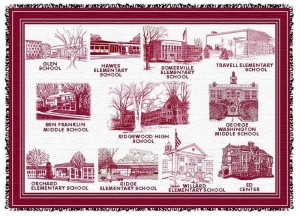
COZY RPS BLANKET SUPPORTS THE RHS SPEECH AND DEBATE CLUB
Ridgewood Speech and Debate Fundraiser
This 100% cotton blanket in maroon and cream is 50” x 70”. The cost is $45.00 for the blanket.
Please direct all questions and orders to : kclarkeanderson@ridgewood.k12.nj.us
Kathleen Clarke-Anderson -201-670-2780 (31630)
RHS Speech and Debate Coach
BFMS
335 N. Van Dien
Ridgewood, NJ 07450
News Anchor, Dari Alexander at Bookends
Saturday, January 12th @ 1:00pm
FOX 5 NY News Anchor, Dari Alexander, will sign her new book: Quick & Clean
Books available Jan 1st. 4th Phone Order if you can’t Make the Event!
Appearing authors will only autograph books purchased at Bookends and must have valid Bookends Receipt.Availability & pricing for all autographed books subject to change.Bookends cannot guarantee that the books that are Autographed will always be First Printings.
Autographed books purchased at Bookends are non-returnable.
While we try to insure that all customers coming to Bookends’ signings will meet authors and get their books signed, we cannot guarantee that all attendees will meet the author or that all books will be signed. We cannot control inclement weather, author travel schedules or authors who leave prematurely.
Bookends, 211 E. Ridgewood Avenue, Ridgewood, NJ 07450 201-445-0726
Weight Reduction Through Mindful Eating: Program Begins Jan. 8
Are you dissatisfied with the results you’ve had with dieting and how diets make you feel? Would you like to learn about a simple, practical, effective way to change your eating habits and your weight? Well-documented studies support the application of mindfulness education and training in the management of eating behavior.
The planned dates/topics for Valley’s Mindful Eating program are:
Tuesday, January 8 – What is Mindfulness? Why and How to Apply it to Eating
Tuesday, January 15 – Hunger: What is it? Physical and Emotional Hunger
Wednesday, January 23 – Identifying Conditioned Patterns Around Eating
Wednesday, February 13 – Emotions and Body Awareness
Tuesday, February 19 – Fullness and Satiety, Food and Mood
Tuesday, February 26 – Working with Heart Hunger, Endings and Beginnings
The classes will be held at The Valley Hospital Conference Center from 5:30 to 7 p.m. The fee for the program is $85, which includes all six sessions and accompanying written materials, including “Mindful Eating” by Jan Chozen Bays, M.D.
Please contact Nina Rubin at nrubin@valleyhealth.com to register. Please send a check for $85 made payable to The Valley Hospital to Nina Rubin, Valley Dining, The Valley Hospital, 223 North Van Dien Avenue, Ridgewood, NJ, 07450.
NJ Touts Educational Reforms But Earns ‘D’ on One Nationwide Report Card StudentsFirst rankings raise eyebrows for judgment of Christie’s record — and who’s doing judging
By John Mooney, January 8, 2013 in Education |2 Comments
Two years ago, school-reform crusader Michelle Rhee was sitting in the first row during Gov. Chris Christie’s State of the State address, in which he laid out much of his education agenda.
As Christie prepares to make his State of the State for 2013 today, education is expected to figure less prominently, but his administration still got a reminder yesterday that the former Washington, D.C., schools chancellor-turned-national education advocate isn’t letting up.
In the first state-by-state report card issued by Rhee’s new organization, StudentsFirst, New Jersey earned a D for its progress – or lack of progress– in meeting Rhee’s core reform principles, which center on teacher quality, school choice and what she deems to be effective spending and oversight.
“Parents and teachers are working hard every day to make sure every child in New Jersey gets a great education, and while recent tenure reform represents meaningful progress, more reforms are necessary for our students to achieve the results we want for them,” said Craig Wallace, StudentsFirst’s state director for New Jersey.
Budget deferment keeps rates stable in Ridgewood
Monday January 7, 2013, 1:00 PM
BY DARIUS AMOS
STAFF WRITER
The Ridgewood News
Ridgewood increased the amount of money that it owes the Board of Education, a legal accounting method that many New Jersey towns adopt in an attempt to keep their municipal tax rates stable.
Known in local government and budget lingo as the deferred school tax, the village’s financial obligation to the school district was upped to $43,075,160 by the end of 2012. The amount represents an approximate $861,000 spike over the 2011 total, an increase that the Village Council approved during a December meeting.
“In general, it’s a computation that takes into effect the growing school district budget. If the school district budget grows, then there’s more of the deferred tax that we can bring into our budget computations,” Village Manager Ken Gabbert said.
Each municipality is responsible for collecting taxes from its residents, including those who are charged by the county and school district. All taxes imposed for any calendar year must be collected in full by Dec. 31 of the same year.
New Jersey State Legislature states that, as a result of the different operating calendars, municipalities are not legally obligated to hand over all school taxes at the time they are collected. Because schools run on a fiscal calendar, which typically begins in July, state statute allows municipal governing bodies to use local school taxes that have been collected but not yet submitted to their respective board of education.
Gas Main Rupture Closes West Glen Avenue In Ridgewood For Over 12 Hours
January 8,2013
Boyd A. Loving
9:21 AM
Ridgewood NJ, A gas main break at the intersection of West Glen Avenue and S Hill Road in Ridgewood has closed West Glen Avenue between Hillcrest Road and North Monroe Street for over 12 hours.
Photos by Boyd Loving
Crews from PSE&G have been on the scene of the rupture since late on Monday evening. Ridgewood Fire Department personnel have responded to numerous reports of strong natural gas odors throughout the west side of Ridgewood since the break was first detected on Monday night.
Photos By Boyd Loving
Currently, there is no estimate as to when the break will be repaired and/or when the road will be reopened. Ridgewood PD units are on the scene detouring traffic around the incident.
Mayor Aronsohn’s 3.1% Tax Increase last year ranked among Highest in Bergen County
Tax talks come to forefront in Ridgewood
Monday January 7, 2013, 1:03 PM
BY DARIUS AMOS
STAFF WRITER
The Ridgewood News
Ridgewood’s 3.1 percent municipal tax increase last year ranked among the highest of all Bergen County towns, based on information released by the county Board of Taxation.
Of the 69 municipalities included in the tax board’s report, the village’s tax percent change from 2011 to 2012 was higher than figures from 50 other Bergen towns. East Rutherford, which at press time had not set its tax rate for the past year, was not included in the report.
The news came as an eye-opener to Village Council members, some of whom have expressed the need for alternate ideas during the budget process in an effort to reduce the financial burden placed on Ridgewood taxpayers. The council is hoping that inventive thinking trickles from the top brass in each department to those working on the ground level.
“I think it’s time that we need to be innovative and push ourselves to think creatively and make some difficult decisions,” Councilwoman Gwenn Hauck said last month. “We can’t be in the top third of highest tax rates in Bergen County.”
New Jersey Senate President: Christie May Have ‘Prayed’ For Sandy To Come
Republicans Call Senate President Sweeney’s Comments ‘Way Out Of Line’
January 7, 2013 10:05 PM
TRENTON, N.J. (CBSNewYork/AP) — New Jersey Senate President Stephen Sweeney (D-Gloucester) said Monday that Gov. Chris Christie might have “prayed” for Superstorm Sandy, because it has provided cover for what Sweeney said are the governor’s failed economic policies.
Sweeney said the Republican governor’s jobs plan before Sandy was a disaster, and now the reconstruction will provide an economic boost through thousands of construction jobs.
“I guess he prayed a lot and got lucky because a storm came,” Sweeney said.
Stephen Moore is the author of the forthcoming book Who’s the fairest of them all? from Encounter Books.
“It is a paradoxical truth that tax rates are too high today, and tax revenues are too low and the soundest way to raise the revenues in the long run is to cut the tax rates…. [A]n economy constrained by high tax rates will never produce enough revenue to balance the budget, just as it will never create enough jobs or enough profits.” —John F. Kennedy, 1963[1]
Even if most policymakers and members of the public instinctively understand the wisdom of President Kennedy’s words, tax rates are set to go way up, not down, next year because of the scheduled expiration of the Bush tax cuts at the beginning of 2013. The Obamacare law also raises tax rates on wealthy individuals by an additional 3.8 percentage points next year. President Obama and others in Congress argue that these higher tax rates are justified because of the growing consensus that the rich don’t pay their fair share of taxes. Unless we do something to spread the burden more equitably, the argument goes, American society will become more unfair and the economy more unsustainable with each passing year.
At first glance, the tax rate issue seems inseparable from the tax fairness issue, since higher taxes are expected to shift society’s wealth from the private sector to the public sector, where, broadly speaking, it is redistributed to lower-wage earners and the needy. In reality, the people at the bottom of the scale have benefited directly and indirectly from every tax rate reduction dating back to Kennedy’s rate reductions in the early 1960s and through the tax cuts adopted early in the administration of George W. Bush. If those lower rates, along with the Alternative Minimum Tax fix, are allowed to expire, the poor will be burdened even more than the wealthy because the whole economic pie will shrink.
If tax cuts work to expand the economy, the income pie gets larger for everyone. For example, tax rate reductions on businesses may mean more money after-tax for hiring more workers, paying them more, or purchasing more plant and equipment and computers that make workers more productive and efficient. Tax rate reductions on investment expand investment and mean more funds available for new businesses to get off the ground and for existing businesses to expand. Lower estate taxes may mean that family-owned businesses don’t have to be sold at auction at the time of the owner’s death. Everyone benefits.
At stake in the current tax debate in Washington are not only marginal income-tax rates but the tax on capital gains and dividends. Federal taxes are already scheduled to rise by about $700 billion over the next ten years to finance the Patient Protection and Affordable Care Act. In short, Americans face the largest cumulative tax increase since the end of World War II, which could be a mighty blow to an economy already on the verge of double-dip recession.
The truth is that higher taxes starve the very sectors of the economy that create jobs for everyone. They can, for a little while, reduce the incomes of our top-earning citizens—until these people’s top-notch accountants are able to redirect their investments away from the most efficient, effective uses of their money and into sleepier investments such as government debt, instead of providing the capital that some high-tech company, for example, needs to develop its next tablet.
Below are a series of statements reflecting popular conceptions and misconceptions about the impact of tax rates on economic productivity and fairness. We’ll address these statements (and debunk attendant myths) one at a time.
1. To become fairer, the tax code needs to tax the rich more heavily.
President Obama certainly thinks so. His latest budget proposal raises $1,700 billion in taxes over the next decade by increasing tax rates for the wealthiest Americans as well as for the middle class. He wants a top tax rate of almost 42 percent[2] (up from 35 percent today) on anyone with more than $250,000 in income from salaries, small-business income, and dividends. After paying state and local taxes, some Americans will face tax rates of nearly 50 percent—because for businesspeople and other active participants in the economy, many other types of tax are applied to almost every stage of transactions. As a result, much of those people’s wealth, which might otherwise go toward creating jobs, would end up sitting in unproductive tax shelters.
For this and other reasons, high tax rates are the worst way to redistribute income to the poor and the middle class. In 1972, when the highest tax rate on the rich was 70 percent and the top capital-gains tax rate was 35 percent, the richest 1 percent of Americans assumed 18 percent of the income-tax burden. Today, with a top income-tax rate of 35 percent and a capital-gains rate of 15 percent, their share is 39 percent, more than twice as much. This is true because, faced with high tax rates, the rich of 40 years ago put more of their income into tax shelters or foreign countries. They invested less, and they worked less. And the rest of us suffered during the years of stagflation—as we will again, if rates are raised.
Even though taxes are 10 to 20 percent lower in the United States than they are in most other industrialized nations, the U.S. government is more dependent on rich people for taxes than are many of the more socialized economies of Europe. According to the Tax Foundation, the U.S. gets 45 percent of its total federal taxes from the top 10 percent of tax filers, whereas the average for industrialized nations is 32 percent. America’s well-off bear a larger share of the tax burden than do the rich in Belgium (25 percent), Germany (31 percent), France (28 percent), and Sweden (27 percent).
2. The rich are paying less in income taxes than they have in the past 50 years.
False. In 2007, the richest 3 percent of Americans contributed a larger share of tax revenues than they have in any year since 1960. For more than half its income, the federal government relies on what it takes from just that 3 percent.
Every year, the Treasury Department examines the distribution of federal taxes by income group. The data for all recent years yield the same conclusion: people at the top not only make a disproportionate contribution to the nation’s wealth; they also pay a higher proportion of their collective income than those at the bottom. Let us examine the data for 2007, when the richest 1 percent of Americans made 22 percent of all earned national personal income but contributed 40 percent of all personal income-tax revenue. The top 10 percent contributed 71 percent of all personal income-tax revenue. The bottom 50 percent earned 12 percent but contributed just 3 percent of the tax revenues so obtained.
3. When all the other taxes are counted, the rich get off easy.
It’s true that the Social Security tax is somewhat “regressive,” in comparison with the income tax. But the payroll tax makes much less difference than people might think. Payroll taxes of just under 15 percent (combined total of employee’s and employer’s share) are charged on the first dollar of income earned by a worker, and the tax is capped at an income of about $110,100 in 2012. The Tax Policy Center, which is run by the Urban Institute and the Brookings Institution, recently studied payroll and income taxes paid by every income group. It found that the highest-income 1 percent of Americans still pay a combined (income plus payroll) average rate of 26.[1] percent, while the poorest fifth of Americans receive a refund of 0.9 percent, largely through the Earned Income Tax Credit. As Figure 3 illustrates, even when the regressive effects of the payroll tax are counted, the rich contribute a greater fraction of their income, and make a greater contribution to federal tax revenues, than other income groups.
4. Tax cuts are just Robin Hood in reverse, taking from the poor to give to the rich.
Since we have just shown that the rich pay more in taxes than the poor, it might appear that tax cuts disproportionately benefit the rich. But the economy is not a static, limited resource in which winners gain at the expense of everyone else. Tax rates can change the size of the pie, since they affect how people act in the economy.
Imagine that a 90 percent or even 100 percent tax on income over $100,000 were imposed. What would that mean for the economy? A lot of people would stop going to work, or seeking promotions, or working second jobs, or running their businesses. And who would want to start or expand a business under such a punitive tax regime? The higher the tax rate, the lower the incentive to lift a finger, propose new ideas, or create a single new job.
Low rates might be beneficial for the private sector, but we cannot pretend that we don’t have a government or that it doesn’t need funding. So in balancing the interests of the private sector and the claims of government, we need to focus on yield—how to raise the necessary revenue to fund government without shrinking the private economy. We must discover the optimal tax rate, which is the lowest possible rate that will produce sufficient revenues to pay for government’s services.
How can we tell when taxes are too high? The most common side effect of excessive tax rates is an economic downturn or, in the worst case, a recession, such as we suffered repeatedly through the 1970s. The near-doubling of tax rates on the rich in the 1930s under Herbert Hoover and Franklin Roosevelt played an important role in extending the length of, and the suffering from, the Great Depression. In recessions, the rich do a little less well, but the poor suffer terribly. Recoveries, like the 25-year boom launched by Ronald Reagan’s tax cuts, lift all boats—especially those of the people most vulnerable to economic ups and downs.
5. Lower tax rates can make the tax burden fairer.
True. In the early 1960s, the highest income-tax rate was 91 percent. That rate was slashed to 70 percent during the Kennedy administration and remained there until 1981. President Reagan slashed the top tax rate to 50 percent, then to 28 percent in 1986. Even though the tax rate fell by more than half, total tax receipts in the 1980s increased, from $517 billion in 1981 to $1,030 billion in 1990, reflecting strong growth of the economy. In view of the results, taxes also appear to have become fairer: since the late 1970s, even as tax rates fell by half, the amount of taxes paid by the wealthy, and their percentage of total income taxes paid, increased vastly.
This trend continued into George W. Bush’s presidency: by 2007, the top 5 percent paid a larger share of individual federal taxes than the bottom 95 percent—for the first time since the Great Depression.
Along with fairness came opportunity, growth, and jobs because the money freed up for consumption and investment had a multiplier effect. Lower tax rates affect every economic decision. Just as consumers might forgo a vacation if they do not expect a tax refund, investors will take fewer risks if they expect their profits to be taxed away. Indeed, lower tax rates encourage investing in America (rather than China), where investors and entrepreneurs will start or expand businesses and create jobs. High taxes, by contrast, nudge people toward safe, sleepy investments or offshore tax shelters.
When President Kennedy was promoting tax rate reductions in 1963, he stated that the best way to promote economic growth “is to reduce the burden on private income and the deterrents to private initiative which are imposed by our present tax system—and this administration is pledged to an across-the-board reduction in personal and corporate income tax rates.”[3]
Even though the truth of Kennedy’s words has been confirmed, this country now faces the absurd prospect of a huge, automatic rise in tax rates in January 2013, when the Bush tax cuts expire. Many Democrats want to raise taxes for those earning more than $250,000—the bulk of America’s investors and entrepreneurs—while most Republicans want to keep all the lower tax rates in place. The Bush tax cuts passed Congress in May 2003. The major changes were as follows:
The tax on dividends was cut from 39.6 percent to 15 percent.
The tax on long-term capital gains was cut from 20 percent to 15 percent.
The highest marginal personal-income tax bracket fell from 39.6 percent to 35 percent. The lowest tax bracket fell from 15 percent to 10 percent.
The tax on business investment in plant, machinery, and equipment was lowered.
Of course, wealthier Americans saved more in taxes than poorer Americans, since they had more money at stake. But the non-wealthy benefited significantly—and not just in their take-home pay. They saw more hiring by businesses, a stronger stock market, and other favorable reactions to the lower tax rates in 2003–07. At the same time, tax revenues rose more after the Bush tax cuts than they did after the Clinton tax increases. And the economy grew faster.
Moreover, after the 2003 tax cuts, payments by the rich increased faster than anyone else’s. Total taxes paid by households earning $1 million or more in a given year more than doubled in 2003–07, even as the tax rate was lowered.
Figure 7 shows what happened to the number of Americans who declared more than $1 million in income on their tax returns through 2007. In just three years, the number earning at least $1 million more than doubled. The best way to get more money from taxpayers is to create more rich people.
Not only did the dollar payments of the rich rise, but the percentage of the total tax burden that the rich paid also increased. The rich are now paying more than they would have paid had the Bush tax cuts not gone through.
The rich also paid a larger share of total personal income taxes paid following the 2003 tax cuts, partly because those tax cuts provided a big cut in middle-class taxes and took a big percentage of Americans off the tax rolls completely.
All these wealth-creating policies would be reversed if the 2003 cuts are allowed to expire in January 2013. Not only would those with high incomes be affected: the Alternative Minimum Tax would return, and because it has not been indexed to account for income inflation, it would affect 30.1 million Americans, swelling the tax bills of people making less than $100,000 a year by $2,000–$3,000.
Here is what will happen if nothing is done about extending the Bush era tax cuts and abolishing Obamacare taxes:
If those tax rates go up, many economists believe that it will push the stock market lower, contract the real economy, and possibly contribute to a double-dip recession like the one that Americans suffered under President Jimmy Carter. Our current recovery is too fragile—we are still 4 million jobs short of where we were in 2007—to withstand such a blow. Except in the face of a conflict like World War II, it’s almost never a good idea to raise taxes, but it’s especially foolish when the economy is still struggling.
6. All those tax cuts created deficits that have mortgaged our children’s future.
False. The lower tax rates brought in more money because they helped the economy to grow and created more jobs and more wealth. Reagan’s tax cuts caused federal tax receipts almost to double, from $517 billion to $1,032 billion. As The New York Times stated on December 8, 1992: “One popular misconception is that the Republican tax cuts caused the crippling federal budget deficit now approaching $300 billion a year. The fact is, the large deficit resulted because the government vastly expanded what it spent each year.”[5]
A growth spurt similar to the one following Reagan’s tax cuts came in response to Bush’s. The Congressional Budget Office (CBO) reports that in the first four years of the Bush tax cuts, federal revenues increased by $786 billion—the largest real increase in history. From 1981 to 2007, every time tax rates were reduced, tax payments by the rich climbed:
At a top rate of 70 percent in 1980, the top 1 percent paid $47 billion in federal taxes. Today, at a 35 percent rate, they paid more than $400 billion. Even adjusting for inflation, that is a nearly 300 percent increase in tax payments by the rich.
After the Reagan income-tax cuts in 1981, the highest-earning 1 percent more than doubled their collective income-tax payments, from $50 billion in 1981 to $114 billion in 1988.
After the 1986 tax reform act, income-tax payments by the rich rose from $70 billion to $146 billion in 1993.
After the 2003 tax cuts, payments by the rich increased from $256 billion in 2003 to $451 billion in 2007. Some of those revenue gains were inflated by the housing bubble, but there was certainly no revenue loss.
What matters most in collecting the taxes needed to run the government is how fast the economy grows and how many jobs are created. Raising tax rates on the prosperous—especially small-business owners, who would be exposed to higher taxes if the 2003 tax cuts expire—can be counted on to shrink the economy and stifle job creation.
All this talk about tax increases is really a political diversion from the real problem in Washington: overspending. The federal budget is now $3.8 trillion, compared with roughly $2 trillion in 2000. Reagan used to cast aside calls for higher taxes with a simple retort: “Never give a big spender a bigger allowance.” The spending disease is what really threatens to paralyze our economic future.
7. Ordinary Americans pay more than their fair share of taxes.
Every year, fewer Americans pay any income tax at all. The nonpartisan Tax Foundation found that in 2009, nearly 42 percent of Americans who file tax returns end up paying no tax. In 2008, that percentage was around 36 percent.[6] Many of these Americans actually received a check from the IRS because of the tax credits that they claimed.
8. The 15 percent tax on investment income, which is well below the income-tax rate that most salaried workers pay, is a gift to the wealthy.
If it is, it’s one that a majority of Americans benefit from. The latest polls show that 54 percent of Americans own stock and benefit directly from lower capital-gains and dividend taxes. But that is probably the smaller part of how ordinary taxpayers benefit. Capital gains are what is left over when an investment—in a stock whose price could have tanked, or a new business that could have gone bankrupt—succeeds. Investing is therefore different from drawing a paycheck, which is almost certain to clear. It makes sense to reward productive risk-taking with a lower tax rate.
Lower capital-gains rates also increase the amount of taxes paid. The 1997 capital-gains tax cut reduced the long-term rate from 28 percent to 20 percent. In the subsequent three years, the amount of taxable capital gains almost doubled. When President George W. Bush cut the rate again, to 15 percent, a 107 percent increase in revenues from 2002 (the year before the rate was reduced) to 2005 resulted.
One explanation is the effect of taxes on decision making. When tax rates are high, people postpone selling stock that they own and thus claiming a profit, even if it would be more rational, from a strictly economic standpoint, to do so right away. In short, the tax code, and not good business sense, is making economic decisions for them. By keeping investors from reallocating their capital to its highest, best use, high taxes promote economic inefficiency and damage productivity. They also shrink the volume of gains that can be taxed.
As John F. Kennedy said in 1962: “The tax on capital gains directly affects investment decisions, the mobility and flow of risk capital …[,] the ease or difficulty experienced by new ventures in obtaining capital, and thereby the strength and potential for growth in the economy.”[7]
9. A higher capital-gains rate would just level the playing field.
It’s true that many very rich people get their income from capital gains and dividends, which are taxed at a lower rate, but that lower rate is deceptive because it is a tax on top of the tax that corporations pay before they pay any of their profits to shareholders. In the U.S., the rate that corporations pay on their profits can be as high as 39.2 percent when including state taxes. (The compensation that they pay their employees is a tax-deductible business expense.) The real tax rate on corporate income paid to individuals through capital gains and dividends is not 15 percent but closer to 40 percent. A higher capital-gains rate would just compound the injustice. In 2007, middle-class families earning between $34,000 and $50,000 paid an effective 14.3 percent of their income to the federal government, according to the CBO. In 2007 (the most recent year for which data are available), those earning more than $2 million paid an average of 24.9 percent. That 15 percent rate cannot be said to tilt the tax system in rich people’s favor.
10. The “wealthy” are likely to be the people next door.
In a country of more than 300 million people, the number of fabulously rich people—the top entertainers, athletes, hedge-fund managers—is tiny. Most of the people in the top income-tax category are small-business owners and investors. Most small businesses are S corporations, meaning that they are taxed at their owner’s individual-income rates, according to the Senate Finance Committee. Thus, when tax rates go up on the rich, they go up on small businesses.
How the wealthy are doing, as well as how numerous they are, has a big effect on the revenues that the government can collect. Because the economy has done so poorly in recent years, tax payments by a dwindling number of the rich have plummeted. According to IRS data, 390,000 tax filers reported adjusted gross income of $1 million or more for 2007. These people paid $309 billion in taxes. In 2009, there were only 237,000 such filers, a decline of 39 percent, and the total taxes they paid declined to $178 billion, a drop of 42 percent.
Those with $10 million or more in reported income fell to 8,274, from 18,394 in 2007, a 55 percent drop. As a result, their tax payments plummeted by 51 percent.
These disappearing millionaires go a long way toward explaining why federal tax revenues have sunk to 15 percent of GDP in recent years. The loss of millionaires accounts for at least $130 billion of the increased federal budget deficit in 2009.
Today’s “tax fairness” activists are concerned mainly about income inequality. But raising taxes contributes to downturns and recessions, which may, unfortunately, be the only way to increase equality. And recessions fall inordinately on the less well-off. Are financial losses for all levels of income an acceptable price to pay for greater equality of income? The recession and weak recovery of the past four years have been income levelers. In 2007, those who made more than $200,000 earned about 35.2 percent of our nation’s total income; in 2009, that figure went down to 33 percent. In 2007, those with incomes above $1 million earned 17.3 percent of the nation’s income; by 2009, that figure was down to 12.9 percent. So we have created a more equal society—by making America poorer.
11. It is increasingly harder to climb the economic ladder, and changing the tax code will help.
Barack Obama seems to think so. Since the early 1980s, he says, the rungs of the economic ladder have been sawed off, making the upward climb increasingly futile. He also alleges that a child born into poverty in the years immediately after World War II had a better than 50–50 chance of moving into the middle class; and a child born into poverty in 1980 had a 40 percent chance of moving up; but a child born today will have only a 33 percent chance of “making it to the middle class.” The New York Times reports that other nations have much more income mobility from one generation to the next than does the United States. It cites research that finds that most Western European and English-speaking nations have higher rates of mobility. The Times reports that in the U.S., 42 percent of those born into the bottom fifth of income stay there as adults. In many other industrial nations, only about 33 percent or 25 percent born into the bottom quintile are found there as adults.[8] Are these gloomy portrayals true? Not exactly.
The story on income mobility across generations in the U.S. is admittedly mixed. The questions are whether a person born poor is likely to be poor when reaching adulthood and whether children who grow up in rich households are much more likely to be rich as adults. In other words, how much does it matter who your parents are, in terms of your own success? We would like to think that what matters most is individual initiative and hard work, not one’s genes or one’s head start in life.
One thing we do know for certain is that today’s workers are generally a lot wealthier than their parents were at the same age. A study by Ron Haskins, based on Pew Foundation data, found that about 66 percent Americans have higher incomes than their parents did at the same age. Even more impressive: when adjusting for family size, 81 percent have a higher income than their parents did. So it is not true that our parents were better off than we are.
But there does seem to be considerable controversy and some distressing news about the ability of low-income Americans to climb up from the bottom rungs of the economic ladder. Most studies now find that about 40 percent of low-income children in America have a low income as adults. If one’s probability of being poor were not related to one’s parents’ income, that figure would be close to 20 percent. Even more distressing is that less than 20 percent of Americans who grow up in a poor household move into the high-middle-income or high-income category. It is getting harder for a poor person to rise to the top income level, according to the analysis by The New York Times.
A new analysis by Scott Winship, an economic studies fellow at the Brookings Institution, has looked at the mobility data and is not so negative about the trends. Winship, an expert on economic mobility, points to at least six prominent studies on “intergenerational income mobility.” That is, research that compares the income status of parents with that of their children when they become adults finds “either no change or rising mobility” in recent decades. Winship also examined data from a national longitudinal survey of children born between 1962 and 1964 and children born between 1980 and 1982 and compared these cohorts’ income when they reached the age of 26 to 28 with their parents’ incomes, and found that upward mobility from poverty to the middle class rose from 51 percent to 57 percent over these two periods. He is reluctant to conclude definitively that mobility increased but is emphatic that “the data provides absolutely no evidence that economic mobility declined, whereas the president said it has fallen by 10 percentage points.”[9]
Even more confounding is President Obama’s assertion that only one in three kids born today will move out of poverty. That is not based on any data or any factual measurement but is pure conjecture by researchers. How does anyone know what the income 25 years from now will be of a child born today? More to the point, what is the value of such negative speculation? As Winship puts it, “all the president is doing is reinforcing any doubt among the poor that they can make it if they try.”[10] It is like trying to teach a six-year-old to ride a bike but telling her in advance all the reasons she will probably fall.
But Winship agrees that a more permanent underclass in America is emerging. “In particular, it’s American men who fare worse than their counterparts in other countries.”[11] Men in poor households have a hard time finding their way into higher income classes—but not primarily because of economic factors limiting mobility. Social factors—divorce, out-of-wedlock births, bad neighborhoods, and extremely dysfunctional schools that don’t train children to be highly functioning adults—are responsible. Most experts on the left and right agree that one of the most important steps to reduce income inequality and give every American a fair opportunity to succeed is school choice, so that parents can opt out of failing schools. Welfare reform that continues to promote work over the dole is also critical, as well as policies that promote intact families.
There is little doubt that government can redistribute wealth: taxing high-income individuals can and has increased equality. But there is little evidence to suggest that this results in increased economic mobility for the poor. A 2006 study by Chul-In Lee and Gary Solon finds that intergenerational income mobility has not changed significantly despite various changes in tax rates: “[O]ur results … suggest that intergenerational income mobility in the United States has not changed dramatically over the last two decades.”[12] That study makes it difficult to see how raising taxes on the wealthy will generate increased income mobility for the poor, and it underscores the point that equality is not synonymous with economic mobility.
ENDNOTES
Quoted in Arthur B. Laffer, Stephen Moore, and Peter J. Tanous, The End of Prosperity: How Higher Taxes Will Doom the Economy—If We Let It Happen (New York: Simon & Schuster, 2008), p. 56.
This figure includes the phase-out of deductions under the Affordable Care Act (ACA).
Quoted in Laffer et al., p. 48.
This figure and the capital gains figure includes the 3.8 percent surtax imposed under the ACA.
David Rosenbaum, “The Push and Pull Over Taxes,” New York Times, December 8, 1992, p. D1.
Tax Foundation, “Federal Income Tax Returns With Zero or Negative Liability,” October 18, 2011. https://taxfoundation.org/article/federal-individual-income-tax-returns-zero-or-negative-tax-liability-1950-2009.
Quoted in Stephen Moore and John Silvia, “Policy Analysis: The ABCs of the Capital Gains Tax,” Cato Institute, October 4, 1995. https://www.cato.org/publications/policy-analysis/abcs-capital-gains-tax
Jason DeParle, “Harder for Americans to Rise From Lower Rungs,” New York Times, January 4, 2012, p. A1.
Scott Winship, “The President’s Suspect Statistics” National Review Online, January 2, 2012. https://www.nationalreview.com/blogs/print/286874
Ibid.
Scott Winship, “Mobility Impaired” Brookings Institution, November 9, 2011. https://www.brookings.edu/research/articles/2011/11/09-economic-mobility-winship
Chul-In Lee and Gary Solon, Trends in Intergenerational Income Mobility, working paper no. 12007 (National Bureau of Economic Research, January 2006), p. 16, https://www.nber.org/papers/w12007.
Garrett Takes the Lead on Flood Aid for Sandy Relief
Jan 4, 2013
WASHINGTON, DC – Rep. Scott Garrett (R-NJ), issued the following statement regarding the bill that will increase the National Flood Insurance Program’s (NFIP) borrowing limit to ensure funds are available to meet the claims received from Sandy victims:
“As someone who has been on the ground, viewed the devastation, and helped clean up some of the damage, I certainly believe that those who have bought flood insurance should expect to receive the coverage they paid for. Today, the House is taking steps to ensure that the federal government fulfills its contractual obligation to all those who have purchased national flood insurance. A temporary increase in NFIP’s borrowing limit is required.”
Democrats look for up to $1 trillion in new tax revenues this year
By Alexander Bolton – 01/07/13 05:00 AM ET
Democrats say they want to raise as much as $1 trillion in new revenues through tax reform later this year to balance Republican demands to slash mandatory spending.
Democratic leaders have had little time to craft a new position for their party since passing a tax deal Tuesday that will raise $620 billion in revenue over the next ten years.
The emerging consensus, however, is that the next installment of deficit reduction should reach $2 trillion and about half of it should come from higher taxes.
April 15, 2013 2012 Federal Tax Return Tax Day for Tax Year 2012 – Filing deadline and due date for Federal Income Tax Returns.
April 15, 2013 2012 Federal Tax Extension Due date for Tax Extensions for 2012 Federal Income Tax Returns.
October 15, 2013 2012 Federal Tax Return Last day to efile a 2012 Income Tax Return for Tax Extension filers and late Tax Return filers.
April 15, 2016 2012 Tax Amendment You can file an Amended Return to pay taxes due anytime, but you generally have a deadline of 3 years from the original due date to claim a tax refund.
No Deadline Previous Year Tax Returns You can file a Tax Return for a previous tax year anytime, but you can only claim a refund within 3 years of the original tax deadline.