
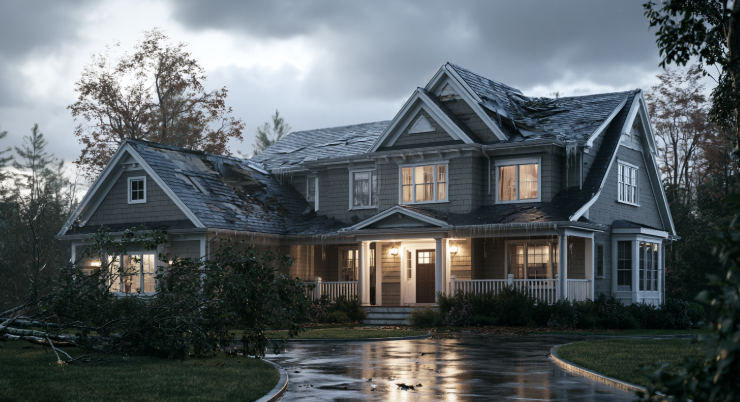
Every storm season, New Jersey homeowners face the same anxious moment: a heavy nor’easter rolls through Bergen County, the wind howls overnight, and the next morning, there’s a brown stain spreading across the ceiling — and the first question is almost always will my insurance pay for this? The honest answer is “it depends,” and the difference between a covered claim and a denied one usually comes down to a few specific factors most homeowners don’t think about until they’re already filing. Knowing how your policy treats storm-related roof leaks before the next storm hits can save you thousands of dollars and a lot of frustration.
How NJ Homeowners Insurance Treats Roof Leaks
Standard homeowners insurance in New Jersey covers roof leaks that result from a sudden, accidental, covered event — wind, hail, or a fallen tree limb. It does not cover leaks caused by age, wear, or lack of maintenance. That single distinction decides most claims.
This is also why your response in the first 24–48 hours matters so much. Once you spot water coming in, insurers expect you to take reasonable steps to stop further damage — tarping the area, moving belongings, and searching for “roof leak repair NJ” to get a professional on-site before the problem spreads. If an adjuster later finds that you let the leak sit and worsen, they can reduce or deny your payout on the grounds that you failed to mitigate the damage.
In other words, acting fast isn’t just good for your home. It’s part of protecting the claim itself.
What’s Typically Covered After a Storm
Covered roof leaks generally trace back to a specific weather event that damaged the roof and let water in. The most common scenarios NJ insurers approve fall into a few clear categories.
Wind Damage
Shingles lifted, torn, or blown off during a storm leave the underlayment exposed and let water reach the structure. This is one of the most frequently approved storm claims in New Jersey.
Impact Damage
A tree limb, branch, or wind-driven debris puncturing the roof creates a clear, storm-caused entry point for water. The visible point of impact makes this type of damage straightforward to document.
Hail Damage
Hail bruises or cracks shingles and compromises the roof’s water barrier, often without an obvious leak at first. The damage can show up as interior leaks days or weeks after the storm.
Sudden Water Intrusion
Interior water damage that is a direct, immediate result of covered roof damage is typically included. This covers the water that comes through after the roof is breached by the storm.
Two Types of Coverage That Apply
Most policies separate a storm claim into two buckets. Dwelling coverage pays to repair the structure itself — the roof, the ceiling, the walls. Personal property coverage pays for belongings damaged by water, such as furniture or electronics. Both can apply to a single storm event.
What Insurance Usually Won’t Pay For
Insurers routinely deny roof-leak claims when the underlying cause is neglect rather than a storm. The most common exclusions fall into a few categories.
Wear and Tear
An old roof at the end of its lifespan that simply gave out is not a covered loss. Insurers treat age-related failure as the homeowner’s responsibility, not a sudden accident.
Long-Term or Repeated Leaks
Water intrusion the homeowner knew about and ignored is routinely excluded. Once a leak is classified as ongoing rather than sudden, the claim usually fails.
Poor Maintenance
Clogged gutters, missing flashing, or deferred repairs that allowed water in shift the cause from “storm” to “neglect.” Insurers expect basic upkeep, and they deny claims when its absence caused the damage.
Resulting Mold
Mold that grew because a leak was left unaddressed for weeks or months is typically not covered. It’s treated as a consequence of neglect rather than of the storm itself.
Why Roof Age Decides Many Claims
The age and condition of your roof weigh heavily in every decision. A leak on a two-year-old roof after a documented hailstorm is an easy approval. The same leak on a 25-year-old roof with curling shingles is far more likely to be classified as wear and tear.
ACV vs. Replacement Cost – Why It Matters for NJ Roofs
How much your insurer actually pays often depends on whether your policy is written for Actual Cash Value or Replacement Cost Value.
Actual Cash Value (ACV) pays the amount the damaged roof was worth at the time of the loss, with depreciation for age and wear subtracted. On an older roof, that deduction can be steep, leaving you to cover a large share of the repair yourself.
Replacement Cost Value (RCV) pays the cost to repair or replace the roof with new materials of similar quality, without the depreciation penalty.
Many New Jersey homeowners don’t realize their older roof is insured only at ACV until they file a claim and see the number. Check your declarations page now, while there’s still time to adjust coverage.
How to Document Storm Damage for a Successful Claim
Documentation is what separates an approved claim from a contested one. After a storm, build a clear record before anyone touches the damage:
- Photograph the damage inside and outside, including the ceiling, attic, and roof if it’s safe to reach.
- Note the date and details of the storm that caused it.
- Keep receipts for any emergency measures, such as tarps or temporary repairs.
- Do not throw away damaged materials until the adjuster has inspected them.
- Get an independent assessment from a licensed roofing contractor.
That last point carries real weight. An insurer’s adjuster represents the insurer. An independent inspection gives you a second, professional opinion on what caused the damage — and that can change the outcome.
Why a Professional Roof Inspection Strengthens Your Claim
A licensed contractor’s inspection report does something your own photos can’t: it establishes, in professional terms, that the damage came from the storm rather than from age or neglect. That distinction is exactly what insurers scrutinize most.
A detailed report documenting wind-lifted shingles, fresh impact marks, or storm-specific damage patterns gives the adjuster concrete evidence to approve the claim. Many contractors will also meet the adjuster on-site, walk the roof together, and ensure nothing is overlooked or misclassified.
Don’t Wait — Acting Quickly Protects Both Your Home and Your Claim
With storm-related roof leaks, time works against you on two fronts. Every hour of standing water does more damage to your home, and every day of delay gives an insurer more room to argue the leak was a maintenance issue rather than a covered loss.
The smartest move is to get a licensed, insured contractor on-site quickly — both to stop the damage and to document it properly. American Quality Remodeling, a roofing and exterior remodeling company serving New Jersey and Pennsylvania, handles storm-damage roof inspections and leak repairs and can help you record the evidence your claim depends on. A fast, professional response protects your home, your wallet, and your payout all at once.





