
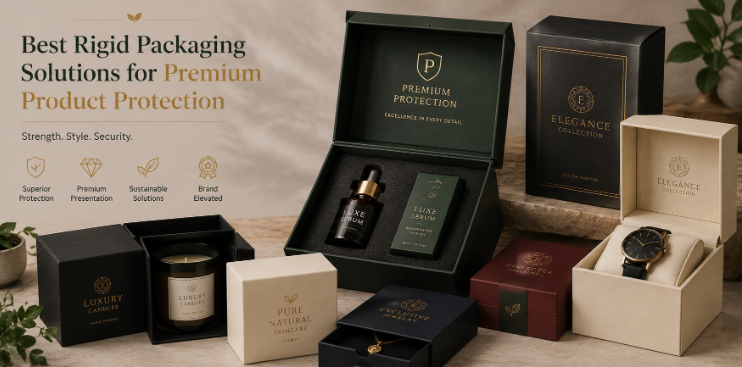
Unboxing a premium product must feel special. The unboxing process is the first physical touchpoint for your customer. It creates a lasting impression. The weight of a rigid packaging box signals immediate quality. A smooth exterior finish tells a narrative of luxury. The sturdy build creates immediate brand trust. This premium experience relies entirely on heavy-duty packaging architecture.
You see, your products face severe risks from the factory floor to the consumer’s home. They experience drops, vibrations, stacking pressure, and temperature shifts. And choosing your packaging box is not just about visual design. It is about keeping your products safe through complex supply chains.
So, how to choose the right rigid packaging for your product and business? Let’s explore the best rigid packaging solutions for premium product presentation.
Understanding Rigid Packaging Solutions
What is premium product housing? It means heavy-duty structural containers. They hold their shape under intense external pressure. They do not bend like thin films. They do not collapse under stack loads. Plus, they maintain structural dimensions perfectly.
Many brands today prefer rigid packaging solutions for high-value electronics. They also use them for luxury cosmetics and skin serums. Fine spirits and delicate jewelry need them too. And fragile glassware requires this level of structural defense.
Here’s how a rigid packaging solution performs.
- The solid paper structure acts as a protective shield
- It stops the impacts from drops
- It fights environmental changes during transit
- It keeps moisture fluctuations from harming your products
The Role of Rigid Packaging in Product Protection and Customer Retention
A fixed box shape creates a predictable physical barrier. Shipping vibrations can crush weaker materials over long distances. But strong walls of rigid packaging absorb these shocks completely. They deflect the energy away from your products. Thus, your products inside stay completely untouched. They remain in pristine retail condition.
Moreover, weight and density trigger psychological thoughts of value. Customers automatically link sturdy boxes with high-quality luxury items. A durable rigid box makes expensive investments feel worthwhile. It validates the purchase price before the customer even sees your actual product.
Exploring Common Rigid Packaging Materials
Reliable product protection lies in raw material selection. Paper-based substrates offer great structural strength for rigid packaging. They provide a premium finish for high-end graphic prints. They also allow for advanced engineering techniques.
Here are the main rigid packaging materials you can choose from:
- Chipboard
Thick sheets made from compressed recycled paper layers. This dense material forms the core of luxury setup boxes. It offers smooth surfaces for gluing premium wrap papers.
- Greyboard
A heavy-weight, industrial cardboard variation. It provides superior bending resistance. It forms the solid walls of heavy-duty rigid boxes, and it keeps its shape under heavy vertical stacking loads.
- Corrugated Fiberboard
A layered material featuring a wavy fluted paper layer. This layer is sandwiched between flat paper liners. It acts as a cushion to absorb heavy shocks during shipping.
- Molded Paper Pulp
Recycled paper fibers pressed into specific geometric shapes. These act as internal nests for fragile items. They hold products securely in place during bumpy shipments.
How About Rigid Plastic Packaging?
The shift away from traditional rigid plastic packaging is accelerating worldwide. Modern brands want to reduce their reliance on oil-based polymers. Well, paper offers incredible flexibility to modern structural engineers. It delivers advanced structural protection. It also provides a warm, premium tactile feel that cold plastic cannot replicate.
Here’s how the best rigid packaging solution removes single-use plastics.
High-Density Greyboard
Greyboard provides incredible crushing resistance without adding excessive weight.
- It protects heavy electronics during international distribution.
- It secures fragile glass cosmetic containers on retail shelves.
- It resists punctures from sharp external objects over long storage cycles.
Multi-Layer Paperboard
Paperboard offers incredible surface smoothness for high-end finishing.
- It has a much smaller carbon footprint than molded plastic resins.
- It allows for intricate spot UV and metallic foil stamping.
- It accepts deep blind embossing easily.
Overall, it turns a standard container into a work of art.
Rigid Packaging Examples Used in the Market
How does a rigid packaging solution operate in the market? Let’s look at different structural forms across various industries.
These rigid packaging examples prove paper architecture balances maximum safety with beautiful style:
- Shoulder Neck Boxes
A three-piece paper construction. A shoulder neck box features an inner paperboard neck that separates the lid and base. It creates a beautiful multi-tiered visual reveal during the unboxing process; ideal for jewelry or luxury perfumes
- Hinged Lid Boxes
Heavy greyboard cases with an integrated lid. he lid swings open smoothly, just like a hardcover book; perfect for luxury cosmetic sets or subscription items.
- Rigid Paper Tube
Cylindrical containers made by winding paperboard layers spirally. They offer immense vertical strength. They protect premium wine bottles and rolled documents from crushing forces.
- Corrugated Shipping Boxes
Multi-layered paperboard containers. They feature heavy-duty fluting profiles. They stack easily in your warehouse without buckling under immense weight.
How Does Rigid Packaging Offer Premium Product Protection?
Alright, now let’s get to the main point: How does rigid packaging offer premium product protection?
Advanced Structural Design for Superior Defense
Premium product protection requires careful engineering calculations. Smart paper craft eliminates structural weak points. It withstands everyday transport risks effectively.
Magnetic Closures with Paper Overlays
Luxury rigid boxes often use hidden magnets for closures. They are embedded carefully between dense greyboard layers. They pull the lid shut with a crisp click. This provides acoustic feedback of quality. Your box will never open accidentally during distribution.
Reinforced Corners
The corners of a rigid box absorb the most energy during accidental drops. Double-walled paperboard construction reinforces these specific stress points. This clever design prevents the edges from crushing inward. Also, it protects your products from impacts.
Rigid vs Flexible Packaging: The Core Differences
Every product category requires a distinct physical defense strategy. Comparing rigid vs flexible packaging highlights unique engineering priorities and transport capabilities.
Let’s check out the core differences between rigid and flexible packaging.
Protection Capabilities
Thick paper structures of rigid packaging excel at crushing resistance. They form an external skeleton around the merchandise.
Meanwhile, pliable pouches of flexible packaging protect against air entry. They protect against moisture migration.
However, flexible materials offer zero drop defense. They transfer impact energy directly to the internal product. If a pallet tips in a warehouse, rigid boxes save your products. Flexible pouches simply burst under the pressure.
Structural Integrity
A rigid box stands upright on retail shelves permanently. It does not sag over time. It does not wrinkle under store lighting. This ensures your branding remains fully visible to passing shoppers.
Flexible packaging like Mylar bags might wrinkle or slouch on shelves. They also slide down retail pegs.
Combining Flexible and Rigid Packaging
Yes, you can combine flexible and rigid packaging solutions. Combining flexible and rigid packaging creates a highly effective hybrid protection system.
Let’s see how.
Luxury Food Sealing
Use a printed greyboard box on the outside for impact defense. Inside, you can use a paper pouch to hold your food items. This locks in the product’s internal freshness and aroma. It protects the outer box from oils.
Delicate Goods Defense
High-value products require total surface preservation. They cannot tolerate scratches. Consider using a Mylar pouch inside a stiff outer greyboard box. The system prevents surface abrasions and eliminates the risk of structural piercing during rough transit.
Selecting the Right Rigid Packaging Solution for Your Brand
Finding the perfect fit requires deep analysis. Look at your specific product dimensions, total weight, and shipping methods.
Evaluate Product’s Weight and Fragility
Heavy products require highly dense materials. Use thick greyboard or double-wall corrugated cardboard.
For lighter products, you can go with thinner chipboard setups. Make sure you consider the material density in your product’s weight. This way, you can cut down unnecessary shipping costs.
Understand Your Supply Chain
Moisture softens paper fibers over time. Use moisture-resistant protective coatings on the outer paper wraps. This keeps your box stiff through long ocean voyages.
Maximize the Unboxing Experience
Protective packaging must still delight your customers. Make sure the structural design of your rigid box balances product safety with ease of opening.
Enhance Your Design with Ribbon Pull Tabs
Deeply embedded products can be hard to remove from stiff inserts. Consider using grosgrain paper ribbons under the product tray to let customers lift your product out safely.
In Summary
Protecting premium products requires a commitment to structural excellence. High-quality rigid packaging shields your expensive goods from physical damage. Eventually, it delights customers during the critical unboxing moment. As a result, establishes immediate brand authority in a crowded marketplace.
So, are you ready to get the best rigid packaging solution for premium product presentation?





