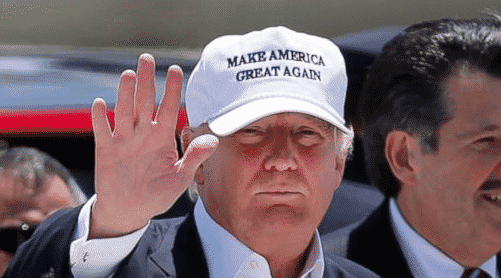
Republican presidential frontrunner Donald Trump said Saturday that rival Marco Rubio should drop out of the race.
“I think it’s time for Marco to clean the deck. I really do. And I say that respectfully,” Trump said at a press conference in Florida.
Trump held the press conference after four states held primaries or caucuses earlier in the day. Trump was projected to win Kentucky and Louisiana, while Cruz won Kansas and Maine.
“I think Marco Rubio had a very, very bad night,” Trump said. “And personally I’d call on him to drop out of the race. I think it’s time now that he drop out of the race. I really think so. I think it’s probably time.”
Trump’s call echoes that of another presidential candidate, Ted Cruz, who has urged the non-Trump candidates to drop out so that a coalition can form against the Republican frontrunner. Rubio, a Florida senator, has only won one state — Minnesota — while Cruz has also notched victories in Texas, Oklahoma, Iowa, and Alaska.
“You got to be able to win. He has not been able to win. And I think that it’s time that he drops out,” Trump said.
Increased spending on issues such as education, public worker pensions, transportation, and hospitals drove lobbying expenditures in New Jersey in 2015 to $70 million, the second highest total ever, according to an analysis of annual lobbying reports released today by the New Jersey Election Law Enforcement Commission (ELEC). Jeff Brindle, PolitickerNJ Read more
Following Governor Chris Christie’s endorsement of Republican presidential frontrunner Donald Trump, the blowback has been considerable from Christie’s own party. With Senators Jennifer Beck and Jack Ciattarelli calling for his resignation and former Republican governor Christine Todd Whitman saying that she would sooner vote for Hillary Clinton than the former reality TV star, one of Trump’s few defenders in the legislature described a disconnect between the caucus and the public. JT Aregood, PolitickerNJ Read more
“Nothing is more symptomatic of the GOP establishment’s death drive than their continued embrace of the presidential aspirations of a man who shrank the party in 2012.”
Clueless GOP establishment continues to flounder
Mittens: GOP Establishment Chooses Mount Romney as Hill to Die on
by STEPHEN K. BANNON & REBECCA MANSOUR3 Mar 20163,677
After President Jeb, President Walker, President Christie,President Kasich, President Ryan, and President Rubio, the Republican establishment is now turning once again to the Adlai Stevenson of the GOP – Willard Mitt Romney.
Perhaps nothing is more symptomatic of the GOP establishment’s death drive than their continued embrace of the presidential aspirations of a man who shrank the party in 2012.
But then, these are the same Republican elites who are determined to grant amnesty to 40 million future Democrats. So, obviously party expansion and broad national victories are not their priorities. How else do you explain their bizarre desire to board the S.S. Mittanic one more time?
A full recounting of the unmitigated disaster that was the Romney campaign is beyond the scope of this op-ed. But let’s cut to the chase. Mitt Romney lost because he was unpalatable to working class Americans.
Sean Trende of RealClearPolitics explained in detail how Romney lost the election in large part because he couldn’t win over white working class voters.
That wasn’t an accident. It was by design. An August 2012 op-ed by Matthew Continetti in the Washington Free Beacon outlined the Obama campaign’s “voter suppression” strategy “to disillusion white voters without degrees in the Rust Belt and Mountain West.” Obama calculated that these working class voters would make Romney president if they voted Republican by the same 30-point margin as they did in 2010, but if they were demoralized and alienated by the GOP candidate, they would hand the election to Obama by simply sitting it out.
WASHINGTON — A few months ago, Hillary Clinton’s campaign was salivating over the chance to take on Donald Trump — but the real-estate mogul is now positioned not only to win the GOP nomination, but also the White House. The master campaigner has defied uncharitable predictions, danced circles around the press, and outfoxed his Republican rivals to keep them from forging a unified plan to stop him. Here are eight reasons why Trump is actually the Democrats’ most potent foe.
Trump has been the driving force behind record-setting Republican turnout, while Democratic turnout has been flat. The GOP has set turnout records in every state, except for Vermont.
In Alabama alone, nearly 200,000 more Republicans voted on Super Tuesday than in 2008. “What Trump is doing is he’s able to attract more voters to turn out,” said Sen. Tim Scott (R-SC), who backs Marco Rubio.
Hillary and Bill Clinton are ripe targets for Trump, who has revealed an uncanny ability to shred his opponents by brutally defining them. He blew apart former Florida Gov. Jeb Bush as “low-energy” and helped explode Ben Carson’s feel-good biography.
So far, Trump has confined his comments about Hillary Clinton mostly to assumptions she may not be allowed to run because of her email scandal — a dubious claim — and saying she lacks the stamina for the job.
But once he gets her in his sights, he can drill down on the e-mail controversy, hit her on Libya and the Iraq war, and go after any number of flip-flops she has made throughout the campaign.
The Justice Department has granted immunity to a former State Department staffer, who worked on Hillary Clinton’s private email server, as part of a criminal investigation into the possible mishandling of classified information, according to a senior law enforcement official.
The official said the FBI had secured the cooperation of Bryan Pagliano, who worked on Clinton’s 2008 presidential campaign before setting up the server in her New York home in 2009.
As the FBI looks to wrap up its investigation in the coming months, agents are likely to want to interview Clinton and her senior aides about the decision to use a private server, how it was set up, and whether any of the participants knew they were sending classified information in emails, current and former officials said.
Hillary might look like a shoo-in with African-American voters, but don’t be too sure.
With Hillary Clinton racking up more overwhelming victories in Super Tuesday primaries thanks to the overwhelming support of African-American voters, the conventional wisdom is that she has the black vote on lock down. She might be wrong.
Clinton has already been endorsed by most members of the Congressional Black Caucus, many big city black mayors and other notable black elected officials from California to the Carolinas.
Additionally, she’s also getting not so subtle signs of support from Obama White House insiders and a few shout-outs from President Obama himself. Initially, the president promised to remain neutral until the primary season was over, but herecently appeared to ever so gently open the door to an endorsement of his former secretary of State sooner than expected.
Personally, I never thought Obama would wait that long, not after what Bill Clinton did for him at the Democratic National Convention in 2012 to help energize his re-election campaign. I suspect Obama would love nothing more than to even the score by repaying the debt he owes the Clintons. Politics is funny. First, they run against each other in a nasty campaign with racial overtones, then they feign friendship and work together, then Bill gallops in to help Barack win a second term, and now Hillary needs the president’s support to win the presidency. Talk about triangulation.
Nonetheless, the conventional wisdom is that black voters have forgiven the Clintons for their attempt to diminish Obama’s 2008 presidential campaign, and this time around, they’ve got Hillary’s back. Except everyone knows that in this presidential election cycle, conventional wisdom left the building long before the train ever left the station. Something tells me that if Donald Trump is indeed the Republican nominee, it might be a miscalculation for Democrats to assume that black voters are a lock for their nominee, even with the first black president and Barack Obama both campaigning for her.
From the New Yorker to FiveThirtyEight, outlets across the spectrum failed to grasp the Trump phenomenon.
By Hadas Gold
03/01/16 04:58 PM EST
Updated 03/01/16 05:28 PM EST
David Remnick, editor of the New Yorker, told his readers last summer that Donald Trump was running for president to promote his own brand and that the “whole con might end well before the first snows in Sioux City and Manchester.”
That was quite measured compared to James Fallows, the national correspondent of more than three decades for the Atlantic, who wrote confidently — and with his own bold for emphasis — “Donald Trump will not be the 45th president of the United States. Nor the 46th, nor any other number you might name. The chance of his winning the nomination and election is exactly zero.”
Those two mandarins weren’t alone in dismissing Trump’s chances. Washington Post blogger Chris Cillizza wrote in July that “Donald Trump is not going to be the Republican presidential nominee in 2016.” And numbers guru Nate Silver told readers as recently as November to “stop freaking out” about Trump’s poll numbers.
Now all these journalists, and more, are coming to grips with their mistaken assessments. And some, too, are freaking out.
In an interview this week, Remnick sounded both shocked and sad at Trump’s success, saying it was “beyond belief” and reflects an “ugliness” that appeals to “every worst instinct” in America.
“The fact that so many of us, all of us, were wrong in predicting anywhere near the extent of his success so far, may be partly due to the fact we didn’t want to believe those currents could be appealed to so well and so deeply and successfully,” Remnick said.
By IRA STOLL, Special to the Sun | February 29, 2016
How panicked should we be about the rise of Donald Trump? A professor at Harvard, Danielle Allen, recently published a widely shared op-ed piece in the Washington Post likening his rise to that of Hitler in Germany.
She’s hardly the only one drawing that analogy. I did so myself back in September of 2015. Certainly, the last thing one wants to do is repeat the error of those who ignored or minimized the threat of Hitler until it was too late.
I’m not telling anyone not to panic. But myself, I am just taking a deep breath or two and relaxing. I will probably get called a Trump enabler, or worse, for saying so. Alas, telling people to calm down doesn’t generate the clicks or television ratings that the Trump panic does. But here — to help you sleep better, if nothing else — is a case that the alarm over Trump is probably overstated.
First of all, such Hitler hype has happened before, and been unwarranted. Steven Hayward, author of “The Age of Reagan,”recalls the rhetoric:
Democratic Rep. William Clay of Missouri charged that Reagan was “trying to replace the Bill of Rights with fascist precepts lifted verbatim from Mein Kampf.” The Los Angeles Times cartoonist Paul Conrad drew a panel depicting Reagan plotting a fascist putsch in a darkened Munich beer hall. Harry Stein (later a conservative convert) wrote in Esquire that the voters who supported Reagan were like the “good Germans” in “Hitler’s Germany.”…John Roth, a Holocaust scholar at Claremont College, wrote: “I could not help remembering how 40 years ago economic turmoil had conspired with Nazi nationalism and militarism—all intensified by Germany’s defeat in World War I—to send the world reeling into catastrophe. . . . It is not entirely mistaken to contemplate our postelection state with fear and trembling.”
Second, Mr. Trump hasn’t even won the presidency yet. There’s a reasonable chance that Hillary Clinton would defeat him in a general election, vanquishing Trumpism for a generation to come and sending the Republican Party a clear message that if it wants to win the White House it will have to jettison the anti-immigrant platform.
Third, some of the shrillest alarms one is hearing about Mr. Trump come from conservatives who complain he isn’t conservative enough. Erick Erickson writes, “He defends Planned Parenthood, says he can cut deals in Washington, and believes in a socialist government run healthcare scheme.”
The editorial in the famous anti-Trump issue of National Review faulted Mr. Trump for being too pro-immigrant: “Trump says he will put a big door in his beautiful wall, an implicit endorsement of the dismayingly conventional view that current levels of legal immigration are fine.” The magazine assailed his immigration policy as “a poorly disguised amnesty.”
Main Street speaks out: Top candidate for small biz
Elaine Pofeldt, special to CNBC.com
As Americans go to the polls for Super Tuesday, one big contingent that may wield tremendous influence is the small-business rank and file. The nation’s 28 million small businesses represent 54 percent of all U.S. sales and have provided 55 percent of all jobs since the 1970s,according to the Small Business Administration.
This should be a day of reckoning for the candidates as Main Street tries to get its voice heard. According to a recent Manta survey, a stunning 60 percent of small-business owners plan to vote in their state primaries and caucuses. Tuesday is the biggest single day for the seven presidential candidates in both parties to receive delegates, with voting taking place in 12 states, including Alabama, Georgia, Massachusetts, Texas and Virginia.
What’s driving small-business owners to the voting booths? According to John Swanciger, CEO of Manta, a social network for small-business owners, “there are issues squeezing small-business owners from every side — the economy, taxes and health care. They are looking for a candidate who understands how their sector is being impacted.”
Who comes out on top? So far, small-business owners said their No.1 pick is Republican candidate and business mogul Donald Trump in Manta’s poll. Thirty-eight percent of small-business owners said the businessman would be the best president for small business, while 21 percent said Democratic candidate Clinton would be.
Confidential polling data shows Hillary Clinton could lose the presidential election in heavily Democratic New York to Donald Trump as the GOP front-runner’s support grows to the point of being “surprisingly strong,” The Post has learned.
The poll results, from Democratic and Republican legislative races, have surprised many leading Dems, virtually all of whom have endorsed Clinton, while confounding and energizing GOP leaders, many of whom until recently have been opposed to Trump.
“There are some Democrats who think that Hillary can be taken if Trump mounts a strong campaign,’’ one of the state’s most prominent Democrats said.
“The events of history have aligned to give the people this fleeting chance to bust up the oligarchy – to take back control from the ‘Masters of the Universe’ return it to the good and decent and patriotic citizens of the United States.” Sen. Jeff Sessions of Alabama
Colin Campbell
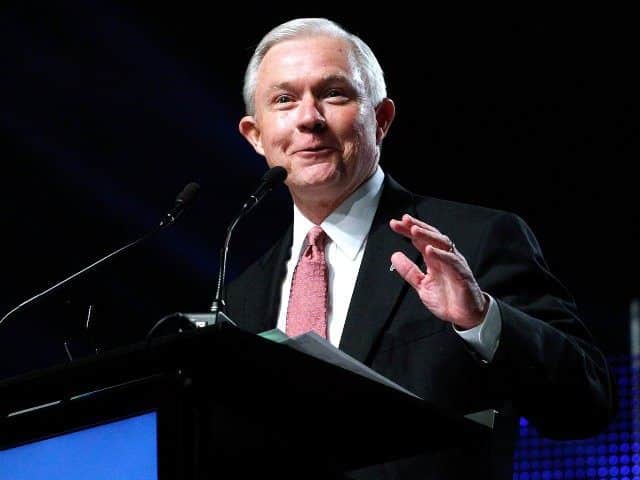
Sen. Jeff Sessions of Alabama endorsed Republican presidential frontrunner Donald Trump’s campaign on Sunday.
Trump announced the endorsement alongside Sessions at a massive campaign rally in Madison, Alabama.
“At this time in America’s history, we need to make America great again!” Sessions exclaimed, echoing Trump’s campaign slogan. “I am pleased to endorse Donald Trump for the presidency of the United States.”
Sessions, known for his hard-line stance against illegal immigration, is popular in some conservative circles.
Sen. Ted Cruz, another presidential candidate, frequently invoked Sessions in order to defend his record on immigration. On Sunday, Drudge Report founder Matt Drudge called Sessionsthe “conservative soul” of the US Senate.
Several other notable politicians have also recently thrown their support to Trump, though another GOP candidate, Marco Rubio, has grabbed the lion’s share of recent endorsements from elected officials.
Last Friday, former presidential candidate and New Jersey Gov. Chris Christie endorsed Trump. And former Arizona Gov. Jan Brewer, whose own record on illegal immigration once caused a national firestorm, announced her support for Trump on Saturday.
Representative Tulsi Gabbard, Democrat of Hawaii, resigned as a vice chairwoman of the Democratic National Committee on Sunday in order to endorse Senator Bernie Sanders for president.
The endorsement came a day after Hillary Clinton won the Democratic primary in South Carolina by a huge margin — she captured nearly 74 percent of the vote — in a signal of her support in the South right before several other Southern states vote in Tuesday’s primaries.
Ms. Gabbard explained her decision in a video on YouTube in which she said that, as a military veteran, she wanted the United States to avoid “interventionist wars of regime change.”
A few weeks after Senator Sen. Marco Rubio (R-FL) joined a bipartisan push for an immigration overhaul in 2013, he arrived alongside Senator Chuck Schumer at the executive dining room of News Corporation’s Manhattan headquarters for dinner.
Their mission was to persuade Rupert Murdoch, the owner of the media empire, and Roger Ailes, the chairman and chief executive of its Fox News division, to keep the network’s on-air personalities from savaging the legislation and give it a fighting chance at survival.
Mr. Murdoch, an advocate of immigration reform, and Mr. Ailes, his top lieutenant and the most powerful man in conservative television, agreed at the Jan. 17, 2013, meeting to give the senators some breathing room.
But the media executives, highly attuned to the intensifying anger in the Republican grass roots, warned that the senators also needed to make their case to Rush Limbaugh, the king of conservative talk radio, who held enormous sway with the party’s largely anti-immigrant base.
The dinner at News Corporation headquarters — which has not been previously reported — and the subsequent outreach to Mr. Limbaugh illustrate the degree to which Mr. Rubio served as the chief envoy to the conservative media for the group supporting the legislation. The bill would have provided a pathway to American citizenship for 11 million illegal immigrants along with measures to secure the borders and ensure that foreigners left the United States upon the expiration of their visas.
It is a history that Mr. Rubio is not eager to highlight as he takes on Donald J. Trump, his rival for the Republican presidential nomination, who has made his vow to crack down on illegal immigration a centerpiece of his campaign.
Trump gained a powerful surrogate responsible for the lowest moment in the campaign of one of his last Republican adversaries: Marco Rubio.
The united Republican establishment front against Donald Trump started to crumble in a potentially profound way on Friday when New Jersey Governor Chris Christie backed the New York billionaire for president with an enthusiastic endorsement.
The move, combined with the endorsement of Maine Governor Paul LePage later Friday, adds the establishment bona fides of two sitting U.S. governors to a devoutly outsider campaign. It also comes just days after Trump’s first two congressional endorsements in Representatives Chris Collins of New York and Duncan Hunter of California.
In Christie, Trump also gained a powerful surrogate responsible for the lowest moment in the campaign of one of his last Republican adversaries: Marco Rubio.
The New Jersey governor also opened a door for other Republican Party elites, who spent recent days rushing to boost Rubio, and invited them to walk through. If beating Hillary Clinton outweighed all other factors, as the New Jersey governor argued, then other objections to Trump’s campaign—such as his bombastic and nativist rhetoric—should take a back seat. As a twice-elected governor of a blue state and former chairman of the Republican Governors Association, Christie could serve as Trump’s ambassador to establishment donors, lawmakers and behind-the-scenes operators across the nation.