Education is not cheap. There are teacher salaries and benefits, classroom support, books and supplies, administrative salaries and building construction and maintenance.
New Jersey school districts last year spent on average $20,385 per student to educate their students. Statewide, per-pupil costs ranged from a high of $60,129 in one small district, to $10,181 for a Jersey City charter school with 310 students.
In some of the state’s regional vocational schools, per pupil spending last year was as high as $35,568. New Jersey’s 21 vocational-technical districts are county-run districts with schools teaching traditional vocational subjects, including auto repair and cosmetology. Many of the vo-tech districts, including Bergen, Union and Middlesex, also include specialized high schools that require entrance exams for admission and are designed for the county’s highest-achieving students.
Ridgewood NJ, RHS delivers results of “social norms” poll with some surprising results .According a letter sent out by Principal Thomas A Gorman out of the 400 students who participated over 90% say they never have used tobacco, 61% have not used alcohol in the last 60 days ,76% do not consume alcohol in an average week, 78% never use marijuana , 90% never use marijuana in the average week .
84% of students say they do not go to parties where alcohol is served and 84% say their parents never let them drink alcohol.
Not sure what to make of this , but apparently the huge house party last week that was broken up by Police from Ridgewood , Fair Lawn and Paramus was a one off unusual circumstance ?
Is de-nile more than a river in Eqypt? Or are our kids just way more responsible than we were ?
Students of history know that governments rarely give up power without a fight. To paraphrase Edmund Burke, those who have been intoxicated with power never willingly abandon it. Yet, last year, the federal government passed a new education law which returns a significant amount of power and decision-making authority to states, districts and schools.
The bi-partisan passage of the Every Student Succeeds Act creates a unique and exciting opportunity for improving American education. The law explicitly bars the Department of Education from dictating or influencing standards or curricula at the federal level, and states and districts have a wide range of new liberties when it comes to developing accountability systems, testing and content.
But with this newfound freedom from Washington comes a newfound responsibility for excellence at the state and district level. We cannot confuse local control with laissez faire. State and local leaders must embrace this opportunity and lift expectations, not relax them.
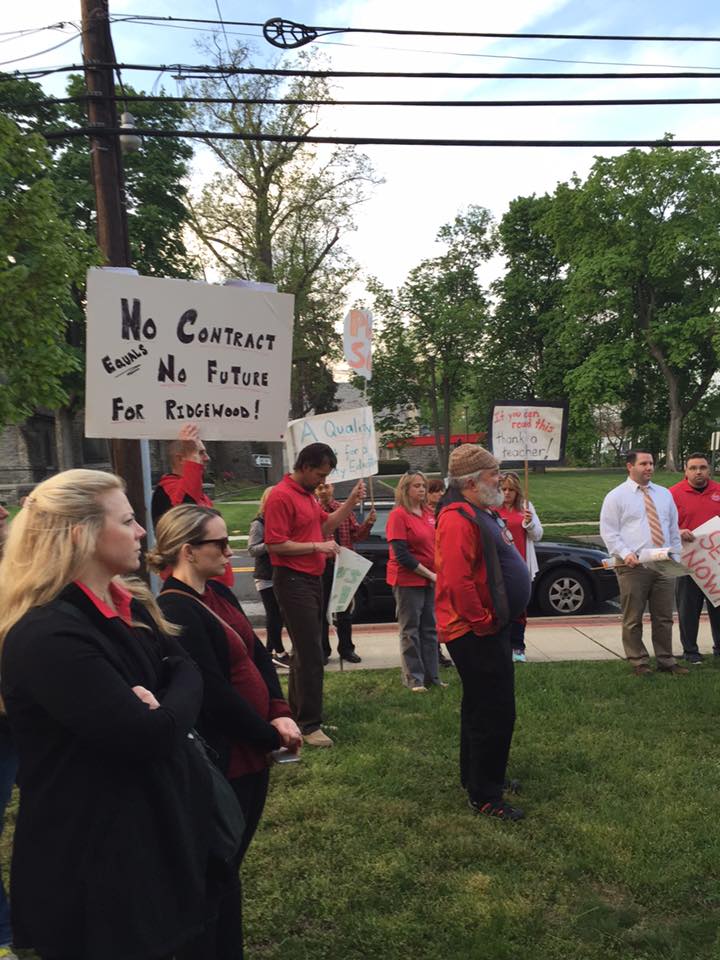
Ridgewood NJ, Daniel Fishbein, Ed.D. Superintendent of Schools comments on the Ridgewood Board of Education $105 million budget :
Spring is a time of abundance, with buckets of rain, sprouts of new foliage and flowers and pollen, and oh yes, the realities of tax returns and in the case of school districts, budgets. Each year the Ridgewood Board of Education works hard to develop a budget for the following school year that provides for our exceptional instructional and co-curricular programs, as well as the maintenance and operations of our facilities. The budget for the 2017-18 school year, which was approved on May 1 by the Board of Education, allots approximately $105 million to maintain our excellent staff, uphold our rigorous academic offerings, and support new initiatives. Next year’s budget will allow us to add new staff, maintain and upgrade instructional technology equipment, implement a new K-5 Science curriculum and other new or revised courses at the middle and high school levels, launch full-day Kindergarten and undertake a variety of renovation projects around the district. The numbers tell the story. The excellence of our academic, athletic, arts and social/emotional programs in our elementary, middle and high schools is regularly proven by the consistent high reach that our students achieve in nationally recognized programs and tests. Statistics from Ridgewood High School – high ranking by US News and World Report – exemplify how we excel as a district. Our students perform very well on all measures, having for example, seven finalists, nine semi-finalists and 70 commended students in the National Merit Scholarship program over the last two years. In the SAT and ACT, our class of 2016 performed at a very high level. SAT ACT RHS 1759 26 NJ 1520 23.1 USA 1490 21 On the AP exams, over 80 percent of our students scored 3 or higher and 134 students were named AP Scholars by the College Boards. Over 95 percent of our Class of 2016 pursued a college or university education this past fall, with 84 percent of their chosen schools classified as competitive, more competitive, or most competitive. And while academics are extremely important, excellence requires breadth in programming. We also provide a very full range of co-curricular and extra-curricular programs that includes fantastic fine and performing arts programs, 29 very successful sports programs and over 100 clubs and activities. Excellence has a price. Simply stated, our ability to offer the variety and depth of services and programs and make an impact in our students’ lives requires a budget of $105 million dollars. The standard of excellence for Ridgewood students is a costly endeavor, yet an excellent investment in their future. In fact, the State of New Jersey has determined that the 2016-2017 per-pupil cost of a Ridgewood education is $15,119, which is a relatively low per-pupil expenditure when compared to our neighboring districts and others across the state. Let’s take a look:
Bergen Academies: 27,852 Northern Valley — Old Tappan / Demarest:19,964 Princeton: 19,964 Ramapo/Indian Hills: 19,479 Teaneck: 9,922 Tenafly: 17,049 State of New Jersey: 15,714 We couldn’t do it without you. Especially as the majority of the budget is funded by our resident taxpayers, you might want to know that next year’s cost to homeowners is an additional yearly increase of $11 per $100,000 assessed home value. As a reference point, the average assessed Ridgewood home of $696,093 will see a tax increase of $76.56. It is important for me to say thank you for your continued support of our schools, programs and students. The Ridgewood community is a critical partner in our mission of excellence, from the budget that you support through taxes, to the co-curricular and extra-curricular programs that cannot exist without the additional funds that you regularly raise through parent organizations such as HSAs, Booster clubs, individuals and organizations. We are also particularly fortunate and grateful to our large organizational donors such as The Foundation and The Valley Hospital, hose large gifts supplement the budget and help ensure our ability to enhance our schools and the educational experience of every Ridgewood student. We want to hear from you. It’s great that I often receive emails or phone calls from residents who have questions, suggestions and, yes, even criticisms on day-to-day and larger issues affecting the Ridgewood Public Schools. I always welcome that one-on-one dialogue. This year, we are also seeking more formal feedback from our parents and guardians, who’ll be e-mailed our biennial satisfaction survey on May 8. We do this survey every two years to gather data on how we are doing in our schools and as a district. Our last survey in 2015 received a 35.6% response rate, and while this number is very good, we want to beat it this year. Please know that your input is important and valued, so I do hope you will take a few minutes to complete the survey when it arrives in your inbox. Soon the rains will stop, the flowers will be in full bloom and we’ll be relaxing in our yards and enjoying the green spaces in our beautiful village. However, the grass isn’t growing under our feet! We are already planning for the 2017-2018 school year, when will welcome the inaugural full-day kindergarten class… the future RHS Class of 2030! Ouch… that number hurts! As always, please feel free to contact me with your questions or concerns
The sun is shining the birds are chirping and the class of 2017 is about to graduate, which means going out and looking for a job.
According to Kim Barberich, executive director of the Rider University Career Development & Success Department, this year’s job outlook for new graduates is looking better than last year.
“The landscape looks like there’s going to be, for 2017, about a 6 percent increase in hiring, I think that’s really exciting,” she said.
Dora Onyschak, the New Jersey metro market manager and vice president at Robert Half, a staffing and employment agency, said 74 percent of employers are hiring new grads this year.
The top degrees that employers are looking for are business, engineering and communication technologies.
Barberich adds that “healthcare is also a really strong domain right now, especially because New Jersey has so many pharmaceutical companies.”
Ridgewood NJ, On Friday June 9th at 8 p.m. Ridgewood Friends of Music will present a one-of-a-kind benefit concert featuring internationally renowned banjo master Tony Trischka and the locally beloved bluegrass band Blue Plate Special. Surprise guests will join them.
Tony Trischka is one of the most influential banjo artists in the world. His Grammy-nominated album Double Banjo Bluegrass Spectacular features appearances by banjo luminaries like Steve Martin, Earl Scruggs and Béla Fleck. In 2007 he was named the International Bluegrass Music Association’s Banjo Player of the Year. His latest album is Great Big World (Rounder Records). The artist has also been featured on multiple NPR programs like Mountain Stage and A Prairie Home Companion. He produced Steve Martin’s Grammy-nominated album Rare Bird Alert (Rounder Records) that featured Paul McCartney and the Dixie Chicks. A dedicated chronicler of banjo history, Trischka was the Musical Director and Co-Producer of the 2011 PBS documentary, “Give Me the Banjo”.
Blue Plate Special (Jay Friedman, Dave Gross, James Hempfling, Rob Hecht, Dan Whitener and Tom Wise) plays the kind of music that can make you feel like you’re home wherever you are. A group of infinitely talented musicians and singer-songwriters, Blue Plate Special performs Americana, bluegrass, and swing. Their latest album, Back By Popular Demand (2016) features fourteen original tunes. Thematically eclectic, the songs will take you on a bluegrass-style journey through life, from the depths of a man’s sorrow, to courtship on a rotary phone. The band has a sense of humor as well; one of the catchiest tunes on the album is a waltzy number about the end of the world. Even if you’ve never heard a lick of bluegrass, a night with Blue Plate Special will make you realize this music was in you all along.
“Bluegrass Under the Stars” will take place outdoors at Graydon Pavilion (rain location GW Middle School). All of the proceeds of this event will go to support Ridgewood Public Schools’ music programs grades K-12. Friends of Music funds music assemblies, helps pay for RHS concert venues, provides showcases and master classes for young musicians, lends financial support to the Ridgewood Summer Music Academy and offers a college scholarship to a graduating senior.
Tickets are $25 online and $30 at the door. Bring your own lawn chair.
By Justin Zaremba | NJ Advance Media for NJ.com
on May 04, 2017 at 12:20 PM, updated May 04, 2017 at 12:43 PM
TRENTON — A former member of the Mount Olive Township Board of Education Thursday who scammed the district out of more than $371,000 will head to federal prison for three months, court records show.
Robert Mania, 48, of Flanders, pleaded guilty last year to one count of mail fraud.
Mania, who owned and operated the insurance brokerage RHM Benefits, Inc., admitted in April 2016 to carrying out a plan between 2007 and 2009 during which he received $371,986 in commissions funneled through the conspirators’ companies.
The U.S. Attorney’s Office has said Mania conspired with a health insurance broker and a third associate to boost the school district’s premium from 4 percent to 5 percent.
The other broker then directed the district’s insurance provider to send part of the commission payment to the associate’s firm, which split the additional funds among the conspirators, authorities said.
NorthJerseyPublished 11:01 a.m. ET May 4, 2017 | Updated 19 hours ago
The Ridgewood Board of Education unanimously passed its annual budget this week.
The $105 million spending plan is funded primarily through a $91 million tax levy, an increase of .97 percent over the previous year. School taxes on a home assessed at the village average of $696,063 will be $11,401, up from $11,325 this year, an increase of $76.
The budget has a tax rate of $1.638 per $100 of assessed value, up from $1.627 last year, for a 0.67 percent increase.
Yesterday’s dismissal of the Newark ‘LIFO’ case and recent decisions continue to show how the court is a force in education in Garden State
Superior Court Judge Mary Jacobson.
For all the attention on the State House in driving education policy, New Jersey’s courts yesterday continued to show their long and storied influence on some of the hottest public school issues.
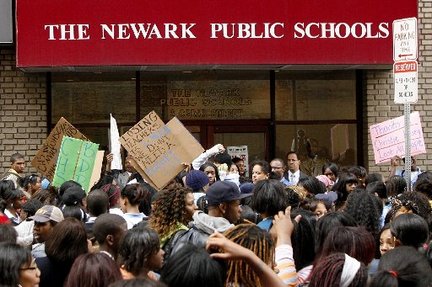
In the more prominent case, state Superior Court Judge Mary Jacobson abruptly dismissed a closely watched lawsuit contesting the state’s infamous teacher seniority rules.
In a clear win for the teachers unions and a blow to the school-reform movement and the Christie administration, Jacobson spoke from the bench, saying the plaintiffs — a half-dozen Newark families, with the help of a national advocacy group — had not proven the “last in, first out” policy had harmed their children.
“I am not disputing the importance of teacher effectiveness in the classroom, but the complaint is completely devoid of facts,” Jacobson said in a lengthy and sternly worded opinion.
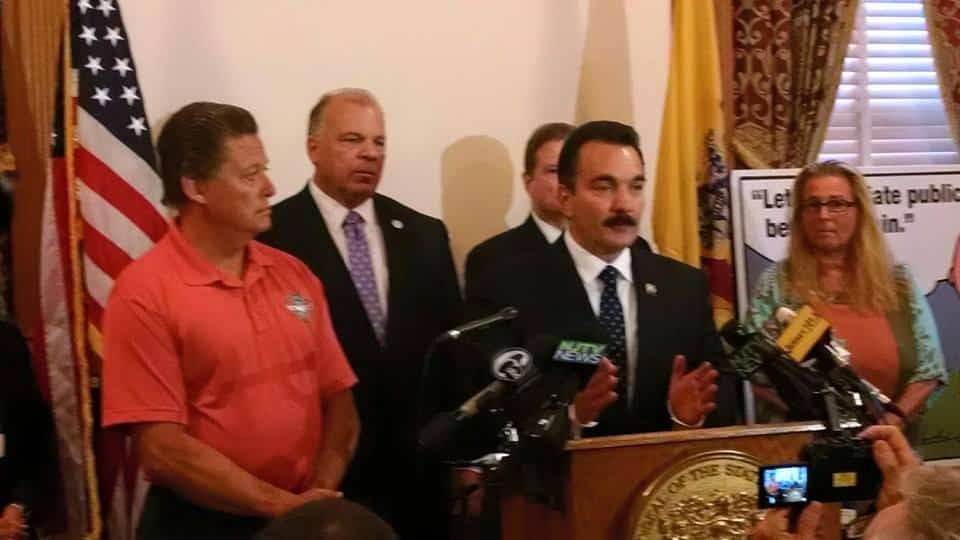
Senate President Steve Sweeney drew a line in the sand over school funding on Tuesday, saying his house would only pass a budget that shifts state dollars to underfunded urban and suburban districts this year.
Gov. Chris Christie has drafted a $35.5 billion spending plan for fiscal 2018 — $13.8 billion of which would go to schools — and lawmakers are reviewing his plan before the July 1 deadline to enact the budget.
The average SAT score in New Jersey high schools varied greatly among the state’s 21 counties last school year.
Some counties had multiple high schools with average scores above 1,300, while other counties did not have a single school with an average score better than 1,200 out of 1,600.
The average SAT score among New Jersey’s public high schools overall was a 1,075 out of 1,600 last school year, but plenty of schools posted significantly more impressive scores.
The range of scores also varied. Some counties had one school that far outperformed its neighbors, and others saw close competition for the top spot.
Specialized schools with selective enrollment and run by county vocational districts once again dominate the list of highest average scores, taking home the top 12 spots.
Here are the top three average scores in each county:
May 1 2017 7:30 PM to 7:30 PM
Location Ed Center, 49 Cottage Place, Ridgewood, NJ
The public is invited to attend the meeting, or watch it live on Fios channel 33, Optimum channel 77, or on the “Link in Live” tab of the district website at www.ridgewood.k12.nj.us.
Ridgewood NJ, 2017-18 School Budget Info:
On Monday, May 1, the Ridgewood Board of Education will hold a public hearing prior to voting on the proposed 2017-2018 school budget. The hearing will be held at the Education Center, 49 Cottage Place, starting at 7:30 p.m.
Click here to view the following budget summary in PDF format:
Ridgewood NJ, Ridgewood district parents and guardians will have the opportunity to provide anonymous feedback to the Board of Education in May, through a satisfaction survey distributed by email.
The 2016-2017 satisfaction survey will solicit parent / guardian opinions in a variety of areas, ranging from the quality of their children’s education to their satisfaction with school facilities. The middle school and high school surveys will also include questions on the district’s 1:1 Chromebook Initiative, which distributes laptops to all students in grades 6-12 for use at school and home.
The survey period will run from Tuesday, May 8 through Friday, May 19. All district parents and guardians with email addresses on file with the district will be sent a link to the brief survey for each school that their children attend. Instructions will be included to complete the questionnaire based on their youngest child’s experience at each school.
The surveys are set up to be completely anonymous and cannot be tracked back to responders. Survey results will be collated and shared with the community and used by the Board of Education and administration as part of their evaluation of district policies and practices. A dedicated email address has been set up to take questions or concerns about the 2016-2017 satisfaction survey at [email protected]
The Newark Unity Slate—a compromise ticket designed by Newark Mayor Ras Baraka, the city’s influential North Ward, and charter-school advocates—swept the city’s school board elections Tuesday night.
Of the 15 candidates on the ballot, the top vote-getter was Josephine Garcia. She brought in 3,566 votes, according to preliminary results by the Essex County Clerk’s Office.
Garcia was the North Ward candidate, aligned with Councilman Anibal Ramos. Reginald Bledsoe—Baraka’s pick— won 3,382 votes. The candidate backed by pro-charter advocates, Floshina Johnson, won 2,717 votes.