We are entering a new financial order where there is no longer an automatic “Fed Put” or a “Poliburo Put” to act as a safety net for asset markets
By Ambrose Evans-Pritchard, International Business Editor
12:00PM GMT 01 Jan 2015
America’s closed economy can handle a surging dollar and a fresh cycle of rising interest rates. Large parts of the world cannot. That in a nutshell is the story of 2015.
Tightening by the US Federal Reserve will have turbo-charged effects on a global financial system addicted to zero rates and dollar liquidity.
Yields on 2-year US Treasuries have surged from 0.31pc to 0.74pc since October, and this is the driver of currency markets.
Since the New Year ritual of predictions is a time to throw darts, here we go: the dollar will hit $1.08 against the euro before 2015 is out, and 100 on the dollar index (DXY).
Sterling will buckle to $1.30 as a hung Parliament prompts global funds to ask why they are lending so freely to a country with a current account deficit reaching 6pc of GDP.
Budget war looms for Obama, GOP
February 2: Obama’s budget deadline
The president is required under the law to submit his budget proposal to Congress by the first Monday of February, which in 2015 falls on the second day of the month.
Obama has repeatedly missed the deadline during his presidency. Last year’s budget came a month late, in March, while the previous year’s was unveiled two months late in early April.
The president’s budget proposal for fiscal 2016, which begins in October, is likely to include more spending for the Pentagon than originally expected because of the new battle against the Islamic State in Iraq and Syria (ISIS).
Obama administration officials have hinted that the proposed spending level for defense will bust the cap set by the Budget Control Act of 2011. If Congress doesn’t raise or remove the cap before next October, across-the-board spending cuts could take effect.
February 27: DHS funding runs out
GOP leaders will have two months to decide how to handle funding for the Department of Homeland Security (DHS) for the rest of the fiscal year. The $1.1 trillion spending bill Congress passed at the end of the lame-duck session only extended DHS funding through February and did not allow for any spending increases.
Republican leaders chose the short-term solution to satisfy conservatives who demanded action to defund Obama’s immigration actions.
Their campaign to block funding might ultimately fail. A Congressional Research Service report from the October 2013 government shutdown found that even if the government closes, immigration-related services would continue to operate.
Democrats have argued that maintaining an outdated funding level for DHS prevents the administration from implementing new programs on cybersecurity and counterterrorism
During World War I the trenches of the Western Front ran right through the vineyards of Champagne, the historic French winemaking region 90 miles north of Paris. Between 1914 and 1918, heavy shelling uprooted row upon row of chardonnay and pinot noir vines, pruned short per the instructions of a 17th-century Benedictine monk named Dom Pérignon. Many of the region’s residents were driven underground by the fighting, hiding out in the limestone caves usually used for the storage and manufacture of the region’s signature sparkling wine. By the time the armistice was signed in 1918, a huge portion of Champagne’s vineyards had been destroyed.
All told, the devastation of the war amounted to only a minor setback in the improbable rise of Champagne’s signature product, the bubbly beverage synonymous with traditional celebrations, modern luxury and conspicuous consumption. Champagne the place had seen battles before (Attila the Hun, the Hundred Years’ War, the Franco-Prussian conflict) and would again (World War II) but from the mid-19th century through the present day, the biggest battles over Champagne the drink involved not soldiers, but lawyers, treaties, trademark officials and scores of angry French citizens. All this for a local drink whose signature feature—its fizz—is the very thing old Dom Pérignon spent much of his life trying to eliminate.
When wine has bubbles, it’s a sign that it has continued to ferment inside the bottle. For much of the history of viniculture, this was a no-no, a mark of wine gone bad, associated with murky, unstable and unpredictable vintages. Although a few vineyards had produced intentionally sparkling wine (as early as the 15th century in Limoux in the South of France), it was only in the late 1600s that bubbly from Champagne began to be produced and respected. Wines from Champagne had a tendancy to fizz because early frosts often led to incomplete fermentation during the manufacturing process. When things warmed the following spring, some of the wine would begin to sparkle. Fizzy Champagne, in fact, was popular among the well-to-do in Georgian England before it became so in the courts and chateaus of pre-Revolutionary France. Barrels of the stuff were shipped across the channel and bottled there. In the early 1600s, English coal-fired glassworks produced bottles far stronger than anything wood furnaces could manage. By 1740 molding techniques had arrived, which allowed for the production of identical bottles and standardized corks. Suddenly the fizz could be contained.
In 1815, another key innovation arrived from a Champagne producer known as the Widow Cliquot. Champagne’s in-bottle fermentation clouds the wine with dead yeast (early Champagne glasses were made mottled to help hide this effect). Getting rid of the yeast during manufacturing took an expert hand and spilled a lot of precious bubbly. Cliquot’s innovation was to turn the bottles neck-down and let the yeast settle in the neck in a process known as “remuage” or riddling. Once the murk was isolated, the bottleneck could be submerged in icy brine, freezing the bad bits into a floating plug of wine-debris that could then be removed before the remaining clear bubbly was sweetened and re-corked.
By John H. Cochrane
This article appeared in the Wall Street Journal on December 21, 2014.
This year the tide changed in the economy. Growth seems finally to be returning. The tide also changed in economic ideas. The brief resurgence of traditional Keynesian ideas is washing away from the world of economic policy.
No government is remotely likely to spend trillions of dollars or euros in the name of “stimulus,” financed by blowout borrowing. The euro is intact: Even the Greeks and Italians, after six years of advice that their problems can be solved with one more devaluation and inflation, are sticking with the euro and addressing — however slowly — structural “supply” problems instead.
U.K. Chancellor of the Exchequer George Osborne wrote in these pages Dec. 14 that Keynesians wanting more spending and more borrowing “were wrong in the recovery, and they are wrong now.” The land of John Maynard Keynes and Adam Smith is going with Smith.
Why? In part, because even in economics, you can’t be wrong too many times in a row.
Keynesians told us that once interest rates got stuck at or near zero, economies would fall into a deflationary spiral. Deflation would lower demand, causing more deflation, and so on.
“We were warned that the 2013 sequester meant a recession. Instead, unemployment came down faster than expected.”
It never happened. Zero interest rates and low inflation turn out to be quite a stable state, even in Japan. Yes, Japan is growing more slowly than one might wish, but with 3.5% unemployment and no deflationary spiral, it’s hard to blame slow growth on lack of “demand.”
Our first big stimulus fell flat, leaving Keynesians to argue that the recession would have been worse otherwise. George Washington’s doctors probably argued that if they hadn’t bled him, he would have died faster.
With the 2013 sequester, Keynesians warned that reduced spending and the end of 99-week unemployment benefits would drive the economy back to recession. Instead, unemployment came down faster than expected, and growth returned, albeit modestly. The story is similar in the U.K.
These are only the latest failures. Keynesians forecast depression with the end of World War II spending. The U.S. got a boom. The Phillips curve failed to understand inflation in the 1970s and its quick end in the 1980s, and disappeared in our recession as unemployment soared with steady inflation.
Still, facts and experience are seldom decisive in economics. Maybe Washington’s doctors are right. There are always confounding influences. Logic matters too. And illogic hurts. Keynesian ideas are also ebbing from policy as sensible people understand how much topsy-turvy magical thinking they require.
Hurricanes are good, rising oil prices are good, and ATMs are bad, we were advised: Destroying capital, lower productivity and costly oil will raise inflation and occasion government spending, which will stimulate output. Though Japan’s tsunami and oil shock gave it neither inflation nor stimulus, worriers are warning that the current oil price decline, a boon in the past, will kick off the dreaded deflationary spiral this time.
I suspect policy makers heard this, and said to themselves “That’s how you think the world works? Really?” And stopped listening to such policy advice.
Keynesians tell us not to worry about huge debts, or to default or inflate them away (but please, call it “restructuring” or “repairing balance sheets”). Even the Obama administration has ignored that advice, promising long-run solutions to the debt problem from day one. Europeans have centuries of memories of what happens to governments that don’t pay debts, or who need to borrow for a new emergency but have stiffed their creditors once too often. More debt? Nein danke!
In Keynesian models, government spending stimulates even if totally wasted. Pay people to dig ditches and fill them up again. By Keynesian logic, fraud is good; thieves have notoriously high marginal propensities to consume. That’s a hard sell, so stimulus is routinely dressed in “infrastructure” clothes. Clever. How can anyone who hit a pothole complain about infrastructure spending?
But people feel they’ve been had when they discover that the economics is about wasted spending, and infrastructure was a veneer to get the bill passed. And they smell a rat when they hear economic arguments shaded for partisan politics.
Stimulus advocates: Can you bring yourselves to say that the Keystone XL pipeline, LNG export terminals, nuclear power plants and dams are infrastructure? Can you bring yourselves to mention that the Environmental Protection Agency makes it nearly impossible to build anything in the U.S.? How can you assure us that infrastructure does not mean “crony boondoggle,” or high-speed trains to nowhere?
Now you like roads and bridges. Where were you during decades of opposition to every new road on grounds that they only encouraged suburban “sprawl”? If you repeat in your textbooks how defense spending saved the economy in World War II, why do you support defense cutbacks today? Why is “infrastructure” spending abstract or anecdotal, not a plan for actual, valuable, concrete projects that someone might object to?
Keynesians tell us that “sticky wages” are the big underlying economic problem. But why do they just repeat this story to justify inflation and stimulus? Why do they not advocate policies to undo minimum wages, labor laws, occupational licenses and other regulations that make wages stickier?
Inequality was fashionable this year. But no government in the foreseeable future is going to enact punitive wealth taxes. Europe’s first stab at “austerity” tried big taxes on the wealthy, meaning on those likely to invest, start businesses or hire people. Burned once, Europe is moving in the opposite direction. Magical thinking — that, contrary to centuries of experience, massive taxation and government control of incomes will lead to growth, prosperity and social peace — is moving back to the salons.
Yes, there is plenty wrong and plenty to worry about. Growth is too slow, and not enough people are working. Even supporters acknowledge that Dodd-Frank and ObamaCare are a mess. Too many people on the bottom are stuck in terrible education, jobless poverty, and a dysfunctional criminal justice system. But the policy world has abandoned the notion that we can solve our problems with blowout borrowing, wasted spending, inflation, default and high taxes. The policy world is facing the tough tradeoffs that centuries of experience have taught us, not wishing them away.
A Practical (and Semi-Optimistic) Plan to Tame the Federal Leviathan
By DANIEL J. MITCHELL
Like a lot of libertarians and small-government conservatives, I’m prone to pessimism. How can you be cheerful, after all, when you look at what’s been happening in our lifetimes.
New entitlement programs, adopted by politicians from all parties, are further adding to the long-run spending crisis.
The federal budget has become much bigger, luring millions of additional people into government dependency.
The tax code has become even more corrupt and complex, with more than 4,600 changes just between 2001 and 2012 according to a withering report from outgoing Senator Tom Coburn of Oklahoma.
And let’s not forget the essential insight of “public choice” economics, which tells us that politicians care first and foremost about their own interests rather than the national interest. So what’s their incentive to address these problems, particularly if there’s some way to sweep them under the rug and let future generations bear the burden?
And if you think I’m being unduly negative about political incentives and fiscal responsibility, consider the new report from the European Commission, which found that politicians from EU member nations routinely enact budgets based on “rosy scenarios.” As the EU Observer reported:
EU governments are too optimistic about their economic prospects and their ability to control public spending, leading to them continually missing their budget targets, a European Commission paper has argued. …their growth projections are 0.6 percent higher than the final figure, while governments who promise to cut their deficit by 0.2 percent of GDP, typically tend to increase their gap between revenue and spending by the same amount.
Needless to say, American politicians do the same thing with their forecasts. If you don’t believe me, just look at the way the books were cooked to help impose Obamacare.
But set aside everything I just wrote because now I’m going to tell you that we’re making progress and that it’s actually not that difficult to constructively address America’s fiscal problems.
First, let’s look at how we’ve made progress. I just wrote a piece for The Hill. It’s entitled “Republicans are Winning the Fiscal Fight” and it includes lots of data on what’s been happening over the past five years, including the fact that there’s been no growth in the federal budget.
You should read the entire thing for full context, but here are a few brief excerpts on why the left can’t be feeling very happy right now.
…Democrats presumably can’t be happy that the lion’s share of the Bush tax cuts were made permanent. …revenues are now projected to average only 18 percent of GDP over the next 10 years…a smaller tax burden than we had throughout the Clinton years. And you can’t finance big government in the long run without a lot more revenue. And they definitely can’t be happy that domestic discretionary spending is now below where it was during the Bush years, when measured as a share of GDP. And with sequester-enforced budget caps, it’s quite likely that number will drop even further. …Perhaps even more important, looking forward, is that House Republicans for four consecutive years have approved budget resolutions that assume genuine reform of Medicare and Medicaid. And they’ve won their biggest majority since before World War II, so GOPers can feel reasonably confident that voters (perhaps sobered up by the fiscal disarray in Europe) understand the need to modernize these programs.
By the way, the point about keeping taxes under control is critical. Simply stated, it’svirtually impossible for government to get much bigger without a stream of new revenue (or, in the case of a value-added tax, a river of new revenue).
Let’s now focus on the second issue, which is how we can maintain this progress.
Here’s a chart I put together back in September that showed projected revenue over the next 10 years (blue line). I then showed what happens if spending is left on autopilot and also what happens if policymakers simply restrain spending so that it grows 2 percent annually (gold line), which is actually a bit higher than inflation.
As you can see, it’s very simple to achieve a budget surplus. And we don’t even need the same amount of spending restraint that we enjoyed over the past five years!
The challenge, of course, is that Obama and many other politicians (including quite a few Republicans) don’t want government on a diet. After all, why let government “only” grow 2 percent each year when you can please the lobbyists, bureaucrats, cronyists, contractors, and other insiders by letting spending increase two or three times faster than inflation?
Fiscal probity isn’t easy. Genuine spending restraint not only means saying no to special interests and campaign contributors, it also means picking smart fights. In some cases, Obama and the left may dig in their heels and threaten a partial government shutdown in hopes of getting bigger budgets.
Sometimes such fights are unwise, but there’s a very strong case to be made that the GOP ultimately prevailed in the 1995 and 2013 shutdown battles.
The bottom line, as illustrated by this amusing A.F. Branco cartoon, is that Republicans shouldn’t automatically wilt if there’s a fight over something that really matters – such as a growing burden of government spending.
Google Goes Off the Climate Change Deep End
by Paul Driessen
December 29, 2014
Paul Driessen Co-authored this article with Chris Skates.
In a recent interview with National Public Radio host Diane Rehm, Google Chairman Eric Schmidt said his company “has a very strong view that we should make decisions in politics based on facts. And the facts of climate change are not in question anymore. Everyone understands climate change is occurring, and the people who oppose it are really hurting our children and our grandchildren and making the world a much worse place. We should not be aligned with such people. They’re just literally lying.”
While he didn’t vilify us by name, Mr. Schmidt was certainly targeting us, the climate scientists who collect and summarize thousands of articles for the NIPCC’s Climate Change Reconsidered reports, the hundreds who participate in Heartland Institute climate conferences, and the 31,487 US scientists who have signed theOregon Petition, attesting that there is no convincing scientific evidence that humans are causing catastrophic warming or climate disruption.
All of us are firm skeptics of claims that humans are causing catastrophic global warming and climate change. We are not climate change “deniers.” We know Earth’s climate and weather are constantly in flux, undergoing recurrent fluctuations that range from flood and drought cycles to periods of low or intense hurricane and tornado activity, to the Medieval Warm Period (950-1250 AD) and Little Ice Age (1350-1850) – and even to Pleistocene glaciers that repeatedly buried continents under a mile of ice.
What we deny is the notion that humans can prevent these fluctuations, by ending fossil fuel use and emissions of plant-fertilizing carbon dioxide, which plays only an insignificant role in climate change.
The real deniers are people who think our climate was and should remain static and unchanging, such as 1900-1970, supposedly – during which time Earth actually warmed and then cooled, endured the Dust Bowl, and experienced periods of devastating hurricanes and tornadoes.
16 Facts About Al Sharpton the Media Won’t Tell You
Tuesday, 09 Dec 2014 12:40 PM
By Jim Meyers
The Rev. Al Sharpton has been praised as a civil rights icon by prominent figures in politics, and “60 Minutes” reported that he has become President Barack Obama’s “go-to black leader.”
Sharpton has been frequently in the media for leading protests against grand jury decisions exonerating white policemen in the deaths of unarmed African-Americans in Ferguson, Missouri, and Staten Island, New York.
But many in the mainstream media have sought to downplay the negatives surrounding the firebrand minister, who has been accused of being a rabble-rouser out for personal gain, including:
1. When Sharpton sought involvement in the funeral of Akai Gurley, an African-American shot dead in November by a rookie police officer in the darkened stairwell of a housing project in Brooklyn, New York, Gurley’s family told him to stay away.
Special: These 5 Things Flush 40 Pounds of Unwanted Fat Out of Your Body
Sharpton held a news conference condemning the cop and promised to deliver a eulogy at the wake. But Gurley’s aunt, who was speaking for his mother, told TMZ: “Al Sharpton came in, put his name on the situation, but has not even made one single call to the parents of Akai,” adding that all Sharpton sees “is money and political gain and he is turning the tragedy into a circus.”
2. Sharpton has more than $4.5 million in current state and federal tax liens against him and his businesses. His National Action Network has repeatedly failed to pay travel agencies, hotels, and landlords, records show.
3. Sharpton has allegedly sought to keep his nonprofit afloat with money that was supposed to go to payroll taxes, although he contends that the payroll tax shortfall was not intentional.
4. The reverend accused an upstate New York prosecutor, Steven Pagones, of being part of a group of white men who raped teenager Tawana Brawley in 1987. A grand jury found “overwhelming evidence” that the rape allegation had been fabricated. Pagones sued Sharpton for defamation and won a judgment of $65,000. Sharpton reportedly paid the judgment with money raised by his supporters.
5. Sharpton has frequently sparked controversy with his strident language. During a rally in Brooklyn, he called white people “crackers.”
6. After a car in a Hasidic rabbi’s motorcade killed a 7-year-old black boy in Brooklyn in 1991, Sharpton referred to the Hasidic Jews as “diamond merchants” and said “if the Jews want to get it on, tell them to pin their yarmulkes back and come over to my house.” Shortly afterward, an innocent Hasidic Jewish student visiting the area from Australia was set upon by a mob and stabbed to death.
Special: Climatologist Warns of 30-Year Freeze, Economic Disaster
7. In 1995, an African-American Pentecostal church in Harlem, New York, asked a Jewish tenant of one of its properties, Freddie’s Fashion Mart, to evict a black-run record store that was subletting part of the property. Sharpton showed up outside Freddie’s vowing to a crowd: “We will not stand by and allow them to move this brother so that some white interloper can expand his business.”
Two weeks before Christmas that year, Freddie’s was attacked by a man in the crowd who shot several customers and then set fire to the building with a flammable liquid, killing seven employees. Sharpton subsequently apologized for his “white interloper” remark, but vehemently denied responsibility for the violence.
8. Speaking at a college in 1994, Sharpton referred to gay men as “homos.”
9. When Mitt Romney, a Mormon, was running for president in 2007, Sharpton said: “As for the Mormon running for office, those who really believe in God will defeat him anyway.”
10. In 1990, Sharpton was acquitted of felony charges that he stole $250,000 from his youth group.
News Media Outlets Caught Directly Funding Political Activism of Tax-Dodging Demagogue Al Sharpton
BY KARA PENDLETON
Al Sharpton hosts a show for MSNBC and is a public speaker, both of which bring in money for him. However, there are more details behind his finances that have raised some eyebrows – and, it’s just not the money he owes in back taxes or the fact that his ventures are in debt.
Melissa Francis, host of Money With Melissa Francis on Fox Business News, spoke with Fox News’ Megyn Kelly about how Sharpton’s political and financial backing by Comcast and NBC is deeper than it appears.
Francis reports that Comcast, MSNBC and NBC Universal all directly funded Sharpton’s National Action Network (NAN) as recently as this October. Each were “Preacher Level” sponsors at a combined 60th birthday party/fundraising event for Sharpton that netted an estimated $1 million in donations.
In ascending order, the sponsor levels noted on the event program were “Media Sponsor,” “Contributor,” “Medallion,” “Track Suit,” “Hair,” “Brooklyn,” “Preacher,” “Author,” and “Activist.”
When asked about the donations, NAN’s response was less than forthright:
“We can’t confirm or give comment that quickly. We have not done our audit for 2014, so how would anyone know when there has been no report on who gave what?”
Sharpton and the cable giants have done business in the past, as well. In 2010, Sharpton spent time lobbying Congress when Comcast wanted the acquisition of NBC Universal to go through. The following year, Sharpton was given his own show.
Recently, Al Sharpton has embroiled himself in the shooting deaths of two NYPD officers, saying that the death of Eric Garner following a physical arrest was a “trigger” for Ismail Brinsley to get revenge. Earlier, Sharpton directly inserted himself into the Ferguson controversy, a conflagration that ultimately led to community-wide devastation from vandalism and looting.
Situations like these between Sharpton and his donors are not unique. ANew York Post article from 2008 provides several other examples of instances where Sharpton threatened boycotts or negative publicity to garner large donations. Once donations were received, these companies were given public support or even awards of recognition.
Certainly, as Sharpton pushes himself further into the national spotlight, the origin and methods of his funding will become the subject of heightened scrutiny. Whether or not anything comes of it is up to who is in charge of the investigative process in the federal government.
Media Companies (and Executives) on the Hot Seat in 2015
DEC. 28, 2014
While it’s great news that the economy is (slowly) coming back, it’s important to remember that a rising tide does not necessarily lift all boats. That is especially true in the media industry, where a bad stretch of advertising and extensive challenges to existing business models have clobbered many legacy outfits.
Now that the economic cycle is no longer creating such stiff headwinds, though, excuses will be tough to come by. Next year will not only be a period of continued disruption, but a reckoning as well.
Certain new realities are beyond argument: Clutter is up — more ads, more channels, more content — advertising rates continue to drop, and audiences are programming their own universe in text, video and audio. Consumers don’t want to watch commercials, are fleeing networks, hate reruns, are increasingly bored by reality programming, shun print products and, oh, by the way, don’t want to pay much for content either.
MSNBC Boss Admits 2014 Stunk for Them, Blames. . . Technology?
By Tim Graham | December 29, 2014 | 5:00 PM EST
MSNBC boss Phil Griffin has sent around a memo to staff admitting the obvious: that 2014 was a very difficult year for MSNBC. But he blames technological change — not the rejection of the MSNBC agenda at the polls. America is “leaning backward” at the moment.
“It’s no secret that 2014 was a difficult year for the entire cable news industry and especially for MSNBC,” Griffin wrote. “Technology is continuing to drive unprecedented changes across the media landscape – and we all should be taking a hard, honest look at how we need to evolve along with it.”
Jordan Chariton at The Wrap reproduced the memo and interpreted through their reporting on the “news” network with the ratings problems:
Griffin also expounded on sending the network out “on the road” and outside of Washington, D.C.; as TheWrap exclusively reported in November, to combat poor ratings, Griffin has embarked on a plan to steer away from too much political punditry, opting for an increase in original reporting on MSNBC.
Insiders familiar with the network’s strategy told TheWrap the pivot from solely covering the nitty gritty of D.C. politics from studios to thrusting talent into the places most affected by the politics is just a small part of a broader strategy the network is still developing. As speculated, that could include programming and talent changes in the coming months.
There’s no change planned from the ultraliberal pose – just an attempt to go Outside the Beltway a bit. Griffin pledged to “stay true to what we do best: covering the issues that matter to all Americans, advancing the conversation, and finding the stories that celebrate the unique spirit and strengths of our country.”
Liberals never channel a “unique spirit” of America. They want America to be more like European socialist states.
The spies in the cellar are now sidling up to your desk
Adam Jones
Publicans may have scored a victory but offices are becoming havens for monitoring equipment
One of the most unsettling workplaces I have ever come across was a pub in the English Midlands I visited 12 years ago. It was nothing to do with the licensee of the Pig & Truffle in Rugby, an enterprising man called Mike Trow, who brought in some fine real ales.
Instead, the uneasiness I felt stemmed from something lurking in his cellar. Attached to the pipes that sent beer up to the bar was spy equipment introduced by Punch Taverns, a company whose flotation I was covering. Punch was both renting the pub to Mr Trow and selling him all his beer at above-market rates .
SERVICE ADVISORY: NJ TRANSIT NEW YEARS EVE SERVICE
IMPORTANT NOTE: No open containers of alcohol will be permitted on board trains, light rail vehicles, aboard buses or in any NJ TRANSIT facility. This policy will be strictly enforced on New Year’s Eve and after midnight.
On New Year’s Eve, Wednesday, December 31, trains will operate on a modified weekday schedule on all rail lines with additional New York-bound trains between 10 a.m. and noon on the Northeast Corridor, North Jersey Coast and Morris & Essex lines. Customers are encouraged to travel early, if possible, when ridership is light. Select morning peak period trains on the Northeast Corridor and North Jersey Coast Line will not operate due to expected light ridership—customers should visit njtransit.com and use the “Station-to-Station Trip Planner” to find trains between the holidays. Additional “early getaway” service from Hoboken Terminal will operate on the Pascack Valley and Port Jervis lines in the afternoon. In the evening, additional New York-bound trips will operate on the Northeast Corridor, North Jersey Coast and Morris & Essex lines. In addition, certain trips that normally depart just before or just after midnight will operate later to accommodate customers returning from New Year’s festivities.
Bus schedules vary by route. Customers are advised to check their timetables or visit njtransit.com for schedule information. Selected routes will operate on special holiday schedules, available on njtransit.com, to match service with ridership demand, including early getaway service from the Port Authority Bus Terminal between noon and 4 p.m. to accommodate the heaviest travel, with less frequent service during the peak periods and later in the evening due to lower ridership. Early getaway service will also operate from the Jersey City Waterfront on the No. 64 and No. 68 bus routes. In the evening, additional service to the Port Authority Bus Terminal will be offered on selected routes from approximately 3 p.m. to 9 p.m. to accommodate customers traveling to New York for the festivities.
Hudson-Bergen Light Rail, Newark Light Rail and River Line will operate on a weekday schedule.
In addition, River Line will operate extended late-night service on New Year’s Eve and after midnight on New Year’s Day to accommodate customers attending the festivities on the Camden Waterfront. Special late-night trains will operate between Camden and Trenton, making all local stops.
Hudson-Bergen Light Rail will also operate added late-night service on New Year’s Eve into New Year’s Day to accommodate travelers returning home from midnight celebrations.
After midnight, special late-night trains will operate on most rail lines, and expanded bus service will be provided from the Port Authority Bus Terminal until approximately
2 a.m. on selected routes. Visit njtransit.com for details.
On New Year’s Day, Thursday, January 1, trains will operate on a weekend/major holiday schedule. Newark Light Rail will operate on a Saturday schedule. River Line will operate on a Sunday schedule. Hudson-Bergen Light Rail will operate on a weekend schedule. Holiday bus schedules vary by route—customers are advised to visit njtransit.com for details.
On Friday, January 2, trains will operate on a modified weekday schedule on all rail lines with additional New York-bound trains between 10 a.m. and noon on the Northeast Corridor, North Jersey Coast and Morris & Essex lines. Customers are encouraged to travel early, if possible, when ridership is light. Select morning peak period trains on the Northeast Corridor and North Jersey Coast Line will not operate due to expected light ridership—customers should visit njtransit.com and use the “Station-to-Station Trip Planner” to find trains between the holidays. Buses and light rail lines will operate on a weekday schedule. Selected Port Authority Bus Terminal routes will see some reductions in a.m. and p.m. peak service due to lower passenger demand. Please consult njtransit.com for additional details.
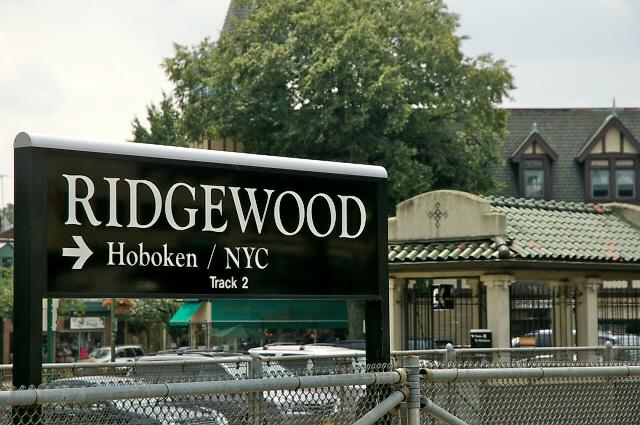
Ridgewood boards have different rules on public comment
DECEMBER 30, 2014 LAST UPDATED: TUESDAY, DECEMBER 30, 2014, 10:24 AM
BY JODI WEINBERGER
STAFF WRITER |
THE RIDGEWOOD NEWS
Earlier this month, zoning board Chairman Joel Torielli opened the land-use meeting with an explanation on public comment.
There’s a time when the public has the opportunity to ask questions only, he said, and then there is a time for comments only. When the hearing is closed, there are no more questions or comments.
Still, during public questioning on one of the applications, zoning board attorney Bruce Whitaker had to interrupt a resident several times to remind her she was not allowed at that time to freely offer her thoughts.
This confusion and frustration among residents about what they can say at what time to have their voice heard on village matters can turn what would normally be a civil back-and-forth into intense heated debates on whose opinions matter.
At Planning Board hearings, it’s not uncommon to have residents interrupted by attorneys citing procedure. At council and Board of Education (BOE) meetings, a timer is used to limit the length of time to address the dais.
The federal government is cracking down on nonprofit hospitals under ObamaCare in an attempt to prevent harsh collection practices and steep charges for the uninsured.
Newly finalized regulations from the Internal Revenue Service, announced Monday, will require nonprofit hospitals to “take an active role in improving the health of the communities” by making payment methods more fair and making costs more transparent.
For example, nonprofit hospitals are banned from asking for money in patients’ rooms or selling debt to third-party companies unless they make a “reasonable effort” to offer financial assistance. Each hospital must also take steps to improve the health of its community, including a semi-annual evaluation of the area’s “health needs.”
“For hospitals to be tax-exempt, they should be held to a higher standard,” Emily McMahon, a deputy assistant secretary for tax policy at the Department of the Treasury, wrote in a blog post Monday announcing the rules.
DECEMBER 30, 2014 LAST UPDATED: TUESDAY, DECEMBER 30, 2014, 1:42 PM
BY KATHLEEN LYNN
STAFF WRITER |
THE RECORD
Home values continued to cool off in October, with prices in the New York metropolitan area up only 2 percent from a year earlier, the Standard & Poor’s Case-Shiller index said Tuesday.
Nationally, single-family home values were up about 4.6 percent in that period, a slowdown from last year’s pace, and evidence that a full recovery from the housing crash is still out of reach. Home values in the region and the nation remain 17 to 18 percent below their peaks in mid-2006, and are at the levels seen in mid- to late-2004, Case-Shiller said.
Case-Shiller does not follow home values county by county, but New Jersey Realtors, the statewide trade group, said that single-family home values in Bergen County rose 2 percent in October from a year earlier, to a median $459,000. In Passaic County, prices were flat, at a median $295,000.
The Case-Shiller figures follow other recent housing data that David Blitzer, head of the index committee at S&P Dow Jones Indices, called “somber.”