Top Obama appointees use secret email accounts
Jun 4, 3:31 AM (ET)
By JACK GILLUM
WASHINGTON (AP) – Some of President Barack Obama’s political appointees, including the Cabinet secretary for the Health and Human Services Department, are using secret government email accounts they say are necessary to prevent their inboxes from being overwhelmed with unwanted messages, according to a review by The Associated Press.
The scope of using the secret accounts across government remains a mystery: Most U.S. agencies have failed to turn over lists of political appointees’ email addresses, which the AP sought under the Freedom of Information Act more than three months ago. The Labor Department initially asked the AP to pay more than $1 million for its email addresses.
The AP asked for the addresses following last year’s disclosures that the former administrator of the Environmental Protection Agency had used separate email accounts at work. The practice is separate from officials who use personal, non-government email accounts for work, which generally is discouraged – but often happens anyway – due to laws requiring that most federal records be preserved.
The secret email accounts complicate an agency’s legal responsibilities to find and turn over emails in response to congressional or internal investigations, civil lawsuits or public records requests because employees assigned to compile such responses would necessarily need to know about the accounts to search them. Secret accounts also drive perceptions that government officials are trying to hide actions or decisions.
(MoneyWatch) Increasing housing prices and the stock market”s posting all-time highs haven’t helped the plight most Americans. The average U.S. household has recovered only 45 percent of the wealth they lost during the recession, according to a report released yesterday from the Federal Reserve Bank of St. Louis.
This finding is a very different picture than one painted in a report earlier this year by the Fed that calculated Americans as a whole had regained 91 percent of their losses. The writers of the report released yesterday point out that the earlier number is based on aggregate household-net-worth data. However, this isn’t adjusted for inflation, population growth or the nature of the wealth. Further, they say much of recovery in net worth is because of the stock market, which means most of the improvement has been a boon only to wealthy families.
Twelve minutes’ exercise per week ‘enough to stay fit’
Just 12 minutes of intensive exercise per week is enough to improve your health if you are overweight, a study has found.
By Nick Collins, Science Correspondent
5:38PM BST 30 May 2013
Four-minute bursts of high-intensity exercise such as running on a treadmill, three times a week are enough to increase fitness, researchers found.
Overweight volunteers who undertook the regime for 10 weeks increased their body’s oxygen uptake – a measure of fitness – by 10 per cent and saw small decreases in their blood pressure and glucose levels.
Health guidelines generally state that we should undertake at least 150 minutes of moderate exercise or 20 minutes of vigorous exercise per week in order to stay healthy.
Texas legislature passes tax cuts for businesses
By Corrie MacLaggan
AUSTIN, Texas | Mon May 27, 2013 4:59pm EDT
May 27 (Reuters) – Texas lawmakers sent Governor Rick Perry more than $1 billion in proposed business tax cuts shortly before the end of the biennial legislative session on Monday.
The tax-cut package – the final piece of which was approved by the House and Senate late on Sunday – includes an extension of a business franchise tax exemption for small businesses and a rate cut for businesses of all sizes.
The Republican-majority legislature also approved about $300 million in electricity rebates.
Perry, a Republican, had called on lawmakers to pass tax relief for businesses. Thirty-five states are taking up tax reform in their current legislative sessions, according to a recent survey by the National Conference of State Legislatures.
Texas’ franchise tax legislation removes inequities and lowers the tax rate for more than 800,000 businesses, according to Lieutenant Governor David Dewhurst, a Republican.
Passing the proposal “sends a clear message that we are committed to sustaining the country’s best climate for job creation and economic growth here in Texas,” Dewhurst said.
Ridgewood NJ, Thank you to all the rescue groups and shelters, volunteers, employees and the people who came out in the rain to adopt yesterday! 114 pets were adopted and over 1,000 people attended!
While that is half the number of pets adopted and people in attendance at the Adopt-A-Pet Day last fall, we know that was only due to the stormy weather. We still think the event was a huge success, and we would like to thank all of you for making it such a great day! Our next event is September 29th, and we look forward to recording-breaking numbers! Let’s get these animals the loving homes they deserve!
Reader says Ridgewood Police imbedded ‘traffic safety’ check in utility work
There was a ‘traffic safety’ check imbedded in utility work at the intersection of Linwood & Northern Parkway the other day around noontime. The back-up extended a few blocks.
For two weeks, there was a traffic sign as you entered the CBD on Ridgewood Ave. As I waited at the light, the sign told me “SLOW DOWN” as it said I was doing 34 MPH.
The new budget may be zero-tax growth but the money will come from somewhere.
Baseball is already played there. The changes being contemplated are not that dramatic. Expanding that field was part of the Master Parks and Recreation Plan done years ago. The BOE fulfilled all of their pledges in the plan. The major casualty of moving the track from RHS to BF was the loss of a 90 foot baseball diamond. The Council in place at the time agreed to expand lower Hawes to make up for that loss as their part of the plan. The subsequent Council did not honor that agreement and the loss of that diamond has yet to be replaced.
It’s not like that field is Yankee stadium to begin with. A renovation and upgrade of that field is way over due.
…
Bad idea. In addition to relocating the backstop right next to the houses (have you ever heard the cracking of alumimum bats), it would involve cutting down numerous large trees in grove park in the area that would become the outfield. It’s nice to have some trees.
Reader says Who is watching the store ? Where are the financial controls ?
Although I am no fan of Richie I do believe he acted in the best interest of the Village and should not be blamed for his actions. The real culprit here is Village management. Who is watching the store ? Where are the financial controls ?
This whole mess could have been avoided if their accounting system simply tracked spending by vendor. Heck, for $200 a Quick Books program can do this !!
Reader says Riche has indicated he might question either Valley or the downtown developments , made him a target
Let me guess — Riche has indicated he might question either Valley or the downtown developments or some other pet project of one of the other council members?
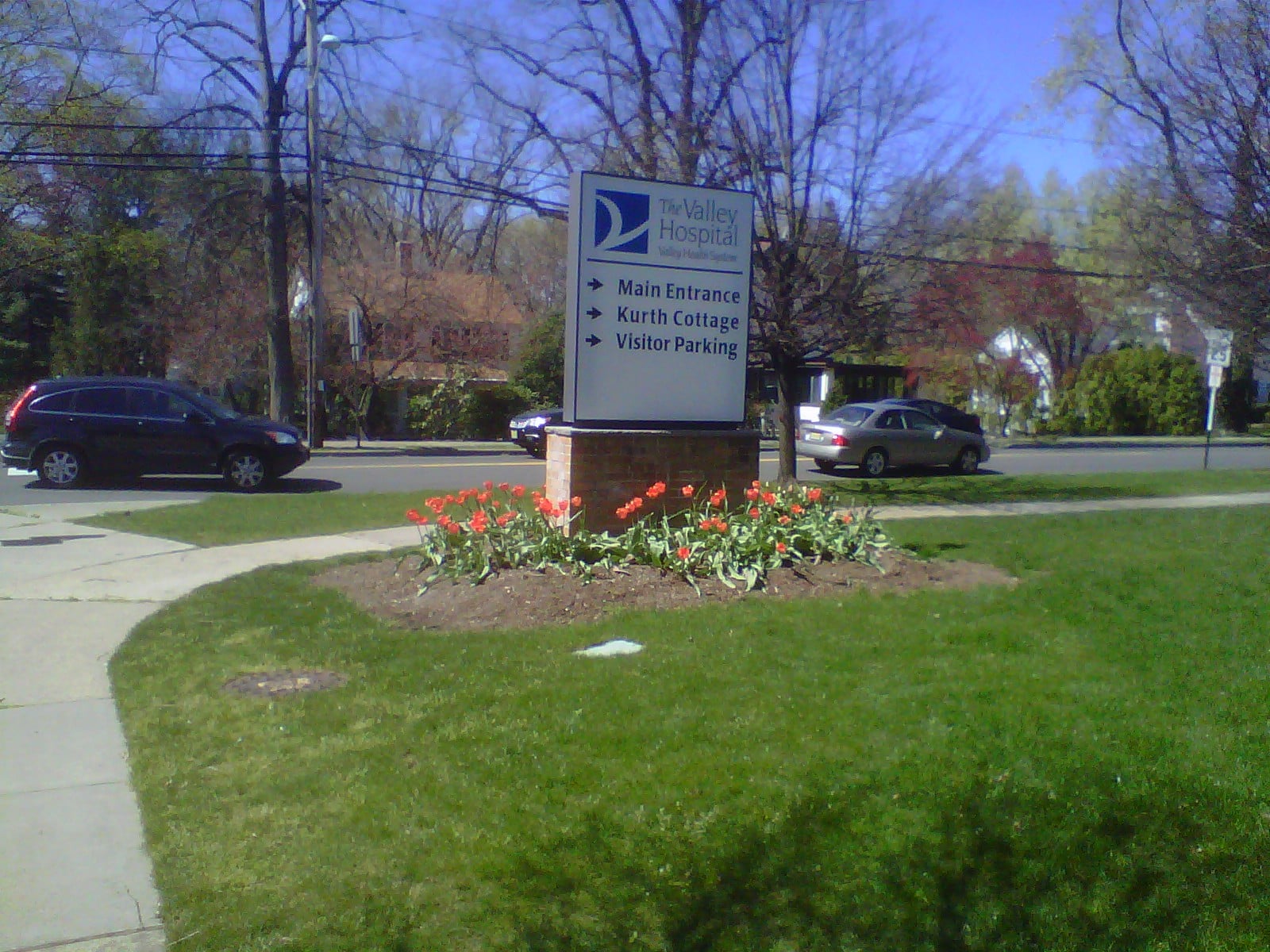
Others on the council feel free to hawk and drool over the virtue of Valley Hospital, yet feel there is no impropriety in their positions. They remind me of Louie in Casablanca — absolutely shocked that someone else might create the appearance of impropriety.
Reader says Tom Riche has done more than his share to help the Village
Tom Riche has done more than his share to help the Village. The situation suddenly under scrutiny a year after the fact was an emergency. The firemen’s phones weren’t working and Mr. Riche stepped in. Sounds pretty bad, right? And the council must now scramble to find needed services.
This “scandal” was another pathetic attempt by the mayor to point a finger and wipe out the competition. Didn’t work. Sorry, Mayor–you need a new M.O. This one is worn out.
Who loves ya? Fewer and fewer of those who realize they shouldn’t have voted for you.
If the $39 (?) parking ticket (paid, then protested) and the phone thing (approved and fine) were the worst things the mayor could find to say about the two council members who are not under his thumb, good for them.
As for wasted Village money, millions have been given or thrown away. Cut back on fat contracts and change orders and then we’ll be in business.
Updated Emergency Planning Guide for Village Residents
The Ridgewood Office of Emergency Management (OEM) just published an Emergency Planning Guide for 2013 – the first update of this critical resource in nearly 15 years.
The Emergency Planning Guide is designed to provide residents with basic emergency preparedness information, including tools and checklists that will assist families in preparing for different types of emergencies. It will also help residents to stay informed before, during and after disasters.
Click Here for your copy of the Emergency Planning Guide: https://mods.ridgewoodnj.net/pdf/manager/2013OEMGuide.pdf
“The Emergency Planning Guide is a must-have resource for all Ridgewood residents and businesses,” explained Mayor Paul Aronsohn. “As we have learned from Super Storm Sandy and other recent storms, you can never be too prepared for a disaster.”
“I applaud our OEM leadership for its proactive approach,” Aronsohn continued.
For the first time, the Emergency Planning Guide is available electronically for viewing and downloading on the Ridgewood OEM website (https://oem.ridgewoodnj.net) as well as the main Village of Ridgewood website (www.ridgewoodnj.net).
The new Emergency Planning Guide was specifically designed as a PDF document to take advantage of current technology. A limited number of hard copies will also be printed at a later date.
According to OEM Coordinator Jeremy Kleiman, “In the past, we would print and mail a copy of the booklet to all village residents and businesses, which is expensive. Budget constraints made us re-think how we communicate emergency preparedness information to the public. We decided to make the Emergency Planning Guide an electronic document to save costs and also to leverage current technology. Residents who are registered to receive E-Notices from the village will receive the document by email.”
OEM asks all residents to register for E-Notices to receive routine information, such as the Emergency Planning Guide, as well as emergency alerts. Please register by visiting either www.ridgewoodnj.net and clicking on the “E-Notices” link, or https://oem.ridgewoodnj.net and clicking on the “Swift911 Notification” icon. Either link will take residents to the same registration portal.
For those residents who do not register for E-Notices or are unable to receive information by email, a limited number of hard copies of the Emergency Planning Guide will be printed at a later date. Ridgewood Councilman Tom Riche is leading a fundraising effort to secure donations that will cover the cost of printing the booklets. Contributions may be made payable to Ridgewood Emergency Planning Guide, c/o Finance Office, Ridgewood Village Hall, 131 N. Maple Ave., Ridgewood, NJ 07451
Graydon Can Meet ADA Compliance with the Mobi Chair
Graydon should comply with ADA requirements like Crestwood Lake in Allendale has: They should purchase Mobi Chairs that allow handicapped individuals to enter the water and either get out and swim or remain in chair and float.
In this way Graydon retains its swimming room in the deep end without dimishing the already small space with a huge ramp that goes out 40 feet. Also the concrete entrance to ramp will replace the sand on the shore. which to many Graydon users, including myself, is unacceptable. We want a natural environment and a natural sand bottom pool.
The concrete patio is already an unnecessary eyesore and a diminishing of Graydon’s natural beauty and charm. Hey, I am used to bringing my lunch before patio was built. Much healthier. Mobi chairs are the way to go.
I suspect mobi chairs makes way too much sense for Ridgewood to implement probably because it does not advance the correct agenda or line the correct pockets.
Protecting Federal Tax Information: A Message From The IRS
Data security breaches and information losses make the headlines and nightly newscasts.
The public is extremely sensitive about the vulnerability of their confidential data.
They have serious and very legitimate worries about identity theft.
When leading businesses and well-respected public agencies lose personal data about their customers and employees, whether by theft, accident, or negligence, it does more than make the news.
It’s an event that undermines the public’s confidence in institutions they trusted.
Because of the job you perform, you’re probably accustomed to working with confidential records and other personal information.
You also have access to and work with federal tax information.
That federal tax information is an important asset on which both you and your employer rely.
Like you, I work with federal tax information, or FTI, as it’s known.
To safeguard sensitive personal and financial information about taxpayers, FTI is protected by law.
That law imposes important obligations on you, just as it does on me and all other IRS employees.
This presentation is designed to give you information you need to know about federal tax information and the laws that protect it.
This material may not be news to you.
You may have heard it before, perhaps even many times before.
While the content may not be new, it is timely, and it’s certainly relevant.
What you’re going to hear will help you to confidently work with federal tax data, knowing what it is and how to protect it.
The very fact that you’re working with FTI is evidence that we trust you and that your employer has a culture of confidentiality with rigorous safeguards in place to prevent data loss and misuse.
The legal provisions that allow IRS to disclose FTI to your employer also obliges it and each of its employees to protect it.
The disclosure basics I’ll share with you in this presentation may be found in greater detail in the “IRS Disclosure Awareness Pocket Guide.”
Publication 1075 is also an excellent source of information about federal tax information and how to protect it.
Both are available at irs.gov.
The law I’ve been referring to is found in the Internal Revenue Code, or Title 26 of the United States Code.
Code section 6103 contains a general prohibition against the disclosure of federal tax returns and return information.
This prohibition applies to you as someone having access to FTI.
The law limits your access to FTI and your disclosure of that information to certain circumstances specified in the law.
As examples, section 6103(d) is the specific point in the law that permits the IRS to disclose FTI to state and some city tax agencies for use in tax administration.
Section 6103(i) allows disclosure of FTI to the Department of Justice and others for the investigation and potential prosecution of non-tax federal crimes.
A section of the same law allows us to disclose FTI to the taxpayer and their authorized representatives, while other sections provide for disclosure of certain information to agencies for specified purposes.
The code provisions that govern disclosure of FTI to you and your employer are important because if it administers other programs, FTI can only be used for matters authorized by statute.
To have a sound understanding of your obligations, you need to know just exactly what you can and cannot disclose.
On a more basic level, it’s also important to understand just exactly what the word “disclosure” means.
The law itself is the source for the definition of “return,” “return information,” and “disclosure.”
While the definition of a return may seem obvious, let’s go over what it means under the law, which tells us that…
A return means any tax or information return, estimated tax declaration, or refund claim, including amendments, supplements, supporting schedules, attachments or lists, required by or permitted under the Code, which is filed with the IRS by, on behalf of, or with respect to any person.
Examples of returns include forms filed on paper or electronically, such as Forms 1040, 941, 1099, 1120, and W-2.
“Return information” is defined by law and is very broad in scope.
It includes the taxpayer’s name, mailing address, and identification number, including social security number or employer identification number; any information extracted from a return, including names of dependents or the location of a business; information on whether a return was, is being, or will be examined or subject to other investigation or processing; information contained on transcripts of accounts; the fact that a return was filed or examined; investigation or collection history; or tax balance due information.
Your employer may receive returns and return information electronically or on paper.
But it’s important to know that, regardless of format, FTI is confidential.
Which brings us to the third important definition we need to cover, and that is “disclosure,” which the law defines as…
…making a return or return information known to any person in any manner.
We know you want to do the right thing, and that’s why we’re here.
We want to make sure that you are fully aware of your responsibilities and the potentially serious repercussions of ignoring those responsibilities.
Knowingly and willfully disclosing FTI to someone not authorized to receive it or willfully accessing tax data without a business need to do so, known as UNAX, are both criminal offenses subject to penalties.
Internal Revenue Code section 7213 specifies that willful unauthorized disclosure of returns or return information by an employee — whether federal or state — former employee, or contractor employee is a felony.
The penalty can be a fine of up to $5,000 or up to five years in jail or both, plus the costs of prosecution.
Under IRC section 7213A, willful unauthorized access or inspection — UNAX — of taxpayer records by an employee is a misdemeanor.
This applies to both paper documents and computerized information.
Violators can be subject to a fine of up to $1,000 and up to one year in prison.
In addition to criminal penalties, civil remedies may also be pursued by any taxpayer whose return or return information has been knowingly or negligently inspected or disclosed in violation of section 6103.
Section 7431 allows a taxpayer to institute action in district court for civil damages.
If the court finds there has been an unauthorized inspection or disclosure of FTI, the taxpayer may receive damages of $1,000 for each act of unauthorized access or disclosure or the actual damages sustained, if greater, plus punitive damages and costs of the action.
And that’s where it really gets expensive.
Protect FTI by following the tips available in the “Disclosure Awareness Pocket Guide.”
Publication 1075 is the definitive source for safeguard standards and procedures required to protect federal tax information.
A number of IRS resources are available to help you access, work with, and protect FTI.
IRS Safeguards staff is responsible for periodic reviews for compliance with these data protection requirements and for receiving and approving certain reports required by law.
IRS Data Services works with agencies in use of the DIFSLA extracts.
The IRS Governmental Liaison keeps the lines of communication and cooperation open and active with state and some city tax agencies and some federal ones, as well.
The IRS Disclosure Office answers your questions and concerns about access to FTI.
We’re here to help you when you need to check it out before you give it out.
Sen. Claire McCaskill, D-MO Calls For Firing Of All Involved In IRS Targeting Scandal
May 17, 2013 4:11 PM
WASHINGTON (KMOX) – Sen. Claire McCaskill, D-MO, issued a video statement Friday in response to reports that the Internal Revenue Service unfairly targeted conservative nonprofit groups.
“I’m mad. It is un-American, it is wrong, and we have to make sure that this gets fixed,” Missouri’s senior senator said. “There’s a reason Lady Justice wears a blindfold in America. That is because in America, we don’t apply the law based on who you are, who you know, or what you believe. We apply the law equally.”
Posted: May 15, 2013 10:49 PM EDT Updated: May 15, 2013 11:01 PM EDT
By DAN BOWENS, @danbowensfox5
NEW YORK (MYFOXNY) -In the digital age up-to-the-minute updates are a click and a touch away. But a new study says all of our gadgets and all of this multitasking aren’t necessarily good — and may actually be making us dumber. The same devices that connect us and keep us plugged in have obvious drawbacks.