
Scientists Uncover Hidden ‘Mountainville Fault’ Responsible for New Jersey’s 2024 Earthquake
the staff of the Ridgewood blog
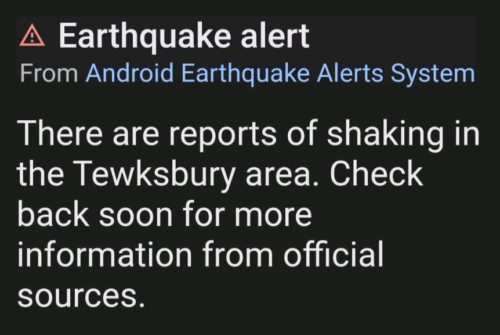
TEWKSBURY, NJ — The April 2024 magnitude 4.8 earthquake that shook millions across the tri-state area wasn’t triggered by the region’s usual geologic suspect.
According to a groundbreaking study published in the Journal of Geophysical Research: Solid Earth, researchers from Columbia University have discovered a previously unmapped fault hidden deep beneath New Jersey—now designated as the Mountainville Fault.
Why the Famous Ramapo Fault Wasn’t to Blame
When the quake struck near Tewksbury, geologists initially looked to the Ramapo Fault, a major 300-kilometer (186-mile) fault line stretching across the mid-Atlantic and Northeast.
However, advanced analysis revealed a critical problem: the Ramapo Fault is misoriented for slip under current tectonic stress regimes. In short, it wasn’t angled correctly to have triggered the April 2024 rupture.
How LiDAR and 3D Seismic Data Exposed the Hidden Fault
To uncover the true source of the quake, Columbia University scientists combined high-tech mapping with boots-on-the-ground fieldwork:
-
3D Seismic Wave Analysis: Researchers tracked the upward projection of aftershocks to pinpoint the exact depth and angle of the rupture.
-
LiDAR Topography Scans: Laser mapping revealed subtle surface ridges hidden beneath dense vegetation 3.5 kilometers west of the main epicenter.
-
Geological Fieldwork & Lab Simulations: Scientists walked the physical fault line to inspect exposed bedrock and conducted lab friction tests to model how the rock layers behave under immense pressure.
The result was the identification of the Mountainville Fault—an “immature” basement-hosted fault embedded in ancient crystalline bedrock, where fractures have not yet merged into a single, smooth fault surface.
What Triggered the Rupture?
While lab modeling strongly supports the Mountainville Fault as the quake’s source, researchers suspect an extra “nudge” was involved to trigger the initial shift. Potential triggers include:
-
Shallow Stress Perturbations: Sudden shifts in local groundwater pressure or surrounding rock displacement.
-
Stress Transfer from the Ramapo Fault: Because the larger Ramapo Fault resists slipping, it may concentrate tectonic stress into surrounding crustal layers, making smaller, “immature” faults nearby more likely to fracture.
-
Quartz-Rich Rock Formations: Uneven rock compositions along the fault line may have created hyper-sensitive friction spots.
A New Hazard Concern for the East Coast
The discovery highlights a potentially widespread seismic risk along the densely populated U.S. East Coast.
Because immature, hidden fault lines like the Mountainville Fault do not leave obvious surface signatures, they often go unnoticed until a moderate earthquake strikes. Columbia researchers emphasize that similar unmapped structures throughout intraplate regions could represent unrecognized seismic hazards that warrant closer study.
Tell your story #TheRidgewoodblog , #Indpendentnews, #information, #advertise, #guestpost, #affiliatemarketing,#NorthJersey, #NJ , #News, #localnews, #bergencounty, #sponsoredpost, #SponsoredContent, #contentplacement , #linkplacement, Email: [email protected]
#NewJersey #Earthquake #ScienceNews #Geology #EastCoast #TewksburyNJ #SeismicHazard #STEM





