
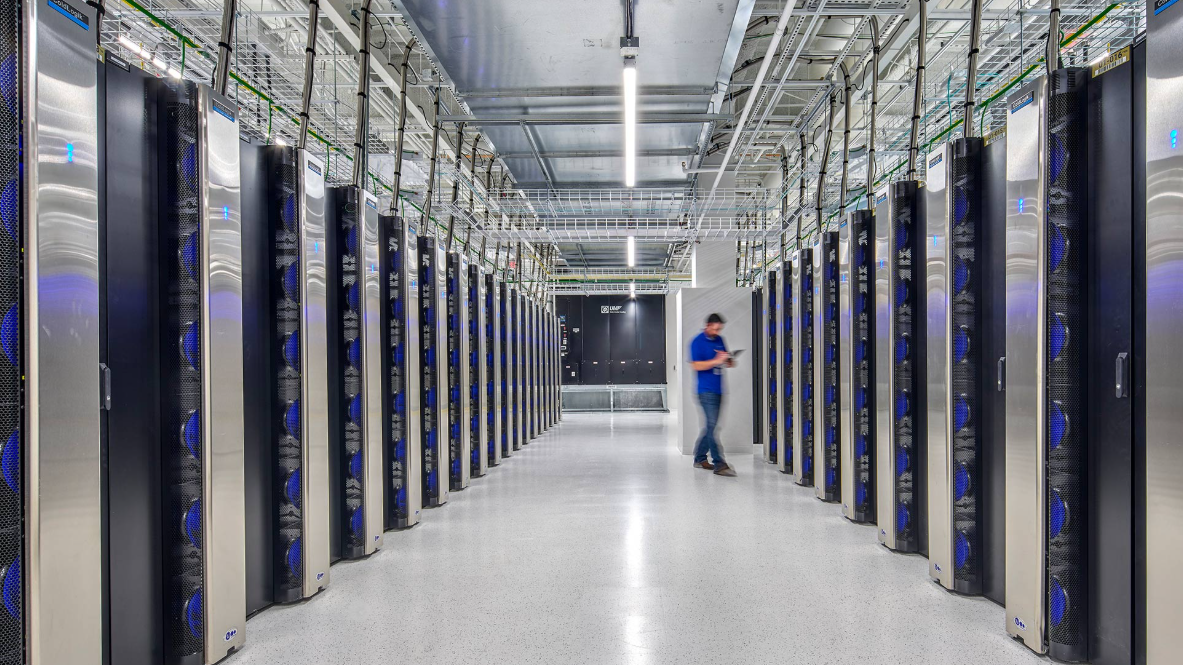
Are Data Center Moratoriums Hurting the Economy? Debunking Myths About AI Infrastructure
the staff of the Ridgewood blog
Paramus NJ, From state capitals to local town halls, opposition to artificial intelligence infrastructure is surging. When New York Governor Kathy Hochul enacted a one-year moratorium on new large-scale data centers via executive order, it became the nation’s first statewide ban—a trend echoing in other states like Texas, where restrictions on rural development are gaining traction. In New Jersey both Jersey City and Paramus move to ban data centers .
Recent polling indicates that roughly 70% of Americans oppose building new AI data centers near their communities. However, experts argue that much of this opposition stems from scaremongering rather than economic and environmental realities.
The Indisputable Economic Case for Data Centers
Hyperscale data centers built by major tech companies—such as Microsoft, Google, Amazon, and Meta—provide significant long-term economic stability:
-
Tax Revenue Surge: In Loudoun County, Virginia (home to the world’s largest concentration of data centers), AI infrastructure revenue has funded 95% of the county’s operating budget, including a $100 million initiative for local public schools.
-
Capital & Jobs: A single facility brings billions of dollars in private capital investment, generating high-paying positions in engineering, maintenance, construction, and local secondary economies.
Fact-Checking the Top Arguments Against Data Centers
1. Do Data Centers Drive Up Utility Bills?
The Fact: States with heavy data center concentrations, like Virginia, have seen electricity rates track near the national average. Conversely, states with fewer data centers, like California, have experienced rapidly rising utility costs. By sharing energy infrastructure expenses, tech companies often help cushion residents against utility rate spikes.
2. Are They Destroying Farmland?
The Fact: Projections estimate data centers will occupy roughly 1,400 square miles nationwide by 2028. By comparison, agricultural land accounts for over 1.4 million square miles in the U.S. In places like Prince Edward County, Virginia, a single $5 billion data center project optimizes land use while injecting immense capital into rural farming communities.
3. Are They Draining Local Water Supplies?
The Fact: Data centers account for approximately 2% to 4% of total freshwater withdrawals in the U.S.—significantly less than golf courses, industrial manufacturing, or commercial agriculture.
A Broader Vision for Modern Infrastructure
Rather than restricting the growth of AI infrastructure, policy experts suggest focusing on expanding overall power generation. Suppressing tech development risks stalling broader environmental efficiencies—such as cloud computing optimizations, supply chain waste reductions, and remote work infrastructure that cuts daily commuting emissions.
Key Takeaways
-
Policy Shifts: New York’s statewide moratorium signals growing regulatory pushback against AI facilities.
-
Economic Impact: Hyperscale data centers fund critical public infrastructure and school districts through massive local tax yields.
-
Resource Reality: Data center electricity and water consumption remain far lower than public perception often suggests.
Tell your story #TheRidgewoodblog , #Indpendentnews, #information, #advertise, #guestpost, #affiliatemarketing,#NorthJersey, #NJ , #News, #localnews, #bergencounty, #sponsoredpost, #SponsoredContent, #contentplacement , #linkplacement, Email: [email protected]
-
Content Tags:
#DataCenters #ArtificialIntelligence #TechInfrastructure #Economy #EnergyPolicy #TechTrends #LocalEconomy






I am seeing on social media accounts everything that negates the above statements. The government is forcing these to be built for what nefarious purpose? Builders of these projects are selling their businesses mid stream on the project because they’re not sure they’ll be fully paid if and when work is completed. People are complaining their property values are deteriorated by the noise, water consumption & pollution, energy costs, night time light illumination. We are being sold a bill of goods by hyperscalers in collusion with government mandates. Local citizens in many parts of the country were forced to sell their homes. Their local governments didn’t have the means to bring the hyperscalers to court. Do some research.
social media ????
lol. I saw it posted on TikTok so it must be true
Addendum to my previous post:
Corporate Bond funding of AI reached $3.68 Trillion as of June. Mostly on Data Centers. But how are Data Centers profitable? Their ONLY market is to rent space for storage and electricity is their biggest expense. Electricity just went up 15%. And most Data Centers are being built by the same companies needing storage in the fueled AI war with China. The water they are draining for current use is static and will lead to complete drainage of rivers and lakes over a short period of time given consumption needs. The entire architectural management of the system is doomed to collapse.
Nj produces 26% less power now than before Phil Murphy
Palm Beach just voted no to a massive data center 20 miles from Mar-A-Lago. I wonder why?
The real water issue is GOLF.
“U.S. golf facilities use roughly 531 billion gallons of water annually for irrigation, compared to U.S. data centers, which consume about 17 billion to 228 billion gallons annually (depending on whether the water footprint of their electricity is included).”
Ban golf, and maybe we can water our lawns!
Golf courses frequently use various rain water capture techniques to water
reminder TikTok was designed for 13 year old’s
They should build one at the old Town Garage site. Ridgewood is very progressive when it comes to tech.