By Larry Higgs | NJ Advance Media for NJ.com
on February 10, 2016 at 11:58 AM, updated February 11, 2016 at 7:50 AM
Rail unions officials said today that their members have authorized a strikeagainst NJ Transit, but are hoping the agency returns to the bargaining table.
“We are certainly hopeful that NJ Transit gets back to the negotiating table,” said Stephen Burkert, general chairman of the SMART Union transportation division, which represents conductors. “We have no official date.”
Members of 17 rail unions have taken a vote and the result was “100 percent” to strike.
An increase in medical premiums that would negate a wage increase, recommended by a federal labor board, is among the major hurdles, he said.
Another negotiating session has been scheduled, said Dennis Martin, interim NJ Transit executive director. Burkert said the unions haven’t been notified of a date for new talks.
The unions have been working without a contract for five years. The unions are looking at a proposal that calls for an 800 percent increase in health insurance premiums and an overall 6 percent pay raise, which Burkert said means workers would pay between $400 and $700 a month.
“We’ve done everything in our power to avert a strike,” Burkert said. “Half of our coalition members would take a pay cut on day one (of a new contract).”
NJ Transit insiders said earlier this month that there was a 75 to 85 percent likelihood of a “soft strike” over the weekend of March 12.
Village Hall meeting at 8pm, during the first public statement there will be an announcement about what actions you can take if the Village Council votes in favor of bonding the proposed garage through the County. So, whether you can come out to the meeting or watch at home – stay tuned.
For those who are just getting up to speed, here’s what’s happening:
The attached new garage proposal diagram just appeared in the lobby of Village Hall. I don’t know about you, but I never imagined it would be this HUGE, let alone that, even with all the prior resident outrage, it still does not fit the municipal lot size.
Tonight our Village Council will be voting on going to the County for a $12,300,000 bond. This is going to take away our control of the process. It is going to cost us hundreds of thousands of dollars more to do this than to bond ourselves. Bonding through the County stipulates the same parking rates for everyone using it. Because of this, it will become a commuter garage for other towns to use and fill up.
Personally, I am not against a parking garage. Our town needs more parking solutions. Bonding through the County, unfortunately, isn’t the way to go.
Let’s keep in control of our wonderful town. Stay tuned for tonight’s meeting.
Ridgewood NJ, the purpose of the garage from the very beginning seems to have been to build a commuter garage for NJT and Bergen County in Ridgewood ,moving to make the Village a transit hub
The Village of Ridgewood (the “Village”) is undertaking the construction of an $11.7M parking deck on Hudson Street (the “Project”). There are two ways the Village can finance this Project over a 25 year period. First, the Village can issue its own General Obligation Bonds (the “Village Bonds”). Second, the Village can finance the project through the Bergen County Improvement Authority (the “BCIA”), which would issue County of Bergen Guaranteed Lease Revenue Bonds (the “BCIA Bonds”). In either event, the Village will be responsible to pay 100% of the debt service on whichever bonds are issued. (https://mods.ridgewoodnj.net/pdf/manager/hudson/20160129BCIAFin.pdf )
the choice :
Transaction Costs: The model includes up-front fixed costs of issuance of $162,500 for the BCIA Bonds vs. $92,500 for the Village Bonds. These costs include typical municipal bond transaction fees such as bond counsel, financial advisor, auditor, credit rating agency, printing, etc. In addition, the analysis assumes the underwriter’s discount would be essentially the same under either scenario. The BCIA Bonds also include the upfront authority financing fee of 12.5 basis points (“bps”) of total par amount of BCIA Bonds, the annual authority administration fee of 5 bps based on the annual outstanding par amount of the BCIA Bonds and an annual trustee fee of $1,000. (https://mods.ridgewoodnj.net/pdf/manager/hudson/20160129BCIAFin.pdf )
as per usually the most expensive for Village Taxpayers is the best choice .
Going to the BCIA , once the money is approved, it tends to appear almost instantaneously, accruing interest long before the project can even get started. That is a significant reason to reconsider this plan or ploy and an excellent reason, if it does happen, not to ask for a cent more than is needed. But losing control over the way commuter spaces are priced is a huge problem and there are undoubtedly more.
There will be approximately 320 car garage. 4 levels. The mayor said in the last meeting that 2 levels may be dedicated to commuters. That’s about 160 cars for commuters. We currently already have one level, which is mostly used by Ridgewood commuters. Lets say the second level is used by Bergen County commuters at no extra money compared to Ridgewood commuters. So, 2 levels are either used by out of Ridgewood commuters or commuters who are already using this lot today without the garage.
With remaining 2 levels, we will get 160 new spot, presumably for non commuters. Cost – 12.3 million in new bond, 500K bond has been already spent + 450k already spent on environmental studies in 2014 & 2015 on this lot. = 13.25M.
That’s 82,800 for every new parking spot created for CBD. This assumes that the project will not go over the budget. With the way this council and village manager are spending the money, this is highly unlikely to stay in the budget.
URGENT – WINTER WEATHER MESSAGE
NATIONAL WEATHER SERVICE NEW YORK NY
341 AM EST FRI FEB 5 2016
…COASTAL LOW BRINGING SNOW TO REGION INTO THIS AFTERNOON…
…WINTER WEATHER ADVISORY REMAINS IN EFFECT UNTIL NOON EST
TODAY…
* LOCATIONS…NORTHEASTERN NEW JERSEY…THE LOWER HUDSON VALLEY…AND
NEW YORK CITY.
* HAZARD TYPES…MODERATE SNOW AND REDUCED VISIBILITIES.
* ACCUMULATIONS…SNOW ACCUMULATION OF 3 TO 5 INCHES.
* WINDS…NORTH 10 TO 20 MPH WITH GUSTS UP TO 30 MPH.
* VISIBILITIES…ONE QUARTER TO ONE HALF MILE AT TIMES.
* TEMPERATURES…IN THE MID 30S.
* TIMING…RAIN AND SNOW WILL CHANGE TO ALL SNOW BY DAYBREAK. SNOW
WILL CONTINUES INTO EARLY THIS AFTERNOON.
* IMPACTS…HAZARDOUS TRAVEL DUE TO SNOW AND REDUCED
VISIBILITIES.
PRECAUTIONARY/PREPAREDNESS ACTIONS…
A WINTER WEATHER ADVISORY MEANS THAT PERIODS OF SNOW WILL CAUSE
TRAVEL DIFFICULTIES. BE PREPARED FOR SLIPPERY ROADS AND LIMITED
VISIBILITIES…AND USE CAUTION WHILE DRIVING.
Ridgewood draws county financing support for downtown parking garage construction
FEBRUARY 4, 2016, 7:26 PM LAST UPDATED: THURSDAY, FEBRUARY 4, 2016, 9:15 PM
BY STEVE JANOSKI
STAFF WRITER |
THE RECORD
RIDGEWOOD — Plans to have county money fund construction of a municipal parking garage on Hudson Street took a step forward Thursday after the Bergen County Improvement Authority agreed to bond for the project.
The unanimous vote was taken after nearly two hours of commentary from village residents that, at times, mirrored those at recent Village Council meetings — business owners and local officials spoke in favor of the 325-car garage, while various residents concerned with its size, scope and aesthetics spoke against it.
But BCIA commissioners reiterated that the board provides financing, not judgment, on an individual project’s merits. That, they said, was best handled at the local level.
“We offer conduit financing,” Commissioner Philip Wilson said afterwards. “They need to go back and talk some more — but it doesn’t have to do with this board.”
The five-member BCIA now will apply to have the state Local Finance Board consider the project of about $11.9 million in cost and give an opinion on its finances. That hearing is set for March 9.
Meanwhile, the Village Council will vote next Wednesday on whether to adopt its agreement with the BCIA.
Discussions about building a parking garage in Ridgewood goes back decades. Local officials hope its construction will ease longstanding parking concerns in the village’s often-cramped downtown.
The BCIA’s action likely will be seen as a victory for Ridgewood Mayor Paul Aronsohn, who has moved the parking deck proposal forward despite vocal opposition from some residents. After Thursday’s meeting, Aronsohn said it was a “good moment for the village.”
BCIA votes today at 1pm. If you have not already sent them an email, please send them an email. Our council members are so close to bond it within Ridgewood. We should keep the control of the garage and not bond it through BCIA.
This link can auto-populate an email form for you to edit and send. Don’t forget to sign your name in the email.
The Council Majority ie 3 amigos have decided that although the proposed bond was not approved by the super majority that they would do an end run and get the money from the BCIA.
Worse than the extra fees involved in getting money from these outside place (and no way is this extra cost netting out to $2,200) is the fact that Ridgewood will lose control and be forced to open up the garage to outside commuters.
Faulty and incomplete analysis on BCIA bond. Even if the Council assumptions are correct on the bond fees being offset by lower rate (BIG if), you complete disregard the lost revenue by going through the BCIA. Ridgewood would lose out on the additional $750/pass per year ($750 residents – $1500 non-residents). Even if you only assume that 10 out of town cars use the garage for commuting we lose out on $187,500 over the life of the bond. We take the risk, the BCIA gets the reward – foolish.
While I’m all for helping our neighboring towns, Ridgewood commuters must come first. If we have unused commuter spaces fine let others park here. Bergen County as well and NJ transit has it’s own agenda and that agenda isn’t in the best interest of Ridgewood. It is a major mistake to take any money from these outside agencies
Ridgewood NJ, For years now we’ve heard the Aronsohn administration’s head cheerleader, Village Manager Roberta Sonenfeld, go on at nauseam about the importance of improving parking opportunities in the Village. We’ve listened to Ms. Sonenfeld, Mayor Paul Aronsohn and current Ridgewood Chamber of Commerce Presidnet Paul Vagianos proclaim at meeting after meeting why the availability of downtown parking is so crutial to the existence of RIdgewood’s business community. Nothing, they say, is more important to keeping existing Ridgewood businesses alive, and attracting new businesses to the Village, than maximizing parking opportunities. All of us have been led to believe that unless more parking opportunities are created, downtown Ridgewood will eventually become a ghost town.
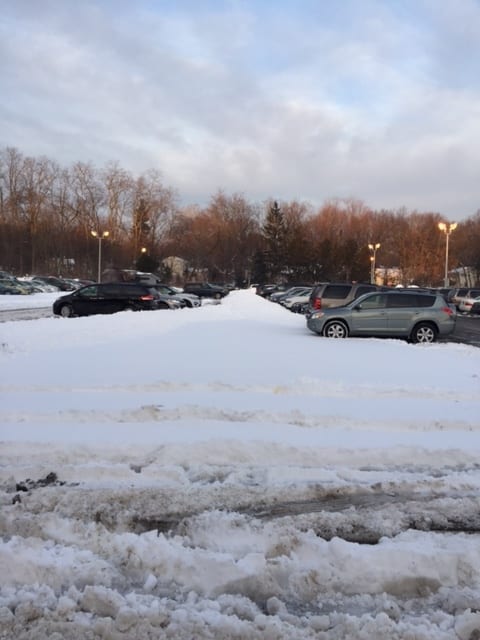
So I ask, if the availability of parking is indeed so critical to the success of business in Ridgewood, why wasn’t snow cleared from every available parking space in the Central Business District prior to the start of business on Monday? The snow stopped falling at approximately 8 PMon Saturday – Portions of several municipal lots were still snow covered as of 3 PMon Tuesday. Metered parking spaces on Godwin Avenue and on Franklin Avenue were still inaccessible as of 6 PMon Monday. Metered parking spaces on Oak Street were still being cleared on Tuesday morning.
It is certainly understandable that the Village’s first priority was to clear traveled roadways, especially those near schools and medical facilities, and to ensure the safe egress of emergency vehicles in and out of their garages/headquarters locations. I also understand that there are a limited number of Village employees and limited pieces of Village owned snow removal equipment. But why where there no contractors called in to work exclusively on the removal of snow to facilitate downtown business operations, with a target of getting everything cleared out prior to the start of Monday morning business operations? And why weren’t contractor resources directed to remove snow from the Route 17 Park & Ride? Governor Chrisie encouraged commuters to leave their vehicles at home and take mass transit – that’s not easily accomplished if you can’t park your vehicle at a mass transit departure point.
Clearly, someone dropped the ball here. Contractors should have been placed on standby in the event the snowfall was too much for our own employees to handle. And I hope that Ms. Sonenfeld doesn’t use the lame excuse that contractors cost money – we’re prepared to spend over $12 million to improve parking opportunities, but won’t spend peanuts to remove snow from parking places? Give me a break!
I strongly encourage Village officials to be prepared for the next “big one.” Their lack of attention with respect to clearing snow from existing parking spaces suggests to me that all the talk about needing more parking is nothing more than a bunch of rhetoric.
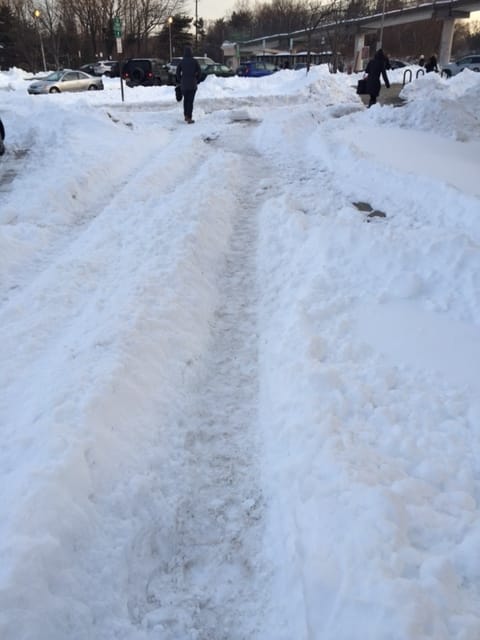
Ridgewood NJ, The town still has not cleared the parking lot at the Ridgewood Park & Ride on Route 17.
Walking from the parking spaces is now to the point of being brutal.The area froze last night and someone is going to get hurt.
Village residents get fined 24 hours after snow ends if not removed from the property.Commuters are now fining the town $200.00 a day for failure to clean the snow within 24 hours and compensation for dry cleaning.
By Larry Higgs | NJ Advance Media for NJ.com
on January 04, 2016 at 8:11 AM, updated January 04, 2016 at 10:59 AM
Replacing bridge decks on several ramps and overpasses between I-78 and Route 1&9 in Newark: The $17.9 million project is expected to start in early 2016 and be completed in early 2017
Repaving 6.6 miles of I- 80 East express and local lanes between Paterson, Elmwood Park and Hackensack: The project is scheduled to start this summer and be completed before the winter of 2016,
While there is uncertainty about how the state will pay for road and bridge projects after 2016, drivers will see plenty of flashing arrows and orange cones that come with the promise of smooth pavement, wider lanes and sturdier bridges.
Drivers might consider 2016 the year of the bridge, because the state has many massive multi-year bridge projects. Work continues on the $1 billionrehabilitation of the Pulaski Skyway, building a new Route 7 Wittpenn bridge, finishing the Route 18 overpass over Route 1, and replacement of the Routes 37 and 72 bridges to Jersey Shore barrier islands.
Drivers also will see large projects continuing on the states major toll roads, including the last phase of Garden State Parkway widening in Atlantic County, the continued work on new interchanges at Exit 14A and 9 on the New Jersey Turnpike and on a new deck on the turnpike’s Hudson County extension.
Work also is starting on new projects in 2016, including:
The first phase of a larger project to rebuild the interchange between Routes 3, 46, Valley, Notch and Rifle Camp Roads in Clifton. This includes construction of a new service road on Great Notch Road, a new bridge over Route 46 at Clove Road and reconstruction of the existing Notch Road Bridge, said Dan Triana, a state department of transportation spokesman.
With a five-year transportation bill that includes three possible funding sources to build the $20 billion Gateway Tunnel under the Hudson River, federal lawmakers said the legislation puts the region closer to getting the cash to pay it. Larry Higgs, NJ.com Read more
By Larry Higgs | NJ Advance Media for NJ.com
on November 25, 2015 at 7:43 AM, updated November 25, 2015 at 2:09 PM
One of the nation’s leading financial rating agencies has weighed in on the Gateway Tunnel project, deeming it necessary to the regional economy and joined others who’ve suggested charging riders to help fund the project.
Two experts have suggested charging a user fee to commuters and travelers who make between 73 million and 100 million trips a year through the 105-year old tubes under the Hudson River between New York and New Jersey. Moody’s said this one possibility that could be used.
“A user fee, similar to U.S. airports passenger facility charge could generate $330 million annually for financing,” Moody’s wrote in an analysis of the Gateway project released on Tuesday. Airport passengers typically pay a $4.50 fee, the analysis said.
Phil Beachem, executive director of the N.J. Alliance for Action, proposed a user fee of $1 or $2 per trip on top of regular train fares. Jonathan Peters, a finance professor at SUNY College of Staten Island, who specializes in toll road and transportation financing has all suggested a user fee.
Moody’s didn’t question the economic need for constructing new tunnels before one of the existing 105-year old tunnels has to be closed to repair damage from Hurricane Sandy flooding.
“While the tunnel will add significant cost to a region already paying for significant infrastructure investments, it provides a vital commuter link for a regional economy with a $1.4 trillion Gross Domestic project,” Moody’s said in the analysis.
NOVEMBER 30, 2015, 7:02 PM LAST UPDATED: TUESDAY, DECEMBER 1, 2015, 12:30 AM
BY CHRISTOPHER MAAG AND SHAWN BOBURG
STAFF WRITERS |
THE RECORD
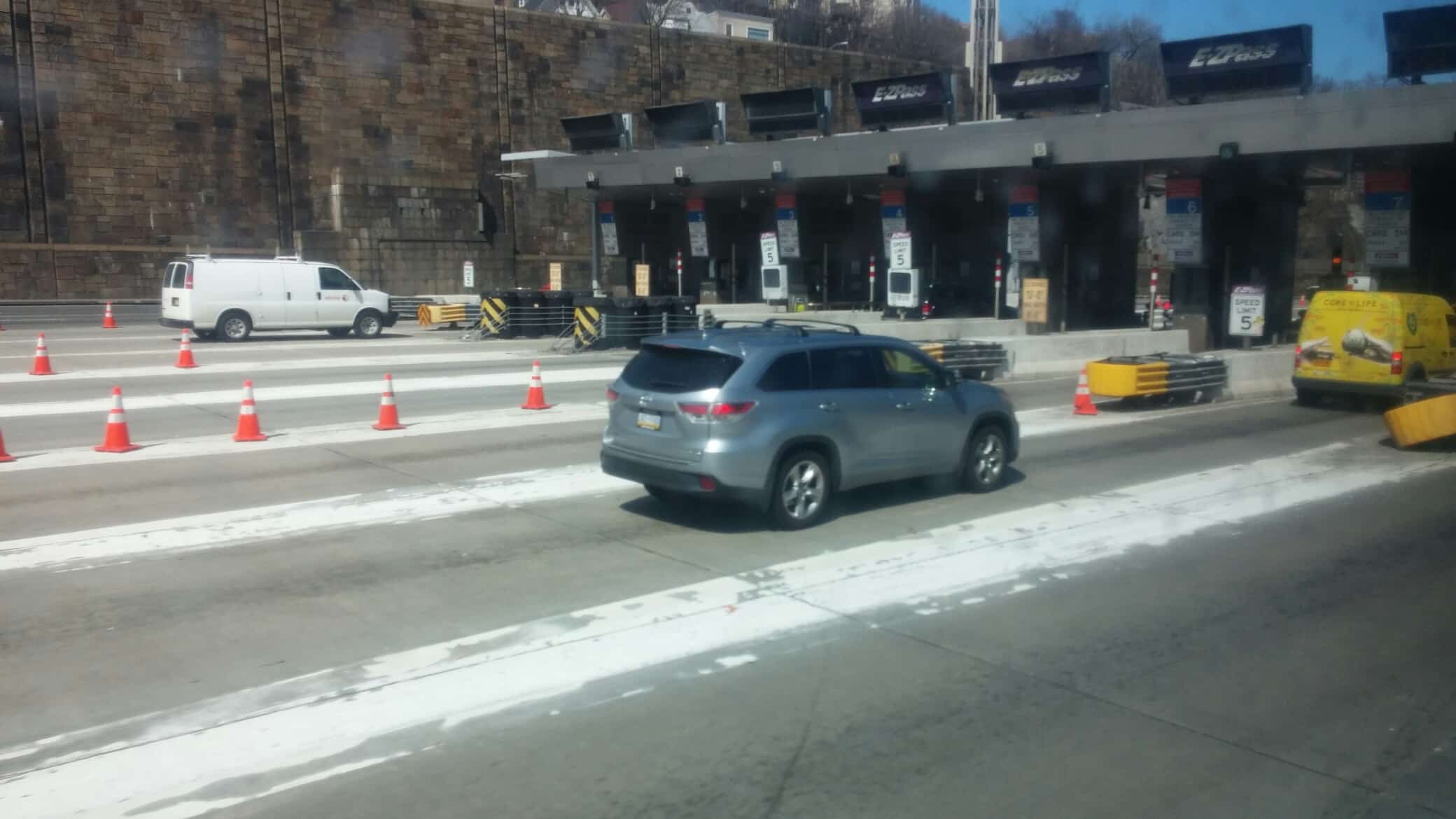
No one likes a toll hike. And next week, a toll hike package approved in 2011 will reach its zenith — starting Sunday, cash-paying drivers will have to pay $15 to cross the George Washington Bridge, nearly double what it cost just a few years ago.
But there could be a small silver lining. Because after a series of back-to-back annual increases beginning in 2011, this may be the last toll hike North Jersey drivers will have to pay for at least a few years, according to a major credit agency’s prediction. The cash |toll currently is $14. Drivers with E-ZPass will see their tolls rise |75 cents during peak hours, to $12.50.
The toll increases were included in a controversial package approved by the Port Authority’s board in 2011. Two years later, The Record revealed that the increase was part of a coordinated plan by Governor Christie and New York Gov. Andrew Cuomo to subvert public input and advance an even higher increase, only to impose a slightly more modest hike to make themselves appear financially responsible.
The strategy may backfire on the Port Authority, according to Moody’s, a credit rating firm. The toll increase makes the PA more dependent than ever on money from its interstate bridges and tunnels, as revenue from airports has declined. But total vehicle traffic is down, and many people remain angry about the rising costs.
That could make future toll hikes politically difficult, good news for drivers but bad for the Port Authority.
As New York City cracks down on panhandling, towns served by New Jersey Transit’s busiest rail lines are in a homelessness crisis, with a surge of people taking shelter in train stations and other public places.
Total homelessness in New Jersey has dropped 27 percent since 2011, but an increasing number of people are avoiding shelters and sleeping in areas not intended as living quarters. In Bergen, Hudson and Essex counties, thick with Manhattan commuters, the unsheltered increase is 22 percent to 86 percent. In Mercer County, where Trenton’s bus and rail station is on Amtrak’s Northeast Corridor, the number has more than doubled.
New York City’s homeless population, meanwhile, has soared, reaching a record of 60,670 staying in shelters in January, according to the Coalition for the Homeless, a Manhattan-based nonprofit service group. In recent weeks, Mayor Bill de Blasio has led breakups of encampments, discouraged passers-by from handing over spare change and deployed more outreach workers to push shelters.
NOVEMBER 12, 2015 LAST UPDATED: THURSDAY, NOVEMBER 12, 2015, 1:21 AM
BY JOHN CICHOWSKI
THE RECORD
Ping!
As anyone with one foot on the gas pedal and an eye on the GPS knows, that sound is technology’s quaint way of telling us there’s traffic congestion ahead – a turn of events that can make grown-ups talk back to their global positioning systems.
“Tell me something I didn’t know,” I told the noisy little screen on my dashboard.
When you drive on Route 17, you expect such things. It was Monday and my Honda and I were approaching the Garden State Parkway in Paramus where crews were toiling at revising a connection that might someday make moving between these two asphalt marvels the kind of safer, seamless driving experience it should be.
But no, this wasn’t the sour song that my GPS was singing or pinging about. This backup was centered on the Ridgewood Avenue exits where a new restaurant is being built. It’s the same location that a persistent caller, Richard Compagnone, had been telling me about.
“In 55 years of driving, I can’t remember a construction job so small taking so long,” said Compagnone. “What’s going on?”
On the surface, what’s going on is a relatively small job to build a Panera Bread sandwich shop and connect it to necessary pipes and wires. But what was really going on was a tiny example of the daily delays and heart-pounding danger that, according to reader feedback, easily make Route 17 Bergen County’s least-favorite highway. Spurred by low gas prices and population growth, this north-south artery is experiencing some retail growth and even heavier-than-usual traffic.