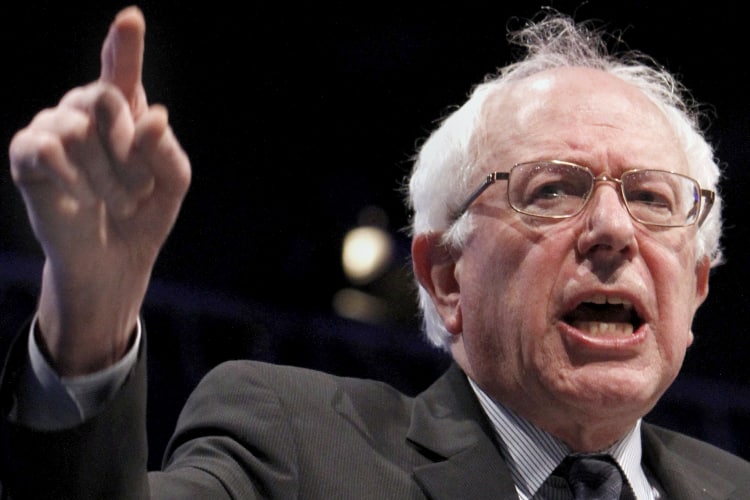
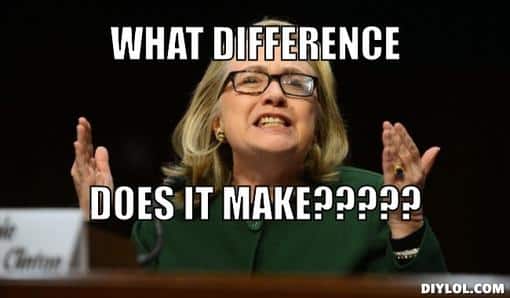
WASHINGTON (AP) — Bernie Sanders said Tuesday that his primary bid against Hillary Clinton was far from over, pointing to his victory in Indiana and strength in upcoming races as a sign of his durability in the presidential campaign.
“I know that the Clinton campaign thinks this campaign is over. They’re wrong,” Sanders said in a telephone interview with The Associated Press from New Albany, Indiana. “Maybe it’s over for the insiders and the party establishment but the voters today in Indiana had a different idea.”
Sanders spoke to the AP after he defeated Clinton in Indiana’s primary, predicting that he would achieve “more victories in the weeks to come” in West Virginia, Kentucky, Oregon and California. The Vermont senator acknowledged that he faced an “uphill climb” to the Democratic nomination but said he was “in this campaign to win and we are going to fight until the last vote is cast.”
Sanders’ win in Indiana likely won’t make much of a dent in Clinton’s lead of more than 300 pledged delegates. Clinton is still more than 90 percent of the way to clinching the Democratic nomination when the count includes superdelegates, the elected officials and party leaders who are free to support the candidate of their choice.
by MATTHEW BOYLE AND ANDY BADOLATO26 Apr 20165,714
Election data compiled by Breitbart News on the Democratic Party’s primaries and caucuses in 2016 and 2008 show that turnout in is down significantly, nearly 20 percent, from the last contested election.
The data also show that the about 4.5 million fewer people have voted in the Democratic presidential contest this year versus 2008.
This year’s contest is a two-person race between Democratic Socialist
Sen. Bernie Sanders (I-VT)
16%
of Vermont and former Secretary of State Hillary Clinton. Clinton is also a former U.S. Senator from New York, a position she held after eight years as first lady.
Hillary Clinton also ran for president in 2008, which makes this data all the more interesting: It’s essentially a comparison up against her previous failed race, when she was the frontrunning Democratic presidential candidate until then Sen. Barack Obama of Illinois blew past her late in the game taking the lead before winning the nomination and then eventually the presidency.
Back in 2008, as Obama battled Clinton, a whopping 23,715,866 people voted in primaries and caucuses nationwide in the states that have already voted this cycle. Fast forward to the next time there’s a Democratic primary for president, this year (since Obama was the incumbent president seeking reelection the primaries in 2012 were largely perfunctory), and turnout has dropped off significantly. Just 19,155,825 people have voted thus far in primaries and caucuses this cycle, a decrease of 4,560,041 voters or 19.23 percent.
The steep drop off is so significant on the Democratic side that the vast majority of states saw drops in voter participation in Democratic primaries and caucuses. The following contests saw less voters participate on the Democratic side in the primaries and caucuses than 2008’s contests: Alabama, Arkansas, Florida, Georgia, Louisiana, Massachusetts, Mississippi, Missouri, New Hampshire, New York, North Carolina, Ohio, Oklahoma, South Carolina, Tennessee, Texas, Virginia, Utah, Wisconsin, Vermont, American Samoa, Hawaii, Iowa, Minnesota, Nebraska, Nevada, Washington state, and Wyoming.
Only a handful of states have seen increases in participation on the Democratic side, including Arizona, Michigan, Alaska, Colorado, Idaho, Kansas and Maine. With the exception of Arizona, Sanders won—and Clinton lost—each of those contests. That means the likely Democratic nominee, Hillary Clinton, has only increased Democratic primary votes in one of the states she won this cycle as compared with 2008’s primary turnout. Every other state she has won this year has seen less turnout from last go-around.
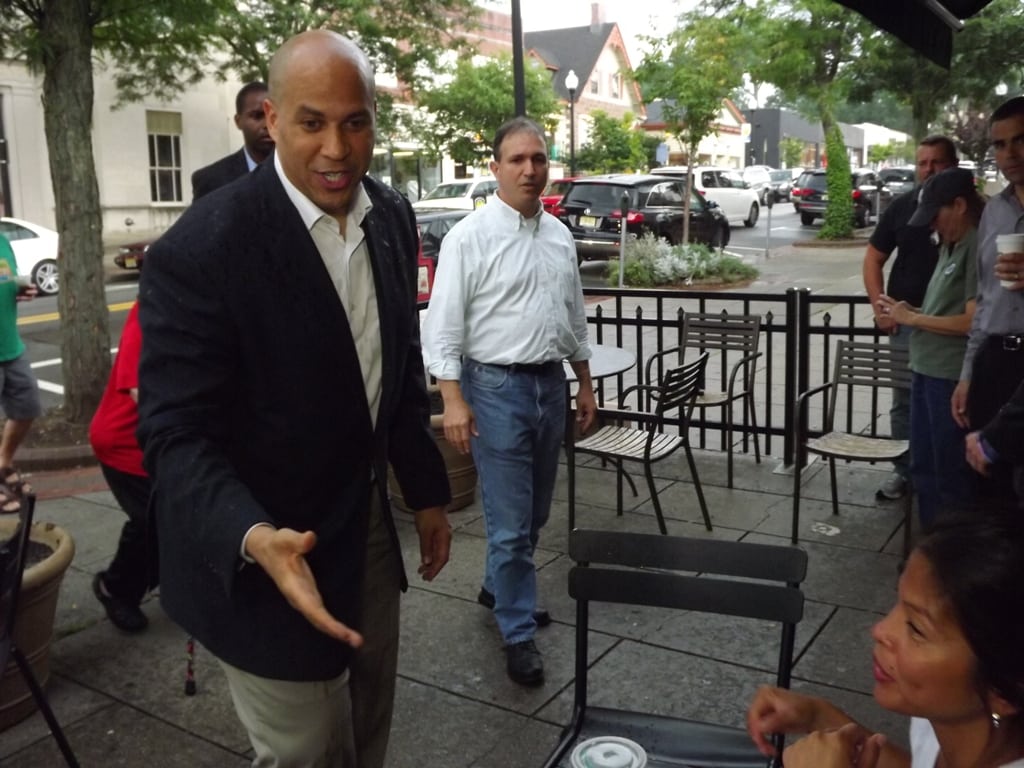
Cory Booker is one of the most enigmatic people I have ever known. Rarely do you encounter someone with such overwhelming strengths combined with such unfortunate weaknesses. Cory was a breath of fresh air for Newark. He brought new respect to the city. He ended the succession of mayors who took office only to eventually find themselves behind bars. He elevated the urban issues of Newark and all cities like it across the country to a new level in the national consciousness. He is a truly inspiring and electric speaker. This is probably his greatest asset. He has the ability to electrify and galvanize an audience like Dr. Martin Luther King did. When you hear him speak it is truly moving. He is special. He is energizing to be around.
However, it is rare I have met someone who is that bright, that energetic, packs that kind of horsepower and, yet, allows himself to be “marginalized” by significant weaknesses. Cory Booker lacks executive ability. In my opinion, he should never be a Governor. He has demonstrated a limited ability and desire to administrate or supervise. And that is why I pen this editorial. I was hoping that Cory Booker would be an exceptional Mayor, one who would take Newark to the next level. In my opinion, that did not happen.
As Democrats – many of them in South Jersey pivoting hard from their agreement with Governor Chris Christie on Atlantic City in order to emphasize distance and convenient opposition – slam the governor on an insolvent state Transportation Trust Fund, Christie barked back at his would-be tormentors. Max Pizarro, PolitickerNJRead more
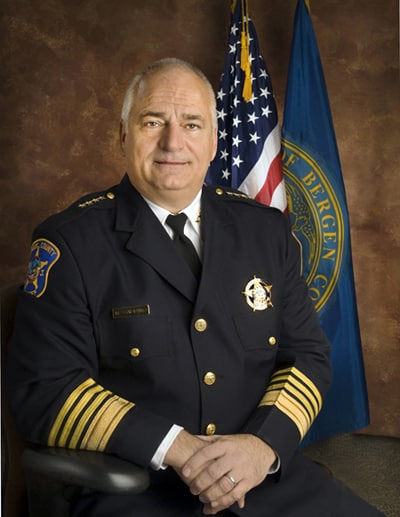
Bergen County Sheriff Michael Saudino – $138,000 in salary plus $129,987 from pension as an Emerson Borough police retire
MARK LAGERKVIST | MARCH 14, 2016
Loophole in law lets some state employees collect retirement money while working at new job
The ranks of retired public officials who collect more than $100,000 a year from New Jersey pensions have more than doubled in the past five years, according to an NJ Spotlight analysis of state Treasury data.
When 2015 ended, 2,296 retirees were collecting six-figure pensions from state pension plans. It is a 131 percent increase above 2010, when the count was 992.
The top of the “$100K Club is loaded with retired school executives. Former Essex County College president A.Z. Yamba leads the pack with $195,000 in annual retirement pay. Of the 30 pensioners who get $150,000 or more, 22 retired as educators.
But in sheer numbers, police and fire officials are predominate. Nearly half – or 1,131 pensioners – belong to the Police and Firemen’s Retirement System.
Of those PFRS retirees, 93 percent – or 1,050 – took advantage of a “special retirement” provision in state pension law. It allows law-enforcement officers – but not other public employees – to collect full benefits after 25 years of service, regardless of age.
When Joseph Blaettler opted for special retirement at age 46, the former Union City deputy police chief started collecting $134,773 a year from PFRS in 2009. If he reaches age 80 – his statistical life expectancy – he will cash more than $4.5 million in pension checks.
After three big wins out west, Democratic presidential hopeful Bernie Sanders said he thinks many of the party’s superdelegates who have pledged to rival Hillary Clinton will switch to his side.
“I think the momentum is with us,” Sanders said on CNN’s “State of the Union” with Jake Tapper on Sunday. “A lot of these superdelegates may rethink their positions with Secretary Clinton.”
The Vermont senator swept Saturday’s Democratic contests in Washington, Alaska and Hawaii, easily winning the majority of the 142 pledged delegates in those states. The biggest prize of the day was in Washington, which offered 101 delegates to be split up on a proportional basis.
The latest delegate counts still put Sanders behind Clinton, however, with 1,004 pledged delegates to her 1,712.
Of those, 469 are superdelegates who have pledged to Clinton and only 29 have pledged to Sanders.
It’s the scenario that Republicans dream of and Democrats believe is all but impossible: Hillary Clinton being forced to drop out of the presidential race due to criminal charges over her email server.
Any bombshell findings in the FBI’s investigation of Clinton could plunge the Democratic race into chaos.
Bernie Sanders could stand to gain. As the only other candidate in the Democratic race, the party could quickly coalesce around him in an effort to halt the bedlam. But that’s far from a sure thing, with many in the party fearful he would be a weak general election candidate.
Democrats insist there’s virtually no chance that Clinton will be indicted over her server. The candidate has said repeatedly that no laws were broken, and that classified information was never sent over the server. Asked about an indictment at the last Democratic debate, Clinton responded: “That’s not going to happen.”
In the event that Clinton stepped aside after winning the nomination at the convention, the Democratic National Committee could decide on the replacement on its own.
If an indictment came before the convention, the path would be more difficult.
TRENTON, N.J. (AP) — In New Jersey’s biggest city, fears are growing over lead in the school district’s water after a lab found elevated levels in nearly half its schools. The Newark district quickly shut off sinks and fountains in 30 buildings and has offered to test as many as 17,000 kids for contamination.
But the problem isn’t new for the state’s largest school district. Testing has shown elevated levels in some buildings over the last few years. And the district has been addressing issues of lead in the water since at least 2003.
The highest lead levels found in the water in Newark’s schools, however, are far lower than those found in homes in Flint, Michigan, which is experiencing a crisis after the city changed its water supply.
Water also poses a relatively small risk of lead poisoning compared to more common sources, such as lead paint.
“One square centimeter of lead paint, about the size of your pinkie nail, has two times what you’d get from drinking a quart or water from highest level of lead in one the schools,” said Dr. Steven Marcus, executive director of the New Jersey Poison Information & Education System at Rutgers University.
Nevertheless, parents are concerned, with dozens submitting their kids for blood tests when the district first offered them on Thursday.
“My first thing was, Flint, Michigan,” said Dionne Bradshaw, whose daughter was tested. “That’s the first thing I thought about. Ok, here we go again.”
This is no ordinary Presidential election. We are experiencing something as close to a revolution as might be possible in America. The outrageous things some of the Presidential candidates are saying have captured the public’s rage, anger, and hate combined with an overwhelming outcry to dismantle the status quo in Washington D.C. At the same time, we are witnessing the evolution of political parties and a redefinition of terms like “liberal” and “conservative.” Donald Scarinci, PolitickerNJRead more
Senate President Steve Sweeney (D-3) and veteran Senator Ronald L. Rice (D-28) exchanged harsh words in the Senate Democratic caucus chamber this afternoon before state Senator James Beach (D-6) stepped in to keep the men apart. Max Pizarro, PolitickerNJ Read more
BY HERB JACKSON
WASHINGTON CORRESPONDENT |
THE RECORD
Governor Christie may be gung-ho for Donald Trump, but it remains to be seen whether the reality show star’s bid for the presidency gets a boost from the state Republican Party by placing his name on the ballot next to party-backed candidates for Congress and local office.
I’ll admit it — I might have been wrong when I predicted last month that the Democratic primary was going to be a “long slog.”
U.S. Senator Bernie Sanders (I-VT) promises he’s in the Democratic primary to stay, but that pledge may soon fall victim to simple arithmetic and an arcane Democratic Party process known as “superdelegates.”
A casual observer of politics may wonder: how is that possible? After all, heading into yesterday’s contests, Senator Sanders has won nearly half of the primaries and caucuses held to date: of the 20 contests held so far, Sanders has won eight, while former Secretary of State Hillary Clinton (D-NY) has 12.
Yet, Senator Sanders trails by a more than two-to-one margin in the delegate count: of the 2,383 delegates needed to clinch the nomination, Secretary Clinton has amassed 1,130 delegates, while Sanders stands at 499.
The plan by New Jersey’s largest insurance company to divide hospitals into two tiers has already angered customers and health care providers and now it has split Democratic lawmakers as the Legislature considers bills to review the move. John C. Ensslin, The Record Read more
For lawyers arguing in federal court over whether U.S. Sen. Cory Booker should remain in a lawsuit alleging that he failed to properly oversee the city’s bankrupt watershed corporation, the question could come down to this: How far does a board member have to go to say he’s done his duty? Tim Darragh, NJ.com Read more
Increased spending on issues such as education, public worker pensions, transportation, and hospitals drove lobbying expenditures in New Jersey in 2015 to $70 million, the second highest total ever, according to an analysis of annual lobbying reports released today by the New Jersey Election Law Enforcement Commission (ELEC). Jeff Brindle, PolitickerNJ Read more