70% more cops per capita than any other state, making 50% more than the average cop in the US according to FBI data, why?
Many of those cops are in our suburbs manning speed traps to help pay for the cost of so many cops. So it’s a vicious circle – we’re actually paying people to drive up our auto insurance premiums just so they can justify their job.
Cut the police force by 50% by not replacing retiring cops, and put them on bronze level health benefits and 401(k) style defined contribution pension plans.
Then perhaps NJ goes up the rankings, our auto insurance premiums and taxes go down, and maybe we can afford some new investments in bridges, roads, tunnels and our schools instead of overpaying for public safety and public sector pensioners?
Ridgewood NJ, in a recent ‘U.S. News & World Report’ Best States Ranking, New Jersey ranks 14th.New Jersey beat out New York, Florida, California, Hawaii and Pennsylvania in the overall rankings.
According to the study, the Best States ranking of U.S. states draws on thousands of data points to measure how well states are performing for their citizens. In addition to health care and education, the metrics take into account a state’s economy, the opportunity it offers people, its roads, bridges, internet and other infrastructure, its public safety and the integrity and health of state government.
What’s amazing is the rankings not only consider such categories as health care(pricey in NJ ), education (forgetaboutit ) but the “state’s economy(ugh), the opportunity it offers people (live with mom), its roads, bridges (total disaster), internet and other infrastructure (public rest rooms), its public safety (cops everywhere) and the integrity and health of state government( your kidding right).”
The Top 10 states in the overall rankings include (in order):
1. Massachusetts
2. New Hampshire
3. Minnesota
4. North Dakota
5. Washington
6. Iowa
7. Utah
8. Maryland
9. Colorado
10. Vermont
The Rankings noted the state’s “world-class universities, leading technology and biological science firms and one fast turnpike,” out of 50 states, the report lists New Jersey 2nd in education, 8th in health care, and 27th in opportunity.
In other categories, you guessed it New Jersey comes in dead last in the category of government, which takes into consideration such things as “Fiscal Stability” (ranked 49th in the country), “Budget Transparency” (29th), and “State Integrity” (18th) Scary New Jersey placed 18th.
The good news in the rankings, New Jersey leads the rest of U.S. states with a zero-percent over-capacity of its State Prison System. New Jersey comes in 2nd place for “Public Transit Usage,” and its low property crime rate ranked 3rd out of all 50 states.
Meanwhile, New Jersey ranked well in overall household income (4th), low suicide rate (2nd), fewest nursing home citations (4th), and pre-school enrollment (1st).
POSTED 1:43 PM, MARCH 1, 2017, BY ALIZA CHASAN, UPDATED AT 05:57PM, MARCH 1, 2017
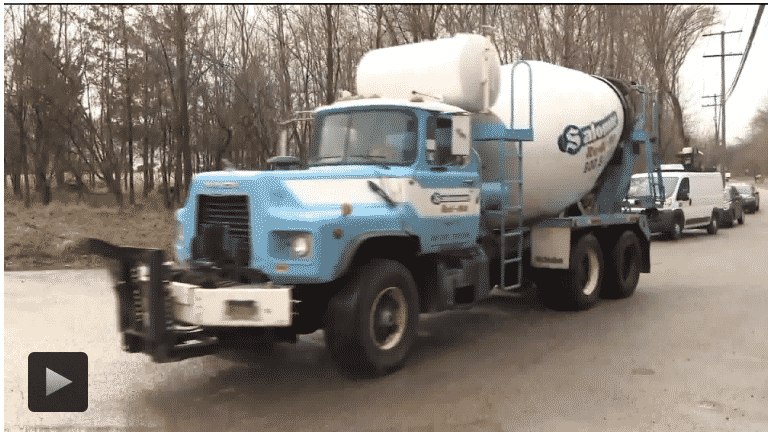
WAYNE, NJ — A worker died in a cement-mixer accident in New Jersey Wednesday morning, local officials said.
Officials got a call about the incident around 10 a.m. The cement mixer was not in use at the time of the incident.
Initial reports show the victim was cleaning out the cement mixer on Dey Road and became trapped under the mixer’s drum. The victim was crushed by the body of the truck.
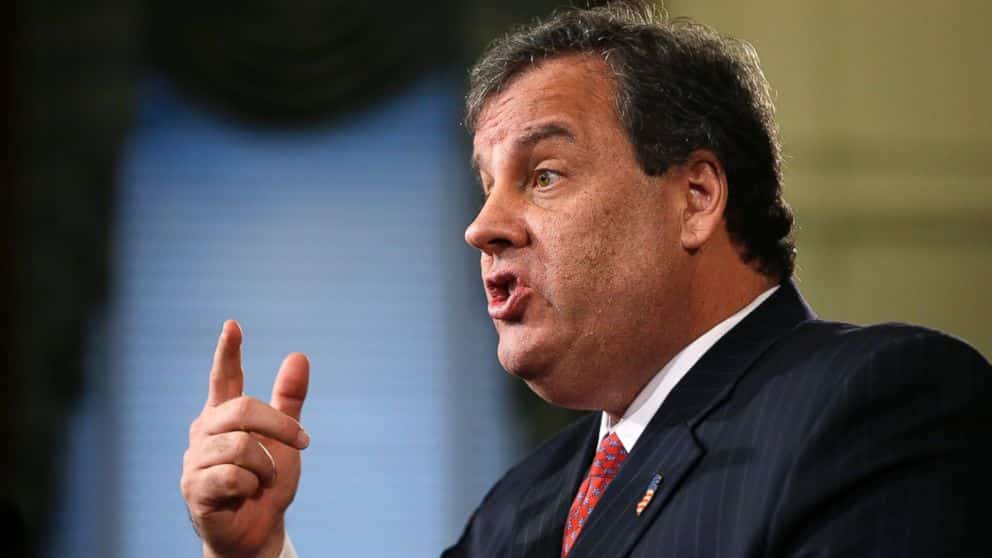
Trenton NJ, Governor Christie unviels his final budget as governor ;
“This is the ninth time I’ve come before a joint session to address our state’s budget. Each time I’ve had specific goals in mind; guiding principles to follow. Government should get smaller. Taxes shall not be increased. Our core commitments must be met. Each time, with varying degrees of struggle, harmony and acrimony, we have reached these goals – I have stuck to those principles. Let me assure you that today will be no different.
– Governor Chris Christie, New Jersey State Budget Address, February 28, 2017
The Fiscal Year 2018 budget will be the eighth and final state budget of Governor Chris Christie’s tenure. When Governor Christie entered office in 2010, New Jersey was enduring an unprecedented fiscal crisis, with an immediate $2.2 billion mid-year fiscal deficit, as well as an unthinkably large $10.7 billion projected budget gap for Fiscal Year 2011 — more than a third of the prior year’s budget. At that time, it was uncertain whether the State would be able to meet its payroll within two months.
The staggering $13 billion two-year gap represented the culmination of years of reckless tax-and-spend policies and shortsighted budgeting practices that ignored economic realities. While state and national economies faltered, spending in Trenton under the previous administration continued unabated at unsustainable levels — increasing 58 percent from 2001 to 2008. The previous governor’s Fiscal Year 2010 budget was propped up with temporary income tax hikes, corporate surtaxes, reliance on one-time federal stimulus funds, temporary employee furloughs and other desperate gimmicks.
Today, Governor Christie is presenting his eighth consecutive balanced budget built on a foundation of fiscal restraint and responsibility. The Fiscal Year 2018 budget will fund $2 billion less in discretionary spending than was spent in Fiscal Year 2008.
The Governor’s Proposed Fiscal Year 2018 Budget:
• Calls for $35.5 billion in State appropriations, a 2.6 percent increase, largely due to non-discretionary costs.
• Contains $2 billion less in discretionary spending than the Fiscal Year 2008 budget.
• Includes the largest pension payment in New Jersey history with a $2.5 billion contribution to the State’s defined benefit funds.
o This will bring total pension contributions by the Christie Administration to $8.8 billion.
o That will be more than two and a half times the total contributions made by all governors combined during the 16-year period from Fiscal Year 1995 through Fiscal Year 2010.
• Renews the Governor’s commitment to higher education in New Jersey. Overall, higher education funding is maintained at a total of $2.2 billion in Fiscal Year 2018.
• Proposes a seventh-consecutive year of the highest amount of school aid supporting Pre-K through Grade 12 education in New Jersey history. The Fiscal Year 2018 budget proposes more than $13.8 billion for education, an increase of $523.2 million.
• Provides more than $17 billion in direct and indirect property tax relief, nearly half the total budget, including $13.8 billion in school aid and $1.5 billion in municipal aid.
• Continues more than $1 billion for direct property taxpayer relief programs:
o 423,300 seniors and citizens with disabilities will receive an average Homestead Benefit of $511, while 169,500 other homeowners earning up to $75,000 will receive an average Homestead Benefit of $397.
o 138,200 seniors and citizens with disabilities will continue receiving Property Tax Freeze benefits averaging $1,401, while 25,100 new beneficiaries will receive their first year of benefits averaging $219.
Investing In New Jersey’s Transportation Infrastructure
Today, Governor Christie proposed a $400 million supplemental appropriation in this Fiscal Year. These funds will be invested and spent quickly over the next 100 days to address bridge deficiencies and road conditions in all of New Jersey’s 21 counties. Further, these funds will be used to expedite technology enhancements and other infrastructure improvements for New Jersey Transit and will allow the New Jersey Department of Transportation to deliver the largest construction program in state history. The results will be smoother roads, safer bridges and a more technologically sound mass transit system.
In October 2016, Governor Christie signed legislation that reauthorized the New Jersey Transportation Trust Fund Authority Act. As a result of that legislation, Governor Christie’s fiscal 2018 budget provides a record $2 billion State Transportation Capital Program. The Program includes over $1.3 billion for State and local highway and bridge projects, and another $677 million for mass transportation projects.
Ensuring Access To Care While Keeping Down Costs
The NJ FamilyCare program currently provides comprehensive health care coverage to more than 1.8 million New Jersey residents at a projected $4.2 billion cost to the Fiscal Year 2018 budget. The program serves individuals eligible for both Medicaid and the Children’s Health Insurance Program (CHIP), and represents a partnership between the State and the federal government. The NJ FamilyCare program, while having some of the highest income limits in the nation, has traditionally provided health coverage exclusively to low-income families, seniors and people with disabilities. On January 1, 2014, Governor Christie expanded the program, using 100 percent federal funding, to provide health coverage to low-income childless adults.
The proposed Fiscal Year 2018 budget represents the fourth full fiscal year of the NJ FamilyCare expansion, and while a fraction of the costs associated with this eligibility group have shifted to the State budget, the expansion continues to represent a tremendous value for New Jersey. Since the Governor’s decision to expand NJ FamilyCare in 2014, an additional 487,000 uninsured New Jersey residents have gained coverage under this program. Not only did this expansion provide reliable medical coverage to many formerly uninsured residents, the infusion of federal dollars has generated meaningful savings to the State budget. Through Fiscal Year 2018, the shift of State costs to the federal government combined with the reduction in demand for Charity Care has resulted in a cumulative savings of $2 billion to the State.
Commitment To World-Class Healthcare
With the goal of ensuring a stable and accessible hospital system that provides care of the highest possible quality, the Department of Health’s budget makes significant investments in three hospital subsidy programs: Charity Care, Graduate Medical Education and Delivery System Reform Incentive Payments.
• Charity Care. Governor Christie’s expansion of NJ FamilyCare has led to a dramatic increase in NJ FamilyCare enrollment, which continues to be funded almost entirely by the federal government. The associated decrease in uninsured residents has reduced by more than half the documented claims for uncompensated care submitted by New Jersey’s hospitals. Since the expansion took effect on January 1, 2014, 487,000 low-income residents have gained health insurance through NJ FamilyCare, a 38-percent increase in program enrollment. This fundamental shift allows for a $25 million reduction in State funding for Charity Care in Fiscal Year 2018. The Fiscal Year 2018 budget provides $252 million in combined federal and State support to offset the costs hospital facilities incur in treating the uninsured.
• Graduate Medical Education (GME). The Fiscal Year 2018 budget increases support to New Jersey’s teaching hospitals by $30 million, with the total amount available through the Graduate Medical Education program now totaling $218 million. This marks the third year in a row that funding for this critical program has been increased, with the total amount available now more than triple the funding provided when Governor Christie took office. This enhanced commitment to GME will help to ensure that New Jersey residents have continued access to an adequate number of well-trained doctors.
• Delivery System Reform Incentive Payment (DSRIP). Funded at $166.6 million, the Delivery System Reform Incentive Payment (DSRIP) program was launched in Fiscal Year 2014 as a replacement for the Hospital Relief Subsidy Fund. The program continues to reward innovation and quality by distributing funds to hospitals based on measurable improvements in health outcomes.
Continued Emphasis On Community-Based Care And Services
Governor Christie is committed to fundamentally changing the way services and programs support individuals with developmental disabilities and their families, by moving away from a system that has historically focused on institutionalization to one that emphasizes home and community-based services and supports. To this end, resources have been refocused to provide people with intellectual and developmental disabilities with the ability to live as independently as possible with the proper supports.
The five-year Olmstead settlement agreement, signed February 2013, covered fiscal years 2013 to 2017 and required 600 placements over that time period. By the end of Fiscal Year 2018, the Department expects to have placed a total of 737 individuals, well exceeding the requirements of the Olmstead agreement due in large part to the acceleration of placements from the closure of North Jersey Developmental Center and Woodbridge Developmental Center in Fiscal Year 2015.
In addition to the Olmstead commitment to move individuals with developmental disabilities out of developmental centers, Governor Christie’s determination to provide services in the community includes funds to develop additional community placements and services that divert admissions to developmental centers. The Fiscal Year 2018 budget provides $89.7 million of new State and federal funding to create community placements and services, including Olmstead placements.
As a result of reforms initiated under the Medicaid Comprehensive Waiver, adults with intellectual and developmental disabilities that are living independently or with family are becoming eligible for substantially increased in-home support services for which the State will receive a federal match. When the Supports Program is fully implemented, it is expected to generate approximately $100 million in matching funding on previously State-only costs to create an estimated $200 million program, which will allow for the further expansion of services.
Family Services
The Fiscal Year 2018 budget continues and enhances the Christie Administration’s commitment to providing a wide array of services to children and families throughout New Jersey through Department of Children and Families (DCF) programs.
• Child Protection and Permanency (CP&P). The Fiscal Year 2018 budget includes a total of $986.6 million in State and federal funds for the operations and services provided by this DCF Division that is responsible for investigating allegations of child abuse and neglect
• Children’s System of Care (CSOC). This program helps more youth remain at home, in school and in their own communities, while still receiving the full scope of services they require, and provides coordinated care for more than 61,000 children and adolescents. The Fiscal Year 2018 budget includes a total of $592.5 million in State and federal funds for the operations and services provided by this Division, an increase of $24.3 million over the fiscal 2017 Appropriations Act.
• Family Success Centers. The Governor’s proposed budget protects funding for these centers which are community-based organizations that provide a wide array of services ranging from day care, resume writing and parenting classes to domestic violence prevention and substance use disorder services. The number of Family Success Centers in New Jersey will increase to a total of 58 in Fiscal Year 2018.
Lead Safety
Through continuing and increased appropriations, Governor Christie’s Fiscal Year 2018 budget continues to address lead concerns in New Jersey, ensuring the State remains a national leader on this issue. Governor Christie has added $10 million in additional State funding to effectuate the update in lead regulations to make New Jersey’s standards for identifying elevated blood-lead levels in children consistent with those of the federal Centers for Disease Control and Prevention.
The Department of Community Affairs will continue working through nonprofit organizations to remediate lead-based paint hazards affecting low- and moderate-income households in New Jersey.
The Fiscal Year 2017 budget provided $10 million to reimburse school districts for costs related to lead testing between July 13, 2016, and July 13, 2017. School districts that tested their water during that time period can continue to seek reimbursement in Fiscal Year 2018 from unexpended Fiscal Year 2017 balances.
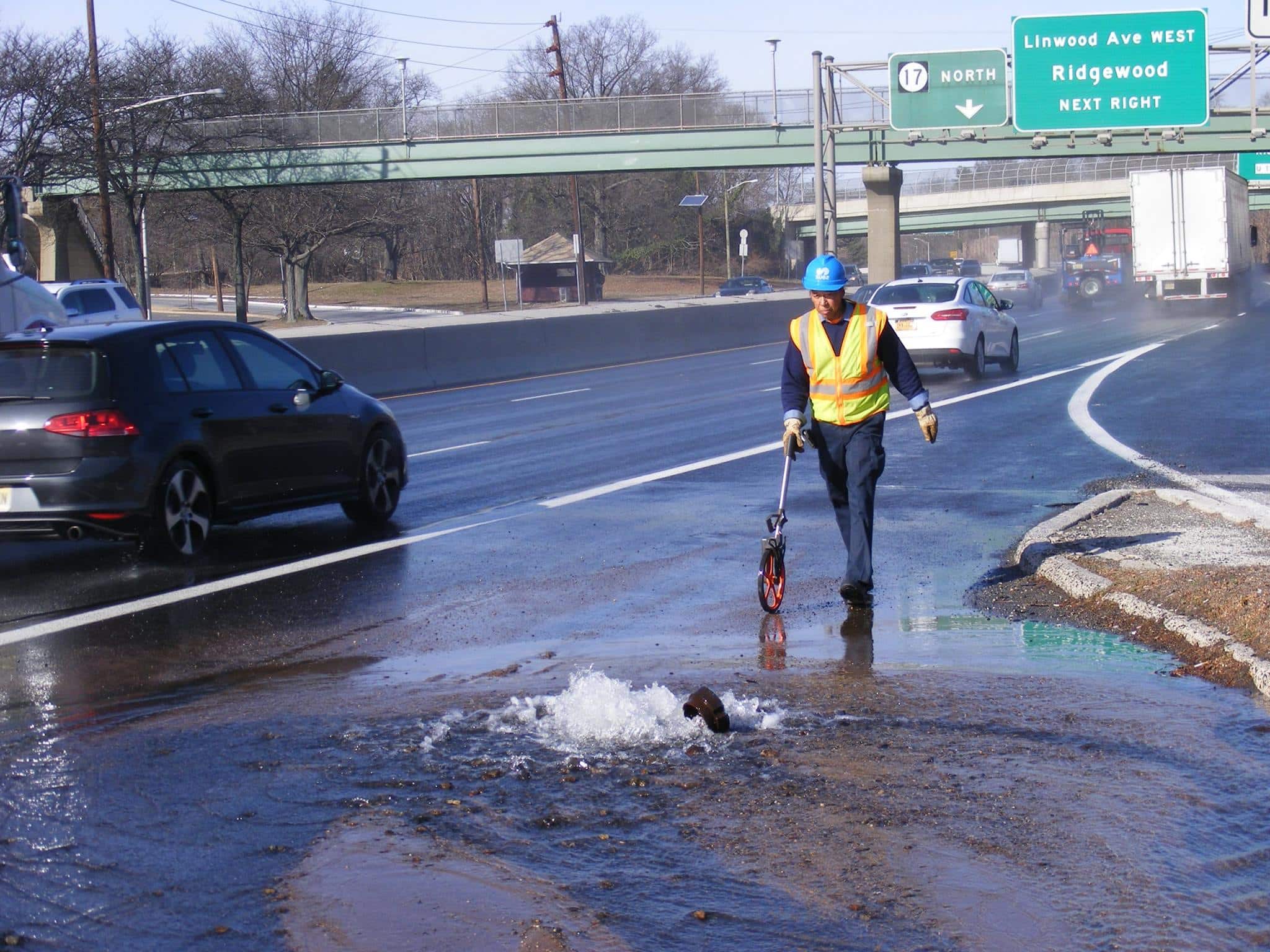
The underground infrastructure carrying water, sewerage, gas and electricity is essential to the lives of every business and person in the state, yet it is in a horrendous state of disrepair. As the owner of a real estate firm that secures underground easements for some of the state’s largest utility companies, I can say with confidence that our underground infrastructure is at a breaking point. If we do not invest in upgrading our underground infrastructure, it will only be a short matter of time before a critical infrastructure failure leads to a public health and safety crisis.
As an example, water suppliers estimate that New Jersey loses 33 percent of drinking water each year just through old, leaking underground pipes. This is enough clean water to fill several reservoirs. However, the few times that our underground infrastructure receives any media attention is during “large-scale” catastrophes, such as when a water main bursts, a blackout occurs, a gas pipeline explodes — or worse, we find dangerous levels of lead in our water supply.
If we do not act on improving our water infrastructure, we risk a lead-water crisis similar to that experienced by the businesses and residents of Flint, Michigan. Only after public outcry and national media attention, the U.S. Congress approved emergency infrastructure funds totaling $170 million in September 2016 to begin critical work on Flint’s lead-contaminated water delivery system. Similarly, New Jersey has water infrastructure the same age or older than Flint. We must find the means to fix New Jersey’s aging water systems before they degenerate from bad to worse.
The cost of repairs is enormous, but the cost of inaction is far greater. According to the Water Research Foundation, funding water and wastewater upgrades around the country could cost $650 billion over the next 20 years. However, as these small- and large-scale problems become more commonplace it is incumbent on our state’s elected officials and decision makers to work with our utility providers and begin crafting comprehensive plans to fix New Jersey’s hidden infrastructure. Smart infrastructure improvements now will benefit ratepayers, create jobs and generate greater investment in our state from the business community.
The New Jersey Utilities Association noted that over the past five years, six companies have spent nearly $2 billion on water delivery system upgrades. This is a good start as these infrastructure investments already have created thousands of new jobs and pumped hundreds of millions of dollars into New Jersey’s economy, all while improving utility delivery to end users.
Now the Joint Legislative Task Force on Drinking Water is diving head first into ways we can address our drinking water issues. With the Legislature and governor coming together with the business and labor community to support an increase in the gas tax that ultimately put the state’s Transportation Trust Fund on solid financial footing, I believe that the timing is right for our residents, business leaders, labor unions, and elected officials from the governor down to local mayors and council members to join together and work on a comprehensive plan to revitalize our water utility infrastructure.
The time to invest is now. Our public health and welfare depends on it.
Updated February 27, 2017
Posted February 27, 2017
By Samantha Marcus | NJ Advance Media for NJ.com
The average property tax bill in New Jersey rose to $8,549 in 2016. But many homeowners pay much, much more.
So which towns pay the most in the state that pays the most for property taxes?
Here are the 30 New Jersey municipalities with the highest average property tax bills, according to data from the state Department of Community Affairs.
20. Ridgewood
This Bergen County village cracks into the top 20 with a $17,180 average real estate tax bill. Schools account for about 65 percent of taxes levied there, while the municipality collects 24 percent and the county, 11 percent.
Neighbors…
28. Glen RockOf New Jersey’s 21 counties, Bergen is the most represented on this list, occupying 14 of the 30 spots. Living in this small Bergen County Borough costs, on average, $15,459 in property taxes.
25. Ho-Ho-Kus
In Ho-Ho-Kus, Bergen County, the average real estate tax bill is $15,580, $18 higher than Woodcliff Lake.
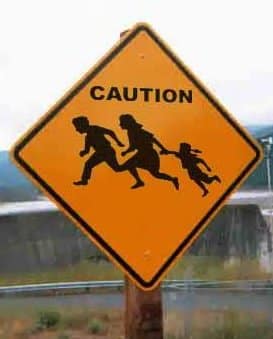
Ridgewood Nj, according to the Pew Research Center , California has by far the largest number of unauthorized immigrants, about 2.3 million in 2014. About six-in-ten unauthorized immigrants live in the six states with the largest populations of unauthorized immigrants—California, Florida, Illinois, New Jersey, New York and Texas.
Pew estimated New Jersey to have 500,000, making up 5.4% of the Gardens states population and 7.6% of school kids with a whopping increase of 45,000 since 2009.
Ridgewood NJ, in a 2017’s Best & Worst States to Raise a Family Wallet hub the Study gave New Jersey high marks rating the Garden state 7th best state in the nation for raising a family.
The survey was predicted on the idea that ,”raising a healthy, stable family sometimes requires moving to a new state. And the reasons are often similar: career transitions, better schools, financial challenges or perhaps a general desire to change settings.
But wants and needs don’t always align in a particular state, which might offer, for instance, a low income-tax rate yet subpar education system. Consequently, a family must make unnecessary sacrifices — the kinds that are easily avoided by knowing which states offer the best combination of qualities that matter most to parents and their kids.
To help with the evaluation process, WalletHub’s data team compared the 50 states and the District of Columbia based on 40 key indicators of family-friendliness. Our data set ranges from “median family salary” to “housing affordability” to “unemployment rate. Read on for the complete ranking, relocation advice from experts and a full description of our methodology.”
The WalletHub analysis used 40 key indicators of family friendliness for its ranking.
The study ranked New Jersey as:
11th best in the country for the percentage of families with kids
9th best for child care costs, adjusted for median family income
4th best for infant mortality rate
10th best for median family salary (adjusted for cost of living)
13th best for violent crime rate
11th best for percentage of families below the poverty level
The Worst and Best States to Be a Homeowner in 2017
February 16,2017
the staff of the Ridgewood
Ridgewoood NJ, for many buying a home is one of the biggest investments of your life, according to Craig Casazza at the consumer site ValuePenguin it’s ideal to buy within a state where housing is relatively affordable and the value of your home is likely to appreciate strongly over time. It’s also desirable to avoid paying more than you can manage in ongoing costs, from taxes to insurance to damage from major storms. Finally, it’s best, of course, if the state where you’re buying boasts low rates of property crime, good schools, and a healthy proportion of homeowners compared with renters.
Casazza rolled together ten key metrics that quantify those factors, and ranked states on how successfully (or not) they offer the optimal factors for home ownership while skirting the attributes you’d want to avoid.
Here is the list of the 10 worst homeowner states and the homeowner scores assigned to them:
The 10 worst states to be a homeowner have some combination of a weak housing market, a heavy burden of costs to maintain a home, and a propensity for calamity and crime. The three worst states are in the south, and specifically from the Gulf region, where yearly storms batter homes and can cause millions of dollars in property damage:
Louisiana 20.97
Mississippi 29.32
Tennessee 29.59
New Mexico 34.69
Alabama 35.04
Missouri 36.64
Texas 39.21
New Jersey 39.54
California 39.97
Georgia 41.53
The 10 best states to own a home generally are less urban overall, with a higher proportion of homes in rural areas, where costs and crime can be lower. Our highest-ranked state for homeownership is Iowa, where it’s very affordable to own a home. With low insurance rates, low mortgage rates, and few calamities that cause insurance claims, South Dakota is another notably inexpensive state in which to own a home.
Iowa 82.60
South Dakota 81.38
Wyoming 79.49
Nebraska 78.17
Maine 77.44
Minnesota 75.37
West Virginia 76.03
Michigan 75.74
New Hampshire 72.28
Wisconsin 71.25
Ridgewood NJ, the New Jersey pension crisis in 60 seconds . Reader says ,” the unions rule NJ and the politicians are at their beck and call. They’re bankrupting the state and municipalities, and taxpayers get screwed at every turn. Benefits should be diminished big time, but the unions get the vote out to keep the good times rolling. You keep voting in theives and you’re gonna get robbed. Any time the unions want something, assume it’s bad for state and local tax payers”
Ridgewood NJ, public frustration continues to grow towards the New Jersey Assembly spending so much time and energy attacking President Trump instead of focusing on any of New Jerseys myriad of serious problems.
Trenton is ignoring everything from property tax relief, school funding, pension payments and reform, the list is endless. New Jersey ranks the number one state to move out of, and ranks near the bottom in almost every economic category, but instead of working on the difficult issues the state faces , Trenton Democrats and some Republicans assisted by the New Jersey media are engaging non-stop Trump bashing.
Assembly, New Jersey, 39th, Republican Holly Schepisi summed it up best ,”Tomorrow we have a “special” voting session in Trenton to vote on such pressing NJ matters as providing guidance to our municipalities on affordable housing, fixing the Pension crisis, reforming the school funding formula…..just kidding! Instead of fixing any of NJ’s major issues, we are voting on at least seven political resolutions targeting our President.”
Schepisi went on to call out her ccolleagues, ” Over the past several days several of my colleagues in the State Legislature have indicated they would try to move forward legislation protecting “Sanctuary Cities” who lose federal funding by mandating the State of NJ pay these cities any monies lost by their refusal to comply with federal law. While I understand the motive behind such bills seeks to protect the legislators’ constituent cities, the practical implications are financially destructive for all of the non-sanctuary areas of the State.
New Jersey is almost broke. We have not made a full payment on our pension obligations in decades. A majority of our schools receive virtually no funding from the State. Indeed most of the areas I represent receive less than $500 per student per year. On the flip side, below are just some of the numbers of aid currently being provided to our “Sanctuary Cities”. If these bills were to go through, the State would be on the hook for hundreds of millions of dollars of additional aid into these communities. MONEY THAT DOES NOT EXIST.
In Newark,19-percent of all city residents are undocumented entrants. Newark currently receives $206.7 million in federal aid, amounting to $733 per resident or $2,932 per family of four. This aid is on top of an additional $742 million in school aid given to Newark by the State of New Jersey and $31 million in transitional aid also given by the State of New Jersey.
Jersey City, also a sanctuary city with more than 10 percent of residents being undocumented, receives $148 million in federal aid on top of $417 million in school aid given by the State of New Jersey.
Other NJ sanctuary cities include:
Trenton – $10 million in federal aid, $229 million in State school aid
Camden- $52 million in federal aid, $280 million in State school aid
Union City – $32.5 million in federal aid, $179 million in State school aid
West NY – $17 million in federal aid, $94 million in State school aid
Ridgewood Nj, according to Kiplinger’s exclusive 2016 analysis of state taxes 10 states impose the highest taxes on retirees. Three of them treat Social Security benefits just like Uncle Sam does—taxing as much as 85% of your benefits. Exemptions for other types of retirement income are limited or nonexistent. Property taxes are on the high side, too. And if that weren’t bad enough, some of these states are facing significant financial problems that could force them to raise taxes, cut services, or both.
New Jersey placed 8 on the list Tax-UnFriendly States for Retirees 2016
State Income Tax: 1.4% (on as much as $20,000 of taxable income) – 8.97% (on taxable income greater than $500,000)
Average State and Local Sales Tax: 6.97%
Estate Tax/Inheritance Tax: Yes/Yes
The Garden State’s tax policies create a thicket of thorns for some retirees.
Its property taxes are the highest in the U.S. The median property tax on the state’s median home value of $313,200 is $7,452.
While Social Security benefits, military pensions and some retirement income is excluded from state taxes, your other retirement income could be taxed as high as 8.97%. And New Jersey allows localities to impose their own income tax; the average local levy is 0.5%, according to the Tax Foundation.
Residents 62 or older may exclude as much as $15,000 ($20,000 if married filing jointly) of retirement income, including pensions, annuities and IRA withdrawals, if their gross income is $100,000 or less. Those amounts will gradually rise so that by 2020 joint filers can exclude up to $100,000; single filers, up to $75,000; and married filing separately, up to $50,000.
New Jersey is one of only a couple of states that impose an inheritance and an estate tax. (An estate tax is levied before the estate is distributed; an inheritance tax is paid by the beneficiaries.) In general, close relatives are excluded from the inheritance tax; others face tax rates ranging from 11% to 16% on inheritances of $500 or more. Estates valued at more than $675,000 are subject to estate taxes of up to 16%. Assets that go to a spouse or civil union partner are exempt. The threshold will rise to $2 million on Jan. 1, 2017 and the estate tax will disappear completely in 2018.
To make matters worse George Mason University’s Mercatus Center ranks New Jersey 48th in its analysis of states’ fiscal health.
Phil Murphy Hits NJ Campaign Stops Alongside Bernie’s Son, Levi Sanders
By PolitickerNJ Staff • 02/12/17 11:30am
“It is critical we elect progressives like Phil at all levels of government,” asserted Levi Sanders, the son of 2016 presidential candidate Bernie Sanders. The appearance of Sanders yesterday at a pair of campaign events, helped Phil Murphy accomplish two things as a candidate for the Democratic nomination for Governor of New Jersey.
First, it put a little space between him and Goldman Sachs. With Bernie Sanders, the independent-socialist senator from Vermont, still a hero to the populist wing of the Democratic Party despite his eventual fall to Hillary Clinton in the presidential primary, the embrace from his son makes it clear that Murphy isn’t a reincarnation of previous Goldman-Sachs-to-Governor tripper Jon Corzine. Levi Sanders said of the decision New Jersey faces: “It’s Wall St vs Main Street. It’s exciting.” By awarding Phil Murphy, who made his fortune at Goldman Sachs, a place on Main Street, Sanders is clearly signaling that Murphy can be trusted by the forces that created such energy around his father’s campaign.
January provided a roller-coaster timetable for consumers: They could sign up for subsidized health insurance through the 31st, if they were eligible.
Yet a new president took office Jan. 20, and one of his first actions was to sign an executive order aimed at withdrawing support of the Affordable Care Act.
Television and radio commercials that had always aired during the last week of enrollment to warn procrastinators of the upcoming deadline were cancelled – then reinstated after protest.
There is usually a surge of about 700,000 people signing up on the federal Obamacare website, healthcare.gov, at the last minute. This year, however, that number was cut nearly in half, to 375,000.That meant an overall drop in the number of Americans who now purchase their policies through the federal marketplace.
Nationally, roughly 12.2 million signed up for Obamacare in 2017, versus 12.7 million in 2016 through the federal marketplace and state-run exchanges.
In New Jersey, though, the situation was markedly different.
The pace of new enrollments dropped once Trump took office, but by the close of the open enrollment window, 295,067 New Jersey residents had acquired insurance through the federal marketplace.
That’s a about a two percent increase over last year’s enrollment of 288,573.
For the fifth year in a row, New Jersey has the highest average auto insurance costs in the country.
The figures are from the National Association of Insurance Commissioners. Christine O’Brien, president of the Insurance Council of New Jersey, says this is a result of New Jersey being such a densely-populated state.
“The chances of accidents are high. The frequency is high, the severity can be high. The cost to repair your car, to pay for your medical bills while in an accident, are all high in New Jersey.”
O’Brien says we have the good fortune of owning fairly decent cars in New Jersey, but they cost a lot to maintain.
“We also have a number of them on the road in record numbers,” she adds.
O’Brien says the average premium runs about $1,200 a year. The National Association of Insurance Commissioners report said Jersey drivers pay an average of $1,263 a year as of 2014. They say the national average for auto insurance is $866.