Posted on Leave a comment

NJ TRANSIT AND NEXTDOOR PARTNER IN COMMUNITY POLICING INITIATIVE

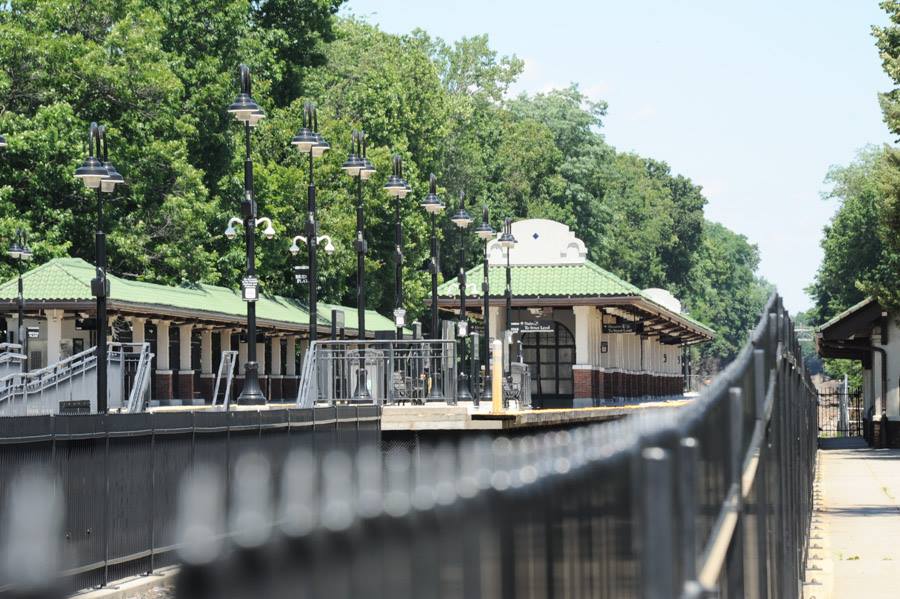
All Clear at Ridgewood Train Station

file photo by Boyd Loving

July 27,2018

the staff of the Ridgewood blog

Ridgewood NJ,  The New Jersey Transit Police Department  has partnered with Nextdoor, a global, private social network for neighborhoods to utilize the social media app to help increase active “eyes and ears’’ surrounding NJ TRANSIT’s infrastructure.

“Safety is the number one priority for NJ TRANSIT,’’ said Executive Director Kevin Corbett. “The New Jersey Transit Police Department is continually looking at innovative strategies to maintain a safe and secure transit system and is the first transit police department to leverage the Nextdoor neighborhood social network. It will improve direct communication for both sides by allowing the sharing of vital information. Residents will have a chance to express their concerns regarding safety to the very officers who patrol and command their ‘home turf.’ It is a win-win situation.’’

This first-of-its-kind partnership between the New Jersey Transit Police Department and Nextdoor will enhance community policing by helping decrease rail line crime and accidents and promote interaction between those who live within a close proximity to NJ TRANSIT rail and light rail lines and stations, and bus terminals.

“NJ TRANSIT understands how important it is to maintain positive relationships with the local communities we serve,’’ said New Jersey Transit Police Chief Christopher Trucillo. “By utilizing the Nextdoor network, the members of the New Jersey Transit Police Department will be able to directly communicate with our unofficial “eyes and ears,’’ the members of the communities we serve. At NJ TRANSIT, we see the partnership with Nextdoor as a tool to strengthen our connections to these local communities, and it gives our neighbors a way to get to know the men and women of the New Jersey Transit Police Department.’’

For video of today’s news conference, visit https://www.youtube.com/watch?v=GHEcsdukwDI

The New Jersey Transit Police Department will not be able to access residents’ network information or content on Nextdoor.

With access to Nextdoor’s public agency platform, the New Jersey Transit Police Department will be able to geo-target Nextdoor residents who live within a one-mile radius of rail and light rail lines and stations, and bus terminals to:

  • Inform nearby residents of criminal activity such as theft and vandalism;
  • Educate residents on how to report suspicious activity;
  • Provide educational information on how to teach children about the dangers of railroad tracks; and
  • Increase the number of residents who interact with New Jersey Transit Police officers who patrol nearby stations and terminals.

Nextdoor is free for residents and the New Jersey Transit Police Department.

Founded in 2010, Nextdoor is a private, hyperlocal social network for neighborhoods used by verified NJ residents. Local residents use Nextdoor for a variety of things such as finding a babysitter to addressing crime and quality-of-life concerns.

This past spring, the New Jersey Transit Police Department conducted a pilot test of the platform for neighborhoods along the Hudson-Bergen Light Rail and Morris & Essex stations. Feedback indicated that neighbors were overwhelming in favor of the partnership.

Those who live within one-mile of NJ TRANSIT’s rail and light rail lines, train stations and bus terminals may sign up for Nextdoor at https://nextdoor.com/agency/new-jersey-transit-police-department/?i=ktzxwqknqbpdnxqhmhwr.

To report a crime in progress or request immediate police or emergency assistance, call 9-1-1 or the New Jersey Transit Police Communications Center at 800-242-0236 or text NJTPD (65873).

Posted on 7 Comments

Hudson-Bergen Light Rail (HBLR) service Extenting into Bergen County

6024ca79a9063d641

July 5,2018

the staff of the Ridgewood blog

What is Northern Branch?

The Northern Branch is a freight rail line owned by CSX Transportation that runs through Hudson and Bergen Counties to the New York State Border. The Northern Branch Corridor, through which the rail line traverses, is a densely settled suburban environment that has not been served by passenger rail since the discontinuation of service on the Northern Branch and West Shore Lines in the 1950s and 60s.

The Northern Branch Corridor Project calls for transit improvements in northeastern Hudson and southeastern Bergen Counties through the restoration of passenger rail service on an existing freight rail line. The electric light rail service would operate on West Side Avenue in North Bergen, and then on existing railroad right-of-way owned by CSX Transportation (CSX) between 91st Street in North Bergen and the northern border of Englewood and would introduce new station stops in North Bergen, Ridgefield, Palisades Park, Leonia, and Englewood.

Project Planning
The growth of automobile usage and accompanying roadway congestion in recent decades led planners and officials to search for solutions to the growing traffic problems in the Bergen County area. In the mid-1990s the West Shore Region Study provided a comprehensive examination of multi-modal opportunities throughout Bergen County, New Jersey and Rockland County, New York. Recommended for further study was an extension of the Hudson-Bergen Light Rail (HBLR) from 85th Street in North Bergen along the Northern Branch to Tenafly, New Jersey.

The Northern Branch Corridor DEIS was prepared by NJ TRANSIT in cooperation with the Federal Transit Administration (FTA) to evaluate the benefits, costs and social, economic and environmental impacts of constructing and operating passenger rail service on the Northern Branch. The DEIS evaluated two Build Alternatives: the Preferred Alternative, which extended existing Hudson-Bergen Light Rail (HBLR) service from North Bergen to the Tenafly-Cresskill border, and a similar HBLR extension that terminated at Route 4 in Englewood.

The DEIS was published in November 2011, and can be reviewed here: Northern Branch DEIS.

Public hearings were held in January 2012, and the public comment period closed on February 21, 2012. More than 1,200 comments were received and reviewed by NJ TRANSIT. While many comments expressed support for the service, residents and community leaders in Tenafly were strongly opposed to the extension of service into their community. After considering the comments, FTA and NJ TRANSIT have developed a new alignment that would extend HBLR service from North Bergen to Englewood Hospital, which is north of Route 4 and south of Tenafly. Light rail service would not extend past Englewood.

This new alignment results in changes to the service plan and potential environmental and social impacts explored in the DEIS circulated for comment in 2012. As a result, this new alignment and associated changes have been analyzed in a Supplemental DEIS (SDEIS) and circulated for public comment and agency feedback in a process closely approximating the one undertaken for the DEIS.
The SDEIS was published on March 24, 2017, and can be reviewed here: Northern Branch SDEIS.

Similar to a DEIS, an SDEIS requires a public hearing and public comment period. The comments on the SDEIS and DEIS will be addressed together in the Final Environmental Impact Statement (FEIS). A 60-day public comment period will follow the notice of availability (NOA) of the SDEIS, during which time NJ TRANSIT will hold a public hearing. Comments will be collected and reviewed in the same manner as conducted for the DEIS. Provided that the SDEIS comments do not present compelling arguments for substantial revision to the SDEIS Preferred Alternative, an FEIS will be prepared, incorporating the SDEIS findings and unchanged elements from the DEIS. A response to comments chapter will be included in the FEIS, addressing all comments received during the prior two comment periods.

Posted on 1 Comment

Pedestrian Fatally Struck by a NJ Transit Pascack Valley Line Train in Oradell

35819490 882629331923101 2059907473833197568 o

Photos courtesy of Boyd Loving’s Facebook page

June 21,2018

the staff of the Ridgewood blog

Oradell NJ, A pedestrian trespasser was fatally struck by a NJ Transit Pascack Valley Line train just south of New Milford Avenue in Oradell on Wednesday evening, 06/20. The train, carrying dozens of passengers, was traveling from Hoboken to Spring Valley, NY. No injuries to any passengers of members of the train crew were reported. Passengers on board when the incident occurred were taken to their final destinations by NJ Transit buses. NJ Transit Police, Oradell Police, and New Milford Police officers were observed at the scene. Oradell Fire Department and a paramedic unit from Hackensack University Medical Center also responded to the scene.

Posted on Leave a comment

NJ TRANSIT APPROVES FINANCING AGREEMENT FOR NEW PORTAL BRIDGE

35227564 1686888708058059 5104729348972216320 o

June 16,2018

the staff of the Ridgewood blog

Ridgewood NJ, The NJ TRANSIT Board of Directors today approved a financing agreement with the New Jersey Economic Development Authority (EDA) which provides up to $600 million toward the construction of a new Portal Bridge.  The commitment solidifies New Jersey’s local share of the project cost.

“We’re not going to kick the can down the road any longer,” said Department of Transportation Commissioner and NJ TRANSIT Board Chair Diane Gutierrez-Scaccetti.   “The time is long overdue for a new Portal Bridge, which is the foundation of many commuter frustrations.  The taxpayers of New Jersey deserve a transportation system which will drive the economy and reliably get them to jobs, schools, and recreation.”

“This funding is proof that Governor Murphy, NJ TRANSIT and the State of New Jersey are firmly committed to advancing this vital transportation infrastructure project,” said NJ TRANSIT Executive Director Kevin Corbett.  “A better tomorrow for NJ TRANSIT starts today.  Our customers have suffered far too long from the outdated, unreliable Portal Bridge.  A new bridge can’t wait any longer.”

The resolution approved by the NJ TRANSIT Board of Directors authorizes the Executive Director in consultation with the Board Chair to execute and deliver the funding agreement with the NJEDA.  The EDA will issue up to $600 million in bonds which will be paid back over a 30-year term from the state Transportation Trust Fund (TTF).  This same funding structure was utilized in 1999 for the construction of the River LINE light rail system.

BACKGROUND

The existing Portal Bridge, built in 1910, is a two-track, railroad swing-type drawbridge that spans the Hackensack River in New Jersey. The project will replace the existing two-track Portal Bridge with a new two-track fixed structure that will be approximately 2.33 miles long and will have a clearance that accommodates current and forecasted maritime traffic, which will eliminate the need for a moveable span that interrupts rail operations and results in delays due to mechanical failures. When built, the new Portal North Bridge will allow for a 10 percent increase in peak hour passenger capacity.

On July 14, 2016, NJ TRANSIT entered into the Project Development phase of the FTA’s Capital Investment Grant (CIG) program. The Preliminary Design Phase for construction of the new Portal North Bridge is complete and a Record of Decision was received from the FTA in July 2017. Early Work construction, including utility relocation and Right of Way acquisition is underway.  NJ TRANSIT is the project sponsor for the new Portal North Bridge project.

In September 2017, NJ TRANSIT applied for CIG funding that, if approved by the FTA and received by NJ TRANSIT, would cover a share of all project costs. The board actions by NJ TRANSIT and NJEDA will support the application for CIG funds to move forward with an improved rating.

The new Portal North Bridge is fully designed and fully permitted.

Posted on Leave a comment

New Jersey Transit Looks at Additional Fare Payment Options

Utah Software Engineer Mints Physical Bitcoins

June 14,2018
the staff of the Ridgewood blog

Ridgewood NJ, In a continuing effort to improve the customer experience, NJ TRANSIT is taking steps to modernize the fare payment system and offer additional payment options. The proposed upgrades seek to reduce cash and paper-based tickets while providing customers with quick, easy and convenient ways to pay.

“Improving the customer experience has been at the top of my priority list,” said NJ TRANSIT Executive Director Kevin Corbett. “Giving customers the ability to utilize the latest technology to pay fares offers a major convenience to them and multiple benefits including easier payment options, speeding up boarding and making our collection systems more efficient and up to date.”

A contract renewal approved by the NJ TRANSIT Board of Directors earlier this year with Conduent Transport Solutions Inc. of Somerset, New Jersey, includes provisions to accept mobile payments, open bank cards and a NJ TRANSIT fare card.

The contract allows NJ TRANSIT and Conduent to develop the future of fare payment systems within the NJ TRANSIT system including:

The acceptance of mobile payments and open contactless bank cards.

A new contactless NJ TRANSIT fare card with options to add cash value to the card at local retailers.

Customer account management through the NJ TRANSIT App or online.

Installation of more than 2,500 validators on the bus fleet and on light rail platforms to accept the contactless fare card, mobile payments and barcodes.

Upgrades to TVMs, ticket office machines and the MyTix sales feature of the Mobile App.

These emerging technologies will incorporate an account based system where customers can manage their account, view ride and ticket history, check balances and add value. Customers who do not have access to mobile payments or contactless bank cards, will achieve the same level of convenience using a contactless NJ TRANSIT fare card. As a result, all customers will experience greater convenience with a tap and ride feel.

The current electronic ticketing through the Mobile App will continue to be used, upgraded and expanded. The contactless fare card is a great option for our cash customers and would be a complement to the NJ TRANSIT Mobile App, MyTix ticketing.

Posted on Leave a comment

NJ Transit Moves forward on Positive Train Control (PTC) equipment on its rail fleet

Ridgewood-Trainstation1_theridgewoodblog

June 5,2018

the staff of the Ridgewood blog

Ridgewood NJ, While NJ TRANSIT continues to install Positive Train Control (PTC) equipment on its rail fleet, adjustments to weekday schedules are needed to allow for hardware components to be installed on locomotives and cab cars. Beginning Monday, June 4, some weekday trains will be temporarily discontinued or have changes to their origin and/or destinations.

These changes will primarily impact customers along the Northeast Corridor, North Jersey Coast Line, Morris & Essex Lines and Pascack Valley Line and may affect customers connecting with these services. Other trains throughout the system will have schedule and/or station stop changes. These schedule adjustments are temporary and will be restored in early 2019. There are no changes planned for weekend service.

NJ TRANSIT’s highest priority is safety and the proper installation of Positive Train Control (PTC). As we progress with the implementation of this critical safety enhancement feature, it is important to remember that NJ TRANSIT remains a safe rail system and will continue to operate safely until PTC is fully implemented.

Positive Train Control (PTC) is technology to enhance rail safety by monitoring and controlling train movements. Using Global Positioning System (GPS) technology, Wi-Fi and high band radio transmission, PTC is capable of automatically controlling train speeds and movements, thereby reducing the risk of accidents due to human error.
The Rail Safety Improvement Act of 2008, passed by Congress, requires the implementation of a PTC system on all non-exempt commuter railroads, including NJ TRANSIT. PTC is intended to prevent:

Train-to-train collisions;
Derailments caused by excessive speed;
Unauthorized train movements in work zones; and
Movement of trains through switches left in the wrong position.

As a new technology, PTC requires design, development, prototype testing, equipment retrofitting and system-wide track implementation.


Posted on Leave a comment

NJ TRANSIT DEPLOYS NEW FARE COLLECTION TECHNOLOGY ON TRAINS

Ridgewood_Train_station_train-_is_coming_theridgewoodblog

Pilot Program Will Provide Handheld Mobile Devices to Train Crews for Ticket Validation and Improved Onboard Communications

May 20,2018

the staff of the Ridgewood blog

Ridgewood NJ,  NJ TRANSIT is going high-tech with fare collection on trains. A pilot program is launching in which select train crews will use handheld mobile devices to scan and validate tickets.

“As part of our effort to restore NJ TRANSIT as a national leader, we are utilizing the latest technology to improve our processes and ultimately improve the customer experience,” said NJ TRANSIT Executive Director Kevin Corbett. “Not only will these handheld devices scan and validate tickets, they’ll also have the capability of giving crews real time information to enhance customer communication.”

As part of the pilot program launching this week, a small number of train crews across multiple rail lines will begin utilizing the handheld mobile devices. Crew members will use the devices to scan the barcodes on all paper and electronic tickets, including monthly passes. Once a ticket is scanned, a crew member will instantly be able to determine if the ticket is valid. One-way tickets would have their barcodes cancelled electronically to ensure they are not used again. Currently, crews visually inspect all electronic tickets and paper passes and use manual punches to cancel paper tickets.

By scanning all ticket types, NJ TRANSIT will have improved capability to collect and analyze data including fare collection and ridership trends. Electronic scanning also combats against the use of fraudulent tickets.

The handheld devices will support future applications including providing real time communication with conductors to enhance the flow of information to customers. Electronic scanning also provides future capability of enabling offline electronic ticketing, which would no longer require customers to have internet access to activate electronic tickets.

The pilot program will collect feedback on the handheld mobile devices and make refinements before initiating a gradual systemwide rollout.

Posted on 1 Comment

Cardinale Bill Calling for Congressional Assistance in Funding Positive Train Control Systems Moves Forward

Ridgewood Train Station

file photo by ArtChick

May 12,2018
the staff of the Ridgewood blog

Ridgewood NJ, The Senate Transportation Committee passed legislation sponsored by Senator Gerry Cardinale (R-39) which encourages the federal government to assist with implementing Positive Train Control (PTC) technology on New Jersey railways.

Sen. Gerry Cardinale’s legislation encourages the federal government to assist with implementing PTC technology on New Jersey railways. (SenateNJ.com)

“By repeatedly underfunding large scale train safety projects, Congress is placing the lives of New Jerseyans at risk,” Cardinale said. “With technological advances that remove human error, such as positive train control, we are able to safeguard passengers and our communities from future train derailments and crashes.”

Positive Train Control (PTC) is a safety system designed to automatically stop a train. It has the ability to prevent accidents like collisions and derailments by slowing the train without input from an engineer on board, removing the possible human error.

On average, 2 million passengers are transported by NJ Transit’s train and light rail systems each week.

Cardinale’s legislation, SJR-12, urges the federal government to take decisive and swift measures to assist with the implementation of positive train control technology on New Jersey railways.

Additionally, the bill requests, if necessary, to extend the deadline for the installation of positive train control technology.

As of December 31, 2017, the Federal Railroad Administration (FRA) noted in a letter to NJ Transit that the FRA was concerned that NJ Transit would not meet the December 31, 2018 deadline. NJ Transit has only installed required hardware on 35 of the 440 locomotives in the NJ Transit fleet and had only trained 143 of 1,100 employees on the new system.

“We pay a high price by failing to implement this lifesaving train technology, as we saw with the crash in Hoboken,” Cardinale added. “Today, we continue our efforts to encourage Congress to deliver the necessary funding to provide the safest ride possible for our commuters. ”

The legislation now heads to the full Senate for a vote.

Posted on Leave a comment

NJ TRANSIT OFFERS EXTRA BUS SERVICE FROM RIDGEWOOD TO NEW YORK FOR ST. PATRICK’S DAY PARADE

ridgewood bus station

file photo

Beverages will not be permitted on any train, light rail vehicle or bus

March 16,2018

the staff of the Ridgewood blog

Ridgewood NJ, NJ TRANSIT will operate extra bus service on selected routes to and from the Port Authority Bus Terminal (PABT) on Saturday, March 17, to accommodate customers traveling to the annual St. Patrick’s Day Parade in New York City. Trains will operate on a regular weekend schedule. Newark Light Rail will operate on a Saturday schedule. Hudson-Bergen Light Rail will operate on a weekend schedule.

IMPORTANT NOTE: No beverages of any kind, in any type of container, open or closed, will be permitted on board trains, buses or light rail vehicles on Saturday, March 17, and Sunday, March 18. This policy will be strictly enforced.

NJ TRANSIT will have Ambassadors on hand at Secaucus Junction, Aberdeen/Matawan, Middletown, N.J., and Penn Station New York to assist customers traveling to/from the parade in New York City.

Extra trips to and from New York will be offered on the following bus routes:

To New York – PABT:

No. 163 (Ridgewood – New York) additional local trips from Hackensack (Summit Ave. and Essex St.) to PABT from 8:20 a.m. until 11:20 a.m. operating via the Boulevard in Hasbrouck Heights, Wood-Ridge, Carlstadt, and East Rutherford.

From New York – PABT:

No. 163 (New York – Ridgewood) additional local service from PABT to Hackensack (Arcola in Paramus) operating local route through East Rutherford, Carlstadt, Wood-Ridge, Hasbrouck Heights and Hackensack every hour beginning at 3:15 p.m. to 10:15 p.m.

Travel Tips

Ticketing: To speed your return, purchase round-trip tickets at the start of your trip from bus operators inbound to New York or at ticket vending machines where available. Bus customers departing Port Authority Bus Terminal (PABT) are reminded that tickets must be purchased before boarding the bus.
Allow Extra Travel Time: Traffic congestion before and after the parade may affect bus travel times to New York City. Customers should plan accordingly.
Parking: Customers traveling from Park/Rides at Allwood Road, North Bergen, Willowbrook Mall, Mothers and Wayne/Route 23 Transit Center are advised that parking fees still apply.
IMPORTANT NOTE: No beverages, in any type of container, open or closed, will be permitted on any train to and from New York/Hoboken. This policy will be strictly enforced. Beverages of any kind are prohibited at all times on board buses.

Posted on Leave a comment

BREAKING UPDATE : RETURN TO FULL SERVICE FOR NJ TRANSIT

jpg4

TRANSIT ALERT UPDATE: NJT trains are subject to up to 60-minute delays following a pedestrian strike earlier this morning in #Secaucus. Amtrak says a train carrying 135 passengers from New York City to Savannah, Georgia hit a trespasser shortly after 6 a.m. The tracks between Newark Penn Station and New York Penn Station have partially reopened but police are still on the scene investigating. Midtown trains are being diverted to Hoboken. Cross-honoring is in effect for NJ Transit buses and #PATH at Newark Penn Station, Hoboken and 33rd street in Manhattan.

March 9,2018

rthe staff of the Ridgewood blog

Ridgewood NJ,  NJ TRANSIT rail, bus, light rail and Access Link services will all operate on a regular weekday schedule for Friday, March 9, 2018. Rail, bus, and light rail crews, along with the New Jersey Transit Police Department, worked continuously to prepare for, and recover from, the devastating effects of this powerful storm that caused significant impacts across our entire transportation network.

For the latest travel information, customers should visit njtransit.com, access NJ TRANSIT’s Twitter feed at @NJTRANSIT or listen to broadcast traffic reports. Additionally, NJ TRANSIT will provide the most current service information via the My Transit alert system (www.njtransit.com/mytransit), which delivers travel advisories to your smartphone. Service information is also available by calling (973) 275-5555.

Due to the freeze/thaw cycle, customers are advised to use extreme caution around bus stops, station and facilities as slippery conditions may exist. Customers should also build extra travel time into their schedules as residual delays and some cancellations may occur from the residual effects of the storm.

NJ TRANSIT crews removed well over 100 trees and branches which blocked rail tracks across the state in order to restore service. To get to the affected areas, crews had to walk in significant amounts of snow, up to 20 inches in some cases, to remove these trees and branches.

Posted on Leave a comment

NJ Transit will be Cross-honoring During Impending Storm

Ridgewood _Train_station_theridgewoodblog

March 2,2018

the staff of the Ridgewood blog

Ridgewood NJ, NJ TRANSIT anticipates regular weekday service on its rail, bus and light rail systems for the service day on Friday, March 2 and regular weekend service on Saturday, March 3 as parts of the state are subject to an intense Nor’easter with coastal flooding, high winds, heavy rain, and even snow in northwestern New Jersey predicted. Cross-honoring is in effect for rail, bus and private carriers and light rail for Friday, March 2 and Saturday, March 3.

Bus Route Nos. 196/197 only bus tickets and passes will be accepted during this time on the Port Jervis Line trains to/from Harriman, Tuxedo and Sloatsburg. Additionally, Shortline Bus will also cross-honor in Orange County, N.Y. The Warwick plan will be instituted if conditions warrant.

NJ TRANSIT will have personnel and assets in position to address any issues that may arise during or after the storm, which is expected to bring strong wind near the coast and flooding to low-lying areas.

NJ TRANSIT’s Emergency Operations Center (EOC) will open during the early morning hours on Friday and key personnel will monitor any impacts on the system throughout the duration of the storm.

Customers are strongly advised to monitor the status of the system by checking njtransit.com frequently. Customers are also encouraged to sign up for My Transit Alerts, which provide customized notifications via email or text message based on a customer’s preferred mode of travel. My Transit alerts can be accessed by creating a free account on njtransit.com. In addition, customers are advised to monitor NJ TRANSIT’s social media feeds on Twitter and Facebook, as well as tune in to broadcast traffic reports for the latest information.

Important Notes:

Cross-honoring will be in effect for Friday, March 2 and Saturday, March 3 on NJ TRANSIT bus and private carriers, rail and light rail services. At this time, it is not anticipated that there will be cross-honoring on PATH or NY Waterway ferries.

Regular weekday service for rail, bus, light rail and Access Link will operate as long as conditions allow.

Bus Route Nos. 196 and 197 only bus tickets and passes will be accepted during this time on the Port Jervis Line at the Harriman, Tuxedo, and Sloatsburg Stations. Shortline bus will also be cross-honoring. The Warwick plan will be instituted if conditions warrant.

Before starting your trip, visit the Travel Alerts page at njtransit.com for up-to-the-minute service information. This information is also available by calling (973) 275-5555 or from broadcast traffic reports.

Customers are encouraged to sign up for the My Transit alert system on njtransit.com, which delivers travel advisories for your specific trip to your cell phone.

Allow extra time getting to and from your destination. Use extreme caution when walking on exposed sidewalks or station platforms and when boarding trains and buses.

Listen closely to public address announcements at stations for late-breaking service information.

Posted on 2 Comments

NJ Transit Environmental Review to Move forward with Hudson-Bergen Light Rail expansion

NJT light rail


February 14, 2018

the staff of the Ridgewood blog

Ridgewood NJ, In a unanimous vote, the NJ TRANSIT Board of Directors approved the proposed alignment of the Hudson-Bergen Light Rail’s planned expansion into Bergen County as described in the Supplemental Draft Environmental Impact statement dated March 2017. The selection of the “Locally Preferred Alternative” is required as part of the federal environmental review process.

The Board action also authorizes the submission of the Locally Preferred Alternative to the North Jersey Transportation Planning Authority Board of Trustees for designation and inclusion in their Long-Range Regional Transportation Plan.

During Project Development the project sponsor must select a Locally Preferred Alternative; get the Locally Preferred Alternative adopted into the fiscally constrained metropolitan transportation plan; and complete the environmental review process under the National Environmental Policy Act (NEPA).

By selecting the Locally Preferred Alternative at this time, NJ TRANSIT will be able to initiate design and engineering activities upon completion of the Final Environmental Impact Statement and receipt of the Record of Decision from the FTA, in advance of requesting entry into Project Development.

Locally Preferred Alternative

The Locally Preferred Alternative consists of a 10-mile two-track extension of the HBLR from its current terminus at Tonnelle Avenue northward to the Englewood Hospital and Medical Center, generally utilizing CSX Transportation’s Northern Branch running track. The project will construct a total of seven stations in North Bergen, Ridgefield, Palisades Park, Leonia, and Englewood (three stations) and parking for approximately 2,740 vehicles. Service is proposed to operate from 5:00 a.m. to 1:00 a.m. with six-minute headways during the peak period and 15-minute headways during the off-peak period. It is estimated that the project will serve 12,370 passengers per average weekday in the year 2030.

See attached map for a visual of the route of the Locally Preferred Alternative.


Posted on Leave a comment

NJ TRANSIT TO PURCHASE ADDITIONAL DUAL-POWERED LOCOMOTIVES

ridgewood train station

December 18, 2017
the staff of the Ridgewood blog

Ridgewood NJ, The NJ TRANSIT Board of Directors today approved the purchase of 17 additional dual-powered locomotives manufactured by Bombardier Transit Corporation. The new locomotives will allow NJ TRANSIT Rail Operations to retire some of the oldest locomotives in the fleet to increase mechanical reliability, operational flexibility and efficiency.

“The addition of these new dual-powered locomotives continues our effort to modernize our rail fleet,” said Executive Director Steven H. Santoro. “These locomotives can operate across the entire rail system in either electric or diesel mode providing us with greater versatility and operating efficiency.”

The ALP45 locomotives will replace NJ TRANSIT’s aging fleet of GP40 and F40-series locomotives, which were initially manufactured in the late 1960s. The older locomotives have reached the end of their service life and have become increasingly more expensive to maintain. In addition, the GP40s and F40s are becoming functionally obsolete as a result of their limited pulling power and ability to provide electrical power to the larger, heavier multi-level passenger coaches.

The ALP45 locomotives are designed to operate push-pull passenger train service on both electrified and non-electrified lines at speeds of up to 125 mph in electric mode and up to 100 mph in diesel mode. The locomotives will meet the current EPA Tier IV requirements, reducing emissions compared to the locomotives to be replaced when operating in diesel mode, and producing no emissions when operating in electric mode. The ALP45s offer a significant increase in horsepower, acceleration and available head-end power over the GP40s they will be replacing.

In 2008, the Board of Directors approved a contract with Bombardier Transit Corporation for the purchase of 26 ALP45 dual-powered locomotives, with an option to purchase up to 63 additional locomotives in the future. In July 2011, NJ TRANSIT purchased 9 additional locomotives, increasing the total number of ALP45s to 35. The first locomotive was delivered in December 2011. The introduction of the dual-powered ALP45s in 2011 marked a first for this technology in the United States.

Today, the Board approved the purchase of 17 additional ALP45 locomotives at a total contract authorization of $184.5 million, under the 2008 contract with Bombardier Transit Corporation.

Posted on Leave a comment

NJ TRANSIT SAYS LEAVE YOUR BOOZE AT HOME DURING SANTACON

SantaCon

December 9, 2017
the staff of the Ridgewood blog

Ridgewood NJ, just a reminder if you are traveling in and out of the city today ,be it for SantCon or not ,NJ TRANSIT is prohibiting liquid beverages on all of its trains, light rail vehicles and buses on Saturday December 9th and the early morning of Sunday December 10th to coincide with the annual SantaCon event in New York City.

NJT says ,”This policy will be strictly enforced. ”

Reminder: All beverages, including alcohol, are not permitted on NJ TRANSIT buses at any time regardless of event.

Posted on 1 Comment

NJ TRANSIT DEPLOYS AQUATRACK UNITS FOR FALL LEAF CLEANING

lasttraintoclarksville_theridgewoodblog

October 16,2017

the staff of the Ridgewood blog

Ridgewood NJ, NJ TRANSIT is once again waging its annual battle against Mother Nature and fallen leaves on the rails.  NJ TRANSIT is deploying its two AquaTrack machines throughout the fall season.

The AquaTrack equipment is a high-pressure power-washing system which removes leaves and oily residue from the tracks in an effort to prevent train delays caused by “slippery rail” conditions.

Last year, NJ TRANSIT unveiled its second AquaTrack unit which allows the cleaning process to maintain a larger coverage area in helping to prevent delays.

“While there is no way to completely eliminate the effect Mother Nature has on the railroad, the AquaTrack units have had great success in managing leaf-related slippage on our rails,” said NJ TRANSIT Executive Director Steve Santoro.  “By utilizing these two highly specialized pieces of equipment, we can keep the rails free and clear of fallen leaves, increasing safety and keeping trains running on time.”

Fallen leaves left on rail tracks can cause a condition known as “slippery rail” – a challenge facing all railroads in the Northeast and other parts of the world where deciduous trees are prevalent.  The decaying leaves create an oily residue that coats the rails and causes poor traction.  The decreased train speeds, in turn, create delays.

The AquaTrack system has been in use by NJ TRANSIT since October 2003.  It consists of two 250-horsepower diesel-engine units mounted on a flat car with an operator control cab.  Two pressure-pump units dispense water up to 20,000 pounds-per-square-inch directly to the top of the rail.  The process uses 17 gallons of water per minute.

The original AquaTrack operated primarily on the M&E and Montclair-Boonton lines, which face particular challenges including the hilly areas around Glen Ridge and Summit stations, washing the rails twice a day Monday through Friday—once overnight and again during midday hours.  On weekends, the Pascack Valley and Main/Bergen County lines are usually covered.  The addition of a second unit last year added cleaning on the Raritan Valley and North Jersey Coast Lines.

In addition to AquaTrack, NJ TRANSIT strategically spreads sand on the rails in front of peak-period trains to increase traction.  NJ TRANSIT also trims trees to help stem the amount of leaves on the tracks.  The leaf clearing operation runs from mid-October through mid-December.