As the Obama administration prepares to publish a long-delayed accounting of how many militants and noncombatant civilians it has killed since 2009, its statistics may be defined as much by what is left out as by what is included.
Release of the information was first envisioned three years ago this month, as part of strict new guidelines President Obama announced for the United States’ controversial use of drones and other forms of lethal force to battle terrorism abroad. Such operations, Obama said in a 2013 speech at the National Defense University, would also be subject to new transparency and oversight.
U.S. productivity growth, the greatest determinant of living standards, has been lower for the past five years than any five-year period on record. New data from the U.S. Bureau of Labor Statistics shows that productivity growth has averaged 0.4%per year over the past half-decade. This is 82% below the average of the prior six decades, which is as far back as this data extends.
The importance of productivity growth has been described in blunt terms by:
Federal Reserve Chair Janet Yellen, who stated that “the most important factor determining living standards is productivity growth.”
the Congressional Budget Office (CBO), which reported that “a small change in the growth of productivity” over an extended period can inflict more harm than recessions, because lower productivity reduces economic “output by an ever-increasing amount.”
U.S. Bureau of Labor Statistics economist Betty W. Su, who wrote that “high productivity growth” affords people with a “higher standard of living and quality of life.”
Productivity growth is especially vital for people with low incomes, because low-wage workers in highly productive nations have much better standards of living than their peers in less productive ones. For example, McDonald’s workers in the U.S. can buy about 2.4 Big Macs with their earnings from an hour of work, but this drops to:
2.2 Big Macs in Western Europe,
0.8 Big Macs in Eastern Europe, and
0.4 Big Macs in Latin America.
This amounts to a stunning 500% premium in purchasing power in the U.S. versus Latin America. As detailed by Princeton economics professor Orley C. Ashenfelter, McDonalds’ workers across the world perform the same jobs with the same levels of productivity, but because they live in nations with different levels of productivity, these workers have vastly different standards of living.
U.S. concern grows over possible Venezuela meltdown: officials
WASHINGTON | BY MATT SPETALNICK
The United States is increasingly concerned about the potential for an economic and political meltdown in Venezuela, spurred by fears of a debt default, growing street protests and deterioration of its oil sector, U.S. intelligence officials said on Friday.
In a bleak assessment of Venezuela’s worsening crisis, the senior officials expressed doubt that unpopular leftist President Nicolas Maduro would allow a recall referendum this year, despite opposition-led protests demanding a vote to decide whether he stays in office.
But the two officials, briefing a small group of reporters in Washington, predicted that Maduro, who heads Latin America’s most ardently anti-U.S. government and a major U.S. oil supplier, was not likely to be able to complete his term, which is due to end after elections in late 2018.
They said one “plausible” scenario would be that Maduro’s own party or powerful political figures would force him out and would not rule out the possibility of a military coup. Still, they said there was no evidence of any active plotting or that he had lost support from the country’s generals.
The officials appeared to acknowledge that Washington has little leverage in how the situation unfolds in Venezuela, where any U.S. role draws government accusations of U.S.-aided conspiracies. Instead, the administration of President Barack Obama wants “regional” efforts to help keep the country from sliding into chaos.
“You can hear the ice cracking. You know there’s a crisis coming,” one U.S. official said. “Our pressure on this isn’t going to resolve this issue.”
Mark Twain is credited with saying “figures don’t lie, but liars figure.” If he were around today Twain’s quote might go something like this: “Figures do lie, and liars figure out how to make people believe them.”
Granted, not as catchy.
But my quote goes a long way toward explaining something that is bothering many political pundits today. President Obama whined last week that he’s not getting enough credit for the economy.
Democrats are besides themselves wondering why Americans are so angry that they might be willing to elect Donald Trump president when the official unemployment rate is only 5%, oil prices are near their lowest level in a decade and the economy has been expanding for seven straight years.
Why aren’t Americans happier?
One of those pundits made me chuckle Tuesday night when he was talking about Trump’s primaries victories in another five states. He suggested that Americans were somehow being brainwashed by the media into thinking the economy was really bad when in fact it was good.
By Dave Boyer – The Washington Times – Thursday, April 28, 2016
The White House labored Thursday to explain a first-quarter economic report showing the weakest growth in two years, even as President Obama was trumpeting his mastery of the economy in a New York Times Magazine interview.
The Department of Commerce reported that U.S. gross domestic product rose 0.5 percent in the first quarter of 2016, the third straight sluggish start to a year. Consumer spending and business purchases both fell, continuing trends that could have ominous implications for Hillary Clinton’s presidential campaign as she tries to claim the mantle as Mr. Obama’s successor.
WASHINGTON (MarketWatch) — The U.S. economy sputtered in the first quarter, expanding at the slowest pace in two years as business slashed investment by the steepest amount since the Great Recession.
Gross domestic product, the sum of a nation’s economy, slowed to a 0.5% annual growth rate in the first three months of 2016, the government said Thursday. The U.S. had grown 1.4%, 2% and 3.9% in the prior three quarters.
Consumers have been the missing link in the U.S. economic recovery and are likely to remain so absent a major change in sentiment.
Despite the seemingly endless stream of Wall Street economists who believe the U.S. is about to snap out of its malaise, most Americans think the economy is bad and getting worse, according to several recent surveys.
One of the more glaring examples of how strong pessimism has become is Gallup’s U.S. Economic Confidence Index. The measure gauges the difference between respondents who say the economy is improving or declining. The most recent results are not good.
Fully 59 percent say the economy is “getting worse” against just 37 percent who say it is “getting better.” That gap of 22 percentage points is the worst since August, according to Gallup, which polled 3,542 adults. The index carries a sampling error of plus or minus 2 percentage points.
Wall Street Journal – Congressional Letter Highlights Awkward Consequence of MetLife Case
Apr 11, 2016
By Ryan Tracy
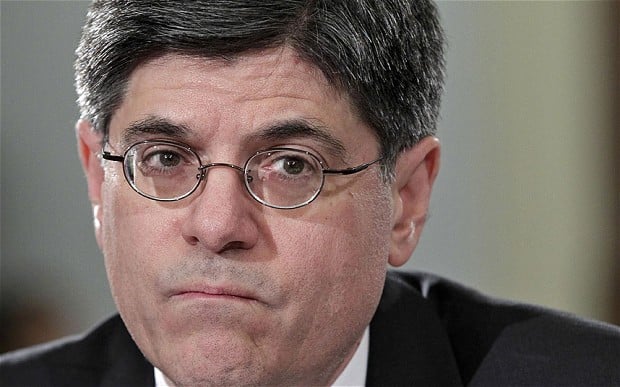
A letter sent to Treasury Secretary Jacob Lew by a member of Congress on Monday highlights the awkward international consequences of a U.S. federal judge’s decision to rescind federal oversight of MetLife Inc.
Rep. Scott Garrett (R., N.J.), chairman of the House Financial Services Committee’s subcommittee on capital markets, wrote to Mr. Lew asking how, after the decision, the U.S. now will proceed with applying new regulatory standards to insurers designated “systemically important.”
The awkward subtext: The U.S. effectively has promised other countries it will apply tighter standards to MetLife, but the federal government no longer has the authority to do so. That could be reversed if the Obama administration wins the case on appeal, a process that could take months.
Mr. Garrett’s criticisms are ones long held by the U.S. insurance industry and state insurance regulators regarding the Financial Stability Board, a group of global regulators from the U.S. and other countries.
On July 18, 2013, the FSB published a list of insurance companies it called “globally systemically important insurers” and agreed they should face tighter supervision. The Treasury Department, the Federal Reserve and Securities and Exchange Commission are U.S. representatives on the FSB. Since the FSB operates by consensus, Mr. Lew and other FSB members effectively endorsed the list of globally systemically important insurers.
That has long irked the insurance industry and regulatory critics such as Mr. Garrett, who point out the list was developed before U.S. regulators on the U.S. Financial Stability Oversight Council decided to apply stricter rules to domestic insurance companies. MetLife was on the July 2013 FSB list, along with rivals American International Group Inc. and Prudential Financial Inc., but MetLife wasn’t designated “systemically important” in the U.S. until December 2014. Prudential received the label in September 2013, and AIG received it July 8, 2013.
Mr. Garrett on Monday asked for a series of documents from Mr. Lew related to the FSB work. He also asked whether Mr. Lew plans to continue pursuing the stricter international standards the U.S. has agreed to apply to MetLife, now that the court has rescinded the federal government’s authority to do so.
MetLife is still overseen by state regulators, including in its home state of New York, and it is possible those regulators could take the view the firm deserves stricter rules because of its size and potential impact on the economy. But state regulators aren’t part of the FSB—a fact that has long frustrated them—so it is far from clear that they would keep up the U.S. end of the international bargain.
A Treasury spokesman didn’t immediately respond to a request for comment.
Mr. Lew previously has said that the U.S. and international processes for determining “systemically important” firms are separate and that U.S. regulators made their own decision about applying stricter rules MetLife and the other firms without regard to any international agreement.
Ridgewood NJ, Tax Freedom Day, the day when the nation as a whole has earned enough to pay the federal, state, and local tax bill for year, will arrive 114 days into the year on April 24, according to the annual report released this morning by the nonpartisan Tax Foundation.
“Tax Freedom Day gives us a vivid representation of how much federal, state, and local tax revenue is collected each year to pay for government goods and services,” said Tax Foundation Analyst Scott Greenberg. “Arguments can be made that the tax bill is too high or too low, but in order to have an honest discussion, it’s important for taxpayers to understand the cost of government. Tax Freedom Day helps people relate to that cost.”
While the national date arrives nine days after the tax filing deadline, each state’s total federal, state, and local tax burden varies greatly. Tax Freedom Day arrives earliest in Mississippi (April 5), Tennessee (April 6), and Louisiana (April 7). On May 21, Connecticut will be the last state to reach Tax Freedom Day this year, while New Jersey (May 12) and New York (May 11) trail closely behind.
The report’s other key findings include:
This year, the national Tax Freedom Day falls on April 24, or 114 days into the year.
Collectively, Americans will spend more on taxes in 2016 than they will on food, clothing, and housing combined.
Americans will pay $3.3 trillion in federal taxes and $1.6 trillion in state and local taxes, for a total bill of almost $5.0 trillion, or 31 percent of the nation’s income.
Tax Freedom Day is one day earlier than last year, due mainly to the Protecting America from Tax Hikes Act of 2015, which made several business and individual tax cuts permanent.
If you include annual federal borrowing, which represents future taxes owed, Tax Freedom Day would occur 16 days later on May 10.
Historically, the date for Tax Freedom Day has fluctuated significantly. The latest-ever Tax Freedom Day was May 1, 2000 – meaning that Americans paid 33 percent of their collective incomes toward taxes. A century earlier, in 1900, only 5.9 percent of national income was required to pay the tax bill, and Tax Freedom Day fell January 22.
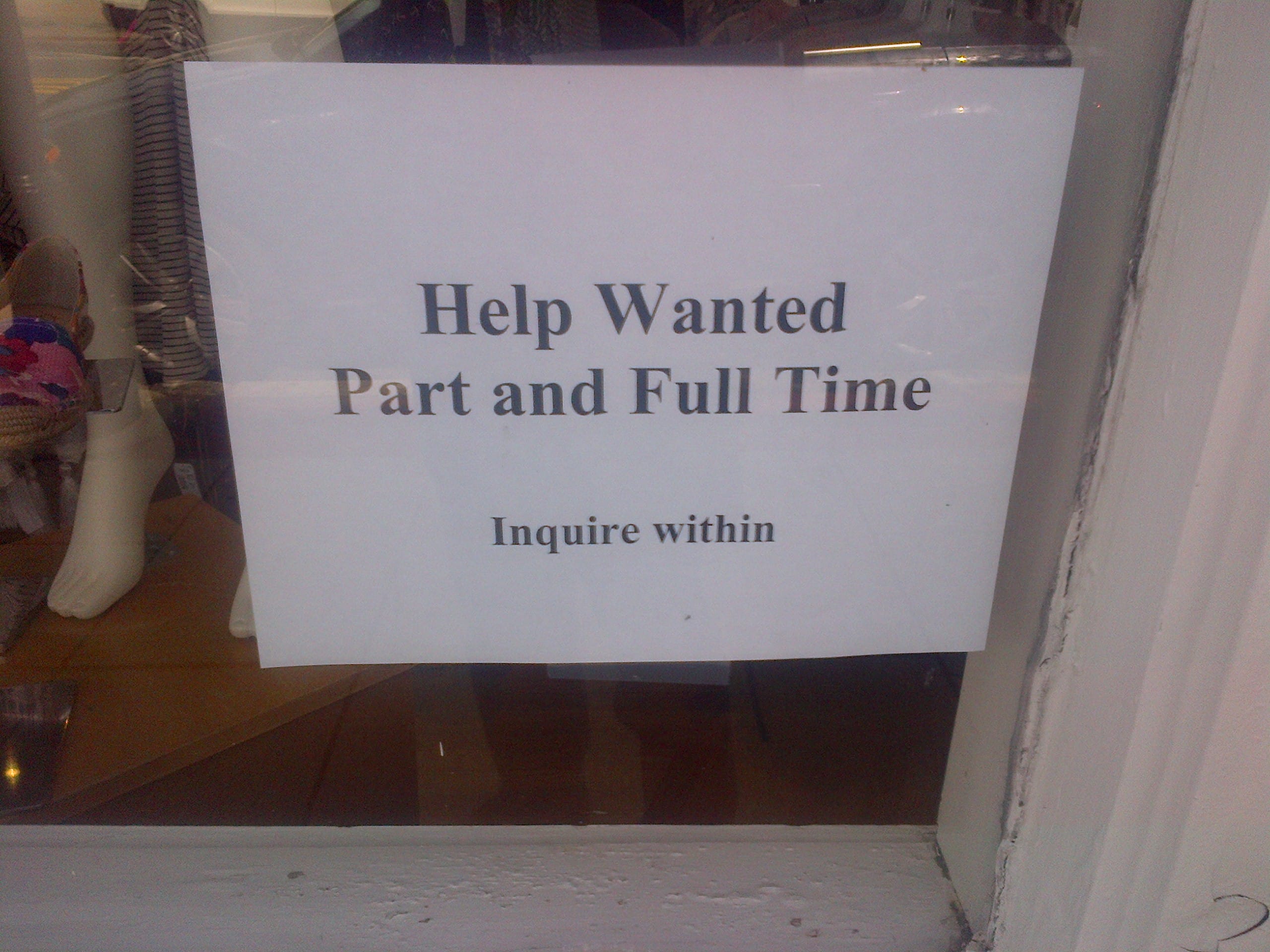
Bloomberg More Americans are finding jobs at retail stores, but they aren’t getting the kind of pay and hours they’d like.
The number of able-bodied Americans entering the labor force has surged since last fall. But in a marked change from earlier in the recovery, more of them are finding jobs right away instead of just looking for work.
What’s going on? It’s hard to say for sure, but circumstantial evidence in the latest U.S. jobs report suggests many of these newly employed workers have found part-time work with mediocre pay.
The participation rate hit a two-year high of 63% in March, climbing from a 38-year low of 62.4% in September, the government said Friday. A person is considered part of the labor force if he finds or job or is actively searching for one.
Western democracy faces no mortal threat but it is going through an acute stress test
When people strike comparisons with Hitler — or Munich — I usually reach for my earplugs. The same applies to the Great Depression. There is nothing on today’s horizon that compares with the Nazis or the mass privation that followed the 1929 stock market crash.
Yet there are echoes we would be foolish to ignore. Western democracy faces no mortal threat. But it is going through an acute stress test. On both sides of the Atlantic, people have lost faith in their public institutions. They are also losing trust in their neighbours. Co-operation is fraying and open borders are in question. We can no longer be sure the centre will hold — or even that it deserves to.
The most insidious trend is vanishing optimism about the future. Contrary to what is widely believed, the majority’s pessimism pre-dates the 2008 financial collapse. At the height of the last property bubble in 2005, Alan Greenspan, then chairman of the Federal Reserve, said society could not long tolerate a situation where most people were suffering from declining standards of living.
“This is not the sort of thing that a democratic society — a capitalist democratic society — can readily accept without addressing,” he said. This came after several years of falling median income.
For most Americans and Europeans the situation is worse today than it was then. Many have since had their homes repossessed. Median incomes were lower in 2015 than when Mr Greenspan issued his warning. A majority on both sides of the Atlantic believe their children will be worse off than they are.
According to today’s employment report, 59.8 percent of Americans ages 16 and older had jobs in February. That’s the highest employment-to-population ratio in years, and the rate of increase is clearly on the rise.
Look back some more years, though, and the story is different. The recent gains are real, but by the standards of the past few decades, a 59.8 percent employment-to-population ratio isn’t impressive.
Let this be another lesson in how the presentation of information shapes our understanding of it. The second chart paints a gloomy picture — the picture that Donald Trump may be referring to when he says the true unemployment rate is 40 percent or higher. A 59.8 percent employment-to-population ratio means that 40.2 percent of American civilians 16 and over don’t have jobs. That percentage includes high-school students, 100-year-olds and lots of other people who don’t want or need jobs, so the true unemployment rate clearlyisn’t 40 percent. Still, in April 2000 the employment-to-population ratio peaked at 64.7 percent. Now it’s significantly lower. What’s going on?
The answer that I keep gravitating to is that despite the 4.9 percent unemployment rate, the job market is still pretty weak, and probably malfunctioning in some way. This isn’t the only possible answer. In 2014, for example, two economists at the Federal Reserve Bank of New York divided people responding to the Census Bureau’s Current Population Survey (from which the unemployment rate and the charts in this article are derived) into 280 cohorts defined by “birth, sex, race/ethnicity, and educational attainment.” They determined that most of the decline in the employment-to-population ratio since 2000 could be explained by the changing makeup of the population.
But demographics aren’t destiny. The employment-to-population ratios by age group, for example, have changed a lot since 1990. First, the women:
Popular financial radio show host Dave Ramsey caused a firestorm on Twitter last week when he weighed in against the “fiduciary rule”—the controversial pending Department of Labor regulation that would impose new restrictions on a vast swath of financial professionals who handle IRAs and 401(k) accounts. Yet, Ramsey was only echoing concerns about the costs of the rule already expressed by Members of Congress from both parties.
Ramsey Tweeted, “this Obama rule will kill the Middle Class and below ability to access personal advice.” A war of Tweets then broke out between opponents of the rule, and supporters, the latter of which includes fee-based investment advisers expected to benefit from the new costs the rule will shower on their broker competitors.
Fittingly, even before Ramsey came out against the rule, one of his critics called for using the rule against Ramsey, supposedly for providing advice said critic deemed harmful to savers. In an Octoberarticle in LifeHealthPro, an online trade journal for insurance agents and financial advisers, Michael Markey, an insurance agent and owner of Legacy Financial Network, called for Ramsey to “be regulated and to be held accountable” by the government for the opinions he gives to listeners. Markey hailed the Labor Department rule as ushering a new era in which “entertainers like Dave Ramsey can no longer evade the pursuit of regulatory oversight.”
Ridgewood NJ, Donald Trump releases his Healthcare Reform Plan , its time for other candidates to do the same .
“Since March of 2010, the American people have had to suffer under the incredible economic burden of the Affordable Care Act—Obamacare. This legislation, passed by totally partisan votes in the House and Senate and signed into law by the most divisive and partisan President in American history, has tragically but predictably resulted in runaway costs, websites that don’t work, greater rationing of care, higher premiums, less competition and fewer choices. Obamacare has raised the economic uncertainty of every single person residing in this country. As it appears Obamacare is certain to collapse of its own weight, the damage done by the Democrats and President Obama, and abetted by the Supreme Court, will be difficult to repair unless the next President and a Republican congress lead the effort to bring much-needed free market reforms to the healthcare industry.
But none of these positive reforms can be accomplished without Obamacare repeal. On day one of the Trump Administration, we will ask Congress to immediately deliver a full repeal of Obamacare.
However, it is not enough to simply repeal this terrible legislation. We will work with Congress to make sure we have a series of reforms ready for implementation that follow free market principles and that will restore economic freedom and certainty to everyone in this country. By following free market principles and working together to create sound public policy that will broaden healthcare access, make healthcare more affordable and improve the quality of the care available to all Americans.
Any reform effort must begin with Congress. Since Obamacare became law, conservative Republicans have been offering reforms that can be delivered individually or as part of more comprehensive reform efforts. In the remaining sections of this policy paper, several reforms will be offered that should be considered by Congress so that on the first day of the Trump Administration, we can start the process of restoring faith in government and economic liberty to the people.
Congress must act. Our elected representatives in the House and Senate must:
Completely repeal Obamacare. Our elected representatives must eliminate the individual mandate. No person should be required to buy insurance unless he or she wants to.
Modify existing law that inhibits the sale of health insurance across state lines. As long as the plan purchased complies with state requirements, any vendor ought to be able to offer insurance in any state. By allowing full competition in this market, insurance costs will go down and consumer satisfaction will go up.
Allow individuals to fully deduct health insurance premium payments from their tax returns under the current tax system. Businesses are allowed to take these deductions so why wouldn’t Congress allow individuals the same exemptions? As we allow the free market to provide insurance coverage opportunities to companies and individuals, we must also make sure that no one slips through the cracks simply because they cannot afford insurance. We must review basic options for Medicaid and work with states to ensure that those who want healthcare coverage can have it.
Allow individuals to use Health Savings Accounts (HSAs). Contributions into HSAs should be tax-free and should be allowed to accumulate. These accounts would become part of the estate of the individual and could be passed on to heirs without fear of any death penalty. These plans should be particularly attractive to young people who are healthy and can afford high-deductible insurance plans. These funds can be used by any member of a family without penalty. The flexibility and security provided by HSAs will be of great benefit to all who participate.
Require price transparency from all healthcare providers, especially doctors and healthcare organizations like clinics and hospitals. Individuals should be able to shop to find the best prices for procedures, exams or any other medical-related procedure.
Block-grant Medicaid to the states. Nearly every state already offers benefits beyond what is required in the current Medicaid structure. The state governments know their people best and can manage the administration of Medicaid far better without federal overhead. States will have the incentives to seek out and eliminate fraud, waste and abuse to preserve our precious resources.
Remove barriers to entry into free markets for drug providers that offer safe, reliable and cheaper products. Congress will need the courage to step away from the special interests and do what is right for America. Though the pharmaceutical industry is in the private sector, drug companies provide a public service. Allowing consumers access to imported, safe and dependable drugs from overseas will bring more options to consumers.
The reforms outlined above will lower healthcare costs for all Americans. They are simply a place to start. There are other reforms that might be considered if they serve to lower costs, remove uncertainty and provide financial security for all Americans. And we must also take actions in other policy areas to lower healthcare costs and burdens. Enforcing immigration laws, eliminating fraud and waste and energizing our economy will relieve the economic pressures felt by every American. It is the moral responsibility of a nation’s government to do what is best for the people and what is in the interest of securing the future of the nation.
Providing healthcare to illegal immigrants costs us some $11 billion annually. If we were to simply enforce the current immigration laws and restrict the unbridled granting of visas to this country, we could relieve healthcare cost pressures on state and local governments.
To reduce the number of individuals needing access to programs like Medicaid and Children’s Health Insurance Program we will need to install programs that grow the economy and bring capital and jobs back to America. The best social program has always been a job – and taking care of our economy will go a long way towards reducing our dependence on public health programs.
Finally, we need to reform our mental health programs and institutions in this country. Families, without the ability to get the information needed to help those who are ailing, are too often not given the tools to help their loved ones. There are promising reforms being developed in Congress that should receive bi-partisan support.
To reform healthcare in America, we need a President who has the leadership skills, will and courage to engage the American people and convince Congress to do what is best for the country. These straightforward reforms, along with many others I have proposed throughout my campaign, will ensure that together we will Make America Great Again.”
Vision, strategy, and courage might have prevented the disaster we see today in Syria. But those elements were nowhere to be found.
LONDON — The Middle East is in flames. Just as Iraq was President George W. Bush’s catastrophic legacy, Syria will be Obama’s. Bush’s sins of commission wrought no less chaos than Obama’s sins of omission. If the Stop the War lobby’s primary motive was to avoid civilian casualties, then by any standard they should slither away shamefully into voluntarily redundancy.
By latest human rights accounts, Syria’s five-year civil war has left 470,000 dead. To add to our disgrace, we don’t even know how accurate these figures are because—as if in despair—the United Nations gave up collecting statistics 18 months ago. Syria has spiraled into the biggest humanitarian, political and security challenge of our time. The Cuban Missile crisis of 2016.
Last week in Munich, the “well-meaning but under-powered” U.S. Secretary of State John Kerry optimistically announced a temporary ceasefire, leading up to UN-brokered peace talks scheduled for Feb. 25. Onlookers meanwhile, wondered what sort of “cessation of hostilities” allows Russia to continue hostilities, and questioned whether depressing realities on the ground truly reflect Kerry’s sleight of hand.