Posted on Leave a comment

New Jersey Makes the Top 10 of States with Highest Tax Burden

for sale Ridgewood_Real_Estate_theRodgewopodblog

file photo by Boyd Loving

April 14th 2017

the staff of the Ridgewood blog

Ridgewood NJ, with Tax Day fast approaching and Republicans planning the first major overhaul of the U.S. tax code in three decades, the personal-finance website WalletHub today released its 2017 Tax Burden by State report.

In order to determine which states tax their residents most aggressively, WalletHub’s analysts compared the 50 states based on the three components of state tax burden — property taxes, individual income taxes, and sales and excise taxes — as a share of total personal income.

States with Highest Tax Burdens (%) States with Lowest Tax Burdens (%)
1 New York (12.94%) 41 Montana (7.51%)
2 Hawaii (11.27%) 42 Wyoming (7.29%)
3 Vermont (10.75%) 43 Alabama (7.19%)
4 Maine (10.73%) 44 South Dakota (7.12%)
5 Minnesota (10.24%) 45 Florida (6.79%)
6 Connecticut (10.23%) 46 New Hampshire (6.70%)
7 New Jersey (10.14%) 47 Oklahoma (6.61%)
8 Rhode Island (10.09%) 48 Tennessee (6.45%)
9 Illinois (10.00%) 49 Alaska (6.27%)
10 California (9.52%) 50 Delaware (5.59%)

Key Stats

  • Red states have a lower overall tax burden, with an average rank of 30.27, than Blue states, which have an average rank of 18.30 (lower rank = higher tax burden).
  • New Hampshire has the highest property tax as a share of personal income, 5.33 percent, which is 3.9 times higher than in Oklahoma, the state with the lowest at 1.38 percent.
  • New York has the highest individual income taxes as a share of personal income, 4.76 percent, whereas Alaska, Florida, Nevada, South Dakota, Texas, Washington and Wyoming do not levy such a tax on their residents.
  • Hawaii has the highest total sales and excise tax as a share of personal income, 6.52 percent, which is 5.7 times higher than in Oregon, the state with the lowest at 1.14 percent.

To view the full report and your state’s rank, please visit:
https://wallethub.com/edu/states-with-highest-lowest-tax-burden/20494/

Posted on 6 Comments

New report shows how much more NJ pays in property taxes vs. rest of U.S.

Ridgewood_Real_estate_theridgewoodblog

file photo by Boyd Loving

By Dino Flammia April 6, 2017 3:00 AM

Nationally in 2016, the average property tax bill on a single family home was $3,296.

In New Jersey, it was $8,477, reinforcing the state’s reputation as being the least tax-friendly to its residents.

According to a report released Thursday by real estate database ATTOM Data Solutions, New Jersey easily takes the top spot for highest property taxes, beating out second-place New York by more than $1,400.

Relative to the average market value of single family homes in the state, New Jersey also posted the highest tax rate in the nation — 2.31 percent, the California-based company said. The rate topped 2 percent in only four other states – Illinois, New Hampshire, Texas and Vermont.

“New Jersey homeowners in 2016 paid a cumulative total of over $20 billion in property taxes just on single family homes,” said ATTOM senior vice president Daren Blomquist.

That represents nearly 10 percent of the $277 billion levied on single family homes nationwide, according to the report.

Read More: New report shows how much more NJ pays in property taxes vs. rest of U.S. | https://nj1015.com/new-report-shows-how-much-more-nj-pays-in-property-taxes-vs-rest-of-u-s/?trackback=tsmclip

Posted on Leave a comment

FINE PRINT: LONG-SOUGHT COMPROMISE WILL INCREASE NJ PROPERTY-TAX TRANSPARENCY

Ridgewood_Real_estate_theridgewoodblog

file photo by Boyd Loving

JOHN REITMEYER | MARCH 31, 2017

An investigation originally undertaken by NJ Spotlight pays off as new property tax data will be posted on state’s governmental services website

What is going on: High property taxes have long been a top complaint of New Jersey homeowners, and a new law enacted by Gov. Chris Christie earlier this month following a compromise with lawmakers aims to help residents gain a better understanding of how their bills come together — and how state property-tax relief programs may help to offset them.

Thanks to the compromise, information about the state’s most popular property-tax relief program, as well as others, will be added to the comparative property-tax figures that are published each year on the website of the state Division of Local Government Services.

How we got here: The origins of the bill that was signed into law by Christie following an initial conditional veto go back to 2014, when lawmakers grew upset that Christie’s administration decided to remove a column from the DLGS website that depicted “average net-property taxes” being paid by homeowners in every town in New Jersey. The change was made as Christie, a second-term Republican, was preparing to run for president, and as he faced criticism for not doing enough to combat the property-tax burden, especially for low-income homeowners and seniors and the disabled.

Lawmakers took action after NJ Spotlight first reported on the change. Earlier reporting also tracked increases in average net-property taxes that occurred during Christie’s tenure.

The issue with average net property taxes: The state for years had calculated average net-property taxes by subtracting the average property-tax rebate provided through the state’s popular Homestead benefit program from the average property-tax bill that was paid on an annual basis by homeowners in every town. The information was released for each year on the DLGS website along with reams of other data, including detailed tax rates and property valuations broken down by county and town.

But Christie’s administration argued that the average net-property tax category was based on faulty math, since not every homeowner in every community qualifies for the Homestead benefit, which was converted from a rebate into a direct credit on property taxes shortly after Christie took office in 2010. The net property-tax bill was also determined using the average property-tax bill for all homeowners in a given town, and not using an “apples-to-apples” comparison of just the average property taxes paid by recipients of the Homestead program.

https://www.njspotlight.com/stories/17/03/30/fine-print-long-sought-compromise-will-increase-nj-property-tax-transparency/

Posted on 1 Comment

Ask Away: Why Are New Jersey Property Taxes So High?

ridgewood real-estate

3-30-17

By Michael Aron
Chief Political Correspondent

New Jersey is famous for saddling its homeowners with high tax bills. That prompted Paul Waters from Brigantine to ask, “Why are New Jersey property taxes some of the highest in the nation?”

There is not one answer.

Most obvious is that New Jersey has 565 municipalities, down from 567 — that’s 565 mayors, councils, town governments.

New Jersey also has more than 600 school districts, 586 of which are operational, each with its own superintendent and administrative structure.

Then there are the 21 county governments and their bureaucracies.

Public worker salaries and benefits are relatively high in New Jersey thanks to aggressive public sector unions.

Throw in the generally high cost of goods and services in the New York-Philadelphia region and you begin to see why our property taxes have been the highest in the nation for years.

https://www.njtvonline.org/news/video/ask-away-new-jersey-property-taxes-high/

Posted on 9 Comments

The Death of Home Rule in New Jersey

ridgewood map

Eustace & Houghtaling Bill to Encourage Municipal Consolidation, Rein in Property Taxes Heads to Governor’s Desk

March 25,2017

the staff of the Ridgewood

Ridgewood NJ, Legislation sponsored by Assembly Democrats Tim Eustace and Eric Houghtaling to give towns better tools to pursue municipal consolidation and ultimately rein in property taxes gained final legislative approval from the full Assembly by a vote of 51-21-2 on Thursday.

The bill (S-690/A-2921) would promote municipal consolidation by increasing the flexibility, clarity and available tools under the “Uniform Shared Services and Consolidation Act” enacted in 2007. Although one of the primary purposes of this law is to promote consolidation by providing more procedural flexibility, to date, only one municipal consolidation has been effectuated since its enactment.

Posted on Leave a comment

More tax data to go online in N.J.

village-hall-theridgewoodblog

Dustin Racioppi , State House Bureau, @dracioppiPublished 1:41 p.m. ET March 22, 2017 | Updated 14 hours ago

Gov. Chris Christie signed a measure into law Wednesday that expands property tax data online, giving taxpayers a broader and more detailed view of their bills and how they compare with others’. But Christie signed the bill on the condition that the new law not include tax relief data that his administration removed three years ago.

The bill, A-312, requires the Department of Community Affairs to post property tax and local government tax data for the past 10 years, as well as information on county, school and fire district tax levies, among other data.

https://www.northjersey.com/story/news/new-jersey/2017/03/22/more-tax-data-go-online-nj/99494890/?utm_campaign=new-jersey-politics&utm_content=2017-23-03-9215348&utm_source=Sailthru&utm_medium=email&utm_term=New%20Jersey%20Politics

Posted on Leave a comment

EXPLAINER: SORTING THROUGH THE STATE’S PROPERTY-TAX RELIEF PROGRAMS

ridgewood real-estate

file photo by Boyd Loving

JOHN REITMEYER | MARCH 21, 2017

The bad news is that the amount of money available for property-tax relief is shrinking; the good news, there are still a plethora of programs and options available

Once a top priority for government leaders in Trenton, property-tax rebates and other direct-relief programs received nearly $3 billion in funding from the state budget a decade ago.

But this year, with Gov. Chris Christie proposing a $32.5 million reduction in funding for direct property-tax relief in his latest state budget proposal, the total will be just over $1 billion unless lawmakers can convince him to allow for an increase before the next fiscal year begins in July.

The reduction comes as Christie, a second-term Republican, in recent years has instead been using revenue growth to ramp up state contributions to the public-employee pension system, which has been another top priority for Democrats who control the Legislature. Christie has also pointed to his efforts to address property-tax increases at their root, including the 2 percent cap on annual property-tax hikes that he and lawmakers passed on a bipartisan basis in 2010.

Still, data released recently by the state Department of Community Affairs showed the average New Jersey property-tax bill rose to a record high of $8,549 last year, putting new heat on lawmakers to more fully address property taxes as they prepare to run for reelection this year with all 120 legislative seats on the ballot in November.

https://www.njspotlight.com/stories/17/03/20/explainer-sorting-through-the-state-s-property-tax-relief-programs/

Posted on 2 Comments

NJ Assembly votes to make it easier for towns to raise property taxes

village-hall-theridgewoodblog

By Michael Symons March 16, 2017 8:12 PM

TRENTON — Towns and counties would gain another exemption to the spending limits of the cap on property tax increases if a bill passed Thursday by the Assembly makes it into law.

Assemblyman Gary Schaer, D-Passaic, said he has heard from municipalities about having to pass on opportunities to use federal or private grants to hire police or buy fire trucks because of concerns over fitting the required local matching funds under the 2 percent cap.

The Assembly voted 48-26 to exempt matching-funds spending from the cap.

“We cannot hamstring local government from doing necessary things that members of one municipality or another would otherwise want to do but they have their hands tied and vital, vital considerations like police, like fire, like EMS, etc., are being jeopardized right now,” Schaer said.

Republicans opposed the bill.

“Any time we begin to erode away that 2 percent property tax cap level, that’s a problem for taxpayers. There’s no question about it,” said Assemblyman Anthony Bucco, R-Morris.

“We had a property tax cap years ago, but it had a million exemptions,” Bucco said. “We were able to negotiate a new property tax cap and limit the number of exceptions to very few, and I think you have to take very seriously any bill that begins to put exceptions back in.”

Read More: NJ Assembly votes to make it easier for towns to raise property taxes | https://nj1015.com/nj-assembly-votes-to-make-it-easier-for-towns-to-raise-property-taxes/?trackback=tsmclip

Posted on 1 Comment

30 N.J. towns with the lowest property tax bills

for sale Ridgewood_Real_Estate_theRodgewopodblog

file photo by Boyd Loving

Updated March 13, 2017
Posted March 13, 2017

By Samantha Marcus | NJ Advance Media for NJ.com

New Jersey is known for having the highest property taxes in the country. In 2016, the average tax bill hit $8,549. But in many towns the average is well below that mark.

Here are the 30 New Jersey towns with lowest property tax bills — all where homeowners pay less than half the state average.

https://www.nj.com/politics/index.ssf/2017/03/30_nj_towns_with_the_lowest_property_tax_bills.html?ath=a661ed5d8cb41fa9dc524c06f451a07d#cmpid=nsltr_strybutton

Posted on 1 Comment

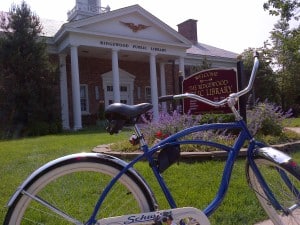
Reader says Ridgewood Public Library Needs Books not a Performing Arts Venue

Bike_Ridgewood_Public_Library_theridgewoodblog

Welcome to the Ridgewood Public Library, where the board wants residents to pay million$$$ to replace books with a community center and performing arts venue, move the staircase (very expensive), and add a skylight and other unnecessary things precisely as we face steep property tax increases from full-day kindergarten, a bloated school budget, and the prospect of endless expenses from new residents in up to four apartment buildings (and possibly more later). We must fight this idea from the start. Attend the Monday 3/27 budget hearing (4th floor courtroom, Village Hall, 5:30 PM) at which the library will ask the council for permission and money for their daydream. Brief comments from the public are invited. Speak as an outraged resident and taxpayer against this idiotic plan, presented in part at a recent council meeting, before it can go any farther. (The opposition will no doubt haul people out to say it’s a great idea. It’s not.)

Posted on Leave a comment

Big changes could be in store for this N.J. property tax relief program

Ridgewood_real_estate_theRidgewoodblog

file photo

By Samantha Marcus | NJ Advance Media for NJ.com
on March 07, 2017 at 11:38 AM, updated March 07, 2017 at 12:25 PM

TRENTON — Seniors and citizens who benefit from New Jersey’s Senior Freeze property tax relief program could receive credits against their real estate bills instead of rebates under a bill in the Legislature.

The Assembly State and Local Government Committee on Monday approved the bill, which would convert the Senior Freeze reimbursements into credits — a change the sponsors said would cut state administrative costs and spare eligible homeowners from having to pay the full bill before receiving a reimbursement check in the following tax year.

The Senior Freeze programs is slated to help offset property tax increases for about 166,000 property owners this fiscal year.

To be eligible for the Senior Freeze program, you must be 65 or older or receiving Social Security benefits and have lived in the state for 10 years. Other requirements, including income limits, apply.

https://www.nj.com/politics/index.ssf/2017/03/changes_could_be_in_store_for_this_nj_property_tax.html?utm_campaign=new-jersey-politics&utm_content=2017-08-03-9074583&utm_source=Sailthru&utm_medium=email&utm_term=New%20Jersey%20Politics#incart_river_home_pop

Posted on Leave a comment

Christie’s successor will face budget challenges

Chris_christie_theridgewoodblog

Christie’s successor will face budget challenges

Published March 04, 2017
Associated Press

TRENTON, N.J. –  Republican Chris Christie’s final budget as New Jersey governor has not yet passed through the Democrat-controlled Legislature, but already fiscal woes that could result in program cutbacks or higher taxes are on the horizon for whoever who succeeds him.

Christie unveiled a $35.5 billion 2018 spending blueprint on Tuesday without proposing tax increases or slashes to programs, but tax cuts enacted under his watch, a ballooning pension payment and mandated education spending will saddle his successor with challenging budget decisions.

Christie can’t run for re-election because of term limits. None of the leading Democratic and Republican candidates running to succeed him has unveiled his or her own prospective budget. While they’ve already begun to signal how they might approach the looming problems, it’s difficult to tell exactly how they would balance the budget.

A closer look at the issue:

WHAT’S THE PROBLEM?

Topping the list of issues is an estimated $1.1 billion hole from the reduction of the sales tax and phase-out of the estate tax that Christie and lawmakers agreed to last year as part of a deal on funding transportation.

Next year’s budget will also confront the prospect of a roughly $1.5 billion increase in the pension payment, if the current schedule is adhered to. And then there’s the school-spending formula approved by the Supreme Court that Christie failed to fund over seven years to the tune of about $1 billion a year.

There’s also significant uncertainty surrounding what could happen to federal aid the state gets, including more than $4 billion a year from the expansion of Medicaid as part of the Affordable Care Act. President Donald Trump and Republican-led Congress promise to repeal and replace the law.

https://www.foxnews.com/politics/2017/03/04/christies-successor-will-face-budget-challenges.html

Posted on Leave a comment

If your property tax bill is mind-blowingly high, just be thankful you don’t live in New Jersey, oh you do !

for sale Ridgewood_Real_Estate_theRodgewopodblog

file photo by Boyd Loving

Think Your Property Taxes Are High? See the Most—and Least—Expensive States

New Jersey is the state with the highest property taxes in the nation

By Clare Trapasso | Mar 2, 2017

If your property tax bill is mind-blowingly high, just be thankful you don’t live in New Jersey. And if you do, well, that’s got to hurt your bank account.

For the third year in a row, New Jersey is the state with the highest property taxes in the nation, according to a recent WalletHub report, with an effective real estate tax rate of 2.35%. This totals about $7,410 annually on a nearly $316,000 home, the median price in the state.

WalletHub analyzed U.S. Census Bureau data to figure out the real estate tax rates by dividing the median annual property tax payment for the state by the state’s median home price. Property taxes are typically levied at the county level, and go toward things like local schools, police and fire services, and parks.

https://www.realtor.com/news/trends/property-taxes-for-least-most-expensive-states/

Posted on 1 Comment

The 20 N.J. school districts most dependent on state funding

money-down-the-toilet-zaw2

By Adam Clark | NJ Advance Media for NJ.com
on February 28, 2017 at 7:15 AM, updated February 28, 2017 at 7:53 AM

TRENTON — When Gov. Chris Christie delivers his 2018 budget address on Tuesday, New Jersey school officials will be listening especially closely.

How Christie will address education funding is the biggest question about his final budget, leaving administrators bracing for the possibility of funding cuts.

There’s some concern Christie could follow through with the “Fairness Formula,” a plan he unveiled last summer to give every district $6,599 per student regardless of income or other needs. Though many education groups are convinced Christie won’t do that, they still don’t have high hopes for increases in school funding.

“I’m not expecting any good news in the budget,” said Richard Bozza, executive director of the New Jersey Association of School Administrators.

https://www.nj.com/education/2017/02/the_20_nj_school_districts_most_reliant_on_state_f.html#incart_river_home_pop

Posted on 11 Comments

Reader says “Today’s matured residents were yesterday’s school budget voters, Simply Not True

Ridgewood Teachers

“Today’s matured residents were yesterday’s school budget voters.
I imagine today’s residents with “Support Ridgewood Teachers’ and “Yes to Full
Day Kindergarten” signs in their yards will be tommorow’s matured residents.”
… Matured resident here, not complaining, just facts. Always voted NO on the school budget, we have the same number kids/schools enrolled in the school system now as we did back then, 1970’s. Voted no on the $1 Million Budget in the 1980’s, ..fast forward, voted no on the $100 Million Budget. There’s no end. Imagine when those downtown apartments get built, how many more school age kids will add to all the systems.
… the support Ridgewood teachers crowd, won’t become the tommorow’s matured residents in Ridgewood – they’ll be long gone once their kids are done with RHS. I know several who’ve done that and many who say this now and in neighboring towns – Glen Rock.
… know many longtime retired residents now that don’t even bother to vote the BOE budgets anymore, say why bother, they get passed anyway. It only benefits the ones who were strongly encouraged to vote for it, with kids in the system. Other towns experiencing the same.
… ask any realtor how many homes in pre-forclosure, auction, foreclosure in Ridgewood, Paramus, Saddle River, in Bergen County. A large number shown on zillow listings, $1m,$2m, $3mill.houses I know a number of seniors who have big reverse mortgages to remain in their homes, even in million dollar Saddle River homes. That revolving door may get stuck when comes time to sell – who will be able to afford to buy into high taxes?