2012 Elections: KYRILLOS CLOSING THE GAP IN NEW POLL
Middletown, September 5… The Kyrillos Campaign today released the results of a new survey showing U.S. Senate Candidate Joe Kyrillos is closing the gap with his opponent. With 65 days until Election Day, Senator Kyrillos has surged to within 4-points of Senator Menendez making this race neck and neck. The survey also shows an incumbent still unable to break 50% and weakened by upside down favorability and job approval ratings.
The topline results can be viewed here.
“Joe’s message of creating jobs for the middle class and working together with members of both sides of the aisle is resonating with the voters of New Jersey,” said Kyrillos Campaign Manager Chapin Fay. “It’s clear New Jerseyans want change and, if this surge continues, in two months they will have it when Joe Kyrillos is elected the next US Senator from New Jersey.”
“This marks another poll in which Menendez is yet again under 50%,” said Adam Geller of National Research, the Kyrillos campaign’s pollster. The survey was conducted by Magellan Strategies on August 30th and September 3rd, 2012 and sampled 746 likely voters for a margin of error of +/- 3.59%.
Yesterday, the U.S. national debt passed $16 trillion. On President Barack Obama’s watch, the debt has increased by 50 percent, as campaign promise after campaign promise has drowned in a sea of federal spending.
When he was running for President, Obama condemned George W. Bush for adding $4 trillion to the national debt over eight years, calling it “irresponsible” and “unpatriotic.” Now—in less than four years—Obama’s Administration has already added almost $6 trillion to the debt. That means he is on track to triple Bush’s debt increase over eight years.
It is important to understand the magnitude of this debt increase and what it means for the country. Several terms are often used to describe the debt, but they are not interchangeable. Here is a quick guide to the U.S. debt.
National debt or “gross debt,” which just passed $16 trillion: This includes what we think of as federal debt plus intergovernmental debt—money the U.S. government has loaned itself from one part of the budget to another. An example of intergovernmental debt is transfers from the general fund to Social Security.
The “debt ceiling” applies to this measure of the debt. At this rate, it will hit the ceiling again—meaning Congress will have to act and will likely raise the limit again—perhaps as early as November of this year.
At $16 trillion, this number has passed total U.S. gross domestic product (GDP), the measure of all that is produced in the economy.
Since Obama took office, the national debt has increased from about $10.6 trillion to more than $16 trillion—a 50 percent increase.
Debt per taxpayer: $111,414 and counting
Publicly held debt or “debt held by the public,” which stands at about $11.3 trillion: The debt held by the public is publicly traded debt, so it can be bought and sold in the credit markets. It does not include the intergovernmental loans mentioned above.
Since Obama took office, publicly held debt has increased from about $6.3 trillion to about $11.3 trillion—a nearly 80 percent increase.
This total—and the 80 percent increase—is actually more significant, because President Obama has added more to the publicly held debt than any previous President.
The federal budget deficit, which is on track to top $1 trillion for the fourth straight year: The deficit shows how much government spending has exceeded revenue in a given year, or the money the government is taking in from taxes. In contrast, the publicly held debt is the total of all past deficits and surpluses. The U.S. government spends more than it takes in. To cover the deficit and continue spending, government bonds and notes—essentially IOUs—must be issued.
President Obama vowed to cut the deficit in half by the end of his first term.
Instead, Obama has averaged deficits nearly three times that of his predecessor.
These numbers are staggering. In just a few years, the U.S. will be spending more on just the interest on the national debt than on our entire national defense budget. As Heritage’s Romina Boccia explains:
Countries like Greece and Italy demonstrate the economic pains that result from procrastinating on solving a nation’s major spending and debt challenges. Only Congress can decide whether to make the prudent and intentional decisions to ward off a fiscal crisis, or whether to stand idle until forced to act by unnecessarily painful events that could have been avoided.
As it is, children born in the United States today—who won’t pay taxes for years yet—are saddled with a more than $50,000 share of the national debt. If Congress and the President refuse to rein in spending, these children may grow up in the new Greece.
Greg Wu named 2012-2013 Ashby Award Winner
September 4,2012
the staff of the Ridgewood blog
Ridgewood NJ, The 2012 winner of the coveted Ashby Award is Greg Wu, Assistant Principal/Grade Administrator at Benjamin Franklin Middle School.
The Ashby award was established in 1966 to honor former Superintendent Lloyd W. Ashby and his wife, Lois, for their distinguished service to the community. The recipient is selected from nominees submitted by staff members and is someone who, in the opinion of his or
her peers, has carried on our district’s long tradition of service and contribution. This is the highest honor that the Ridgewood Public Schools can bestow on a staff member.
The Ashby has been awarded every year since 1992 when Dennis Carroll became the first recipient
To read Dr. Fishbein’s remarks at the Ashby Award presentation at Convocation on September 4. https://tinyurl.com/9ze3634
SUNDAY, SEPTEMBER 2, 2012
BY CHARLES SAYDAH
THE RECORD
Charles Saydah is editor of The Record’s Your Views.
What sane person would want the likes of Charles W. Kingsfield Jr. as a teacher?
WE HEAR a lot about good teachers, particularly in New Jersey. The effort to reward them with the profession’s biggest prize — tenure, with its lifetime job guaranty — is at the center of Governor Christie’s tenure reform effort.
Unfortunately, outside of linking teaching skills to student performance on standardized tests, few elected representatives define precise characteristics of a good teacher. They say merely that they know one when they see one.
We ordinary people are as much at sea. Sure, we have a lot of pop culture prototypes to point to as exemplars. Richard Dreyfus’ portrayal of Indiana music teacher Glenn Holland in “Mr. Holland’s Opus,” Laura Dern’s portrayal of West Virginia science teacher Miss Riley in “October Sky” and Edward James Olmos’ portrayal of California calculus teacher Jaime Escalante in “Stand and Deliver” are among Hollywood’s more recent contributions to our collective understanding of a good teacher.
But try to put their strengths into words. A website called greatschools makes a noble effort, identifying seven standards of great teachers: They set high expectations for all their students. They have clear, written-out objectives, are prepared and organized, engage students and get them to look at issues in a variety of ways. They are masters of their subjects. They form strong relationships with their students, show they care about them as people and communicate frequently with parents.
But how would a character like John Houseman’s Charles W. Kingsfield Jr., the icy law professor in “Paper Chase,” fit into the general profile? He, too, set high expectations for his students. He, too, came prepared and organized to each class. He, too, engaged students and got them to look at issues in a variety of ways. He, too, was a master of his subject. Presumably, his students became great lawyers.
‘Jersey Shore’ canceled amid ratings slump on MTV
August 30, 2012
By: Bruce Baker
“Jersey Shore” canceled? The latest MTV news about the reality show says Snooki, The Situation, JWoww and other cast are in their last season amid falling ratings. New Jersey Gov. Chris Christie, who spoke openly about his disdain for the show, is undoubtedly giving himself high-fives over the show’s departure from television.
According to a Los Angeles Times report Thursday, the uber-tanned bunch of dames and blokes on the MTV series are fading to black after six seasons of raising hell in Seaside Heights.
The reality television series was an instant hit in 2009 when it debuted. At its peak, over 8 million viewers watched a return of the wise-guy vernacular.
While “Jersey Shore,” canceled after its sixth season, closes a chapter in the MTV playbook, cast members like Nicole “Snooki” Polizzi and Jennifer “JWoww” Farley won’t be leaving reality TV. .
AT&T on ambitious buying spree to catch Verizon in airwaves race
Published: Thursday, August 30, 2012, 1:52 PM
AT&T is cobbling together about $2.6 billion in deals for airwaves to catch up with Verizon Wireless, which has vaulted ahead in the race to stockpile the industry’s most precious asset.
AT&T has proposed at least 24 deals in the past four months for the rights to spectrum, the radio waves used to transmit mobile-phone calls and data connections. Verizon won U.S. approval on Aug. 23 to buy airwave rights from Comcast Corp. and three other cable companies for $3.9 billion.
In addition to keeping up with Verizon, AT&T’s buying spree is an effort to relieve pressure on its network as data traffic from smartphones and tablets taxes its wireless coverage, said Chris King, an analyst with Stifel Nicolaus & Co. in Baltimore. Acquiring more government licenses to use spectrum gives companies greater capacity on their networks to handle demand.
Annual Street Fair Sponsored by Ridgewood Parks and Recreation
ANNUAL STREET FAIR, SEPTEMBER 23RD Ridgewood Parks and Recreation will again sponsor this seasonal outdoor market on Sunday, September 23rd, 12 noon to 5 pm, on East Ridgewood Avenue (rain or shine).
There is no fee to attend. Vendor wares will include arts and crafts, jewelry, holiday ornaments, novelties of many sorts, home goods, and clothing and accessories. Children’s events will include pony rides, sand art, a petting zoo, inflatables and more. The food court offers a wide variety of refreshments.
Allendale is seeking operator for its water system
Thursday, August 30, 2012
BY JAMES M. O’NEILL
STAFF WRITER
The Record
ALLENDALE — Faced with rising costs to meet state drinking-water standards and upgrade its old pipes, the borough plans to contract out the operation of its municipal water system to a larger company.
The move reflects a growing trend nationally, as cash-strapped local governments look to save money by hiring large water companies that have the economies of scale to run their water systems and bring down costs.
“Regulations are becoming very stringent, and it’s difficult for a small water department like ours to keep up with all the testing and other requirements. It’s getting more and more costly,” Mayor Vince Barra said Wednesday.
After Congress passed the Safe Drinking Water Act in 1974, the initial regulations covered no more than a handful of pages. Today, they cover some 300 — not including the manuals issued to help interpret those rules, said Howard J. Woods Jr., a private water-industry consultant. Technology to identify contaminants in water has leapfrogged since the mid-1970s.
“The business of operating a water system continues to grow more complex,” said Woods. “Small water systems are really going to be challenged to keep up, and that costs a lot of money and requires a lot of expertise.”
SPEECH: CONDOLEEZZA RICE STAKES STAGE AT CONVENTION
Wed Aug 29 2012 19:05:34 ET
**Prepared Remarks at Republican Convention
Good evening. Distinguished delegates, fellow Republicans, fellow Americans.
We gather here at a time of significance and challenge. This young century has been a difficult one. I will never forget the bright September day, standing at my desk in the White House, when my young assistant said that a plane had hit the World Trade Center – and then a second one – and a third, the Pentagon. And then the news of a fourth, driven into the ground by brave citizens that died so that many others would live. From that day on our sense of vulnerability and our understanding of security would be altered forever. Then in 2008 the global financial and economic crisis stunned us and still reverberates as unemployment, economic uncertainty and failed policies cast a pall over the American recovery so desperately needed at home and abroad.
And we have seen once again that the desire for freedom is universal – as men and women in the Middle East demand it. Yet, the promise of the Arab Spring is engulfed in uncertainty; internal strife and hostile neighbors are challenging the fragile democracy in Iraq; dictators in Iran and Syria butcher their own people and threaten the security of the region; China and Russia prevent a response; and all wonder, “Where does America stand?”
Indeed that is the question of the moment- “Where does America stand?” When our friends and our foes, alike, do not know the answer to that question – clearly and unambiguously — the world is a chaotic and dangerous place. The U.S. has since the end of World War II had an answer – we stand for free peoples and free markets, we are willing to support and defend them – we will sustain a balance of power that favors freedom.
To be sure, the burdens of leadership have been heavy. I, like you, know the sacrifices that Americans have made – yes including the ultimate sacrifice of many of our bravest. Yet our armed forces remain the sure foundation of liberty. We are fortunate to have men and women who volunteer – they volunteer to defend us on the front lines of freedom. And we owe them our eternal gratitude.
I know too that it has not always been easy – though it has been rewarding – to speak up for those who would otherwise be without a voice – the religious dissident in China; the democracy advocate in Venezuela; the political prisoner in Iran.
It has been hard to muster the resources to support fledgling democracies– or to help the world’s most desperate – the AIDs orphan in Uganda, the refugee fleeing Zimbabwe, the young woman who has been trafficked into the sex trade in Southeast Asia; the world’s poorest in Haiti. Yet this assistance – together with the compassionate works of private charities – people of conscience and people of faith – has shown the soul of our country.
And I know too that there is weariness – a sense that we have carried these burdens long enough. But if we are not inspired to lead again, one of two things will happen – no one will lead and that will foster chaos — or others who do not share our values will fill the vacuum. My fellow Americans, we do not have a choice. We cannot be reluctant to lead – and one cannot lead from behind.
Mitt Romney and Paul Ryan understand this reality — that our leadership abroad and our well being at home are inextricably linked. They know what needs to be done. Our friends and allies must be able to trust us. From Israel to Poland to the Philippines to Colombia and across the world — they must know that we are reliable and consistent and determined. And our adversaries must have no reason to doubt our resolve — because peace really does come through strength. Our military capability and technological advantage will be safe in Mitt Romney and Paul Ryan’s hands.
We must work for an open global economy and pursue free and fair trade – to grow our exports and our influence abroad. In the last years, the United States has ratified three trade agreements, all negotiated in the Bush Administration. If you are concerned about China’s rise – consider this fact – China has signed 15 Free Trade Agreements and is negotiating 20 more. Sadly we are abandoning the playing field of free trade – and it will come back to haunt us.
We must not allow the chance to attain energy independence to slip from our grasp. We have a great gift of oil and gas reserves here in North America that must be and can be developed while protecting our environment. And we have the ingenuity in the private sector to tap alternative sources of energy.
And most importantly, Mitt Romney and Paul Ryan will rebuild the foundation of American strength – our economy – stimulating private sector led growth and small business entrepreneurship. When the world looks at us today they see an American government that cannot live within its means. They see a government that continues to borrow money, mortgaging the future of generations to come. The world knows that when a nation loses control of its finances, it eventually loses control of its destiny. That is not the America that has inspired others to follow our lead.
After all, when the world looks to America, they look to us because we are the most successful political and economic experiment in human history. That is the true basis of “American Exceptionalism.” The essence of America – that which really unites us — is not ethnicity, or nationality or religion – it is an idea — and what an idea it is: That you can come from humble circumstances and do great things. That it doesn’t matter where you came from but where you are going.
Ours has never been a narrative of grievance and entitlement. We have not believed that I am doing poorly because you are doing well. We have not been envious of one another and jealous of each other’s success. Ours has been a belief in opportunity and a constant battle – long and hard — to extend the benefits of the American dream to all – without regard to circumstances of birth.
But the American ideal is indeed endangered today. There is no country, no not even a rising China, that can do more harm to us than we can do to ourselves if we fail to accomplish the tasks before us here at home.
More than at any other time in history –the ability to mobilize the creativity and ambition of human beings forms the foundation of greatness. We have always done that better than any country in the world. People have come here from all over because they believed in our creed – of opportunity and limitless horizons. They have come from the world’s most impoverished nations to make five dollars not fifty cents– and they have come from the world’s advanced societies – as engineers and scientists — to help fuel the knowledge based revolution in the Silicon Valley of California; the research triangle of North Carolina; in Austin, Texas; along Route 128 in Massachusetts – and across our country.
We must continue to welcome the world’s most ambitious people to be a part of us. In that way we stay perpetually young and optimistic and determined. We need immigration laws that protect our borders; meet our economic needs; and yet show that we are a compassionate people.
We have been successful too because Americans have known that one’s status at birth was not a permanent station in life. You might not be able to control your circumstances but you could control your response to your circumstances. And your greatest ally in doing so was a quality education.
Let me ask you, though, today, when I can look at your zip code and can tell whether you are going to get a good education – can I really say that it doesn’t matter where you came from – it matters where you are going. The crisis in K-12 education is a grave threat to who we are.
My mom was a teacher – I have the greatest respect for the profession – we need great teachers – not poor or mediocre ones. We need to have high standards for our students – self-esteem comes from achievement not from lax standards and false praise. And we need to give parents greater choice – particularly poor parents whose kids – most often minorities — are trapped in failing neighborhood schools. This is the civil rights struggle of our day.
If we do anything less, we will condemn generations to joblessness, hopelessness and dependence on the government dole. To do anything less is to endanger our global economic competitiveness. To do anything less is to tear apart the fabric of who we are and cement a turn toward grievance and entitlement.
Mitt Romney and Paul Ryan will rebuild us at home and inspire us to lead abroad. They will provide an answer to the question, “Where does America stand?” The challenge is real and these are tough times. But America has met and overcome difficult circumstances before. Whenever you find yourself doubting us – just think of all the times that we have made the impossible seem inevitable in retrospect.
America’s victorious revolutionary founding – against the greatest military power of the time; a Civil War – hundreds of thousands dead in a brutal conflict – but emerging a stronger union; a second founding – as impatient patriots fought to overcome the birth defect of slavery and the scourge of segregation; a long struggle against communism – that ended with the death of the Soviet Union and the emergence of Europe, whole free and at peace; the will to make difficult decisions, heart-wrenching choices in the aftermath of 9/11 that secured us and prevented the follow-on attacks that seemed preordained at the time.
And on a personal note– a little girl grows up in Jim Crow Birmingham – the most segregated big city in America – her parents can’t take her to a movie theater or a restaurant – but they make her believe that even though she can’t have a hamburger at the Woolworth’s lunch counter – she can be President of the United States and she becomes the Secretary of State. Yes, America has a way of making the impossible seem inevitable in retrospect. But of course it has never been inevitable – it has taken leadership, courage and an unwavering faith in our values.
Mitt Romney and Paul Ryan have the experience and the integrity and the vision to lead us – they know who we are, what we want to be and what we offer the world.
That is why this is a moment – an election – of consequence. Because it just has to be – that the most compassionate and freest country on the face of the earth – will continue to be the most powerful!
May God Bless You – and May God continue to bless this extraordinary, exceptional country – the United States of America.
Avo Heritage Super Toro in stock now at the Tobacco Shop of Ridgewood
Avo Heritage Super Toro is now in stock!
The latest addition to the AVO Heritage series is the AVO Heritage
‘Special Toro’ – produced only in limited quantities. The ‘Special
Toro’ is the first AVO cigar to be composed with a 60 ring gauge.
It is comprised of specially fermented tobaccos that
were hand selected by Avo Uvezian and Hendrik Kelner. The
percentage of Ligero tobaccos creates a spicy, full-bodied cigar with
complex flavor and exhilarating palate stimulation.
Now available at
The Tobacco Shop of Ridgewood
~Gary, Barbara and Collin
The Tobacco Shop of Ridgewood | 10 Chestnut Street | Ridgewood, New Jersey 07450
Phone: 201-447-2204 | Email: [email protected]
Hours: Monday – Saturday 10:00AM – 5:30PM and Thursday Night 6:30PM – 8:30PM
Back to School: New Jersey cheating questions hit close to home
Investigations of teachers and administrators helping their students cheat on state achievement tests remain disconcerting and discouraging — especially when they occur as close to home as Woodbridge and other local districts.
Some of these cases are relatively decisive. A high-profile investigation in Atlanta implicated dozens of teachers and administrators and ultimately took down the district superintendent.
But there are murkier outcomes. An investigation into New Jersey’s own Camden schools, where cheating was never proven outright, led to a settlement last year with the whistleblower — a district principal — and left lots of unanswered questions. (Mooney, NJ Spotlight)
Back to School: E-Books and a Healthier Food greet Students
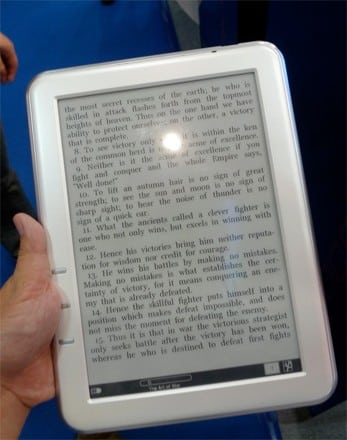
Libraries at Benjamin Franklin and George Washington Middle Schools and Ridgewood High School will lend electronic books starting this fall. The Board approved funds for approximately 200 new e-books, which may be borrowed and downloaded to a variety of e-ink devices. The schools will also make available to students a limited number of ereaders for borrowing.
Also new this school year are revisions to the school lunch system, including the establishment of individual online accounts for all students and changes in menu items and portion sizes as mandated by new guidelines of the Healthy, Hunger-Free Kids Act.
Look for more information to come on the lunch program and electronic library books.
The Board of Education and Superintendent of Schools Dr. Daniel Fishbein are interested in hearing residents’ thoughts and concerns. To facilitate dialogue, they are inviting residents to drop in for casual conversation and coffee several times during the 2012-2013 school year.
The first Coffee and Conversation will take place on Wednesday, September 12, from 7-8:30
p.m. at the Education Center, 49 Cottage Place, floor 3.
Other Coffee and Conversation dates are November 14, January 16, 2013 and April 3, 2013.
Please come, and bring your questions, suggestions, comments and concerns.
Ridgewood Council members offer opinions on parking proposal
Monday August 27, 2012, 1:40 PM
BY DARIUS AMOS
STAFF WRITER
The Ridgewood News
Preliminary plans to construct two parking garages and a new large anchor store in the heart of the Central Business District (CBD) have been met with varying reviews, but the overriding feeling from most villagers is that the existing downtown situation needs improvement.
The proposal, as developed and presented by members of the business community earlier this month, calls for parking facilities at the corner of South Broad and Hudson streets, and another facing the Franklin Avenue corridor in the North Walnut Redevelopment zone.
Along with the parking structures, the group, which includes Chamber of Commerce members, also envisions a new storefront built on the current lot next to The Gap on East Ridgewood Avenue, according to plans unveiled during the Village Council’s work session meeting on Aug. 8.
This week, members of Ridgewood’s governing body offered their initial thoughts about the downtown proposal, weighing in on what they believed was the good, the bad, the ugly and the unknown, while offering some suggestions to make the plan more viable.
The overall pitch is laced mostly with good ideas, some council members told The Ridgewood News this week. They applauded the group for “its innovative thinking and ideas,” according to Mayor Paul Aronsohn.
Back to School: Back to School: Some Surprising Education Numbers
Lindsey Burke
August 27, 2012 at 12:25 pm
As children head back to the classrooms, let’s look at two important figures to consider this school year: 308,000 and $11,400.
308,000: Number of members lost by the National Education Association.
Education special interest groups, such as the teachers unions, are experiencing a decline in membership. As Stephen Sawchuck reports in Education Week, “by the end of its 2013–14 budget, NEA [the National Education Association] expects it will have lost 308,000 members and experienced a decline in revenue projected at some $65 million in all since 2010. (The figures are expressed in full-time equivalents, which means that the actual number of people affected is probably higher.)”
While the decline in membership appears to have shocked the NEA, the remarks of one of the union’s top officials, treasurer Becky Pringle, are even more shocking:
We’re living with a recession that just won’t end, political attacks that have turned brutal, and societal changes that are impacting us—from stupid education “reform” to an explosion of technology—all coming together to impact us in ways that we had never anticipated.
Pringle is likely referring to the reforms that Governor Scott Walker (R–WI) put into place in his state last year, giving teachers the choice to join the union or not. And it’s no surprise that the unions fear the “stupid” reforms that are underway, namely, online learning and school choice. As former New York City Schools chancellor Joel Klein wrote in The Atlantic last week:
[T]oday’s entrepreneurs know they can harness emerging technologies to reimagine teaching and learning. It’s a story as old as change itself. The candlemaker’s union wasn’t cheering Edison on.
Those reforms are even more crucial considering the amount of taxpayer dollars that will be poured into the public system this year.
$11,400: Average per-pupil, per year spending in public schools.
Students headed back to school this fall will have historically high levels of dollars spent on them in the public school system. Nationally, average per-pupil spending exceeds $11,400 this year, meaning a child entering kindergarten today can expect to have no less than $148,000 spent on his or her education by the time the child graduates high school. In all, more than $570 billion will be spent on public K-12 education this year.
Sadly, continual increases in the money spent per child and in overall spending haven’t led to increases in academic achievement. That’s due in large part to the fact that most parents still do not have control over where or how that money is spent. We continue to fund institutions—sending that money to schools—instead of actually funding children.
Imagine if a child could put those dollars in a funding “backpack” and take that $11,400 to any school—public, private, or virtual. As in every other sector of American life, we would likely see outcomes improve as a result of competitive pressure placed on the government school system. Children would have access to schools that meet their unique learning needs. Parents would be able to harness the possibilities that online learning and customized education hold for tailoring their children’s educational experiences.
For all of those reasons and more, funding portability and school choice is an important assignment for policymakers to undertake as the school year begins.