JANUARY 9, 2016 LAST UPDATED: SATURDAY, JANUARY 9, 2016, 1:21 AM
BY PETER J. SAMPSON
STAFF WRITER |
THE RECORD
With his conviction for conspiracy and embezzlement reinstated by an appeals court, a former North Jersey labor leader is facing a possible prison term when he is sentenced later this month for plotting to siphon funds from an electricians union in a scheme to pad the salary of his future wife.
Following a trial in federal court in Newark, a jury in November 2013 found Richard “Buzzy” Dressel guilty on two of eight counts: conspiracy to embezzle union funds and embezzlement from Local 164 of the International Brotherhood of Electrical Workers in Paramus.
Five months later, U.S. District Judge William J. Martini granted a defense motion for acquittal, ruling the government had not presented sufficient evidence for conviction.
The office of U.S. Attorney Paul J. Fishman challenged the judge’s decision, and a three-judge panel of the 3rd U.S. Circuit Court of Appeals in Philadelphia reversed Martini and reinstated the conviction in August.
As a result, Dressel, 66, of Montvale, who as business manager held the local’s top position for 14 years, is facing up to five years in federal prison and a $250,000 fine on each of the two counts when he is sentenced by Martini on Jan. 21.
Before his indictment in 2012, Dressel had served on the boards of the Hackensack University Medical Center Foundation, Bergen Community College and the state Casino Reinvestment Development Authority. He had been a member of the New Jersey Sports and Exposition Authority, and he was a major force in Democratic Party politics, raising funds and using the rank and file to get out the vote.
Dressel has steadfastly maintained he committed no crime.
By Samantha Marcus | NJ Advance Media for NJ.com
on January 07, 2016 at 7:31 PM, updated January 08, 2016 at 8:19 AM
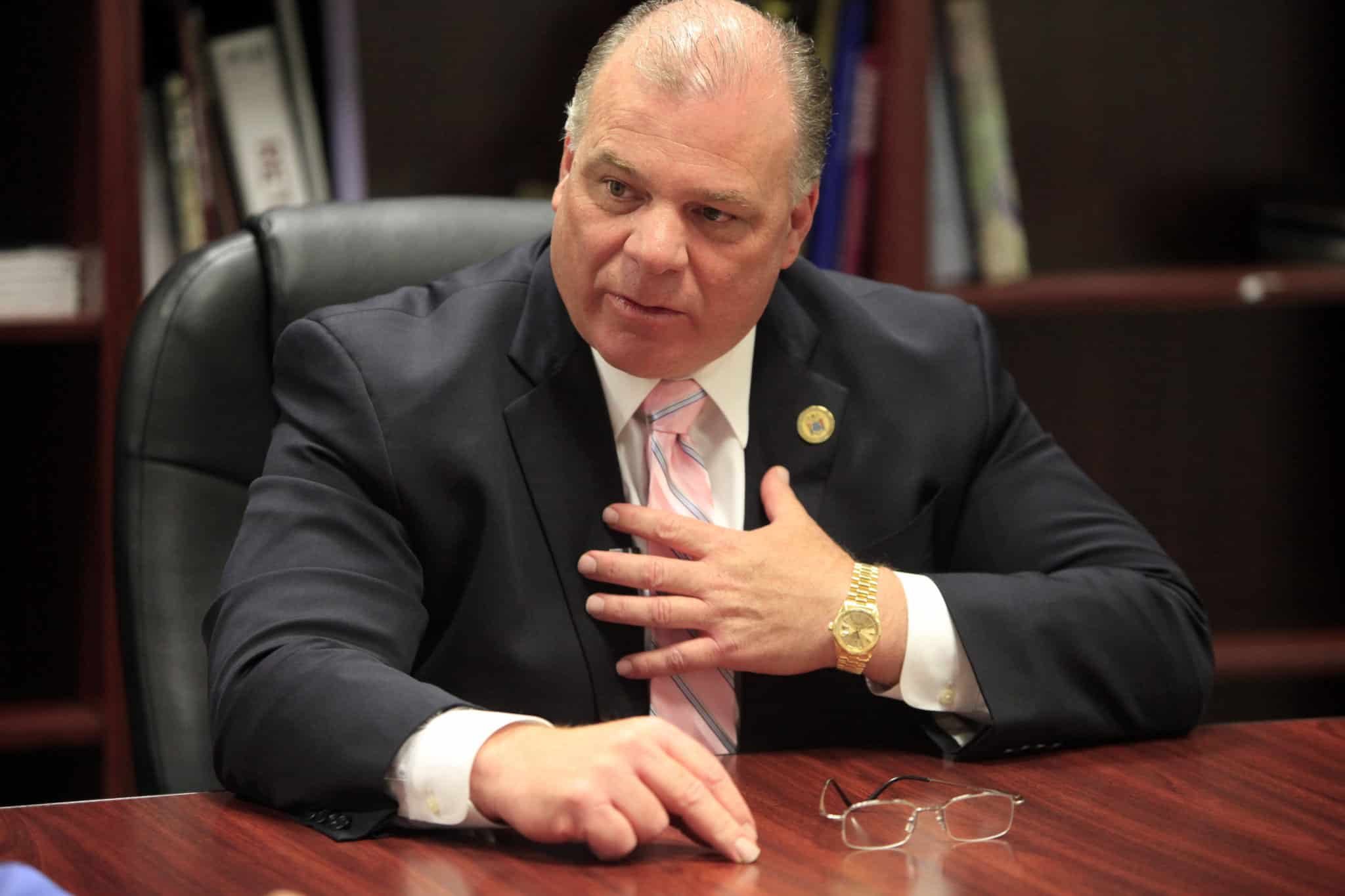
TRENTON — State Senate President Stephen Sweeney and labor leaders on Thursday defended his proposal to constitutionally enforce payments into the public pension system against arguments it’s a gift to special interests that will shackle New Jersey’s finances.
The scrap between Sweeney (D-Gloucester) and labor leaders vs. Senate Minority Leader Tom Kean Jr. (R-Union) and business lobbyists centered on what would be worse: a mandated pension contribution that would eat up so much money the state couldn’t respond to fiscal emergencies, or a pension system that continues hurtling toward insolvency.
Sweeney, the Democrat leading the charge on the amendment, told the Senate state government committee it’s in everyone’s interest to pay the bill now. Should a pension fund run out of money, the state would have to pay retirees’ pension benefits out of pocket, he said.
“If we don’t do this, by 2026 or 2027, when the pensions go broke, it’s nine or ten billion dollars. And that’s coming out of the budget. Directly out of the budget,” Sweeney said. “That’s armageddon.”
In the days prior to Christmas, two hastily called Judiciary committee hearings were called in an effort to change the NJ State Constitution, ensuring one party control of the State in perpetuity. Practically no notice was provided, no information was shared, no questions were answered and no experts testified. Regardless of your political leanings, anyone who favors open, transparent, good government should reject what transpired. So far the Star Ledger and the Daily Record editorial boards have denounced this political gamesmanship. Below please find an Op Ed piece regarding this issue.
Lame Duck Redistricting Scheme Raises More Questions than It Answers
By Assemblyman Michael Patrick Carroll and Assemblywoman Holly Schepisi
Schemes hatched in lame duck sessions of the Legislature should always give reason for pause, but changing voting rights without considerable public discussion is reckless. A proposed constitutional amendment with a significant but unknown impact on the voting rights of New Jersey’s citizens deserves more than the hasty, slapdash, non-transparent treatment the Democrats are giving this measure.
Ignoring the Legislature’s responsibility to hold fact-finding hearings, Chairman John McKeon dismissed concerns about fast-tracking the proposal changing the way the state redraws its legislative districts. “The people of New Jersey will have the opportunity to vote on whatever is on the ballot,” he said at last week’s Assembly Judiciary Committee hearing.
We did not support this plan in part because the sponsors couldn’t answer basic questions. How can voters make an informed decision about a constitutional amendment when the Legislature itself does not fully understand it?
What’s the rush? Legislative districts won’t be reconfigured again until 2021. When the 1966 Constitutional Convention considered the standards used today, it met for three months and had 14 meetings full of expert testimony. Additionally, there were six meetings specifically on apportionment. In this process, the Democrats are advancing a plan after only two brief committee meetings with no expert testimony and only one member of the public commenting.
Their amendment relies on a decades-old report by Dr. Donald Stokes, who served on the Apportionment Commission in 1981 and 1991. Many of his assumptions are based on demographics from almost a generation ago. No one can deny that New Jersey has changed significantly in a quarter century. Does Stokes’ modeling still hold true? Were the demographics he used in 1993 accurate on what we know today?
The amendment deviates from the report on even more critical aspects. Stokes used legislative elections to create his models and proposal, but this amendment ignores them. Instead, it relies on federal and gubernatorial elections that have little to do with drawing up legislative districts. Why exclude legislative races to determine how those districts should be drawn? That’s like using baseball statistics to figure out how football should be played.
Their plan requires only a quarter of districts to be competitive, but allows the remaining 75 percent to have no contest at all. Why not maximize the number of competitive districts? The Stokes test for determining whether a map is fair requires the popular vote across the state to be represented among the districts as a whole and be responsive to the shifts of public opinion. When electoral tides move strongly toward one party, that party should fairly quickly win an effective majority of seats. Using the 2011 legislative election returns, a fair map should have resulted with 21 Democrat and 19 Republican Senators, rather than the 24-16 split that has remained since that election.
Further, the amendment intentionally excludes the equal representation requirement in the state Constitution. Every state respects equal population requirements, the bedrock of American democracy since “no taxation without representation.” Yet, the Democrats intentionally left it out in favor of gerrymandering districts, which almost always shift groups of voters to limit the voting rights of others. They may point to the compactness requirement in the constitution, but this amendment makes federal law pre-eminent.
Why do the sponsors want to make this change? Democrats have held a legislative majority since 2001 and hold their largest majority in 40 years.
The plan was conceived behind closed-doors by Democratic political operatives with essentially a super PAC in East Brunswick. They introduced it to the Assembly Judiciary Committee on November 17, even though it was not mentioned during a previous meeting just three days earlier. With little more information than a Politico article, it passed on a party-line vote the week before Christmas.
By the end of the next day, the Democrats wanted to limit the number of members on the redistricting commission in their plan without explanation. They called the committee back the following Monday, but that meeting started four hours late after most of the media and public left. This contempt for transparency and lack of serious inquiry into this proposal’s ramifications is striking and should be a matter of serious concern to anyone who values New Jersey’s voting rights.
While parties may disagree on the result of the map every ten years, New Jersey’s electoral process has been routinely praised by academics when compared to other states. Why weren’t those experts invited to the committee hearing? Shouldn’t we know what other states do before moving forward with a constitutional amendment? Surely if this plan were all the Democrats say, there would have been a line of academics ready to back them up.
In no other profession would you first enact a policy to know what is in it. The lack of information, transparency and candor is reason enough to be concerned with where the state is headed under a Democratic majority. This constitutional amendment blindly leads the public into forever changing the way New Jersey votes.
In the Legislature, a bill is moving that would propose a constitutional amendment that would change the way the state’s legislative districts are configured.
Rather than basing redistricting on ten-year, census-driven population changes, the amendment would base redistricting on polling data measuring the average vote statewide over nine legislative election cycles.
Democratic proponents of the amendment maintain that it would ensure that ten legislative districts would be competitive, in turn contributing to higher voter turnout. But Republican opponents counter that it could undermine democracy by indefinitely locking in the current Democratic majorities in both legislative houses.
The proposed amendment is being introduced at a time when the U.S. Supreme Court is considering a case that well might affect state legislative redistricting, but in a different way.
The divergent paths of these two actions may clash at some future time, depending on the outcome of the ballot question and the decision of the high court.
DECEMBER 27, 2015, 10:29 PM LAST UPDATED: MONDAY, DECEMBER 28, 2015, 7:23 AM
BY SALVADOR RIZZO
STATE HOUSE BUREAU |
THE RECORD
As Governor Christie heads into a crucial stretch in his campaign for the White House, back home, another pension dispute with multibillion-dollar consequences has reached a critical stage at the state Supreme Court.
A loss could spark another major budget crisis for Christie, potentially in the middle of a presidential campaign in which he often promotes his experience as a tested leader who can reform the United States’ fiscal problems and rein in $19 trillion in debt.
A group of retired prosecutors and public-worker unions is challenging a law Christie signed in 2011 that suspended yearly cost-of-living adjustments for retirees. When Christie tells voters in the rest of the country about having “fixed” New Jersey’s notoriously underfunded pension system and saved more than $100 billion over 30 years, he is referring largely to this cost-saving measure.
And the Supreme Court is being asked to strike it down as an unfair violation of workers’ rights.
Attorneys for all sides have now filed hundreds of pages of legal briefs. The court is expected to hear oral arguments next year and could issue its ruling just as Christie is competing in key primary states, or during the general-election season.
If they win, thousands of retirees — but perhaps not all of them — could begin to see bigger pension checks every year there is an increase in inflation as measured by the Consumer Price Index.
file photo by Boyd Loving New Jersey is the only state which Americans tend to have an unfavorable opinion of
As America prepares to celebrate its 239th birthday this Saturday, YouGov compiled a ‘State of the States’, asking Americans how they feel about each and every state that forms our country.
This research shows that New Jersey is the only state in the country which people tend to have a negative opinion of. 40% of Americans have an unfavorable opinion of New Jersey while 30% have a favorable opinion of the state, giving the state a net favorability rating of -10%. In contrast, Alabama, the second least popular state in the country, has a net favorability rating of +8%, as 39% of Americans have a favorable view of Alabama and 31% have an unfavorable opinion. After Alabama the least popular states are Illinois (+9%), Mississippi (+9%) and Indiana (+12%).
Hawaii is the most popular state in the union with a net favorability rating of +56%, with 67% of Americans having a favorable view of the state and only 11% having an unfavorable opinion. Hawaii is followed by Montana (+43%), Wyoming (+42%), Alaska (+42%) and Maine (+42%).
DECEMBER 23, 2015, 3:15 PM LAST UPDATED: WEDNESDAY, DECEMBER 23, 2015, 5:44 PM
BY WAYNE PARRY
ASSOCIATED PRESS
ATLANTIC CITY — Pressure is building on state lawmakers to agree on a ballot question to put before voters asking whether to approve two new casinos in northern New Jersey.
Sens. Raymond Lesniak, a Democrat, and Joseph Kyrillos, a Republican, called on lawmakers Wednesday to agree on a single plan for the November referendum.
Competing versions of the proposal in the Senate and Assembly differ mainly on which companies would be allowed to own the new casinos.
“Casino expansion will create jobs and generate economic growth for the entire state,” said Lesniak, a potential candidate for governor in 2017. “This is an opportunity we have to capitalize on. Democrats and Republicans in the Legislature should work together on a plan that can go to the voters for approval on the next ballot in November of 2016.”
Kyrillos said the referendum is too important to be scuttled by partisan politics.
“The entire Assembly, including Republicans and Monmouth County’s two new Assembly Democrats, need to wake up and join the Senate’s initiative to help save this effort,” he said.
Republican Sen. Jennifer Beck said Assembly Speaker Vincent Prieto and Jersey City Mayor Steven Fulop — a likely gubernatorial candidate — “have repeatedly constructed roadblocks” to a Senate measure backed by Senate President Steve Sweeney, another likely candidate for governor. Fulop says he strongly supports casinos in northern New Jersey.
The proposal calls for casinos at the Meadowlands Racetrack in East Rutherford and in Jersey City. The vote to allow the new casinos would amend the state Constitution, which restricts casino gambling to Atlantic City.
file photo by Boyd Loving
Check out your own state’s cost per mile with Reason Foundation’s Annual Highway Report.
Nick Gillespie|Dec. 7, 2015 12:09 pm
This new video uses data from Reason Foundation’s 21st Annual Highway Report to make a simple but devastating point: New Jersey’s roads are paved not with asphalt but wasted taxpayer dollars. (Disclosure: Reason Foundation is the nonprofit that funds this website.)
Indeed, according to the report, the Garden State spends way, way more than other states to maintain its roads:
South Carolina and West Virginia spent just $39,000 per mile of road in 2012 while New Jersey spent over $2 million per state-controlled mile. Rhode Island, Massachusetts, California and Florida were the next biggest spenders, outlaying more than $500,000 per state-controlled mile.
See where your state stacks up here.
Spoiler alert: if you live in California, Massachusetts, Rhode Island, New Jersey, Alaska, or Hawaii, you can suck it in terms of road costs and road quality. But you already knew that, didn’t you?
Legislators in Jersey (and many other states) are eyeing ways to pay for more road construction. Recent polls show about 57 percent of Jersey residents are against a gas-tax hike even as five roadways popped up on a list of the “worst traffic bottlenecks” in the country.
Critics of Reason Foundation’s methodology counter that a fairer accounting of costs finds that Jersey spends “only”$270,000 per mile on its roads.
Yeah, maybe, but almost certainly not.
Jersey’s gas tax is a relatively cheap-o 14.5 cents per gallon while neighboring New York’s is a relatively whopping 45 cents per gallon. These taxes are supposed to fund capital road projects and maintenance but neither is accomplishing that basic task. Capital New York notes that while New Jersey’s transportation fund is wallowing in debt (about one-third of receipts go to debt service), New York’s fund is giving away money to a wide range of activities, with less than a quarter of receipts going to road projects. Give the state too little money and they need more; give it too much and they spend it on whatever they want to.
And there’s this for Jersey folks:
New Jerseyans pay an average $601 annually in extra repairs due to driving on roads in need of fixing, according to [Department of Transportation] data.
36 cents – Mass transit 23 cents – “Local System Support,” including regional planning and state aid for county and local roads 12.6 cents – Behind-the-scenes work on implementing the capital program, such as research, planning and design. 12 cents – Road upgrades, including pothole repairs, resurfacing, drainage, landscaping and environmental compliance 8 cents – Bridge maintenance, rehabilitation and replacement 3 cents – Support facilities, such as office buildings and highway rest areas 2 cents – Congestion relief, including road widening 2 cents – Safety improvements at intersections, railroad crossings, traffic signals, restriping highways 1 cent – Multimodal programs, including bicycle, pedestrian, ferry and freight programs 0.4 cents – Airport improvement program
In the final weeks before the Christie administration closed a facility in Woodbridge for people with developmental disabilities, hundreds of state workers earned $2.7 million just for showing up — including some seen playing cards and watching TV, according to a report by the Office of the State Auditor. Susan K. Livio, NJ.comRead more
Speaker Paul Ryan told colleagues that a major tax package agreed to by leaders in both chambers will postpone the “Cadillac tax” on expensive healthcare plans and place a two-year moratorium on the medical device tax, two critical sources of revenue for ObamaCare.
By Scott Wong,Mike Lillis and Alexander Bolton – 12/15/15 09:55 PM EST
Speaker Paul Ryan (R-Wis.) announced to the House Republican Conference on Tuesday night that leaders have reached a sweeping year-end deal on taxes and funding the government after days of intense negotiations.
The full text of the 2009-page omnibus bill was posted online early Wednesday morning at about 1:30 a.m.
The delayed posting of the omnibus text means that in order to adhere to the so-called “three-day rule,” House GOP leaders will have to wait until Friday to hold a vote on the legislation.
Lawmakers had exited a Tuesday night House GOP conference meeting with the expectation of voting Thursday on the spending package. But Ryan is unlikely to want to waive the self-imposed rule less than two months into his speakership on such a massive bill, meaning the vote will likely slip to Friday.
In the meantime, the House and Senate are expected to easily clear another stopgap measure to keep the government funded through Dec. 22. Current funding expires Wednesday night.
Ryan unveiled the details of the agreement while the political world was fixated on the fifth GOP presidential debate in Las Vegas.
He told colleagues that the spending bill will postpone the “Cadillac tax” on expensive healthcare plans and the tax package will place a two-year moratorium on the medical device tax, two critical sources of revenue for ObamaCare.
N.J. Democrats to address four proposed amendments to state constitution
DECEMBER 15, 2015, 10:56 PM LAST UPDATED: TUESDAY, DECEMBER 15, 2015, 10:56 PM
BY DUSTIN RACIOPPI
STATE HOUSE BUREAU |
THE RECORD
As Governor Christie prepares for a four-day bus tour of New Hampshire to bolster his presidential campaign, Democrats in New Jersey will set in motion a plan to circumvent Christie’s executive authority by pushing for changes to the state constitution that would dedicate funding for transportation and pensions, allow casinos in North Jersey, and amend how legislative districts are drawn.
On Thursday, Democrats — who control the state Legislature — also plan to vote on three separate measures to override Christie vetoes. And that’s in addition to more than 100 bills scheduled for votes as the legislative session heads into its final weeks. Whatever bills aren’t addressed by the end of the session would have to be reintroduced next year.
Adding to the customary frenzy of the lame-duck session are the potential implications that some of the legislative actions could have on Christie’s White House bid and on the next gubernatorial election, in 2017.
Lame-duck sessions are “usually pretty busy with little things that people want to get done,” Loretta Weinberg, the Senate majority leader, said. “This is major stuff.”
The four proposed constitutional amendments would bring wide changes to the state: allowing up to two casinos in North Jersey; requiring the state to make quarterly payments into the public employee pension fund; dedicating all gas tax proceeds to the nearly-broke Transportation Trust Fund; and adjusting the legislative redistricting process. Changes to the state constitution must be approved by New Jersey residents. The votes scheduled for legislative committees Thursday would begin the process of getting those proposals on the 2016 ballot.
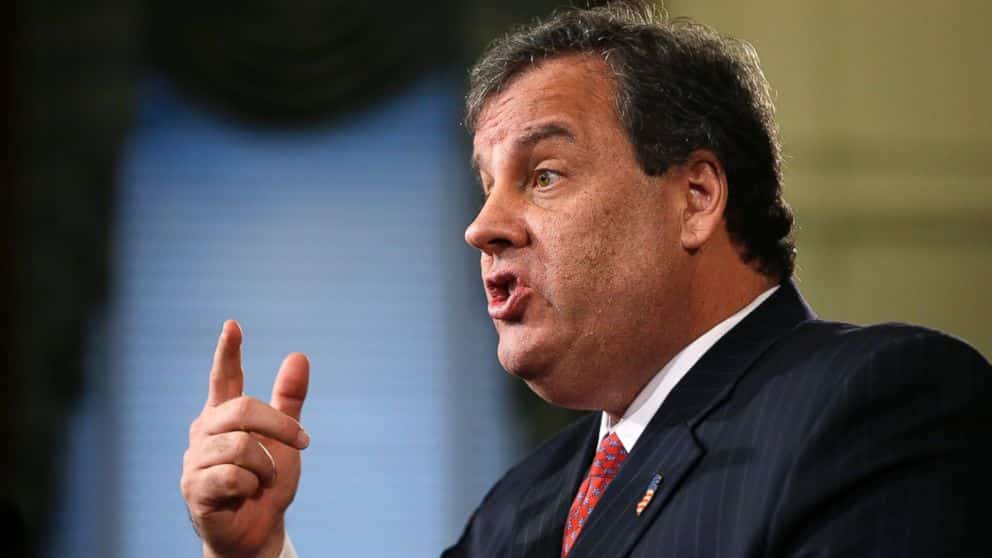
Although Christie has been supportive of the idea of expanding gambling outside Atlantic City and putting it to voters to decide, he has called amending the constitution for measures that don’t require it “governance by temper tantrum.” He was especially critical last week of Senate President Stephen Sweeney’s proposal to require quarterly pension payments, calling it a guaranteed tax increase to New Jersey residents and businesses.
Sweeney, D-Gloucester, joined with Christie, a Republican, in 2010 and 2011 to reform the public employees’ pension and health benefits system, including requiring the state to make increased contributions into the pension fund over seven years. After three budgets of Christie’s that reduced those payments, and a state Supreme Court decision telling lawmakers and the governor to find a solution, Sweeney has proposed making the payments a constitutional requirement.
Christie accused Democrats of catering to unions and said during his radio show last week that Sweeney’s proposal is “totally about playing politics” since Sweeney is expected to run for governor in 2017. Any Democratic gubernatorial candidate is likely to seek the support of unions, who have strong influence in the state and spend heavily in state elections.
NJ Senator Mike Doherty (R-23) questioned New Jersey’s outsized spending on transportation infrastructure, saying that he has not found a satisfactory explanation as to why the state pays more than ten times what similarly populous states like Massachusetts pay to fix their roads, bridges and highways
Sweeney Trots out ‘New Jersey – Investing in You’ with Key Senators
They came bearing gifts in the Christmas season, – $174 million’s worth, to be precise – state Senate President Steve Sweeney (D-3) and his colleagues in the Senate Democratic Caucus, the statehouse cough-up of seven weeks-worth of round table visits around New Jersey in the respective districts of the senators who now stood sedately at attention with Sweeney. Max Pizarro, PolitickerNJ Read more
Following Friday morning’s release of Senate President Steve Sweeney’s (D-3) proposal to amend the state constitution and allow the expansion of casino gaming into North Jersey, the New Jersey State Building and Construction Trades Council has announced its official support for Sweeney’s amendment. JT Aregood, PolitickerNJ Read more
Senate President Steve Sweeney just proposed a Constitutional amendment that would give public workers unions all they want on pensions, and ask nothing in return. Star-Ledger Editorial Board, The Star-Ledger Read more
Day of verbal assaults in N.J. was vintage Christie
DECEMBER 9, 2015, 11:49 PM LAST UPDATED: THURSDAY, DECEMBER 10, 2015, 12:05 AM
BY DUSTIN RACIOPPI
STATE HOUSE BUREAU |
THE RECORD
In a rare public event in New Jersey this week, Governor Christie ripped into the state’s largest business community for nearly 40 minutes, stealing headlines by telling leaders to “get a spine” and quit playing “kissy-face” with “crazy and liberal” Democrats he said were bought and paid for by union “pigs.”
But he was far from done.
Over the course of that speech to the New Jersey Business and Industry Association, and later during his monthly radio call-in show, Christie attacked or insulted at least a half-dozen other targets, some familiar, some not.
Tuesday’s string of attacks was a vintage version of the Christie who rose to national fame hurling invective at his adversaries and dressing down supporters if they strayed from the path.
Christie spared few from his withering critiques, from former governors to “liberal lunatics” in the Legislature to the “brutally liberal, ridiculous” media to a Senate aide. He even took a jab — jokingly — at the hapless Philadelphia 76ers, who plan to move their practice facility to Camden next year.
His speech to business leaders and the radio show were the only public events on his schedule Tuesday. On Wednesday, Christie did not attend a groundbreaking ceremony for Subaru’s new headquarters in Camden, one of the many achievements — along with luring the 76ers to New Jersey — he’s touted as part of his tax-incentive program.