Ridgewood NJ, As Tax Day approaches, about eight in ten New Jerseyans feel they pay too much in taxes and are not happy with what the state government is doing about the affordability of living in the Garden State, according to the latest Rutgers-Eagleton Poll, conducted in collaboration with the New Jersey Business & Industry Association (NJBIA).
Eighty-two percent of residents think they pay too much in taxes for what they get, and large majorities believe the taxes they pay – namely, property taxes (79 percent), the 41.4 cent gas tax (77 percent), and the state income tax (62 percent) – are unfair. Only the sales tax sits well with residents, with over half (58 percent) saying the tax is reasonable.
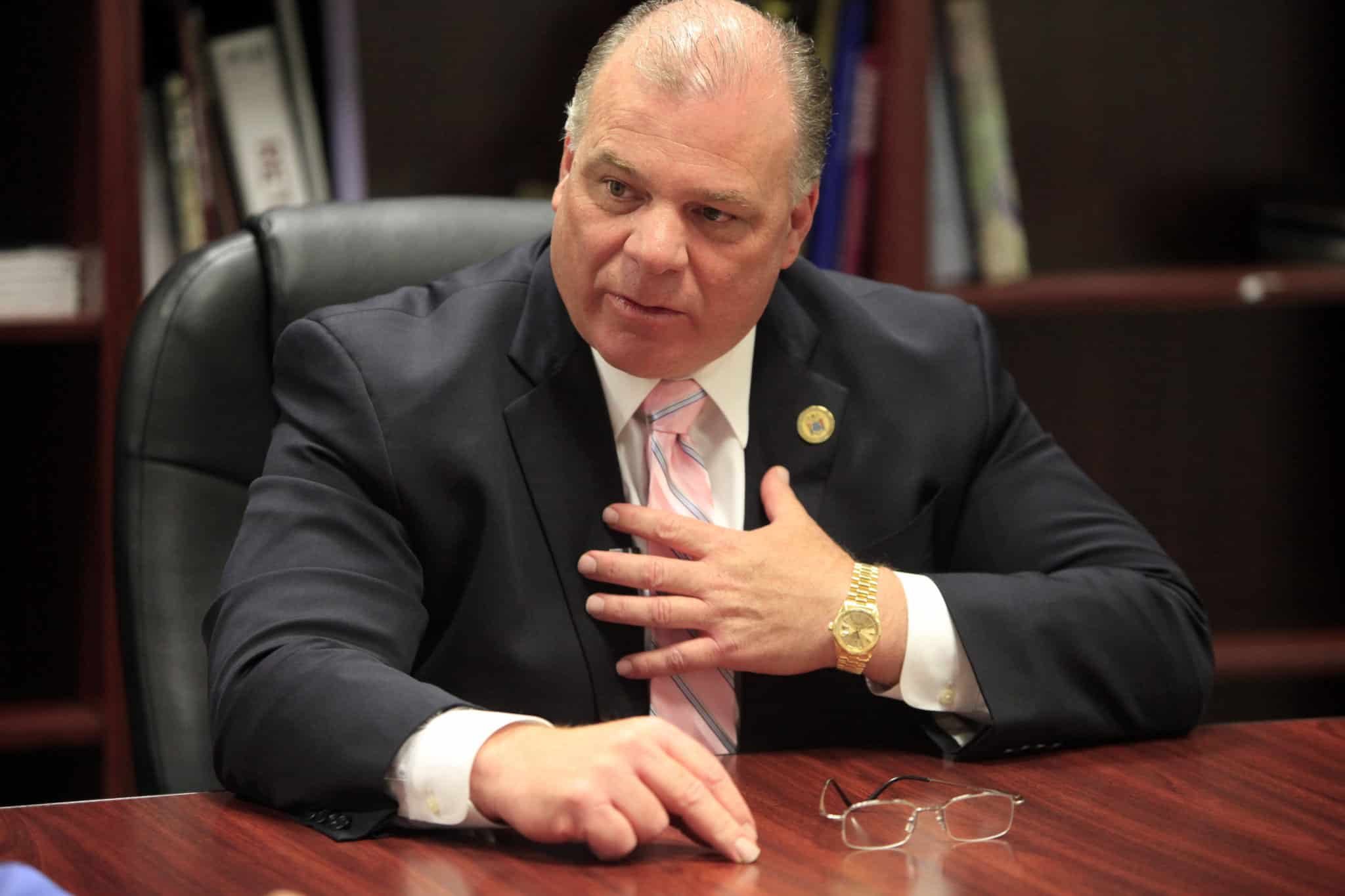
TRENTON NJ, Senate President Steve Sweeney will hold a town hall meeting from 6:00 p.m. to 8:00 p.m. on Monday, March 11, in Wilson Hall, Monmouth University, 400 Cedar Ave, West Long Branch, NJ to conduct a public discussion about the fiscal reforms in the “Path To Progress” report.
Hosted by Grey J. Dimenna, the President of Monmouth University, the forum will include the participation of Senator Vin Gopal, Senator Declan O’Scanlon and Peter Reinhart, from the Monmouth University Kislak Real Estate Institute and a member of the Economic and Fiscal Policy Workgroup.
Go west (or south) young families as leaving Ridgewood is sad but apparently, financially prudent. State and local governments have little leeway to manage their budgets given their contractual salary, healthcare and pension obligations. Population trends, prevailing taxes, and budget stress are tell tale signs that our Village and State’s financial problems are not revenue but expense related. Decades long deficits and massive unfunded pension obligations are proof that state and local fiscal strategies are out of sync.
Unlike the private sector, government wage and benefit payouts are not flexible. They increase with the passage of time. We in the Village have been served this sandwich for years and now people are moving faster to greener pastures that offer a different menu. With that said, it is encouraging that some of our state level elected officials recognize our financial crisis for what it is, as a spending problem. It would be nice to hear that locally…Our only hope is that the same political and perhaps certain union leaders will act bravely to modify current arrangements that mitigate growing budget deficits. In this matter, all interests are aligned.
Real and sustainable fiscal management is difficult to implement. It takes compromise and commitment but the resulting policy changes are not hard to understand. Some are obvious such as i) 401Ks for new hires versus a pension, ii) altering timing on pension payouts, iii) means based health care programs versus the gold standard regardless of house hold income, and iv) eliminating revenue draining white elephant projects such as municipally run/owned parking garages. (Sorry, I could not help myself.)
It is likely naive of me to hope that our leaders (again be they elected or union leaders) will deflect our current financial trajectory But it is a must because it is the only way to ensure what was contracted is delivered. A deal is a deal and we should stand by what we agreed to pay. However, all have to recognize that will be true only if there is money to pay for what was promised. The balance is we all have a line in the sand on how much more we will pay to support current services.
My comments are not intended to offend anyone. Their purpose is to be a call to action and compromise because I love it here. I enjoy my neighbors, the schools, teachers, the community, and I don’t want to bailout when my kids are off to college. I want to be apart of the solution and not just a piggy bank. I know others feel the same but we will vote with our feet if our leaders lead poorly and without reasonable foresight.
Village Counsel and union leaders, is there a willingness to make reasonable contractual changes now before it is too late or do you prefer the status quo? Your responses and actions are very powerful. Your decisions will dictate how fast our tax base erodes and how the Village will deliver on the benefits of your bargain. I respectfully suggest that your challenge is now because time is money and money is finding other places to live.
Maybe YOU continued to walk into that ballot box and voted the party line because quite frankly like all good liberal dolts you simply can’t think on your own. And yes, your thinking along that line just put one of Hudson Counties finest criminals back in office. And yes the rest of the country looks at us and laughs…why not? Stupid is what stupid does. And taxing pension checks is NOT going to solve the problem of union malfeasance and corrupt government officials. The process of exodus has already started and will only excelerate as they way we work continues to change. Remember, nobody wants to work in NYC either so that only compounds the exit process. I’ll be gone come Feburary. We’ll leave here and let the people who started and supported this mess wallow in its remains. Good luck with that.
Trenton NJ, according to Steven Malanga is the senior editor of City Journal, Federal Highway Administration data on revenues that the states have available for spending on roads, bridges, and mass transit New Jersey collected the seventh-highest transportation revenues of any state, even before it raised its gas tax and every state that spent more was considerably larger.
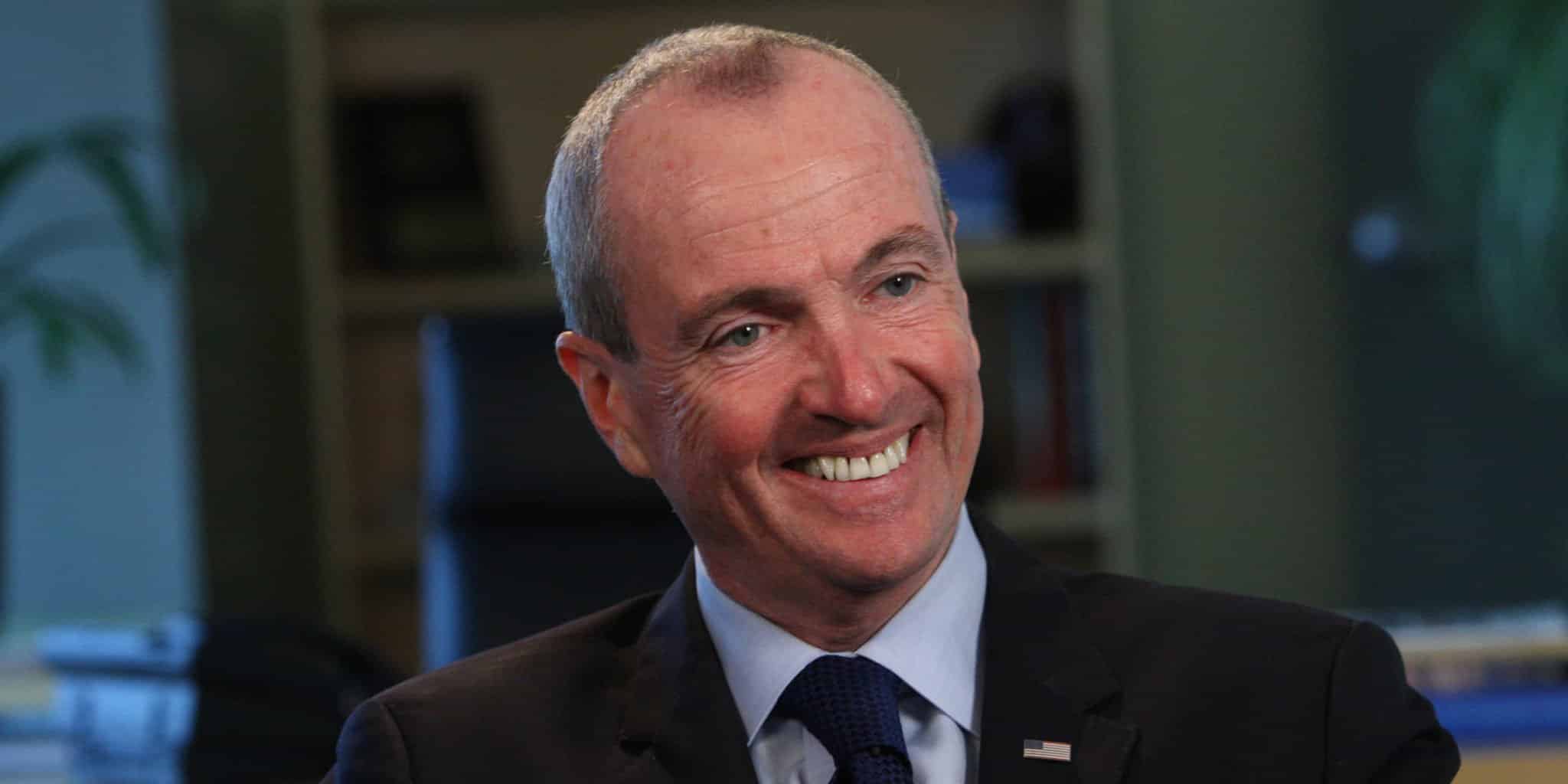
Trenton NJ, Governor Phil Murphy, Attorney General Gurbir S. Grewal and Labor Commissioner Rob Asaro-Angelo responded today to a U.S. Supreme Court ruling that says public sector workers need not pay their “fair share” of dues to the unions that represent public sector employees.
In an opinion issued this morning, the U.S. Supreme Court decided Janus v. American Federation of State, County and Municipal Employees. The petitioners in Janus asked the Court to overrule an earlier decision that had determined public unions could require all workers to pay a “fair share” of union dues to defray the cost of collective bargaining. New Jersey, along with a coalition of states and unions, defended that prior decision. But in a 5-4 ruling this morning, the Supreme Court decided to allow workers to refuse to pay their fair share, potentially weakening collective bargaining by labor groups that negotiate employee compensation, pensions, and contracts.
“This disappointing decision does not in any way diminish our administration’s commitment to protecting the right of public sector employees to organize,” responded Governor Phil Murphy. “We stand firm with our labor unions and labor organizations to advocate and protect members’ rights as we did with the Workplace Democracy Enhancement Act I signed in May. Supporting strong unions is a critical part of making New Jersey’s economy work for everyone.”
If you read between the lines New Jersey politicians particular Democrats are upset that state workers will no longer be forced to support them through political donations.
Attorney General Gurbir Grewal agreed , “The very first amicus brief I signed as Attorney General was one in support of workers’ rights in Janus v. AFSCME,” said Attorney General Grewal. “I was proud to stand with labor on this crucial issue and remain so today. In New Jersey, we’re charting a path to protect workers even as the federal government turns away from them.
“At the Attorney General’s Office, we will use our legal authorities to continue vigorous enforcement of state laws that protect workers’ rights to organize and to engage in collective bargaining,” Attorney General Grewal continued. “Nothing about today’s decision changes that.”
The only thing Trenton is interested in protecting is the compact between state workers and Democrats that says you give us campaign contributions and we give you raises and generous contracts .
“This decision is a travesty for working men and women everywhere, particularly here in New Jersey, where workers’ right to organize is protected by our state Constitution,” added Labor Commissioner Rob Asaro-Angelo. “The decision undermines the ability of working people around the country to receive the respect and appreciation they deserve. Despite this ruling, the Department of Labor and Workforce Development is committed to working with our sister government agencies to protect workers’ rights, secure their safety, and ensure the dignity that work provides.”
The only “travesty” has been the lack of tax payer representation in the political process and the control of state government to unions
Trenton NJ, Assembly sponsors of Right to Work legislation praised the U.S. Supreme Court’s decision today that government workers cannot be required to pay union fees as a condition of working in public service.
“This decision restores free speech and freedom of association to every public school teacher and government worker across New Jersey,” said Assemblywoman Amy Handlin (R-Monmouth). “For far too long, unions have propped themselves up with money skimmed out of paychecks despite the workers’ objections.”
Handlin’s legislation (A183) would make New Jersey the twenty-ninth Right to Work state by allowing workers to decide whether to join a union. Assemblyman Robert Auth also sponsors the legislation.
After the top court’s decision, New Jersey’s 475,000 state and local public workers could opt out of their unions – taking money and political clout with them.
“This is a victory for rank-and-file teachers,” said Auth (R-Bergen). “Big unions have concentrated on procuring power and excessively paying its leadership while neglecting teachers in the classrooms. The NJEA’s executive director was paid $1.2 million thanks to dues as high as eleven-hundred dollars imposed on full-time teachers.”
Auth pointed to a Star-Ledger investigation that found the NJEA gave its top leadership a 42 percent pay raise in 2016. On average, the fourteen officers identified as NJEA leaders earned more than $530,000 — up from $379,000 the year before.
New Jersey is one of just 22 states where public employees can be forced to join and pay dues to a public union.
Washington DC, for the second time in a week the US Supreme court gave the Trump administration a major win . First on Tuesday the Supreme Court upheld President Trump’s travel ban affecting several mostly Muslim countries, offering an endorsement of the president’s executive authority on immigration in one of the hardest-fought battles of this term.
The 5-4 ruling marks the first major high court decision on a Trump administration policy and it upholds the selective travel restrictions.
Today in perhaps a more significant issue for New Jersey Taxpayers and in a major legal and political defeat for municipal and state unions, the Supreme Court ruled once again 5-4 that state government workers cannot be forced to pay so-called “fair share” fees to support collective bargaining and other union activities.
Unions claim 5 million government employees in 24 states including New Jersey and the District of Columbia will be affected by this ruling.
The so called “Janus decision” is seen as a victory for Free Speech advocates . Teachers and other public sector members will now have freedom to choose to voluntarily join a union if they decide it will serve their interests, rather than endure compulsory fees to unions that put their own agenda first. Public sector unions will no longer be able to force non-members to pay bloated “agency fees” as a condition of employment.
Trenton NJ, while you been buy on the local election campaign Governor Murphy just handed out a nice payback to the unions that got him elected .Governor Phil Murphy said at the time he doesn’t know the cost to taxpayers of raises he gave to 35,000 New Jersey state workers, members of a union that supported his candidacy.
Assemblywomen Holly Schepisi said , “Maybe these raises are warranted, maybe they aren’t, but how could our Governor authorize them without having some idea of what they would cost the taxpayers of New Jersey???
P.S. it’s over $148 million ”
UPDATE: Below please find today’s press release from the Governor’s office which discusses preliminary increased costs of $149 million.
State of New Jersey
Murphy Administration Releases Total State Cost of Contract Settlement with the Communication Workers of America, AFL-CIO
Trenton – Today, the Murphy Administration released the total projected state cost of its recent contract settlement with the Communication Workers of America, AFL-CIO:
The total projected state cost of the contract is approximately $148.9 million.
Of this total, $78 million is related to the unprecedented suspension of step increments and clothing allowances by the Christie Administration dating back to FY 2016.
A fiscal year breakdown of the projected costs may be found below. Retroactive payouts for FY 2016 and FY 2017 are assumed in the Fiscal Year 2018 adjusted appropriation:
FY Payout Total
FY16 Retro $24.0 million
FY17 Retro $34.7 million
FY18 Retro $41.4 million
FY 19 Projected $48.8 million
Grand Total $148.9 million
Because of the duration of the retroactivity and the details of the contract negotiations, final totals will not be available until programming is completed.
Washington DC, The Supreme Court is scheduled to return to Washington next week after nearly a month off. The justices will hear a number of important oral arguments, including a case involving free speech, and public employee unions.
Next Monday February 26th , the U.S. Supreme Court will hear arguments in one of the most anticipated cases of the year, the case of Janus v. American Federation of State, County, and Municipal Employees, Council 31.
This case could have an enormous impact on big union states like New Jersey and may impact many unions political influence like the NJEA.
The case focuses on Mark Janus who is not a public sector union member but has to pay fees ie inion dues anyway. Janus argues these fees “violate his free speech and free association rights.”
This case involves forcing public employees who opt out of union membership to pay a fee for the “fair share” of costs associated with collective bargaining. Mark Janus, an Illinois state employee, argues that forcing him to subsidize the union he has declined to join violates his free speech and free association rights.
The court will look at whether to overturn its 1977 decision in Abood v. Detroit Board of Education, which held that public employees could be forced to pay an agency fee.
This very issue was before the court in 2016 when Justice Antonin Scalia died. The court deadlocked 4-4 in Friedrichs v. California Teachers’ Association, thereby upholding the lower court ruling in favor of the California Teachers Association.
Unfortunately the state pension fund operates like a Ponzi scheme – it requires new hire contributions to fund current liabilities. Putting new hires into 401K’s would bankrupt the funds almost immediately.
1) Stop all new public employee hires from getting a paid pension Enable a 401k retirement plan similar to what many private employees subscribe to Why should we pay for these employees for decades they aren’t working
2) significantly increase public employee health care contributions This is real requirement for any chance at resolving the costs issue
3) increase the time worked requirement to 30 years and stop the multiple public job/pension/health cycle If you retire from a public role you are not eligible for another public pension
4) reduce the union requirements for public work contracts NJ costs to build are ridiculous due to union requirements This is sole reason states such as Florida have significantly less cost to build anything Put the bids out for all laborers union or not and set a fair price
5) Absolutey need to consolidate the various towns schools, fire, police, etc There has to be a way to provide services while consolidating and cutting overhead costs How many school administrators, fire trucks, vehicles, police officers are really needed in these small villages How many police and fire personal are getting paid or on pension just in RW?
Ridgewood NJ, according to the Manhattan Institute for Policy Research New Jersey is running out of time projections show that the pension system, already the worst-funded in the nation, will continue taking on debt for at least five more years.
The Rockefeller Institute of Government at the State University of New York defines a government pension system that’s below 40% funded as in crisis. New Jersey’s pension system is well below that line, and the cost to fix the system, even under optimistic economic and financial-market projections, is already enormous. After a nine-year expansion, if America’s economy turns down in the coming months, the price of fixing New Jersey’s pension system will surge higher still. Yet even when the costs were considerably less, the state’s political leaders balked at fixing the system. We’ve now reached the point where neglecting to construct an adequate and lasting fix pushes the pension system on a path toward failure, a catastrophic scenario for New Jersey’s public employees and taxpayers.
Key takeaways from the report :
As this report demonstrates, to stay on pace to reach the new plan’s required yearly contributions into the pension system by 2023, state government must increase the revenue that it dedicates to its pension system by more than threefold. At that point, pension payments could equal 12%–15% of New Jersey’s budget.
Based on the historical growth of New Jersey’s revenues, rising pension payments alone will likely consume virtually all the state’s additional tax collections over the next five years, even under an optimistic scenario where tax collections accelerate. That would leave little money for increasing funding of local schools, higher education, municipal services, or property-tax relief.
If the economy were to experience even a mild recession, the resulting slowdown in tax collections would likely mean that New Jersey would fall short by at least an additional $3.5 billion in meeting its pension obligations, sparking a more substantial rise in new pension debt.
After years of relying on unrealistic investment assumptions, New Jersey recently cut its projected rate of investment returns to a more realistic 7%. Even so, this is higher than forecasts made by independent experts for pension fund performance over the next five to 10 years. If the outside experts are correct, the investment returns on the state’s pension portfolio will fall significantly short, requiring New Jersey to dedicate further tax revenues to its pension system or allow additional new debt to pile up—a dangerous situation because the system’s funding levels are already so low that some pension experts fear that fixing a system this poorly funded is nearly impossible.
Absent some unexpectedly robust acceleration of the economy, it is highly unlikely that New Jersey will generate enough new revenues to meet its pension commitments without severely hobbling the rest of the state’s budget. At the same time, allowing its pension system to continue to accumulate debt by not contributing adequately to it will push New Jersey toward a potentially catastrophic failure of its government pensions.
Ridgewood NJ, watch out New Jersey you could be next , for decades in California, a sacrosanct rule has governed public employees’ pensions: benefits promised can never be taken away.
But now the California Supreme Court has threaten to reverse that premise and open the door to benefit cuts for workers still on the job.
California Governor Jerry Brown said legal rulings may clear the way for making cuts to public pension benefits, which would go against long-standing assumptions and potentially provide financial relief to the state and its local governments.
ballooning expenses are an issue that Gov. Jerry Brown will face in his final year in office despite his earlier efforts to reform the state’s pension systems and pay down massive unfunded liabilities.
At issue is the “California Rule,” which dates to court rulings beginning in 1947. It says workers enter a contract with their employer on their first day of work, entitling them to retirement benefits that can never be diminished unless replaced with similar benefits.
It gives workers security that their retirement will be safe and predictable after a career in public service. But it also ties lawmakers’ hands in responding to exploding pension costs.
It’s widely accepted that retirement benefits linked to work already performed cannot be touched. But the California Rule is controversial because it prohibits even prospective changes for work the employee has not yet done.
Ridgewood NJ, The League, along with a coalition of local government groups have made clear to the Legislature the need to extend the cap on arbitration awards , The league called on local mayors , saying “We know that hundreds of municipalities have publicly called for the extension of the cap, but it is clear we must redouble our efforts to maintain this important protection for property taxpayers”. The law is set to expire in two weeks.
In an analysis of the cap released this fall found it saved taxpayers $530 million on police and firefighter salaries and more broadly found the duo of caps saved taxpayers $2.9 billion.
The expiration date coincides with the expiration of at least 100 public safety municipal contracts, according to the League of Municipalities, and proponents said they would expect unions to quickly file for interest arbitration.
“The conclusions the data supports are undeniable. The arbitration award cap and property tax cap are unseverable and essential policies if we are serious about keeping property tax increases at the historically low rates of the last few years. The data and the report confirm what the laws of mathematics dictated from the start, you can’t have an effective cap on property taxes without an identical cap on arbitration awards. We can’t tell local officials their revenues can only increase by two percent, but that the largest line item in their budgets must increase by three percent or eight percent or any amount higher than the tax cap. And it isn’t just police and firefighter salary costs that are effected, there is a ripple effect throughout all salary expenses.” , Assemblyman Declan O’Scanlon.
The League of Municipalities says that Trenton needs to hear directly from you on the critical need for the common sense extension of the 2% cap on interest arbitration awards. In 32 calendar days the cap will expire along with over a 100 police and fire contracts. With this deadline looming, local officials’ voices must be heard in Trenton. If the cap is not extended it will be local leaders, not the special interest groups or State elected leaders, facing the dilemma of funding an unelected third party arbitrator’s award under the state mandated 2% levy cap.
In addition, to personally contacting your State representatives on the urgent need for the 2% cap on interest arbitration awards, please contact the following:
Senate President Sweeney at 856-251-9801 or [email protected]
Senate Republic Leader Kean at 908-232-3673 or [email protected]
Assembly Speaker Prieto at 201-770-1303 or [email protected]
Assembly Republican Leader Bramnick at 908-232-2073 or [email protected]
Assembly Speaker Elect Coughlin at 732-855-7441 or [email protected]
Governor Christie at 609-292-6000
Governor-Elect Murphy (Transition office) 609- 292-4075