Libertarianism’s Untroubling Aristocracy of Self-Control
by Pamela J. Stubbart
Pamela Stubbart theorizes that a no-holds-barred libertarian political order would benefit everyone, not only those born with exceptional self-control.
All prospective political orders, by their existence and maintenance, would create advantages for some people (as compared to the baseline of no state having been formed at all, or the baseline of some pre-existing state). Indeed, that is a main point of having a state at all: systematically conferring benefits (construed broadly) that are justly due to citizens. It is a mistake to think that any state is or could be “neutral,” in the sense of benefiting everyone literally equally. Rather, we use a normatively-loaded conception of “fairness” to evaluate whether any possible set of benefits and burdens to citizens is distributed equitably.
That being said, consider the claim that a libertarian system (i.e. one created by a government significantly smaller and/or less active in most citizens’s individual, properly private lives) would generate a “self-control aristocracy.” Although this objection has undoubtedly been raised many times, I find Joseph Heath’s statement of the “self-control aristocracy” objection to libertarianism particularly straightforward and succinct.
Because I am self-conscious about my membership in the self-control aristocracy, I am acutely aware of the fact that, when I think about questions of “individual liberty” in society, I come to it with a particular set of class interests. That is because I stand to benefit much more from an expansion of the space of individual liberty than the average person does—because I have greater self-control. So I recognize that, while a 24-hour beer store would be great for me, it would be a mixed blessing for others… What does this have to do with libertarianism? It is important because every academic proponent of libertarianism—understood loosely, as any doctrine that assigns individual liberty priority over other political values—is a member of the self-control aristocracy. As a result, they are advancing a political ideal that benefits themselves to a much greater extent than it benefits other people. In most cases, however, they do so naively, because they do not recognize themselves as members of an elite, socially-dominant group, that stands to benefit disproportionately. They think of liberty as something that creates an equal benefit for all. (Or, to the extent that it fails to benefit some people, it is entirely the fault of those people, for failing to exercise sufficient self-control.)
Indeed, humanized portrayals of the realities of willpower are sometimes clearly aimed at making us feel as though our own capacities to make good choices are deeply fragile (our membership in the “self-control aristocracy” only tenuous), and that poor people whosedecision fatigue leads them astray are owed our sympathy. High time preference, learned helplessness, and the apparent rationality of objectively poor choices…there but for the grace go we.
Au contraire, understanding self-control as not just fragile but rather as learned and malleable is the proper response to the science. Practicing and developing more willpower won’t make every poor person rich, but it will make the importance of willpower and self-regulation into a largely self-fulfilling prophecy. One likely upshot of the incremental (“growth”) theory of intelligence is that people who see their failure of self-control as inevitable (fixed by genetics and circumstances) will be much less likely to do the things that will help them to choose better the next time. Heath may be correct that many individual libertarians have this blind spot with respect to their self-control privilege, but it is not an inherent philosophical difficulty of libertarianism.
This is not to deny that there are individual differences in capacity for willpower and self-control: almost certainly there are. But these differences are not revealed by simply observing how people behave in one situation or at one slice of time and inferring immutable personality traits from that. Indeed, Walter Mischel’s now-legendary “marshmallow test” may have done just as much to obscure understanding of self-control as it did to elucidate its nature. If you recall, the marshmallow test confronted small children with the difficult choice between two marshmallows later or one marshmallow now. Delaying gratification was found to be correlated with other positive outcomes even much later in life (e.g. higher SAT score, lower BMI).
At first blush, the marshmallow test’s implications seem as clear as day: we can see differences in the innate willpower of even preschool-aged children, and these children carry their willpower (or lack thereof) with them throughout the rest of their lives, for better or for worse. If this were the simple truth, we would rightly worry that a more laissez-faire regime than we have presently would do more to create than rectify misery and injustice for citizens (most of whom must, on this view, be rather unremarkable in the innate willpower department).
But that’s not the simple truth. Though a few kids may be natural self-control superstars, those who “passed” the marshmallow test by delaying gratification often showed overt signs of effort. Coping mechanisms like distracting oneself with another object or body part helped the gratification-delayers to take focus off the immediate pleasure of one marshmallow and to reach their self-defined goal of waiting for two. Although these self-control boosting tactics surely happened largely subconsciously in the small children, they may have been learned in the first place and are surely learnable.
For this reason, suggestions about how to improve willpower (“do your hardest work earliest in the day!” “don’t shop on an empty stomach!”) are not merely silly “lifehacks”appropriate only for elites. Notice that some self-control self-help tips already comprise the psychologically-accurate core often unfortunately hidden in exchanges about, for instance, why poor people don’t eat well. It may be true that no one (poor or wealthy) makes good food choices when they’re that tired and in a hurry. This reflects proper humility with respect to the limits of human willpower. But those urging others to “plan meals ahead of time” and “make a food budget” are correct, too. These are reasonable pre-commitment measures that really can enhance even a tired and hurried person’s ability to make good choices.
A libertarian world may be one in which citizens with self-control most fully reap the benefits of self-control, but it’s also a world where citizens are best-positioned to develop it. In other words, a libertarian world’s systematic (but organic) benefit to those with self-control is a feature of that world, not a bug. How people respond to policy by developing willpower (or not) is to some extent an empirical question, and we can study these matters empirically. But is it any wonder, for instance, that Americans stopped saving when they had become confident that big government would take care of them forever? A less generous, means-tested retirement benefit might seemingly slight a few people on the margin, but it also could help to recreate a society of savers. Either “libertarian paternalist” policies or unilateral individual practices (like opting in to a automatic monthly savings account contribution) can get us there. And this is the power of allowing conditions to reward virtuous behavior: you get more virtue.
Citizens improving their willpower is a positive-sum game, and government can encourage this game to flourish by largely leaving untouched the institutions and structures that inherently reward delaying gratification. This does constitute, in some sense, a systematic benefit of libertarianism bestowed (or allowed to fall) upon those who do achieve and maintain self-control throughout their lives. But a large degree of self-control is prosocial (good for self and others), widely available, and conducive to long-term societal stability. Sometimes the government helps citizens to develop their moral and intellectual powers by providing materially, as in the case of education. In the case of self-control, the goal may be better reached through declining to provide. If this creates a “self-control aristocracy”—merely a group of people whose natures and choices have caused them to develop and benefit from the exercise of willpower—then long live the self-control aristocracy. This is one aristocracy into which one needn’t be born.
https://www.libertarianism.org/columns/libertarianisms-untroubling-aristocracy-self-control?utm_content=buffer19c96&utm_medium=social&utm_source=facebook.com&utm_campaign=buffer
Search Results for: ration
Teacher spends two days as a student and is shocked at what she learns
What could our Ridgewood schools learn from this post and this process? We need more transparency in our schools as to methods and best practices. How are we engaging our kids’ brains? We must demand more from the unions, teachers and the administration.(Reader)
Do teachers really know what students go through? To find out, one teacher followed two students for two days and was amazed at what she found. Her report is in following post, which appeared on the blog of Grant Wiggins, the co-author of “Understanding by Design” and the author of “Educative Assessment” and numerous articles on education. A high school teacher for 14 years, he is now the president of Authentic Education, in Hopewell, New Jersey, which provides professional development and other services to schools aimed at improving student learning. You can read more about him and his work at the AE site.
Wiggins initially posted the piece without revealing the author. But the post became popular on his blog and he decided to write a followup piecerevealing that the author was his daughter, Alexis Wiggins, a 15-year teaching veteran now working in a private American International School overseas. Wiggins noted in his follow-up that his daughter’s experiences mirrored his own and aligned well with the the responses on surveys that his organization gives to students.
by Alexis Wiggins
https://www.washingtonpost.com/blogs/answer-sheet/wp/2014/10/24/teacher-spends-two-days-as-a-student-and-is-shocked-at-what-she-learned/?tid=pm_pop
UTA grad isolated at New Jersey hospital as part of Ebola quarantine
By KACI HICKOX
Special Contributor
Published: 25 October 2014 12:00 PM
Updated: 25 October 2014 08:56 PM
(Editor’s note: Kaci Hickox, a nurse with degrees from the University of Texas at Arlington and the Johns Hopkins University, has been caring for Ebola patients while on assignment with Doctors Without Borders in Sierra Leone. Upon her return to the U.S. on Friday, she was placed in quarantine at a New Jersey hospital. She has tested negative in a preliminary test for Ebola, but the hospital says she will remain under mandatory quarantine for 21 days and will be monitored by public health officials. Dr. Seema Yasmin, a Dallas Morning News staff writer, worked with Hickox as a disease detective with the Centers for Disease Control and Prevention. With Yasmin’s help, Hickox wrote this first-person piece exclusively for the News.)
I am a nurse who has just returned to the U.S. after working with Doctors Without Borders in Sierra Leone – an Ebola-affected country. I have been quarantined in New Jersey. This is not a situation I would wish on anyone, and I am scared for those who will follow me.
I am scared about how health care workers will be treated at airports when they declare that they have been fighting Ebola in West Africa. I am scared that, like me, they will arrive and see a frenzy of disorganization, fear and, most frightening, quarantine.
I arrived at the Newark Liberty International Airport around 1 p.m. on Friday, after a grueling two-day journey from Sierra Leone. I walked up to the immigration official at the airport and was greeted with a big smile and a “hello.”
I told him that I have traveled from Sierra Leone and he replied, a little less enthusiastically: “No problem. They are probably going to ask you a few questions.”
He put on gloves and a mask and called someone. Then he escorted me to the quarantine office a few yards away. I was told to sit down. Everyone that came out of the offices was hurrying from room to room in white protective coveralls, gloves, masks, and a disposable face shield.
One after another, people asked me questions. Some introduced themselves, some didn’t. One man who must have been an immigration officer because he was wearing a weapon belt that I could see protruding from his white coveralls barked questions at me as if I was a criminal.
Two other officials asked about my work in Sierra Leone. One of them was from the Centers for Disease Control and Prevention. They scribbled notes in the margins of their form, a form that appeared to be inadequate for the many details they are collecting.
https://www.dallasnews.com/ebola/headlines/20141025-uta-grad-isolated-at-new-jersey-hospital-as-part-of-ebola-quarantine.ece
Wyckoff explores police dispatch affiliation with county
October 24, 2014 Last updated: Friday, October 24, 2014, 12:58 AM
By Rebecca Greene
Correspondent |
Wyckoff Suburban News
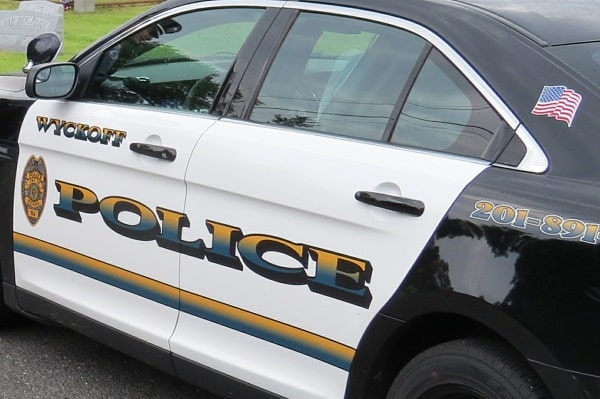
Wyckoff – Township police are closing their dispatch center and expect to outsource dispatch operations to Bergen County beginning in 2015 – this, after Midland Park announced in the summer it would not renew its contract with the township for dispatch services, ending a 15-year relationship.
“This is for full dispatching similar to the service we have been providing to Midland Park,” Police Chief Benjamin Fox in a telephone interview. “Safety and efficiency for all Wyckoff emergency services has been considered, as well as the ability to deliver these services to the residents of the community in a manner as we have in the past.”
Fox said township officials have considered the cost effectiveness of making such a change. An agreement between Wyckoff and the Bergen County Public Safety Operations Center in Mahwah is under attorney review. Fox said additional information would be forthcoming.
The township will officially end its dispatch service to Midland Park on Dec. 31, when the communities’ current $1.29 million five-year contract expires.
Township officials said it offered Midland Park a new five-year contract that started at $260,000 the first year with a 3 percent increases for each succeeding year. The proposal was $20,000 less than the current five-year contract which was executed in 2010 at $280,000 and increased 3.5 percent each year.
– See more at: https://www.northjersey.com/news/business/wyckoff-explores-police-dispatch-affiliation-with-county-1.1117626#sthash.QwP6v1L3.dpuf
Hillary: ‘Don’t Let Anybody Tell You’ That ‘Businesses Create Jobs’
Appearing at a Boston rally for Democrat gubernatorial candidate Martha Coakley on Friday, Hillary Clinton told the crowd gathered at the Park Plaza Hotel not to listen to anybody who says that “businesses create jobs.”
“Don’t let anybody tell you it’s corporations and businesses create jobs,” Clinton said.
“You know that old theory, ‘trickle-down economics,’” she continued. “That has been tried, that has failed. It has failed rather spectacularly.”
“You know, one of the things my husband says when people say ‘Well, what did you bring to Washington,’ he said, ‘Well, I brought arithmetic,’” Clinton said, which elicited loud laughs from the crowd.
https://www.breitbart.com/Breitbart-TV/2014/10/24/Hillary-Dont-Let-Anybody-Tell-You-That-Businesses-Create-Jobs
Ridgewood must look at facts, then decide
OCTOBER 24, 2014 LAST UPDATED: FRIDAY, OCTOBER 24, 2014, 10:00 AM
THE RIDGEWOOD NEWS
We can’t just say no to housing
Jeff Kahn
To the Editor:
Ridgewood residents love this town, and we all want what’s best for it. Most of us agree that Ridgewood needs “something” to remain a great place to live.
But in our public discourse on what that “something” is, we cannot be a town that simply says “no” to new ideas.
This includes proposals to bring modern multifamily residences to downtown. Rather, we must engage the developers, who are open to feedback and suggestions, and present us with a real opportunity to address a number of pressing needs in our town.
Downsizing empty nesters can’t find the modern option they want and are leaving town. Vacant storefronts line Ridgewood Avenue, and large, derelict lots like the old Brogan dealership blot the landscape, hurting our town’s image.
Surely, housing can be part of the answer to make sure Ridgewood remains a vibrant and desirable place to live for generations to come.
– See more at: https://www.northjersey.com/opinion/opinion-letters-to-the-editor/letter-ridgewood-must-look-at-facts-then-decide-1.1117449#sthash.MVGiyxxH.dpuf
Courts should decide hospital expansion
OCTOBER 24, 2014 LAST UPDATED: FRIDAY, OCTOBER 24, 2014, 10:01 AM
THE RIDGEWOOD NEWS
Let courts decide Valley’s fate
Rurik Halaby
To the Editor:
I support The Valley Hospital’s decision to take the matter of its renewal to court, as I know that we, the residents of Ridgewood, will win if Valley wins. Valley has to renew to remain viable. And its future cannot be dictated by a small band of neighbors who are only guided by their parochial needs.
And before the politicians start beating their chests, I will relate a discussion I had with a Village Council member after the council voted against Valley in 2011. He/she shook his/her head and lamented the fact the issue ever came to the council: “It should have been settled by the courts.” Well, hopefully the Village Council’s work will be done for it.
History is full of missed opportunities, and Ridgewood’s great missed opportunity this past year was our mayor not mediating behind the scenes between Valley and its neighbors to alleviate the neighbors’ concerns and to arrive at a workable solution. If I lived in the neighborhood, I certainly would have had my concerns, but I would have worked hard to get Valley to address them to the satisfaction of most of the neighbors.
This is now doubly difficult because the neighbors’ fears have gone beyond rationality to the realm of paranoia: The neighborhood being smothered with a blanket of noxious fumes, basements being flooded, walls getting cracked, and children being mowed down by heavy trucks on their way to school. These concerns made me wonder if this project was actually taking place in the most advanced engineering country in the world.
– See more at: https://www.northjersey.com/opinion/opinion-letters-to-the-editor/letter-courts-should-decide-hospital-expansion-1.1117450#sthash.MC5oZryJ.dpuf
Black disappointment with Obama threatens Democrats
BY DAVID LIGHTMAN
McClatchy Washington BureauOctober 23, 2014
MIAMI — Black voters’ disappointment with President Barack Obama, who they so eagerly embraced for so many years, could be costly on Election Day to Democrats, who badly need a big African-American turnout to win Senate and gubernatorial races in key states.
Instead, many African-Americans see an unemployment rate well above the national average, continuing problems with crime in many neighborhoods, and a president more interested in trying to help other voting blocs that didn’t give him such unwavering support.
Related: Rep. John Lewis says he’d ‘vote against’ Obama judicial nominee
He talks about same-sex marriage in a nod to the gay and lesbian community. He discusses immigration and its benefits, an issue particularly important to the Latino community. He fights for equal pay, a vital issue to the women Democrats so avidly court.
Read more here: https://www.mcclatchydc.com/2014/10/23/244420_black-disappointment-with-obama.html?rh=1#storylink=cpy
Traffic safety board expands number of vehicles covered in air bag warning
file photo Boyd Loving
Traffic safety board expands number of vehicles covered in air bag warning
OCTOBER 22, 2014, 3:43 PM LAST UPDATED: WEDNESDAY, OCTOBER 22, 2014, 4:46 PM
ASSOCIATED PRESS
The National Highway Traffic Safety Administration has expanded the number of vehicles and manufacturers covered by a warning about air bags. Ten automakers and almost 8 million vehicles are covered.
The agency is urging owners to get air bags repaired due to the potential danger to drivers and passengers. NHTSA says inflator mechanisms in the air bags made by Takata Corp. can rupture, causing metal fragments to fly out when the bags are deployed.
Government ups air bag warning to 7.8M vehicles
On Monday the agency included 4.7 million vehicles on a list. But Wednesday it added multiple models and removed about 133,000 older General Motors cars that were put on the list by mistake. NHTSA says the number of vehicles could still change because some may have been double-counted.
The agency is urging people in high-humidity areas such as Florida, Puerto Rico, Guam, Saipan, American Samoa, the U.S. Virgin Islands, Hawaii and “limited areas near the Gulf of Mexico in Texas, Alabama, Mississippi, Georgia and Louisiana” to get their cars repaired quickly.
The safety agency urges owners to use their vehicle identification number on manufacturer sites to see if vehicles are have been recalled by the manufacturer.
– See more at: https://www.northjersey.com/news/list-traffic-safety-board-expands-number-of-vehicles-covered-in-air-bag-warning-1.1115008#sthash.Gfe4Y8fD.dpuf
Ridgewood will no longer donate to charitable groups
file photo by Boyd Loving
Ridgewood will no longer donate to charitable groups
OCTOBER 22, 2014 LAST UPDATED: WEDNESDAY, OCTOBER 22, 2014, 12:23 AM
BY LAURA HERZOG
STAFF WRITER |
THE RIDGEWOOD NEWS
Ridgewood will no longer be donating thousands of dollars each year to local charitable organizations, a process the village manager said is illegal.
The public disclosure that the village was making these donations for a long period of time was made by Village Manager Roberta Sonenfeld at a council meeting on Oct. 8.
Sonenfeld told the public that she could not specify for how long the donations have been made, but that they likely went on under several different administrations.
“I will tell you that it was probably somewhere in the range of maybe $10,000 [a year]… to sports organization, as well as to some Ridgewood charities,” she said.
Last Wednesday, Sonenfeld told The Ridgewood News that the donations had been going on for “much more than 10 years” (the technological records only go back that far). She also said that no state government entity had told the village to discontinue the donations.
She believed that the village wanted to support Ridgewood residents by making the donations, and had apparently not realized that they were illegal.
“Municipalities, by state law, cannot make donations to charitable institutions; there are very few exceptions to this,” she said. “I think it’s the idea that as a taxpayer … you’re not spending your money for someone else to determine what charity to give to.”
– See more at: https://www.northjersey.com/news/state-law-requires-ridgewood-to-stop-donations-1.1114768#sthash.PnhqFHmx.dpuf
Reader says Valley tried to buy the license of Pascack Valley for $2 million in order to terminate and keep it CLOSED Pascack Valley, arguing that there were too many available health care services and beds in the region.
Chris Christie at People First , Open Pascack Valley Hospital Rally
Reader says Valley tried to buy the license of Pascack Valley for $2 million in order to terminate and keep it CLOSED Pascack Valley, arguing that there were too many available health care services and beds in the region.
Richard Keenan, Valley’s chief financial officer and senior vice president, said in his testimony “Most nights there are approximately 300 unoccupied hospital beds in Bergen County,” Some remaining hospitals “are still running at dangerously low occupancy levels,”
Do recall that Valley tried to buy the license of Pascack Valley for $2 million in order to terminate and keep it CLOSED, arguing up to 2013 decision that there were too many available health care services and beds in the region.
“The bed need study that we conducted again shows that opening another hospital in the most overbedded county in the state makes no sense,” said Valley CEO Audrey Meyers.
From a Valley lawyer at the time : ‘The board of trustees and the leadership of The Valley Hospital continue to believe that the opening of a new hospital ( PV) during an era of health care reform, declining hospital reimbursement, reduced patient hospitalizations, insignificant population growth and a challenging economy is wrong for the health care system of Bergen County,” “The latest numbers show that there will be no increase in demand for health care, and a new hospital will only hurt existing hospitals.”
So Valley basically argued that Pascack Valley wasn’t inherently beneficial to the region given healthcare surpluses but knowing that PV’s continued closure was inherently beneficial to Valley accumulating additional profits .
PV hearings exposed Valley’s ulterior motives and any pretense of altruism. The embarrassing double talk of Valley, the repeated attempts to shove through an overbuild and now this wasteful suit has alienated this community
Valley enjoys a coveted address and gracious host but its rather affluent residents are also educated and attentive and not willing to let the detriments of unbridled expansion degrade their town. Valley always had their support and ability to properly renew but their aspirations to be a regional behemoth needed to be thoughtfully planned especially given past rulings and guidance about limitations which they obviously choose to disregard.
Technology today allows the option of operating a right sized base with satellites , Valley could take this route or materially expand at another location as some other regional hospitals did. No legitimate rationale exists for any huge expansion not to be in a suitable location. Poor planning or arrogance are not a basis for an overbuild.
The existing building of HUMC PV was totally renovated with the newest technology for $80mil . Valley is a larger structure as is so the cost would be proportionately higher but a proper renewal would result in large scost avings that can be reinvested elsewhere. Valley and its trustees should take a cue from others and embark on a proper renewal at Van Dien and other options before they lose whatever is left of their goodwill and rank.
Companies Try to Escape Health Law’s Penalties
Some Employers Seek to Shift Employees to Medicaid; Others Plan to Offer ‘Skinny’ Benefit Plans
“We’ve got to be careful about not fooling ourselves into thinking everybody wins,” said Matt Salo, executive director of the National Association of Medicaid Directors. “The cost to the taxpayer does go up significantly.”
By ANNA WILDE MATHEWS And
JULIE JARGON
Updated Oct. 21, 2014 9:17 p.m. ET
With companies set to face fines next year for not complying with the new mandate to offer health insurance, some are pursuing strategies like enrolling employees in Medicaid to avoid penalties and hold down costs.
The health law’s penalties, which can amount to about $2,000 per employee, were supposed to start this year, but the Obama administration delayed them until 2015, when they take effect for firms that employ at least 100 people.
Now, as employers race to find ways to cover their full-time workers while holding a lid on costs, insurance brokers and benefits administrators are pitching a variety of options, sometimes exploiting wrinkles in the law.
The Medicaid option is drawing particular interest from companies with low-wage workers, brokers say. If an employee qualifies for Medicaid, which is jointly funded by the federal government and the states, the employer pays no penalty for that coverage.
“You’re taking advantage of the law as written,” said Adam Okun, a senior vice president at New York insurance broker Frenkel Benefits LLC.
Locals 8 Restaurant Group LLC, with about 1,000 workers, already offers health coverage, and next year plans to dial back some employees’ premium contributions. That is because an employer can owe penalties if its coverage doesn’t meet the law’s standard for affordability.
https://online.wsj.com/articles/companies-try-to-escape-health-laws-penalties-1413938115
1st Annual Kelly Creegan Golf Outing
How Asset Forfeiture Allows Cops to Steal from Citizens
A Virginia lawmaker takes on policing for profit.
A. Barton Hinkle | October 22, 2014
In September Rep. Scott Garrett (R-NJ), Chairman of the Congressional Constitution Caucus, and Rep. Tony Cárdenas (D-CA), Co-Chairman of the bipartisan Crime Prevention and Youth Development Caucus, today introduced H.R. 5502, the Fifth Amendment Integrity Restoration (FAIR) Act, to protect Americans from having their property seized without the due process of law. The FAIR Act makes a number of changes to civil asset forfeiture laws to restore the constitutional protections guaranteed by the Fifth Amendment.
The FAIR Act would ensure that Americans are innocent until proven guilty by requiring the government to meet a higher legal standard before seizing an individual’s property. This legislation would raise the standard to seize assets from a preponderance of evidence to a higher standard of clear and convincing evidence. In addition, the FAIR Act would eliminate the practice of equitable sharing and eliminate all profit incentives by requiring that all funds seized by the federal government go into the general treasury fund.
It probably seemed like a bright idea at the time: Let the police seize the ill-gotten gains of alleged drug dealers and other suspected criminals and sell it, using the proceeds to buy much-needed crime-fighting gear.
Unfortunately, the process—civil asset forfeiture—did not require convicting anybody of a crime. In fact, it didn’t even require charging anybody with a crime. Not surprisingly, this led to rampant abuse, which has been abundantly documented for many years. Various reform efforts, including a 2000 federal law, have been unable to stop what’s become known as policing for profit.
But Virginia lawmaker Mark Cole is going to give it another shot. That’s as good a sign as any that civil asset forfeiture has jumped the shark.
You can’t get much more conservative than Cole, a Republican who represents Spotsylvania in the General Assembly, without falling off the edge of the political spectrum. Cole supports “traditional family values” — so much so that he voted against appointing a Richmond prosecutor and former Navy pilot to a judgeship because he was gay. Cole has sponsored legislation to deny government benefits to illegal immigrants. And to strip state funding for abortions even in cases where the fetus has “gross and totally incapacitating physical deformity or mental deficiency.” And to rewrite a state prohibition against guns in schools so private schools could set their own rules. Four years ago, he sponsored a bill to protect people from having microchips implanted in their bodies, in part because such microchips might be used as the “mark of the beast” described in Revelations.
On his website, Cole boasts of supporting law enforcement. “Public safety and emergency services are Mark Cole’s top priorities,” reads a quote from Stafford County Sheriff Charlie Jett. “He helped ensure that funding was available for pay raises for deputies and state troopers. He has been a strong voice for us in Richmond.”
But policing for profit has gone too far, even for Cole. In anticipation of the 2015 legislative session, he already has filed a bill (HB 1287) that would forbid asset forfeiture without a conviction—and even then only after all appeals have been exhausted.
https://reason.com/archives/2014/10/22/how-asset-forfeiture-allows-cops-to-stea
71% of Obamacare Signups Traced to Government’s Expansion of Medicaid
Melissa Quinn / @MelissaQuinn97 / October 22, 2014
The vast majority of Americans gaining health coverage under Obamacare actually qualified for Medicaid because of loosened eligibility —and that’s what boosted enrollment among those previously uninsured, a new report from The Heritage Foundation.
The Obama administration has boasted that the Affordable Care Act, popularly known as Obamacare, would allow those previously uninsured to purchase quality, affordable health care.
“The inescapable conclusion is that, when it comes to covering the uninsured, Obamacare so far is an expansion of Medicaid,” Heritage Foundation health policy experts Edmund F. Haislmaier and Drew Gonshorowski write in a research paper scheduled for release today.
Officials announced in May that more than 8 million Americans had picked a health plan on the Obamacare website, HealthCare.gov.
Subscribe to updates and alerts
Haislmaier and Gonshorowski conclude that 8.5 million Americans gained coverage through Obamacare from January to July.
Commentary: The Real Story on How Much Obamacare Increased Coverage
However, their paper says, more than 70 percent of those signups can be traced to the expansion of Medicaid eligibility in 24 states:
Of the 8.5 million total individuals who gained health insurance coverage, 71 percent of that net coverage gain was attributable to Obamacare’s expansion of Medicaid to able-bodied, working-age adults.
In the states that adopted and implemented Medicaid expansion under Obamacare, enrollment skyrocketed as an additional 5.7 million Americans signed up for coverage.
In 21 states opting out of Medicaid expansion, however, enrollment was strikingly lower. The Heritage report finds that 355,674 Americans signed up for Medicaid in those states.
In all, Medicaid enrollment increased by 6 million individuals for the first half of 2014.
The Daily Signal is the multimedia news organization of The Heritage Foundation.
The Affordable Care Act, popularly known as Obamacare, loosened eligibility requirements for Medicaid, traditionally the government’s health program for the poor. The changes made it easier for individuals with an income of up to 138 percent of the federal poverty line (roughly $16,000) to qualify for the taxpayer-funded health coverage.
As the Heritage experts note, many Medicaid-eligible Americans under the new requirements also don’t have dependent children.
States got an incentive–federal dollars–to adopt the requirements.
Twenty-seven states and the District of Columbia opted to expand Medicaid. By July, however, 24 states had implemented the program.
The Affordable Care Act went into effect in October. Its implementation included the rollout of HealthCare.gov, the online marketplace where consumers can peruse and purchase insurance plans.
HealthCare.gov’s advent was accompanied by well-publicized malfunctions, glitches and failures. White House officials scrambled to fix the website as consumers experienced long delays. As a result, the Obama administration extended the close of open enrollment from March 30 until April 15.
Despite the rocky rollout of HealthCare.gov, President Obama and then-Health and Human Services Secretary Kathleen Sebelius touted that enrollment in Obamacare insurance plans topped the original goal of 7 million.
According to reports from the Department of Health and Human Services, enrollment likely hovered around 7.3 million, as original estimates took into account those who selected a plan, but did not pay their first month’s premiums.
Sylvia Mathews Burwell, who in June replaced Sebelius as HHS secretary, said in a speech last month at the Brookings Institute:
Four years after President Obama signed the law, middle class families have more security, and many who already had insurance have better coverage. Fewer Americans are uninsured, and at the same time, we’re spending our health care dollars more wisely, and we’re starting to receive higher quality care.
https://www.heritage.org/research/reports/2014/10/obamacares-enrollment-increase-mainly-due-to-medicaid-expansion