Posted on Leave a comment

>Frank Gaffney : How Safe Are We 10 Years After 9/11?

>How Safe Are We 10 Years After 9/11?
Friday, 09 Sep 2011 11:10 AM
By Frank Gaffney

So, where are we 10 years after 9/11? It is comforting that we have been blessed with a near-unbroken decade without further mass-casualty attacks since those that killed nearly 3,000 Americans on Sept. 11, 2001.

Unfortunately, our government is pursuing policies that can only encourage those who aspire to do us harm to redouble their efforts.

Such an assessment was implicit in a critique of President Barack Obama’s new counterterrorism “strategy” delivered last week by Senate Homeland Security Committee Chairman Joseph Lieberman.

The Democrat-turned-Independent from Connecticut described the president’s so-called “Empowering Local Partners to Prevent Violent Extremism in the United States” white paper as “ultimately a big disappointment”:

The administration’s plan . . . suffers from several significant weaknesses. The first is that the administration still refuses to call our enemy in this war by its proper name, violent Islamist extremism. We can find names that are comparable to that, but not the one that the administration continues to use which [is] “violent extremism.”

https://www.newsmax.com/Remember911/9-11-Obama-counterterrorism/2011/09/09/id/410383?s=al&promo_code=D036-1

Posted on Leave a comment

>Thinking About 9/11

>Thinking About 9/11
Ron DuBois  Bogota, New Jersey


Earlier this evening, Thursday, September 8th, I was at a moderated event in New York City. The moderator was pundit and author Michael Medved, and the speakers were former Secretary of Defense, Donald Rumsfeld; former White House Press Secretary, Ari Fleischer; and former Attorney General, Michael Mukasey, who prosecuted the blind Sheik for the 1993 World Trade Center bombing. They spoke about the upcoming 10th anniversary of 9/11, the intervening years since 2001, and the current war on terrorism.

All three were basically in agreement, that while Spain, India, England, and other places, have suffered terrible terrorist attacks in the last few years, the U.S. has avoided them. This has not been due to a lack of effort by the terrorists – remember the “shoe bomber”, the Christmas Day “underwear bomber”, and the truck bomb in Times Square. (Gee, how imaginative our Media is, with titles I would expect from seamy rags.)  Our intelligence agencies, all jokes aside, and police, have actually done a tremendous job of protecting us, preventing dozens of plots from reaching fruition, in spite of hinderence from the White House and the Department of Jokers,  er, I mean Justice. The attempts listed above were prevented by a combination of the bombers own stupidity and brave American civilians, in spite of Janet Napolitano’s declaration that “the system worked”.

The speakers recalled exactly where they were and what they were doing when the planes hit the Twin Towers. Mr. Fleischer was with the President, Secretary Rumsfeld was in the Pentagon, and felt the shock of the plane hitting it, and Attorney General Mukasey, I believe, was at home. They also spoke of current U.S. policy in the Middle East and Africa, echoing my own opinions perfectly. Egypt was at peace with Israel, and no threat to us, yet President Obama helped depose Mubarak, opening the door for the Muslim Brotherhood. While Syria and Iran are threats, and Turkey is becoming one, our White House and State Department have been slow to react, and Libya, no threat at all to us, or to the Middle East, became the victim of NATO attacks on the Qadaffi government. Now, I don’t like Qadaffi much, but there’s a good chance the new government will be worse. What’s more, President Obama did not go to Congress for consent, even after the 60-day maximum under the War Powers Act was exceeded. Just to remind folks, there are only three, clearly itemized, reasons the President may use the War Powers Act, and the situation in Libya was not one of them.

At the end, the speakers fielded questions from the audience, and from 25 satellite viewing places around the country. The question that gave me pause was, “What happened to all the unity and flags and patriotism that was displayed after 9/11?”  Here in New Jersey, where I live, it lasted over a year; what surprised me, according to Secretary Rumsfeld, was that in Washington it only lasted about three months. After that, it was back to “business as usual”. I think it is sad, that so many Americans have failed to continue the high level of patriotism that followed 9/11, but even sadder that many in Washington, who represent us at home, and our country to the world, could not hold their unity together for more than Three months.

Microsoft Store

Posted on Leave a comment

>PSEG Saluted as International Sustainability Leader

>
PSEG Saluted as International Sustainability Leader
Dow Jones recognizes NJ energy company’s commitment to economic, environmental and social responsibility

(September 8, 2011 – Newark, NJ) – Public Service Enterprise Group (PSEG) was today named to the Dow Jones Sustainability World Index. Along with Duke Energy, it was one of only two U.S. utilities to make the international list. PSEG was also included in the Dow Jones Sustainability North America Index. The indexes serve as benchmarks for investors who integrate sustainability considerations into their portfolios and they are important indicators of success, given that companies that embrace sustainability are consistently among the highest performers in their industry.

“The DJSI have become the gold standard in recognizing the world’s corporate sustainability leaders,” said Michael A. Petronella, President, Dow Jones Indexes. “These indexes have become an invaluable market tool for those seeking to support companies that are committed to creating and adopting sustainable business practices.”

The Dow Jones Sustainability Index (DJSI) tracks the financial performance of the leading sustainability-driven companies worldwide. The DJSI selects leading companies for investment purposes, based on the quality of a company’s strategy, management and its performance in dealing with opportunities and risks deriving from economic, environmental and social developments.

The results are watched by market participants and are used by asset managers in 16 countries to manage a variety of sustainability-driven portfolios, such as mutual funds. Empirical evidence indicates that companies with higher sustainability scores are more likely to outperform their peers over the long-run.
“Businesses often define sustainability in terms of the environment, but it is about much more. It means considering our overall impact on the people and communities we serve, while striving to grow a strong, solid business,” said Anne Hoskins, PSEG’s senior vice president of public affairs and sustainability. “We view our plans and investments through the lens of relevant economic, environmental and social issues.”

Posted on Leave a comment

>BOE looks to monitor students diets

>BOE looks to monitor students diets 


How better to gather information about your child’s eating habits and use them to tailor health insurance policies and create behavior control programs.Dig deep on this one, there is probably some government $$ out there to be had if you have the data to back up the need for an obesity awareness program or some other intrusive nonsense.


Then again it can just be another incompetent move by the BOE and school administration


.Microsoft Store

Posted on Leave a comment

>Ridgewood schools taking a delicate approach to teaching 9/11

>Ridgewood schools taking a delicate approach to teaching 9/11

THURSDAY, SEPTEMBER 8, 2011
BY JOSEPH CRAMER
STAFF WRITER
THE RIDGEWOOD NEWS

On most days, Ridgewood’s proximity to New York City would be considered one of its greatest merits and conveniences. That was not the case, however, on Sept. 11, 2001, as the catastrophe that claimed the lives of 12 Ridgewood residents could be viewed all too clearly from the peak of Crest Road or Route 17.

This proximity, both geographic and painfully personal, doubtlessly contributed to the ultimate impact of those attacks on the village’s consciousness moving forward, and it is with that proximity in mind that the Ridgewood Public Schools administration decided to take a more measured approach to educating students about the tragedy.

“Ridgewood is a community that suffered a lot of loss in 9/11 and we still have students in the schools, some who were just infants when it occurred,” Superintendent Daniel Fishbein said.

https://www.northjersey.com/news/129476688_Ridgewood_Schools_taking_a_delicate_approach_to_teaching_9_11.html

Posted on Leave a comment

>FBI raids solar panel company hailed by Obama

>FBI raids solar panel company hailed by Obama


Firm got $500 million in stimulus funds

FBI agents executed search warrants Thursday at the California headquarters of Solyndra LLC, which was awarded more than $500 million in federal stimulus loans in 2009 to make solar panels in what the Obama administration called part of an aggressive effort to put more Americans to work and end U.S. dependence on foreign oil.

But the firm filed a bankruptcy petition Tuesday in Delaware, shedding more than 900 full-time employees, leaving just a “core group” of 113 employees, according to bankruptcy records.

FBI spokesman Peter D. Lee said multiple search warrants were served at the company’s Fremont, Calif., headquarters in what he called a joint investigation by the FBI and the Energy Department’s Office of Inspector General. But he said he could not provide any details about the ongoing probe.

https://www.washingtontimes.com/news/2011/sep/8/fbi-raids-solar-panel-company-hailed-by-obama/

Posted on Leave a comment

>FEMA Disaster Assistance

>FEMA Disaster Assistance

On Wednesday, August 31, President Obama declared a state of emergency for New Jersey, freeing up federal funds and resources to assist New Jersey in dealing with Hurricane Irene and the recovery efforts. Bergen, Passaic, Warren and Sussex Counties have all been named official disaster areas and are eligible for both individual and public assistance.  This means aid is now available for individuals, small businesses, localities and non-profits.


If you would like to apply for this assistance, please read the information below about the qualifications and apply directly to FEMA using the phone numbers or websites provided. Please pass this information along to anyone who might need it.


This has been a difficult time for many New Jersey families, and I once again ask everyone to help your neighbors and friends by lending a helping hand as the rebuilding process begins. I have faith in the will-power and strength that has always defined the Garden State. 


Thank you and God bless.
Sincerely,


Scott Garrett

Aid for Families and Individuals

Individual and Household Programs (IHP)

Individual assistance can be provided to eligible individuals and households who are uninsured, or under-insured, and suffered losses due to disaster damage.  By law, the amount of individual assistance a person or household can receive is capped and may not cover losses to the extent that a flood insurance policy would.  IHP is not intended to restore damaged property to the condition it was in prior to the disaster; IHP home repair may only provide enough money, up to the limits, to return a house or item to service.  IHP is not intended to cover businesses; they must seek loans from the Small Business Administration (SBA) prior to seeking IHP assistance.  With each case, the disaster victim must register for assistance to establish eligibility.  FEMA (or the providing agency) will verify eligibility and need before assistance is offered.

For more information about the above programs, please call 1-800-621-FEMA (1-800-621-3362) or visit www.DisasterAssistance.gov

Temporary Housing, Rental and Mortgage Assistance

FEMA’s Temporary Housing Assistance and Rental Assistance programs ensure that people whose homes are damaged by disaster have a safe place to live until repairs can be completed.  These programs are designed to provide funds for expenses that are not covered by insurance and are available only to homeowners and renters who are legal residents of the United States and who were displaced by the disaster.  Also available is Mortgage and Rental Assistance (MRA), which provides a check to pay the rent or mortgage to prevent eviction or foreclosure.

For more information about the above programs, please call 1-800-621-FEMA (1-800-621-3362) or visit www.DisasterAssistance.gov

Individual and Family Grants

The Individual and Family Grant Program (IFG) provides funds for the necessary expenses and serious needs of disaster victims that cannot be met through insurance or other forms of disaster assistance (including low interest loans from the Small Business Administration).  Applicants will be tested for a loan first.  To obtain assistance for housing and personal property, applicants may be required to apply to the U.S. Small Business Administration (SBA) for a disaster loan.  If the SBA determines the applicant ineligible for a loan, or if the loan amount is insufficient, the applicant is referred to the IFG program.  Among the needs that can be met through the IFG Program are housing, personal property, medical, dental, funeral, transportation and required flood insurance premiums.

For more information about the above programs, please call 1-800-621-FEMA (1-800-621-3362) or visit www.DisasterAssistance.gov

Aid for Small Businesses

Small Business Administration Disaster Loans

The Small Business Administration (SBA) can provide three types of disaster loans to qualified homeowners and businesses: Home Disaster Loans to homeowners and renters, Business Physical Disaster Loans to business owners to repair or replace disaster-damaged property, and Economic Injury Disaster Loans, which provide capital to small businesses and to small agricultural cooperatives to assist them through the disaster recovery period.  For many individuals, the SBA Disaster Loan program is the primary form of disaster assistance.  Other FEMA programs for individuals include: Disaster Unemployment Assistance, Legal Services, Tax Relief Considerations and Crises Counseling.

For more information about the above programs, please call 1-800-659-2955 or visit https://www.sba.gov/content/business-physical-disaster-loans

Aid for Localities and Nonprofits

Public Assistance – Reimbursement to Municipalities & Private Nonprofits

FEMA Public Assistance funds the repair, restoration, reconstruction, or replacement of a public facility or portion of the infrastructure that is damaged or destroyed by a disaster.  Certain private nonprofit (PNP) organizations may also receive assistance.  Eligible private nonprofits include educational, utility, emergency, medical, rehabilitation, and temporary or permanent custodial care facilities (including those for the aged and disabled), and other private nonprofit facilities that provide essential services of a governmental nature to the general public.

Projects fall into the following categories: Debris Removal, Emergency Protective Measures, Road Systems and Bridges, Water Control Facilities, Public Buildings and Contents, Public Utilities, and Parks and Recreation.

For insurable structures within Special Flood Hazard Areas, primarily buildings, assistance from FEMA is reduced by the amount of insurance settlement that could have been obtained under a standard National Flood Insurance Program (NFIP) policy.

FEMA reviews and approves the project applications and obligates the federal share of the costs (75 percent) to the state. The state then disburses funds to local applicants.  For small projects, payment of the federal share of the estimate is made upon approval of the project and no further accounting to FEMA is required.  For large projects, payment is made on the basis of actual costs determined after the project is completed, although interim payments may be made as necessary.

For more information about the above programs, please call: 1-609-963-6900

Posted on Leave a comment

>NJ businesses band together to boost natural gas

>

NJ businesses band together to boost natural gas

Worried that New Jersey’s access to natural gas supplies could be jeopardized by lobbying from environmentalists opposed to increased use of fossil fuels, a band of big business groups have organized a coalition to promote the use of the fuel.

Called Natural Gas for New Jersey, the coalition already secured a win when Gov. Chris Christie conditionally vetoed a bill last month that would have imposed a ban on a controversial method of drilling for natural gas in New Jersey, a step they argued would allow the state to tap plentiful and relatively cheap supplies of the fuel in the region.

More importantly, the creation of the coalition gives the Christie administration powerful backing in its plans to rely more on natural gas to meet New Jersey’s energy needs and to try and drive down steep electricity bills for both residents and businesses.  (Johnson, NJ Spotlight)

Posted on Leave a comment

>A Jobless Labor Day

>A Jobless Labor Day
the Heritage Foundation


For 14 million unemployed Americans and their families, this Labor Day will not be a happy one. Instead of enjoying a day off of work, they’re suffering a disturbing trend under the Obama economy: Jobs are not being created, the unemployment rate has not improved, and the economy is at a near standstill. Even worse, the labor market’s stall might be turning into a decline.

And today, in Detroit—which in July had the highest unemployment rate of any metropolitan area in the country—President Obama is due to stand with labor presidents including the AFL-CIO’s Richard Trumka, Teamsters’ James P. Hoffa, and the UAW’s Bob King to tout his bailout of the auto industry and his yet-to-be-disclosed plan to turn the economy around.

The Big Labor backdrop is ironic but not surprising. The union movement has helped lead to the staggering loss of manufacturing jobs in the United States, and the demands it has made on employers and governments help create the very conditions leading to the tragic unemployment in Detroit and across the country. But they are strong political allies of the President—having spent $1.1 billion on politics and lobbying in the last election cycle—and they continue to hold a prominent seat at the table.

It follows, then, that President Obama continues to put the institutional interests of unions ahead of America’s economic well-being. In a new paper, Heritage’s Rea Hederman and James Sherk explain that the latest example comes from the National Labor Relations Board (NLRB), which issued several rulings recently undermining employer and employee rights: snap elections, restricting secret ballot elections, and a new rule that allows unions to cherry-pick which workers get to vote on unionizing. All these rules are designed to facilitate organizing companies whose workers are unenthusiastic about unions.

Private-sector workers have a right to unionize, of course. Management gets the union it deserves. But unionization has economic costs, as Sherk and Hederman write:
Unions make businesses less competitive and discourage investment. This reduces job growth. Studies show that jobs fall by 5–10 percent at newly organized firms. Going forward, employment grows by three to four percentage points more slowly at unionized businesses than at otherwise identical non-union companies.

The result can be felt in places like the Motor City as unionized manufacturing employment plummets. Since 2005, GM shed half of its unionized workforce. Nationwide, unionized manufacturing employment fell by 80 percent between 1977 and 2010, while non-union manufacturing employment decreased by 6 percent over that same time period. Unions are feeling the effects, with membership falling by over 600,000 workers in 2010 alone. If workers are happy without a union, the government should not foist one on them.

Sherk explains why unions are on the decline:
Union membership has fallen because traditional collective bargaining does not appeal to most workers. Polls show that only one in 10 non-union workers wants to organize. This makes sense: in the competitive private sector, unions can do little to raise their members’ pay. Additionally, most workers like their jobs and believe they are on the same side as their employers.

Fortunately, Big Labor doesn’t have to be the only game in town. Workers want a say in their workplace, but they’re becoming increasingly aware of unions’ limitations. Private-sector unions have little power to raise their members’ wages, while employers have learned that respecting their employees makes good business sense. That is why large majorities of workers say they are satisfied with their jobs and their bosses.

Unions, though, aren’t going to go down without a fight. That’s why they’re lobbying the Obama Administration to protect their interests. Unfortunately, the President is obliging, whether it’s by changing the rules of the game to make unionization easier, preventing private employers from locating in right-to-work states—as the NLRB is doing with Boeing case in South Carolina—or pushing for more government spending on infrastructure projects that employ primarily union members (while leaving the rest of the economy in the lurch).

Meanwhile, Americans are suffering from the President’s decision to satisfy unions before reducing unemployment, all while there are more signs of a declining labor market than there are of a recovery. There are things Congress and the President can and should do to improve the business climate, such as repealing Obamacare, opening the door to domestic energy production, preventing harmful regulations, passing pending free trade agreements, and reining in the NLRB. Labor Day 2012 can be brighter than today, but Congress and the President must choose the right path to help get us there.

https://blog.heritage.org/2011/09/05/morning-bell-a-jobless-labor-day/

Posted on Leave a comment

>Strangers in Our Homeland

>Strangers in Our Homeland
By Floyd and Mary Beth Brown September 2, 2011

Summer is a time of strong memories. Memories of sunshine, lemonade and bicycles flood our minds. Summertime is the season when our youth is so close we can almost reach out and touch it. This summer we have been extra reflective, the marriage of our first child and the contemplation of our parents mortality have only heightened our introspection. Because it is so integral to our lives, much of our analysis has focused on America and her changes.

Change is not always negative, but as we review the changes of the last decade, we are simply aghast at what has happened. It’s like comparing before and after snapshots of a person addicted to methamphetamines, and the picture isn’t pretty. Hence, today we often feel like strangers in our homeland.

The social upheaval of the past decade has been beyond monumental, and it has resulted in a broken America, with a high number of dysfunctional and lost people. Like a colony of termites stealthily destroying the wooden beams of a house, Liberalism has devastated the social fabric and consensus that made America the preeminent country in the world.

First, the rule of law is a fading memory. Obama and the radicals he has surrounded himself with in the White House think less about following the law than they do achieving political objectives. A liberal outcome is first and foremost on their minds above America’s laws. Three examples are the treatment of GM bondholders, the ongoing war in Libya and the Obama stealth amnesty for illegal aliens.

In the case of GM, the bondholders who had primary liens on the physical assets of General Motors were illegally striped of their legal rights in the Obama takeover of the company. Obama’s primary objective was to protect the United Auto Workers, a major contributor to his campaign. The UAW was essentially transferred the monies that should have been paid to bondholders in the reorganization. The stock the bondholders should have had went to the Union in the form of shares for healthcare.

Next is the ongoing Obama war in Libya. The Obama administration has ignored the legal requirements of the War Powers Act. We never liked the War Powers Act or Gadhafi, but the act is still law and Obama’s failure to follow either the US Constitution or statue in this crisis is a flagrant disregard for the rule of law.

Finally, Obama’s latest act, to use his power to overrule both immigration statues and court orders to suspend the deportation of illegal immigrants, amounts to the outrageous violation of the law.

If George W. Bush had been involved in any of these illegal acts, impeachment hearings would be in full swing with live C-Span coverage available for you to watch in your home. Because of the weakness of Republican leadership in the US Congress, Obama flaunts the law with impunity.

The debt ceiling legislation is a perversion of the US Constitution with the Republicans in Congress actually transferring the power of the purse from themselves to the executive against both tradition and the Constitutional framework developed by the founders to divide power. Now Obama will be able to unilaterally increase the debt by over 2 trillion dollars without as much as a whimper of opposition. If you are a sucker who actually believes the so-called “super committee” will reduce spending, we imagine you still believe Obama has the best interests of the country at heart.

As youngsters, we lived in an America that protected children from abortion. In those halcyon days we would never have contemplated the act of sodomy as somehow proper, even if characterized as a monogamous same sex marriage.

In our youth, which now seem like a distant memory, Christian virtue was actually lauded. You were taught to look up to people who believed in the difference between right and wrong. Instead, today the social disorder has degenerated to the point where Rap stars leading flash mobs are considered community heroes.

We are strangers in this homeland, yet we never give up hope. Before the America that we love becomes even more foreign, the breaks must be applied to the runaway liberalism that is destroying America from the inside out.
wine.comshow?id=mjvuF8ceKoQ&bids=209195

Posted on Leave a comment

>The History of Labor Day

>

The History of Labor Day

   Labor Day: How it Came About; What it Means

Labor Day, the first Monday in September, is a creation of the labor movement and is dedicated to the social and economic achievements of American workers. It constitutes a yearly national tribute to the contributions workers have made to the strength, prosperity, and well-being of our country.

Founder of Labor Day
More than 100 years after the first Labor Day observance, there is still some doubt as to who first proposed the holiday for workers.
Some records show that Peter J. McGuire, general secretary of the Brotherhood of Carpenters and Joiners and a cofounder of the American Federation of Labor, was first in suggesting a day to honor those “who from rude nature have delved and carved all the grandeur we behold.”
But Peter McGuire’s place in Labor Day history has not gone unchallenged. Many believe that Matthew Maguire, a machinist, not Peter McGuire, founded the holiday. Recent research seems to support the contention that Matthew Maguire, later the secretary of Local 344 of the International Association of Machinists in Paterson, N.J., proposed the holiday in 1882 while serving as secretary of the Central Labor Union in New York. What is clear is that the Central Labor Union adopted a Labor Day proposal and appointed a committee to plan a demonstration and picnic.
The First Labor Day
The first Labor Day holiday was celebrated on Tuesday, September 5, 1882, in New York City, in accordance with the plans of the Central Labor Union. The Central Labor Union held its second Labor Day holiday just a year later, on September 5, 1883.
In 1884 the first Monday in September was selected as the holiday, as originally proposed, and the Central Labor Union urged similar organizations in other cities to follow the example of New York and celebrate a “workingmen’s holiday” on that date. The idea spread with the growth of labor organizations, and in 1885 Labor Day was celebrated in many industrial centers of the country.
Labor Day Legislation
Through the years the nation gave increasing emphasis to Labor Day. The first governmental recognition came through municipal ordinances passed during 1885 and 1886. From them developed the movement to secure state legislation. The first state bill was introduced into the New York legislature, but the first to become law was passed by Oregon on February 21, 1887. During the year four more states — Colorado, Massachusetts, New Jersey, and New York — created the Labor Day holiday by legislative enactment. By the end of the decade Connecticut, Nebraska, and Pennsylvania had followed suit. By 1894, 23 other states had adopted the holiday in honor of workers, and on June 28 of that year, Congress passed an act making the first Monday in September of each year a legal holiday in the District of Columbia and the territories.
A Nationwide Holiday
The form that the observance and celebration of Labor Day should take were outlined in the first proposal of the holiday — a street parade to exhibit to the public “the strength and esprit de corps of the trade and labor organizations” of the community, followed by a festival for the recreation and amusement of the workers and their families. This became the pattern for the celebrations of Labor Day. Speeches by prominent men and women were introduced later, as more emphasis was placed upon the economic and civic significance of the holiday. Still later, by a resolution of the American Federation of Labor convention of 1909, the Sunday preceding Labor Day was adopted as Labor Sunday and dedicated to the spiritual and educational aspects of the labor movement.
The character of the Labor Day celebration has undergone a change in recent years, especially in large industrial centers where mass displays and huge parades have proved a problem. This change, however, is more a shift in emphasis and medium of expression. Labor Day addresses by leading union officials, industrialists, educators, clerics and government officials are given wide coverage in newspapers, radio, and television.
The vital force of labor added materially to the highest standard of living and the greatest production the world has ever known and has brought us closer to the realization of our traditional ideals of economic and political democracy. It is appropriate, therefore, that the nation pay tribute on Labor Day to the creator of so much of the nation’s strength, freedom, and leadership — the American worker.
https://www.dol.gov/opa/aboutdol/laborday.htm

Posted on Leave a comment

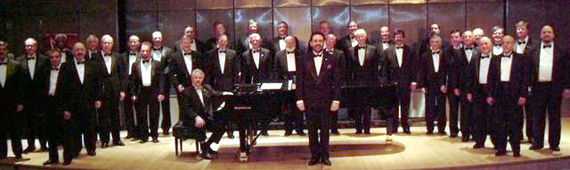
>The Orpheus Club Men’s Chorus opens its new season Sept. 7

>

orpheusclub the+ridgewood+blog

photo ridgewoodorpheusclub.org


RIDGEWOOD  NJ— The Orpheus Club Men’s Chorus opens its new season Sept. 7 and is looking for men who like to sing.

On October 11, 1909, eight men met at the Ridgewood home of Frank R. Pawley do discuss a men’s singing club. A week later, 10 men gathered in the village library, a room in the First National Bank Building. The group paid 75 cents per night to use the room and began singing together, with Dewitt Clinton, Jr., as director. The Orpheus Club Men’s Chorus was born.

Others joined the club and by December, it was agreed that a concert would be presented in February at the Library, but the actual decision was left to the director, and the first Performance was in May. The opener in that concert was the rousing “Winter Song.”

Club membership quickly rose from the 18 who sang the first concert to 35. The members met weekly on Wednesdays from October to May, and in 1913, the club gave it’s first performance of “Pilgram’s Chorus” frim Wagner’s Tannhäuser.

Variety in repertoire was common in Orpheus Club concerts. A program might include “The Boog-a-Boo,” a ragtime number, “Pld Black Joe,” the Stephen Foster song, comedy numbers like “But They Didn’t,” and classics, sometimes sung in French or German.

Ten years after its founding, the Orpheus Club was making guest appearances around New Jersey, and traveled as far as Brookly to sing at a fundraiser for the rebuilding of the Baptist Temple, which had suffered a fire.

As the years continued , the Orpheus Club Men’s Chorus remained a significant part of New Jersey’s cultural life. When the Kasschau Memorial Band shell was dedicated in Ridgewood, the club sang at the inauguration.

In 1962, Richard Lane signed on as pianist for the club, beginning a distinguished career that would continue for 42 years until his death in 2004. A brilliant composer and teacher, Lane wrote 20 numbers for the Club and today’s concerts always feature at least one of Richard’s compositions.

Today, the Orpheus Club Men’s Chorus includes about 50 singers from New York and New Jersey and generally makes eight to 10 appearances annually including four formal concerts. The Club has sung “Alto Rhapsody” (Brahms) with the Adelphi Chamber Orchestra as well as “The Testament of Freedom” (Thompson) and “Hymn to the Nations” (Verdi) with the Orchestra of St. Peter by the Sea. The men of Orpheus have joined with the Ridgewood Choral to sing “Song of Democracy” (Hanson) and appeared with the Ridgewood Concert Band to sing the music of Aaron Copland and Richard Wagner.

In the Spring of 2005, the Chorus made its Lincoln Center debut, performing at the Lincoln Center Library with the Palisades Virtuosi chamber ensemble. Additional performances in recent years have included concerts at the Kasschau Memorial Band shell in Ridgewood, singing in Ridgewood’s Independence Day parade, area churches, and in November 2009, a presentation of Beethoven’s Fantasia for Piano, Chorus, and Orhcestra, Op. 80 (the Choral Fantasy) with the Ridgewood Choral, the Ridgewood High School Chamber Choir, and the Eastern Christian High School Chorus.

Richard Lane’s composition declares: “We are men who like to sing. We are the men of Orpheus.” For more than 100 years.

The Orpheus Club rehearses on Wednesday evenings at 8 PM in The Georgian Room at The Cupola Senior Residence, West 100 Ridgewood Avenue, Paramus, NJ .

For anyone interested in joining the Club for the Winter 2010 Season, we will begin our spring rehearsal schedule on Wednesday, September 8th. We have openings in all sections.

For more information about the Orpheus Club Men’s Chorus, call Greg Farrell at 201-652-2873, or visit the website at ridgewoodorpheusclub.org.

Posted on Leave a comment

>Teachers’ unions: all for accountability … in theory

>Teachers’ unions: all for accountability … in theory
By Bob Bowdon

In 1984, the Ministry of Plenty handled rationing. The Ministry of Love
was in charge of torture. And in the summer of 2011, life imitated art
when the National Education Association announced it supports the use of
student performance in teacher evaluations. So says the group’s latest position paper on the subject. Sometimes, you see, organizations say the opposite of what they mean.

The New York Times took the bait, using the headline
“Union shifts position on teacher evaluations.” The casual
headline-skimmer might be led to wonder, have bona fide education
reformers infiltrated the NEA Politburo? Then you come across this
Orwellian head fake of a phrase in The Times’s coverage:

“But blunting the policy’s potential impact, the union also made
clear that it continued to oppose the use of existing standardized test
scores to judge teachers, a core part of the federally backed teacher
evaluation overhauls already under way in at least 15 states.”

Posted on Leave a comment

>NJ Teacher evaluation gets a new start

>

NJ Teacher evaluation gets a new start

The timing may not be intentional, but the Christie administration’s announcement yesterday of its pilot teacher evaluation system in 11 districts came almost to the day on a conspicuous anniversary.

It was a year ago — and a week — that Gov. Chris Christie fired Bret Schundler as his education commissioner over what was a mishap on the state’s failed application for federal Race to the Top money, a grant that aimed to put in place this very evaluation system statewide.

A firestorm erupted and accusations flew, and tensions only heightened over how the administration was going to handle Christie’s central quest to tighten teacher accountability — without a $400 million federal grant to help pay for it.

Needless to say, and admittedly for other reasons, too, Christie’s relations with the teachers unions, who had an on-again-off-again relationship, with Schundler only worsened.

A year later, the system that would directly tie teacher evaluation to student achievement is seeing a distinctly calmer roll-out with yesterday’s announcement of the pilot. A top official of the New Jersey Education Association (NJEA) even used the words “cautious optimism.”  (Mooney, NJ Spotlight)

Posted on Leave a comment

>NJ Supreme Court gets new lineup

>

NJ Supreme Court gets new lineup

There’s a new face on the New Jersey Supreme Court and another vacancy.
Attorney Anne Patterson was privately sworn in on Thursday, more than a year after Gov. Chris Christie nominated her to become a justice. She replaces Justice Roberto Rivera-Soto, who left the court on Wednesday.

The change was part of a deal Christie brokered with Senate President Stephen M. Sweeney, who had blocked her nomination out of frustration with Christie.

The Republican governor became the first governor in recent memory not to renominate a sitting justice for tenure when he declined to reappoint Justice John Wallace, the court’s only black member.

Christie instead chose Patterson, a corporate lawyer from his hometown, in May 2010 to replace Wallace. Christie said he wanted to remake a court that conservatives said meddles too much in affairs that should be handled by lawmakers and governors.

The stalemate was finally broken in the spring when Christie agreed to instead nominate Patterson to replace Rivera-Soto, who announced his plans to retire after Democrats called for his ouster.  (DeFalco, Associated Press)