RAMSEY NJ, Frank Pallotta, Republican candidate for New Jersey’s Fifth Congressional District, offered praise of the New Jersey Republican Party’s lawsuit against Governor Phil Murphy. The lawsuit comes as Murphy faces a crisis of leadership during the COVID-19 pandemic. From long-term care facility deaths approaching 6,000 to an unemployment rate that has soared to 15%, it is clear that in comparing New Jersey to other states that these failures rest squarely on the shoulders of Phil Murphy and his gross incompetence in managing our state through this crisis. On the eve of Memorial Day Weekend, in particular, we should be ashamed of the fact that COVID-19 was allowed to spread unchecked—thanks to the policies of Governor Murphy—at the state-run New Jersey Veterans Home, creating one of the deadliest epicenter for the virus in the state.
TRENTON NJ, The negative impact of the Covid-19 pandemic on New Jersey’s economy resulted in a record number of monthly job losses and widespread unemployment in April. The mandatory shut down of business activities and stay at home orders to prevent the spread of the virus contributed to total nonfarm employment plummeting by 757,700 jobs in April, while the state’s unemployment rate soared to 15.3 percent, according to estimates released by the U.S. Bureau of Labor Statistics. Both the private (-750,100) and public (-7,600) sectors of the state’s economy recorded losses. The decrease in nonfarm payrolls and the increase in the unemployment rate both represent record-setting monthly shifts for the state.
Ridgewood NJ, A promising drug called remdesivir may shorten hospital stays for patients with COVID-19 and perhaps speed their recoveries while diminishing the odds of death, according to Anthony Fauci, director of the National Institute of Allergy and Infectious Diseases, who on Wednesday described federal next steps based on the new, positive study.
Statement by Ralph Albert Thomas, CPA (DC), CGMA
CEO and Executive Director
New Jersey Society of Certified Public Accountants
Trenton NJ, Governor Phil Murphy delivered a budget address with significant consequences for New Jersey’s future. There’s much at stake. New Jersey is facing a fiscal crisis and we are not committing ourselves to the difficult decisions that will put the state on sound financial footing.
EAST RUTHERFORD NJ, Friday marks the official opening of the American Dream in East Rutherford, New Jersey. Nickelodeon Universe, the largest indoor theme park in the Western Hemisphere, and The Rink – an NHL-size ice skating and hockey facility opened to guests, marking the first chapter in the revolutionary destination’s opening.
Don Ghermezian, CEO of American Dream and President of Triple Five, and Ken Downing, Chief Creative Officer of Triple Five greeted guests as they descended the stairs into Nickelodeon Universe. They were joined by New Jersey Governor Phil Murphy. The crowd of over 2500 was entertained by a host of Nickelodeon characters including the Teenage Mutant Ninja Turtles and Dora the Explorer and the Clifton Mustang Marching Band surprised and delighted guests in a parade through the park led by SpongeBob Square Pants.
From making the rent to shopping for groceries and paying off study loans, putting aside savings is nearly impossible for millennials. With a weak economy and poor job prospects, it’s a wonder that any of us are still surviving.
While it may be easy to blame all of these on poor financial management skills, this simply is not true. Despite an increase in median household incomes over the years, soaring college fees and car and property prices mean that most millennials are firmly anchored in debt. Consequently, this makes it impossible for them to have savings of any kind.
However, there is still hope on the horizon. Despite rising unemployment and soaring costs of living, it is still very possible to have some savings put aside. Here, we’ve put together a simple guide to help you have some cash in the piggy bank.
1. Put aside 10-20% of your salary each month
Call it a tax upon yourself or a forced savings scheme, either way putting aside at least 10% of your salary each month is a great way to start saving. Deposit the self-imposed 10-20% tax each month into a separate savings account via auto debit each month. Before you know it, you’ll have a fair sum put away.
2. Sign up for an IRA account
From the moment you land your first job, you should always check to see if your job has a 401k plan. If it doesn’t, sign up for an IRA account as soon as possible. Treat it your IRA deposits as just another expense and you’ll find putting aside some savings is quite possible.
3. Avoid credit card debt like the plague
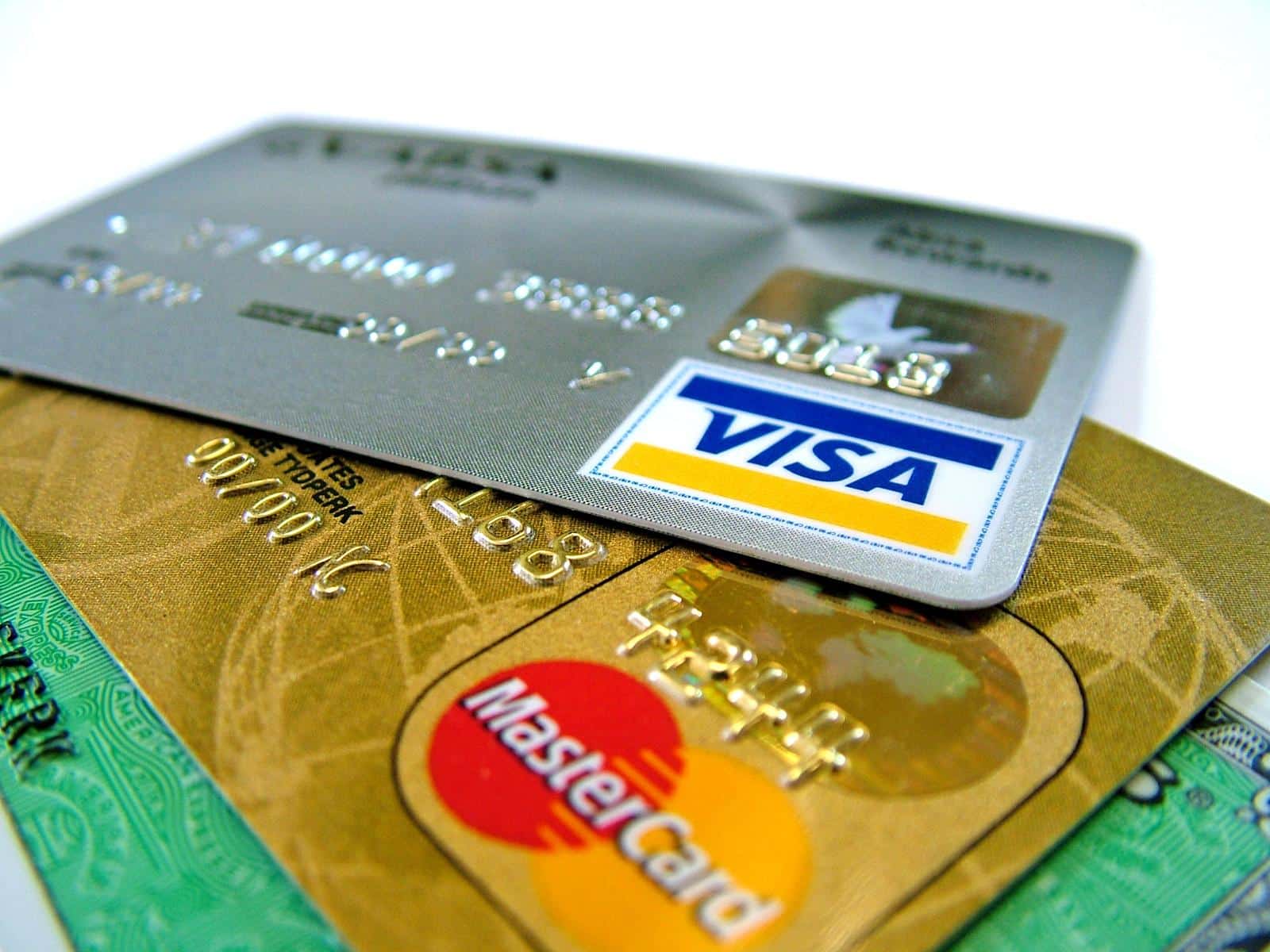
A study conducted by the Federal Reserve Bank of New York has revealed that a whopping 55% of American households are in severe credit card debt. With the extortionate interest rates charged, it’s easy to see how outstanding credit card debt can easily balloon out of control.
As a rule of thumb, always pay off any and all existing credit card debt at the end of the month. This ensures that you’ll never be bogged down with interest payments. Also, paying off your credit card debt on a timely basis helps you develop a solid credit history.
4. Take on a side-gig
Sometimes, a single income stream just isn’t enough. Fortunately, in today’s world there are plenty of opportunities for those willing to look. An example of this can be seen in the active freelance market.
Thousands of copywriters, designers, accountants and even virtual assistants are hired on a daily basis on sites such as Upwork.com and Freelancer.com.
Sites such as these allow you to monetize any of your skills. By taking on a side-gig or a series of freelance projects, you’ll be able to grow and multiply your income streams. Put aside your earnings from these jobs and deposit them into a savings account.
Over time, you’ll be able to save up a surprising amount of money. In some cases, successful freelancers have been known to turn their side hustle into a successful full-time business.
If you fancy sports, look out for online sportsbooks. They might offer some rewards and they have promotions and bonuses for newcomers. However, remember to wage responsibly, so you don’t lose more money than the one you are betting.
5. Audit your expenses
Auditing your personal expenses can be tough. However, by taking a look at your expenses over the previous 6 months, you’ll be able to identify areas where costs could be reduced. Whether it’s skipping on eating out or giving Starbucks a pass, you’ll find that even the smallest expenses do add up.
While it may initially seem like an insurmountable task, it is very much possible for you to have a healthy savings account. With the right combination of self-discipline and consistency, you can make saving a part of your lifestyle.
“The minutes shown certainly provide plenty of TOTALLY IGNORED residents who do not want this clear cutting of trees and planting infant trees on the berm which will take at least 20-30 years based on the town’s planting in front of all the new residences on Queens Court and Kingsbridge. We’ve been here 50 years and have only had to rake in the last 10 or so years. There was nothing on this property when we moved in except for 2 scrawny trees in front. And, according to the history revealed about Schedler “the fighting was done on the rise above the River. ” which is actually my house as we are at the very top of the rise. We all know this property was purchased for the use of the athletic groups in Ridgewood which supposedly was going to provide mega bucks by them for the purchase. “
East Windsor NJ, Continuing to advocate for the fiscal and economic reforms needed to avert future financial crises, Senate President Steve Sweeney spoke at the joint New Jersey Business and Industry Associations (NJBIA) and New Jersey State Chamber of Commerce policy forum today where he emphasized the economic value of bringing fiscal reforms to public finances.
Senator Sweeney participated in “Meet the Decision Makers,” an event that features key New Jersey policy figures. Senator Sweeney spoke about the “Path to Progress” report issued by the 25-member study group that provides a working blueprint to achieve the operational and structural reforms needed to restore financial stability and affordable government.
Paramus NJ, Stew Leonard, Jr. of Stew Leonard’s Wines and Spirits will host a major “Mexican Fiesta” after President Donald Trump struck an agreement with the Government of Mexico to avoid tariffs which would skyrocket costs of tequila and goods imported from Mexico. Since tariffs will be held not be placed on imported goods from Mexico, Stew Leonard’s Wine and Spirts shops in Connecticut and New Jersey will host a celebration for residents, patrons and tequila lovers with a margarita and tequila tasting.
Stew Leonard’s Wine and Spirits stores located in Clifton, Paramus and Springfield, NJ as well as in Norwalk, Danbury, and Newington, Conn. will commemorate the day that the tariffs were supposed to go into effect with a tequila tasting party on Monday, June 10, 2019 from 4:00 pm to 6:00 p.m.
Trenton NJ, Attorney General Gurbir S. Grewal announced today that New Jersey and a coalition of 43 other States have filed a lawsuit accusing 20 generic drug companies of conspiring to artificially inflate the prices of over one hundred generic drugs, in violation of federal and state antitrust and consumer protection laws.
The statistics are in and if you’re a millennial, you have every reason to worry. It’s a well-known fact that student loans are a burden to the current generation. This is despite the millennials owning bachelor’s and master’s degrees. On the other hand, it’s these loans that made it possible for them to acquire tertiary level education.
A recent release showed student loans are now just shy of $1.5 trillion ($1.48). To put this into perspective, it is 1.5 times the credit card debt owed by Americans.
With this in mind, it’s easy to see why millennials are unable to find that ever-elusive financial freedom. According to a study done by MagnifyMoney, a millennial with a student loan is worth a mere 25 percent of what a fellow millennial without a loan is worth.
With such disparity, it’s also clear where their income disappears to. Graduating may bring lots of joy, but the journey to the top of the hill is only beginning. Take a look at how fellow millennials struggle with student loans.
The Net Worth Divide
The rift in the net worth of people with student loans and those without continues to widen as the years go by. For example, in 1989, less than 35 households with student loans had only 13% less in net worth, compared to their counterparts without the burden.
Fast forward to 1998, and this figure is almost triple, with the rift widening to 36%, which means the household with a student loan averaged at $68,687 in net worth while those without averaged at $108,146.
Almost two decades later, the gap between the two households stands at a whopping 75%. Those with student loans average $29,087 while millennials without average $114,376. This means those without loans pocketed more than $85,000 than those shackled with loans.
While a college degree can command a lucrative salary, the income will only go toward clearing the debt thereby hindering you from achieving financial freedom.
A Dry Bank Account
Student loans are great since they finance your dreams. However, reality checks in after graduation. If you’re lucky, you’ll get a job, and the income will go toward offsetting the debt. This is the point where your dream of financial freedom dims.
According to studies, those with student loans use a huge chunk of their paycheck to pay off their loans, thus drying their bank accounts. These graduates have an average of $5,500 while those without holds almost double that amount, $10,180.
This creates a chain reaction where these millennials end up taking on more credit card debt as a result of reduced liquid cash. In fact, they form 55% of those with student debts, while those without makeup 32%. Furthermore, they also have huge balances, $2,888 compared to $1,476 for those without.
Reduced Retirement Savings
The chain reaction continues. Since the millennials have less money in their bank accounts, it’s only logical for them to cut down spending on various household items. Even doing so may not be enough to cover the monthly expenses.
This means no left-over to put away as savings for your retirement. The debt-free millennials have an average of $39,905 stashed away on retirement savings. This is $18,745 more than their counterparts with $5000 quick realistic loans, who have $21,160 saved.
However, you can change the narrative by starting to save for your sunset years as early as possible. Remember, these savings work like compound interest. Even a small contribution toward your IRA or 401(k) has the power to grow over time.
Homeownership
If saving for retirement is a struggle, then you can already imagine what kind of effort a millennial with a student loan will need in order to own a home.
The Joint Center for Housing from Harvard revealed that close to 21 million households used over 30% of their income to pay rent.
This is even as income remains stagnant, and rent costs continue to soar, making it difficult for one to realize the dream of owning a home. With student loans, the dream is even further away than expected thereby reducing the number of millennial graduates owning homes—34 percent compared to their counterparts at 36 percent.
Even if they managed to buy a home, their value is much lower, and a massive mortgage is staring right back at them. Those without loans have home values standing at 5% more than those with them. In figures, this $165,000 versus $157,000.
Since it’s difficult to raise the down payment required to pay for a home, these homeowners end up taking on more debt to finance their dream. According to the research done by MagnifyMoney, this translated to an average mortgage of $104,000 compared to $98,000 for those without debts.
The Solution
Taking on loans at a young age may not be the best strategy. However, the best way to tackle this problem is by finding ways to clear the debt as soon as possible. Here are some:
Make extra payments. Take a deeper look at your budget and cut down on expenses. The excess money can go towards making extra payments. This will save you the money you’d have paid in interest.
Ask for a raise at work. Sometimes, the solution to your woes lie in a salary increase. If this doesn’t work, you can change jobs altogether. You can also consider starting a side job to supplement your main income.
Apply for the loan forgiveness program, This is a viable option, especially if you work in the public sector, for example as a teacher.
You can also look for private and state-based programs, which can help you repay the debt. Some employees also offer student loan matching programs, which can help you clear your loan.
Student loan refinancing is also a worthy option. With this method, you have the chance to repay the loan at a reduced interest rate. However, this will only work if you have good credit and income. This will, in the long run, save you the money you’d have paid in interest. Moreover, you’ll be able to clear the loan faster.
While student loans may help you get a college education, the aftermath may be more difficult to handle when the government starts demanding what you owe them. Nevertheless, it’s not the end of the road because there are methods you can use to achieve financial freedom, as highlighted in this article.
New Brunswick NJ, Speaking at a public policy forum at Rutgers University’s Eagleton Institute of Politics, Senate President Steve Sweeney discussed the cost-cutting reforms in the “Path to Progress” report, including those that will produce savings and efficiencies for municipalities, county governments, local school districts and their employees.
Discusses Poll Showing Public’s Dissatisfaction with Handling of Public Finances
the staff of the Ridgewood blog
Trenton NJ, Continuing to advocate for the fiscal and economic reforms needed to avert future financial crises, Senate President Steve Sweeney spoke at the New Jersey Business and Industry Associations policy forum today where he emphasized the economic value of bringing fiscal reforms to public finances.
Senator Sweeney addressed NJBIA’s Government Affairs Policy Committee about the “Path to Progress” report issued by the 25-member study group that provides a working blueprint to achieve the operational and structural reforms needed to restore financial stability and affordable government.
Trenton NJ, Senate President Steve Sweeney joined in a panel discussion sponsored by the League of Municipalities for its 27th Annual Mayors Legislative Day where he discussed the cost-cutting reforms in the “Path to Progress” report, including those that will produce savings and efficiencies for municipalities, school districts and their employees. Senator Sweeney participated as a member of the “Meet the Legislative Leaders” panel discussion.
“The proposals developed by the study commission will deliver savings for state and local government alike,” said Senator Sweeney (D-Gloucester/Salem/Cumberland). “Municipalities, local school districts and the taxpayers will realize the benefits of the proposals to address soaring pension and benefit costs, hold down property taxes, make government and school districts more efficient, and leverage state assets.”
People take out personal loans for various reasons. But there’s one thing for a fact. Personal loans are less common compared to credit cards. In the US, for instance, only 10% of the citizens apply for personal loans compared to a soaring more than 60% of the population applying for credit cards. Nonetheless, the popularity of personal loans is increasing every day.
So what exactly are personal loans and why should you consider (or not consider) taking one?
Personal loans are quite different from credit cards. The loans are obtained from banks, credit unions and other financial institutions and they require monthly payments over an agreed upon period of time. They are also a type of installment loan. The loans have a term of between two to five years, but this term can be less or higher depending on the loan amount and your agreement with the lender.
The Benefits of Personal Loans
The Loans Can be Used for Different Purposes
There are loans, like mortgages, student loans, auto loans and many others that have restrictions on usage. But with a personal loan, you can use the funds for any purpose. Just ensure that the money is used for a productive project to manage repayments.
No Collateral Required
Some personal loan lenders may need collateral for you to secure the loan but most of them don’t. They can, therefore, be a good option for those who do not have any asset to secure the loan.
You Can Qualify for Large Amounts
Personal loan limits range from $500-$100,000. It is, therefore, possible to borrow huge sums of money if you have large projects to undertake. There are other lenders, like Bonsai Finance who offer the loans with a limit of $500 to $5,000 and they also have flexible terms.
Affordable Rates
Personal loans also have lower rates when compared to credit cards. Provided you have a good credit score, the rates can be as low as 5%.
Disadvantages of Personal Loans
Fixed Payments
With credit card debts, you can take your time for you to pay off your bills, but personal loans require timely payments. If you do not pay the loan, you may risk losing your collateral or if it is an unsecured loan, you can be sued for failure to repay the loan.
Prepayment Penalties
If you apply for a credit card, you can avoid paying interest provided you pay off the balances on time. But when it comes to personal loans, paying the loan before the due date tends to attract a prepayment penalty and this can increase the total cost of the loan.
Personal loans can be a good option if you need funds for carrying out your personal projects. But these loans can also not be suitable for every situation. You, therefore, should do the math to ensure that you can afford to pay the debt on time. If not, you can consider other borrowing options to avoid hurting your credit score by defaulting or making late payments.