
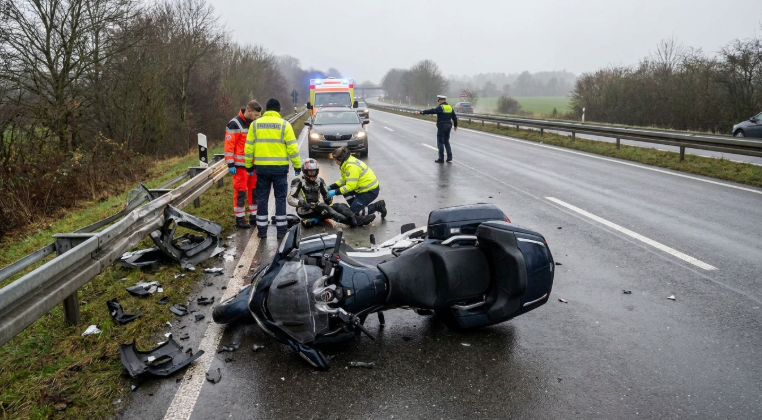
Most riders believe carrying insurance guarantees complete financial recovery after a severe crash. The reality looks much bleaker. Minimum state requirements barely cover initial emergency room visits following high-speed collisions on Assembly Street. Severe injuries quickly exhaust minimum liability policies, leaving victims with substantial out-of-pocket medical debt.
The at-fault driver’s insurance stops paying the exact moment policy caps hit, leaving families to absorb massive surgical costs. Claimants must understand policy limit mechanics to identify all available avenues for recovery.
Identifying The Immediate Insurance Gap
State law requires drivers to carry twenty-five thousand dollars in bodily injury liability per person. Nationally, open femur treatments cost $13,688 to $24,141, averaging $59,700 for complex cases. Uninsured 3-day injury stays average $30,000 (excluding surgeon fees), while Richland Hospital charges $995 daily for a standard orthopedic room and board. Uncovering actual limits involves demanding policy documents early.
Consulting a Columbia motorcycle accident lawyer, such as the attorneys working at Stewart Law Offices, a ‘’Best of York County’’, “Best Law Firm”, and “Best Personal Injury Law Firm” awards-winning law firm, forces reluctant adjusters to disclose exact coverage maximums. For those evaluating the best path forward in a motorcycle accident case, their legal team is available for consultation at the Columbia location. Insurance carriers rarely volunteer policy limits voluntarily, which stalls settlement negotiations while medical bills compound.
Exploring Underinsured Motorist Coverage Mechanisms
Victims overlook their own policies when the at-fault driver lacks sufficient backing. Underinsured motorist coverage bridges this gap. If a rider holds a substantial underinsured policy, this fund activates the moment the primary defendant’s insurance exhausts its resources. The Department of Insurance strictly regulates how companies handle specific first-party claims. Notify the carrier immediately after a crash near the Gervais Street Bridge to block adjusters from denying the claim based on late notice.
Holding At-Fault Drivers Personally Liable
When insurance funds run dry, the law permits pursuing the negligent party’s personal assets. Securing a judgment exceeding the insurance payout means nothing if the defendant lacks executable wealth.
Asset Discovery Procedures
Investigators scan real estate records and bank accounts to locate seizable property. The county maintains public property records revealing substantial land ownership.
The Judgment Collection Reality
Obtaining a court order guarantees no cash. South Carolina protects certain personal property from seizure. Creditors must carefully observe strict statutory state exemptions when attempting to liquidate physical possessions.
Hunting For Third-Party Liability Sources
Serious collisions near the busy I-26 and I-20 interchange frequently involve secondary defendants. If a commercial delivery driver causes a pileup while on the clock, the legal doctrine of respondeat superior makes the employer financially responsible for resulting damages. Municipalities occasionally share blame for poorly maintained infrastructure.
A defective traffic signal on Two Notch Road opens the door to claims against local government entities. The Tort Claims Act mandates strict notice requirements but provides another avenue for recovery.
The Role Of Supplemental Umbrella Policies
Wealthy individuals or corporate defendants frequently carry umbrella policies floating above standard auto liability limits. An umbrella policy provides a critical secondary source of recovery for severe injuries. Adjusters rarely volunteer the existence of this coverage.
Stephen Suggs, a Columbia motorcycle accident lawyer, notes, “Insurance adjusters will intentionally drag out the discovery phase when they know policy limits are blown, hoping the claimant will accept the exact cap out of sheer financial desperation rather than looking for umbrella coverage.” Subpoenas force disclosure of all active lines.
Managing Medical Liens And Outstanding Bills
When settlement funds cannot cover all expenses, healthcare providers assert liens against the final payout. A limited settlement fund often cannot satisfy both outstanding hospital liens and the client’s damages. When it lacks sufficient size to feed the hospital and the injured rider, aggressive negotiation becomes necessary.
According to the National Highway Traffic Safety Administration, motorcycle crashes generate disproportionately high lifetime medical costs. As of 2026, fatal crash injuries to motorcyclists result in over $65 billion in lifetime medical, work, and quality of life lost costs. State statutes provide mechanisms to reduce legal liens. Attorneys leverage state statutes and the threat of uncollectability to negotiate reductions on medical liens.
For guidance regarding your motorcycle accident injury claim, you can contact Stewart Law Offices at 10 Calendar Ct # 100 in Columbia or call (803) 743-4200. Their dedicated attorneys can even travel to visit injured victims unable to travel to the office.

Executing A Bad Faith Claim Against Insurers
Sometimes, an insurance company refuses a reasonable settlement demand within the policy limits, forcing a trial. If the jury awards a verdict far exceeding those limits, the insurer faces liability for the entire amount due to their initial refusal.
This legal concept holds carriers accountable for exposing policyholders to massive financial ruin. Proving bad faith requires demonstrating that the carrier acted unreasonably. The state judiciary handles these complex secondary lawsuits. Claimants use these suits to secure the full value of damages directly from the insurance corporation.
Questions About Columbia Motorcycle Claims
What happens if the at-fault driver declares bankruptcy?
Bankruptcy discharges most standard personal injury judgments, though exceptions exist if the at-fault driver caused the crash while intoxicated. Claimants must secure funds from available auto or commercial policies before a defendant files for financial insolvency.
Can health insurance cover bills when auto limits are exhausted?
Yes. Health insurance plans step in to cover remaining expenses. The health provider will later file a subrogation claim against any final financial settlement.
Does filing a lawsuit guarantee finding hidden assets?
No. Court orders permit deep financial investigations, but defendants with minimal income and zero real property simply have no assets available for legal seizure.





