

Homelessness Surges in NJ: A Look at the Alarming 24% Increase
the staff of the Ridgewood blog
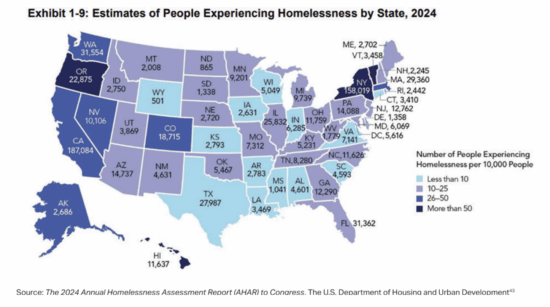
The crisis of homelessness in America is escalating, and New Jersey is feeling the painful impact. According to the January 2024 Point-in-Time count, 12,680 people were experiencing homelessness on a single night in the state—a staggering 24% increase from the previous year.
The primary drivers of this surge are clear: rising rents, a shortage of affordable housing, and a wave of evictions or “soft evictions” (being asked to leave shared homes). However, this devastating trend is deeply compounded by underlying issues like mental health disorders and substance use disorder. Essex County continues to report the highest number of unsheltered individuals in New Jersey, highlighting a complex challenge in urban areas.
The Disturbing Theory of the ‘Homeless-Industrial Complex’
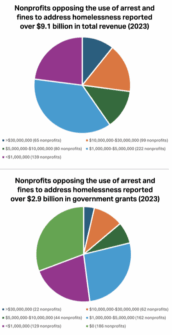
As government and philanthropic spending on homelessness services swells into the billions—with an estimated $9 billion in revenue flowing through related organizations—a controversial new report from the Capital Research Center (CRC) suggests that this massive system may be incentivized to perpetuate the crisis rather than solve it.
The report posits the existence of a “Homeless-Industrial Complex“—a vast network of organizations and actors that, consciously or unconsciously, benefit from the continuation of homelessness.
According to CRC President Scott Walter, “Fringe groups in the Homeless Industrial Complex like to characterize homelessness as a symptom of societal injustices, such as systemic racism, police violence, or capitalism.” He argues that this focus on ideological narratives often overshadows the critical need for direct, evidence-based programs aimed at recovery.
Advocacy Over Results? The Accountability Gap
The CRC report and related critiques argue that:
- Institutional Self-Interest: Many organizations become structurally reliant on continuous funding streams. They are incentivized to focus on input metrics (like beds provided or meals served) rather than measurable outcomes (like individuals achieving stable housing and economic independence).
- Ideological Capture: Critics suggest that some groups within the complex use their humanitarian platform to advance broad ideological agendas, sometimes opposing policies, like enforcement measures, that communities see as essential for restoring public order and encouraging recovery.
- Housing First Concerns: The report specifically criticizes the uncritical implementation of “Housing First” approaches when applied without corresponding requirements for sobriety or mental health treatment, arguing that for many with acute addiction or mental illness, housing alone fails to address the root causes of their instability.
The Path Forward: Focus on Accountability and Recovery
To truly solve this humanitarian crisis, critics agree that simply increasing funding is not enough. The CRC report concludes that real reform requires:
- Transparency and Accountability: Clear boundaries between service provision and political advocacy, with full transparency on how public and philanthropic dollars are being used.
- Focus on Measurable Results: A shift toward recovery-oriented programs with measurable outcomes that genuinely help people move off the streets and into self-sufficiency.
- Vigilance Against Misuse: Guarding against the co-optation of humanitarian platforms for ideological ends that distract from practical solutions for the most vulnerable.
For communities like Essex County and the rest of New Jersey, turning compassion into effective, results-driven solutions must become the top priority.
Follow the Ridgewood blog has a brand-new new X account, we tweet good sh$t
https://twitter.com/TRBNJNews
https://truthsocial.com/@theridgewoodblog
https://mewe.com/jamesfoytlin.74/posts
#news #follow #media #trending #viral #newsupdate #currentaffairs #BergenCountyNews #NJBreakingNews #NJHeadlines #NJTopStories






Music to Democrats ears. Their favorite word is dependency.
LBJ laid it out in his “200 years’ quote. You can find it everywhere if you Google it.
But beware creating dependency, because you can’t stop once you have them…………………………………..