
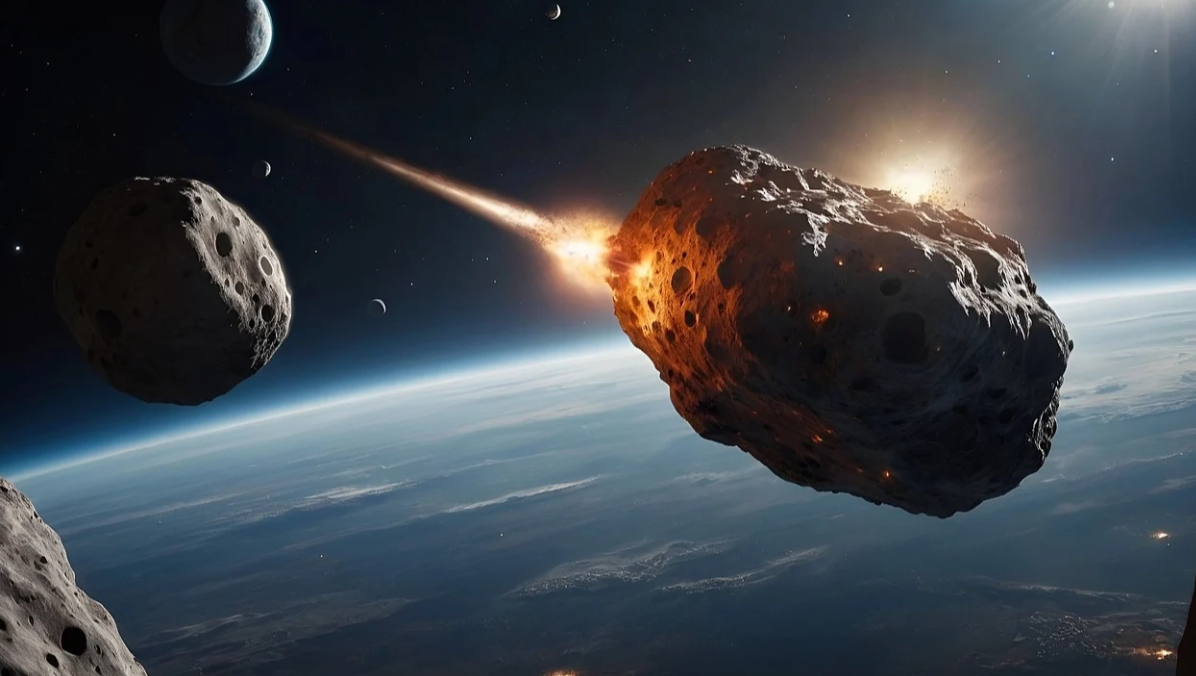
Earth Fights Back: NASA Successfully Alters an Asteroid’s Orbit for the First Time
the staff of the Ridgewood blog
Ridgewood NJ, In a scene straight out of a Hollywood blockbuster, NASA has officially confirmed a historic milestone in Planetary Defense. For the first time in human history, we have deliberately changed the orbital path of a celestial body—proving that if a “dino-killer” asteroid ever heads our way, we might actually be able to stop it.
The mission, which began with a spacecraft launch in 2021, targeted a duo of asteroids: Didymos and its smaller moonlet, Dimorphos. Here is how NASA pulled off this interplanetary feat.
The Kinetic Impact: By the Numbers
The strategy was simple in theory but incredibly complex in execution: slam a spacecraft into an asteroid to see if the “nudge” actually works. The results exceeded expectations.
-
The Impact Force: The collision, combined with the recoil from 35 million pounds of ejected rock and dust, created a massive “rocket-engine” effect.
-
The Result: The duo’s travel time around the sun was reduced by 0.15 seconds.
-
Why 0.15 Seconds Matters: While it sounds tiny, a fraction of a second’s change in orbit adds up to thousands of miles over several decades. In the world of orbital mechanics, this is the difference between a direct hit and a total miss.
Why Do We Need a Planetary Defense System?
Space is a shooting gallery. To understand the stakes, we only have to look back to 1908 and the Tunguska Event.
A massive asteroid exploded over Siberia with the force of roughly 185 Hiroshima bombs, flattening 800 square miles of forest. If such an event occurred over a major city today, the results would be catastrophic. NASA’s latest success ensures that we are no longer sitting ducks.
Note: Neither Didymos nor Dimorphos currently pose any threat to Earth; they were chosen specifically as a safe “practice range” for this technology.
The Future of “Space Policing”
This mission serves as a proof of concept for the DART (Double Asteroid Redirection Test) methodology. Moving forward, NASA and international space agencies plan to:
-
Map Near-Earth Objects (NEOs): Identifying potential threats decades before they arrive.
-
Deploy “Kinetic Impactors”: Using the data from this mission to build more effective deflection spacecraft.
-
Monitor Long-Term Shifts: Watching how the “aftershocks” of the Dimorphos impact continue to affect its trajectory.
The verdict is in: Earth is officially becoming a “hard target” for space rocks.
Follow the Ridgewood blog has a brand-new new X account, we tweet good sh$t
https://twitter.com/TRBNJNews
https://truthsocial.com/@theridgewoodblog
https://mewe.com/jamesfoytlin.74/posts
#news #follow #media #trending #viral #newsupdate #currentaffairs #BergenCountyNews #NJBreakingNews #NJHeadlines #NJTopStories
-
Tags: #NASA #SpaceNews #PlanetaryDefense #Asteroid #Astronomy #ScienceBreakingNews #EarthSafety






This is so cool
100 years from now they’ll trace the origin of the killer asteroid that will wipe out all life on Earth back to this event changing its trajectory and causing the fatal event…