Posted on 4 Comments

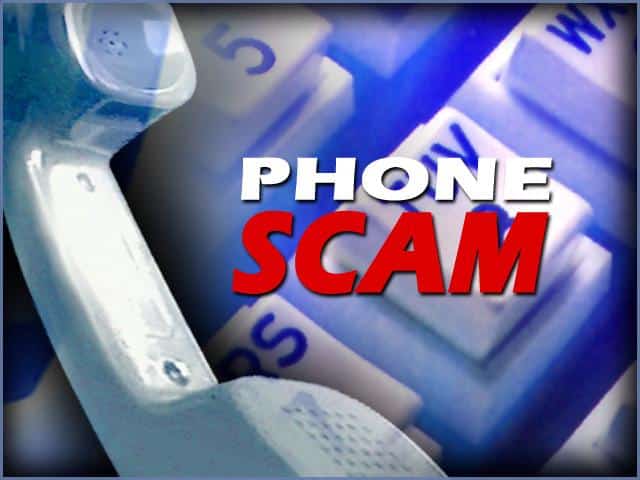
Ridgewood Resident Gets Fleeced for $6000 in IRS Phone Scam

PhoneScam

March 22,2017

the staff of the Ridgewood blog

Ridgewood NJ, Ridgewood Police report that on March 16, a Ponfield Place resident reported a theft by deception. The resident reported receiving a phone call from an individual claiming to be from the I.R.S. The caller reported the victim owed $6000 and needed to pay immediately or they would be arrested. The victim was instructed to purchase sixty iTunes gift cards to bring her account up to date. The victim then purchased sixty $100 gift cards and the caller requested the serial numbers, the victim then scratched off the back portion of the gift cards and provided all the serial numbers. The victim realized shortly thereafter the call was a scam and reported the incident to the iTunes theft department, the victim was then advised to report the incident to the Ridgewood Police Department before they would further their investigation.

The Ridgewood Police Department once again would like to remind citizens of the increased amount of scams. Always investigate communications made through postal mail, telephone, and/or the internet to prevent fraud and deceptive activity. If you have any questions or concerns, please contact the Ridgewood Police Department to ensure you’re not becoming a victim of these scams.

Posted on Leave a comment

THE RIDGEWOOD VILLAGE COUNCIL’S PUBLIC WORKSHOP AGENDA

Ridgewood Village Council

file photo by Boyd Loving

THE RIDGEWOOD VILLAGE COUNCIL’S

PUBLIC WORKSHOP AGENDA

MARCH 22, 2017

1.         7:30 pm – Call to Order – Mayor

2.         Statement of Compliance with Open Public Meeting Act

Mayor: “Adequate notice of this meeting has been provided by a posting on the bulletin    board in Village Hall, by mail to the Ridgewood News, The Record, and by submission       to all persons entitled to same as provided by law of a schedule including the date and           time of this meeting.”

3.         Roll Call – Village Clerk

4.         Flag Salute/Moment of Silence

5.         Public Comments (Not to Exceed 3 Minutes per Person – 40 Minutes in Total)

6.         Presentation

a.         FAC Assessment in Paying for a Parking Garage

7.         Discussion

  1. Ridgewood Water
  1. Change Order – Furnish and Install Control Valves at Various Locations
  1. Parking
  1. Cambridge and Bogert Parking Restrictions
  2. Train Station Parking Lot
  3. Pomander Walkc.         Budget
  1. Partial Donation – Portable Fuel Cell Trailer – Parks & Recreation
  2. Partial Release of Cash Bond
  3. Award of Contract – Conduit Installation for Traffic Signals Upgrades
  4. Award of Two Year Contract – Disposal of Recyclables
  5. Shared Services – Wood Ridge Pistol Ranged.         Policy
  1. Respect, Give It to Get It Campaign
  2. Ridgecrest – Graydon Pricing
  3. Schedler Park Plans7.         Discussion Cont’d

    e.         Operations


  1. Kings Pond Area Cleaning Program
  2. Citizens Safety Advisory Committee – Standardized Form for Requesting Parking Changes
  3. Village Traffic Consultant8.         Manager’s Report

    9.         Council Reports

    10.       Public Comments (Not to Exceed 5 Minutes per Person)

    11.       Resolution to go into Closed Session

    12.       Closed Session

    A. Legal – Valley Hospital; Request for Payment of Health Benefits for Former

    Employee

    B. Contracts/Negotiations – White Collar Negotiations and Blue Collar Negotiations

    13.       Adjournment

PrintEmail

Posted on Leave a comment

EXPLAINER: SORTING THROUGH THE STATE’S PROPERTY-TAX RELIEF PROGRAMS

ridgewood real-estate

file photo by Boyd Loving

JOHN REITMEYER | MARCH 21, 2017

The bad news is that the amount of money available for property-tax relief is shrinking; the good news, there are still a plethora of programs and options available

Once a top priority for government leaders in Trenton, property-tax rebates and other direct-relief programs received nearly $3 billion in funding from the state budget a decade ago.

But this year, with Gov. Chris Christie proposing a $32.5 million reduction in funding for direct property-tax relief in his latest state budget proposal, the total will be just over $1 billion unless lawmakers can convince him to allow for an increase before the next fiscal year begins in July.

The reduction comes as Christie, a second-term Republican, in recent years has instead been using revenue growth to ramp up state contributions to the public-employee pension system, which has been another top priority for Democrats who control the Legislature. Christie has also pointed to his efforts to address property-tax increases at their root, including the 2 percent cap on annual property-tax hikes that he and lawmakers passed on a bipartisan basis in 2010.

Still, data released recently by the state Department of Community Affairs showed the average New Jersey property-tax bill rose to a record high of $8,549 last year, putting new heat on lawmakers to more fully address property taxes as they prepare to run for reelection this year with all 120 legislative seats on the ballot in November.

https://www.njspotlight.com/stories/17/03/20/explainer-sorting-through-the-state-s-property-tax-relief-programs/

Posted on Leave a comment

HEADS THEY WIN, TAILS YOU LOSE

Village Council Meeting

ANDREW SIDAMON-ERISTOFF | MARCH 21, 2017

Police and fire unions’ power grab sticks New Jersey’s taxpayers with the pension bill

Andrew Sidamon-Eristoff

In 1866, Surrogate Gideon J. Tucker wrote that “[n]o man’s life, liberty or property are safe while the Legislature is in session.” Over a hundred years later, the New Jersey Legislature is doing its very best to keep Surrogate Tucker’s warning pertinent by once again advancing special-interest legislation that reaches for a new low in bad public policy and stunning indifference to taxpayers.

The issue at hand is the state Senate’s recent unanimous approval of S-3040, a bipartisan bill to transfer “management” of the $26 billion Police and Firemen’s Retirement System (PFRS) from the Department of the Treasury’s Division of Investment and the State Investment Council to a union-controlled board of trustees. The stated rationale includes giving PFRS’s beneficiaries more control over the investment of their retirement savings and insulating pension-asset investment decisions from nefarious political influence. That sounds benign, even reasonable. As the bill’s prime sponsor stated: “It’s a matter of enlightened self-interest for people who have skin in the game.”

“Self-interest”? Certainly. “Enlightened”? Not so much.

Here are only a few of the many reasons why this bill is a very, very bad idea:

Control without risk: sticking local taxpayers with the tab

Although it’s possible to make a straight-faced argument for giving PFRS and other pension-fund beneficiaries a greater role in making investment decisions, it makes absolutely no sense for government employers to turn over investment management while retaining all investment risk. And it’s demonstrably insane to give public employees unqualified power to set their own benefit levels and require that government employers (and taxpayers) pay the tab. Yet that’s exactly what this bill does.

https://www.njspotlight.com/stories/17/03/20/opinion-heads-they-win-tails-you-lose/

Posted on Leave a comment

Collision at the intersection of Ridgewood Road and Walnut Street in Washington Township

Washington Twp car crash

photo courtesy of Boyd Loving’s Facebook page

March 21,2017

the staff of the Ridgewood blog

Washington Twp NJ, One (1) person was transported to a local hospital following a two (2) vehicle collision at the intersection of Ridgewood Road and Walnut Street in Washington Township on Monday afternoon, 03/20. Both vehicles were removed from the scene by a flatbed tow truck. Washington Township PD, Westwood EMS, and a paramedic unit from Hackensack University Medical Center North responded to the incident. Injuries to the victim, an adult female, appeared to have been non life threatening.

Posted on 1 Comment

Pricey N.J. college gets stung by credit agency junk rating

Drew University

By Adam Clark | NJ Advance Media for NJ.com
on March 20, 2017 at 2:13 PM, updated March 20, 2017 at 4:30 PM

MADISON — New Jersey’s second-most expensive college has been losing money and faces a difficult path to regaining financial stability, according to a Wall Street credit rating agency.

Moody’s Investors Service on Friday downgraded Drew University, a private college of about 1,800 students in Madison, for the second time in 15 months.

The downgrade reflects “the continued weakening of the university’s financial viability,” Moody’s reported. Drew, which costs more than $47,000 a year in tuition and fees, is operating with unsustainable deficits and relies on loans or money from its diminishing endowment to cover its bills, the agency said.

Moody’s dropped Drew’s rating from Ba3 to B2 on one set of bonds and from Ba3 to B3 on another. All of those ratings are categorized as junk bonds on Wall Street, and Drew’s credit outlook remains negative.

The latest downgrade could make it more expensive for Drew to borrow money in the future. It also marks the latest sign of financial trouble at the state’s small private colleges, where enrollment has plummeted as students seek less expensive options.

“This is disappointing,” university President MaryAnn Baenninger wrote in a letter about the downgrade sent to faculty and staff. “But it will not deter us from continuing steady progress towards a sustainable financial future.”

https://www.nj.com/education/2017/03/pricey_nj_college_gets_stung_by_credit_agency_junk_rating.html#incart_river_home

Posted on 1 Comment

Picking apart Cory Booker’s latest health care nonsense, point by point

cory_booker_theridgewoodblog

file photo by Boyd Loving

By Herman Cain —— Bio and Archives March 20, 2017

As Republicans in Congress continue to craft a legislative solution to the disastrous Unaffordable Care Act, the Democrats continue to mislead its defenders with more and more dishonest and deceptive rhetoric. The latest installment comes from Senator Cory Booker (D-New Jersey), and is deserving of a complete deception diagnosis.

By the way, Booker is considered by Democrats to be a future Democrat presidential candidate, and he won the un-coveted “Liberal Lunacy of the Week” last week on the Herman Cain Radio Show with the following litany of false statements:

“The Republicans cannot just force this down our throats.  It’s going to knock a lot of folks off, hurt long-term care, hurt good working class folks.  I don’t understand this almost, I don’t understand their political strategy because this is bad politics.  Deeper than that it is bad policy and bad process.”

Let’s break this down, shall we?

The Republicans cannot just force this down our throats.

Most of us will recall then House Speaker Nancy Pelosi, saying that the Democrats had to pass the UCA and then tell us what was in it. They did just that in 2010 with no Republican votes in Congress, because it was that bad and they wanted no Republican input. They forced it down our throats.

In 2017, the Republicans’ American Health Care Act (AHCA) is working its way through Congress and we know what’s in it, and sensible people like most of it. Some of the favorite features are no mandates, no penalties, repeal of taxes hidden in the UCA, and allowing the states to manage Medicaid. These features are the exact opposite of what’s in the UCA, which has failed miserably.

Posted on 2 Comments

Like Corzine, governor hopeful Murphy donated big to N.J. Democrats. Here’s how much.

Phill Murphy -Sara Medina del Castillo

By Matt Arco and Brent Johnson | NJ Advance Media for NJ.com
on March 20, 2017 at 7:05 AM, updated March 20, 2017 at 11:26 AM

TRENTON — Phil Murphy, the early Democratic favorite in this year’s race for New Jersey governor, has donated at least $1.15 million to state and local Democratic organizations and candidates since 2001, according to an NJ Advance Media analysis of campaign finance records.

More than 40 percent of that money — about $466,000 — was shelled out over the past three years, a period during which Murphy, a millionaire former Goldman Sachs banking executive, took steps toward launching his campaign to succeed Republican Chris Christie as governor.

The donations came from Murphy, his wife Tammy, jointly from the couple, or from his gubernatorial campaign, according to the analysis, the most in-depth look so far at how much Murphy has given to in-state causes.

https://www.nj.com/politics/index.ssf/2017/03/how_much_phil_murphy_donated_to_nj_democrats_in_recent_years.html

Posted on Leave a comment

A new report finds much of New Jersey is drought-free

B3HXXR

By David Matthau March 21, 2017 1:58 AM

We had a significant snow and rain storm across the Garden State last week, but the New Jersey Department of Environmental protection has not changed any of its drought warnings or watches in central and north Jersey — yet.

A drought warning remains in effect for Bergen, Essex, Hudson, Hunterdon, Mercer, Middlesex, Monmouth, Morris, Ocean, Passaic, Somerset, Sussex, Union and Warren counties.

However the latest U.S. Drought Monitor report for New Jersey shows 43 percent of the state (southern and coastal) is now classified as being drought-free, while only 6 percent of northern New Jersey is still listed as being in a “severe drought” situation.

The U.S. Drought Monitor report takes into account several hydrological indicators, including soil moisture and stream flow variability, while the DEP drought indicators strictly measure reservoir levels in New Jersey.

“This is definitely good news but we can’t get too excited because all it takes is a prolonged dry spell at the wrong time of year and we can quickly move back into drought conditions,” said Tony Broccoli, a professor of atmospheric sciences and chairman of the Department of Environmental Sciences School of Environmental and Biological Sciences at Rutgers University.

Read More: A new report finds much of New Jersey is drought-free | https://nj1015.com/a-new-report-finds-much-of-new-jersey-is-drought-free/?trackback=tsmclip

Posted on Leave a comment

How can NJ towns balance their budgets without raising property taxes?

village-hall-theridgewoodblog

By David Matthau March 20, 2017 4:30 AM

New Jersey 101.5 video archive

Gov. Chris Christie’s proposed New Jersey budget for fiscal year 2018 holds state aid to municipalities flat once again.

The result is towns across the Garden State are now scrambling to make ends meet, which in some cases will mean an increase in property taxes beyond the state-mandated 2 percent cap.

Michael Darcy, the executive director of the New Jersey State League of Municipalities, said the cap is doing its job, holding the line on increases that have been significantly higher in the past, but there are built in exceptions to the cap, such as insurance and pension costs.

“The result is towns across New Jersey are finding it increasingly difficult to hold the line on tax hikes while providing necessary services because municipal aid from the state has been held flat for the past nine years,” he said.

Read More: How can NJ towns balance their budgets without raising property taxes? | https://nj1015.com/how-can-nj-towns-balance-their-budgets-without-raising-property-taxes/?trackback=tsmclip

Posted on 7 Comments

Is it Time for a “No-Knock ” in the Village of Ridgewood ?

Ridgewood Police quickly apprehended alleged shoplifter

file photo by Boyd Loving

March 21,2017

the staff of the Ridgewood blog

Ridgewood NJ, after the recent spat what the Ridgewood Police Department called, “diversion burglaries” .A diversion burglary is when someone posing as a utility worker or chimney inspector or repairer comes to your door and while you are distracted speaking with them or when they request you take them to a distant part of the home, an accomplice enters and burglarizes your home.Readers say it time for a Village no-knock ordinance .

“More door knockers this week. Maybe a time for an ordinance change?”

Other posters agreed , “I have requested a no-knock ordinance for years and years. Time to end it. Sorry, Scouts. Of course, utilities wouldn’t be banned anyway. Just never open the door. I don’t even ask “who is it?” any more.”

Posted on 18 Comments

Readers Debate Village of Ridgewood Communication

VillageHall_floods_theridgewoodblog

file photo by Boyd Loving

March 21,2017
the staff of the Ridgewood blog

Ridgewood NJ, the recent “no parking” ordinance pushed on Bogert and Cambridge has raised concerns over how the Village of Ridgewood communicates it business. Be it a “no parking “ordinance or a raise in commuter parking fees the Village however well intentioned is falling far short at getting the word out.

Many suspect the massive amount of Village committees with overlapping responsibilities seems to be creating more confusion as well as a ‘make work” atmosphere . This often results in nothing more than holding the committees captive to special interest agendas.

But the main question remains is ,’How are these types of proposed changes communicated/broadcast?”

A reader added , “How are 50 to 60 asleep? A posting was possibly put in the classified section of the Ridgewood News, that nobody reads? The people on the two streets should have been given proper notice. The village never enforced the “no parking 50 feet from the corner” sign and this ridiculous ordinance has no parking halfway up the street. This member of the Travell Safety Committee has overstepped her bounds. The council has said they will re-look at the ordinance and hopefully they mean that. Bogert and Cambridge are quiet streets that do not have a heavy traffic flow and this is totally unnecessary.”

Another reader asks ,”How do 50 people not know about it, if it was so well publicized???The Village did not include the people who are directly affected. A notice could have been sent to the people on the blocks affected and they would have been forewarned. Meanwhile, I’ll continue to make my own coffee and drive my regular sized car!”

While some suggest , “Ignorance is no excuse. This change was not slipped in during the middle of the night. It was broadcast, publicized, discussed, discussed some more. So sorry that some of you are too busy having lattes and driving around in massive SUV’s to pay attention to local happenings.”

Posted on Leave a comment

Trailer Rollover in Paramus Creates Long Waits For 17 Southbound

Trailer Rollover in Paramus Creates Long Waits For 17 Southbound

photos courtesy of Boyd Loving’s Facebook page

March 21,2017

the staff of the Ridgewood blog

Paramus NJ, An aerial lift platform trailer being towed by a pick up truck rolled over on Route 17 southbound in Paramus on Monday afternoon, 03/20. Only one (1) travel lane of traffic on Route 17 southbound near A&S Drive remained open while two (2) flatbed tow trucks worked in unison to right the device. No injuries were reported in the mishap. Paramus PD responded to the incident. The trailer was removed from the scene by one of the aforementioned flatbed tow trucks.

17435933 665800613605975 8198166390279807487 o

17390493 665800733605963 7501511574358761022 o 1


Posted on 2 Comments

New Jersey Pension and Health Benefit Study Commission Concludes Trenton Politicians Made A Mess

Christine Todd Whitman

March 21,2017

the staff of the Ridgewood blog with a little help from our friends

Ridgewood NJ, Funny you never mention all of the contributions that weren’t made since 1995. Why is that? Could it be that if the appropriate contributions were made the pensions would be properly funded today? Lets look at the Status Report of the New Jersey Pension and Health Benefit Study Commission which was issued on September 25, 2014 to see what they say about this issue.
.
Page 3) Both public employees and taxpayers as a whole, however, have been poorly served by a long-standing and bipartisan tradition of increasing benefit levels without adequate funding. Successive Governors and State Legislatures have committed the State to providing these benefits based on relatively optimistic financial assumptions without adequate consideration of the long-term costs to taxpayers if economic reality were to fall short of these assumptions.
.
The specific cause of the $3 billion gap in FY 2014 is that the State paid less than $700 million of the $3.7 billion it would have had to have paid to meet its statutory annual required contribution (“ARC”)2 to the pension funds for that year.
.
Page 4) This problem, which all major stakeholders had a role in creating, has immediate, real-world implications. In April and May 2014, Standard & Poor’s, Fitch and Moody’s each downgraded New Jersey’s general obligation bonds, citing the State’s challenge of “structural budget imbalance exacerbated by rapidly growing pension and OPEB (Other Post-Employment Benefits) costs.” Within the last few weeks, Fitch and Standard & Poor’s have each again downgraded New Jersey’s general obligation bonds.4 This has the potential to cost the State millions of dollars going forward in higher interest costs.
.
Page 6) All that being said, however, the failure of the State to make required pension contributions when they have been due has made a bad situation much worse. Local governments participate in the same plans but have made more of their required payments with greater regularity, resulting in the local government share of the funds having a funded ratio of 75%, compared to the State’s 54% funded ratio.11 Under-funding the State’s share of the plans has been consistent under the stewardship of both major parties, as shown by the chart on the following page:
.
Page 13) The unfunded liability of the State plans reflects a long-term disconnect between the willingness to provide public employees with benefits and the willingness to pay for them. The consequences of this disconnect have now come home to roost.
.
Page 15) As the table below indicates, largely due to the extremely high investment returns of the late 1990s, at the turn of the century the funded ratio of the plans based on actuarial values approached or exceeded 100%, even during the 2000-02 economic downturn. However, the apparent resiliency of the plans during that downturn is misleading. The actuarial asset values are rolling multi-year averages. For some time after the flush years of high returns, those averages continued to reflect high actuarial asset values for those years even though the market value of the assets was declining. Statutory changes also increased the expected rate of return from 7% to 8.75% and modified the actuarial funding method to allocate more costs to future years, thereby reducing the apparent value of the liabilities. This further reinforced the misperception that the plans were safely and permanently in surplus.
.
The reported asset values and statutory changes enabled the State, in full compliance with the standards then in place, to discontinue making contributions to the funds. While there were clear warnings then that this could lead to huge fiscal problems in the future, at the time it permitted hundreds of millions of dollars to be diverted to other purposes ranging from education to tax relief. Compounding the problem, during the years when the pension plans were apparently well-funded (but actually lapsing into deficits), the Legislature enacted a series of benefit enhancements, including a retroactive 9% increase in TPAF and PERS pensions in 2001, which increased State pension liabilities by $4.2 billion.35

Posted on 4 Comments

Boost in Ridership Leaves New York’s Penn Station Platforms Packed

Ridgewood_Train_station_train-_is_coming_theridgewoodblog

Many weekday commuters struggle to exit trains as the number of riders is increasing and construction compounds the problem

By
MELANIE GRAYCE WEST and
ANDREW TANGEL
March 20, 2017 4:13 p.m. ET

The morning rush has become the morning crush for some NJ Transit commuters arriving at New York Penn Station.

The scene plays out like this: When a train pulls in, commuters queue up for the doors and arrive on a platform that is both narrow and jammed, people shoved together elbow to elbow. To exit from the platform, commuters sometimes encounter an onslaught of passengers trying to catch another train or a crush of passengers from an arriving train.

Sometimes the escalator is going down instead of up, the narrow stairwells are packed single file or, in a truly frustrating situation, a new stairwell is gated.

The morning commute for thousands already ends at the much maligned Penn Station. Now, some say, the escape from Penn Station is worse, with platforms more jammed than ever as the number of commuters increases.

In 2016, average weekday boardings at Penn Station numbered 94,859 people, up from 92,314 in 2015 and 87,130 in 2014, according to Nancy Snyder, a NJ Transit spokeswoman. Each weekday, about 57,000 NJ Transit customers use Penn Station platforms between the hours of 6 a.m. to 10 a.m., according to Nancy Snyder.

https://www.wsj.com/articles/boost-in-ridership-leaves-new-yorks-penn-station-platforms-packed-1490040830