JULY 3, 2015 LAST UPDATED: FRIDAY, JULY 3, 2015, 12:31 AM
BY MARK KRULISH
STAFF WRITER |
THE RIDGEWOOD NEWS
Residents looking to weigh in on the issue of multifamily housing should circle September on their calendars.
The Village Council set forth an ideal timeline for consideration of ordinances relating to a master plan amendment approved by the Planning Board last month.
Although the issue can be brought up during comment portions of any council meeting, officials are eyeing the mid-September public meeting as the date for a public hearing. An exact date will not be fixed until the ordinances are formally introduced.
In early June, the Ridgewood Planning Board approved a master plan amendment that would create four new zones in the Central Business District, three of which would allow for multifamily housing projects to be built at a maximum density of 35 units per acre for affordable rental units.
JULY 2, 2015 LAST UPDATED: THURSDAY, JULY 2, 2015, 1:21 AM
THE RECORD
Police in Saddle River, Ridgewood and Ho-Ho-Kus are once again urging residents to lock their cars following a pair of recent automobile thefts.
Two cars were stolen from the area last week, including one taken last Thursday from Ho-Ho-Kus’ Saddle Ridge Road, said the borough’s chief of police, Christopher Minchin.
That automobile was stolen by a man who fled a Saddle River police officer earlier that morning, authorities said. The car was later found in Newark.
According to police accounts, a patrolling Saddle River cop happened upon a running car along Twin Brooks Road just after 3 a.m. As the officer approached the car, it quickly reversed, nearly slamming into the patrol unit as it fled.
A man who’d been standing near the suspicious vehicle disappeared into the nearby woods, close to the Ho-Ho-Kus border, police said.
As “Pomp and Circumstance” plays at ceremonies nationwide this month, a record number of high school students are celebrating their hard-earned diplomas.
The celebrations won’t last. Despite their hard work, these students will soon find that they’re far from prepared for life after graduation. Academically, they’re worse educated than most of their foreign contemporaries. Occupationally, they’re ill-equipped for the jobs our economy needs. And emotionally, they’re less healthy than any generation in recent history.
America’s K-12 educational system is to blame. Despite huge advances in classroom technology and the science of learning, our nation’s schools remain a relic of another era.
Modernizing our schools isn’t just a matter of changing funding formulas and tweaking mechanisms for accountability. Instead, we must completely reimagine the American model of schooling, drawing on the science- and technology-driven practices that have revolutionized the modern world.
U.S. students are rapidly falling behind their international peers in primary and secondary education. A recent report from the Organization for Economic Cooperation and Development ranked countries based on the average math and science scores of 15-year-old students. America’s schools came in 28th.
Even worse, the OECD found that almost a quarter of American 15-year-olds failed to acquire “basic skills” in math and science. Of the 76 countries evaluated in the study, only Luxembourg performed worse.
This poor academic performance translates directly into inadequate workforce skills, especially in science, technology, engineering, and math, or STEM. Because of a lack of qualified applicants, companies take more than twice as long to fill STEM positions than equivalent non-STEM ones. The problem will only worsen. STEM positions are projected to grow 17 percent by 2024, almost double the rate of non-STEM jobs.
As if leaving students undereducated and unprepared for the workforce isn’t enough, current school practices are also making students psychologically unhealthy. The incidence of anxiety and depression among American adolescents has reached alarming levels. And, according to the Centers for Disease Control, nearly one in five high school kids contemplated suicide in 2013, many due to stress from school.
If we are going to reverse these dangerous trends, we need to completely change the way we teach our young people.
That starts by acknowledging that every student is different, and that the same student can be different depending on the week, the month, and the year. As a result, students need an education customized to their evolving individual needs.
This idea is far from new. Individualized teaching has long been recognized as superior to standard one-size-fits-all instruction. A 1984 study showed that individually tutored students, on average, performed better than 98 percent of students educated in a standard setting.
The problem is that such tutoring has long been prohibitively expensive. But with the advent of new technology, programs such as Khan Academy and Coursera are demonstrating that personalized, self-directed learning is possible on a large scale.
That could mean a classroom full of students using laptops or tablets to learn at their own pace. Or teachers using technology to closely track individual student progress so they know when to step in and help.
Once students master foundational core knowledge and skill requirements, they need resources and time to pursue their own projects, internships, and other opportunities for applied learning.
Rather than trudge through unnecessary extra English courses, a science-lover should be able to spend her time in the laboratory. By the same token, an aspiring writer should be encouraged to work on the novel kicking around in his head rather than taking unwanted extra science courses. It’s amazing what teenagers are capable of if they are given agency and a little direction.
Apart from academics, schools should address students’ emotional and social growth. For too long, a skeptical public has brushed aside concepts like socio-emotional learning as hippie nonsense. But in this case, the hippies have it right. Those who embrace these concepts experience very real, measurable benefits — including enhanced academic achievement.
For example, in January, Developmental Psychology published a study of grade-school students who were taught meditation and mindfulness techniques. After 12 weeks, the students showed a 24 percent decrease in aggression and an overall reduction in depression-like symptoms — plus a 15 percent improvement in math scores!
Progressives, liberals, socialists, Democrats and the media (one and the same?) who crow about the current “low” unemployment rate never want to admit that the reason it’s gotten to 5.3 percent — the “official unemployment rate,” or U-3, as reported by the Bureau of Labor Statistics — is because the bureaucrats at BLS and the politicians in the White House artificially have tossed millions upon millions of long-term, out-of-work Americans off the roles by arbitrarily declaring that they’re “no longer in the labor force.”
There are lies, damned lies and government unemployment statistics. I’ve written about this before, but you can never have enough economic bad news, especially on the eve of our national birthday.
The more accurate U-6 rate, which is what economists look at for unemployment numbers and includes those marginally attached to the workforce, has the unemployment rate at 10.5 percent. But even that is too optimistic.
There are some – count John Williams at ShadowStats.com and me among them – who contend that the REAL unemployment rate has to include EVERYBODY, not just those the government wants included and did, until 1994 when they rigged the way the numbers were calculated to exclude the long-term unemployed.
That unemployment rate – the REAL rate – is 23.1 percent, a number that, unlike the U-3 and the U-6, hasn’t significantly gone down in over two years. At its highest in 1933 during the Great Depression, the unemployment rate was at 25 percent.
While Williams is not without his critics, they focus more on his terminology and harping about the edges of his calculations rather than his central thesis that a whole lot of folks who should be counted as in the labor force aren’t being counted.
Since, for statistical purposes, the U-3 only counts workers in the labor force, the measurement automatically drops whenever the labor force shrinks in size, which it does whenever the government wants it to. In theory, I can get the unemployment rate to ZERO by simply declaring all unemployed persons to be no longer in the labor force. BAM – problem solved.
Adding insult to injury, whatever job creation we’ve seen has been in low-wage and part-time positions. Mid- and higher-range positions are down some 1.2 million since 2009. When you go from making $75,000 per year on a full-time basis to making $7.50 per hour on a part time basis, most people consider that to be a severe hit, but the federal government considers it a net win – after all, you’re working, aren’t you?
A record 94 MILLION Americans are no longer considered as being in the labor force. That’s substantially greater than one in three, resulting in a participation rate — the total of Americans working or “looking” for work — of 62.6 percent, a number not seen since the worst days of the Carter administration.
To illustrate graphically, here’s a comparison of the U-3, the U-6 and John Williams’ ShadowStates Alternate rate that factors back in the workers the government has kicked off the labor force roles:
Consider: Even with a margin of three to five percent unemployment, which would encompass workers in between jobs or otherwise transitioning, which some are always doing, well over one-third of all Americans who should be working, could be working and would be working if the government had any business sense about it are not working.
Net, net, net: Continuing and accelerating economic stagnation and deterioration, zero wage growth, sluggishness and that brother-in-law of yours who’s been out of work since the fourth season of Breaking Bad will still be sleeping on your couch, eating your food and drinking your beer for as far as the eye can see.
When some left-wing loon posts one of those stupid “Obama’s so great — he’s lowered the unemployment rate” bumper-sticker memes on Facebook, show them this post and ask what other lies the administration and its lackeys and toadies are telling?
After Macy’s announced the company will be joining NBCand severing ties with presidential candidate Donald Trump, Trump has responded by issuing a statement declaring, “Clearly, NBC and Macy’s support illegal immigration.”
In his statement, Trump writes,
“Clearly, NBC and Macy’s support illegal immigration, which is totally detrimental to the fabric of our once great country. Both Macy’s and NBC totally caved at the first sight of potential difficulty with special interest groups who are nothing more than professional agitators, who are not looking out for the people they purport to represent, but only for themselves. It is people like this that are actually running our country because our leaders are weak and ineffective.”
Obama’s ‘Minimal’ World Leadership Brings Jimmy Carter, Chris Christie Together
Ken McIntyre / @KenMac55 / July 01, 2015 /
In a rare alignment of two very different politicians, Jimmy Carter and Chris Christie agree in their belief that America is less respected in the world than it was when President Obama took office in 2009.
“I can’t think of many nations where we have a better relationship than when we did when [Obama] took over,” Jimmy Carter says.
Christie, the two-term New Jersey governor, zinged Obama on foreign policy in some of the most well-received lines of his announcement Tuesday morning that he will seek the Republican nomination for president.
“After seven years I heard the president of the United States say the other day that the world respects America more because of his leadership,” Christie said. “This convinces me it is the final confirmation that President Obama lives in his own world, not in our world.”
It was a big applause line.
Not so much when Carter, the Democrat who served one term as the 39th president, said something similar last week in a public event—video of which began to surface late Tuesday.
America’s “influence and prestige and respect in the world is probably lower” than seven years ago, he said.
“The United States’ influence and prestige and respect in the world is probably lower now,” Jimmy Carter says.
Carter, 90, seemed to stun into silence a standing-room-only crowd at an Aspen Institute gathering in Aspen, Colo., when he said he “can’t think of many nations in the world where we have a better relationship now than when we did when [Obama] took over.”
When Aspen Institute CEO Walter Isaacson asked Carter to assess Obama’s “success or failures on the world stage,” Carter replied:
On the world stage, I think they’ve been minimal. I think he’s done some good things domestically, like the health program and so forth. But on the world stage, just to be as objective about it as I can, I can’t think of many nations in the world where we have a better relationship now than when we did when he took over.
You know, if you look at Russia, if you look at England, if you look at China, if you look at Egypt, and so forth—I’m not saying it’s his fault, but we have not improved our relationship with individual countries. And I would say that the United States’ influence and prestige and respect in the world is probably lower now than it was six or seven years ago.
During his off-the-cuff announcement remarks, Christie also criticized Obama for “weak and feckless foreign policy” and warned his audience not to “turn it over to his second mate, Hillary Clinton.”
Carter reiterated that he doesn’t “blame” Obama because “it’s been circumstances that have evolved.”
The former president and Georgia governor repeated praise for John Kerry, whom Obama chose to succeed Clinton as secretary of state.
To applause, Carter called Kerry “outstanding” and “one of the best secretaries of state we’ve ever had.” He later said Kerry is “very courageous and innovative and dynamic.”
The Washington-based Aspen Institute is an educational and policy studies organization with a mission “to foster leadership based on enduring values and to provide a nonpartisan venue for dealing with critical issues.”
Isaacson’s hour-long conversation with Carter and his wife, former first lady Rosalynn Carter, took place June 23. In this video from C-SPAN, Carter’s remarks on Obama and the world stage begin at the 19-minute mark.
On May 28 at around 10:40 a.m., Thomas J. Hughes, 29, jumped from the 24th floor of his apartment building in Manhattan. Hughes had worked in investment banking at Moelis & Co. His father, John, said he was under pressure at work and may have used alcohol and drugs to cope. “At a time when he was under stress he probably resorted to illegal drugs, causing this incredibly poor judgment, is probably the best I can say,” he said after his son’s death. According to reports, Hughes attended the private Canterbury School in Milford, Conn., and Northwestern University in Illinois.
One month earlier, on April 16 at around 4:20 a.m., Sarvshreshth Gupta, 22, a technology, media and telecoms analyst at Goldman Sachs Group Inc. in San Francisco, was found in a parking lot beneath his apartment building. The police found an open window to the roof of Gupta’s apartment building. He had, according to an essay by his father Sunil—“A son never dies” —complained about working long hours. “I have not slept for two days, have a client meeting tomorrow morning, have to complete my presentation, my VP is annoyed and I am working alone in my office.” A police report this month ruled his death “suicide by jumping.”
Although the media does focus on people who, at least on paper, appear to have it all, experts say this is also a reminder that depression doesn’t discriminate. While suicide rates overall remain lower among those who have more education, there have been reports of a dozen such cases of suicide of white-collar workers who worked for high-profile financial firms over the last 18 months. “We want people to be aware that this can happen to anyone so people don’t say, ‘They have everything going for them, they can’t be depressed,’” says Lauren Nicholas, assistant professor of health policy and management at the John Hopkins Bloomberg School of Public Health in Baltimore.
We’ve all winced at the numbers. U.S. students rank 17th, 26th, and 21st on the reading, math, and science portions of the PISA exam – well below many of their international peers.
But even while we recognize that these numbers are bad, many of us secretly reassure ourselves that such is not the case with the local schools which our children attend. Surely the American children struggling to keep up with the rest of the world are in other communities besides our own, right?
Not necessarily. As recent test scores demonstrate, students from well-to-do suburban and rural areas might not be doing as well as we imagine.
A case in point is the Kettle Moraine school district, located on the outskirts of Milwaukee. The district’s superintendent describes Kettle Moraine as “‘a very good school district.’” In this district, “only about 10 percent of the 1,300 students at Kettle Moraine High qualify for free or reduced-price lunch, and about 90 percent are white.” And with the high graduation rates and ACT test scores which many of its students achieve, one would have to agree that Kettle Moraine’s students seem to be ahead of the pack.
However, Kettle Moraine recently had the opportunity to take the OECD Test for Schools, an exam which channels the official PISA test, but adapts it for individual American schools to see how competitive they are on the global stage. As it turns out, students from the high-achieving Kettle Moraine district weren’t leading the global pack in a key area. They were behind.
RHS Class of 1978 member Carrie McIndoe is running the program. Sounds like there is still time for some entrepreneurial RHS students. If not this summer, then keep the idea in mind for next summer.
Scholarships Available for High School Entrepreneurship Camp
Jun 24, 2015
Full Scholarships are available to the EntrePrep℠ Summer Institute, a one-week residential experiential entrepreneurship program for a diverse population of rising high school juniors and seniors. The program will be held July 12-18, 2015 at the University of Delaware, Newark and August 9-15, 2015 at Skidmore College, Saratoga, NY.
Program
In this intensive program, the participants experience being entrepreneurs. They work towards launching and operating their own Business-for-a-Day™, with over 20 hours of training and mentoring in support of this undertaking. They brainstorm, identify ideas and opportunities and develop them into their own Business-for-a-Day™.
They assemble the resources needed to launch their businesses and then run them. These young entrepreneurs deliver a ‘Concept versus Reality’ analysis in a final presentation before a live audience of their peers, mentors, local community and business advisors.
The students learn and implement economic/financial concepts and key life
skills, all required to create, run and evaluate their businesses. They experience the entrepreneurial mindset.
The program provides preparation for the future. The knowledge and skills students learn by this direct experience, helps prepare them for the world they are entering – one where understanding of economic concepts and financial literacy is a must and where most jobs are created by small businesses.
This is a unique opportunity to participate in a transformative experience.
For more information contact: Carrie McIndoe 917-650-3929 www.econventures.org
Those of us leaning in the Austrian direction see bubbles and malinvestments around every corner and assume, wrongly as it turns out, the market will right these wrongs lickety-split. But, for the moment a rational market is no match for cheap money. “Any college that is thinking about capital expansion, now is a very good time,” Robert Murray, an economist at Dodge Data told the Wall Street Journal. “Several years down the road, the climate might not be as good.”
Now being a good time because stock market gains have pumped up endowments, “and low interest rates have created a favorable environment for colleges to build,” writes Constance Mitchell Ford. The campus building boom marches on.
In 2014 colleges and universities commenced construction on $11.4 billion worth of projects, a 13 percent increase from the previous year. It’s the largest dollar value of construction starts since the heady days of 2008.
Ms. Ford’s piece highlights a $2 billion project at Cornell and sixteen new buildings at Columbia worth $6 billion. But here in Auburn, Alabama the campus has been a construction zone since 2008 when I arrived. Multiple new dorms, a basketball arena, a fancy student center, and various new classroom buildings have been constructed at a time when funding from the state has been cut back. What’s now underway is the largest scoreboard in college football, with a plan to expand the stadium next.
Back in the 1985–86 school year, full time tuition at Auburn for a non-resident was $2,585. Thirty years later it is now $28,040. That’s a compounded annual growth rate of 8.27 percent.
According to Bloomberg, college tuition and fees have increased 1,120 percent since records began in 1978, and the rate of increase in college costs has been “four times faster than the increase in the consumer price index.”
Tuiton at state schools is rising even faster says Peter Cappelli, professor of management at the Wharton School of the University of Pennsylvania. He told Becky Quick on CNBC’s “Squawk Box” the cost of an education has risen 50 percent faster at state schools versus private in roughly the last decade.
Cappelli said a critical question is whether students will graduate in the first place, noting that only 40 percent of full-time students earn a degree within four years, and 30 million — and perhaps as many as 35 million — young adults do not finish their studies.
Unfinished college is as useful as an unfinished building.
College degrees are similar to what Austrians call higher-order goods. It’s believed a student will gain knowledge and seasoning in college, making him or her more productive and a candidate for a high-paying career. The investment of time and money in knowledge are undertaken for the payoff of higher productivity and a high future income. Higher education is the higher-order means to a successful career.
The assumption is those high-pay jobs, (A) will require a college degree, and (B) they will be plentiful when the student graduates. Borrowing $100,000 to earn a law degree is a malinvestment if the student ends up writing briefs for $15 per hour. A recent graduate of the Charleston School of Law put fliers on cars announcing that he or she had borrowed $200,000 to attend school and is now working at Walmart for $35,000 a year.
A post on the “Above The Law” blog revealed, “As of the 2013–2014 academic year, the total cost of a three-year J.D. degree from Charlotte Law was $123,792.00, while the median loan debt per graduate was $159,208.00. Just 34 percent of the class of 2014 was employed in full-time, long-term jobs where bar passage was required. …”
“More college graduates are working in second jobs that don’t require college degrees,” writes Hannah Seligson in the New York Times, “part of a phenomenon called ‘mal-employment.’ In short, many baby-sitters, sales clerks, telemarketers and bartenders are overqualified for their jobs.”
Ludwig von Mises wrote in Human Action,
The whole entrepreneurial class is, as it were, in the position of a master builder whose task it is to erect a building out of a limited supply of building materials. If this man overestimates the quantity of the available supply, he drafts a plan for the execution of which the means at his disposal are not sufficient. He oversizes the groundwork and the foundations and only discovers later in the progress of the construction that he lacks the material needed for the completion of the structure. It is obvious that our master builder’s fault was not overinvestment, but an inappropriate employment of the means at his disposal.
As it is now, parents and students still have the belief that college is the way to, if not riches, at least a well-paying career. In a 2011 piece for mises.org with what turned out to be the hasty title of “The Higher-Education Bubble Has Popped” I quoted PayPal founder and early Facebook investor Peter Thiel, who questioned the value of higher education. He told TechCrunch,
A true bubble is when something is overvalued and intensely believed. Education may be the only thing people still believe in in the United States. To question education is really dangerous. It is the absolute taboo. It’s like telling the world there’s no Santa Claus.
Like most bubbles this one is being fueled by debt. USA Today reports, 40 million borrowers owe $29,000 each, totaling $1.2 trillion outstanding. Student loan debt is easy to get, but hard to get rid of. It’s hard to pay back without a high salary, nor can it be bankrupted away. “Government either guarantees or owns most of the student loans and has the power to sue and to garnish wages, tax refunds, and federal benefits like Social Security when borrowers default,” Kelley Holland writes.
Defaults are plentiful. In the third quarter of last year, the three-year default rate was roughly 13.7 percent, with the average amount in default per borrower just over $14,000.
These debtors “are postponing marriage, childbearing and home purchases, and … pretty evidently limiting the percentage of young people who start a business or try to do something entrepreneurial,” says Mitch Daniels, president of Purdue University
I administer funds for a small scholarship for graduating high school seniors in my old home town. This year, for the first time, an applicant wrote that he needed financial help for college because his father, a veterinarian, can’t help his children because he’s struggling to make payments on his own student debt.
The college boom is not just on campus. Student housing developers have been riding the college boom as well. Two years ago in a piece for The Freeman, I wrote about developers cashing in building dorms. These developers have even found Auburn, with its population of only 50,000. A project called 160 Ross has long-time residents in an uproar with its high density. But as much as locals don’t like it, students have snapped up units at $599 a bed.
That rack rate has large student housing developers coming to town and CV Ventures is ready to break ground for a six-story mixed-used project on just one acre featuring 456 beds, stumbling distance from the college bars, with a Waffle House across the street.
Meanwhile, everyday we hear about how online courses being the death knell for brick-and-mortar institutions. For the moment traditional colleges seem safe. “Because traditional campuses offer peer and teacher interaction,” writes Ron Kennedy, “as well as a plethora of other important benefits often sought by traditional, college-aged students, there will remain a need for traditional education.”
More importantly, Kennedy continues, “Research has shown that students who interact face-to-face with their instructors and other students tend to be more academically balanced than their online counterparts. This is one reason why most employers still prefer students who have attended traditional campuses.”
Trees don’t grow to the sky and neither will tuition. However, it’s doubtful young people will suddenly stay home with their parents and work toward degrees taking online classes. Parents who can afford it want to relive their college days vicariously through their kids.
Ridgewood Police Responded to a Whooping 427 calls between June 24th and July 1st
July2,2015
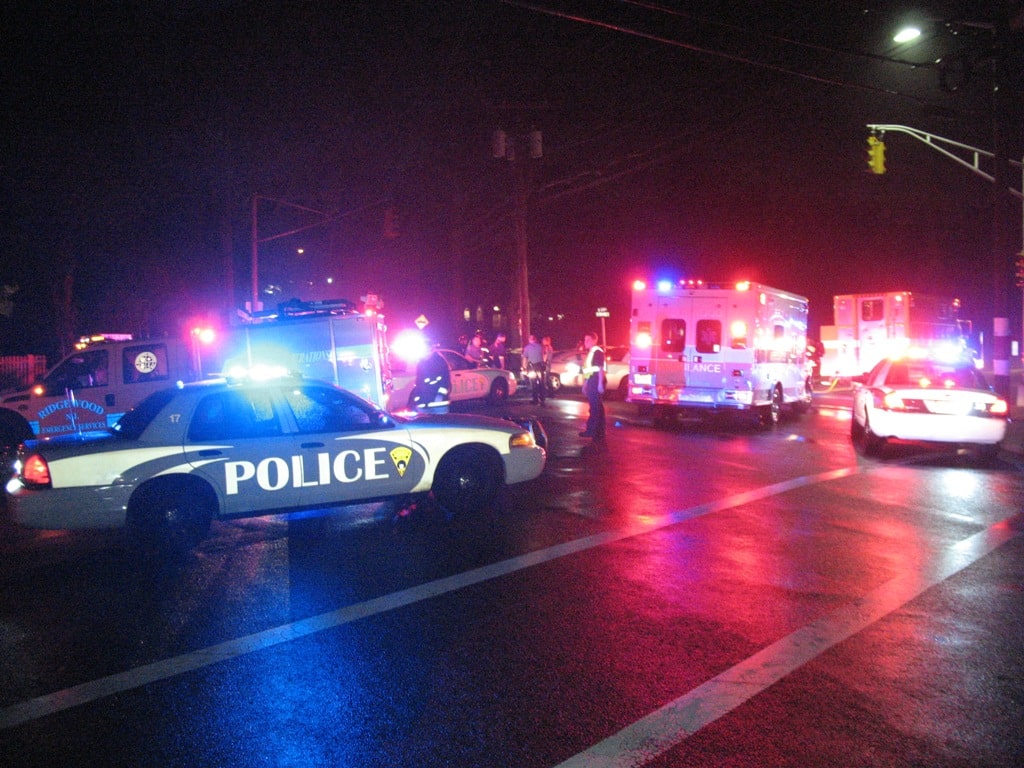
the staff of the Ridgewood blogRidgewood NJ, Between Wednesday June 24, 2015 and Wednesday July 1, 2015 the Ridgewood Police Department responded to (427) Calls for Service (30) trauma/medical emergency calls and (17) motor vehicle accidents.
Ridgewood Police had a very busy week :On Thursday June 25, 2015 Officers Colin Donnelly and Joseph DiBenedetto were dispatched to the Central Business District on the report of a disturbance. Upon their arrival they observed a male actor who fit the description provided by the caller later identified as Fransisco A. Andino, 23 of Newark, New Jersey sitting on the sidewalk at Van Neste Square and East Ridgewood Avenue. As the officers were speaking with Andino they were notified that there was an active warrant for his arrest out of Hoboken, New Jersey, for assaulting a police officer. Andino who attempted to flee the area on foot was subdued and placed under arrest by Patrolman Colin Donnelly after a brief foot chase. While at police headquarters Andino assaulted several officers by biting, kicking and spitting at them. He was subsequently charged with obstructing administration of law (2C:29-1A), resisting arrest (2C:29A(3)(a)), disorderly conduct (2C:33-2(a)(1)) and three counts of aggravated assault on a law enforcement officer (2C:12-B(5)(a). Bail was set at $15,000, Andino was housed at the Bergen County Sheriff’s Unit at Bergen Regional Medical Center.During the late afternoon hours on Thursday June 25, 2015, a resident reported observing a group of juveniles acting suspiciously near a vacant home. It was later determined that the homeowners were away on vacation and it was the groups intent to congregate on the property unsupervised without the homeowner’s permission. Annually with the onset of summer and vacations commencing this has become a frequent problem, residents are asked to report suspicious activities in their neighborhoods in order to prevent similar behavior.
On Thursday Friday June 26, 2015 a pedestrian crossing East Ridgewood Avenue while in a marked crosswalk reported that she/he was nearly struck a by a vehicle that failed to yield right of way. The driver pulled to the side of the roadway exiting their vehicle entering into a verbal dispute with the pedestrian. The pedestrian reported being assaulted by the driver who left the area prior to the arrival of police. The operator of the vehicle later responded to the Ridgewood Police Headquarters where she reported being assaulted by the pedestrian. Neither party wished to pursue the matter. It is paramount that all drivers cede right of way to pedestrians in the roadway regardless of whether a crosswalk is present as per the New Jersey Motor Vehicle Laws.
On Monday June 29, 2015 Detective Jeffrey Casson arrested Francis J. Yacopino, 30, of West Milford, New Jersey on a criminal warrant out of Pennsylvania. The warrant was discovered during a background check of Yacopino who had applied for a job with the Village of Ridgewood. Yacopino was housed in the Bergen County Jail on a fugitive warrant pending extradition.
On Monday June 29, 2015 a resident reported that his/her personal information had been used to open a fraudulent Dish Network account, the resident further reported having been the victimized similarly numerous times over the last several years. This type of incident continues to be on the rise and information on prevention and reporting identity theft occurrences is available at the police department.
During the spring months numerous street signs have been removed from roadways in the village. In addition to being both a nuisance and financial burden, the removal of these signs (including traffic signage) creates a danger to the public. Citizens are asked to exercise vigilance in reporting these incidents to police as well assisting in the recovery of stolen signs.
Please remember to register your house and any emergency contacts with the Police Department Records Division when you are planning to go away.
A reminder : All criminal defendants are presumed to be innocent until proven guilty in a court of law.
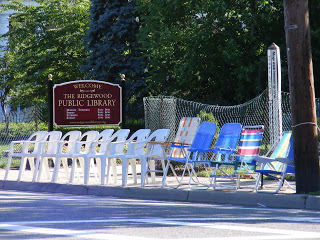
RIDGEWOOD, N.J. (CBSNewYork) — Hundreds of lawn chairs are already lined up in strategic spots inRidgewood, New Jersey, in advance of the town’s big Fourth of July parade.
Some residents started setting out their lawn chairs along the mile-long parade route on Maple Avenue as much as 13 days ago, 1010 WINS’ Glenn Schuck reported.
JULY 1, 2015, 11:47 PM LAST UPDATED: WEDNESDAY, JULY 1, 2015, 11:48 PM
BY LINDY WASHBURN
STAFF WRITER |
THE RECORD
A ruling in state tax court that has taken away the property-tax exemption of a major medical center because it operates more like a for-profit business than a charitable institution could have implications for other non-profit hospitals around the state if the municipalities that host them seek to collect property taxes.
Judge Vito Bianco declared in a closely watched opinion that Morristown Medical Center failed “to qualify for property tax exemption” for three years beginning in 2006. The case has been in the court system for the better part of a decade. It is unclear how the ruling applies to later years.
Non-profit hospitals have changed a lot since their origins as “charitable alms houses providing free basic medical treatment to the infirm poor,” he said, likening Morristown’s business model to that of its “new for-profit competitors.” Eight hospitals statewide currently are owned by for-profit companies, with two more due to be acquired at the end of this month. These investor-owned facilities pay taxes, unless they negotiate tax abatements with local authorities.
Like the for-profits, “today’s non-profit hospitals have evolved into labyrinthine corporate structures, intertwined with both non-profit and for-profit subsidiaries and unaffiliated corporate entities,” Bianco wrote. They “generate significant revenue and pay their professionals salaries that are competitive even by for-profit standards.”
JULY 1, 2015 LAST UPDATED: WEDNESDAY, JULY 1, 2015, 9:24 AM
BY MATTHEW SCHNEIDER
STAFF WRITER |
THE RIDGEWOOD NEWS
Tensions were high last Monday night as a large crowd of parents gathered at the Board of Education meeting to voice their displeasure about various issues. The assembly was so large that additional chairs had to be laid out for the capacity crowd.
Parents packed last week’s Ridgewood Board of Education meeting to voice their displeasure over the increasing class sizes at some village elementary schools.
Many parents attended the meeting to protest increasing class sizes in some Ridgewood elementary schools.
Sheila Brogan, BOE president, issued a preemptive statement at the beginning of the meeting, saying, “I did want you to know that we have been listening. It has not been falling on deaf ears that people are concerned about the sizes of some of the classes in some of our elementary schools.”
This did little to mollify the crowd, however, as many went to the podium to express their displeasure and disappointment with the board’s handling of the issue.
A little-known private foundation controlled by Bill and Hillary Clinton donated $100,000 to the New York Times’ charitable fund in 2008, the same year the newspaper’s editorial page endorsed Clinton in the Democratic presidential primary, according to tax documents reviewed by theWashington Free Beacon.
The Clinton Family Foundation, a separate entity from the Bill, Hillary and Chelsea Clinton Foundation, has been the family’s vehicle for personal charitable giving since 2001.
It is funded directly by the Clintons and distributes more than $1 million a year to civic and educational causes.
The New York Times Neediest Cases Fund is a charity affiliated with the newspaper that assists underprivileged New Yorkers. It is run by members of the New York Times Company’s board of directors and senior executives.
The Times’ editorial board endorsed Clinton against Democratic challengers John Edwards and Barack Obama on January 25, 2008, writing that she was “more qualified, right now, to be president.”