N.J. residents welcome Christie’s decision to reduce impact of student test scores
JULY 15, 2014, 7:48 PM LAST UPDATED: WEDNESDAY, JULY 16, 2014, 1:00 AM BY HANNAN ADELY STAFF WRITER THE RECORD
Educators, lawmakers and parents welcomed Governor Christie’s decision to reduce the impact of student test scores on teacher evaluations and to study the volume of testing, but some said Tuesday that the measures fell short of what is needed.
On Monday, the governor pledged to appoint a commission to study standardized tests, their usefulness, and whether they were too much or too repetitive, in an apparent response to public criticism over the increase in testing and the impact on classroom instruction. But critics of the tests said they had doubts that the commission would recommend real change.
“This does nothing to address the true problem, which is putting stress on our teachers and our children under this high-stakes testing,” said Terry Anzano, a Ridgewood parent.
The new measures will not change anything in the classroom come September, critics said, and will do little to address concerns that tests have been rushed and that districts devote too much time and resources to them. But the commission will make recommendations a year from now that could affect testing in the future.
Readers get to the crux of student parking idea , its really about more parking for sports events
Reader favors …..It would make way too much sense to actually use that space for parking so it probably won’t happen. The property went for sale years ago and the neighbors “outbid” the BOE for the property. I believe the owner(s) are in severe tax arrears to the Village so the property could be “in play.” I see PSE&G has recently put up new gates on that section as well as the section between E. Ridgewood Ave and Spring so maybe PSE&G has regained “ownership.”
If all of that can be worked out, entrance only from N. Irving and exit and right turn only onto E. Ridgewood Ave with a cleaned up and heavily landscaped buffer between the neighbors would go along way to alleviating the parking issues that the students at RHS face and the parking issues the neighbors face anytime there is a sporting event at RHS or Stevens. But, as I said it makes way too much sense for it to happen. Most likely the Village Council will probably want to build a multi-use parking garage on the site and bog the whole thing down for another 20 years.
Reader says been there done that …Lets spend more taxpayers money to beautify this dirt road so the little beauties can bring their parents BMW’s to school. More traffic but less danger. Sound like a page out of Valley Hospital play book. Oh let not forget more parking for all those sports people. Maybe the BOED should get together with our Council and build a parking garage at Ridgewood High School. The high school could fit a multi deck in their lot. Don’t forget its not just plating shrubs. Driveway aprons. guard rails for safety so no one drives into the brook or ditch, signs and what ever else has to be done for safety.
Do you have someone in mind that is a Bergen Legend? Bergen 350 is looking for nominees for a Legend Award to be honored at the Bergen 350 Gala, so submit names of those living and deceased!
https://bergen350.com/about-the-legends-award/
Bergen 350 Legends Award
We too often think of history as being made in distant times and far away places rather than on our own doorstep. Yet here we stand, not only on soil repeatedly hallowed as a battleground of the American Revolution, but on a rich plain of progress where America begins again for each successive generation in their search for excellence. Over the past three and a half centuries, Bergen County has transformed from a frontier wilderness to one of America’s premier suburban counties, hosting seventy municipalities, each with its own homestyle flavor. Both past and present, individuals of singular accomplishment and events of great moment enrich our history.
On the 350th anniversary of New Jersey’s founding, we hope to honor the stories of extraordinary individuals, living or departed, who leave a positive legacy for our posterity to admire and emulate. To represent the true historical depth of our community, our selection of Bergen Legends purposes to officially recognize and perpetuate the names of those who have displayed outstanding ability, meritorious service and superior performance in their various fields of endeavor. Nominees must be exemplary individuals of good character and demonstrated ability who have forged successful careers, enriching the life of our community through their talent, energy and substance. While the names of some may already be etched in the annals of time, others may be unsung heroes, who gain prominence or deserve recognition for excellence in business professions or public affairs, in the arts and sciences, or in entertainment and athletics. The only qualification for consideration is that Bergen County be closely identified with their record of achievement and as their primary field of action.
We therefore encourage the nomination of any person who through his or her life’s work has demonstrated a significant and lasting contribution to the great heritage, improved quality of life and good character of Bergen County. The first class of honorees will be named at our Bergen 350 Gala on October 15, 2014.
Readers not impressed with Mayor Aronsohn’s Move to Squash Free Speech
The Council would rather hear themselves talking than hear those who pay the bills talking.
What objective criteria are being used to determine whether a remark is personally abusive or offensive? Answer: there are no objective criteria to determine such. This is a subjective call based upon the whim of our mayor.
Remarks that are either personally abusive or offensive. “With the Three Amigos that anything that doesn’t tout the accomplishments .
Aronsohn and Pucciarel , and Hauck regularly put down their colleagues on the council for no good reason. Usually they are trying to cow somebody into refraining from accurately describing the three amigo’s actual behavior, or what they should have done but didn’t, or explaining why what they did or failed to do was ethically or legally or morally wrong. So they basically want to disarm their political opponents while retaining complete flexibility to fillet people they don’t like with impunity. How and why do we put up with this transparently mendacity behavior in our elected officials?the Council would rather hear themselves talking than hear those who pay the bills talking.
Forum to focus on ideas for Ridgewood business district
JULY 15, 2014 LAST UPDATED: TUESDAY, JULY 15, 2014, 12:38 AM BY LAURA HERZOG STAFF WRITER
Two major master plan amendment applications, from The Valley Hospital and developers seeking to build multifamily housing developments in Ridgewood’s Central Business District (CBD), have dominated Planning Board meetings over the last year.
And this state of affairs has forced the board and residents to become “reactive” to these applications, rather than “proactive” in developing their own vision for the CBD’s future, according to Deputy Mayor Albert Pucciarelli.
“[Residents] are locked into a reactive mode, like the Planning Board itself,” Pucciarelli said. “Protest signs about ‘Save our Village’ do not really set the tone for a positive image of what it is we want. It suggests more of what we don’t want.”
To learn what villagers would like to see happen in the CBD, Pucciarelli is holding an informal public meeting starting at 7:30 p.m. on Wednesday, July 23 in Village Hall.
“No agenda. Limited structure. Let’s just have a chance to come to the open mic and exchange ideas,” Pucciarelli said. “I’m hoping it brings out people who are genuinely interested in promoting ideas in a positive way. I don’t want to see it turn into a demonstration against a particular application or group of applicants that are out there.”
Pucciarelli previously sat on both the planning and zoning boards for about 24 years. He was the council’s Planning Board liaison until last Tuesday’s reorganization meeting.
He said his new position off the Planning Board has left him free to engage in a more open discussion about the CBD.
The US shale revolution has averted the threat of a global oil crisis caused by growing levels of conflict and instability.
In the sleepy farmland of south Texas, near the ghost town of Helena, the 18 gleaming towers of ConocoPhillips’ oil stabilisation plant are an incongruous sight.
Three years ago, there were only fields here but facilities have sprung up to handle the flood of oil pouring out of the Eagle Ford shale region south and east of San Antonio. These are exciting times in the US oil industry; the new plants are proof of that.
Prospects are bright here and in a few other countries including Canada. As the gush of crude from North America strengthened, analysts predicted it would send prices tumbling and open a new era of cheap fuel. It has not happened.
That is because the great advances in US shale have coincided with political upheaval in big oil-producing countries. Political instability in Libya, Iraq and Venezuela has stoked concerns about disruption and threats to future supplies. International sanctions on Iran have also reduced the global supply of oil, and Nigeria’s industry is plagued by theft.
Were it not for the new production in the US, which has cut the country’s imports sharply, there would probably be talk of another world oil crisis. As a global energy supplier, it is, in the words of Madeleine Albright, the former secretary of state, the “indispensable nation”.
The rise of Eagle Ford has been spectacular. The advances in horizontal drilling and hydraulic fracturing, or “fracking”, which were first used to extract natural gas from shale, have in the past four years been applied here to produce oil, with remarkable results. Eagle Ford produced just 15,000 barrels of crude oil per day in 2010, but 838,000 b/d in the first four months of this year, according to the Railroad Commission of Texas, the state regulator.
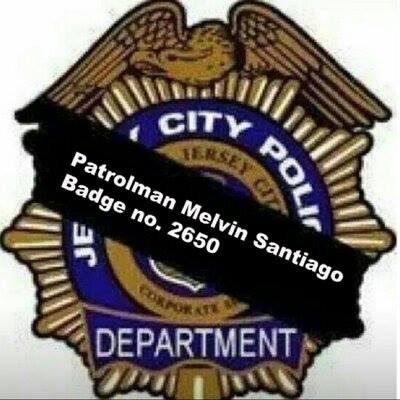
Governor Chris Christie Orders Flags Lowered to Half-Staff in Honor of Fallen Jersey City Police Officer Melvin Santiago
Executive Order No. 158 – Ordering all State buildings to fly flags at half-staff on Wednesday, July 16, 2014 to honor the service and sacrifice of Jersey City Police Officer Melvin Santiago, who was raised in Jersey City and tragically lost his life in the line of duty.
“Officer Santiago’s selfless devotion to public service and the protection of his community makes him a hero and a true role model for all New Jerseyans.” said Governor Christie. “It is appropriate and fitting for the State of New Jersey to recognize his true commitment to the welfare and safety of others, to mark his passing, to honor his memory, and to remember his family as they mourn their tragic loss.”
The Federal Highway Trust Fund Is Going Broke. Here’s Why That Could Be a Good Thing.
Elizabeth Nolan Brown|July 14, 2014
This week President Obama is putting the hard sell on raising highway and transit aid, as the federal Highway Trust Fund (HTF) warns that it’s bound by early August to run out of sufficient money to meet state obligations. The White House says Obama will discuss the matter Tuesday in Virginia, where he’s expected to propose a “pro-growth business tax reform” solution. In Delaware on Thursday, he’ll announce an initiative to increase private-sector investment in transportation.
About 27 percent of highway and transit spending currently comes from the federal government, via the HTF, while states kicking in about 38 percent and 35 percent coming from municipalities. The HTF isn’t set to “run dry” in August, as many are reporting, but it did tell states to expect an average 28 percent reduction in aid at that point unless Congress acts. The fund faces a $15 billion gap between projected spending and the money it will collect in 2015.
House and Senate committees began addressing ways to shore up HTF funding last week, both in the short-term and the long-term. The existing two-year funding measure expires at this end of this September. Legislators are now looking at bills that would provide about $11 billion to the HTF through May 2015 and address long-term funding separately in the future.
State governors still say Congress isn’t acting fast enough, and it’s hindering their ability to plan and build major highway and bridge projects. From Reuters:
Republicans and Democrats who gathered in Nashville during the weekend for a National Governors Association (NGA) meeting said that at minimum Congress should approve a short-term fix before the federal highway account becomes insolvent by the end of August. Yet they want a longer solution to remove uncertainly that could stop or delay projects worth an estimated $3.6 trillion to fix crumbling roads and bridges.
The inability of Congress to agree increases pressure on states to find alternative financing for their share, governors said. It affects the work needed to create jobs and boost the economy while repairing outdated infrastructure to avoid disasters such as the 2007 Minneapolis bridge collapse that killed 13 people and injured 145.
According to the American Society of Civil Engineers, the U.S. needs $3.6 trillion by 2020 to maintain highways, bridges, and other infrastructure. One way to raise some funds would be to raise fuel taxes, relied on heavily by states and the federal government to fund infrastructure projects—and untouched by Congress since 1993.
Yet there’s nothing stopping states from taking this matter into their own hands. Since 2013, seven states have raised fuel levies, reports Reuters, while Wisconsin Gov. Scott Walker is considering substituting sales tax and Indiana Gov. Mike Pence is pushing public-private partnerships. Other governors at the NGA conference also said they were looking at alternative funding solutions.
When left a little more to their own devices, it seems states get innovative. They develop localized solutions. They experiment.
Dear Liberals, Stop Freaking Out About the Supreme Court ,Freedom isn’t so dangerous.
A. Barton Hinkle | July 14, 2014
Reaction to Supreme Court decisions generally falls into two camps: (a) The court wisely followed the Constitution, legal precedent, first principles, logic, and sensible jurisprudence, or (b) WE’RE ALL GOING TO DIE!!!
Reaction B was on full view after the Hobby Lobby decision, in which the Supreme Court held that some companies could cite religious objections to avoid complying with a federal contraception mandate. The New Yorker offered a typically measured and thoughtful response: “When the Taliban Meets Hobby Lobby,” which was based on the extremely realistic premise that the Taliban would move to the U.S., set up a closely held corporation, and then file suit to avoid having to pay insurance coverage for polio vaccinations.
The essay drew a lot of amused response. “What if the Taliban wanted to exercise its right to free speech?!?!?!?!” mocked one reader on Twitter. “Sure, the 4th Amendment SOUNDS nice,” wrote another. “But what if a cop pulled over Osama bin Laden driving down I-95?!”
Still, you can’t blame people who lose an argument for getting upset. Unfortunately, they also tend to exaggerate. And to complain not only that the reasoning was wrong but that the decision will produce consequences so horrible we’d all be better off letting an asteroid the size of Texas smack into planet Earth and kill everything but the roaches.
That was the reaction in many quarters after two Supreme Court rulings in favor of gun rights. After the high court struck down a District of Columbia handgun ban, Mayor Adrian Fenty predicted that “introducing more handguns into the District will mean more handgun violence.” Atlanta Mayor Shirley Franklin agreed: “There is no question that this decision from the Supreme Court makes it harder for all mayors to keep their city safe,” she warned. Chicago Mayor Richard Daley called the ruling “very frightening.” The New York Times insisted that the Court had “all but ensured that even more Americans will die senselessly.”
Two years later, the Supreme Court extended its District of Columbia v. Heller ruling in McDonald v. Chicago. Reaction? Lather, rinse, and repeat.
Yet none of those predictions turned out to be accurate. After the rulings, the national homicide rate kept falling, and as did violent crime overall, and large cities especially enjoyed some of the largest declines. But wait—weren’t 14 people killed by gunfire in Chicago last weekend alone? Sadly, yes. (Pertinent point: Two of them were gunned down by police officers.) But that headline overshadowed the fact that, overall, Chicago’s homicide total has been trending down—and last year reached a low it hadn’t seen in half a century.
A similar pattern played out after the Supreme Court’s 2010 decision in Citizens United, which said the government could not prohibit the election-season distribution of a movie about Hillary Clinton just because it was produced by a corporation. Reaction from the left was hotter than thermite plasma.
The Court had given corporations the power to “overwhelm elections,” fumed the New York Times corporation. A commentator from another corporation (MSNBC) declared the case the worst ruling since Dred Scott, which upheld slavery. President Obama saidCitizens United “strikes at democracy itself.” Others called the ruling a “constitutional Frankenstein moment,” a “corporate takeover,” “radical,” “absurd” and “terrifying.” Some progressives launched a campaign to rewrite the First Amendment. Really.
How did the predicted hostile takeover of democracy by corporate America turn out? In the aftermath of the 2012 elections, the Times reported: “American Crossroads, the super PAC founded by Karl Rove, spent $104 million in the general election, but none of its candidates won. The United States Chamber of Commerce spent $24 million backing Republicans in 15 Senate races; only two of them won. Sheldon Adelson, the casino mogul, spent $53 million on nine Republican candidates, eight of whom lost.” It was, as the paper noted, “A Landslide Loss for Big Money.”
Ridgewood teen ready for 20-mile open-water swim in California
JULY 13, 2014, 5:00 PM LAST UPDATED: MONDAY, JULY 14, 2014, 8:06 AM BY LINDA MOSS STAFF WRITER THE RECORD
RIDGEWOOD — Charlotte Samuels, 16, has literally swum around Manhattan, around Cape May and from Battery Park to Sandy Hook. But her open-water event next month will be quite different from those races: She’ll have to contend with sharks and whales, and will start swimming at pitch-black midnight.
Samuels, who will be a junior at Ridgewood High School this fall, is going to the West Coast to swim the 20.2-mile Catalina Island Channel in California on Aug. 4. Earlier this year, she completed the long Manhattan Island Marathon Swim, a 28.5-mile course.
The brunette teenager is also hoping to get a slot to swim the English Channel this fall, 21 miles. The Manhattan Island, Catalina and English Channel are the “Triple Crown” of open-water events, Samuels said, and she’s aiming to conquer all three.
“If I do it in the next four years I’ll still be the youngest person to ever do it: The youngest person right now is 20,” Samuels said.
On Sunday, Samuels returned to her home in Ridgewood after spending several days at a swimming camp at West Point, N.Y. Open-water swimming is her passion, one she has pursued since she was 12 and her paternal grandfather, Herb Tanenhaus of Eureka, Calif., gave her a copy of “Swimming to Antarctica: Tales of a Long-Distance Swimmer” by Lynne Cox.
Lawmakers Throw Light on Secretive ‘Operation Choke Point’
Kelsey Harkness / @kelseyjharkness / July 15, 2014 /
‘No place to stop’: Rep. Darrell Issa, R-Calif., on Operation Choke Point. (Photo: Flickr)
Is “Operation Choke Point” about to get choked by Congress? Rep. Darrell Issa, R-Calif., sure hopes so.
Issa, chairman of the House Oversight and Government Reform Committee, is calling for the dismantling of what he calls a secretive initiative launched by the Obama administration in early 2013.
Critics say that Operation Choke Point, so dubbed by Department of Justice officials under Attorney General Eric Holder, seeks to weed out businesses from the marketplace that the Obama administration considers objectionable. According to The Wall Street Journal, it was an outgrowth of the Financial Fraud Task Force, established by President Obama’s executive order early in his first term.
The initiative, Issa said last week, is a slippery slope:
“If you empower the government to pick winners and losers within a lawful enterprise, then there is no place to stop.”
Initially, in the wake of the 2008 financial crisis, officials targeted small-dollar, nonbank lenders. But it grew to include other legal, legitimate businesses such as gun dealers and tobacco vendors at Walmart and Bass Pro Shop.
Issa, speaking on Operation Choke Point at Cato Institute, called it “proactive, progressive activity” by government against banks and other legitimate businesses.
“Fraud should be prosecuted,” Norbert Michel, research fellow in financial regulations at The Heritage Foundation, told The Daily Signal. “They don’t have to use the banking system to shut out every single player in an industry to do that.”
House Republicans already have passed legislation prohibiting funding for Operation Choke Point. This week, the Justice Department initiative comes under further scrutiny in three House settings:
This morning at 10, the oversight and investigations subcommittee of the Financial Services Committee wasscheduled to hold a hearing on the Justice Department initiative. Today at 2 p.m., the Financial Services Committee’s subcommittee on financial institutions subcommittee was set to hold a hearing on a new bill by Rep. Blaine Luetkemeyer (R-Mo.), the “End Operation Choke Point Act of 2014.” Thursday at 9:30 a.m., the Judiciary Committee’s subcommittee on regulatory reform will hold a hearing entitled “Guilty Until Proven Innocent?” on whether Justice has the legal authority to execute the operation and possible collateral damage to legitimate businesses.
One official at Justice, quoted anonymously in a Wall Street Journal report last summer, said the initiative was intended to change “the structures within the financial system that allow all kinds of fraudulent merchants to operate,” with the intent of “choking them off from the very air they need to survive.”
By “air,”the DOJ means money. The Obama administration uses Operation Choke Point to intimidates banks from doing business with merchants it deems “high risk,” Issa and other critics say.
For example, Issa said in his remarks last week, Federal Deposit Insurance Corporation officials make “inappropriate” phone calls to banks and payday lenders, pressuring them to sever ties with businesses the government considers “reputational risks.”
Mark Calabria, Cato’s director of financial regulation studies, said FDIC pressure is an enormous weight over the financial industry.
“When the federal government maintains the discretion to decide which bank gets rescued and which does not, it should be clear that banks in practice have little choice but to cooperate,” Calabria said.
Despite his opposition to the initiative, Issa has yet to endorse legislation to end Operation Choke Point. Instead, he said:
We’ve got to do what baseball pitchers do anytime somebody’s crowding the plate. And that is, we’re going to put the ball close enough that either they’re going to jump back, or we’re going to hit them with the ball. … What they’re doing is wrong, and we’ve got to show that.
Bergen County Exec’s race: Booker says “I’m going to come in very hard” for Tedesco
MONTCLAIR – Bergen County native U.S. Senator Cory Booker (D-NJ) paused from speaking out in favor of a bill seeking to reverse the Supreme Court’s decision in the Hobby Lobby case to look homeward to the 2014 Bergen County Executive’s race. (Bonamo/PolitickerNJ)
Like a high schooler collecting yearbook messages before summer break, Sen. Cory Booker (D-N.J.) is roaming the halls of the Senate before August recess asking his peers to pose for selfies. (Itkowitz/The Washington Post)
Tick Tock regulars say ex-manager’s guilty plea won’t hurt diner
JULY 14, 2014, 6:49 PM LAST UPDATED: MONDAY, JULY 14, 2014, 11:27 PM BY ANDREW WYRICH STAFF WRITER
It has hosted governors and members of Congress, and even a president’s daughter. A neon beacon luring hungry motorists and regulars day and night, the Tick Tock Diner in Clifton somehow stands apart even in a state where diners are treasured not as kitsch, but as culture.
It’s also where a disgruntled manager mulled a plot to kill his boss with a couple of newfound pals. Georgios Spyropoulos, 47, the diner’s former manager, reversed an earlier not-guilty plea to admit in a Paterson courtroom that he had orchestrated the ill-fated plot to rob |and kill his boss, who also is his wife’s uncle.
As the news of his guilty plea spread on Monday, longtime Tick Tock patrons said not even a lurid murder plot could tarnish their beloved diner.
“There are bad people everywhere,” said Rodney Cauthen, 42, of Bloomfield. “If you don’t go to a place because of their management, you’d have to cross a lot of places off your list.”
Cauthen said that it’s all sad, of course, but he’s gratified that the former manager confessed.
He said the Tick Tock’s food and atmosphere are the draw that makes him a regular.
“Of the few diners my wife and I go to, this one is definitely one of our favorites,” Cauthen said.
Todd Knowlden, a 46-year-old East Rutherford man who was entering the diner with his family, said he believed justice was being served when he heard of the plea.
10 Year Old Ryan Leo Kamm asks ,How did coin thief get away?
Leo many in Ridgewood continue to wonder that same thing , the Village had for many year rejected modernizing its parking meters and even after a $40 million dollar renovation to the Ridgewood train station the old fashioned coin operated meters remained intact .Past mentions of upgrading parking meters were met with fallacious and hostile comments on this blog .
Ridgewood Parking Problems: oh those new fangled meters will never work here
Regarding “Crime pays” (Editorials, July 11):The editorial says that Thomas Rica stole $460,000 in quarters. According to my math, that’s 1,840,000 quarters.
I am only 10 years old, but I am wondering: If Rica stole 23,000 pounds in quarters, how could he walk out of a building carrying that amount with no pickup trucks available — even if he did it over several years — without being detected?