The Knockout Game — NYT/NPR Say No Big Deal
By Larry Elder – November 28, 2013
The “knockout game” — and the media underreporting of it — combines the breakdown of the family with the media’s condescending determination to serve as a public relations bureau for blacks. The “game” is a dare in which a young man — all the perps appear to be male people of color, mostly blacks — tries to literally knock out an innocent bystander with one blow. Both National Public Radio and The New York Times say these reports of the “knockout game” being widespread are overblown and do not represent a trend. Really?
According to Colin Flaherty, author of “White Girl Bleed A Lot: The Return of Racial Violence to America and How the Media Ignore It,” the knockout game has gone national. He describes “knockouts” in Philadelphia, Atlantic City, St. Louis, Birmingham, Chicago, Charlotte, Milwaukee, Denver, Minneapolis, Georgetown, New York City, Greensboro, Baltimore, Las Vegas, Kansas City, Miami, Cleveland, Nashville, Peoria, Seattle, Saratoga Springs, Atlanta and a host of others towns and cities.
From a distance, the media can spot some lone idiot holding up an offensive sign at a tea party rally. But when it comes to black perp/white victim crime, there is a very different attitude. Consider the media reaction to the assault of three white girls on Halloween night, 2006, in Long Beach, Calif., just outside Los Angeles. Without provocation, a mostly black mob of 30 to 40 teens and adults brutally kicked, punched and pummeled three young white women, slamming them to the ground, ripping earrings from their lobes and beating them with a skateboard. One of the victims had 12 fractures in her face that required multiple surgeries, and had damage to her teeth and her eyesight. The women also suffered internal injuries and concussions. But for the efforts of a black good Samaritan, who waded into the crowd to help the girls, they might well have died.
The Los Angeles Times, the major metropolitan hometown paper, for one whole week did not write a single word about the Long Beach incident, which took place only twenty-some miles from the paper’s headquarters. Eyewitnesses to the brutal attack reported many in the mob yelling, “We hate white people, f*** whites!” during the rampage.
Ridgewood Police Answers : Why do New Jersey Police Departments refer to the person who is accused of committing a crime the “actor”?
Here is a quote from Title 2C, NJ Criminal law:
2C:1-14. Definitions.
2C:1-14. In this code, unless a different meaning plainly is required:
a. “Statute” includes the Constitution and a local law or ordinance of a political subdivision of the State;
b. “Act” or “action” means a bodily movement whether voluntary or involuntary;
c. “Omission” means a failure to act;
d. “Conduct” means an action or omission and its accompanying state of mind, or, where relevant, a series of acts and omissions;
e. “Actor” includes, where relevant, a person guilty of an omission;
f. “Acted” includes, where relevant, “omitted to act”;
g. “Person,” “he,” and “actor” include any natural person and, where relevant, a corporation or an unincorporated association;
As you see, the “perpetrator” or “do-er” or “defendant” fits in with that legal definition of “actor” and that term is used in lots of the individual statutes use that term, like this excerpt from 2c:2-3:
“e. When causing a particular result is a material element of an offense for which absolute liability is imposed by law, the element is not established unless the actual result is a probable consequence of the actor’s conduct.”
Because the term is used in NJ criminal law, police just tend to use it on complaints, in their reports and news releases. Lots of states that use the “model; penal code” as the basis for their criminal law use the word “actor” when reffering to the accused
Ridgewood employees’ holiday party to be held in Hawthorne
Wednesday November 27, 2013, 11:22 AM
BY DARIUS AMOS
STAFF WRITER
The Ridgewood News
The annual village employee holiday party will once again take place outside of Ridgewood, a notion that has been a growing sore spot in the minds of some elected officials and residents who had hoped to keep the celebration local. As they have done in previous years, village staffers will venture into Hawthorne next month for their workplace gala.
“I don’t understand how we’re not able to do this party in Ridgewood, with all the restaurants that we have,” Mayor Paul Aronsohn said during a council meeting earlier this month, further stressing his ongoing penchant to patronize a village business with the partially taxpayer-subsidized event.
After sending out a questionnaire to 15 Ridgewood establishments, officials at Village Hall received only three responses from those interested in hosting the holiday get-together, according to acting Village Manager Heather Mailander. The manager’s office opened up the search to village restaurants and non-profit groups with rental halls, but none of the proposals that were delivered entirely fulfilled Ridgewood’s needs and requests.
Valley Hospital buys Ridgewood office building for $28 million
Wednesday November 27, 2013, 5:40 PM
BY LINDA MOSS AND BARBARA WILLIAMS
STAFF WRITERS
The Record
Related: Ridgewood might be able to restrict traffic at The Valley Hospital, traffic engineer says
Valley Hospital, which is in an expansion mode, has purchased a 112,000-square-foot office building in Ridgewood, where it says it will put new programs and services.
The three-story Parkview Plaza is at 1200 East Ridgewood Ave., across from the Wild Duck Pond, about a mile from the hospital’s main campus. The sale price was $28 million, according to real estate sources, who also said that Valley has been scouting northern Bergen County for other properties to buy.
The hospital purchased the building under its corporate name, Society of the Valley Hospital Inc., from Secaucus-based developer Hartz Mountain Industries Inc. The deal closed Nov. 19, according to CoStar, which tracks commercial real estate data.
Valley officials Wednesday confirmed the purchase but declined to release any details about its future use of the building, which is nearly fully leased, at 82 percent occupancy, according to CoStar. Tenants include Morgan Stanley and a number of medical offices.
Ridgewood might be able to restrict traffic at The Valley Hospital, traffic engineer says
Wednesday, November 27, 2013 Last updated: Wednesday November 27, 2013, 5:47 PM
BY BARBARA WILLIAMS
STAFF WRITER
The Record
RIDGEWOOD — There is one way the village can try to control traffic in and out of The Valley Hospital if a massive expansion plan is allowed to go forward, a traffic engineer told the planning board this week.
Parking spaces should be restricted to 1,600, fewer than the 1,698 currently available, said Gordon Meth, an engineer from RBA Group in Parsippany. That would ensure employees park off-site and reduce the number of vehicles using hospital driveways, especially during peak shift-change times.
Meth offered a few other changes to the hospital’s proposed plan including putting a traffic signal at the intersection of East Glen Avenue and North Van Dien Avenue/Red Birch Drive instead of making it an all-way stop.
Ridgewood businesses might be allowed to fly flags
Wednesday November 27, 2013, 1:58 PM
The Ridgewood News
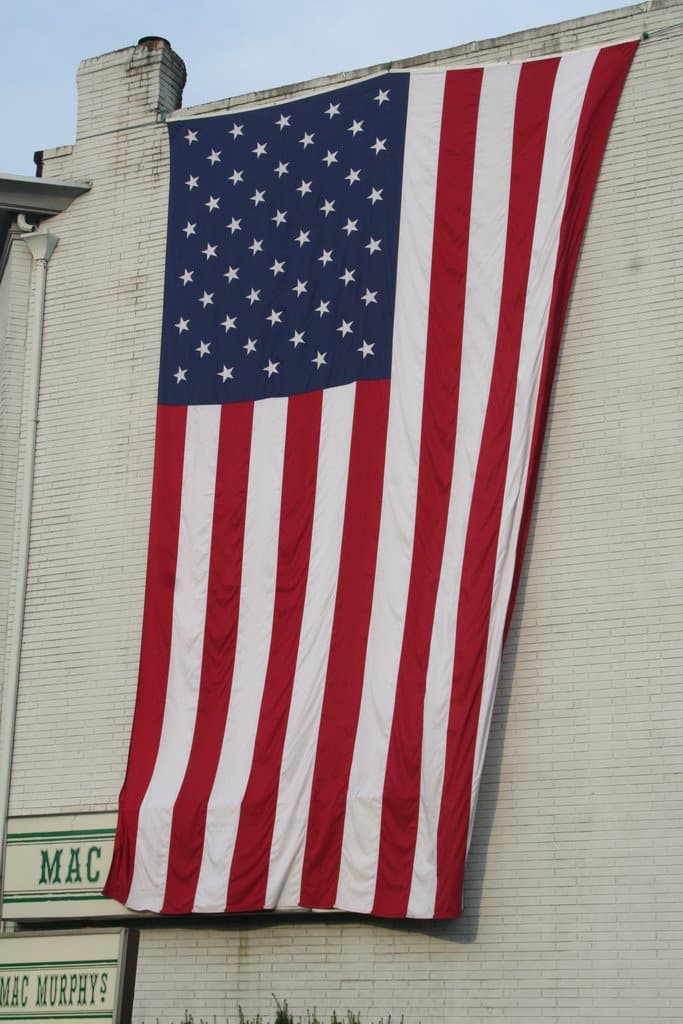
Proposed changes to Ridgewood’s land use regulations would give business owners permission to hang an American flag from their buildings in the downtown area, specifically the historic business district.
Planning Board members on Tuesday reviewed and approved revisions to the Ridgewood code, saying the changes offered by the Village Council to clarify flag parameters are consistent with the master plan. They did advise the governing body to further consider additional changes, however, as certain gray areas pertaining to freedom of speech might exist.
The council considered code revisions after they were alerted to a new business, which is slated to move into town early next year, that hoped to display an American and state flag on an angle from its storefront. The Historic Preservation Commission, however, told the business owner that flags were not allowed, Mayor Paul Aronsohn said.
Historic Bergen County sites, and cash to save them, disappear
Friday, November 29, 2013 Last updated: Friday November 29, 2013, 12:58 AM
BY ALLISON PRIES
STAFF WRITER
The Record
The late-19th-century Darlington Schoolhouse — perched at Darlington Avenue and Ramapo Valley Road in Mahwah — sat vacant for roughly two decades.
DON SMITH/STAFF PHOTOGRAPHER
By the time it is renovated and repurposed, efforts to preserve the late-19th-century Darlington Schoolhouse in Mahwah will have spanned nearly a decade.
Its chestnut banisters were battered, windows broken by vandals and walls sagged out under the weight of the 120-year-old roof.
By the time it’s renovated and repurposed, the act of saving it will have spanned roughly a decade.
But that’s a success story for historic preservation.
Bergen County is dotted with architectural reminders of its past — the schoolhouse, commissioned by Theodore Havemeyer in the late 1890s for the children of field workers; the 1750s home of successful New York merchant John Fell in Allendale, preserved by a group of citizens; and early Dutch stone houses in Fair Lawn and other towns.
– See more at: https://www.northjersey.com/community/Historic_Bergen_County_sites_and_cash_to_save_them_disappear.html#sthash.KMkRG4Ci.dpuf
Citing ‘complexity’ of case, judge grants ex-Bergen Democratic chief delay in corruption trial
Thursday, November 28, 2013 Last updated: Thursday November 28, 2013, 4:48 PM
BY PETER J. SAMPSON
STAFF WRITER
The Record
Joseph A. Ferriero will have a year to prepare for his next federal corruption trial on charges of orchestrating a series of bribery, kickback and shakedown schemes during his reign as chairman of the Bergen County Democratic organization.
U.S. District Judge Ester Salas, sitting in Newark, signed an order Nov. 18 setting a new trial date of Oct. 14, 2014 for Ferriero’s racketeering case. The trial, estimated to take six weeks, had previously been tentatively scheduled for December.
Ferriero, 56, once among the state’s most powerful political leaders, was indicted on Sept. 11 on charges of running the affairs of the county’s Democratic organization through a pattern of racketeering activity. He also was charged with conspiring to promote bribery and distribute bribe proceeds and to commit mail and wire fraud; as well as with one count each of violating the Travel Act and the mail and wire fraud statutes.
The judge acted on a joint application by the office of U.S. Attorney Paul J. Fishman and Ferriero’s counsel, Michael Baldassare and Jennifer Mara, for an order declaring the matter to be a complex case.
Proclamation of Thanksgiving Washington, D.C. October 3, 1863
This is the proclamation which set the precedent for America’s national day of Thanksgiving. During his administration, President Lincoln issued many orders similar to this. For example, on November 28, 1861, he ordered government departments closed for a local day of thanksgiving.
Sarah Josepha Hale, a 74-year-old magazine editor, wrote a letter to Lincoln on September 28, 1863, urging him to have the “day of our annual Thanksgiving made a National and fixed Union Festival.” She explained, “You may have observed that, for some years past, there has been an increasing interest felt in our land to have the Thanksgiving held on the same day, in all the States; it now needs National recognition and authoritive fixation, only, to become permanently, an American custom and institution.”
Prior to this, each state scheduled its own Thanksgiving holiday at different times, mainly in New England and other Northern states. President Lincoln responded to Mrs. Hale’s request immediately, unlike several of his predecessors, who ignored her petitions altogether. In her letter to Lincoln she mentioned that she had been advocating a national thanksgiving date for 15 years as the editor of Godey’s Lady’s Book. George Washington was the first president to proclaim a day of thanksgiving, issuing his request on October 3, 1789, exactly 74 years before Lincoln’s.
The document below sets apart the last Thursday of November “as a day of Thanksgiving and Praise.” According to an April 1, 1864, letter from John Nicolay, one of President Lincoln’s secretaries, this document was written by Secretary of State William Seward, and the original was in his handwriting. On October 3, 1863, fellow Cabinet member Gideon Welles recorded in his diary how he complimented Seward on his work. A year later the manuscript was sold to benefit Union troops.
By the President of the United States of America.
A Proclamation.
The year that is drawing towards its close, has been filled with the blessings of fruitful fields and healthful skies. To these bounties, which are so constantly enjoyed that we are prone to forget the source from which they come, others have been added, which are of so extraordinary a nature, that they cannot fail to penetrate and soften even the heart which is habitually insensible to the ever watchful providence of Almighty God. In the midst of a civil war of unequaled magnitude and severity, which has sometimes seemed to foreign States to invite and to provoke their aggression, peace has been preserved with all nations, order has been maintained, the laws have been respected and obeyed, and harmony has prevailed everywhere except in the theatre of military conflict; while that theatre has been greatly contracted by the advancing armies and navies of the Union. Needful diversions of wealth and of strength from the fields of peaceful industry to the national defence, have not arrested the plough, the shuttle or the ship; the axe has enlarged the borders of our settlements, and the mines, as well of iron and coal as of the precious metals, have yielded even more abundantly than heretofore. Population has steadily increased, notwithstanding the waste that has been made in the camp, the siege and the battle-field; and the country, rejoicing in the consiousness of augmented strength and vigor, is permitted to expect continuance of years with large increase of freedom. No human counsel hath devised nor hath any mortal hand worked out these great things. They are the gracious gifts of the Most High God, who, while dealing with us in anger for our sins, hath nevertheless remembered mercy. It has seemed to me fit and proper that they should be solemnly, reverently and gratefully acknowledged as with one heart and one voice by the whole American People. I do therefore invite my fellow citizens in every part of the United States, and also those who are at sea and those who are sojourning in foreign lands, to set apart and observe the last Thursday of November next, as a day of Thanksgiving and Praise to our beneficent Father who dwelleth in the Heavens. And I recommend to them that while offering up the ascriptions justly due to Him for such singular deliverances and blessings, they do also, with humble penitence for our national perverseness and disobedience, commend to His tender care all those who have become widows, orphans, mourners or sufferers in the lamentable civil strife in which we are unavoidably engaged, and fervently implore the interposition of the Almighty Hand to heal the wounds of the nation and to restore it as soon as may be consistent with the Divine purposes to the full enjoyment of peace, harmony, tranquillity and Union.
In testimony whereof, I have hereunto set my hand and caused the Seal of the United States to be affixed.
Done at the City of Washington, this Third day of October, in the year of our Lord one thousand eight hundred and sixty-three, and of the Independence of the Unites States the Eighty-eighth.
Each year at this time school children all over America are taught the official Thanksgiving story, and newspapers, radio, TV, and magazines devote vast amounts of time and space to it. It is all very colorful and fascinating.
It is also very deceiving. This official story is nothing like what really happened. It is a fairy tale, a whitewashed and sanitized collection of half-truths which divert attention away from Thanksgiving’s real meaning.
The official story has the pilgrims boarding the Mayflower, coming to America and establishing the Plymouth colony in the winter of 1620-21. This first winter is hard, and half the colonists die. But the survivors are hard working and tenacious, and they learn new farming techniques from the Indians. The harvest of 1621 is bountiful. The Pilgrims hold a celebration, and give thanks to God. They are grateful for the wonderful new abundant land He has given them.
The official story then has the Pilgrims living more or less happily ever after, each year repeating the first Thanksgiving. Other early colonies also have hard times at first, but they soon prosper and adopt the annual tradition of giving thanks for this prosperous new land called America.
The problem with this official story is that the harvest of 1621 was not bountiful, nor were the colonists hardworking or tenacious. 1621 was a famine year and many of the colonists were lazy thieves.
In his ‘History of Plymouth Plantation,’ the governor of the colony, William Bradford, reported that the colonists went hungry for years, because they refused to work in the fields. They preferred instead to steal food. He says the colony was riddled with “corruption,” and with “confusion and discontent.” The crops were small because “much was stolen both by night and day, before it became scarce eatable.”
In the harvest feasts of 1621 and 1622, “all had their hungry bellies filled,” but only briefly. The prevailing condition during those years was not the abundance the official story claims, it was famine and death. The first “Thanksgiving” was not so much a celebration as it was the last meal of condemned men.
But in subsequent years something changes. The harvest of 1623 was different. Suddenly, “instead of famine now God gave them plenty,” Bradford wrote, “and the face of things was changed, to the rejoicing of the hearts of many, for which they blessed God.” Thereafter, he wrote, “any general want or famine hath not been amongst them since to this day.” In fact, in 1624, so much food was produced that the colonists were able to begin exporting corn.
What happened?
After the poor harvest of 1622, writes Bradford, “they began to think how they might raise as much corn as they could, and obtain a better crop.” They began to question their form of economic organization.
This had required that “all profits & benefits that are got by trade, working, fishing, or any other means” were to be placed in the common stock of the colony, and that, “all such persons as are of this colony, are to have their meat, drink, apparel, and all provisions out of the common stock.” A person was to put into the common stock all he could, and take out only what he needed.
This “from each according to his ability, to each according to his need” was an early form of socialism, and it is why the Pilgrims were starving. Bradford writes that “young men that are most able and fit for labor and service” complained about being forced to “spend their time and strength to work for other men’s wives and children.” Also, “the strong, or man of parts, had no more in division of victuals and clothes, than he that was weak.” So the young and strong refused to work and the total amount of food produced was never adequate.
To rectify this situation, in 1623 Bradford abolished socialism. He gave each household a parcel of land and told them they could keep what they produced, or trade it away as they saw fit. In other words, he replaced socialism with a free market, and that was the end of famines.
Many early groups of colonists set up socialist states, all with the same terrible results. At Jamestown, established in 1607, out of every shipload of settlers that arrived, less than half would survive their first twelve months in America. Most of the work was being done by only one-fifth of the men, the other four-fifths choosing to be parasites. In the winter of 1609-10, called “The Starving Time,” the population fell from five-hundred to sixty.
Then the Jamestown colony was converted to a free market, and the results were every bit as dramatic as those at Plymouth. In 1614, Colony Secretary Ralph Hamor wrote that after the switch there was “plenty of food, which every man by his own industry may easily and doth procure.” He said that when the socialist system had prevailed, “we reaped not so much corn from the labors of thirty men as three men have done for themselves now.”
Before these free markets were established, the colonists had nothing for which to be thankful. They were in the same situation as Ethiopians are today, and for the same reasons. But after free markets were established, the resulting abundance was so dramatic that the annual Thanksgiving celebrations became common throughout the colonies, and in 1863, Thanksgiving became a national holiday.
Thus the real reason for Thanksgiving, deleted from the official story, is: Socialism does not work; the one and only source of abundance is free markets, and we thank God we live in a country where we can have them.
* * * * *
Mr. Maybury writes on investments.
This article originally appeared in The Free Market, November 1985.
The pilgrims almost starved themselves to death with their experiment in communal ownership.
John Stossel | November 27, 2013
Had today’s politicians and opinion-makers been in power four centuries ago, Americans might celebrate “Starvation Day” this week, not Thanksgiving.
The Pilgrims started out with communal property rules. When they first settled at Plymouth, they were told: “Share everything, share the work, and we’ll share the harvest.”
The colony’s contract said their new settlement was to be a “common.” Everyone was to receive necessities out of the common stock. There was to be little individual property.
That wasn’t the only thing about the Plymouth Colony that sounds like it was from Karl Marx: Its labor was to be organized according to the different capabilities of the settlers. People would produce according to their abilities and consume according to their needs. That sure sounds fair.
They nearly starved and created what economists call the “tragedy of the commons.”
If people can access the same stuff by working less, they will. Plymouth settlers faked illness instead of working the common property. The harvest was meager, and for two years, there was famine. But then, after the colony’s governor, William Bradford, wrote that they should “set corn every man for his own particular,” they dropped the commons idea. He assigned to every family a parcel of land to treat as its own.
The results were dramatic. Much more corn was planted. Instead of famine, there was plenty. Thanks to private property, they got food — and thanks to it, we have food today
1863 President Abraham Lincoln proclaimed a national Thanksgiving Day to be held each November
In 1621, the Plymouth colonists and Wampanoag Indians shared an autumn harvest feast that is acknowledged today as one of the first Thanksgiving celebrations in the colonies. For more than two centuries, days of thanksgiving were celebrated by individual colonies and states. It wasn’t until 1863, in the midst of the Civil War, that President Abraham Lincoln proclaimed a national Thanksgiving Day to be held each November.
Thanksgiving Interfaith Service – November 26 – ALL are Welcome!
The Interfaith Group is presenting a Thanksgiving Service, Tuesday, November 26 at 7:30PM at the Unitarian Society, Cottage Place, Ridgewood. All are welcome to attend and share in this annual comunity event.
Village Offices Closed in Observance of Thanksgiving Holiday – November 28 & 29
Village Hall and The Stable offices will be closed Thursday, November 28 and Friday, November 29 in observance of Thanksgiving. There WILL BE GARBAGE & RECYCLING COLLECTION on FRIDAY, November 29, as scheduled on the Village website and in the printed Village Calendar.
Overnight parking regulations suspended 11/27 and 11/28 for Thanksgiving. There is no need to call the dispatch center for permission to leave your vehicle on the street.