Posted on 5 Comments

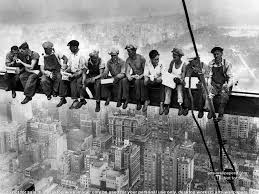
Labor Day exhausted: 40-hour work week grows to 47-60 hours

imgres-2

Labor Day exhausted: 40-hour work week grows to 47-60 hours

BY PAUL BEDARD | AUGUST 29, 2014 | 12:04 PM
TOPICS: WASHINGTON SECRETS JOBS LABOR WORK REQUIREMENTS

The old “9 to 5” work week is becoming about as obsolete as the American Dream.

A new Gallup poll finds that economically-stressed Americans are now working an “average” of 47 hours, with a growing number clocking 60 hours or more.

“Adults employed full time in the U.S. report working an average of 47 hours per week, almost a full workday longer than what a standard five-day, 9-to-5 schedule entails. In fact, half of all full-time workers indicate they typically work more than 40 hours, and nearly four in 10 say they work at least 50 hours,” said Gallup, based on their 2014 Work and Education survey.

Full time workers:

— Less than 40 hours per week, 8 percent.

— 40 hours, 42 percent.

— 41-49 hours, 11 percent.

— 50-59 hours, 21 percent.

— 60 hours or more, 18 percent.

Gallup said that salaried workers are putting in more hours, on average five hours more per week, 49 vs. 44 for hourly workers.

https://washingtonexaminer.com/american-dream-turned-nightmare-40-hour-work-week-grows-to-47-60-hours/article/2552623

Posted on Leave a comment

NJ TRANSIT OFFERS ‘EARLY GETAWAY’ SERVICE FOR LABOR DAY WEEKEND

Ridgewood-Trainstation1_theridgewoodblog.net_

NJ TRANSIT OFFERS ‘EARLY GETAWAY’ SERVICE FOR LABOR DAY WEEKEND

Kids ride free all weekend with Family SuperSaver Fare
August 27, 2014

NEWARK, NJ — NJ TRANSIT will offer “early getaway” rail and bus service on Friday, August 29, for the benefit of customers leaving work early for the Labor Day holiday weekend.

On Friday, August 29, extra outbound trains will operate on the Northeast Corridor, North Jersey Coast, Raritan Valley, Morris & Essex and Port Jervis lines starting at approximately 1 p.m.  Extra buses will operate from the Port Authority Bus Terminal on more than a dozen bus routes starting around noon.  Visit njtransit.com for details.

On Labor Day, Monday, September 1, trains will operate on a weekend/major holiday schedule on all lines.  Hudson-Bergen Light Rail will operate on a weekend schedule. Newark Light Rail will operate on a Saturday schedule.  River Line will operate on a Sunday schedule.  Bus schedules vary by route—customers are advised to check their timetables or visit njtransit.com for schedule information.

For complete schedules and fares, visit njtransit.com or call 973-275-5555.

Summer Savings

With summer winding down, there is still time to take advantage of NJ TRANSIT’s discounted travel packages to destinations including the Jersey Shore, Six Flags Great Adventure, Monmouth Park Racetrack and Mountain Creek Action Park:

Beach Packages:  Save up to $6.50 on admission to one of five beaches— Long Branch, Asbury Park, Ocean Grove, Bradley Beach and Belmar—by purchasing round-trip train fare and a beach pass for one price at NJ TRANSIT ticket vending machines (choose “Special Promotions” and select “Beach Package”) or at ticket windows.  Customers can purchase the package for $31.50 from New York Penn Station or any station on the Main, Bergen County or Pascack Valley lines (except from Metro-North stations), and for $23.50 from Hoboken Terminal or Newark Penn Station.  Beach packages are now on sale daily through Labor Day, Monday, September 1.

Shore Express:  Enjoy a shorter trip and one-seat ride to the Jersey Shore with NJ TRANSIT’s new express service, departing New York Penn Station at 7:52 a.m. and 10:01 a.m. and stopping at Secaucus Junction, Newark Penn Station, Elizabeth, Rahway, Aberdeen-Matawan, Red Bank, Long Branch, Asbury Park, Bradley Beach, Belmar, Spring Lake, Manasquan, Point Pleasant Beach and Bay Head without having to change trains in Long Branch.  Return trips will depart Bay Head at 4:54 p.m. and 6:54 p.m. This express service will operate on Saturdays, Sundays and holidays through September 1, supplementing NJ TRANSIT’s hourly rail service between Long Branch and Bay Head.
Shore EZride Jitney provides shuttle service to beaches, shopping and dining locations from Long Branch Station.  NJ TRANSIT customers can ride the jitney for free with a coupon available on njtransit.com/shore.

Six Flags Great Adventure and Safari or Hurricane Harbor:  Save up to $40 by purchasing round-trip bus transportation and park admission together.  NJ TRANSIT provides express bus service to Six Flags from the Port Authority Bus Terminal in New York, Newark Penn Station, Philadelphia Greyhound Terminal, Walter Rand Transportation Center in Camden, and from Freehold.
Monmouth Park:  Board a train anywhere on NJ TRANSIT’s rail system and save up to $5.50 when you travel to Monmouth Park Racetrack.  Simply purchase a round-trip package to Monmouth Park from NJ TRANSIT ticket vending machines (choose “Special Promotions” and select “Monmouth Park Racetrack”) or at ticket windows, and receive Grandstand Admission and an official track program for $1 plus round-trip train fare.
Mountain Creek Action Park:  Save $8 on the adult admission price when you ride Bus No. 304 from the Port Authority Bus Terminal, Weehawken, Union City, North Bergen or Wayne/Route 23 Transit Center on Saturdays, Sundays and holidays through September 1.

For details on NJ TRANSIT’s Summer Services and customer discounts, visit njtransit.com/summer.

On weekends, kids ride free on NJT

Every weekend, families riding NJ TRANSIT can save with the Family SuperSaver Fare, which allows two children 11 and younger to travel free with each fare-paying adult.  For the Labor Day holiday weekend, the program will be in effect from 7 p.m. Friday, August 29 until 6 a.m. Tuesday, September 2.

Posted on Leave a comment

Happy Father’s Day and a bit of History

Father Knows Best
Happy Father’s Day and a bit of History 

In June of every year, we honor fathers. The first Mother’s Day was celebrated in 1914, but a holiday honoring fathers did not become official until 1966, when President Lyndon Johnson declared that the third Sunday in June would be Father’s Day. President Richard Nixon made this proclamation permanent in 1972. But this doesn’t mean that the holiday was not celebrated before this time.

The idea for Father’s Day is attributed to Sonora Dodd, who was raised by her father after her mother’s death during childbirth. While listening to a sermon at church on Mother’s Day, she thought about all her father had done for her and her siblings and decided fathers should have a day, too. Because Dodd’s father was born in June, she encouraged churches in her area, Spokane, Wash., to honor fathers that month. The first Father’s Day was celebrated in Spokane in 1910.

Over the years, the idea spread, and people lobbied Congress to establish the holiday. In 1916, President Woodrow Wilson, who had signed a proclamation establishingMother’s Day, approved the idea, but never signed a proclamation for it. In 1924, President Calvin Coolidge made it a national event to “establish more intimate relations between fathers and their children and to impress upon fathers the full measure of their obligations.”

https://www.loc.gov/wiseguide/jun03/father.html

Posted on 3 Comments

FLAG DAY CEREMONY

Ridgewood_5Memorial_Day_Ceremony-2013_theridgewood-blog.net_1-300x2251

FLAG DAY CEREMONY
SATURDAY, JUNE 14 @ 6PM
AMERICAN LEGION, TEANECK

Flag Day Celebrated June 14  

On June 14, 1777, John Adams spoke about the flag at a meeting of the Continental Congress in Philadelphia. He said, “Resolved, that the flag of the thirteen United States shall be thirteen stripes, alternate red and white; that the Union be thirteen stars, white on a blue field, representing a new constellation.” 

There have been twenty-seven official versions of the flag so far; stars have been added to it as states have entered the Union. The current version dates to July 4, 1960, when Hawaii became the 50th state. Celebrate Flag Day on June 14.

Our generous friends at the American Legion, Teaneck Post have invited NJ Tea Party Coalition Members to celebrate Flag Day with our veterans on Saturday, June 14th.

The festivities will feature appearances from our cherished veterans and more.

If you have a damaged flag you need to dispose, the veterans are burning flags in the parking lot, according to military tradition.

The bar will be open and the event is a wonderful way for us to repay all of the American Legion’s generosity to us and the community.

Bring a friend and celebrate this patriotic holiday with our American heroes.

It’s a good idea to park across the street in the Stop and Shop – near the back of the lot.

Posted on Leave a comment

History of Martin Luther King Jr. and the Civil Rights Struggle

index

History of Martin Luther King Jr. and the Civil Rights Struggle

Martin Luther King Jr. (1929-1968) was a Baptist minister and social activist who played a key role in the American civil rights movement from the mid-1950s until his assassination in 1968. Inspired by advocates of nonviolence such as Mahatma Gandhi, King sought equality for African Americans, the economically disadvantaged and victims of injustice through peaceful protest. He was the driving force behind watershed events such as the Montgomery Bus Boycott and the March on Washington, which helped bring about such landmark legislation as the Civil Rights Act of 1964 and the Voting Rights Act of 1965. King was awarded the Nobel Peace Prize in 1964 and is remembered each year on Martin Luther King Jr. Day, a U.S. federal holiday since 1986.

https://www.history.com/topics/martin-luther-king-jr

The King family had been living in Montgomery for less than a year when the highly segregated city became the epicenter of the burgeoning struggle for civil rights in America, galvanized by the landmark Brown v. Board of Education of Topeka decision of 1954. On December 1, 1955, Rosa Parks (1913-2005), secretary of the local National Association for the Advancement of Colored People chapter, refused to give up her seat to a white passenger on a Montgomery bus and was arrested. Activists coordinated a bus boycott that would continue for 381 days, placing a severe economic strain on the public transit system and downtown business owners. They chose Martin Luther King Jr. as the protest’s leader and official spokesman.

By the time the Supreme Court ruled segregated seating on public buses unconstitutional in November 1956, King, heavily influenced by Mahatma Gandhi (1869-1948) and the activist Bayard Rustin (1912-1987), had entered the national spotlight as an inspirational proponent of organized, nonviolent resistance. (He had also become a target for white supremacists, who firebombed his family home that January.) Emboldened by the boycott’s success, in 1957 he and other civil rights activists–most of them fellow ministers–founded the Southern Christian Leadership Conference (SCLC), a group committed to achieving full equality for African Americans through nonviolence. (Its motto was “Not one hair of one head of one person should be harmed.”) He would remain at the helm of this influential organization until his death.

In his role as SCLC president, Martin Luther King Jr. traveled across the country and around the world, giving lectures on nonviolent protest and civil rights as well as meeting with religious figures, activists and political leaders. (During a month-long trip to India in 1959, he had the opportunity to meet Gandhi, the man he described in his autobiography as “the guiding light of our technique of nonviolent social change.”) King also authored several books and articles during this time.

In 1960 King and his family moved to Atlanta, his native city, where he joined his father as co-pastor of the Ebenezer Baptist Church. This new position did not stop King and his SCLC colleagues from becoming key players in many of the most significant civil rights battles of the 1960s. Their philosophy of nonviolence was put to a particularly severe test during the Birmingham campaign of 1963, in which activists used a boycott, sit-ins and marches to protest segregation, unfair hiring practices and other injustices in one of America’s most racially divided cities. Arrested for his involvement on April 12, King penned the civil rights manifesto known as the “Letter from Birmingham Jail,” an eloquent defense of civil disobedience addressed to a group of white clergymen who had criticized his tactics.

Later that year, Martin Luther King Jr. worked with a number of civil rights and religious groups to organize the March on Washington for Jobs and Freedom, a peaceful political rally designed to shed light on the injustices African Americans continued to face across the country. Held on August 28 and attended by some 200,000 to 300,000 participants, the event is widely regarded as a watershed moment in the history of the American civil rights movementand a factor in the passage of the Civil Rights Act of 1964.

The march culminated in King’s most famous address, known as the “I Have a Dream” speech, a spirited call for peace and equality that many consider a masterpiece of rhetoric. Standing on the steps of the Lincoln Memorial–a monument to the president who a century earlier had brought down the institution of slavery in the United States—he shared his vision of a future in which “this nation will rise up and live out the true meaning of its creed: ‘We hold these truths to be self-evident, that all men are created equal.'” The speech and march cemented King’s reputation at home and abroad; later that year he was named Man of the Year by TIME magazine and in 1964 became the youngest person ever awarded the Nobel Peace Prize.

In the spring of 1965, King’s elevated profile drew international attention to the violence that erupted between white segregationists and peaceful demonstrators in Selma, Alabama, where the SCLC and Student Nonviolent Coordinating Committee (SNCC) had organized a voter registration campaign. Captured on television, the brutal scene outraged many Americans and inspired supporters from across the country to gather in Selma and take part in a march to Montgomery led by King and supported by President Lyndon Johnson (1908-1973), who sent in federal troops to keep the peace. That August, Congress passed the Voting Rights Act, which guaranteed the right to vote–first awarded by the 15th Amendment–to all African Americans.

The events in Selma deepened a growing rift between Martin Luther King Jr. and young radicals who repudiated his nonviolent methods and commitment to working within the established political framework. As more militant black leaders such as Stokely Carmichael (1941-1998) rose to prominence, King broadened the scope of his activism to address issues such as the Vietnam War and poverty among Americans of all races. In 1967, King and the SCLC embarked on an ambitious program known as the Poor People’s Campaign, which was to include a massive march on the capital.

On the evening of April 4, 1968, King was fatally shot while standing on the balcony of a motel in Memphis, where he had traveled to support a sanitation workers’ strike. In the wake of his death, a wave of riots swept major cities across the country, while President Johnson declared a national day of mourning. James Earl Ray (1928-1998), an escaped convict and known racist, pleaded guilty to the murder and was sentenced to 99 years in prison. (He later recanted his confession and gained some unlikely advocates, including members of the King family, before his death in 1998.)

After years of campaigning by activists, members of Congress and Coretta Scott King, among others, in 1983 President Ronald Reagan (1911-2004) signed a bill creating a U.S. federal holiday in honor of King. Observed on the third Monday of January, it was first celebrated in 1986.

https://www.history.com/topics/martin-luther-king-jr

Posted on Leave a comment

Debt Up $3T In Less Than 3 Yrs Under Boehner’s Deals; More Than Under All Presidents from Washington Through Reagan

incle_sam_wants_you_theridgewoodblog.net_

Debt Up $3T In Less Than 3 Yrs Under Boehner’s Deals; More Than Under All Presidents from Washington Through Reagan

December 11, 2013 – 8:22 PM
By Terence P. Jeffrey

(CNSNews.com) – The new debt run up by the federal government since House Speaker John Boehner cut his first spending deal with President Barack Obama has now topped $3 trillion—exceeding all the debt accumulated under all American presidents from George Washington through Ronald Reagan.

Boehner became speaker in January 2011, after the Republicans won a majority of the House of Representatives in the 2010 elections. He cut his first spending deal with President Barack Obama on March 1, 2011, and that deal took effect after March 4, 2011 when the continuing resolution then funding the government expired. Since then, the federal government has been funded under legislation approved by the Republican-controlled House that Boehner leads.

At the close of business on March 4, 2011, the federal debt was $14,182,627,184,881.03, according to the U.S. Treasury. As of the close of business on Dec. 10, 2013, it was $17,234,005,998,603.93.

That means that under federal spending deals negotiated during Boehner’s speakership and approved by a Republican-majority House that Boehner leads, the federal debt has increased $3,051,378,813,722.90.

– See more at: https://cnsnews.com/news/article/terence-p-jeffrey/debt-3t-less-3-yrs-under-boehners-deals-more-under-all-presidents#sthash.Pcm1NJy7.dpuf

Posted on Leave a comment

The Great Thanksgiving Hoax

Turkey_theridgewoodblog.net

The Great Thanksgiving Hoax

Each year at this time school children all over America are taught the official Thanksgiving story, and newspapers, radio, TV, and magazines devote vast amounts of time and space to it. It is all very colorful and fascinating.

It is also very deceiving. This official story is nothing like what really happened. It is a fairy tale, a whitewashed and sanitized collection of half-truths which divert attention away from Thanksgiving’s real meaning.

The official story has the pilgrims boarding the Mayflower, coming to America and establishing the Plymouth colony in the winter of 1620-21. This first winter is hard, and half the colonists die. But the survivors are hard working and tenacious, and they learn new farming techniques from the Indians. The harvest of 1621 is bountiful. The Pilgrims hold a celebration, and give thanks to God. They are grateful for the wonderful new abundant land He has given them.

The official story then has the Pilgrims living more or less happily ever after, each year repeating the first Thanksgiving. Other early colonies also have hard times at first, but they soon prosper and adopt the annual tradition of giving thanks for this prosperous new land called America.

The problem with this official story is that the harvest of 1621 was not bountiful, nor were the colonists hardworking or tenacious. 1621 was a famine year and many of the colonists were lazy thieves.

In his ‘History of Plymouth Plantation,’ the governor of the colony, William Bradford, reported that the colonists went hungry for years, because they refused to work in the fields. They preferred instead to steal food. He says the colony was riddled with “corruption,” and with “confusion and discontent.” The crops were small because “much was stolen both by night and day, before it became scarce eatable.”

In the harvest feasts of 1621 and 1622, “all had their hungry bellies filled,” but only briefly. The prevailing condition during those years was not the abundance the official story claims, it was famine and death. The first “Thanksgiving” was not so much a celebration as it was the last meal of condemned men.

But in subsequent years something changes. The harvest of 1623 was different. Suddenly, “instead of famine now God gave them plenty,” Bradford wrote, “and the face of things was changed, to the rejoicing of the hearts of many, for which they blessed God.” Thereafter, he wrote, “any general want or famine hath not been amongst them since to this day.” In fact, in 1624, so much food was produced that the colonists were able to begin exporting corn.

What happened?

After the poor harvest of 1622, writes Bradford, “they began to think how they might raise as much corn as they could, and obtain a better crop.” They began to question their form of economic organization.

This had required that “all profits & benefits that are got by trade, working, fishing, or any other means” were to be placed in the common stock of the colony, and that, “all such persons as are of this colony, are to have their meat, drink, apparel, and all provisions out of the common stock.” A person was to put into the common stock all he could, and take out only what he needed.

This “from each according to his ability, to each according to his need” was an early form of socialism, and it is why the Pilgrims were starving. Bradford writes that “young men that are most able and fit for labor and service” complained about being forced to “spend their time and strength to work for other men’s wives and children.” Also, “the strong, or man of parts, had no more in division of victuals and clothes, than he that was weak.” So the young and strong refused to work and the total amount of food produced was never adequate.

To rectify this situation, in 1623 Bradford abolished socialism. He gave each household a parcel of land and told them they could keep what they produced, or trade it away as they saw fit. In other words, he replaced socialism with a free market, and that was the end of famines.

Many early groups of colonists set up socialist states, all with the same terrible results. At Jamestown, established in 1607, out of every shipload of settlers that arrived, less than half would survive their first twelve months in America. Most of the work was being done by only one-fifth of the men, the other four-fifths choosing to be parasites. In the winter of 1609-10, called “The Starving Time,” the population fell from five-hundred to sixty.

Then the Jamestown colony was converted to a free market, and the results were every bit as dramatic as those at Plymouth. In 1614, Colony Secretary Ralph Hamor wrote that after the switch there was “plenty of food, which every man by his own industry may easily and doth procure.” He said that when the socialist system had prevailed, “we reaped not so much corn from the labors of thirty men as three men have done for themselves now.”

Before these free markets were established, the colonists had nothing for which to be thankful. They were in the same situation as Ethiopians are today, and for the same reasons. But after free markets were established, the resulting abundance was so dramatic that the annual Thanksgiving celebrations became common throughout the colonies, and in 1863, Thanksgiving became a national holiday.

Thus the real reason for Thanksgiving, deleted from the official story, is: Socialism does not work; the one and only source of abundance is free markets, and we thank God we live in a country where we can have them.

* * * * *
Mr. Maybury writes on investments.
This article originally appeared in The Free Market, November 1985.

https://mises.org/daily/336

Posted on Leave a comment

A Veterans Day Message from Bergen County Executive Kathleen A. Donovan

Ridgewood_5Memorial_Day_Ceremony-2013_theridgewood-blog.net_1-300x225

file photo Boyd Loving

A Veterans Day Message from Bergen County Executive Kathleen A. Donovan

Each year at this time I struggle to find the words that will appropriately reflect the deep respect and admiration I hold for our U.S. military veterans..

There are, I have come to learn,  no words that can adequately reflect our gratitude and repay the debt we collectively owe to the men and women who served in the U.S Armed Forces and continue to serve us to this day.

The simplest and best words I can come up with to commemorate this day are simply to say to our veterans: Thank You.

Thank you for your sacrifice and your commitment to your country. Thank you for your bravery on the battlefield; thank you for putting your lives on the line and your personal lives on hold while you protected America’s interest around the globe.  And thank you for giving us the freest nation on earth – the shining beacon of hope for the rest of the world.

For the past 240 years, beginning when our colonialist first embraced the fight for liberty, Americans have made an unwavering commitment to freedom and a pledge to fight tyranny wherever it exists in the world. When the call to arms has come, American men and women have answered, willingly and unselfishly.

The unique American commitment to Liberty has never waned, no matter what the price. And the price has been steep for many individuals and their families.

Millions of American families have been heartbroken by the loss of a loved one who fought and died in uniform —  and millions more have been forced to live with wounds, both physical and psychological that have afflicted our U.S. servicemen and women.

The families who stand by proudly while their sons and daughters serve the cause for freedom deserve our thanks today too.  They live with fear every day for their children. I pray that their sons and daughters will be returned safely to them.

And so, at the 11th hour, of the 11th day, of the 11th month, we pause and remember and thank our veterans.

Bergen County Executive Kathleen A. Donovan

Posted on 3 Comments

A little history lesson on Halloween for the Christians who believe it’s a Pagan holiday

1240486_4635547787075_1108115996_n

A little history lesson on Halloween for the Christians who believe it’s a Pagan holiday
Djmc King Cassanova

So since I can’t help myself… Lets have a little history lesson on Halloween for the Christians who believe it’s a Pagan holiday reserved for witches and devil worshippers (not saying any names to avoid the impending embarrassment that is surely heading your way)

Oh, and for those who think this Athiest can’t possible know anything about religion lets just add this little tidbit: I was raised Catholic, have read the bible all the way through many times, have done extensive research and am well versed on many religions, (and yes this does include Wiccan). I am not one to tell anyone they are wrong for their religious views, unless of course they are wrong based on fact and plain common sense. So, lets have a history lesson, shall we? I think we all could use one.

Halloween falls on the eve of the Christian holy days of All Hallow’s Day and All Saints Day. the days are collectively known as Hallowmas. Like many other major “holidays” in Christianity, celebrations begin the night before. This includes All Hallow’s which is where Halloween got its name from: Hallow’s Eve.

Hallowmas is used to honor the saints and to pray for recently departed souls who haven’t reached Heaven yet. It was customary for people, known as criers, to dress in black and ring a bell to call on Christians to remember departed souls. The custom of trick or treating came from the Christian custom of “souling”. Children would go door to door collecting “soul cakes” as means of praying for souls stuck in purgatory. During Hallowmas, Churches that were too poor to have displayed relics of saints allowed parishioners to dress up as martyred Saints as a way to honor them.

In many countries of Europe, Christians believe that once a year the souls return for a party known as the “danse macabre” which is actually depicted in decor on the walls of many churches and cemeteries. This is where the custom of modern day costume parties originates.

Halloween was (and still is) celebrated to honor the Saints and the souls of the deceased. In many countries children dress as departed Saints and other biblical figures.

Yes there are some Christians (nonconformist protestants in particular) who at one point believed that the spirits who returned were evil since they believed in predestination therefore redefining Hallow’s Eve without purgatory. Their homes and barns were blessed to protect themselves from evil spirits and the witches that were thought to accompany them.

My history lesson on “witches” and Wiccan religion will have to be another time. That being said, as with anything in life, things can be twisted to reflect your own personal beliefs or changed completely. Excellent example would be the Swastika which, up until Hitler got his hands on it, represented life and good luck. Hallowmas didn’t have a negative connotation until the Protestants tweaked it to coincide with their own beliefs.

Halloween was and still is a Christian holiday.

That concludes our history lesson. Be sure to hand out the big candy bars to the pagan children running the streets worshipping the devil.

Posted on 1 Comment

The History and Symbolism of Labor Day

Father-Labor-Day

The History and Symbolism of Labor Day

Observed on the first Monday in September, Labor Day pays tribute to the contributions and achievements of American workers. It was created by the labor movement in the late 19th century and became a federal holiday in 1894. Labor Day also symbolizes the end of summer for many Americans, and is celebrated with parties, parades and athletic events. ( https://www.history.com/topics/labor-day )

The History of Labor Day

Labor Day: How it Came About; What it Means

Labor Day, the first Monday in September, is a creation of the labor movement and is dedicated to the social and economic achievements of American workers. It constitutes a yearly national tribute to the contributions workers have made to the strength, prosperity, and well-being of our country.

Labor Day Legislation

Through the years the nation gave increasing emphasis to Labor Day. The first governmental recognition came through municipal ordinances passed during 1885 and 1886. From these, a movement developed to secure state legislation. The first state bill was introduced into the New York legislature, but the first to become law was passed by Oregon on February 21, 1887. During the year four more states — Colorado, Massachusetts, New Jersey, and New York — created the Labor Day holiday by legislative enactment. By the end of the decade Connecticut, Nebraska, and Pennsylvania had followed suit. By 1894, 23 other states had adopted the holiday in honor of workers, and on June 28 of that year, Congress passed an act making the first Monday in September of each year a legal holiday in the District of Columbia and the territories.

Founder of Labor Day

More than 100 years after the first Labor Day observance, there is still some doubt as to who first proposed the holiday for workers.

Some records show that Peter J. McGuire, general secretary of the Brotherhood of Carpenters and Joiners and a cofounder of the American Federation of Labor, was first in suggesting a day to honor those “who from rude nature have delved and carved all the grandeur we behold.”

But Peter McGuire’s place in Labor Day history has not gone unchallenged. Many believe that Matthew Maguire, a machinist, not Peter McGuire, founded the holiday. Recent research seems to support the contention that Matthew Maguire, later the secretary of Local 344 of the International Association of Machinists in Paterson, N.J., proposed the holiday in 1882 while serving as secretary of the Central Labor Union in New York. What is clear is that the Central Labor Union adopted a Labor Day proposal and appointed a committee to plan a demonstration and picnic.

The First Labor Day

The first Labor Day holiday was celebrated on Tuesday, September 5, 1882, in New York City, in accordance with the plans of the Central Labor Union. The Central Labor Union held its second Labor Day holiday just a year later, on September 5, 1883.

In 1884 the first Monday in September was selected as the holiday, as originally proposed, and the Central Labor Union urged similar organizations in other cities to follow the example of New York and celebrate a “workingmen’s holiday” on that date. The idea spread with the growth of labor organizations, and in 1885 Labor Day was celebrated in many industrial centers of the country.

A Nationwide Holiday

The form that the observance and celebration of Labor Day should take was outlined in the first proposal of the holiday — a street parade to exhibit to the public “the strength and esprit de corps of the trade and labor organizations” of the community, followed by a festival for the recreation and amusement of the workers and their families. This became the pattern for the celebrations of Labor Day. Speeches by prominent men and women were introduced later, as more emphasis was placed upon the economic and civic significance of the holiday. Still later, by a resolution of the American Federation of Labor convention of 1909, the Sunday preceding Labor Day was adopted as Labor Sunday and dedicated to the spiritual and educational aspects of the labor movement.

The character of the Labor Day celebration has undergone a change in recent years, especially in large industrial centers where mass displays and huge parades have proved a problem. This change, however, is more a shift in emphasis and medium of expression. Labor Day addresses by leading union officials, industrialists, educators, clerics and government officials are given wide coverage in newspapers, radio, and television.

The vital force of labor added materially to the highest standard of living and the greatest production the world has ever known and has brought us closer to the realization of our traditional ideals of economic and political democracy. It is appropriate, therefore, that the nation pay tribute on Labor Day to the creator of so much of the nation’s strength, freedom, and leadership — the American worker.

https://www.dol.gov/laborday/history.htm

Posted on Leave a comment

10 recipes for the perfect Labor Day barbecue

spicy_ribs_theridgewoodblog.net_

10 recipes for the perfect Labor Day barbecue
Published August 29, 2013
FoxNews.com

While summer may be coming to a close, the end of grilling season is still a long way away. This Labor Day, take advantage of the fact that the old Weber isn’t covered with snow or plastered with rotting leaves. Think about it. You’ve only got a few more weeks before summer is over and the neighbors think you’re crazy for firing up the grill in a blizzard.

To aid in your Labor Day celebration, we’ve come up with a list of recipes that pay tribute to summer and welcome the fall. From barbecued turkey wings to a fall berry cocktail, we’ve compiled all the makings of an epic Labor Day feast. So turn on the grill, loosen that belt and let the Labor Day party begin.

https://www.foxnews.com/leisure/2013/08/29/10-recipes-for-perfect-labor-day-barbecue/

Posted on Leave a comment

CARSON: MLK would be alarmed by black-on-black violence, lack of family values

ben_carson

CARSON: MLK would be alarmed by black-on-black violence, lack of family values
Ben S. Carson is professor emeritus of neurosurgery at Johns Hopkins University.

It is hard to believe that 50 years have elapsed since the famous “I have a dream speech” of Dr. Martin Luther King Jr. on the Mall in Washington. I was an 11-year-old child in Detroit languishing in the midst of poverty, but very interested in the strides that were being made in the civil rights movement.

I was the only black kid in my seventh-grade class and over the previous two years had risen from the bottom of the class to the top. My mother had forced us to read, which had a profound positive effect on both my brother Curtis and myself. I was quite optimistic that things were getting better for black people in America.

If King could be resurrected and see what was going on in America today, I suspect he would be extraordinarily pleased by many of the things he observed and disappointed by others. He, like almost everyone else, would be thrilled to know that there was a two-term black president of the United States of America and a black attorney general, as well as many other high government officials, business executives and university presidents.

Perhaps just as thrilling would be the sight of black doctors, lawyers, airline pilots, construction foremen, news anchors, school superintendents and almost any other position imaginable in America. The fact that seeing blacks in such positions no longer raises eyebrows is a testimony to the tremendous progress that has been made in America over the last 50 years.

Read more: https://www.washingtontimes.com/news/2013/aug/28/i-have-a-dream-50-years-later/#ixzz2dInp4ai2

Posted on Leave a comment

DoD Training Manual: ‘Extremist’ Founding Fathers ‘Would Not Be Welcome In Today’s Military’

founding-fathers-declaration-of-independence

DoD Training Manual: ‘Extremist’ Founding Fathers ‘Would Not Be Welcome In Today’s Military’

Manual lists people concerned with “individual liberties, states’ rights, and how to make the world a better place” as potential extremists

Adan Salazar
Infowars.com
August 24, 2013

Conservative watchdog group Judicial Watch recently obtained a Department of Defense training manual which lists people who embrace “individual liberties” and honor “states’ rights,” among other characteristics, as potential “extremists” who are likely to be members of “hate groups.”

Marked “for training purposes only,” the documents, obtained Thursday through a Freedom of Information Act request submitted in April, include PowerPoint slides and lesson plans, among which is a January 2013 Air Force “student guide” distributed by the Defense Equal Opportunity Management Institute simply entitled “Extremism.”

Judicial Watch’s FOIA request asked for “Any and all records concerning, regarding, or related to the preparation and presentation of training materials on hate groups or hate crimes distributed or used by the Air Force.”

As the group notes, “The document defines extremists as ‘a person who advocates the use of force or violence; advocates supremacist causes based on race, ethnicity, religion, gender, or national origin; or otherwise engages to illegally deprive individuals or groups of their civil rights.’”

The manual goes on to bar military personnel from “active participation” in such extremist organization activities as “publicly demonstrating,” “rallying,” “fundraising” and “organizing,” basically denying active-duty military from exercising the rights they so ardently fight to defend.

It begins its introduction of a section titled, “Extremist ideologies,” by describing the American colonists who sought independence from British rule as a historical example of extremism.

“In U.S. history, there are many examples of extremist ideologies and movements. The colonists who sought to free themselves from British rule and the Confederate states who sought to secede from the Northern states are just two examples,” according to the training guide.

In a section drawing inspiration from a 1992 book titled “Nazis, Communists, Klansmen, and Others on the Fringe: Political Extremism in America,” the manual also lists “Doomsday thinking” under “traits or behaviors that tend to represent the extremist style.”

https://www.infowars.com/dod-training-manual-suggests-extremist-founding-fathers-would-not-be-welcome-in-todays-military/

Posted on 1 Comment

Why Capitalism Is Awesome

Ridgewood_5Memorial_Day_Ceremony-2013_theridgewood-blog.net_1-300x2251

Why Capitalism Is Awesome
July/August 2013
By Chris Berg

Each year the glossy business magazine FastCompany releases a list of what it considers to be the “World’s 50 Most Innovative Companies.” This list is populated much as you would expect. In 2012 the leader was Apple, followed by Facebook, Google, and Amazon.com. Spot a theme? In the top 10, there are only two companies that are not primarily digital companies. One, Life Technologies, works in genetic engineering. (The other — try not to laugh — is the Occupy Movement. FastCompany describes them as “Transparent. Tech savvy. Design savvy. Local and global. Nimble.”) Not only are most of them digital firms, but they’re all flashy and unique, and they’re almost all household names.

Everybody from Forbes to BusinessWeek hands out most innovative company awards. They’re all pretty similar and predictable. But these lists have a perverse effect. They suggest that the great success of capitalism and the market economy is inventing cutting edge technology and that if we want to observe capitalist progress, we should be looking for sleek design and popular fashion. Innovation, the media tells us, is inventing cures for cancer, solar panels, and social networking.

But the true genius of the market economy isn’t that it produces prominent, highly publicized goods to inspire retail queues, or the medical breakthroughs that make the nightly news. No, the genius of capitalism is found in the tiny things — the things that nobody notices.

A market economy is characterized by an infinite succession of imperceptible, iterative changes and adjustments. Free market economists have long talked about the unplanned and uncoordinated nature of capitalist innovation. They’ve neglected to emphasize just how invisible it is. One exception is the great Adam Smith.

In his Wealth of Nations, the example he used to illustrate the division of labor was a pin factory. He described carefully the complex process by which a pin is made. Producing the head of the pin “requires two to three distinct operations.” To place the head on the wire is a “peculiar business.” Then the pins have to be whitened. The production of a pin, Smith concluded, is an 18-step task.

Smith was making an argument about specialization, but just as important was his choice of example. It would be hard to think of something less impressive, less consequential than a pin. Smith wanted his contemporaries to think about the economy not by observing it from the lofty heights of the palace or the lecture hall, but by seeing it from the bottom up — to recognise how a market economy is the aggregate of millions of little tasks. It’s a lesson many have not yet learned. We should try to recognise the subtleties of the apparently mundane.

CAPITALISM MEANS EFFICIENCY
Ikea’s Billy bookshelf is a common, almost disposable, piece of household furniture that has been produced continuously since 1979. It looks exactly the same as it did more than three decades ago. But it’s much cheaper. The standard model — more than six feet tall — costs $59.99. And from an engineering perspective the Billy bookshelf is hugely different from its ancestors.

In those 30 years the Billy has changed minutely but importantly. The structure of the back wall has changed over and over, as the company has tried to reduce the weight of the back (weight costs money) but increase its strength. Even the studs that hold up the removable book shelves have undergone dramatic changes. The studs were until recently simple metal cylinders. Now they are sophisticated shapes, tapering into a cup at one end on which the shelf rests. The brackets that hold the frame together are also complex pieces of engineering.

Ikea is a massive company. Tiny changes — even to metal studs — are magnified when those products are produced in bulk. There is no doubt somebody, somewhere in the Ikea product design hierarchy whose singular focus has been reducing the weight and increasing the strength of those studs. They went to sleep thinking about studs and metals and the trade-offs between strength and weight. Their seemingly inconsequential work helps keep Ikea’s prices down and its profits high. With each minute change to the shape of the Billy’s metal studs they earn their salary many times over.

Being massive, however, Ikea has an advantage: it is able to hire specialists whose job is solely to obsess about simple things like studs. Ikea is well-known for its more prominent innovations — for instance, flat-packing, which can reduce to one-sixth the cost of shipping — and the extremely low staffing of its retail stores.

For big-box retailers, innovation is about efficiency, not invention. Extremely resilient supply chains may not win glossy innovation awards but they are the source of much of our modern prosperity. But Ikea is big and famous. So let me suggest another icon of capitalist innovation and dynamism: pizza.

CAPITALISM TASTES BETTER, CHEAPER
Pizza is one of our most mundane and simple foods. It would be the last place most people would look for innovation and engineering. It is, at its most basic, a thin bread topped by tomatoes and cheese — a food of the poor of Naples exported, which is endlessly interpreted by the rest of the world.

Forty-one percent of Americans eat pizza at least once a week, whether purchased frozen and reheated in home ovens, delivered, taken away, or cooked from scratch at home. All of these choices are more complicated than they seem. Keeping a pizza crisp long out of the oven so that it can be delivered, or making sure it will crisp up in a variable home oven after having been frozen for weeks is anything but simple.

Moisture is the enemy. For frozen pizzas, this means that toppings have to be precooked precisely to avoid some ingredients being burned while others are still heating through. Frozen pizza takes a lot of abuse — it is partially thawed each time it is transferred from manufacturer to supermarket to home freezer. So the dough has to be precisely regulated to manage its water content.

Cheese freezes poorly, and consumers expect it to melt evenly across the base, so manufacturers obsess about cheese’s pH range and its water and salt content. And of course all these decisions are made with an eye on the customer’s budget and the manufacturer’s profitability. The consumers of familysized frozen pizzas tend to be extremely price sensitive. The opportunities for innovation in processes, equipment, automation, and chemistry are virtually endless.

It gets even more complicated when we factor in changing consumer tastes. The modern pizza customer doesn’t just want cheese, tomato, and pepperoni. As food tastes grow more sophisticated they look for more sophisticated flavors, even in frozen pizza. It’s one thing to master how cheddar or mozzarella melts. Dealing with more flavorful brie or smoked Gouda is another thing entirely. Like Ikea’s stud specialist, there are hundreds of people across the world obsessed with how frozen cheese melts in a home oven. These sorts of complications are replicated across every ingredient in this simple product. (How does one adapt an automated pepperoni dispenser to dispense feta instead?)

Customers demand aesthetic qualities too. Frozen products have to look authentic. Customers like their pizza crusts to have slight burn marks, even if home ovens won’t naturally produce them. So manufacturers experiment with all sorts of heating techniques to replicate the visual result of a woodfired oven.

Takeout pizza seems easier but has almost as many complexities. Some large pizza chains are slowly integrating the sort of sauce and topping applicators used by frozen goods manufacturers. Cheese is costly and hard to spread evenly. The pizza chain Dominos uses a proprietary “auto-cheese,” which takes standardized blocks of cheese and, with a push of a button, shreds them evenly across a base.

Moisture problems are even more endemic in takeout pizza. The cooked pizza has to survive, hot and crispy and undamaged, for some time before it is consumed. If the box is closed, the steam from the hot pizza seeps through the bread, making it soft and unappealing. But an open box will lose heat too quickly. Engineers have struck a balance. Vents in the box and plastic tripods in the centre of the pizza encourage airflow. Deliverers carry the pizzas in large insulated sleeves to keep the heat in but reduce risk of steam damage.

We could easily replicate this analysis for almost every processed or manufactured food in the typical supermarket. Then we could reflect on the complexity of serving food, not in a home kitchen, but on an airplane flying more than 600 miles per hour and 37,000 feet in the air, cooked in a tiny galley for hundreds of people at a time.

Some of the most extraordinary logistical accomplishments of the modern world are entirely unnoticed. Some — like airline food — we actively disparage, without recognizing the true effort behind them.

CAPITALISM IS ABOUT INNOVATION, AS WELL AS INVENTION
One of the great essays in the free market tradition is Leonard Read’s “I, Pencil.” Read was the founder of the influential American think tank the Foundation for Economic Education. In his essay, he adopts the perspective of an ordinary wooden lead pencil and purports to write his genealogy. He began as a cedar tree from North California or Oregon, was chopped down and harvested and shipped on a train to a mill in San Leandro, California, and there cut down into “small, pencil-length slats less than onefourth of an inch in thickness.”

Read’s point: “Not a single person on the face of this earth” knows how to make a pencil on their own. The construction of a pencil is entirely dispersed among “millions of human beings,” from the Italians who mine pumice for the eraser to the coffee manufacturers who supply their drinks to the cedar loggers in Oregon.

Read was vividly illustrating a famous point of Friedrich Hayek’s — these separate people manage, through nothing but the price system, to make something extraordinarily complex. None of the pumice miners intend to make a pencil. They simply want to trade their labor for wages. Adam Smith’s invisible hand does the rest. Read published his essay in 1958. The chemical formula for the eraser, known as the “plug,” has changed repeatedly over the half century since. The production is highly automated, and the supply lines are tighter.

Chemicals are added to keep the eraser from splitting. Synthetic rubber production in 2012 is much different than it was in 1958. These tiny plugs look pretty much the same but have evolved in a dozen different ways. “I, Pencil” magnificently captures the complexity of markets, but it doesn’t quite capture their dynamism. The millions of people involved in pencil production aren’t merely performing their market-allocated tasks but are trying to find new ways to make their tiny segment easier, cheaper, and more profitable. The pencil market — as far from a cutting-edge firm like Facebook as you could imagine — is still full of entrepreneurs trying to break apart established business models to shave costs and rationalize supply chains. In 1991 a gross of 144 simple, Chinese-made wood pencils sold on the wholesale market for $6.91. In 2004 that price had dropped to $4.48.

And this is before we consider the variety of pencils available to consumers — not just wooden ones of different shapes, sizes, colors, and densities, but mechanical pencils, jumbo sized children’s pencils, rectangular carpenters’ pencils (rectangular pencils can’t roll away) and on, and on, and on. It is to capitalism’s great disadvantage that there’s nothing inherently exciting about pencils. Humans like novelty. We like invention. We like high-technology breakthroughs that will change the world.

I, PORK
The most insightful book about capitalism published in the last decade isn’t a treatise on economics or philosophy but an art project. In Pig 05049, the Dutch artist Christien Meindertsma starkly shows photographs of the 185 separate products that are made from a single pig.

Every part of a slaughtered pig is sold and repurposed. Obviously, we’re familiar with pork and ham but how many people realise that pig bones are converted into a glue that holds sandpaper together? Or that pig fat is a constituent part of paint, helping its spread and giving it a glossy sheen? Pig parts are found in everything from yogurt to train brakes to photography paper to matches — even in bullets.

One response to Meindertsma’s book is to see it as simply a modern-day reworking of Leonard Read’s pencil. But it’s more than that. Pig 05049 reveals what a market economy tries to obscure: the deep complexities of individual products.

That single pig was stripped down and shipped to factories and markets across the world. It went into matches and copper and crayons and floor wax. These products are as mundane as can be imagined — what consumer spends more than a moment’s thought on which crayon to purchase, let alone how those crayons are produced? But as Meindertsma points out, the distinctive smell of many crayons comes from fatty acids, which in turn come from pig bone fat, used as a hardening agent.

Pig 05049 was published in 2007. The oleochemical industry — that is, the industry that derives chemicals from natural oils and fats — is one of the most innovative in the world. Like any industry experiencing rapid technological and scientific change, it is restructuring as well, moving production from Western Europe and the United States to China, Malaysia, and Indonesia.

Six years is a long time in a competitive marketplace. As simple as they seem, those crayons are changing: costs of production have been shaved down, raw materials are being utilized more efficiently, and supply lines are being tightened. Amazon now lists 2,259 separate products in the children’s drawing crayon category alone.

GOVERNMENT DOESN’T UNDERSTAND INNOVATION
If FastCompany has a warped view about the nature of innovation in a market economy, it is not alone. Governments do, too. The Australian federal government has its very own minister for innovation, and his Department of Industry, Innovation, Science, Research and Tertiary Education doles out grants for inventions and startups. Its Commercialisation Australia program sponsors inventors who “have transformed an innovative idea into reality.”

Innovation Australia funds grant-seekers to turn their “ground-breaking ideas into commercial products.” This is the invention fetish — the idea that technological progress occurs when dreamers have great ideas. All society needs to do is subsidize dreams into reality.

But ideas are the easy part. Getting things done is hard. Setting up a business, paring down costs, acquiring and retaining market share: those are the fields in a market economy where firms win or lose. The brilliance of the market economy is found in small innovations made to polish and enhance existing products and services. Invention is a wonderful thing. But we should not pretend that it is invention that has made us rich.

We have higher living standards than our ancestors because of the little things. We ought to be more aware of the continuous, slow, and imperceptible creative destruction of the market economy, the refiners who are always imperceptibly bettering our frozen pizzas, our bookshelves, our pencils, and our crayons.

https://www.cato.org/policy-report/julyaugust-2013/why-capitalism-awesome?utm_content=buffer1dde1&utm_source=buffer&utm_medium=twitter&utm_campaign=Buffer

Chemistry.com