Fed Chair Yellen had a health scare during a speech, but she’s feeling fine now
Fed Chairwoman Janet Yellen gave a scare Thursday while giving a speech on monetary policy and inflation at the University of Massachusetts at Amherst.
Near the end of her prepared remarks, Yellen appeared to be experiencing some physical discomfort. She paused several times to cough before saying she would stop.
“[I]f the economy surprises us, our judgments about appropriate monetary policy will change,” she said. “Let me stop there. Thank you.”
She gathered her notes, gave several smiles, and stuck around to be presented with a gift before she made her way offstage.
Several news outlets reported that she proceeded to receive medical attention, but now she seems to be in the clear.
Garrett Introduces Bill to Hold FSOC Accountable to the American People
Sep 18, 2015
the staff of the Ridgewood blog
WASHINGTON, D.C. – Rep. Scott Garrett (NJ-05), Chairman of the Financial Services Subcommittee on Capital Markets and Government-Sponsored Enterprises, today introduced H.R. 3557, the Financial Stability Oversight Council (FSOC) Transparency and Accountability Act, to bring much-needed transparency and accountability to the FSOC.
“The Financial Stability Oversight Council (FSOC) is one of the most notorious examples of the kind of secretive and unaccountable government bodies that could only be a creation of Washington, D.C. The Dodd-Frank Act vested the FSOC with the authority to designate nonbank financial institutions as “too big to fail,” essentially giving them unprecedented authority over an entire sector of the U.S. economy without adequate checks and balances.
“The Council continues to hold closed-door meetings, refuses to publish substantive transcripts, and stonewalls requests from the people’s representatives when we need more information about its operations. No agency should be allowed to operate above the law in this way, and my bill will shed some much-needed light on this shadowy government body.”
Garrett’s legislation would:
Subject the FSOC to the Government in the Sunshine Act
Subject the FSOC to the Federal Advisory Committee Act
At all FSOC meetings, allow for the participation of all members of the Commissions and Boards represented
Require that any vote taken by the principal of a Commission or Board represented must first be taken by that Commission or Board and the principal must then in turn vote that same decision at the Council
Allow for Members of Congress on the Congressional oversight committees of FSOC to be able to attend all FSOC meetings
A previous version of the legislation passed the House Financial Services Committee in June, 2014.
Ridgewood NJ, Rep. Scott Garrett (NJ-05), Chairman of the Financial Services Subcommittee on Capital Markets and Government-Sponsored Enterprises, issued the following statement as the Federal Open Market Committee (FOMC) begins their September meeting:
“As the ridiculous amount of attention on this week’s FOMC meeting proves, the performance of our economy and the financial markets is increasingly dependent on a group of unelected bureaucrats at the Federal Reserve. Chair Yellen and her predecessors claim that the Fed’s monetary policy decisions are based upon objective criteria, yet traders, lenders, economists, and other market participants anxiously wait to probe and dissect every word in the FOMC statement.
“There is a problem when more Americans are looking to a secret Fed meeting for economic indicators than the actual financial markets. We need to scale back the undue influence that the Federal Reserve and other central bankers have on our economy by following what has worked in the past: a rules-based monetary policy that fosters greater certainty and leads to longer periods of sustained economic growth.”
High quality global journalism requires investment. Please share this article with others using the link below, do not cut & paste the article. See our Ts&Cs and Copyright Policy for more detail. Email [email protected] to buy additional rights. https://www.ft.com/cms/s/0/85d0becc-58c5-11e5-a28b-50226830d644.html#ixzz3ljsgl31q
A growing number of investors believe that US stocks are overvalued, creating the risk of a significant bear market, according to research by Yale University market scholar Robert Shiller.
The Nobel economics laureate told the Financial Times that his valuation confidence indices, based on investor surveys, showed greater fear that the market was overvalued than at any time since the peak of the dotcom bubble in 2000.
“It looks to me a bit like a bubble again with essentially a tripling of stock prices since 2009 in just six years and at the same time people losing confidence in the valuation of the market,” he said.
However, he made clear that it remained impossible to time any fall in the market, and cast doubt on whether stocks would drop should the Federal Reserve raise rates later this week.
Global debt levels are dangerously high and central banks cannot keep the game going indefinitely, warns the high priest of orthodoxy
By Ambrose Evans-Pritchard
8:30AM BST 14 Sep 2015
Debt ratios have reached extreme levels across all major regions of the global economy, leaving the financial system acutely vulnerable to monetary tightening by the US Federal Reserve, the world’s top financial watchdog has warned.
The Bank for International Settlements said the wild market ructions of recent weeks and capital outflows from China are warning signs that the massive build-up in credit is coming back to haunt, compounded by worries that policymakers may be struggling to control events.
“We are not seeing isolated tremors, but the release of pressure that has gradually accumulated over the years along major fault lines,” said Claudio Borio, the bank’s chief economist.
The Swiss-based BIS said total debt ratios are now significantly higher than they were at the peak of the last credit cycle in 2007, just before the onset of global financial crisis.
WASHINGTON, D.C. – Rep. Scott Garrett (NJ-05), Chairman of the Financial Services Subcommittee on Capital Markets and Government-Sponsored Enterprises, delivered the following opening remarks at a Joint Oversight & Investigations/Capital Markets Subcommittee hearing entitled “Preserving Retirement Security and Investment Choices for All Americans”:
Congressman Scott Garrett’s opening remarks as prepared for delivery:
Every day, millions of Americans look to a broker dealer or investment adviser for guidance on what to do with their hard-earned savings and to help them achieve a secure and prosperous retirement
Once a privilege enjoyed only by the super-wealthy, personalized investment advice and access to the financial markets is now something that can be enjoyed by Americans of all income levels
The 2008 financial crisis and the current market turmoil have highlighted the importance of such advice, as numerous studies show that investors who work with a financial professional receive better and more consistent returns on their investments, while those who invest on their own often times make the mistake of “buying high and selling low”
In fact, the Department of Labor estimated in 2011 that people who invest without the benefit professional advice make errors that can cost them $114 billion every year
That makes it all the more curious that this same Department of Labor is now marching forward with a regulation that will upend the ability of Americans to receive such guidance and which threatens the retirement security of the most vulnerable within our society
When President Obama announced the rulemaking earlier this year, a release from the White House stated that the rule “…is taking a step to crack down on those…Wall Street brokers…who don’t put the best interest of working and middle class families first.”
But in looking down our panel of witnesses today and in reading through some of the 2,300 comment letters received by the DOL, it’s pretty clear that the biggest impact of this rule is going to be felt far from Wall Street – and millions of middle or lower income households may ultimately have no place to go for advice
Moreover, the SEC continues to contemplate implementation of a uniform fiduciary standard under Section 913 of the Dodd-Frank, a rulemaking that remains unsupported by empirical data and which could directly conflict with a DOL rule
So it’s clear that the time for Congress to act is now – and I want to commend Mrs. Wagner of Missouri for her continued leadership on this issue and for again putting forth a thoughtful piece of bipartisan legislation that will help preserve access to financial advice for Americans of all income levels
I thank our witnesses again and look forward to the discussion today
So the New York Times asked me to write a “Room for Debate piece based on this prompt: “Can companies excel without making workers miserable?”
It is a theme that had never occurred to me. As I point out in my mini-essay, companies are very profitable and workers overall aren’t miserable. So is this speculative or something? Or does it reflect a certain world view about what brings humans deep satisfaction?
As my boss Arthur Brooks has written, “In other words, the secret to happiness through work is earned success. It is deeply satisfying to apply our skills and create value in our lives and in the lives of others. No wonder Americans who feel successful in the workplace are twice as likely to say that they’re happy overall. This means economic opportunity is critical. That’s what enables us to find the job that suits our skills and advance through hard work. Opportunity is the gateway to a key source of human happiness.”
Fellow RFD essayist Guy Kawasaki argued something similar: “The bottom line is that if you want to be happy at your job, find one that is psychologically rewarding with adequate compensation — in short, one that enables, encourages and even requires good work. But good work is hard. And when you want to have fun, go to Disneyland.”
So it’s important to have an economy that creates jobs, gives people necessary work skills, makes sure work pays, and requires work for welfare. Others disagree and propose a guaranteed basic income with no conditions. Here is an interesting counter by Andrew McAfee, coauthor with Erik Brynjolfsson of The Second Machine Age, a book whose predictions about technological change and automation have been cited by guaranteed income proponents:
Puerto Rico unveils fiscal reform plan, braces for cuts
SEPTEMBER 9, 2015, 8:54 PM LAST UPDATED: WEDNESDAY, SEPTEMBER 9, 2015, 8:55 PM
BY DANICA COTO
ASSOCIATED PRESS
SAN JUAN, Puerto Rico (AP) — Puerto Rico is bracing for widespread spending cuts after the government released a long-awaited fiscal reform plan on Wednesday that would reduce much of the island’s $72 billion public debt and calls for restructuring the remainder at the expense of bondholders.
The five-year plan proposes that the government cut subsidies to municipalities and the University of Puerto Rico, offer early retirement and reorganize or merge state agencies. It also calls on the government to extend until 2021 legislation that would freeze new hires, salary increases and collective bargaining agreements.
Gov. Alejandro Garcia Padilla acknowledged in a televised address that Puerto Ricans already have had to endure new taxes, an increase in utility bills and layoffs during a nearly decade-long economic stagnation.
“Our island faces an unprecedented fiscal and economic crisis,” he said. “We have asked our people for many sacrifices.”
During a background briefing late Tuesday, members of the group that worked on the plan said Puerto Rico’s Government Development Bank would run out of money by the end of this year if action is not taken and warned that the government would face a liquidity crunch next year if the plan is not implemented.
The U.S. Treasury said it was reviewing the plan and noted that Puerto Rico still needs an orderly process to address its liabilities.
“The situation remains urgent and requires the immediate attention of Congress,” the agency said. “Under the status quo, without a tested legal regime in place, a resolution of Puerto Rico’s financial obligations would likely be chaotic, protracted, and costly both for Puerto Rico and more broadly for the United States.”
SEPTEMBER 3, 2015 LAST UPDATED: THURSDAY, SEPTEMBER 3, 2015, 1:21 AM
BY RICHARD NEWMAN
STAFF WRITER |
THE RECORD
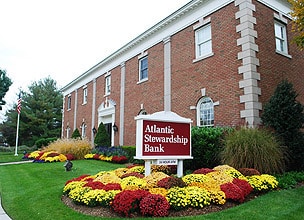
Stewardship Financial Corp. of Midland Park is the latest northern New Jersey bank to raise millions of dollars from investors to repay capital provided by the U.S. government to spur lending after the most recent recession.
The parent of 30-year-old Atlantic Stewardship Bank said late Friday that it raised $16.6 million to replace $15 million in funding received in 2011 from the U.S. Treasury through the Small Business Lending Fund, which was part of the Small Business Jobs Act signed into law by President Obama in September 2010.
The program gave banks with less than $10 billion in assets an incentive to make loans to businesses with less than $50 million in annual sales. The more loans they made, the less they had to pay to the government in dividends. The kinds of loans that qualify include commercial and industrial loans and owner-occupied commercial real estate loans.
Many banks, including Atlantic Stewardship, used the money to replace the government’s Troubled Asset Relief Program funds. The participating banks have been making quarterly dividend payments to the Treasury at an annual rate of as low as 1 percent or as high as 5 percent of the amount of the government’s investment, depending on the amount of small-business loans the banks make.
As of March 31, the total increase in small-business lending since the program began amounted to $16.4 billion, according to a Treasury survey of participants.
“Death cross” patterns continue to spread through the stock market like an epidemic, even infecting market segments believed to be more insulated from overseas turmoil.
The Russell 2000 index RUT, -2.71% of small-capitalization stocks became the latest victim among the major market indexes. The index’s 50-day moving average fell to 1,222.95 in midday trade Tuesday, crossing below the 200-day moving average (MA), which slipped to 1,224.11, according to FactSet.
Many chart watchers believe a death cross, when the 50-day MA crosses below the 200-day MA, indicates that a shorter-term decline has developed into a longer-term downtrend.
The Russell 2000’s last death cross appeared on Sept. 22, 2014. The index fell another 7.1% in the three weeks after that before bottoming at a one-year low.
That follows the death cross that appeared in the S&P MidCap 400 Index MID, -2.83% on Monday.
Jerry Seinfeld’s son got in trouble with the police — and he’s only 12 years old!
Don’t worry — the comedian doesn’t exactly have a derelict kid on his hands.
Seinfeld and his family were shut down by East Hampton, New York, police on Tuesday, Aug. 18 for setting up a lemonade stand, reports CBS New York.
Seinfeld’s wife Jessica posted a photo on Instagram of her son, Julian, and two of his friends with their hands up (jokingly) amidst the police drama.
When officers arrived after a neighbor complained about illegally parked cars, they informed the Seinfelds that it is not legal to run a lemonade stand on village property.
“Lemonade dreams crushed by local neighbor, but not before raising lots of money for @loverecycled,” Jessica Schneider wrote on Instagram. “Thanks to all of our customers and big tippers!”
If there’s one phrase that can inspire patriotism, it’s the American Dream. That concept was defined by James Truslow Adams as being the “dream of a land in which life should be better and richer and fuller for everyone, with opportunity for each according to ability or achievement.” The pursuit of this dream has driven the American people for generations, and recently, it has driven them directly into ABC’s Shark Tank.
But I’m getting ahead of myself.
Business in America has changed drastically in recent years. At a time when business idols are college drop outs who built companies from their garagesand Silicon Valley is a household name (and a tv show!), the goal of entrepreneurship has trumped all. The idea of rising through the ranks of your company has been surpassed by fast-paced success stories about startups improving and conquering old industries in record amounts of time (looking at you, Uber). This shifting business environment paired with the underlying hope to be the next overnight million-dollar company is what makes Shark Tank so interesting.
By Drew Harwell and Simon Denyer August 25 at 4:48 PM
U.S. stocks plunged in the last hour of trading Tuesday to wipe out a day-long rally, adding fresh uncertainty to markets that had seemed to be on the rebound.
The wild swing highlighted investors’ anxieties over an expansive Chinese slowdown and hinted at fault lines in an American economy otherwise seen as strong.
The surprise setback dropped the Dow Jones industrial average more than 650 points from its mid-day peak, its biggest reversal since 2008, and pushed the index of 30 blue-chip stocks down 204 points, or about 1 percent, to 15,666.44.
Investors had spent most of the day climbing back from a dismal Monday and from several days of carnage in Chinese stock markets. China’s central bank on Tuesday cut interest rates in a bid to stimulate the country’s economy, and for a while that appeared to reassure European and U.S. markets.
But by late afternoon, Wall Street went back into selling mode, as lingering fears about a slowdown in the global economy undercut the brief surge of confidence.
Members of the New Jersey’s craft brewers guild— a group small enough to fit in one restaurant booth a few years ago and now numbering around 70 — worry state law is murky on whether they can sell their suds at farmers markets or if local food trucks can serve patrons at microbreweries. Associated Press Read more
Peter Schiff Warns “The Fed Is Spooking The Markets, Not China”
Submitted by Tyler Durden on 08/24/2015 – 16:35
The correction may soon morph into a full-fledged bear market if the Fed makes good on its supposed intentions to raise interest rates this year. Have no illusions, while most market observers are quick to blame the sell-off on China, this market was given life by the Fed, and the Fed is the only force that will keep it alive. Unfortunately for the Fed, it won’t be able to get away with doing nothing for too much longer. Events may soon force it to show its hand. Then perhaps some may notice that the Fed is holding absolutely nothing and has been bluffing the entire time.