SELLOUT: Debt Up $2.7T in 2.5 Yrs Under Boehner Debt-Limit Deals
February 12, 2014 – 12:42 PM
(CNSNews.com) – The debt of the U.S. government has increased by $2.678 trillion in the 2.5 years since House Speaker John Boehner (R.-Ohio) completed his first deal to put legislation increasing the debt limit through a Republican-controlled House of Representatives.
On Aug. 2, 2011, President Barack Obama signed legislation, approved by the Boehner-led House, permitting the Treasury to increase the debt by $900 billion. Since then, the debt limit has been repeatedly suspended by legislation that needed to pass through the Republican-controlled House.
Yesterday, the House once again passed legislation to suspend the debt limit—this time through March 15, 2015, which is after November’s mid-term congressional elections.
This time, the House voted 221 to 201 (with 10 members not voting) to suspend the debt limit. The majority consisted of House Democrats plus 28 House Republicans–including Speaker John Boehner (R.-Ohio) and House Majority Leader Mickey Cantor (R.-Va.).
Obama administration looks to curtail free speech and squelch dissent with New IRS 501c Regulations
commentary by Ron DuBois
Jan 27
Well, once again I am saddened by the illegal and unconstitutional machinations of our Government. The fraud and illegal maneuverings of the last three elections pale in comparison to this. The IRS is issuing “regulations” that would prevent 501 (c) (4) organizations – mainly Conservative organizations – from doing just about anything opposing the President. People cannot support a group or candidate, or even mention them, can’t donate money, or even volunteer their time. They cannot do a get-out-the-vote drive, hold a bi-partisan meeting, or hand out flyers. Nothing. This would effectively prevent any opposition from being mounted against any Democrat, the President, or any Presidential appointment. The IRS does this knowing there is insufficient time to mount a legal challenge prior to the November elections. I would hope there would be a way for Congress to intervene, but the Democrats still control the Senate. This is a major, major, development. Ron D.
New IRS Regs can Tip 2014 Elections
With his signature ‘stroke of the pen’, Pres. Obama’s IRS has proposed sweeping new powers to oversee campaign laws. As you will see, these rules stack the deck against opposition to the President.
Under a proposed regulation, Pres. Obama is using the IRS to close the loophole that allows §501(c)(4) groups to spend 49% of their budget on elections without disclosing the names of their donors.
By itself, that disclosure may not be bad, but the new IRS regs do not stop there. If these rules go into effect, many of the activities readers are engaged in right now could lead to fines and imprisonment.
The new rules require reporting on all §501 (c)(4) donations that engage in any form of political activity. (See below for the expanded definitions of ‘political activity’.) But, the same does not hold true for groups like Planned Parenthood that can segregate their donations between abortion activities and other activities.
While most conservative groups use §501 (c)(4) organizations, liberal groups tend to use §527 organizations that do not fall under these new rules.
For the first time in our history, the rules consider administration appointments and the confirmation process itself as political activities. This give the IRS the authority to police opposition to any administration nominations.
Once an issue has been raised for or against a candidate or appointee, the IRS sees discussion of that issue or even retaining information about that issue in website archives as political activity that can be controlled. This includes distributing voter guides, registering voters or getting out the vote drives. While one can argue that voter guides can be distributed by either party, therefore this applies to liberals and conservatives alike, not really. Once the practice is controlled by the government, the sitting administration is the only one left that can guide the electorate.
These are the proposed regulatory changes:
1. The IRS would declare that a broadly expanded category of “candidate related political activity”, including voter registration drives and non-partisan voter education, is not beneficial to the community as a whole and does not promote social welfare. Therefore it is treated as political speech.
2. The definition of “candidate” is expanded to include anyone who is proposed by another for selection, nomination, or appointment to any public office in a political organization, or to be a Presidential or Vice-Presidential elector.
3. “Candidate political activity” would include the appointment and confirmation of executive branch nominees.
4. Issue oriented communications would be treated as “candidate related political activity” even if it is neutral or non-biased or if it is just intended to explain a non-electoral action such as a vote on pending legislation. Voter guides and get-out-the-vote drives would be defined as “candidate-related political activity.”
5. “The Treasury Department and the IRS contend that content previously posted by an organization on its Web site that clearly identifies a candidate and remains on the Web during the specified pre-election period would be treated as candidate-related political activity.”
6. Any event an organization hosts within the 60/30 day election timeframe, at which a candidate appears, whether or not it was previously scheduled, would constitute “candidate-related activity.”
7. The definition of “express advocacy” is radically expanded to include any communication that makes “reference to a particular issue or characteristic distinguishing the candidate from others.” (For example, during an election that included Pro-Life and Pro-Choice candidates, any reference to the abortion issues would become express advocacy, even if the election was not mentioned.)
8. The IRS would include statements about political parties, not just candidates, in its definition of express advocacy.
9. Any contribution to a §501(c) organization that engages in “candidate-related political activity” would itself constitute “candidate-related political activity” by the donor.
10. Contributions would be defined to include in-kind donations and volunteer services as well as cash.
This regulation severely represses Free Speech and Free Association of those opposing the president, while leaving his supporters relatively untouched. While it is likely most of this ruling is unconstitutional, the point is moot for the short term. By the time any opposition case makes its way through the court system, the 2014 elections will be over.
Then there is the perception issue. The media will hail the fairness of finally forcing §501 (c)(4) organizations to reveal their donors while ignoring the colossal trampling of Free Speech.
There still is an opportunity until February 27th to make comments to the IRS on IRS REG-134417-13.
PSE&G Braces for Another Winter Storm
February 12, 2014
(NEWARK, NJ – Feb. 12, 2014) Public Service Electric and Gas Company (PSE&G), New Jersey’s largest electric and gas utility, is preparing for the approaching winter storm system expected to hit the region tomorrow morning through Friday morning, bringing with it snow and a wintry mix.
Up to a foot of snow accumulation is possible in some areas. While snow usually isn’t an issue for utilities, the possibility of sleet and freezing rain can increase the likelihood of downed wires and resulting power outages. Vehicles striking utility poles can also cause wires to come down.
In anticipation of the storm, PSE&G is ensuring that all available personnel are ready to respond beginning tonight. The utility is also arranging for contractors, including tree crews, to assist the utility’s own skilled workforce, and ensuring that additional supplies such as poles and transformers are on hand.
PSE&G offers the following tips to customers to prepare:
Charge your cell phones, tablets and other mobile devices.
Fill up your car’s fuel tank.
Ensure you have a battery-powered radio and a supply of fresh batteries.
Check your supply of flashlights, blankets, nonperishable food and bottled water for everyone in your family.
Put your refrigerator and freezer at the coldest setting. Keep a blanket handy to throw over these appliances for added insulation. If electricity is interrupted, keep refrigerator and freezer doors closed as much as possible.
Sign up for MyAccount at www.pseg.com and bookmark the mobile-friendly homepage on your smart phone so it’s easy to report outages and check restoration progress.
Compile a list of emergency phone numbers, including PSE&G’s Customer Service line: 1-800-436-PSEG. Call this number to report power outages or downed wires.
Accumulation of ice and heavy snow may weigh down power lines and as a result cause power lines to come down. PSE&G urges its customers to be cautious if they see downed lines. Downed wires may appear dead but should always be considered “live.” Do not approach or drive over a downed line and do not touch anything that it might be in contact with.
To report downed wires or power outages, customers should call PSE&G’s Customer Service line at 1-800-436-PSEG. Customers with a handheld device, or who are at an alternate location with power, can also report power outages and view the status of their outage by logging in to My Account on www.pseg.com, PSE&G’s mobile-friendly website.
General outage activity throughout our service territory is available online at www.pseg.com/outagecenter and updates are posted on www.pseg.com during severe weather.
The utility’s Twitter and Facebook pages also keep the public informed about our restoration progress. Sign up as a follower at https://www.twitter.com/psegdelivers and www.facebook.com/pseg to monitor restoration progress. Customers also can register for text and email alerts at www.pseg.com/myaccount.
GWMS Music Students Make Jr. Region Band and Orchestra
Congratulations to these GWMS students who were accepted into the 2014 Jr. Region I Band and Orchestra:
Band:
William Karanikolas(8)- Bassoon
Jaehyeok Yang(8)- Clarinet
Orchestra
Jun-Davinci Choi (7)- Violin
Jack Shigeta (7)- Violin
Jessica Orefice (8)- Violin
Gunwoo Kong (8)- Viola
The musicians are students of Brian Brown (Band Director 6 and Chamber Orchestra Director) and Janelle Jacoby (Instrumental Music and Orchestra Director)
While you can’t change the weather, you can minimize some of winter’s biggest threats to your home.
Heavy snow accumulation can pose a threat to your home or business — both as it builds up and as it melts. The three most important precautions to take:
• Watch for snow accumulation on the leeward (downwind) side of a higher-level roof, where blowing snow will collect. For safe removal that won’t endanger you or damage your roof, consult a roofing contractor for a referral.
• Remove snow from basement stairwells, window wells and all walls. Melting snow can lead to water damage and moisture intrusion.
• Keep your attic well-ventilated to maintain a temperature close to that of the outdoors to minimize the risk of ice dams forming. A warm attic melts snow on the roof, causing water to run down and refreeze at the roof’s edge, where it’s much cooler. If ice builds up and blocks water from draining, water is forced under the roof covering and into your attic or down the inside walls of your house.
Water intrusion and flood damage from melting snow and ice can threaten homes and businesses, but you can take these steps to help minimize the potential damage.
Immediately after the threat of physical danger has passed:
• Make sure the building is structurally safe to enter or reoccupy.
• Turn off electrical power. Do not use electricity until it is safe to do so.
• Ensure that natural gas sources are safely secured.
• Secure the exterior to prevent further water intrusion. This can include boarding up broken windows, making temporary roof repairs, sealing cracks or tacking down plastic sheeting against open gaps in walls or roofs.
When it’s safe to begin cleanup:
• Disconnect all electronics and electrical equipment and move them to a safe, dry location.
• Remove as much standing water as possible from inside the building.
• Begin to remove water-damaged materials immediately.
• Ventilate the home as best you can with fans and/or dehumidifiers.
• Contact a water extraction company, if necessary, for assistance.
By taking immediate action, you will reduce the amount of damage and increase the chance of salvaging usable materials. You’ll also reduce the amount of rust, rot, mold and mildew that may develop, and lower the likelihood that the water will lead to structural problems.
Ice dams are an accumulation of ice at the lower edge of a sloped roof. When interior heat melts the snow, water can run down and refreeze at the roof’s edge, where it’s much cooler. If the ice builds up and blocks water from draining off the roof, water is forced under the roof covering and into your attic or down the inside walls of your house.
To help reduce the risk of ice dams:
• Make sure your gutters are clear of leaves and debris.
• Keep the attic well-ventilated so snow doesn’t melt and refreeze on the roof’s edge.
• Make sure the attic floor is well insulated to minimize the amount of heat rising through the attic from within the house.
Bursting pipes occur when frozen water causes a pressure buildup between the ice blockage and the closed faucet. Pipes in attics, crawl spaces and outside walls are particularly vulnerable to extreme cold. To keep water in your pipes from freezing:
• Fit exposed pipes with insulation sleeves or wrapping to slow heat transfer.
• Seal cracks and holes in outside walls and foundations near water pipes with caulking.
• Keep cabinet doors open to allow warm air to circulate around pipes.
• Keep a slow trickle of water flowing through faucets connected to pipes that run through an unheated or unprotected space.
To prepare for a blackout you should do the following:
• To begin preparing, you should build an emergency kit and make a family communications plan.
• Follow energy conservation measures to keep the use of electricity as low as possible, which can help power companies avoid imposing rolling blackouts.
• Fill plastic containers with water and place them in the refrigerator and freezer if there’s room. Leave about an inch of space inside each one, because water expands as it freezes. This chilled or frozen water will help keep food cold during a temporary power outage, by displacing air that can warm up quickly with water or ice that keeps cold for several hours without additional refrigeration.
• Be aware that most medication that requires refrigeration can be kept in a closed refrigerator for several hours without a problem. If unsure, check with your physician or pharmacist.
• Keep your car tank at least half full because gas stations rely on electricity to power their pumps.
• Know where the manual release lever of your electric garage door opener is located and how to operate it. Garage doors can be heavy, so know that you may need help to lift it.
• Keep a key to your house with you if you regularly use the garage as the primary means of entering your home, in case the garage door will not open.
DURING A BLACKOUT
• Use only flashlights for emergency lighting. NEVER use candles during a blackout or power outage due to extreme risk of fire.
• Keep refrigerator and freezer doors closed to keep your food as fresh as possible. If you must eat food that was refrigerated or frozen, check it carefully for signs of spoilage. •Turn off or disconnect appliances, equipment (like air conditioners) or electronics in use when the power went out. Power may return with momentary “surges” or “spikes” that can damage computers as well as motors in appliances like the air conditioner, refrigerator, washer or furnace.
• Do not run a generator inside a home or garage.
• Do not connect a generator to a home’s electrical system. If you use a generator, connect the equipment you want to run directly to the outlets on the generator.
• Listen to local radio and to a battery- or generator-powered television for updated information.
• Leave on one light so that you’ll know when your power returns.
• Use a standard telephone handset, cellular phone, radio or pager if your phone requires electricity to work, as do cordless phones and answering machines. Use the phone for emergencies only. Listen to a portable radio for the latest information.
• Do not call 9-1-1 for information—call only to report a life-threatening emergency. Use the phone for life-threatening emergencies only.
• Take steps to remain cool if it is hot outside. In intense heat when the power may be off for a long time, consider going to a movie theater, shopping mall or “cooling shelter” that may be open in your community. If you remain at home, move to the lowest level of your home, since cool air falls. Wear lightweight, light-colored clothing. Drink plenty of water, even if you do not feel thirsty.
• Put on layers of warm clothing if it is cold outside. Never burn charcoal for heating or cooking indoors. Never use your oven as a source of heat. If the power may be out for a prolonged period, plan to go to another location (the home of a relative or friend, or a public facility) that has heat to keep warm.
• Provide plenty of fresh, cool water for your pets.
• Eliminate unnecessary travel, especially by car. Traffic signals will stop working during an outage, creating traffic congestion.
• Remember that equipment such as automated teller machines (ATMs) and elevators may not work during a power outage.
AFTER A BLACKOUT
Throw out unsafe food:
• Throw away any food that has been exposed to temperatures 40° F (4° C) for 2 hours or more or that has an unusual odor, color or texture. When in doubt, throw it out!
• Never taste food or rely on appearance or odor to determine its safety. Some foods may look and smell fine, but if they have been at room temperature too long, bacteria causing food-borne illnesses can start growing quickly. Some types of bacteria produce toxins that cannot be destroyed by cooking.
• If food in the freezer is colder than 40° F and has ice crystals on it, you can refreeze it.
• If you are not sure food is cold enough, take its temperature with the food thermometer. Throw out any foods (meat, poultry, fish, eggs and leftovers) that have been exposed to temperatures higher than 40° F (4° C) for 2 hours or more, and any food that has an unusual odor, color or texture, or feels warm to touch.
Ridgewood School district saves green on energy
Tuesday February 11, 2014, 10:00 AM
BY LAURA HERZOG
STAFF WRITER
The Ridgewood News
The Ridgewood school district has already reaped at least $55,000 in energy savings for the 2013-14 school year, based on the calculations of an energy conservation company.
The savings are the result of the Board of Education’s (BOE) decision last year to hire a new energy specialist and contract with Cenergistic, an energy savings company. The total represents roughly 19.5 percent of what the district would have spent if it had not started the energy conservation program, said specialist Michael Parigi.
Parigi and two consultants from Cenergistic attended the Jan. 27 BOE meeting to explain the results of their work.
WINTER STORM WARNING IN EFFECT FROM MIDNIGHT TONIGHT TO 6 AM EST FRIDAY
URGENT – WINTER WEATHER MESSAGE
NATIONAL WEATHER SERVICE NEW YORK NY
328 AM EST WED FEB 12 2014
…WINTER STORM TO IMPACT THE TRI-STATE REGION…
328 AM EST WED FEB 12 2014
…WINTER STORM WARNING IN EFFECT FROM MIDNIGHT TONIGHT TO 6 AM
EST FRIDAY…
THE NATIONAL WEATHER SERVICE IN NEW YORK HAS ISSUED A WINTER
STORM WARNING FOR HEAVY SNOW…WHICH IS IN EFFECT FROM MIDNIGHT
TONIGHT TO 6 AM EST FRIDAY. THE WINTER STORM WATCH IS NO LONGER IN
EFFECT.
* WINDS…NORTH 10 TO 20 MPH WITH GUSTS UP TO 25 MPH.
* TEMPERATURES…IN THE UPPER 20S.
* VISIBILITIES…ONE QUARTER MILE OR LESS AT TIMES.
* TIMING…SNOW WILL DEVELOP LATE TONIGHT AND CONTINUE DURING THE
DAY THURSDAY BEFORE TAPERING OFF THURSDAY NIGHT. SOME SLEET MAY
MIX WITH THE SNOW ON THURSDAY.
* IMPACTS…SNOWFALL WILL MAKE TRAVEL TREACHEROUS IN
ADDITION…HEAVY…WET SNOW MAY CA– USE SOME WEAK…FLAT ROOF
STRUCTURES TO COLLAPSE AND TREES WILL BE SUSCEPTIBLE TO FALLING.
PRECAUTIONARY/PREPAREDNESS ACTIONS…
A WINTER STORM WARNING FOR HEAVY SNOW MEANS SEVERE WINTER WEATHER
CONDITIONS ARE EXPECTED OR OCCURRING. SIGNIFICANT AMOUNTS OF SNOW
ARE FORECAST THAT WILL MAKE TRAVEL DANGEROUS. ONLY TRAVEL IN AN
EMERGENCY. IF YOU MUST TRAVEL…KEEP AN EXTRA FLASHLIGHT…FOOD…
AND WATER IN YOUR VEHICLE IN CASE OF AN EMERGENCY.
Village Hall and Stable Offices Closed February 12 in observance of Lincoln’s Birthday
In observance of Lincoln’s Birthday, the Village Hall and The Stable offices will be closed on Wednesday, February 12th. The will be no garbage or recycling collection that day.
Republican Abraham Lincoln 1861-1865
Lincoln warned the South in his Inaugural Address: “In your hands, my dissatisfied fellow countrymen, and not in mine, is the momentous issue of civil war. The government will not assail you…. You have no oath registered in Heaven to destroy the government, while I shall have the most solemn one to preserve, protect and defend it.”
Lincoln thought secession illegal, and was willing to use force to defend Federal law and the Union. When Confederate batteries fired on Fort Sumter and forced its surrender, he called on the states for 75,000 volunteers. Four more slave states joined the Confederacy but four remained within the Union. The Civil War had begun.
The son of a Kentucky frontiersman, Lincoln had to struggle for a living and for learning. Five months before receiving his party’s nomination for President, he sketched his life:
“I was born Feb. 12, 1809, in Hardin County, Kentucky. My parents were both born in Virginia, of undistinguished families–second families, perhaps I should say. My mother, who died in my tenth year, was of a family of the name of Hanks…. My father … removed from Kentucky to … Indiana, in my eighth year…. It was a wild region, with many bears and other wild animals still in the woods. There I grew up…. Of course when I came of age I did not know much. Still somehow, I could read, write, and cipher … but that was all.”
Lincoln made extraordinary efforts to attain knowledge while working on a farm, splitting rails for fences, and keeping store at New Salem, Illinois. He was a captain in the Black Hawk War, spent eight years in the Illinois legislature, and rode the circuit of courts for many years. His law partner said of him, “His ambition was a little engine that knew no rest.”
He married Mary Todd, and they had four boys, only one of whom lived to maturity. In 1858 Lincoln ran against Stephen A. Douglas for Senator. He lost the election, but in debating with Douglas he gained a national reputation that won him the Republican nomination for President in 1860.
As President, he built the Republican Party into a strong national organization. Further, he rallied most of the northern Democrats to the Union cause. On January 1, 1863, he issued the Emancipation Proclamation that declared forever free those slaves within the Confederacy.
Lincoln never let the world forget that the Civil War involved an even larger issue. This he stated most movingly in dedicating the military cemetery at Gettysburg: “that we here highly resolve that these dead shall not have died in vain–that this nation, under God, shall have a new birth of freedom–and that government of the people, by the people, for the people, shall not perish from the earth.”
Lincoln won re-election in 1864, as Union military triumphs heralded an end to the war. In his planning for peace, the President was flexible and generous, encouraging Southerners to lay down their arms and join speedily in reunion.
The spirit that guided him was clearly that of his Second Inaugural Address, now inscribed on one wall of the Lincoln Memorial in Washington, D. C.: “With malice toward none; with charity for all; with firmness in the right, as God gives us to see the right, let us strive on to finish the work we are in; to bind up the nation’s wounds…. ”
On Good Friday, April 14, 1865, Lincoln was assassinated at Ford’s Theatre in Washington by John Wilkes Booth, an actor, who somehow thought he was helping the South. The opposite was the result, for with Lincoln’s death, the possibility of peace with magnanimity died.
The Presidential biographies on WhiteHouse.gov are from “The Presidents of the United States of America,” by Frank Freidel and Hugh Sidey. Copyright 2006 by the White House Historical Association.
Neighbors in Ho-Ho-Kus join Schedler property discussion in Ridgewood
Tuesday February 11, 2014, 10:27 AM
BY DARIUS AMOS
STAFF WRITER
The Ridgewood News
The Ridgewood Council has yet to resume public discussions on the future of the Schedler property, but a handful of residents continue to keep the topic fresh on the governing body’s mind.
Council members last rang in on the potential development of the site in December, when members of the Ridgewood Eastside Development organization presented a series of facts and findings.
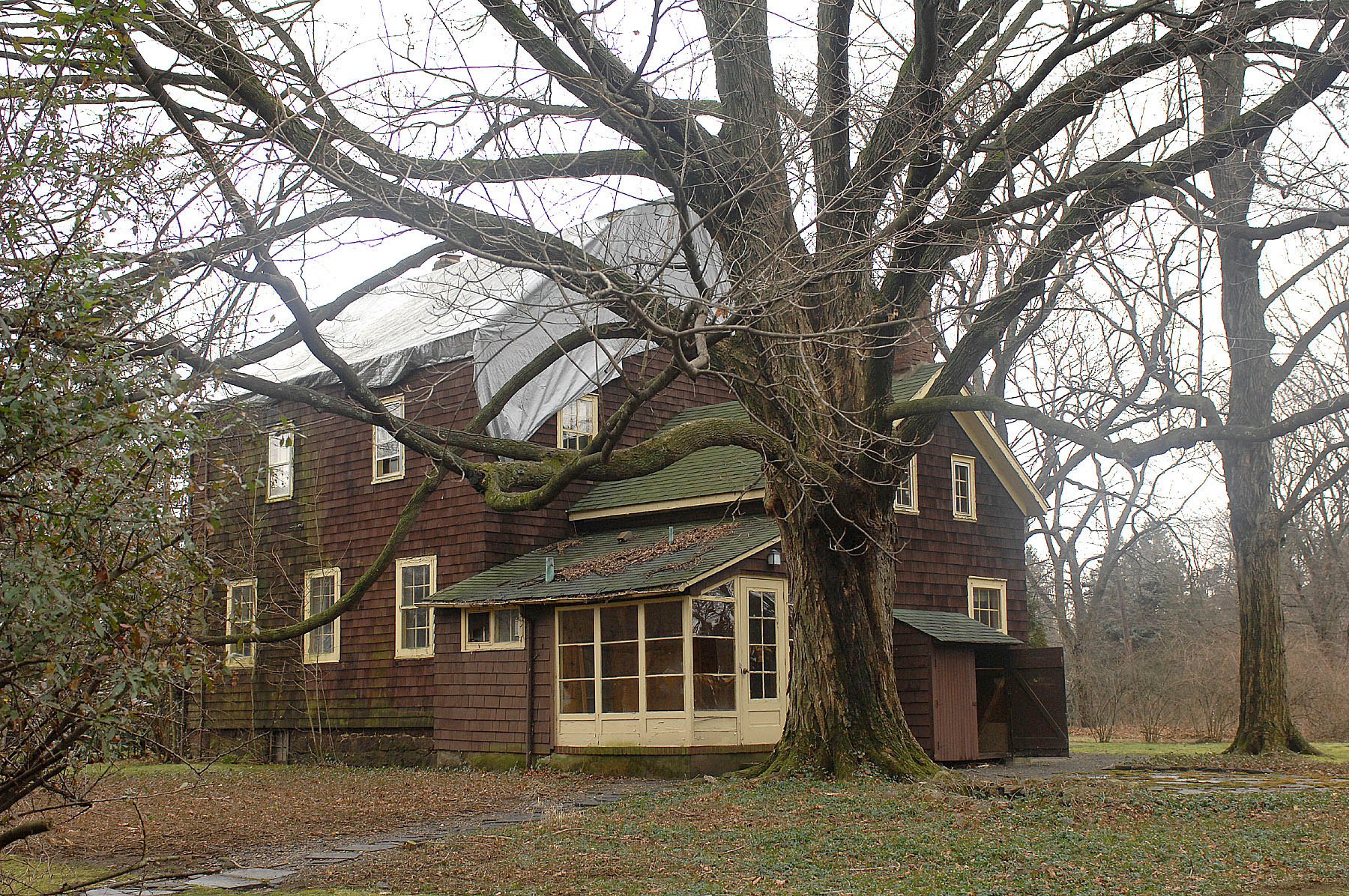
Jane Shinozuka, who lives on Ridgewood’s east side, was the most recent resident to broach the topic, when she suggested last week that development might result in a spike in crime. Others, during a January council meeting, stressed the importance of basic winter maintenance to the historic house that currently stands on the 7-acre tract of land sandwiched between Route 17 north and West Saddle River Road.
Obamacare Delay another Hail Mary as the clock runs down to the November elections
NJTP
The Post reports: “For the second time in a year, the Obama administration is giving certain employers extra time before they must offer health insurance to almost all their full-time workers. Under new rules announced Monday by Treasury Department officials, employers with 50 to 99 workers will be given until 2016 – two years longer than originally envisioned under the Affordable Care Act – before they risk a federal penalty for not complying.”
For larger companies it is even worse: “Instead of being required in 2015 to offer coverage to 95 percent of full-time workers, these bigger employers can avoid a fine by offering insurance to 70 percent of them next year.”
Except for the die-hard Obama spinners, there was widespread recognition that this is another Hail Mary as the clock runs down to the November elections.
Cerf’s Out, Activists and Parents Look to Sink Common Core
NJTP
New Jersey Education Commissioner Christopher Cerf, who was a major proponent of Common Core curriculum is stepping down at the end of the month, according to a published report in the Bergen Record.
Carolee Adams, Eagle Forum President NJ, attributes the about-face to a concerted effort across the state to educate legislators, parents and NJ taxpayers on the perils of implementing the untested curriculum that violates traditional American values and privacy of students and their families with invasive data mining techniques.
Carolee and Tea Party activists across the state worked hard to turn back the progressive tide inherent in Common Core curriculum.
Thanks to those efforts, radical education activists lost their beach-head in NJ schools. No small accomplishment.
N.J. state police: Christie never flew near GWB during lane closures
Tuesday February 11, 2014, 2:03 PM
BY MICHAEL PHILLIS
STATE HO– USE BUREAU
The Record
Full coverage: Chris Christie and the GWB lane closure controversy
Governor Christie never flew over or near the George Washington Bridge during the September lane closures, the state police said Tuesday.
“None of the three flights transporting the governor during that week flew over, or close to either the George Washington Bridge or Fort Lee, including the flight on 9/11,” state police spokesman Capt. Stephen Jones said in a statement.
The NAACP planned a peaceful march to protest the requirement of voter ID laws on Saturday at the “Moral March on Raleigh.” Organizers said 20,000 to 30,000 Americans showed up to the protest. Rev. William Barber, president of the state NAACP, stated, “We return to Raleigh with a renewed strength and a renewed sense of urgency. This Moral March inaugurates a fresh year of grassroots empowerment, voter education, litigation and nonviolent direct action.”
Read more here: https://www.newsobserver.com/2014/02/08/3601888/annual-march-rally-builds…
In a flyer sent out entitled “Important Do’s and Don’ts for Marchers,” some very responsible marching elements were listed for people’s safety.
The most ironic recommendation on the list comes half way down, where march coordinators tell recipients:
“DO bring photo identification (driver’s license, passport or other valid photo ID) with you and keep it on your persons at all times.”