
Ridgewood Borrows $5.4 Million Amid Revenue Uncertainty: Understanding the Municipal Debt Risks
the staff of the Ridgewood blog
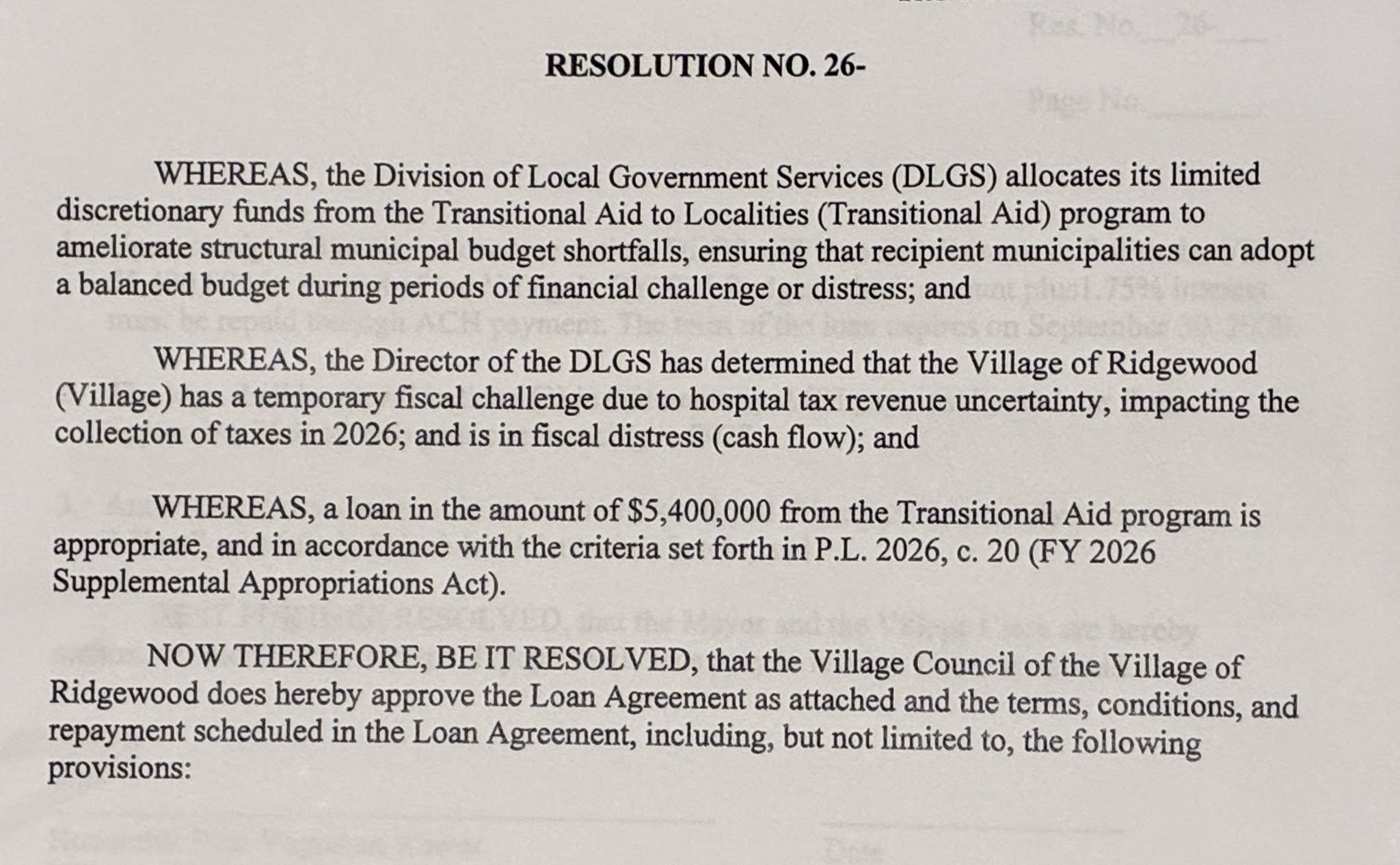
Ridgewood NJ, A growing concern among Ridgewood residents centers on local municipal spending and operational funding. With anticipated tax revenues from Valley Health stalled due to ongoing court proceedings, the Ridgewood Village Council has turned to debt issuance, authorizing an additional $5.4 million in borrowing to cover municipal operations and expenses.
Drawing comparisons to larger urban centers facing fiscal hurdles, local observers question the sustainability of relying on debt when expected revenue streams remain uncertain.
Why Municipal Debt Issuance Poses Long-Term Risks
While borrowing allows local governments to manage immediate cash flow deficits, taking on municipal debt introduces several financial and regulatory risks for taxpayers:
1. Increased Financial Burden
-
Debt Servicing Costs: Municipalities must dedicate a growing portion of their annual budgets toward interest and principal payments. This reduces available funds for municipal services, especially during economic downturns.
-
Capital Market Pressures: Broader macroeconomic trends and federal deficits can drive up borrowing costs, making future capital projects significantly more expensive.
2. Legal and Regulatory Constraints
-
Borrowing Limits: New Jersey municipalities face legal borrowing caps. Exceeding or straining these limits can jeopardize credit ratings, leading to higher interest rates on future bonds.
-
Complex Compliance: Managing debt obligations requires stringent regulatory compliance to avoid fiscal penalties or legal complications.
3. Long-Term Fiscal Instability
-
Compounding Liabilities: Heavy reliance on borrowing alongside existing obligations, such as municipal pensions and healthcare, creates structural fiscal instability.
-
Cycle of Dependency: Continually taking on short-term debt to offset delayed or lost revenue risks creating a perpetual cycle of borrowing.
4. Market and Investor Perception
-
Credit Rating Impact: Shifts in market conditions or investor perception regarding a municipality’s fiscal management can affect its ability to refinance existing debt at favorable terms.
What Lies Ahead for Ridgewood Taxpayers
As the legal proceedings surrounding Valley tax revenues unfold, local leaders face the ongoing challenge of balancing municipal budgets without overburdening taxpayers through compounding debt servicing costs. Transparent fiscal oversight remains vital to ensuring long-term financial stability for the Village of Ridgewood.
Tell your story #TheRidgewoodblog , #Indpendentnews, #information, #advertise, #guestpost, #affiliatemarketing,#
Tags: Ridgewood NJ, Local Government, Municipal Debt, Village Council, Taxes, Bergen County News, Local Economy.






“anticipated tax revenues from Valley Health stalled”
LOL
The better version is:
“With anticipated tax revenues from Valley Health now in doubt”
The Village tax charade. Spent money they didn’t have knowing it would be challenged by the hospital and defeated in court. That is what led to this.