Trenton NJ, Gov. Phil Murphy’s proposed budget would use nearly $80 million to help fund affordable housing projects to fill gaps in his spending plans. Assemblywoman Holly Schepisi is having none of it.
At the conference of mayors a couple weeks ago in Atlantic City, Schepisi spoke to dozens of mayors who said that affordable housing obligations were crushing their own budgets.
“The affordable housing funds are already far below what towns really need to fulfill court-ordered projects,” said Schepisi (R-Bergen). “Mayors from both sides of the aisle have pleaded for help from the state on this issue and Governor Murphy is callously ignoring their calls by cutting the only funding they have, and that isn’t enough in the first place. The affordable housing issue will continue to crush our communities until the legislature and the governor decide to stop turning the other way and actually address this problem.”
Governor Murphy plans to redirect $59.3 million from the Affordable Housing Trust Fund, and another $18.5 million from the Housing and Mortgage Financing Agency. Those two funds are the largest source of relief for municipalities who are forced by courts to provide affordable housing, regardless of demand.
Schepisi introduced a package of bills to address the affordable housing crisis last year, but they have not yet been considered for a vote. Schepisi’s affordable housing package includes:
Ending municipal obligations and requiring COAH to calculate and administer a statewide obligation (A1645/A1647/ACR80).
Requiring COAH to determine if towns can afford new housing and establishing a challenge to the obligation (A1646/A1648).
Eliminating the urban aid exemption from affordable housing obligations and amending the constitution to prohibit exclusionary zoning (A1649/ACR79).
Terminating the builder’s remedy that coerces affordable housing (A1650).
River Vale NJ, Assemblywomen Holly Schepisi laid out the forced court ordered over development facing Bergen County :
This is what is happening all over the State of New Jersey. Over the past several weeks I have spoken with Mayors from all over the State who are begging for help.
I couldn’t agree more with Mayor Keith Misciagna. Our communities are being destroyed by ridiculous over development all throughout the State. A couple of factoids regarding our current regulations:
1. If a suburban community builds affordable housing it is prohibited from giving preference for that housing to its own residents in need. So the divorced single mom who is losing her house, the family who can longer afford their home because of a loss of a job or a medical crisis cannot receive preference for the affordable housing being built or the housing no longer counts for a community fulfilling its obligation.
2. A community may not build more than 25% of the affordable housing in its community for seniors or it “doesn’t count” towards their obligation (and a community cannot give preference to their own seniors who have lived in the community paying taxes). Likewise, a community may not build more than 25% of the affordable housing in its community for those with special needs
3. Any Urban Aid Communities in the State have no obligation to provide ANY further affordable housing. However what would have been their obligation gets divided up and split among the suburban communities. By way of example, Jersey City has given out new construction building permits for over 37,000 units over the past several years. Under the affordable housing guidelines it would have had a obligation to provide approximately 7,000+ units of affordable housing. Jersey City is an Urban Aid community so it has no obligation. However those 7,000 units get split up and sent to our communities.
4. The financing available to communities to build affordable housing through governmental programs was manipulated by the legislature so that 40 percent of all available money MUST GO TO URBAN AID communities which have no affordable housing obligation.
5. There are currently over 40,000 foreclosed homes in this State that could be used as affordable housing but the powers that be refuse to allow them to be counted.
6. Section 8 housing or affordable housing with vouchers has historically not been counted as fulfilling affordable housing obligations in a community.
7. If you are a community trying to recruit business and jobs, you are penalized and your community now gets hit with additional numbers of affordable housing you must provide for in your total calculations.
8. The environmental impacts and a community’s infrastructure, schools, roads, capacity of volunteer services are not permitted to be taken into account under current regulations.
The system is so broken.
Help us fix this. MAKE YOUR VOICES BE HEARD IN TRENTON.
Ridgewood NJ, Fair share housing is driving all the high density housing in Bergen County and the rest of the state ,destroying neighborhoods and communities in their wake. . Anyone who is saying I am progressive and I want to run for higher level office in NJ, and at the same time saying “I will oppose” high density development, is not being honest with voters. This and the “rainbow flag” is the only progressive cause where they can show their voting record in Ridgewood to gain a ticket for higher office in NJ. This is exactly with Harwin’s mentor Paul Aronsohn did in 2008 and what a mess that made.
Fair Share Housing using the “Mount laurel Doctrine” clams to be helping working families but instead seems to be the DEVEOPERS BEST FRIEND. Forced over development creates more demand for police, fire, schools, roads ,sewers ,electric and water. , Often over whelming the infrastructure of the target town.
The back ground ,the New Jersey Supreme Court, in Mount Laurel I (1975) and Mount Laurel II (1983), declared that municipal land use regulations that prevent affordable housing opportunities for the poor are unconstitutional and ordered all New Jersey municipalities to plan, zone for, and take affirmative actions to provide realistic opportunities for their “fair share” of the region’s need for affordable housing for low and moderate-income people. Peter J. O’Connor, founder and Executive Director of Fair Share Housing Center, was one of three attorneys who brought the original Mount Laurel litigation.
The Mount Laurel Doctrine, which prohibits economic discrimination against the poor by the state and municipalities in the exercise of their land use powers, was the first case of its type in the nation and is widely regarded as one of the most significant civil rights cases in the United States since Brown v. Board of Education (1954). The Mount Laurel Doctrine today is a cornerstone of land use courses in all of our nation’s law schools.
In 1985, the New Jersey Legislature, in direct response to the Mount Laurel decisions, enacted the Fair Housing Act, which created the Council on Affordable Housing (COAH) to assess the statewide need for affordable housing, allocate that need on a municipal fair share basis, and review and approve municipal housing plans aimed at implementing the local fair share obligation.
The pressure will be on the Village of Ridgewood because Ridgewood is embarking on the development of a new Village Master Plan to replace the current, outdated document which is about 35 years old. A Master Plan encompasses all zoning laws and regulations that shaped the Village into the community it is today. From downtown development to the allowable property setbacks in everyone’s neighborhoods, the document is critical in maintaining the character of the Village. Our goal is to allow for smart development that doesn’t overwhelm streets and neighborhoods while supporting a vibrant and healthy Central Business District.
A new Village Master Plan document will guide Ridgewood’s development 40 plus years into the future making it critically important for trusted, experienced Council members to be active participants. Council members with a proven track record of protecting resident property values, Ridgewood neighborhoods, and the character of the Village we call home. Mayor Knudsen is the most experienced Council member in the area of Municipal Land Use making her participation important to the future of the Village. Experienced Council members with a comprehensive understanding of Municipal Land Use patterns, development and zoning, will serve the community best as we begin the exciting Master Plan process.
Imagine the Ridgewood Water issues and traffic issues in the Village as well as a major expansion of an already enormous Ridgewood Schools Budget of $110,000,000 ! Therefore it bears repeating that this election is key!
I am gutted that all my heroic efforts to buy a house in Ridgewood are heading to waste. Affordable housing is never affordable and in the end when landlords are incapable of filling their units they will ask the courts to change laws in favor of section 8 and that’s the end of the town and start of the eternal sh!thole living. Speechless as to how powerless current residents are and nobody raises a voice about us. The whole NJ but especially Bergen County is the Fair Share Housing (FSH) playground. They can play with our lives as they wish.
I too was vocal against Valley but now I totally regret it. Valley would have been much better than what’s coming. I live near N Maple Valley property and I get chills down my spine when I picture what that area can become. Valley facilities would have been a miracle but now only God (FSH + Murphy) knows what it can turn into. Depressing.
It is horrible what is about to happen to Ridgewood. Yes, it is happening all over Bergen county with 800 more units approved for mahwah. People/leaders of Ridgewood must not just throw up our hands and say it is too late. We musyALL come together and undo what Aronson and others have embraced for Ridgewood. Please, we must all rally and stop this now. Is there not any council person, that will lead the charge and lead to preserve Ridgewood?
Don’t you get it. Ridgewood is already ruined. I know the four multi family monstrosities are not yet built. But they will be. In five years Ridgewood will be unrecognizable and a very crowded unpleasant place to live. And what about the unintended consequences of the four apt. complexes; water problems, sewage problems, crime; dangerous streets from too many vehicles, noise , vehicle pollution.
It doesn’t matter who wins this election. The damage is done. Your taxes will sky rocket most likely; the profit from renting the apts. will not cover the new problems.
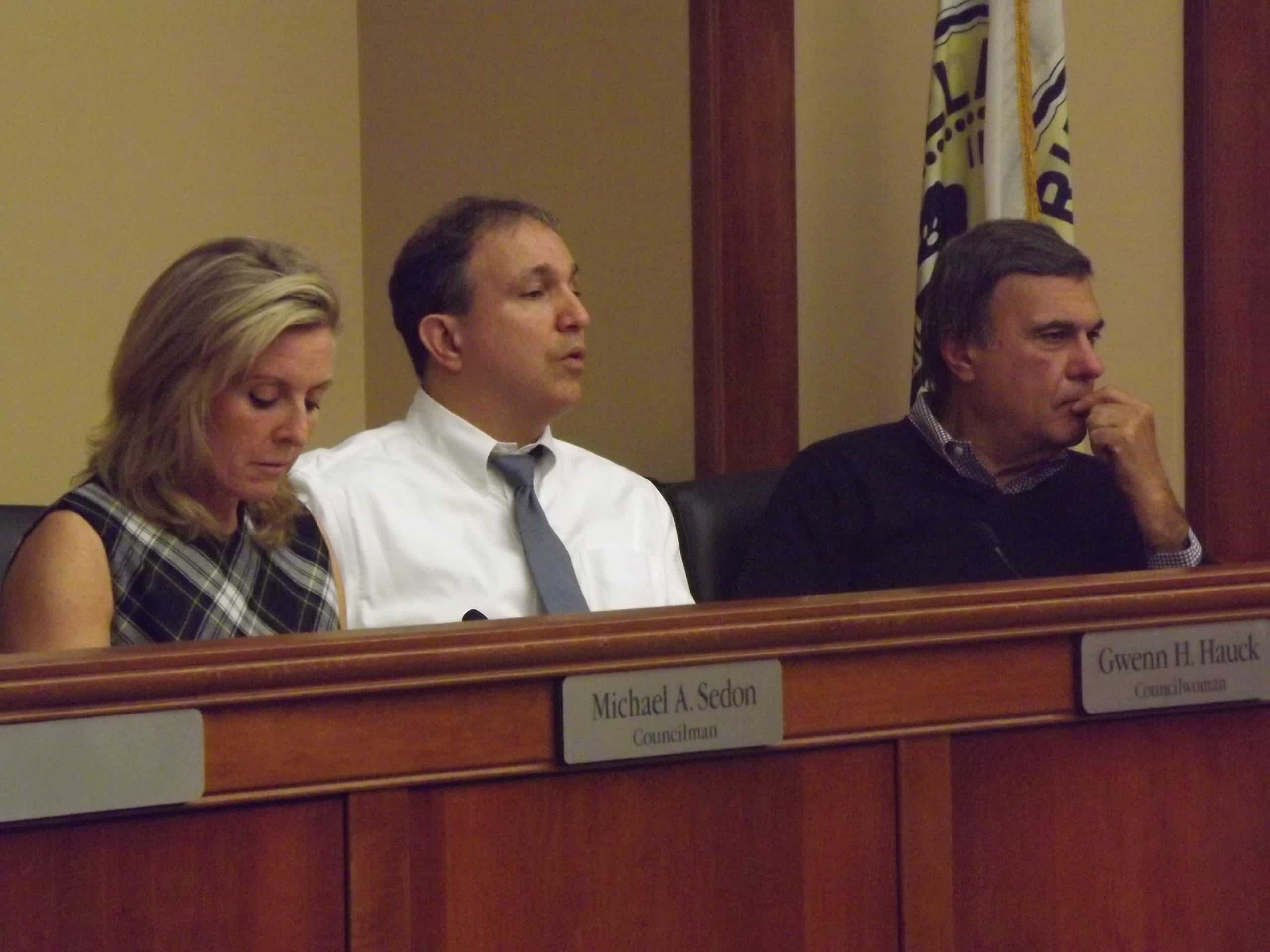
As I said previously, we have no candidates with new ideas running. Sedon and Susan may have done nothing visible but push the garage that no-one wants anymore, but they haven’t done too much actual damage to Ridgewood. Aronsohn’s puppets will just pick up where they left off. That means that they will promote even more outlandish development in town, and may revert to that huge garage when basically we don’t want any. Everyone who cares at all about Ridgewood, or who plans to live here a few more years MUST VOTE. If you can’t stomach voting for any of them, you still must vote. Otherwise Aronson’s people will be a shoe in as they will be the only ones to draw the voters. If you stay home, you choose the puppets because they will win by default. All you can do this time is to vote for the current council and then spend some time finding someone with the kind of knowledge we need to lead this town.
Not one of the current or former council members have ever stated publicly why they think that the new apartments are good for Ridgewood. These developments are just causing more issues for our already stretched budget and resources.
Last summer, we were forced to obey restrictions on watering our lawns due to a water shortage. Because I followed the rules, my lawn died. What will happen when the water demand is increased because of these new apartments? why is this good for Ridgewood?
why is this good for our schools? (my child’s class class size is close to 30)
why is this good for people who walk or drive through our town? (it is already congested)
why is this good for anyone besides the developers?
WHY DID WE LET THEM IN?
It seems that very few people can even think of a realistic reason to build the garage. Add to Ridgewood taxes so people in other towns can park near the station? Provide extra parking for the builders who refuse to supply what is legally required? (How are they getting by with that, anyway? Did they change the town rules about how much parking is required for any construction? Or do they think their building permits do not require adequate parking? Council, the doctor on Broad Street has plenty of parking and has been struggling for several years to be able to use the 210 building which she owns. Why do outsiders get by with every single thing they want?) This building on Hudson doesn’t do anything for Ridgewood residents, except taking away a large part of the parking for Mt. Carmel’s activities. Two decks might help in separate parts of town but no-one is going to walk from Hudson to Oak, much less further. The only beneficiaries will be the commuters and the apartment dwellers, and for that Ridgewood must have higher and later parking fees as well as an astronomical increase in our taxes? At least the schools benefit OUR children. How will that garage benefit any of the residents?
yeah it is the natural outcome. We are in a situation now where we can choose the least worst alternative. If this can gets kicked down the road yet again, the next steps would be the BIG main street proposals that are now taking place in towns like Bogota and Closter… that result would be more mixed use, fewer stores, more restaurants, banks, Gyms and apartments, putting more pressure on parking and schools which would require a bigger parking solution. While the choices now are not great, the building of a garage soon makes sense to curtail further expansion of mixed use stock a la other communities..
Wait, so the argument now is… because a previous council approved the building of condos, in order to “save” the Village we need to appease the developers and build a garage for them given that they will obviously not have the needed parking spaces for their new tenants….and if we don’t build this thing, this town will become a glorified Rt 17 strip filled with gyms, banks and more condos? Come on people…..let’s all assume they build this thing, how does that change anything in terms of the parking landscape in this town? Yes, commuters will use it, yes shoppers will use it, but lets be realistic, probably only those looking to shop on Broad St or very close to it. We all know that everyone in this town or those that come here want to park right across the street from where they’re going, as stated in many of the posts before, if you look for parking you will find it, but you may have to walk a bit. So the taxpayers of this town should spend millions of dollars to alleviate a problem that may or may not exist for two to three hours on Friday and Saturday nights?? Do the math, it doesn’t add up and with Uber that problem is going away. Let’s spend money on updating the current run down parking lots we have or reconfigure current parking lanes and see how that goes….what’s the downside? We need to stop looking backward and look forward….Uber and Amazon to name a few are changing how we live our lives….less brick and mortar, less cars being driven for nights out….that’s the future, not building a garage that maybe in 1990 there was a solid argument for.
A garage is needed. I’m willing to accept that the size of such a facility is up to debate but in my opinion, as unpopular as it may be in this echo chamber, it is needed. It’s presence will not destroy the character of the town but will improve the quality our visits to downtown and the health of our businesses.There are plenty of other wealthier towns that have such a facility and their characters and/or home values have not be eviscerated.
As to the size of the proposed housing developments. I think there is room for good debate there as to whether the scope of the developments is appropriate for the downtown or whether they should have been allowed in the first place. I will say however that the empty lots that exist now are eyesores.
1)Ridgewood needs high-end apartments
2)Ridgewood needs a performing arts center
3)Ridgewood needs parking decks/garages
4)Ridgewood needs to be more business-friendly
Many view this “Vision” as a vision to destroy the Village of Ridgewood and turn into just another New Jersey overbuilt dumpy town .So now for ever more the Current Village Council and Village residents are stuck with the mess they created .
Unfortunately the high density housing was approved with the idea that a garage would pick up the slack with parking and allow the developers to offer less parking spaces . The fact that the developments will create a need for more schools, more water, more parking and generate more congestion in an overly congested central business district is left for the Ridgewood taxpayer to pick up the tab.
One wonders if some those who suggested there was enough water and that parking and congestion were not issues could and should be prosecuted ?
One thing the Council has never responded to: Will a portion of this garage be available to the builders so they can supplement their legal lack of parking by having Ridgewood residents pay to help them out? It “may’ be used by commuters who can’t find parking on the streets. The stores and restaurants in town will continue to have their employees park directly in front of their businesses. Paul will still have his reserved “no parking” space in front of his wall. Who do you actually expect to use this space? Probably not shoppers or diners. And what about the Sunday/other Mt. Carmel uses of the lot that will be covered by the garage? Are we going to be expected to “pay for parking” that was formally free? And, to add insult to injury, the parking meters’ rates will be increased and the hours extended. Who wants that? Unless you can at least force the town’s various commercial employees to use it, who else will?
Does The garage allows developers to count the parking spaces there as required parking for the new developments? Since we are screwed by former council approvals the only way to cover the added costs of these new units is to charge ongoing annual “impact fees” for every unit above the usual permitted density. If 50 units are built where 25 is the usual permissible then the additional should bee charged for each bedroom multiplied by the cost of annual student expenditure . So if It costs $20,000 per year per student in the BOE budget,, and a unit has 2 bedrooms,then an annual impact fee of $40,0000 plus assessed real estate taxes. So 25 extra units have 50 extra bedroom require $1,000,0000 annual fees to the village.