From Queens to Fort Lee, developers are targeting “affordable” price points: panelists
By E.B. Solomont | March 15, 2017 03:00PM
What’s a New York developer to do when renters are priced out of neighborhoods? Turn to emerging areas in Queens, the Bronx, New Jersey, Westchester and Long Island.
“We’re like cockroaches, we try to figure out what’s needed next,” said Jan Burman, president of Long Island-based Engel Burman Group, a developer of assisted living properties.
He was speaking Wednesday at a panel on residential real estate trends hosted by the newly-launched Fordham University real estate program. Moderated by Madison Realty Capital’s Michael Stoler, Burman was one of 10 panelists assembled, along with Madison’s Josh Zegen; Benjamin Stacks of Capital One Bank; RXR Realty’s Seth Pinsky; KABR Group’s Kenneth Pasternak; Kushner Companies’ Laurent Morali; Jeff Levine of Douglaston Development; SJP Residential Properties’ Allen Goldman; the Beechwood Organization’s Steven Dubb and TD Bank’s Roy Chin.
“Prices have increased dramatically in core areas, pushing people out to areas that were formerly peripheral,” said Pinsky, who is heading RXR’s investment in “emerging markets” like New Rochelle and other suburban enclaves. “If we want to get ahead of this problem, the ultimate solution is to have supply meet demand.”
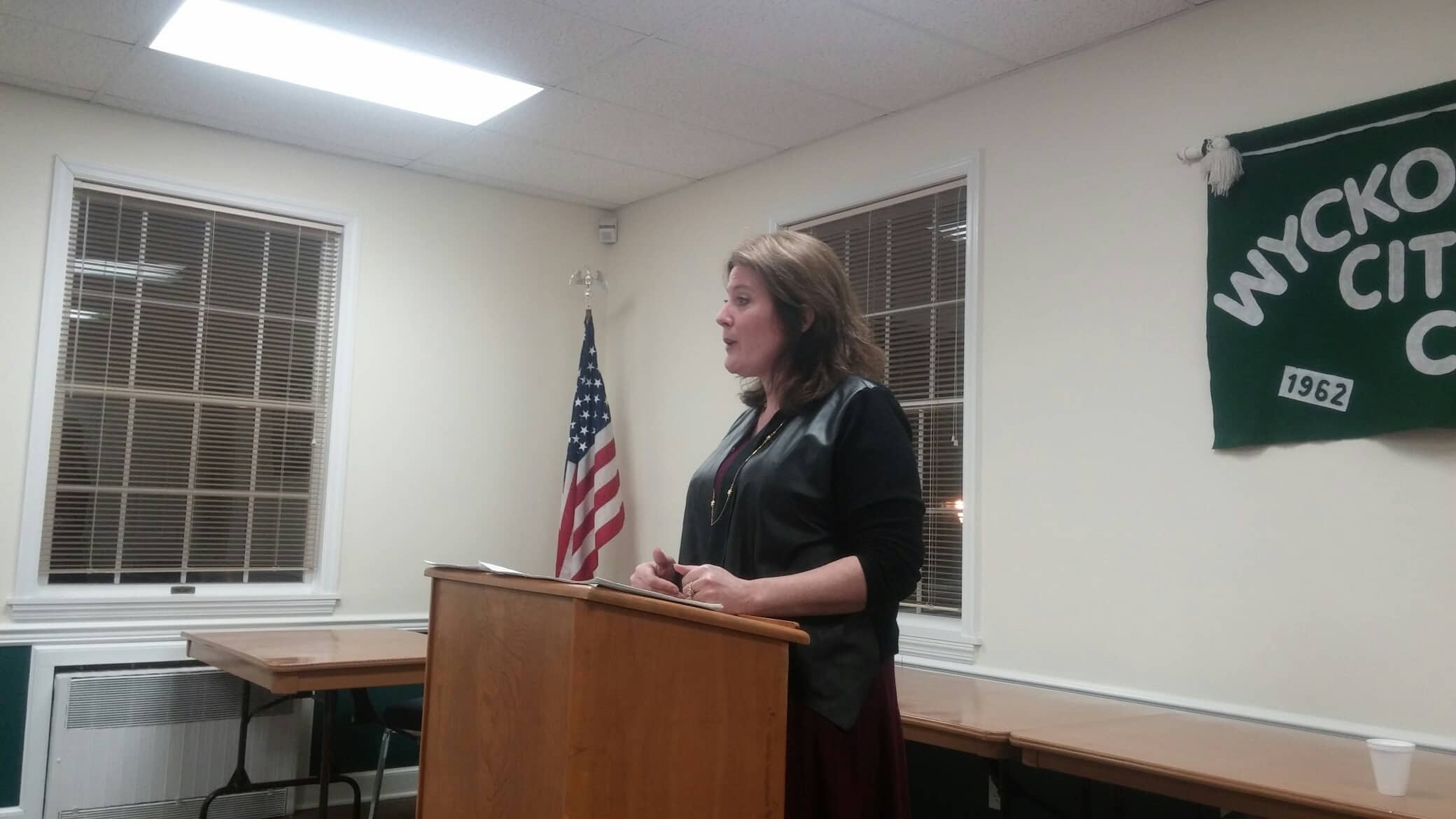
Special Guest Speaker Assemblywoman Holly Schepisi
March 21 – 7pm
650 American Legion Drive, Teaneck N J
(Don’t forget to bring a pantry item for the American Legion food drive-support our veterans’ good works)
Teaneck N J , We are very fortunate to have Assemblywoman Holly Schepisi as our guest speaker on March 21, Tuesday. Assemblywoman Schepisi has been an advocate for towns deciding what happens in their own town….wouldn’t you think that is the right way forum for these decisions to be made?
Don’t think for a moment this isn’t going to affect your town or any town in NJ for that matter….we brought this issue to your attention last year and now it’s rearing it’s ugly head in full force on the state level.
In a decision that could reshape hundreds of communities, the New Jersey Supreme Court ruled in January that municipalities must allow the development of affordable housing for poor and middle-class families whose needs were ignored for more than 16 years.
A recent article in NorthJersey.com highlighted Affordable Housing affecting the towns in Bergen County.
“Two Pascack Valley towns have thrown their support behind legislation that aims to bring affordable-housing litigation in the state to a screeching halt and pressure the state Legislature to take action on the issue. The governing bodies in Emerson and Woodcliff Lake approved resolutions last week backing the bills, which were introduced by Assemblywoman Holly Schepisi.
One bill – A4666 – urges a freeze on all affordable-housing litigation through the end of the year. A companion bill – A4667 – calls for establishing a bipartisan Affordable Housing Obligation Study Commission that would be composed of professionals and elected officials to determine each town’s affordable-housing obligations.
State Sen. Gerald Cardinale, R-Demarest, has sponsored similar legislation in the Senate.
Towns have been submitting their housing plans to state judges for approval, after the state Supreme Court ordered them to bypass the Council on Affordable Housing, which has been inactive for years because of bureaucratic dysfunction.
Schepisi said the Legislature should be dealing with the issue, not the courts. “There are a host of out-of-the-box ideas and thinking that we as legislators should be exploring, and we’re not,” Schepisi said, adding: “We need to also question if the obligation should rest with the state rather than each municipality.”
Ridgewood NJ, The Village council has hired Brigette Bogart of Brigette Bogart Planning and Design Professionals to serve as the village’s part-time planner, replacing the departed Blais Brancheau.
Bogart will attend planning and zoning board meetings, as well as review development applications filed by third parties, among other duties. Compensation will be an amount not to exceed $60,000.
According to the firm’s website, Brigette Bogart Planning & Design Professionals LLC was established in May of 2012 as a full service planning and design firm that recognizes the need to incorporate sustainable planning and appropriate urban design concepts into the future development projects.
Bogart has a Master of City and Regional Planning, University of Pennsylvania, 2000 and a Bachelor of Environmental Design in Architecture, North Carolina State University, 1997.
She has been awarded the 2008 NJPO Achievement in Planning for Borough of Park Ridge Rehabilitation Project,
2011 NJPO Achievement in Planning for the Township of Fredon Master Plan ,and the 2012 Recognized by Sustainable New Jersey as a member of a Certified Green Team.
Bogart previously worked for 12 years for the well-known Westwood-based planning firm Burgis Associates. In 2003, Bogart was named a Partner with Burgis Associates where she had been involved in all aspects of physical planning. Over a 12-year span, she has represented several municipalities in the review of subdivision and site plan development applications and the preparation of land use regulations as well as master plan elements. In 2010 She received her certification in Grant Writing.
Many residents may remember Bogart as the planner who testified on behalf of Citizens for a Better Ridgewood in 2014 during public hearings on the master plan amendments that would eventually rezone several parcels of land in downtown Ridgewood. Bogart said the rezoning requests “appear to be akin to spot zoning,”
She advised the Ridgewood Planning Board to engage in a cautious process, asking it to think about a “vision” for Ridgewood’s future as it moves forward. At the time their vision seemed more like Union City than Ridgewood .
Bogart herself took a cautious tone did not voice a stance against the developments, but she noted instead that the developments, though possibly at odds with Ridgewood’s best interests, would also help Ridgewood meet some of the current objectives in its master plan, such as enhancing aesthetics of certain areas downtown.
In the end, Bogart testimony reinforced the CBR’s contention that the problem was not development but “jumping from 12 units an acre to 50 units an acre seems reckless at best.”
At that time, the proposed amendments called for a density of 50 units per acre, which members of the grassroots organization CBR as well as most of the Ridgewood community, found unacceptable. Amendments were passed over a year later by the Planning Board reducing the density to 35 units per acre.
The Village Council also added two new members to the Planning Board, Carrie Giordano was appointed as the first alternate member of the board with a term that expires on June 30, 2018. Frances Barto was named as the second alternate, given a term of a little over two years that expires on June 30, 2019.
The village also engaged the Trenton-based Clark, Caton and Hintz planning firm for an amount not to exceed $35,000 to work on issues related to affordable housing.
Nicholas Pugliese , State House Bureau, @nickpugzPublished 5:39 p.m. ET Feb. 20, 2017 | Updated 3 hours ago
The obliterated homes and torched wedding photos. The lost green cards and melted jewelry. Those things, at least, might have been anticipated once the first flames took hold in the Avalon at Edgewater apartment complex in January 2015.
The type of sprinkler system installed in the building, as required by New Jersey’s building code, was designed primarily to give people enough time to get out, not to save the building and its contents. To that extent, it succeeded. No one died. No one was even seriously injured.
Why is New Jersey forcing senior citizens to flee the state?
After decades of contributing as full-fledged members of our communities throughout New Jersey, we find ourselves increasingly forced to flee the state due to the burdensome and discriminatory nature of property taxes for seniors on fixed incomes.
New Jersey has the highest property taxes in the nation, an average of $8,500 per year versus the national average of $3,800. However, you know these facts. What you don’t know is that for senior citizens, who often live in adult communities to reduce their expenses, the property tax burden is disproportionately higher — often 17-20 percent of a senior’s annual income, and climbing.
The issue of taxes is always a complicated decision for leaders, to allocate resources equitably among disparate interests and groups. The Abbott decision, for example, appropriately (and importantly) required the commitment of state education funding to support urban districts. But funding decisions by the governor and state Legislature, over time, had unintended consequences as well.
The shifting of aid to education in some areas of the state, without increasing overall state aid to education, has resulted in communities being forced to fund local education through higher property taxes. The unintended — but real consequence of this trend — has resulted in retirees (on fixed incomes) being forced to pay disproportionately higher taxes.
State Assemblywoman Holly Schepisi, who attended the meeting, said she is preparing new legislation that would potentially help towns, especially densely populated communities like Dumont, address their affordable housing obligations.
“Every municipality in Bergen County is struggling, having no idea how to address it,” Schepisi said. “My biggest concern is, if they have their way, if we don’t stop this now, by 2026 Bergen County will be Brooklyn.”
Ridgewood Nj, seems the attempts by the council to reconfigure parking have been met with new calls for “Garagezilla” .
In a recent NJ.com article on struggling downtowns Englewood was mentioned for having over 2000 parking spaces available, including a 345 space garage, many new, upscale downtown housing developments, and still stores are closing. The fact is the retail landscape has changed and it has nothing to do with the lack of parking or limited foot traffic/customer availability.
While in Ridgewood many allies of the former mayor Paul Aronsohn are using any attempt at incrementally adjusting parking allocations to promote a massive parking garage. Aronsohns supporters in the Ridgewood Financial Advisory Committee or FAC continue to use the eerily familiar tactics they used on Mayor Killion and Village Manager Ken Gabbert , blaming all cost increases on the new Village Council.
Remember the Financial Advisory Committee was created by the mayor Aronsohn solely as a breeding ground for future council members willing to live in his shadow. The fact remains that in order for the Financial Advisory Committee to be an effective part of the Village governance the following criteria must be met:
Publish clear and realistic by-laws Post agenda’s of all meetings Post minutes of all meetings promptly All members must sign Financial disclosure forms All members must sign NDA’s or non-disclosure forms
These are professional standards that are used and commonly accepted everywhere in the world. If they are not met in Ridgewood the committee must be closed done otherwise the Village will continue to leave itself open to lawsuits.
There has been a noticeable increase repeat critical comments on the Ridgewood blog mirroring the same lines over and over. The same lines once used against Mayor Killion and Kenn Gabbert are now used against the current mayor and Village council.
“My friend went to park at one of the lots that require an app and was unable to download so couldn’t use the lot. She said the lot was mostly empty and also that there was a fee to use the app. I think the VC made these parking rules so complicated now people are just staying away. I’m not aware that merchants supported this plan. I think the new VC came in with ideas of how to “fix” parking and this is the result. I’m sure merchants would rather have seen a parking garage. Good luck. I stay out of downtown altogether now.”
To bad this poster forgot to mention the “parking app ” was the brainchild of the Aronsohn administration and Former village Manager Roberta Sonenfeld.
“The poster does have a decent point about commuters getting screwed by the vocal, anti-development, municipal-election voting majority in Ridgewood who control the Council agenda. Commuters are too busy to care much despite the fact the Council screws them at every turn, i.e. $250 annual increase to $1000 for a commuter parking space which was moved further away from Ridgewood station after the pass was paid for last Dec. Thanks VoR!”
While complaints about the overpriced commuter parking seem valid blaming the current council for the insane property taxes is a recurrent theme,“So go on blaming Aronsohn for the continued inability of this Council to come up with a viable solution for the commuters who pay the bulk of property taxes in Ridgewood. As 12:43 noted, if Ridgewood is no longer attractive to commuters as a place to raise their families (due to high property taxes versus declining schools despite a $100mn annual BOE budget, etc) then property values fall. As potential revenue sources like Valley leave, those who remain will have to just pay more to cover for the excessively expensive contracts the Village and BOE have agreed to with the public sector unions we contract with. Commuters and taxpayers getting screwed, a declining CBD, and a school system that no longer ranks highly in the nation are all facts”
Again,not sure what the Village Council has to do with the Ridgewood Board of Education, and all the residents voting for constant tax increases ie full day kindergarten and turf fields?
Other comments ecco the same shots taken against Killion ,“What proposals does the new Counxil have James? Rebuild Schedler (no conflicts of interest there, right?). Raise taxes to pay the police even more (again no conflicts, wink, wink)? Are we still studying traffic flow? Where’s the Valley PILOT? What’s the plan to renew the CBD? Commuter parking? How do we replace the potential tax revenues from Valley? Do we need such big, expensive police & fire depts if Valley is leaving in 3 years? Even you know the Village is in decline James, while Summit, Tenafly, Scarsdale and Greenwich all see the increase in their property values outpace ours. Why is that?”
This comment is so full of misinformation it ended up in our spam folder.
It all gets summed over and over by the following comments , The poster does have a decent point about commuters getting screwed by the vocal, anti-development, municipal-election voting majority in Ridgewood who control the Council agenda. Commuters are too busy to care much despite the fact the Council screws them at every turn, i.e. $250 annual increase to $1000 for a commuter parking space which was moved further away from Ridgewood station after the pass was paid for last Dec. Thanks VoR!
Anotherwords if we built the garagezilla and massive high-density housing all problems would be solved …. right that’s the ticket oy vey.
Mark Krulish , Staff Writer, @Mark_KrulishPublished 5:45 p.m. ET Feb. 9, 2017 | Updated 6:18 p.m. ET Feb. 9, 2017
As the battle over affordable housing continues across New Jersey, the Ridgewood Planning Board heard more testimony from professionals about a development slated for the former Brogan Cadillac site on South Broad Street.
The board has four different applications pending for multifamily housing proposals in parts of downtown that were rezoned last year. The Dayton, subject of Tuesday’s hearing, is a luxury apartment project with 93 units proposed – including 15 percent set aside for affordable housing as required by ordinance.
N.J. senator: An alternative plan to Court’s ruling on affordable housing | Opinion
Posted on January 27, 2017 at 10:44 AM
By Christopher Bateman
Providing enough affordable housing for people in need is one of the most important issues we face in this state. The constant string of misguided court decisions has done nothing but create confusion for our towns.
Last week, the New Jersey Supreme Court issued a ruling that could be devastating to taxpayers.
The court essentially overturned a July 2016 Appellate Court decision and ruled that the calculation of present need must be expanded to include obligations created during the “gap period” of 1999-2015. The court determined that a new, undefined “analytic component” should be used to determine if the needs created during the gap period still exist today.
Since its first intrusive decision more than 40 years ago, the court has been infamous for creating this kind of confusion. As a result, municipalities have spent far too much time and money in court battling over how to determine and satisfy their court-imposed “fair share.”
Given the population decrease in NJ due to people seeking greener pastures (or just a job or lower property taxes) elsewhere, perhaps the answer is not to build additional housing units in Ridgewood to help us meet our COACH obligations, but to find some way to force the price or market valuation of the entire existing housing stock in Ridgewood down far enough in value as that a sufficient number of previously built single family homes in Ridgewood end up falling into the affordable housing category. Why try to build up (because there is no actual room to build out) when you can simply drag down? Perhaps there would be some difficulty in forcing the unfortunate existing owners to sell but, hey, this is New Jersey…we’ll just intimidate them, Soprano’s style, until they see the wisdom of the policy. /s
If you missed last week’s affordable housing decision from the N.J. Supreme Court, Save Jerseyans, then get caught up ASAP right here.
The bottom line?
New Jersey communities face NEW property tax-busting affordable housing requirements, as many as 150,000 unit state-wide; the numbers are being fought-out in a number of trial level venues as we speak.
Some of you have asked me what this could look like on a town-by-town basis.
Not pretty, that’s for damn sure, but our friend Assemblywoman Holly Schepisi (R-39) shared one pro-affordable housing organization’s projections via social media this morning to illustrate the challenge ahead for New Jersey’s municipalities.
Those who attended the hearings could easily reach the opinion that Arohnson sold the Village out to the developers. He pushed for a a formula where the Village allowed land speculators and developers to build 85 regular market units for every 15 coah compliant units. Do the math – – under the Aronson Plan, if the Village was ordered by the Courts to build 150 units, then the developers would be allowed to build 1000 apartments in town. And because the Village may need to build as many as 500 coah units (or even 1,000 according to some attorneys) then under the Arohnson formula, the town would have to let the developers build 5,000 to 10,000 units in total. Think about it, that’s 5,000 to 10,000 new families moving into town. The developers were licking their chops over the stupidity of the Aronson formula and the opportunity to start to apply it to properties throughout the town.
The new council quickly moved to kill some of the enabling legislation behind the Aronson plan. But, frankly, its not clear they have done enough to prevent developers from continuing to buy up property and make the argument that they need to build, build, build in order to enable Ridgewood to meet its coah requirements. Our Council needs to take bold action to meet coah requirements while not allowing developers to re-make the Village.
A lot needs to be done and the process needs to be started quickly. The Council cannot ignore this issue. They need to starting acting now.
Excellent but what is the next set of actions to ensure some real actions
Are taken before events and the Developers decend on Ridgewood ,Ho HoKus Glen Rock and other Bergen county communities.?
The developers should be targeted for negative aspects of Build and Run with the Cash tactics..what banks are financing these ruinous Multi family Neighborhood and School taxes blockbusters.Banks they to project community good citizens profiles but they are awash with cheap money for the Fed and lack of interest payments to the savers for a Decade now
“I implore our Senate President and Assembly Speaker to do everything in their power to move forward with bi-partisan legislation addressing this issue. The court rules on what is constitutional, not aggressively ruling what it thinks is best for the state. We cannot let the court legislate what is best for individual communities.”
Mark Krulish , Staff Writer, @Mark_Krulish4:02 p.m. ET Jan. 19, 2017
Blais Brancheau, the longtime Director of Planning for the Village of Ridgewood, is resigning from his position.
The village manager’s office confirmed Thursday morning that Brancheau had submitted his letter of resignation, but could not immediately say when his last day would be.
Jean Mikle and Russ Zimmer , Asbury Park PressPublished 11:10 a.m. ET Jan. 18, 2017 | Updated 13 hours ago
A housing advocacy group says “tens of thousands” of new units of affordable housing could be built in New Jersey as a result of a state Supreme Court decision Wednesday.
In a unanimous decision, the court ruled that municipalities must meet affordable housing needs that accumulated during the so-called “gap period” between 1999 and 2015, when the state’s Council on Affordable Housing failed to produce housing quotas for towns.
The ruling could have a dramatic impact on Monmouth County, where several affluent towns have fought increased affordable housing obligations. By contrast, most of Ocean County’s most populous towns won’t be affected because they have already agreed to court settlements providing thousands of affordable homes.