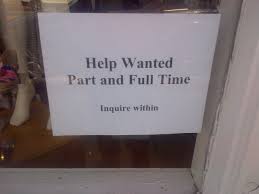
A clear symptom of a state in decline; ravaged by high taxes and fiscal policies which erode both opportunity and the quality of life for its residents. https://s.nj.com/IoOo8Fk
N.J. young adults more likely to live with parents, less likely to marry than rest of U.S.
By Stephen Stirling | NJ Advance Media for NJ.com
New Jersey’s young adults are better educated than they were 30 years ago, but are earning less and are far more likely to live with their parents than the previous generation, according to new data released today by the U.S. Census Bureau.
The new figures, released as part of the U.S. Census Bureau’s American Community Survey, take a look at the young adult population across the country from a period of 2009 to 2013. They paint a fascinating picture of the state’s rapidly evolving 18 to 34 year-old demographic, one that will likely dictate the future of the Garden State but is still suffering the lingering effects of the Great Recession.
Nearly 30 percent of New Jersey’s 18 to 34 year-olds now hold a Bachelor’s degree, the new data show, compared to 19 percent in 1980 and 22 percent across the rest of the country.
DECEMBER 3, 2014 LAST UPDATED: WEDNESDAY, DECEMBER 3, 2014, 6:13 PM
BY HUGH R. MORLEY
STAFF WRITER |
THE RECORD
A private sector employment report showing the nation has added jobs at a healthy clip since the start of the year also shows just how far behind New Jersey remains in the economic recovery.
The nation added 208,000 private sector jobs in November, taking the total added to 2.26 million this year, according to the monthly survey released Wednesday by ADP Research Institute, a division of Roseland-based payroll company ADP.
The employment increase of about 2 percent for the year so far, very close to the official government figures from the U.S. Bureau of Labor Statistics, is the latest evidence that the recovery from the Great Recession is continuing at a good pace.
Meanwhile, New Jersey’s private sector employment has increased by slightly more than a third of that amount – just over 0.7 percent – as several key sectors have lost jobs this year, according to the state’s latest employment report, which covers the year through October. The sectors in which New Jersey’s private employment has fallen this year included construction, manufacturing and leisure and hospitality.
New Jersey lagged in particular in the “goods producing” sector, which has fallen by just over 1.1 percent so far this year, losing about 4,200 jobs, compared to a gain of 1.86 percent nationwide, according to the ADP report.
November Jobs Report Gives Insight into Why Most Americans Think the Economy Is Lousy
James Sherk / @JamesBSherk / December 05, 2014
The Bureau of Labor Statistics’ November employment report showed solid economic growth, but also provides clues about why many Americans report unhappiness with the economy.
The headline figures contained mostly good news. The household survey reported the unemployment rate remaining flat (5.8 percent) at the lowest rate since July 2008. Labor force participation also remained flat at 62.8 percent as did the employment to population ratio—remaining 59.2 percent, the highest since mid-2009 but well below pre-recession levels.
The average duration of unemployment has remained stubbornly high, rising to 33 weeks in November.
The payroll survey reported employers created 321,000 net new jobs in November—the most in any month since April 2011. The professional and business services (+86,000), retail trade (+50,000), healthcare (+29,000) and food services and drinking places (+27,000) showed the greatest gains. The payroll survey also found the average work hours increasing a tenth of an hour to 34.6 a week—the highest level since early 2008. In more good news, revisions to the September and October surveys showed that employers created 44,000 more jobs those months than previously believed.
Nonetheless, polls suggest that most Americans consider the economy in poor shape. The exit polls from the midterm elections found that 70 percent of voters see America’s economic condition as either “not so good” or “poor.”
Over the past year, average wages have grown by 2.1 percent—only slightly above the rate of inflation.
The November jobs report gives some insight into why. The average duration of unemployment has remained stubbornly high, rising to 33 weeks in November. The median unemployed worker has been looking for work for almost three months—almost twice as long as before the recession hit. Unemployment has become more painful for workers; those who lose their jobs have much greater difficulty finding new ones.
Additionally, average hourly wage growth has slowed to a crawl during the recovery. In November, average wages rose just 9 cents an hour. Over the past year, average wages have grown by 2.1 percent—only slightly above the rate of inflation. Thus, the real buying power of American workers has hardly improved.
This also shows why claims that this represents the strongest economic growth since the tech bubble are misleading. Yes, the economy has added jobs a good pace – welcome news after the deep recession and anemic recovery. But wages grew far faster and the unemployed found jobs far more quickly in the mid-2000s. This does not feel like a booming economy because it is not.
All told, November’s employment report brought welcome news about labor market improvements—but the economy still remains far from a satisfying recovery.
Garrett bill on SEC disclosure rules sails through House Streamlining Paperwork for Startup Companies
DECEMBER 3, 2014 LAST UPDATED: WEDNESDAY, DECEMBER 3, 2014, 12:02 AM
BY HERB JACKSON
WASHINGTON CORRESPONDENT |
NORTHJERSEY.COM
The Securities and Exchange Commission would be required to simplify some of the disclosures that public companies must make under a bill sponsored by Rep. Scott Garrett that won unanimous approval in the House.
Garrett, R-Wantage, was one of the sponsors of a 2012 law intended to make it easier for startups to raise funds through financial markets, and the law included a section directing the SEC to study disclosure simplification.
On the House floor Tuesday, Garrett said the SEC produced a study in December 2013 that did not call for any changes but did call for more study.
“I believe we need to stop studying and start taking action,” Garrett said. “Simplifying and streamlining disclosure requirements will enable companies to divert fewer resources to compliance, freeing up additional capital to create American jobs.”
The Disclosure Modernization and Simplification Act, which was approved in a voice vote on Tuesday, directs the SEC to allow public companies to submit a summary page of annual reports on Form 10-K that cross references the contents of the report, Garrett said.
It also directs the SEC to revise Regulation S-K “to better scale disclosure rules for emerging growth companies and smaller issuers.”
Rep. Carolyn Maloney, D-N.Y., said the SEC’s 2013 report showed that the commission had studied ways to streamline disclosure in 1969, 1977, 1992, 1996 and 2007.
“What this history demonstrates is that the process of scaling and streamlining the reporting requirements for smaller companies is something that we all need to focus on in order to keep pace with the ever-evolving marketplace,” she said.
Obama’s Amnesty Will Add As Many Foreign Workers As New Jobs Since 2009
10:37 AM 11/20/2014
President Barack Obama’s unilateral amnesty will quickly add as many foreign workers to the nation’s legal labor force as the total number of new jobs created by his economy since 2009.
The plans, expected to be announced late Nov. 20, will distribute five million work permits to illegal immigrants, and also create a new inflow of foreign college graduates for prestigious salaried jobs, according to press reports.
Obama has already provided or promised almost one million extra work permits to foreigners, while his economy has only added six million jobs since 2009.
Under the president’s new amnesty plan, “up to four million undocumented immigrants who have lived in the United States for at least five years can apply. … An additional one million people will get protection from deportation through other parts of the president’s plan,” according to a Nov. 19 report in The New York Times.
The five million total was attributed to “people briefed on his plans,” the Times reports.
The five million work permits will add to Obama’s prior giveaways, which have provided work permits to almost one million foreigners.
CHIEF FINANCIAL OFFICER/DIRECTOR OF PARKING UTILITY
Village of Ridgewood, Bergen County is searching for a position of Chief Financial Officer/Director of Parking Utility. The successful candidate shall have a minimum of 5 years’ experience as a New Jersey municipal CFO, a Bachelor’s degree in accounting or finance from an accredited college and must possess a valid certification as a Chief Municipal Financial Officer issued by the New Jersey Department of Community Affairs. In addition, in overseeing the Parking Utility, will be responsible for strategic planning; cost/revenue optimization and working with a changing paradigm of parking in the Village, resulting in improved controls and increased resident, business, and visitor satisfaction. Send cover letter detailing experience and qualifications, resume and salary history to: Sharyn Matthews, Senior Human Resources Professional, Village of Ridgewood, 131 North Maple Ave., Ridgewood, NJ 07451; or email to [email protected].
Obamnomics ,Giving Up in America : 40% Women, 28% Men, 39% Youth Don’t Want A Job
(Washington Examiner) – Nearly four in 10 Americans, or 92 million, are not in the labor force and now there’s a reason why: They have simply given up and don’t want to work.
According to the Bureau of Labor Statistics, the largest group of people not in the labor force are those who don’t want a job, a remarkable statement on the nation’s work ethic. The federal job counter said that 85.9 million adults last month didn’t want a job, or 93 percent of all adults not in the labor force.
A Pew Research Center analysis out Friday dug a bit deeper to find out who those people are. Many are younger Americans who seem far less interested it landing a job than previous generations, possibly discouraged by the lack of good-paying jobs.
SPECIAL: Join the Tea Party REVOLUTION! The Obama Regime must be dismantled!
Pew said that 39 percent of 16- to 24-year-olds don’t want to work, up from 29 percent in 2000.
Women especially don’t want a job, but men have similar feelings.
“Women are more likely than men to say they don’t want a job, although the gap has been narrowing — especially since the Great Recession. Last month, 28.5 percent of men said they didn’t want a job, up from 23.9 percent in October 2000 and 25.2 percent in October 2008. For women, the share saying they didn’t want a job hovered around 38 percent throughout the 2000s but began creeping up in 2010, reaching 40.2 percent last month,” said the Pew analysis.
Which Cities/States Will Be The First To Default When The Economy Rolls Over?
Submitted by Charles Hugh-Smith of OfTwoMinds blog,
What happens to local governments when the economy rolls over?
Though we’re constantly reassured the “recovery” that’s stumbled for five years has years of strong growth ahead, history suggests the “recovery” is due to roll over. Few recoveries last longer than 5 or 6 years, and the business cycle is graying fast: subprime auto loans are not exactly the foundation of “strong growth.” So what might push the economy over the cliff? The strong U.S. dollar is crimping overseas sales and profits, the global economy is already recessionary, mortgage applications have dried up, auto sales are being driven by subprime loans, and the valuation bubbles in stocks and real estate are due for a breather, if not an outright reversal. Retail sales are flat, and with all these headwinds, growing profits by 10% to 20% a year becomes impossible for the vast majority of enterprises. So what happens to local governments when the economy rolls over? Tax revenues decline. The consensus is that local governments are sitting pretty: sales and property values have risen smartly, pushing tax revenues higher, and the cost of borrowing money via tax-free municipal bonds has fallen. Nice, but these are all functions of expansion and rising tax rates. The uneven nature of the “recovery” has left some cities and states more vulnerable to a downturn than others.Let’s catalog the various risk factors that might become consequential as the global and U.S. economies weaken.
1. Those dependent on foreign tourism. The weak dollar made America a bargain destination for the past decade. As the dollar strengthens and other currencies lose purchasing power, America is no longer a bargain–especially as job cuts decimate the number of people who can blow a few thousand dollars on overseas vacations to the U.S. 2. Auto manufacturing-dependent locales. Vehicle sales have been strong, and the cheerleaders claim sales will keep rising for years to come. Really? With what money? As soon as layoffs hit the marginal workforce and the subprime auto loan bubble implodes, vehicle sales will follow suit. 3. Cities and states that depend heavily on capital gains taxes. Once the current housing and stock bubbles deflate–or simply stop expanding–tax revenues from the enormous capital gains reaped in the past five years will wither. 4. Locales dependent on high income taxes. Given that most of the job growth of the past five years has occurred in low-wage sectors, adding jobs hasn’t boosted income taxes much. High income-tax states have jacked up rates on high-income earners, but there is no law of nature that says high-income jobs will survive a global downturn. Rather, enterprises desperate to tighten operating costs will want to jettison high-cost employees first. 5. Local governments with enormous debt burdens. With interest rates low, municipalities and states went to the bond market over the past few years for “free money.” Once tax revenues plummet, the interest on all that “free money” will take a larger percentage of tax revenues, heightening the cost of new bond debt as buyers start adding in the risk of eventual default. 6. Locales with high fixed costs. These include high healthcare costs for homeless, elderly, government employees, etc., interest on all those bonds, government employee pensions, etc. The fixed costs only increase every year, regardless of tax revenues. Every local government with high fixed costs is in a tightening fiscal vice once tax revenues plummet. 7. Local governments with generous employee benefits and pensions. Once the stock market rolls over, the big capital gains that have funded public pension plans dry up, and the annual contribution has to be paid out of declining tax revenues. Should interest rates actually rise, pension fund bond portfolios would plummet in value, too. 8. Local governments dominated by self-serving entrenched interests. That is, all of them: sclerotic, self-serving, entrenched interests resolutely refuse to accept any cuts in their swag. As tax revenues fall off a cliff, government managers will face a dilemma: they can’t cut costs because the self-serving interests have made that politically impossible, and they can’t borrow money for operating expenses.
That leaves defaulting on debt as the only choice left. And since that’s the only choice left, that’s what they’ll do. The vice will close on some cities and states sooner than others, but it will eventually squeeze every city and state with declining revenues and rising fixed costs into default.
50% of occupations today will no longer exist in 2025: Report
Press Trust of India | Mumbai
November 7, 2014 Last Updated at 21:40 IST
A paradigm shift is expected to be witnessed in the way workplaces operate over the next 15 years, making nearly 50 per cent of occupations existing today redundant by 2025, a report has said.
Artificial intelligence will transform businesses and the work that people do. Process work, customer work and vast swathes of middle management will simply disappear, it said.
The report titled ‘Fast Forward 2030: The Future of Work and the Workplace’ has been prepared by realty consulting firm CBRE and China-based Genesis, a property developer, after interviewing 220 experts, business leaders and young people from Asia, Europe and North America.
“Nearly 50 per cent of occupations today will no longer exist in 2025. New jobs will require creative intelligence, social and emotional intelligence and ability to leverage artificial intelligence. Those jobs will be immensely more fulfilling than today’s jobs,” the report said.
Tuesdays Ballot Questions a Yes Vote Means More Taxes
Most often a YES vote means more taxes…… vote NO
Please use this information to inform your friends and family, and tell them it is critical for them to get out to vote! Important Questions on the ballot, Tuesday, November 4 There are two State questions that are proposed constitutional amendments. One relates to your right to bail and pretrial release, and the other is on Open Space. Public question No. 1 – End the Right to Bail !!!! A “yes” vote on this constitutional amendment would END yourcurrent right to release on bail prior to trial. You’re being asked to abolish this Constitutional right, and find out later what will replace it. It could allow a court to order indefinite detention pending trial in a criminal case; it does not require “a speedy trial.” Recommendation: Vote NO!
The question says, in part, “This would change the current constitutional right to bail. The change to the Constitution would mean that a court could order that a person remain in jail prior to trial, even without a chance for the person to post bail, in some situations”. Article I, Sec. 11 of the NJ Constitution presently says, …”All persons shall, before conviction, be bailable by sufficient sureties.” This amendment would abolish that right.
Public question No. 2 – Divert Corporate Income Tax, then increase it
This would amend the Constitution to “Dedicate State funds for Open Space, Farmland, and Historic Preservation, and change existing dedication for water programs, underground storage tanks, and hazardous site cleanups”. A “Yes” vote would divert 4% of NJ corporate income tax funds, or $150M per year (NO SUNSET CLA– USE!), then increase that dedicated tax to six percent, or $200M in 2019. You will notice that there is NO reference to the cost on your sample ballot. Nor is there mention of how programs currently funded with the 4% that is to be diverted will be funded after this change. A convenient oversight? There are NUMEROUS reasons to vote “No” :
1) it is unconscionable that New Jersey attempts to manage its annual budget by Constitutional amendment, without a sunset clause. Why would we bind the state FOREVER, rather than do this through legislation, that could be changed when necessary? THIS IS LUNACY! (will cause your taxes to rise) 2) NJ already has already protected 31% of its land area, equivalent to the state of Delaware, from development. Approval of this question would take more land off the tax rolls – equivalent to Rhode Island! (will cause your taxes to rise) 3) The precedent for government owning so much (formerly) private property is greatly disturbing. Such land is forever removed from the tax rolls (and from any potential to generate revenue or profit for either the State or for private business), and that cost is shifted to the already over-burdened NJ taxpayer. (will cause your taxes to rise) 4) NJ already ranks dead last in terms of growth and business climate, and #1 in taxation, according to the Tax Foundation. (more taxes) 5) An Allied Van Lines report indicates that, for every one customer they move into NJ, almost two are heading out. NJ is listed as the #1 outbound state for two of the last three years.(more tax for you!) 6) Our state is approaching bankruptcy, with everything from the State’s pension system, to roads and transportation, education, and everything in between scrambling for funds. Our unfunded liabilities for pensions and healthcare benefits is $254B (seven times the annual budget!), according to Americans for Prosperity, and the annual budget shortfall is nearing $1.6B. (even more taxes for your and your family) 7) Even some of the environmentalists are concerned, because of the reallocation of the corporate tax that they fear could negatively impact currently funded programs. (eventually more taxes for you) IF YOU NEED TO READ MORE ABOUT OPEN SPACE QUESTION 2: What Will Question 2 Cost Taxpayers? October 24, 2014 by Richard Miner https://watchdogwire.com/new-jersey/2014/10/24/nj-open-space-ballot-initiative-would-give-govt-control-of-43-3-of-state-land/
Ranking the Best and Worst States for Business Taxes
Annual release of the 2015 State Business Tax Climate Index
Washington, DC (Oct 28, 2014)—Wyoming, South Dakota, and Nevada rank among the best business tax climates, while companies in New Jersey, New York, and California struggle with the worst tax codes in the county, according to the newest edition of the Tax Foundation’s annual State Business Tax Climate Index.
The report’s key findings include:
The 10 most competitive states are: Wyoming (#1), South Dakota (#2), Nevada (#3), Alaska (#4), Florida (#5), Montana (#6), New Hampshire (#7), Indiana (#8), Utah (#9) and Texas (#10). The 10 least competitive states are: New Jersey (#50), New York (#49), California (#48), Minnesota (#47), Vermont (#46), Rhode Island (#45), Ohio (#44), Wisconsin (#43), Connecticut (#42), and Iowa (#41). The most notable ranking changes occurred in North Carolina, Nebraska, North Dakota, New York, Wisconsin, Maine, and Kansas (see state specific press releases for more details).
The report, now in its 11th edition, measures how well structured each state’s code is by analyzing over 100 tax variables in five different categories: corporate, individual income, sales, property, and unemployment insurance taxes. States are punished for overly complex, burdensome, and economically harmful tax codes, but are rewarded for transparent and neutral tax codes that do not distort business decisions. A state’s ranking can rise or fall significantly based not just on its own actions, but on the changes or reforms made by other states.
Since the last edition, many states have experienced ranking changes largely because of the fundamental reforms made in a handful of states. The most exciting change occurred in North Carolina which experienced the largest rank improvement in the study’s history, jumping from 44th to 16th place due to a fundamental overhaul of state’s tax code. Nebraska, North Dakota, New York, and Wisconsin also improved their tax codes. Conversely, Maine was the only state that saw a significant drop in rank this year due to its increased state sales tax rate.
“The federal government is gridlocked, but state policymakers on both sides of the aisle are enacting truly fundamental reforms,” said Tax Foundation Economist and Manager of State Projects Scott Drenkard. “States are doing their part and it’s time that Washington steps up.”
The goal of the State Business Tax Climate Index is to start a conversation between taxpayers and policymakers about how their states fare against the rest of the country. This report helps answer the questions: How well is your tax code structured? How competitive is your state compared to the rest of the county? Are businesses in your state spending too much time complying with onerous tax provisions? Are you double taxing things you shouldn’t?
7 things the middle class can’t afford anymore
Erika Rawes, The Cheat Sheet 8 a.m. EDT October 25, 2014
During debates and speeches, politicians often bring up the financial burden that’s placed on the middle class. We talk about the middle class as though they are this singular entity, who used to thrive until they underwent persecution by the evil 1%. But, realistically speaking, the middle class and the 99% are not really synonymous. So, who are the middle class?
In its discussion of historical middle class societies, The Economist reports, “Their members are neither rich nor poor but somewhere in-between. . . . ‘Middle-class’ describes an income category but also a set of attitudes . . . An essential characteristic is the possession of a reasonable amount of discretionary income. Middle-class people do not live from hand to mouth, job to job, season to season, as the poor do.”
Some argue that the most sensible income amount to attach to the middle class would be the median household income, of around $54,000. Perhaps, anyone who earns between the 25th percentile and 75th percentile is a member of the middle class.
Diana Farrell, once Deputy Director of America’s National Economic Council, told The Economist she thinks a middle class income begins at the point where a person (or family) has one-third of their income left over for discretionary purposes after they’ve provided themselves with food and shelter. In other words, someone who earns $3,000 per month would have $1,000 left after they’ve paid their mortgage or rent, utilities, and grocery bills.
Hillary: ‘Don’t Let Anybody Tell You’ That ‘Businesses Create Jobs’
Appearing at a Boston rally for Democrat gubernatorial candidate Martha Coakley on Friday, Hillary Clinton told the crowd gathered at the Park Plaza Hotel not to listen to anybody who says that “businesses create jobs.”
“Don’t let anybody tell you it’s corporations and businesses create jobs,” Clinton said.
“You know that old theory, ‘trickle-down economics,’” she continued. “That has been tried, that has failed. It has failed rather spectacularly.”
“You know, one of the things my husband says when people say ‘Well, what did you bring to Washington,’ he said, ‘Well, I brought arithmetic,’” Clinton said, which elicited loud laughs from the crowd.
Research shows marriage is responsible for the creation of wealth – so why aren’t millennials interested?
Generation Screwed By Naomi Schaefer Riley October 20, 2014 | 7:47pm
The attitudes of millennials toward marriage are getting harder and harder to understand.
This is a demographic whose economic prospects have never looked good.
They are coming of age at a time when college tuition is at record levels, student debt has surpassed a trillion dollars, houses (even after the bubble popping) are unaffordable, unemployment remains stubbornly high and wages have stagnated in recent years.
It’s no wonder they’ve been nicknamed “The Screwed Generation.”
So you’d think that if research shows there is something that could be a surefire way of improving their economic lot, they would grab hold of it like a life preserver. Well, you’d be wrong.
In fact, research has shown marriage to be responsible for the significant creation of wealth — yet millennials don’t seem interested. The average age of a first marriage for men is 29 and for women it’s 27. Many are simply not marrying at all.
Almost half of children born to women under 30 are out-of-wedlock births now, according to a recent study by Child Trends, a Washington-based research group.
Gov. Cuomo Awarded for Outstanding Achievement in State Tax Reform in 2014
Washington, DC (Oct. 16, 2014)—Today, the nonpartisan Tax Foundation will award New York Governor Andrew Cuomo with the 2014 Outstanding Achievement in State Tax Reform award for championing a comprehensive corporate tax reform bill that will transform New York’s treatment of corporate taxes from one of the worst in the country to one of the best. The Tax Foundation will present Governor Cuomo with the award at a 12:00pm press conference this afternoon at the Museum of American Finance in New York City.
As the award’s name suggests, honorees are selected due to their extraordinary efforts to advance the cause of simpler, smarter tax policy in the previous year. New York’s reforms in 2014 reduced unnecessary complexity in the corporate tax base and lowered the corporate income tax rate to the lowest level since 1968 (read more on the reform bill). As these reforms phase in, New York’s ranking on the State Business Tax Climate Index will improve from 50th to 48th and its corporate tax system will improve from 25th place to 4th best in the nation.
“New York’s efforts mark a tremendous step towards reforming one of the least competitive tax codes in the nation,” said Joseph Henchman, Vice President of State Projects at the Tax Foundation. “New York’s economic successes occur because of strengths that overcome a challenging business tax environment, but with 2014’s reforms, one less obstacle will stand in the way of the economic growth in New York.”
“At a time when the gridlocked federal government is slow to enact substantive reforms, it’s encouraging to see states enacting crucial and well-crafted reforms,” added Henchman.
This year, six people will receive the award, the rest of whom will be announced next week.