>Ridgewood school board interviews six candidates for open seat
THURSDAY, OCTOBER 27, 2011
BY JOSEPH CRAMER
STAFF WRITER
THE RIDGEWOOD NEWS
The Board of Education (BOE) interviewed six candidates this week for the seat left vacant by trustee Charles Reilly’s departure last month.
Six candidates applied and were each questioned by board members on Monday night regarding their professional backgrounds, reasons for applying for the position, and goals as a potential BOE trustee. The decision on Reilly’s replacement will be announced at a public meeting on Nov. 7.
Among the candidates – James Morgan, Gwen Sullivan, B. Vincent Loncto, Janice Willet, Rei Shinozuka and Eric Gross – several themes were consistent across the six interviews. All expressed a desire to contribute to the reputation of the Ridgewood school district, which was a primary reason behind moving to the village for many of the candidates.
Issues of communication, whether relating to complex technical matters such as yearly budgets or simple instances of parent feedback, were also paramount in candidates’ responses.
>Interviews will be held on Monday, October 24, 2011 for Vacant Board Seat
APPLICATIONS RECEIVED FOR VACANT BOARD MEMBER POSITION
As of Friday, October 21, 2011, 4:00 p.m., the district has received applications for the vacant Board Member position from the following people:
Eric Gross
B. Vincent Loncto
James Morgan
Rei Shinozuka
Gwen Sullivan
Janice Willett
Interviews will be held starting at 7:00 p.m. on Monday, October 24, 2011, at the Regular Public Meeting, in the Board Room on the third floor of the Education Center.
Ridgewood NJ, New Jersey Transit (NJT) is wrapping up the last of its major renovations at the Ridgewood train station and putting the finishing touches on the project in anticipation of its expected fall completion date.
The extensive $41 million construction project, which began in early 2009, was undertaken with the intent of making the station accessible to disabled passengers and more convenient for all commuters. Since then, the station has seen a raised platform replace the previously existing one on the station’s west side, the installation of 350-foot canopies over the tracks, new stairs, parking improvements and renovations to the station’s restrooms and ticket booth.
Gmax testing is a standard measure of the safety of athletic fields. It involves measuring the shock absorbing properties of a playing surface and comparing the results to an industry standard set by the American Society for Testing and Materials (ASTM). Harder surfaces will increase the amount of impact absorbed by the body, which results in a higher Gmax rating. Scores over 200 are considered dangerous and increase the risk of life threatening head injuries. Preferred Gmax scores should be in the 120-150 range.
Things to Know About Gmax:
-The cumulative nature of the effects of head injury make it important to monitor the impact-related
-characteristics of sports surfaces.
-The higher the Gmax value, the lower the shock-absorbing properties of the surface.
-Gmax measurements are a fundamental tool of athletic field safety testing.
-Gmax is also useful in assessing the playability of a field; an athlete’s ability to cut and turn on the surface, the -rotational resistance and consistent footing it provides, and the support it gives without sacrificing speed and -quickness.
A new facilities and fields hotline has been established for non-emergency concerns regarding the school district’s buildings and grounds. To report a concern, please call 201-670-2700, ext. 10548 or e-mail [email protected].
>Golden Toilet: “I guess you don’t get much for $400,000.00 anymore.”
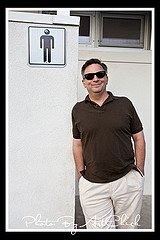
Reader : “I was at the field with the $400,000 toilets and decided to go in and see, they looked ok, but the soap was empty the electric was off so the toilets didn’t flush and we couldn’t dry our hands. I guess you don’t get much for $400,000.00 anymore. It was 1:00 pm. There is no money to keep the town up and it is a shame. Maybe the mayor, manager and council would like to put the large paycheck to work and do some cleaning up around town.” ( photo by Artchick.biz)
During a municipal budget review held on Wednesday April 14th, Dylan Hansen, the Village’s Network Administrator, publically revealed that 102 Village of Ridgewood employees are currently using cell phones that were paid for by Ridgewood taxpayers. Additionally, all monthly usages fees, in connection with business and/or personal calls, are also paid by Ridgewood taxpayers.
Clearly, the Village Manager and Village Council were either asleep at the switch or absent when cell phones were distributed at Village Hall. It is not possible that there are 102 Village employees whose positions warrant unlimited business and personal use of taxpayer provided cell phone service. This is simply an outrageous situation that must be brought to an immediate end.
The Fly has several questions for the Village Council:
1) What is the percentage of Village employees who have taxpayer provided cell phone service?
2) What is the formal approval process for obtaining taxpayer provided cell phone service?
3) When an employee retires, resigns, or is terminated, is someone checking to make certain that taxpayers aren’t continuing to provide the individual with cell phone service?
4) Is there a list kept of who has these phones or do we just know that 102 are out there? Is the list available for public viewing?
5) Is the value of cell phone service for personal use being reported as income on W2 forms?
The Fly suggests that now is the right time for Village Council members to hang up most of the Village issued cell phones.
Well now St. Patrick’s Day wouldn’t exist if not for the man himself! But how much do we know about him? Did you know that he spent six years of slavery in Ireland until he escaped and undertook religious training abroad?
Beannachtaí na Féile Pádraig is the Gaelic way of expressing a wish that you have all the blessings of St Patrick’s Day and the “luck of the Irish” to go with it. There are many humorous explanations for this expression. One comes from the legend of the ‘Little People’ of the land, know as leprechauns. Finding or catching a leprechaun (who would then give you gold) was a lucky event that could only take place in Ireland ! The Irish are descendants of great Celtic and Viking fighters and invaders. Their natural fighting skills often ensured survival & hence they became known as the ‘lucky’ people .a classic case of making your own luck ! But then “The Luck of the Irish” may all be legend.
Saint Patricks Day Parades Worldwide, Irish Pubs all around the globe, Fun Runs, Irish Associations, Irish Music Festivals, Irish Names, Irish Dancing Schools, Irish Music Irish Roots, Irish Festivals,Scottish Highland Games USA & Canada, as well as, Scottish Pipes & Drum Bands.
St Patricks Day is for thinking about our Saint as well as a time to think of loved ones across the water.
So, why is it celebrated on March 17th? One theory is that that is the day that St. Patrick died. Since the holiday began in Ireland, it is believed that as the Irish spread out around the world, they took with them their history and celebrations. The biggest observance of all is, of course, in Ireland. With the exception of restaurants and pubs, almost all businesses close on March 17th. Being a religious holiday as well, many Irish attend mass, where March 17th is the traditional day for offering prayers for missionaries worldwide before the serious celebrating begins.
>Come on, is this a surprise to anyone? This is just one more example of how inefficient and costly Government is. Take a look at the cost of the bandshell bathrooms. Is there anyone who doesn’t believe that a private contractor couldn’t have built those for a fraction of the cost the Village spent?
Government has become a self perpetuating beast; enacting regulations (to protect the people!) which require people to enforce, require extra hours and costs to adhere to them and thus driving up costs for everyone else. The private sector has profit as motivation, government has service as its mandate. Government should not be running businesses that private enterprises can provide cheaper.
Did you see what happened with the school system up in Providence the other day? They fired every single teacher in the system. One of the alternatives they are looking at is hiring a private contracter to provide teachers and manage the school system. Think they can do it cheaper?
As reported in the Ridgewood News by Michael Sedon and Kipp Clark , attorney Stuart J. Lieberman, of Princeton-based Lieberman & Blecher, who represents the Preserve Graydon Group contends that a Nov. 16 letter written by Village Clerk Heather Mailander failed to answer the group’s concerns about why the village is taking all the information gathered by the RPP “at face value without reviewing them,” as well as questions why municipal employees have been made available to help the group. With these questions yet unanswered, Lieberman contends the RFP should never have been issued.
Liberman went on , “In short, the basis for my client’s concern is that the municipality has clearly and extensively relied on the work product of the RPP in creating the draft RFP, apparently taking its conclusions at face value and without reviewing them thoroughly or perhaps at all,” Lieberman wrote. “For reasons more fully explained in my letter dated to you Nov. 30, 2009, we believe the draft RFP violates state law.”
Once again Village Government business seems to be driven by the price of a particular project and not the value of the improvements the project will bring to the quality of life in the Village .
Again this blog was proven correct in its objections to the original $13 million dollar proposal because as Ms. Mailander clearly points out in her statements that the Village Council only seems interested in hearing what it wants to hear.
For those of you who are unfamiliar with what an amazing town Ridgewood used to be ,in the olds days had you pulled a stunt like this you would have been quietly asked to leave town in no uncertain terms and your house would have been put on the market the next day. It really was a beautiful place to live and no one would have ever put up with this type of behavior or even known someone would have even tried to get away with it . It just wont happen in Ridgewood.
Oh well …
> Absolutely ridiculous. You can build a 2,000 sf house for $375,000 (build not buy land).
I blame the village for not overseeing this project more closely. Even though we have seen all of these delays, I bet the village is still paying on time.
The village needs to step up and demand improvements and completion of the job. If not, they need to sue the contractor to fix all of the problems (as well as demand legal fees for having to sue them).
if you can’t handle Ridgewood’s tax burden, then i suggest you MOVE. nobody is holding a gun to your head to live here. if you don’t want to pay state income taxes or don’t want to deal with high property taxes go to Texas!
if you can’t pay our taxes then you’re clearly too poor to be living in ridgewood.
>During last night’s Village Council Work Session, local real estate developer Nick Tsapatsaris revealed his conceptual plan to offer valet parking at Wilsey Square. The developer hopes to have his operation up and running prior to the start of NJ Transit’s upcoming train station renovation project.
Tsapatsaris, owner of a commercial office building at 20 Wilsey Square, informed Council members of his plan to install several parking lifts on property located directly behind the Exxon station on Godwin Avenue, just south of Wilsey Square. According to Tsapatsaris, an increase of 70 parking spaces could be achieved in the area by deploying parking lifts on the identified property.
Under Tsapatsaris’ plan, drivers would exit their cars directly in front of his building at 20 Wilsey Square. A valet parking attendant would then take over. No car owners would be permitted in the area where the parking lifts operate.
Council members thanked Mr. Tsapatsaris for his presentation and suggested he move his proposal forward by submitting an application to either the Board of Adjustment or Planning Board.
Tsapatsaris is a member of the Ridgewood Planning Board.
Saturday, March 22, 2008
Last Updated Saturday March 22, 2008, EDT 9:48 AMBY BOB GROVESThe cost of Valley Hospital’s proposed expansion would threaten Ridgewood’s taxpayers and the future of the facility, critics charged.
Valley’s $750 million plan to replace two of its older buildings with three new ones over the next decade could balloon, with interest, to $1 billion — and that would require the hospital to earn an additional $40 million a year for 25 years to pay it off, said Paul Gould. He is a member and spokesman of Concerned Residents of Ridgewood, a neighborhood group that has opposed Valley’s expansion plans for months.
“Where will it come from?” Gould said. “Will we end up with another Pascack Valley?” The Westwood hospital went bankrupt and closed last year after building a $50 million addition.
On the contrary, Valley’s plan “is vital to its success,” said Maureen Curran Kleinman, a hospital spokeswoman.
“If Valley is not allowed to renew over time, we will not be the hospital that the community will choose for its medical care in the future,” Kleinman said in a statement. “It will impede our ability to attract the best physicians and staff, and the hospital would be at risk of facing the same unfortunate fate as Pascack Valley and many other New Jersey hospitals that have been forced to close their doors.”
The Ridgewood Planning Board is deciding whether to approve separate requests, by Valley and by Concerned Residents, for changes in the village’s hospital zone ordinances and master plan. Those changes would either allow the hospital to expand or preserve the surrounding neighborhood.
Beyond financial concerns about the hospital’s plan, Gould and other members of his group worry how much Valley’s expansion would cost the village.
“Taxpayers would absorb the additional infrastructure costs of roads, fire and police, which are paid for by the residents of Ridgewood,” he said.
If, for example, Valley increased its occupancy rate from its current 87 percent to 100 percent, to help pay for the expansion, that could add 80,000 car trips on village streets to the hospital per year, on top of 600,000 vehicle visits already made there annually, Gould said.
While other area hospitals have expanded or renovated in recent years, Valley’s $750 million plan is one of the most ambitious.
Gould’s group is worried that Valley will suffer the same fate as Pascack Valley, which succumbed to a $100 million annual debt after it opened an addition. The hospital closed in November.
“We do not want another bankrupt hospital,” Gould told the Planning Board during a public hearing this week.
But Valley officials say the hospital is not in financial danger.
Valley would finance the first phase of its expansion, estimated at $420 million, through tax-exempt bonds, fund-raising and existing cash, “as is typical financing for not-for-profit hospital projects,” Kleinman said.
Even after the project is complete, Valley’s debt will be “manageable and moderate in comparison to other hospitals,” Kleinman said.
Gould conceded that Valley “is very profitable today,” he said. At a time when many of the state’s hospitals are struggling financially, Valley hospital has $225 million in cash and investments and a $46 million debt, according to tax filings. Revenue increases by 8 percent each year, Gould said.
But to pay for the hospital to pay for the expansion, Gould said, net patient revenue would have to increase by an additional 8 percent a year. How will the hospital do that when it’s only adding three more beds to its current 451? he asked.
Valley officials have repeatedly said their building plan is being done to bring the hospital up to modern medical standards, not to bring in more patients. Will the hospital have to increase what it charges patients? the neighborhood group asked.
“Valley’s charges are among the absolute lowest of any hospital in the state,” Kleinman said. “Even after the project is in place we will still have charges well below other hospitals in New Jersey.”
The neighborhood group also claims that the Planning Board, through its attorney and other professional advisers, has already been negotiating with Valley officials about some terms of the expansion before it has been approved.
David Nicholson, chairman of the Planning Board, said its professionals had met with Valley officials, but denied that they had “negotiated” any of the proposal.
“The implication that this matter is already decided is simply not true,” Nicholson said.
Kleinman said the hospital met with village professionals to discuss the hospital ordinance and make a recommendation to the Planning Board, but not to negotiate terms of the proposed expansion.
Tuesday, March 11, 2008
Last Updated Tuesday March 11, 2008, EDT 9:01 AMBY BOB GROVESThe Valley Hospital needs more space to handle advances in medical technology and provide better patient care, officials said Monday.
“The hospital is at a pivotal point in its history,” Audrey Meyers, Valley’s president and chief executive officer, told the Ridgewood Planning Board. “Valley must be allowed to evolve over time.”
About 200 people, including supporters and opponents of Valley’s expansion plans, attended the public hearing. Valley’s $750 million plan includes adding a parking deck and replacing two buildings with three new ones, increasing the hospital’s size by 67 percent.
Although modern surgery involves less-invasive techniques, it requires bigger equipment than can be accommodated by Valley’s existing operating rooms, Meyers said. Under the plan, Valley would add just three beds to its existing 451 beds, but the hospital wants to make all its room private in keeping with current standards of care, Meyers said.
The population of Valley’s service area is relatively stable and expected to grow by only 4 percent in the next 10 years, she said. “The demand for change at Valley will be driven by changes in technology and patient care delivery,” she said.
Opponents say the proposed 80-foot-tall hospital buildings don’t belong in the residential neighborhood because they would overshadow homes as well as Benjamin Franklin Middle School.
Answering concerns by nearby residents that the expansion would increase traffic, Meyers said that the hospital’s nine off-site facilities have already eliminated more than 673,000 car trips per year to the hospital’s main campus.
Tuesday night’s special Planning Board meeting at George Washington Middle School was its fourth public hearing on Valley’s proposal.
The next meeting will take place next Tuesday, when Concerned Residents of Ridgewood, a group that opposes the hospital’s plan, will make their arguments before the Planning Board.
In January, the residents group applied to amend the village Master Plan and its hospital zone ordinance to “limit its impact on the community and preserve the village’s residential character.” The group also asked the Village Council and the Planning Board to amend the ordinance to change the minimum distance — from the current 40 feet, to a proposed 80 feet — that hospital buildings must be set back from North Van Dien and Linwood Avenues.
“We want further clarification about whether the hospital has changed any of its positions from 12 months ago — particularly the magnitude and scale of the proposed development — following the public outcry,” Paul Gould, a member of the group, said before the meeting.
David Nicholson, chairman of the Planning Board, said the board would consider the request by the hospital and concerned residents “as legitimate and equal” and will consider them simultaneously. “The board will then make its decision whether it will consider any changes — one or the other or one of our own devising — to the ordinances,” he said. “My hope is we will make a decision by the end of April.”