School budget elections disappearing in New Jersey
April 12, 2014, 11:28 AM Last updated: Saturday, April 12, 2014, 11:28 AM
By GEOFF MULVIHILL
Associated Press
TRENTON, N.J. (AP) — Just a few years ago, April school elections were a key date on New Jersey’s political calendar, the time most of the state’s voters had — but ignored — the chance to say yes or no to property tax increases.
Now, the only-in-New Jersey votes hardly exist.
Just 26 of the state’s 585 school districts will hold elections April 23. That’s 15 fewer than last year.
The change is a result of a law that, starting in 2012, allowed schools to save money and duck public outrage by moving school board elections to November and scrap votes on the tax levy. School budgets are the biggest component of New Jersey property tax bills, which average more than $8,000, the highest in the nation.
The conversion has been faster than expected, and it has come without much complaint.
Frank Belluscio, a spokesman for the New Jersey School Boards Association, said his group doesn’t believe the school budgeting process has changed much because the direct vote on tax levies associated with school budgets is a thing of the past in most communities.
The budgets, he says, are still subject to a cap on how much administrative expenses can grow, still get reviewed by state education officials and are still subject to public hearing. And those that call for property tax increases of about 2 percent still must be voted on — unless the bigger increases are because of certain exceptions.
– See more at: https://www.northjersey.com/news/school-budget-elections-disappearing-in-new-jersey-1.938920#sthash.zbWpmLqc.dpuf
Ridgewood NJ, Amelia Ortiz had some extra pep in her step as she boarded her train Wednesday morning. It might have been the coffee.
Flo’s Depot at the Ridgewood train station officially opened for business Tuesday morning, exactly one week after its originally scheduled unveiling. No one, including Ortiz, seemed to mind the seven-day delay – after all, they have been waiting for almost five years for a coffee stand to re-open at the spot.
When New Jersey Transit began a multi-million dollar renovation project and forced the last coffee stand to permanently close its doors in 2009, morning rail riders were compelled to seek their caffeine jolts and breakfasts-on-the-go from other sources. For those residents opting against a travel mug of java from home, the extra stop at a nearby shop or bakery posed a minor inconvenience.
Charter School Applications Remain Strong, Despite Few Approvals by State
Administration’s reluctance to sign off on new charters doesn’t do much to discourage nearly 40 new applicants
Even as the Christie administration approves fewer new charter schools, interest in opening these facilities remains high, with nearly 40 applications coming in last week for the latest round of review.
Thirty-eight applications were received in all, although that number may be culled after preliminary reviews are conducted by the state Department of Education to determine if the proposals are complete.
The high number of applications reflects the enduring interest in operating these schools, even as the state throttles back on approvals. In the round of applications this past March, 38 proposals yielded just three approvals.
Overall, 14 of this year’s applications are repeat submissions; nearly a dozen come from the larger education management organizations that are coming to dominate New Jersey’s charter landscape. (Mooney/NJSpotlight)
UConn’s success envied around nation, especially in N.J.
APRIL 8, 2014, 10:55 PM LAST UPDATED: WEDNESDAY, APRIL 9, 2014, 12:48 AM
BY TARA SULLIVAN
RECORD COLUMNIST
THE RECORD
This was before the opening tipoff, before her Connecticut women’s basketball team routed Notre Dame for a second consecutive national championship, before Stefanie Dolson helped turn Storrs, Conn., into the college basketball’s epicenter. Dolson, a senior center who would go out and dismantle the Fighting Irish with 17 points and 16 rebounds, was asked if she’d heard any words of advice from the previous night’s national champions, otherwise known as her male counterparts back at UConn.
Dolson said she and her teammates had received texts from the men’s players that said, “One more game to go – you got this.”
That they did.
For the second night in a row, a Connecticut team outran, out-jumped and out-hustled the opposition; and for the second night in a row, Connecticut was the last college basketball team standing, finishing off a male-female double-double championship for the second time in school history.
The school that was supposed to be left behind is on top of the world.
With a wire-to-wire 79-58 win over previously undefeated Notre Dame in Nashville, Tenn., on Tuesday night, the Connecticut women didn’t simply finish off a perfect 40-0 season, but improved to 9-0 in national title games under head coach Geno Auriemma. One night earlier, the UConn men’s team defeated Kentucky, winning its second national title in four years, and fourth overall.
Between second-year coach Kevin Ollie and predecessor Jim Calhoun, the men’s team is also perfect in four championship games.
Connecticut’s position among the country’s elite athletic programs is indisputable, a testament to a long, sustained and successful building project that is the envy of schools across the land.
Nowhere is that shade of green deeper than amid the sea of Rutgers red, where a floundering department feels so far away from the superior level Connecticut projected to the world across a dominant month of March.
Ridgewood NJ, April 9, 2014 – The Ridgewood blog was founded in March of 2006 by James J Foytlin aka PJ Blogger .[1] Mr. Foytlin was born and raised in Ridgewood ,New Jersey and is a graduate of Ridgewood High School .[2] [3]
After many years living in New York City[4] Mr Foytlin returned to Ridgewood after a divorce and the tragic events of 9/11 . Once he settled in he noticed a lack of sufficient news coverage of local events . One day a friend from Brazil[5] showed him her home town on the internet and to Mr. Foytlin’s great surprise when he tried to reciprocate he was utterly dismayed at the absolute lake coverage of his home town. After all Ridgewood is only 18 miles from midtown Manhattan[6] the media capitol of world and there was not a single picture of Ridgewood to be found . How could this be? Ridgewood is a picturesque upper middle class village of around 25,000 located in Bergen county in northern New Jersey[7] . Founded by Dutch settlers before it became an English colony[8] . The town or village as its called is steeped in rich history and tradition .Known for a large amount of Victorian era housing , a quality school system and a family friendly atmosphere.
Though busy getting reacquainted with his home town the fact that the Village of Ridgewood was so under represented on the internet continued to disturb Mr. Foytlin. Mr. Foytlin had been writing news letters for his job in financial services since the mid 1990’s . The popular flip, off beat investment strategy news letters had become email blasts with the advent of readily accessible internet.[9] By 2004 the email blasts were converted into blog format for the One Small Voice blog (https://onesmallvoice.blogspot.com/ ). [10]
Around that time the Village of Ridgewood had finally completed it’s much anticipated and long delayed renovation of the Village hall which has been flooded out due to Hurricane Floyd.[11] The renovation was marred by huge cost over runs and lengthy delays. In 2005 it opened with great fan fare , was once again flooded with the very first rain . Mr. Foytlin was more shocked by the abject lack of responsibility taken by elected officials than the fact that the $9 million dollar renovation had to some extent been a failure . That was the breaking point and Mr. Foytlin had had enough so he decided to give , citizen journalism a go and created the Ridgewood blog in March of 2006. [12]
The birth of PJ Blogger .By this time Blogging its seems had become quite the rage and mainstream news anchors such as Dan Rather had questioned the validity of information from non professionals sitting around in their Pajama’s blogging.[13] Mr. Foytlin not a fan of Dan Rather or any of the mainstream media decided to blog under the name PJ Blogger as a play on words and to plant himself firmly in the camp of the new digital media.
Innovations by the Ridgewood blog to citizen journalism.
“The Fly” is a column on the Ridgewood blog the originates from the expression ,”I’d like to be a fly on the wall “ . The idea is that every citizen has both a unique perspective and experience and these two factors can be used to gather news and opinions about local issues. Originally only of handful of people in town participated but with time the Ridgewood blog can now count on 30–50 semi regular contributors. These post are both anonymous and signed and are largely opinion as well a breaking news.[14]
The Ridgewood blog brings a free market lassie fare point of view to local issues . Mr. Foytlin aka PJ Blogger has stated that for local issues there are only two kinds of people ;the ones who say spend what every you want because I will not be around to pay the bill and the second group which are more focused on the ,”be careful this is my money your spending” . The Ridgewood blog is dedicated to the interplay of there two groups.[15]
[1][12] the Ridgewood blog website https://theridgewoodblog.blogspot.com/
[2] Birth Certificate born in Valley Hospital , Ridgewood 04/09/1962
[3] Ridgewood High School Class 1980
[4] 444 East 86th street ,530 East 72nd
[5] Monica Rocha
[6] Mapquest
[7] United States 2000 Census, the village population was 24,936.
[8] https://www.americantowns.com/nj/ridgewood/organization/vi…
[9] Fahnestock & Co. now Oppenheimer & Co.
[10] https://onesmallvoice.blogspot.com/
[11] https://www.ridgewoodlibrary.org/localhistory/lh_vh_pease.htm
[13] https://www.opinionjournal.com/diary/?id=110005611
[14] [15] James J Foytlin
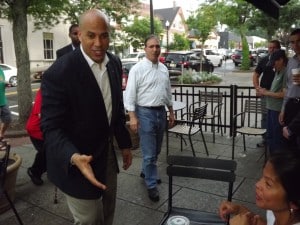
file photo Cory Booker in Ridgewood by Boyd Loving
New Jersey – It Just Ain’t Working
Editor’s Note – There are a number of national news stories today that highlight how fiscal and social policies are destroying the state. The state’s credit rating was down-graded by Moody’s, it’s largest city is posed for state takeover, public pensions are in critical condition and political correctness has run amok in our schools.
How do you plan to change this?
NEWARK FACING ‘EXTRAORDINARY LEVEL OF FISCAL DISTRESS’
UNION CITY, New Jersey–New Jersey’s biggest city has yet to file a budget and hasn’t told the state whether it will need federal aid this year. Left in an “extraordinary level of fiscal distress” by former Mayor Cory Booker, Newark is on the brink of a state takeover.
The Associated Press reports that officials responsible for keeping Newark afloat are increasingly hitting roadblocks in their attempts to streamline the government. In one letter to the City Council, one city official, Thomas Neff, described the situation as “an extraordinary level of fiscal distress” and urged the ailing city to invite state oversight.
While the city is currently being run by an interim government since Cory Booker’s ascendance to the Senate, both candidates currently running for mayor oppose state intervention. New Jersey generally is struggling through a stagnating economy and serious revenue shortfalls, but Newark has become especially aggrieved.
Neff’s argument is centered around the fact that Newark has yet to produce a budget for 2014 and has not reached out to state officials for financial aid during this difficult time.
The federal government is also threatening to intervene to save Newark’s police department. The Justice Department announced in February that it would send observers to the city to monitor police. This resulted from a 96-page appeal that the American Civil Liberties Union sent to the federal government arguing that federal oversight in Newark would prevent police abuse.
The AP notes that Booker, who ran his Senate campaign on a commitment to reform Newark, continues to be proud of his work in the city. He argues that he “turned the city around” after being told “Newark’s problems were literally impossible to solve.” After several years of stagnant crime development, however, 2013 heralded a sea change in Newark’s status quo, with a significant increase in violent crimes–carjackings, in particular. The crime wave peaked during Booker’s Senate campaign but failed to deter his victory. Booker’s mark on the city led The New York Times to attack him as an “absentee landlord” who boasted of doing his job well because he “brought ice pops” around during the summer, though he never actually fixed problems.
Even Newark’s mayoral race is plagued with crime. The inside of the campaign bus of candidate Ras Baraka was “torn apart” and burned, and sugar was poured into the gas tank. A suspect has been arrested, but Baraka accuses opponent Shavar Jeffries of orchestrating the vandalism, as official campaign finance records show that the suspect was paid by the Jeffries campaign.
N.J. Senate President Sweeney said an investigation by fellow lawmakers into politically motivated traffic jams should end
TRENTON — The New Jersey Legislature’s top Democrat said an investigation by fellow lawmakers into politically motivated traffic jams should end if a judge quashes the panel’s subpoenas before quickly reversing course Monday and saying the committee has not run its course.
Reader says Calling Villagers crackpot laypeople is yond belief. Who was the alleged comment really directed to?
He must have meant the “laypeople” on the planning board — perhaps, those asking questions about the faulty premises in the reports of the developers so-called experts, or maybe those who dare to ask what the effect of 400 new families will be on schools, traffic and other aspects of village life. Shame on those planning board members who dare to ask questions of those who testify before the board!!
Could this really have been the developers’ response to the public or did the paper get the quote wrong. Is Saracino that much of a sniveling buffoon who thinks he can get away with destroying the town by insulting Villagers? I suspect there must have been a mistake. Surely, Mr. Saracino is not an ignorant bully who thinks he can insult and buy his way into re-making Ridgewood a city made in his image.
Reader says I don’t understand the poisonous anti-development sentiment
Is anyone thinking that, as detailed in this post, the inventory of apartments in Ridgewood is old with limited ability to modernize because of the types of buildings that were the style in 1915 and again in the 1950′s are not want people want today? Is anyone thinking that newer and more modern style apartment will attract young professionals who want to start a life in Ridgewood and empty nesters who want to stay in Ridgewood? That combination will bring a vibrancy to Ridgewood so this will not just be a village with parents of school age children who leave when the kids graduate.
As a parent, I find the box of kleenex on the back to school supply list offensive beyond words but I do it and for our children, we write cheeks all year long for teams, field trips, concerts, book fairs, etc., etc. It is called the cost of living in a Village with high expectations for the schools. It is the cost of living so close to NYC.
I don’t understand the poisonous anti-development sentiment and the yard signs that imply the end of the world as we know it if things change.
PR Representative for Mr. Saraceno (The Enclave) Uses Valley tactic of belittling and attacking the opposition
Loved in the article in The Ridgewood News where I believe it was the PR Representative for Mr. Saraceno/The Enclave stated that, “The crackpot opinions of lay people have to be weighed for what they are”. Very nice. Not sure how calling people crackpots is going to help push through your development.
This is the exact same tactic that Valley has been employing for years. Anyone that dares to disagree with us is part of an ignorant minority. Those that don’t know history.
Funny none of the “The crackpot lay people” walked off with $460,000 worth of quarters right under everyone at Village Hall’s nose .
None of “The crackpot lay people” spent $500,000 on a toilet for vets field .
None of “The crackpot lay people”spent $9 million on renovating the Village Hall from flood damage only nto have it flooded out on the very first rain ..
the list is almost endless
From turf fields in flood zones , banning banks , higher density housing means less traffic to math classes that dont involve addition .
But Since you continue to ask none of “The crackpot lay people” would have even considered highering a Profession “crack pot” like Marty Brooks to be Superintendent of Schools . The BOE had spent countless amounts of tax payer money to a “search firm” which somehow failed to report Marty’s very checkered past . The first 30 pages of a Google search turned up among other things , the “WE HATE MARTY BROOKS ” website , a petition signed by over 800 parents looking to have him removed from his job in Long Island and a whole host of derogatory information . This blog was contacted by those same caring parents looking warn the Village of our coming doom . Education after all is about kids learning something , its not about teachers unions, overpaid administrators or wasteful pet projects . The Village ended up after a bit with a highly qualified , local resident Daniel Fishbein who was clearly the right choice to begin with , you can not possible tell me that the schools , though having some ups and downs are not far more focused on the “Tradition of Excellence ” now than they were then .
The point once again is perhaps its time to start questioning the judgement of many of the so called “experts “, and start listening to all the “lay people”.
APRIL 4, 2014 LAST UPDATED: FRIDAY, APRIL 4, 2014, 12:31 AM
PAGES: 1 2 > DISPLAY ON ONE PAGE
Keep an open mind on new housing
Ed Sullivan
to the editor:
The year 1915 saw great change in Ridgewood when the first multifamily building went up at 263 Franklin Ave., where it still stands today. As demand grew, six more apartment complexes were added through the 1920s.
“Will these new apartments destroy our village?” residents must have asked.
Sound familiar? With a Master Plan amendment currently before the Ridgewood Planning Board, this question has emerged again.
The apartment building history of Ridgewood shows a pattern: The first apartments went up 90-100 years ago. Responding to post-war demand, a second wave of 15 complexes followed during the 1950s-60s.
With each wave, Ridgewood embraced the new while preserving the “old.” History tells us that Ridgewood has a wonderful capacity to adapt to the times while maintaining its excellent schools, charming character and vibrant downtown.
Fifty years after the last significant apartment build-out, new demographic forces are driving a third round, driven by baby boomers and young people.
Empty nesters and baby boomers like me are downsizing at an accelerating pace, but we do not wish to live in a senior community.
Today’s active boomers and retirees desire a modern, high-end option, with amenities and conveniences that come with a walkable downtown setting.
– See more at: https://www.northjersey.com/opinion/opinion-letters-to-the-editor/letter-keep-an-open-mind-on-new-housing-1.841702#sthash.gup9CJqI.dpuf
Put education back into state, local hands
By Scott Garrett
Many pundits claim America’s K-12 education system is stagnant and doesn’t equip our nation’s youths with the skills necessary to remain globally competitive in the 21st century. In response, President Obama has recommended the adoption of Common Core standards, a uniform set of benchmarks that must be met by students at the end of each grade. The president has sold Common Core as an innovative set of national standards that will achieve academic excellence.
Unfortunately, we have heard all of this before.
More than a decade ago, President George W. Bush’s No Child Left Behind was signed into law. At the time, NCLB was advertised as dynamic, flexible and federally driven — education reform that would advance academic achievement through accountability. Today, NCLB is considered a failure. After spending billions and enacting rigid punishments for failing schools, no discernible academic improvement was achieved.
The centralization of education did not begin with NCLB. For half a century, Washington has pursued control of the classroom by attaching strings to federal education dollars sent to the states. Yet despite spending roughly $2 trillion and decades of increased federal regulation, reading scores remain flat, education costs have more than doubled, student-teacher ratios continue to decline, high school graduation rates remain unchanged since the 1970s and achievement gaps persist.
The tradition of federalized education has failed our students. And on this tradition the president proposes to double down.
Common Core is the predictable result of the Obama administration’s coercion of cash-strapped states. In return for a state’s adoption of Common Core, the administration promised the states a share of a $4.35 billion bounty.
Some officeholders don’t trust people outside Washington to come up with solutions. I disagree.
Some officeholders don’t trust people outside Washington to come up with solutions. I disagree. Rather than centralizing education, I believe that states and localities — those closest to the students — should set academic standards. The state and local governments are our laboratories of democracy. By promoting innovation at the state and local level, where parents and teachers have a louder voice, we provide ourselves with the opportunity to replicate our successes and learn from our mistakes.
But arrogant, top-down dictates, such as Common Core, rob us of this opportunity. We should allow federalism to work and defer to local experience.
That is why I’ve introduced the Local Education Authority Returns Now Act. The LEARN Act would allow states to opt out of federal education regulations and retain the dollars that would have been sent to Washington by reimbursing the taxpayers through a tax credit. The process is simple, straightforward, and empowers parents, teachers, school boards and local officials.
The LEARN Act works in three steps. First, a state decides that strings attached to federal money are hampering the ability of parents and teachers to educate their children as they see fit and enacts a law opting out of the federal program. Second, the Treasury Department determines how much money an opt-out state is entitled to. Finally, the taxpayers of the opt-out state receive a tax credit to reimburse them for the funds diverted to Washington. This method immediately cuts the authoritative and financial strings of the federal government, allowing states to set appropriate education standards.
The future of our nation depends on our ability to educate and train the generations that will carry on the legacy of freedom and prosperity. Today, states must focus on complying with federal mandates rather than cultivating an atmosphere that allows our educators to effectively educate our students.
We’ve experimented with centralized education before, and it failed. We cannot merely replace one set of federal dictates with another. The time has come to put our children first by returning control to those who know them best.
Rep. Scott Garrett is a Republican representing New Jersey’s 5th Congressional District
Readers says ” This whole process has been at best a joke at worst a fraud.”
If Valley had made anything approaching a reasonable modernization plan when they first pushed for their “Renewal” (remember way back when it was called a “Renewal”? That was like 3 PR campaigns ago) construction would be finished by now. Instead, they continue to push for this monstrosity of a project that’s no good for anyone but Valley and their plants on the Planning Board and Village Council.
The court asked for a compromise and the compromise is the addition of a 5 story parking garage along Linwood and the elimination of some underground space. Residents have not been engaged in the revised plan. This whole process has been at best a joke at worst a fraud. Residents should take to the streets . Village officials and Valley have been stringing us along.
” This whole process has been at best a joke at worst a fraud.” Of all the statements made above, this one really hits the nail on the head ! How embarrassing to the residents of this town.
N.J. study warns of continuing struggle for black, Latino children
APRIL 1, 2014
BY MONSY ALVARADO
STAFF WRITER
THE RECORD
White, Asian, African-American and Latino children in New Jersey scored higher than the national average across racial and ethnic backgrounds in several key indicators that measure a child’s chance at success in school and in life.
But the data in a report, for release today by a national advocacy organization, reveal deep disparities within the state’s racial and ethnic groups in areas including fourth-grade reading proficiency, eighth-grade math skills, high school and college graduation rates, and poverty levels. White and Asian children in the Garden State continue to score better than their Latino and black counterparts in several of these areas.
“To me this report provides data that confirms what we have suspected for a long time, that there is a significant gap in the well-being of children based on race and ethnicity,” said Cecilia Zalkind, executive director of Advocates for Children of New Jersey, a statewide, non-profit, non-partisan child research and action organization that jointly released the information with the Annie E. Casey Foundation.
The statistics found in The Kids Count policy report, “Race for Results: Building a Path to Opportunity for All Children” by the Baltimore-based Casey Foundation, is intended to better inform policymakers when making decisions about programs that can benefit children, foundation officials said.
“This first-time index shows that many in our next generation, especially kids of color, are off track in many issue areas and in nearly every region of the country,” said Patrick McCarthy, president and CEO of the Casey Foundation in a press release. “Race for Results is a call to action that requires serious and sustained attention from the private, non-profit, philanthropic and government sectors to create equitable opportunities for children of color, who will play an increasingly large role in our nation’s well-being and prosperity.”
Why Religion Matters Even More: The Impact of Religious Practice on Social Stability
By Patrick F. Fagan, Ph.D.
Over the past decade, considerable research has emerged that demonstrates the benefits of religious practice within society.[1] Religious practice promotes the well-being of individuals, families, and the community.
Of particular note are the studies that indicate the benefits of Religion to the poor.[2] Regular attendance at religious services is linked to healthy, stable family life, strong marriages, and well-behaved children. The practice of Religion also leads to a reduction in the incidence of domestic abuse, crime, substance abuse, and addiction. In addition, religious practice leads to an increase in physical and mental health, longevity, and education attainment. Moreover, these effects are intergenerational, as grandparents and parents pass on the benefits to the next generations.
America’s Founding Fathers understood the vital role that Religion plays in a free society.[3] Far from shielding the American people from religious influence, the Founders promoted the freedom of religion and praised the benefits that it brings to society. George Washington articulated this in his farewell address to the nation:
Of all the dispositions and habits which lead to political prosperity, Religion and Morality are indispensable supports. In vain would that man claim the tribute of Patriotism who should labor to subvert these great Pillars of human happiness-these firmest props of the duties of Men and citizens. The mere Politician, equally with the pious man, ought to respect and to cherish them. A volume could not trace all their connections with private and public felicity. Let it simply be asked, Where is the security for property, for reputation, for life, if the sense of religious obligation desert the oaths, which are the instruments of investigation in Courts of Justice? And let us with caution indulge the supposition that morality can be maintained without religion. Whatever may be conceded to the influence of refined education on minds of peculiar structure, reason and experience both forbid us to expect that National morality can prevail in exclusion of religious principle.[4]
Given the extent to which religious practice promotes civil society, understanding religion’s contribution to America’s constitutional order is fundamental to the nation’s continued prosperity. The practice of Religion is a powerful antidote to many of our nation’s pressing social problems, many of which have reached historically high proportions. Yet, despite the societal benefits of Religion, the expression of faith in the public square has faced many challenges. Therefore, legislators should seek constitutionally appropriate ways to explore the impact of religious practice on society and, where appropriate, recognize its role and importance.
Religion and marriage
There are many indications that the combination of religious practice and stable marital relationships contributes to a strong and successful next generation. We already know that stable marriage is associated with improved physical, intellectual, mental, and emotional health of men, women, and children, as well as equipping them with the values and habits that promote prosperous economic activity.[5] Religious practice is also related to positive outcomes for the stability and quality of marriage.
Marriage. Numerous sociological studies have shown that valuing Religion and regularly practicing it are associated with greater marital stability, higher levels of marital satisfaction, and an increased likelihood that an individual will be inclined to marry.[6] Christopher Ellison of the University of Texas at Austin and his colleagues found that couples who acknowledged a divine purpose in their marriage were more likely to collaborate, to have greater marital adjustment, and to perceive more benefits from marriage and were less likely to use aggression or to come to a stalemate in their disagreements.[7] Earlier research found that couples whose marriages lasted 30 years or more reported that their faith helped them to deal with difficult times, was a source of moral guidance in making decisions and dealing with conflict, and encouraged them to maintain their commitment to their marriages.[8]
Divorce. Four of every 10 children experience parental divorce,[9] but a link between religious practice and a decreased likelihood of divorce has been established in numerous studies. Women who are more religious are less likely to experience divorce or separation than their less religious peers.[10] Marriages in which both spouses attend religious services frequently are 2.4 times less likely to end in divorce than marriages in which neither spouse worships.[11] Those who view their religious beliefs as “very important” are 22 percent less likely to divorce than those for whom religious beliefs are only “somewhat important.”[12] The sociological literature reviews by the late David Larson of the Duke University Medical School and his colleagues indicated that religious attendance is the most important predictor of marital stability,[13] confirming studies conducted as far back as 50 years ago.[14]
The likelihood of divorce is even further reduced when husbands and wives share the same religious commitment. Such couples report having a greater sense of well-being and more satisfaction with their marital relationship,[15] and they are less likely to commit acts of domestic violence.[16] A study of couples with divergent theological views showed that they were more likely to argue, especially about financial matters.[17] Intermarriage across major faith groups is also linked with greater marital instability.[18] Furthermore, couples who share the same faith are more likely to reunite if they separate than are couples who do not share the same religious affiliation. In one study, one-third of the separated spouses who had the same religious affiliation reconciled, compared with less than one-fifth of those with different affiliations.[19]
During the 1980s and 1990s, when religious practice decreased overall,[20] the association between regular religious attendance and marital stability became even more apparent. Those who had ceased religious practice divorced 2.5 times more frequently than those who continued to attend religious services.[21] Paul Amato, a leading authority on the sociology of divorce from Pennsylvania State University, concluded that a possible increase in religious practice among some already existing marriages might have offset the negative effects of the overall decrease in religious practice among many other Americans. The rise in religious practice in this newly worshipping sector between 1980 and 2000 brought about increased support for lifelong marriage and counterbalanced, at the national aggregate level, two other trends: the increased incidence of premarital cohabitation and the increased work hours of married women, both of whichare associated with decreased marital satisfaction and a greater likelihood of divorce. Amato concluded that this increase in religious worship in one subgroup was one of the main factors in preventing growth in overall levels of marital unhappiness and proneness to divorce. As a result, the divorce rate in 2000 was nearly identical to the rate in 1980.[22]
Marital Harmony and Satisfaction. The practice of Religion not only stabilizes marriage, but also improves its quality. Brad Wilcox of the University of Virginia found that the more frequently husbands attended religious services, the happier their wives said they were with the level of affection and understanding that they received and the amount of time that their husbands spent with them.[23] Earlier research had shown that the more frequently couples engage in religious practice, the more they were satisfied with their marriages: 60 percent who attended religious services at least monthly perceived their marriages as “very satisfactory,” compared with only 43 percent of those who attended religious services less often.[24] A 1977 study indicated a link between religious practice and marital sexuality: Very religious women had greater satisfaction in sexual intercourse with their husbands than did moderately religious or non-religious women.[25]
Cohabitation. Studies consistently suggest that cohabitation is associated with an increased likelihood of divorce. For example, Paul Amato, confirming earlier indications,[26] reported that couples who had lived together before marriage were 59 percent more likely to divorce than those who did not.[27]
Repeated studies confirm the finding that those who attended religious services infrequently and those who, as adolescents, considered Religion to be of low importance are more likely to cohabit as young adults.[28] Compared with peers who attended religious services several times a week, young women who never attended were seven times more likely to cohabit. Women who attended weekly were one-third less likely to cohabit than those who attended less than once a month.[29]
The religious practice of parents also affects cohabitation rates. Those whose mothers frequently attended religious services were 50 percent less likely to cohabit than were peers whose mothers were not actively religious. A related research finding reported that church-going adults tend to stop regular religious practice when they begin to cohabit.[30]
Religion and family Relations
In general, religious participation appears to foster an authoritative, warm, active, and expressive style of parenting. In addition, parents who attend religious services are more likely to enjoy a better relationship with their children[31] and are more likely to be involved with their children’s education.[32]Moreover, the greater a child’s religious involvement, the more likely both the child and parent will agree about the quality of their relationship,[33] the more similar their values will be, and the greater their emotional closeness will be.[34] However, some of the same research also shows that religious differences within families can detract from the parent-child relationship.
Mother-Child Relationship. Compared with mothers who did not consider Religion important, those who deemed Religion to be very important rated their relationship with their child significantly higher, according to a 1999 study. When mothers and their children share the same level of religious practice, they experience better relationships with one another. For instance, when 18-year-olds attended religious services with approximately the same frequency as their mothers, the mothers reported significantly better relationships with them, even many years later, indicating that the effects of similar religious practice endures. Moreover, mothers who became more religious throughout the first 18 years of their child’s life reported a better relationship with that child, regardless of the level of their religious practice before the child was born. Mothers who attended religious services less often over time reported a lower-quality relationship with their adult child.[35]
Grandmothers’ religious practice illustrates an intergenerational influence. The more religious a mother’s mother is, the more likely the mother has a good relationship with her own child.[36]
Father-Child Relationship. Greater religious practice of fathers is associated with better relationships with their children, higher expectations for good relationships in the future, a greater investment in their relationships with their children, a greater sense of obligation to stay in regular contact with their children, and a greater likelihood of supporting their children and grandchildren.[37]
Wilcox found that fathers’ religious affiliations and religious attendance were positively associated with their involvement in activities with their children, such as one-on-one interaction, having dinner with their families, and volunteering for youth-related activities. Compared with fathers who had no religious affiliation, those who attended religious services frequently were more likely to monitor their children, praise and hug their children, and spend time with their children. In fact, fathers’ frequency of religious attendance was a stronger predictor of paternal involvement in one-on-one activities with children than were employment and income-the factors most frequently cited in the academic literature on fatherhood.[38]
Wilcox also traced the “pathways” through which Religion affects fathers’ relationships with their children and concluded that religious affiliation and especially religious attendance have unique effects that are independent of conventional habits of civic engagement. The emphasis that Religion typically places on family life, along with churches’ family-focused social networks of support and psychological support of fatherhood, helps to explain why religiously active fathers are more involved in youth-related activities.[39]
Domestic Violence. A small but growing body of research has focused on the links between religious practice and decreased family violence. For example, men who attended religious services at least weekly were more than 50 percent less likely to commit an act of violence against their partners than were peers who attended only once a year or less.[40] No matter how the data were analyzed, regular attendance at religious services had a strong and statistically significant inverse association with the incidence of domestic abuse.[41] Similarly, after controlling for all other factors, Wilcox found that of all groups studied (unaffiliated, active conservative Protestant, active mainline Protestant, nominal conservative Protestant, and nominal mainline Protestants), religiously active conservative Protestant men were least likely to engage in domestic violence.[42]
Religion and Extramarital Sex
Religious belief and practice are associated with less permissive attitudes toward extramarital sex and correspondingly lower rates of non-marital sexual activity among adolescents and adults.
Attitudes Regarding Non-Marital Sex. Numerous recent studies have found a relationship between religious practice and less permissive attitudes toward non-marital sex. Lisa Wade of the University of Wisconsin[43] and Sharon Rostosky of the University of Kentucky[44] reported that religious influence was the strongest significant predictor of less permissive sexual attitudes for both men and women. Wilcox found that, among both conservative and mainline Protestants, religious affiliation and religious attendance consistently predicted negative attitudes toward divorce and premarital sex.[45] A study of trends in the Netherlands covering a 30-year period also found that individuals who attended religious services more often were less likely to be accepting of extramarital sexual relationships.[46]
These recent findings support and expand upon earlier research, such as a 1989 study of adolescents that found that youth who attended religious services more frequently had less permissive attitudes toward sexual activity and less sexual experience than peers who attended religious services less frequently.[47]
Adolescent Sexual Behavior. Religious practice and placing a high significance on Religion are associated with decreased non-marital sexual activity. After parental marriage, religious practice is probably the most significant factor related to reduced teen sexual activity. Analysis of data from the National Longitudinal Survey of Adolescent Health found that a one-unit increase in religiosity[48]reduced the odds of becoming sexually active by 16 percent for girls and by 12 percent for boys.[49]Another study found that traditional values and religious beliefs were among the most common factors cited by teens as their reason for remaining sexually abstinent, second only to fear (e.g., fear of an unwanted pregnancy, a sexually transmitted disease, or parental discipline).[50] The level of overall religious practice in a community also influences the sexual behavior of its youth: The greater the level of religious practice, the lower the level of teen sexual activity.[51]
In a 2002 review of the academic literature on the effects of Religion, 97 percent of the studies reported significant correlations between increased religious involvement and a lower likelihood of promiscuous sexual behaviors. The authors found that individuals with higher levels of religious commitment and those who regularly attended religious services were generally much less likely to engage in premarital sex or extramarital affairs or to have multiple sexual partners.[52]
Out-of-Wedlock Childbearing. Thirty-seven percent of births now occur out of wedlock,[53] with an increasing number born to cohabiting parents.[54] However, given the findings on the relationship between religious practice and non-marital sex, attitudes, and behavior, it is not surprising that regular religious practice is one of the most powerful factors in preventing out-of-wedlock births. Rates of such births are markedly higher among young women who do not have a religious affiliation than among peers who do.
The level of young women’s religious commitment also makes a significant difference. Compared with those who viewed themselves as being “very religious,” those who were “not at all religious” were far more likely to bear a child out of wedlock (among whites, three times as likely; among Hispanics, 2.5 times as likely; and among blacks, twice as likely).[55] At the state aggregate level, the same phenomenon occurs. States with higher rates of religious attendance have lower rates of teenage pregnancy.[56]
Religion and the Abuse of Alcohol and drugs
Numerous studies demonstrate a significant association between religious practice and healthy behavioral habits relating to cigarettes, alcohol, and drugs. Individuals with higher levels of religious involvement have lower rates of abuse and addiction and are more likely to find long-lasting success if they ever struggled with any of these behaviors.
Cigarette Use. Harold Koenig and colleagues at Duke University found that religious activity was inversely related to cigarette consumption among the elderly.[57] The late Feroz Ahmed and colleagues at Howard University found the same for African-American women of childbearing age.[58]
Alcohol Abuse. Decades of research indicate that a higher level of religious involvement is associated with a reduced likelihood of abusing alcohol[59] or drugs.[60] The relationship between religious practice and the avoidance or moderate use of alcohol is well documented, whether or not denominational tenets specifically prohibit the use of alcohol.[61]
Adolescents,[62] psychiatric patients,[63] and recovering addicts[64] all show lower rates of alcohol abuse the more frequently they engage in religious activities. For adolescents, higher levels of religious practice by their mothers are related to significantly lower rates of alcohol abuse, even after controlling for religious denomination and the adolescents’ peer associations-two factors that also influence the level of drinking.[65]
Drug Abuse. Just as with alcohol, religious practice has for some time predicted significant reduction of substance abuse.[66] In a comprehensive review of the academic literature on Religion and substance abuse, Byron Johnson of Baylor University and his colleagues reported that, in the vast majority of studies, participation in religious activities was associated with less drug abuse. Even in cases in which individuals used drugs, the more religious were less likely to develop long-term problems.[67] All of the factors related to a decrease in drug use-good family relations, doing well in school, having friends who do not use drugs, and having anti-drug attitudes-had an even more powerful deterrent effect when teenagers were also religious.[68] The more dangerous the drug, the more religious practice deterred its use.[69]
Just as religious practice and belief deter drug abuse, Religion also has a positive effect in the treatment of drug addiction. In 1994, a seven-year follow-up study of Teen Challenge, a faith-based drug addiction program, found that the program’s graduates had significantly changed their behavior, in contrast to those who had dropped out.[70] A Northwestern University study[71] also found that Teen Challenge participants were more likely to remain sober and to maintain employment than were peers in control groups.[72]
Religion and Mental Health
In a review of mental health research that referenced decades of social science studies, 81 percent of the 99 studies reviewed found “some positive association…between religious involvement and greater happiness, life satisfaction, morale, positive affect, or some other measure of well-being.” This analysis included a wide diversity among ages, races, and denominations.[73]
Happiness and Well-Being.Happy peopletend to be productive and law-abiding and also tend to learn well, thus having a positive impact on society. A review of the research shows that Religion significantly affects the level of an individual’s happiness and overall sense of well-being. In the vast majority of the studies reviewed, an increase in religious practice was associated with having greater hope and a greater sense of purpose in life.[74]
Stress, Self-Esteem, and Coping Skills.More frequent attendance at religious services predicts less distress, even when controlling for the normal sociodemographic predictors of this condition.[75]Similar findings hold for high-school students.[76] For adults, a strong belief in eternal life also predicts less harmful stress from work-related problems.[77]A survey of African-American men and women found that respondents who were more religious reported a greater sense of control than less religious respondents. This greater sense of control was, in turn, correlated with decreased distress.[78]
Of the studies cited in Byron Johnson’s extensive literature review, 65 percent concluded that religious commitment and practice lead to increased self-esteem, while more than 80 percent indicated that religious practice correlates with increased social support.[79]
Membership in a religious community can enhance coping skills. One study found that people were much more inclined to use positive coping responses when they received spiritual support from fellow church members.[80] When like-minded individuals and families joined together in prayer, mutual support, or religious practice, they viewed their circumstances with spiritual significance: not only mundane daily affairs, but also major life traumas.[81] In a study of high-school students from West Virginia, the “ego strengths of hope, will, purpose, fidelity, love, and care” increased as the students lived out their religious beliefs more intently.[82]
Thus, involvement in religious practice, religious organizations, and religious communities tends to lead to favorable self-image and to foster the development of faith, hope, benevolence, and a belief in divine grace as personal spiritual resources.[83]
Depression and Suicide. Both public and private religious practice protect against depression. People who are frequently involved in religious activities and highly value their religious faith are at a reduced risk for depression, according to a review of more than 100 studies. This review also found that 87 percent of the studies surveyed concluded that religious practice correlates with reduced incidence of suicide.[84] Levels of depression were also lower for those who participated in religious services than they were for those who only prayed on their own.[85]
Studies have found that adolescents who frequently attend religious services and have a high level of spiritual support from others in their community have the lowest levels of depression.[86]Conversely, a lack of religious affiliation correlates with an increased risk of suicide.[87] Immigrant youth likewise enjoy the benefits of a higher level of general well-being when they attend religious services frequently.[88]
Religion and Physical Health
Greater longevity is consistently and significantly related to higher levels of religious practice and involvement, regardless of the sex, race, education, or health history of those studied.[89] For example, those who are religiously involved live an average of seven years longer than those who are not. This gap is as great as that between non-smokers and those who smoke a pack of cigarettes a day. Predicting the life spans of 20-year-olds who are religiously involved compared with those who are not yields differences in life span as great as those between women and men and between whites and blacks.[90] Among African-Americans, the longevity benefit is still greater. The average life span of religious blacks is 14 years longer than that of their nonreligious peers.[91]
Studies on the effects of religious practice on annual death rates of various populations found that, after controlling for variables such as race, death rates for an age cohort (e.g., men age 59 or women age 71) were reduced by 28 percent to 46 percent (e.g., from 100 deaths per year to 72 deaths to 54 deaths) for that age group.[92]
An earlier review of 250 epidemiological health research studies found a reduced risk of colitis, different types of cancer, and untimely death among people with higher levels of religious commitment.[93]Conversely, at any age, those who did not attend religious services had higher risks of dying from cirrhosis of the liver, emphysema, arteriosclerosis, and other cardiovascular diseases and were more likely to commit suicide, according to an even earlier review by faculty of the John Hopkins University School of Public Health.[94] The most significant pathway by which religious practice delivers these longevity benefits is a lifestyle that reduces the risk of mortality from infectious diseases and diabetes by encouraging a support network among family and friends that helps to maintain a pattern of regimented care.[95]
Not only a person’s own religious practice, but also parents’ religious practice affects personal health. Adolescents whose mothers attended religious services at least weekly displayed better health, greater problem-solving skills, and higher overall satisfaction with their lives, regardless of race, gender, income, or family structure, according to a study of public school children in Baltimore.[96]
Religion and Educational Attainment
Because education is important for all citizens and the government invests heavily in public schooling, any factor that promotes academic achievement is important to the common good. Academic expectations, level of education attained, school attendance, and academic performance are all positively affected by religious practice. In two literature reviews conducted by Mark Regnerus of the University of Texas at Austin,educational attainment aspirations[97] and math and reading scores[98]correlated positively with more frequent religious practice.
Parents’ religious practice also counts. The greater the parents’ religious involvement, the more likely they will have higher educational expectations of their children and will communicate with their children regarding schooling. Their children will be more likely to pursue advanced courses, spend more time on homework, establish friendships with academically oriented peers, avoid cutting classes, and successfully complete their degrees.[99]
Students in religiously affiliated schools tend to exhibit a higher level of academic achievement than their peers in secular schools, particularly in low-income urban neighborhoods. For example, studies continue to find that inner-city students in public schools lag behind in educational achievement, compared with students in Catholic schools.[100]
The cultural values of a religious community are also a significant pathway to academic success for adolescents. For example, to earn a high school diploma or take advanced math courses, children must plan for the future and structure their activities accordingly. Religious communities typically invest in forming an ethic of such discipline and persistence. A recent study confirms both this indirect contribution of religious community values and the direct influence of the students’ own religious activities in promoting academic achievement.[101]
Earlier studies found this same relationship between religious practice and academic discipline. For example, in 1985, the groundbreaking work of Richard Freeman of Harvard University revealed that attendance at religious services and activities positively affected inner-city youth school attendance, work activity, and allocation of time-all of which were further linked to a decreased likelihood of engaging in deviant activities.[102] For instance, youth who frequently attended religious services were five times less likely to skip school, compared with peers who seldom or never attended.[103]
education and Disadvantaged Youth. For youth in impoverished neighborhoods, religious attendance made the greatest difference in academic achievement prospects, according to research in 2001 by Regnerus. As rates of unemployment, poverty, and female-headed households grew in a neighborhood, the impact of a student’s level of religious practice on academic progress became even stronger.
Regnerus posits that churches uniquely provide “functional communities” for the poor that reinforce parental support networks, control, and norms in environments of disadvantage and dysfunction. In these neighborhoods, families are most likely to build pathways to success for their children when they closely monitor them and when they develop ties to local churches that expose their children to positive role models. Youth in high-risk neighborhoods who regularly attend religious services progress at least as satisfactorily as their peers in low-risk, middle-class neighborhoods:
Religious attendance was found to serve as a protective mechanism in high-risk communities in a way that it does not in low-risk ones, stimulating educational resilience in the lives of at-risk youth. We argue that adolescents’ participation in religious communities-which often constitute the key sources of neighborhood developmental resources-reinforces messages about working hard and staying out of trouble, orients them toward a positive future, and builds a transferable skill set of commitments and routines.[104]
Regnerus goes on to suggest that religious affiliation had a positive impact on educational attainment for African-Americans residing in a high-risk neighborhood, even when controlling for family structure, although its effect was strongest for youth living in two-parent families.[105] The role of Religion in building relationships and habits of hard work “reinforces a conventional (as opposed to alternate or illegal) orientation to success and achievement.” Youth religious affiliation in combination with religious families and friends serves to integrate youth into the broader society and shapes their aspirations for education and achievement.[106]
Religion and Community
Religious practice benefits not only individuals, but also communities. Religiously active men and women are often more sensitive to others, more likely to serve and give to those in need, and more likely to be productive members of their communities.
Compassion and Charity.Religious practice is linked to greater generosity in charitable giving. In extensive research documenting the relationship between Religion and philanthropy, Arthur Brooks of Syracuse University demonstrated that religious practice correlates with a higher rate of care and concern for others. Compared with peers with no religious affiliation, religious respondents were 15 percent more likely to report having tender, concerned feelings for the disadvantaged. This gap was reduced by only 2 percent when the effects of education, income, marital status, sex, race, and age were taken into account.
The correlation between Religion and increased charitable giving crosses ideological boundaries. When Brooks divided the survey population into quadrants of politically conservative, liberal, secular, and religious respondents, he found that the impact of Religion on compassion applied regardless of the political perspective. Religious conservatives were 6 percent more likely to be concerned about the disadvantaged than were secular liberals, while religious liberals were 24 percentage points more likely to express such feelings of compassion than were secular conservatives.
Among the general survey population, religious individuals were 40 percent more likely than their secular counterparts to give money to charities and more than twice as likely to volunteer. Among those who felt compassion for the disadvantaged, religious respondents were 23 percentage points more likely to donate to charities at least yearly and 32 percentage points more likely to donate monthly than were their secular counterparts. They were 34 percentage points more likely to volunteer at least yearly and 22 percentage points more likely to volunteer monthly.[107]
Regnerus and his colleagues found similar correlations between religious adherents and charitable giving in an analysis of the 1996 Pew survey on religious identity and influence. Individuals with a religious affiliation were 30 percent more likely to donate to organizations assisting the poor when compared with their secular counterparts.[108]
The impact of religious practice on formal charity had additional significance for community cohesion. Individuals who gave to charitable organizations were 21 percentage points more likely to give informally (e.g., to family and friends).[109]
Ram Cnaan of the University of Pennsylvania found that congregations as communities were almost universally involved in collective charitable outreach. In an extensive survey of religious institutions in Philadelphia, Cnaan found that 91 percent of the congregations surveyed had at least one community program that supplied goods and services to those in need, including food pantries, prison ministries, summer camps, and substance abuse prevention programs. He estimated the replacement value of the services provided by congregations in Philadelphia to be $228 million a year in the late 1990s.[110]
Violent crime.Just as the stable marriage of parents is powerful in preventing crime,[111] so too is the practice of religion. A review of the literature on Religion and crime suggests that, compared with less religious counterparts, religiously involved individuals are less likely to carry or use weapons, fight, or exhibit violent behavior.At the metropolitan level of analysis, areas with high rates of congregational Membership and areas with high levels of religious homogeneity tend to have lower homicide and suicide rates than other metropolitan areas.[112] Similarly, at the state level of analysis, states with more religious populations tend to have fewer homicides and fewer suicides.[113]
Immigrant Assimilation. Religion plays a role in helping immigrants to adjust to their new homeland. In research on the role of the ethnic church in the social adjustment of Vietnamese adolescents, including their educational success, regular religious attendance was found to increase the likelihood that youth would attend after-school classes, as well as the likelihood that they would retain their ethnic cohesion. Even after controlling for other variables, these activities and religious service attendance correlated with better grades, avoidance of substance abuse, and the importance attached to attending college-all of which aided their successful integration into American society.[114] Thus, religious practice was a significant bridge from their culture of origin to success in their new homeland.
Religion and At-Risk Youth
Even against the odds, in neighborhoods of disorder and poverty, religious practice serves as a significant buffer against drug abuse and juvenile delinquency. A study of 2,358 young black males from impoverished inner-city Chicago and Philadelphia found that a high level of religious attendance was associated with a 46 percent reduction in the likelihood of using drugs, a 57 percent reduction in the probability of dealing drugs, and a 39 percent decrease in the likelihood of committing a crime that was not drug-related. Thus, religious attendance was associated with direct decreases in both minor and major forms of crime and deviance to an extent unrivalled by government welfare programs.[115]
The effect of Religion is not solely a matter of external controls that curb adolescents’ risky behavior. Rather, religious attendance also promotes self-control, a positive allocation of time, attendance at school, and engagement in work.[116]In addition, youth religious practice is linked to a decreased likelihood of associating with delinquent peers-a significant factor in youth crime.[117]
Drug Use in Inner-City Neighborhoods.While religious practice appears to have a general restraining effect on the likelihood of using drugs, this effect appears to be especially strong for adolescents living in higher-risk neighborhoods, where increased religious practice coincides with substantially decreased drug use.[118] African-American youth living in impoverished urban neighborhoods who attended religious services at least weekly were half as likely to use illicit drugs as those who never attended.[119] Furthermore, an analysis of national longitudinal data indicates that religious youth from low-income neighborhoods are not only less likely than non-religious neighborhood peers to use illegal drugs, but also less likely than peers in “good” neighborhoods who have low levels of religious commitment.[120] In preventing drug abuse, religious practice trumps socioeconomic disadvantage.
Juvenile Delinquency. In at-risk, destabilized communities, religious practice was found to be a buffer against youth crime in the same way that it reduced the likelihood of substance abuse among adolescents. Even in communities where there are no strong social controls against delinquent behavior, religious commitment and involvement protects youth from antisocial behavior-both minor and serious. In the Add Health Survey, a major national survey of adolescents, a 6 percent reduction in delinquency was associated with a one-point increase on an index that combined adolescents’ frequency of religious service with their rating of the importance of religion.[121]
Mothers’ religious practice is also an influence in reducing the likelihood that children will become delinquent. Each unit increase in a mother’s religious practice is associated with a 9 percent decline in her child’s delinquency. The adolescents at lowest risk for delinquency typically have highly religious mothers and are themselves highly religious.[122] Even in cases in which young people have become involved in deviant behavior, specific types of religious activity can help to steer them back on the right course and away from further criminal activity. In addition, evidence indicates that religious involvement during adolescence has a cumulative effect and thus may significantly reduce the likelihood that a young person will commit crimes in adulthood.[123]
Negative Outcomes
The vast majority of the studies reviewed give evidence of numerous societal benefits of religious belief and practice. However, relatively few studies indicate some unintended negative outcomes.
Religion and Sexual Behavior. Although frequent religious attendance is highly correlated with less sexual activity among those who are not married, some religiously observant individuals do become sexually active. These individuals tend to use contraception less and thus do not have the protection of abstinence or barriers to prevent pregnancy or infection.[124] Among adolescent males from divorced families, there are indications of a positive correlation between frequent church attendance and an increased number of sexual partners. This relationship, however, does not appear among female adolescents from divorced families.[125] Motivation for Religious Practice. Researchers cite two types of motivation for religious practice: intrinsic and extrinsic.[126] Intrinsic and extrinsic motivations for religious practice seem to result in two very different types of outcomes.
Intrinsic motivation is related to moral standards, conscientiousness, discipline, responsibility, and consistency.[127] Those who are intrinsically motivated (intrinsics) are likely to be more sensitive to others and more understanding of their own emotions. They tend to have a greater sense of responsibility, are more self-motivated, and have greater internal control.
By contrast, extrinsic motivation relies on secular benefits such as those derived from religious affiliation and is often linked to self-indulgence, indolence, and a lack of dependability. Such individuals (extrinsics) are more likely to be dogmatic, authoritarian, and less responsible. They also tend to have less internal control and are less self-directed.[128] Furthermore, numerous findings link extrinsic religious motivation to similar, self-centered behaviors.[129] For example, studies documenting racial prejudice among church members found that those who are the most racially prejudiced either attend religious services infrequently or are extrinsically motivated and practice Religion simply as a means for fulfilling their own ends (e.g., Membership in a social group) rather than for prayer and worship.
In general, extrinsics have more anxiety about life’s ups and downs than intrinsics do. Intrinsics’ religious beliefs and practices are more integrated and consistent. For instance, they are more likely to attend public religious services and pray privately. By contrast, those who pray only privately and do not attend public religious services tend to have a higher level of general anxiety, a characteristic typical of extrinsics.[130] One set of findings on anxiety about death showed that extrinsics fared worse than intrinsic believers, but also worse than those who do not profess religious belief.[131] All of these findings confirm the conclusion in 1968 of Gordon Allport, then professor of psychology at Harvard University: “I feel equally sure that mental health is facilitated by an intrinsic, but not an extrinsic, religious orientation.”[132]
Despite some findings indicating the occasional negative outcomes, the vast majority of research studies cite the positive effects of religious practice. Typically, findings of negative effects are linked to specific circumstances related to particular forms of religious practice, most of which could be described as “malpractice” of religion.
Summary and Policy Implications
Strong and repeated evidence indicates that the regular practice of Religion has beneficial effects in nearly every aspect of social concern and policy. This evidence shows that religious practice protects against social disorder and dysfunction.
Specifically, the available data clearly indicate that religious belief and practice are associated with:
Higher levels of marital happiness and stability;
Stronger parent-child relationships;
Greater educational aspirations and attainment, especially among the poor;
Higher levels of good work habits;
Greater longevity and physical health;
Higher levels of well-being and happiness;
Higher recovery rates from addictions to alcohol or drugs;
Higher levels of self-control, self-esteem, and coping skills;
Higher rates of charitable donations and volunteering; and
Higher levels of community cohesion and social support for those in need.
The evidence further demonstrates that religious belief and practice are also associated with:
Lower divorce rates:
Lower cohabitation rates;
Lower rates of out-of-wedlock births;
Lower levels of teen sexual activity;
Less abuse of alcohol and drugs;
Lower rates of suicide, depression, and suicide ideation;
Lower levels of many infectious diseases;
Less juvenile crime;
Less violent crime; and
Less domestic violence.
No other dimension of life in America-with the exception of stable marriages and families, which in turn are strongly tied to religious practice-does more to promote the well-being and soundness of the nation’s civil society than citizens’ religious observance. As George Washington asserted, the success of the Republic depends on the practice of Religion by its citizens. These findings from 21st century social science support his observation.
What Policymakers Should Do
The original intent of the Founding Fathers was not to bar Religion from the public arena, but to guard against the federal government’s establishment of a particular state-approved church.
At the federal, state, and local levels, policymakers should work to encourage an environment in which religious institutions and organizations can thrive and citizens can actively practice their faith-both privately and publicly. In doing so, government entities can remain neutral with regard to particular faiths while still respecting the rights of citizens who are not affiliated with any Religion or faith.
Specifically, Congress should:
Pass a sense of Congress resolution finding that data on religious practice are useful to policymakers and researchers who inform the public debate. Such a resolution would remove the misconception that legislators are not permitted to be concerned with the religious dimension of life. In the words of the late Justice William O. Douglas (who was not considered a conservative on the Supreme Court):
We are a religious people whose institutions presuppose a Supreme Being. We guarantee the freedom to worship as one chooses. [When] the state encourages religious instruction or cooperates with religious authorities by adjusting the schedule of public events to sectarian needs, [it] respects the religious nature of our people and accommodates the public service to their spiritual needs. To hold that it may not would be to find in the Constitution a requirement that the government show a callous indifference to religious groups. That would be preferring those who believe in no Religion over those who do believe.[133]
Ensure the collection of better information from existing periodic national surveys on the prevalence of religious practice and the association between Religion and societal well-being.For instance, the American Community Survey and the Census Bureau’s March Supplement to the Current Population Survey should be augmented to include a measure of the level of respondents’ religious practice. This would permit an analysis of the effect of religious practice on the myriad aspects of national life that are studied.
In general, policymakers also should:
Become acquainted with research showing that religious practice serves the common good.This should inform their policy decision-making and equip them to lead an ongoing national discussion on the vital and constructive role of Religion in American life. The purpose of this dialogue would not be to enact legislation, but to highlight through public discourse the association between religious belief and practice and the well-being of American society. Such discussions would promote understanding, appreciation, and cooperation among citizens of different faiths while simultaneously respecting the freedom of those who do not have a religious affiliation or an inclination to practice any religion.
Consider the evidence on the effectiveness of faith-based approaches to social problems.Faith-based social service ministries have unique competencies in addressing some of the most difficult social problems. By some estimates, these organizations provide $20 billion worth of privately funded social service delivery for more than 70 million Americans each year. There are significant indications that faith-based social service programs are more effective than their secular counterparts.
A comprehensive review of the literature on the effectiveness of faith-based organizations contrasted the impacts of secular and faith-based programs in different service areas, from the treatment of addictions to “re-entry to society” programs for former prisoners.[134] In all but one of the 11 multivariate studies reviewed, faith-based programs were significantly more effective than secular counterparts.[135] These effective faith-based ministries have the potential to reduce dependency on government services, and policymakers should consider how to create an environment in which they can operate freely and to greatest effect.
Conclusion
A steadily increasing body of evidence from the social sciences demonstrates that regular religious practice benefits individuals, families, and communities, and thus the nation as a whole. The practice of Religion improves health, academic achievement, and economic well-being and fosters self-control, self-esteem, empathy, and compassion.
Religious belief and practice can address many of the nation’s most pressing social problems, some of which have reached serious levels (e.g., out-of-wedlock births and family dissolution). Research has linked the practice of Religion to reductions in the incidence of divorce, crime, delinquency, drug and alcohol addiction, out-of-wedlock births, health problems, anxiety, and prejudice. Faith-based outreach has been uniquely effective in drug addiction rehabilitation and societal re-entry programs for prisoners. Furthermore, the effects of religious belief and practice are intergenerational and cumulative. In a sense, they “compound the interest>” of our social capital.
Allan Bergin, a research psychologist who received the American Psychological Association’s top award in 1990, summed up the impact of Religion in his acceptance address: “Some religious influences have a modest impact whereas another portion seems like the mental equivalent of nuclear energy.”[136]
Freedom from an established Religion is compatible with the freedom to fully practice one’s religious beliefs. This freedom is very different from purported protection from religious influence. To work to reduce the influence of religious belief or practice is to further the disintegration of society. Some may be uncomfortable with the religious beliefs and practices of others, but that discomfort is small compared to the effects of having a society with little or no religious practice. America’s ongoing national experiment with freedom now faces anew the challenge of balancing society’s need for the benefits that Religion brings, its commitment to religious pluralism in the political order, and the rights of those who choose to live with no religious conviction.
Our Founding Fathers, in their dedication to liberty, promoted the freedom of all Americans to practice religious beliefs, or not, as they choose. Although the freedom not to practice Religion is intrinsic to religious freedom, that protection does not mean that this non-practice of Religion is equally beneficial to society. Social science data reinforce George Washington’s declaration in his farewell address: “Of all the dispositions and habits which lead to political prosperity, Religion and Morality are indispensable supports.”
Patrick F. Fagan is William H. G. FitzGerald Research Fellow in Family and Cultural Issues in the Richard and Helen DeVos Center for Religion and Civil Society at The Heritage Foundation.