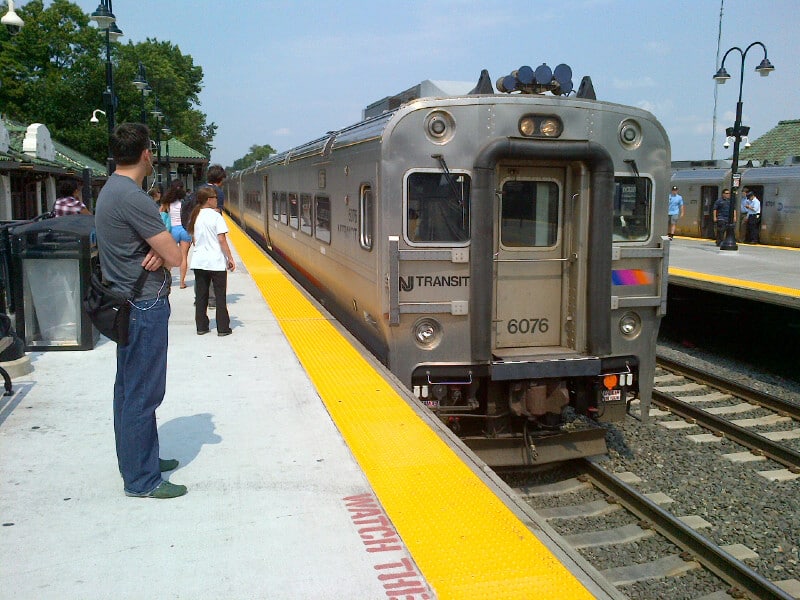
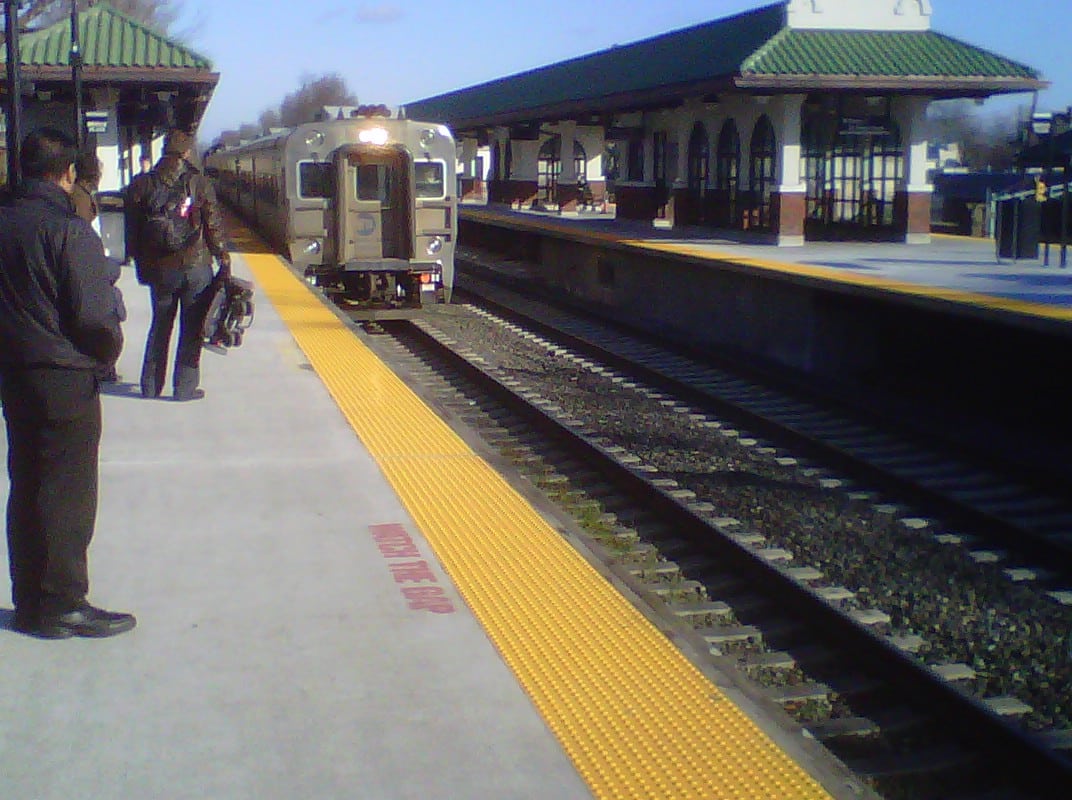
TENTON, N.J. — For six days in July, equipment failures forced New Jersey Transit trains to share a single Hudson River tunnel, delaying Manhattan commuters as long as 90 minutes.
Such disruptions will mount even if Amtrak, the national passenger railroad that owns the century-old tracks, makes repairs and builds replacements, which could take until 2030.
New Jersey Transit’s solution calls for flexible bosses.
In the event of a prolonged shutdown, the agency is counting on about one-third of its more than 165,000 daily Manhattan commuters to work from their houses. About 60,000 would be channeled to ferries and the rest could go by “a robust bus program,” said Nancy Snyder, a spokeswoman. Undetermined is what that would cost, or who would pay for such a workaround.
“This tunnel is going to be harder and harder to keep functioning reliably,” said Stephen Gardner, Amtrak’s executive vice president for Northeast Corridor business development. “It’s unreasonable to expect that there’s not going to be further kinds of disruptions or additional outages needed over several years ahead.”
New Jersey Transit, the nation’s third-largest commuter system, has few options. The ability to cross-honor, or send rail ticketholders to buses and the PATH subway during service interruptions, is constrained by space at the Port Authority terminal in Manhattan.
“For both bus and rail we are at or near full capacity in the peak,” Snyder said in an e-mail. Alternative transportation costs were too difficult to forecast, she said, because “many variables” can affect pricing.
“Amtrak has yet to come up with a plan or schedule regarding tunnel repairs that are expected to take place over the next 20 years,” Snyder said. “Until that happens, New Jersey Transit cannot speculate on the type of alternatives that may be necessary.”
JULY 27, 2015, 10:53 PM LAST UPDATED: MONDAY, JULY 27, 2015, 10:53 PM
BY HERB JACKSON AND CHRISTOPHER MAAG
STAFF WRITERS |
THE RECORD
U.S. Transportation Secretary Anthony Foxx urged Governor Christie and New York Gov. Andrew Cuomo on Monday to meet with him in the next two weeks to talk about replacing the century-old Hudson River rail tunnel that is frequently the cause of delays for commuters.
Foxx’s call comes after a week in which state and federal officials traded increasingly harsh words about delays on trains entering and leaving New York City.
In a letter to the two governors obtained by The Record, Foxx recounted how the federal government put up $3 billion for a new NJ Transit tunnel that was begun in 2009, then canceled by Christie in October 2010.
Amtrak, which owns the existing tunnel and Northeast Corridor tracks used by many NJ Transit commuters daily, has proposed the Gateway project, which includes building two new tubes under the river. If Gateway were built and the existing two-track tunnel were overhauled to replace failing electrical systems and structural damage caused by flooding from Superstorm Sandy, rail capacity under the river would eventually be doubled.
Foxx said that Amtrak was in discussions with the Federal Railroad Administration about financing, but that Washington would not bankroll the project by itself.
“Neither Amtrak nor your individual states, acting alone, can replace these tunnels,” Foxx wrote. “It will take all of us working together. To that end, I would like to meet with you within the next two weeks to discuss the project, especially your states’ roles in getting it completed.”
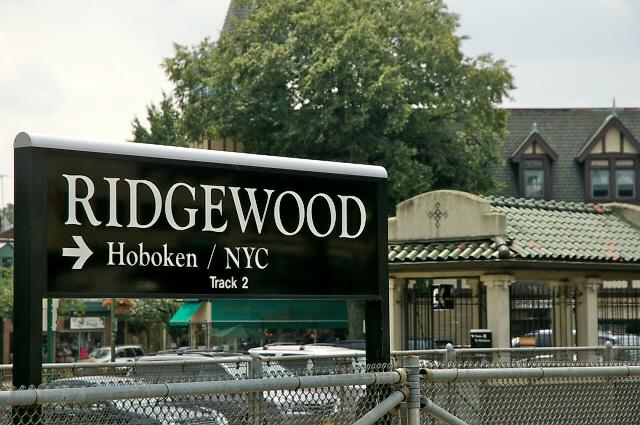
Why did he choose Ridgewood for this speech (flanked by his favorite union power brokers, btw)?
Odd choice since RW is not a major NJ transit hub…
Is it our “non-partisan” elections ?
Or perhaps it is another step towards politicizing the village and bringing Hudson county style Democrat political machinery into the village? (we are a tempting – rich, clueless – prize after all)
Maybe it is just something as simple as (yet another) attempt by Aronsohn to revive his political “career”.
who knows…
Ridgewood IS NOT one of NJ Transit’s busiest stations… its not even in the top 7 according to the 2014 “NJ Transit Facts at a Glance” sheet.
.
LINK: https://www.njtransit.com/pdf/FactsAtaGlance.pdf
.
Here is what NJ Transit lists as its top Seven:
.
Stations with the Highest Boarding Levels Avg. Weekday Boardings
Penn Station New York (Rail) ……………………………………………. 87,130
Port Authority Bus Terminal (Bus) ………………………………………. 78,014
Newark Penn Station (Rail) ……………………………………………….. 27,224
Frank R. Lautenberg Secaucus Junction (Rail)…………………..24,459
Hoboken Terminal (Rail) …………………………………………………… 14,444
Metropark Station (Rail) ……………………………………………………… 7,748
Princeton Junction (Rail) …………………………………………………….. 6,799
.
Ridgewood has 1,400 riders per day
LINK: https://www.stantec.com/our-work/projects/united-states-projects/r/ridgewood-station-rehabilitation.html#.VastQWfbKpc
.
Menendez wouldn’t go to a 2nd rate train stop unless it served some other purpose for himself (or his political buddies in the village)
Friday, July 17, 2015
the staff of the Ridgewood blog
Ridgewood NJ, Senator Bob Menendez held a press conference at the Ridgewood Train station yesterday under heavy security and pushed for more transit funding and union jobs. While it was an interesting choice of venue , a venue that had undergone a controversial $40 million renovation several years ago , which include and elevator to nowhere.
Menendez put forth his 9 Principles for a Public Transportation Reauthorization Bill, with no mention of how this stuff would be paid for or what happened to all the money in the Transportation Trust Fund or what the happened to all the shovel ready jobs from the stimulus package .
The senator was joined by our Mayor Paul Aronsohn for what many would call a union love fest .
“I categorically reject the idea that we can’t afford to fix our transportation system; we can’t afford not to fix it,” said Sen. Menendez, Ranking Member of the Subcommittee on Housing, Transportation, and Community Development, which has jurisdiction over transit. “Let’s stop pretending the transportation problem is going to resolve itself if we just wait long enough. Hundreds of thousands of New Jersey families and millions of Americans rely on a safe, reliable, affordable transit system, and Congress must finally accelerate on real investments and stop putting the brakes on upgrades, innovations and protections.”
“We need a transportation system that drives economic growth and helps communities thrive. Strategically investing in public transit can save families money in the long run, and it reduces congestion on our roads. It also increases economic mobility and job growth, giving people more personal flexibility and freedom to get to work, school, or wherever they need to go. Building tomorrow’s transportation system begins with hard work, careful planning, and smart investments today and these key principles offer a roadmap for making needed infrastructure improvements,” said Sen. Reed, who also serves as the Ranking Member of the Senate Appropriations Subcommittee on Transportation, Housing and Urban Development (THUD).
“Robust funding and smart policy that ensures that our transit systems remain efficient, safe, and reliable must be a key component of any transportation funding bill,” said Sen. Schumer. “As the Senate Banking Committee works toward a bipartisan bill these principles lay out some basic tenets that the bill should strive to achieve. Without additional investment transit systems across the country will continue to deteriorate, increasing the backlog of critical maintenance projects and jeopardizing the safety of transit riders.”
“By making smart investments in our transit infrastructure, we can create jobs today and build long-term economic growth in the future,” said Senator Merkley. “Oregon has been a longtime leader in innovative development projects, it’s time we incorporate more of these ideas in our national policy. Improving the reliability and efficiency of our public transportation systems is a win-win for workers, businesses, and the environment. At the same time, it makes our cities and towns better places to live, work, and raise a family.”
“A strong public transportation system is good for families, good for business and good for this country,” said Senator Warren. “A 21st Century economy requires a 21st Century transportation system.”
Sen. Menendez made the announcement at a news conference outside the New Jersey Transit rail station in Ridgewood, N.J., where residents rely on public transportation to commute to work.
“For Ridgewood commuters, having access to safe, efficient and reliable mass transit is not just important; it is a way of life,” said Mayor Paul Aronsohn. “We are therefore grateful to all that Senator Menendez is doing to promote these principles for a public transportation reauthorization bill.”
Sen. Menendez argued that transit systems have the potential to spur economic development, revitalize communities, and create new jobs. His policy framework today also received support from the leaders of the New Jersey AFL-CIO, Amalgamated Transit Union (ATU), Laborer’s International Union of North America (LiUNA), Northeast Regional Council of Carpenters, Brotherhood of Locomotive Engineers and Trainmen (BLET), Bergen County Central Labor Council, International Union of Operating Engineers (IUOE) and SMART-Transportation.
“We need a strong multi-year transportation funding bill signed into law to improve our economy and strengthen our communities,” said Charles Wowkanech, president of the New Jersey State AFL-CIO, which represents one million workers and their families. “Long-term funding allows proper planning and prioritization of our transportation needs, and creates permanent, sustainable jobs that make New Jersey a desirable location for employers and workers alike.”
“The Amalgamated Transit Union proudly stands with Senator Menendez, who recognizes the important role public transportation plays in communities across New Jersey and our country,” ATU State Council Chairman Ray Greaves said. “A long term transportation re-authorization bill will allow us to invest in and strengthen our transportation infrastructure, our mass transit system, and our workforce. It’s no secret that investment in mass transit is good for our economy and it creates jobs.”
“Once again, I commend Senator Menendez for his leadership in promoting the importance of making needed capital investments in our nation’s transportation infrastructure,” said Raymond M. Pocino, VP and Eastern Regional Mgr., Laborer’s International Union of North America. “The Senator’s policy priorities will help fund capital improvements to our region’s transit systems and enhance operational efficiencies. It is critical that we find a solution at the national and local level to fund our extensive transportation network. Without an efficient, mutli-modal transportation system we cannot grow our economy and create jobs, not only for the construction industry but all sectors of industry.”
“The passage of this bill will help New Jersey rebuild its failing infrastructure and create more opportunities for our residents to go to work,” said Northeast Regional Council of Carpenters Executive Secretary-Treasurer Michael Capelli.
“Senator Menendez is a true champion for the commuters of NJ Transit,” said Steve Burkert, General Chairman of SMART-Transportation Division Local 60, which is a member of the NJ Transit Rail Labor Coalition. “We applaud the Senator’s efforts to gain long term funding for NJ Transit. This funding will promote future growth and properly maintain current infrastructure. The safety of the passengers who ride our trains on a daily basis should never be compromised due to budgetary restraints. We stand here today in full support of Senator Menendez and his pursuit of funding the Public Transportation Reauthorization Bill.”
Principles for a Public Transportation Reauthorization Bill
Principle 1: Make sound investments by funding our nation’s transit programs at $115 billion over six years, the level recommended by the President.
Principle 2: Provide predictability and stability through a six-year authorization bill.
Principle 3: Address state of good repair challenges by growing programs including State of Good Repair and Bus and Bus Facilities.
Principle 4: Meet rising demand through increased investment in formula programs and Capital Investment Grants.
Principle 5: Strengthen America’s transit workforce through professional development, training, and robust worker protections.
Principle 6: Create sustainable communities through increased incentives for transit-oriented development
Principle 7: Build big, nationally and regionally significant projects in rural, suburban, and urban communities.
Principle 8: Invest in innovations that support safe, reliable, efficient and environmentally-friendly transit systems.
Principle 9: Improve disaster response by funding the Public Transportation Emergency Relief program.
more of Boyd Lovings photos will be posted durring the day and on the Ridgewood blogs Facebook page
the staff of the Ridgewood blogMenendez will reportedly be making a speech at the Ridgewood train station today Friday at 11 AM. If you stop by you might get a glimpse of him and our mayor standing next to one another. The speech is reportedly about NJ Transit.Our guess , US Senator Bob Menendez (D-NJ) will most likely call for increases in long-term, dedicated Federal funding to repair and upgrade the nation’s crumbling infrastructure . Menendez will refer to the economic and environmental reasons why increased investments are necessary, as well as the lesser-talked-about national security imperatives”Menendez may also mentioned New Jersey’s Gateway Project his first question to Therese McMillan, Acting Administrator of the Federal Transit Administration. The project includes the replacement of the Hudson River tunnels and the Portal Bridge – both of which are over 100 years old and in serious danger of failing in the near future. Menendez has stressed in the past he wants the U.S. to be well-positioned to undertake big, visionary transit projects.
If we get lucky he might bash the Presidents Iran deal or chat on the juicy of his federal indictment .
NJ Transit needs to close a $56 million budget gap.
Rockland residents will likely find out this week if they’ll still be able to take a late night Pascack Valley Line train on most days to get home from New York City.
On Wednesday, the New Jersey Transit board is expected to decide whether to eliminate the 12:45 a.m. train out of Hoboken, N.J. (1601), which runs Monday through Friday. That would leave those who work or stay late in the city scrambling to catch the 10:42 p.m. departure from Hoboken.
But people who like to spend Friday or Saturday nights in the city can take some consolation: Train 2101, which departs Hoboken at 12:45 a.m. on Saturdays and Sundays, is not part of the package of potential service cuts, meaning they can return to stations in Pearl River, Nanuet and Spring Valley.
If approved, NJ Transit spokeswoman Nancy Snyder said the service would end in September, while a nine percent fare increase would take effect in October. Most train riders in Rockland, except those who travel from Suffern, wouldn’t be impacted by the proposed increase since they pay their fares to Metro-North Railroad.
NJ Transit needs to close a $56 million budget gap. Eliminating Train 1601 — which serves about 40 daily riders — would save it $420,000 this fiscal year. Roughly half of those riders get off at one of three stations in Rockland, Metropolitan Transportation Authority spokesman Aaron Donovan said.
Not that long ago, top NJ Transit officials were forced to resign when the decisions they made to leave trains and locomotives exposedduring Hurricane Sandy resulted in $100 million in equipment damages.
Ronnie Hakim, the former New Jersey Turnpike Authority director, was brought on board as executive director to fill the void. The turnpike authority had an overtime scandal following 2013-2104 snowstorms. Apparently that wasn’t a deterrent to Hakim becoming a top NJ Transit official. It might even have worked in her favor: She could show the boys how it’s done.
Maybe you read a more recent article about NJ Transit. They have 1,000 employees making six-figure salaries. Excuse me — that’s 1,001 such employees — because Michael Drewniak, Gov. Chris Christie’s former press secretary, just landed a job at NJ Transit paying $147,700. That policy-and-planning job was newly created just for him and didn’t require any transit experience. It’s just another made-to-order Trenton patronage job paid for with our transit dollars.
Does anyone in Trenton have oversight responsibility so they can require that NJ Transit officials spend transit funds on actual transit projects? Or, will the revenue from the recent 9 percent fare hike provide additional patronage opportunities?
How many NJ Transit commuters have six-figure incomes and receive 9 percent salary increases?
ULY 9, 2015, 8:22 AM LAST UPDATED: THURSDAY, JULY 9, 2015, 8:23 AM
ASSOCIATED PRESS
NEWARK, N.J. (AP) — New Jersey Transit engineers have voted to strike if their contract dispute is not resolved.
However, union members are hoping the federal government will create a panel to help bring about an agreement. Union officials say the creation of the board would be enough to forestall a strike for the immediate future.
Enhanced North Jersey Coast Line express weekend service to beach towns
July 6,2015
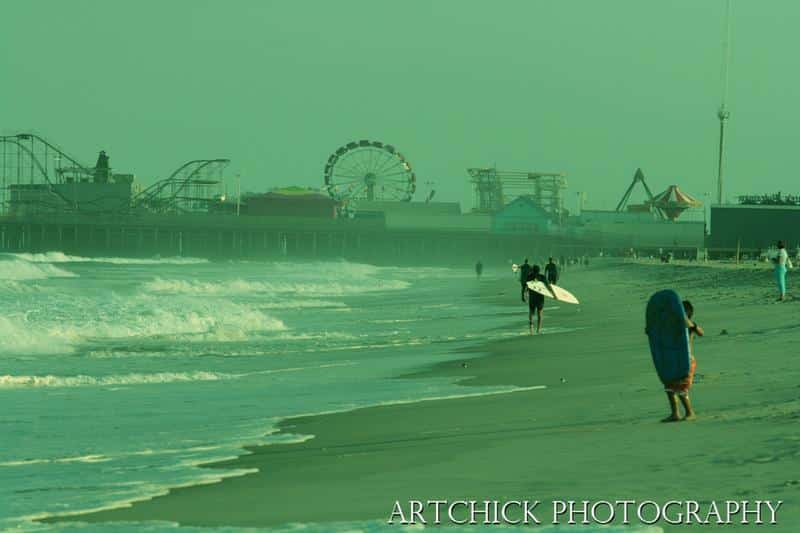
NEWARK, NJ — NJ TRANSIT is making it convenient and affordable to get to summer shore destinations with the return of express weekend rail service from Penn Station New York and northern New Jersey cities to shore communities along the North Jersey Coast Line this Sunday, June 21.
Enhanced Saturday, Sunday and holiday rail service on the North Jersey Coast Line will operate from June 21 through September 12 and utilize the agency’s dual-powered locomotives to provide a one-seat ride.
“This one-seat ride rail service from New York is a sound investment that not only gives visitors and residents easier access to some of our most popular beaches and boardwalks, it also helps take cars off the roadway and boosts tourism and the economy in our shore communities,” said Transportation Commissioner and NJ TRANSIT Chairman Jamie Fox.
“Our Shore service provides a safe and reliable way to get people where they need to be to enjoy time in the sun and expands transit options for travelers along the state’s costal region,” said NJ TRANSIT Executive Director Veronique “Ronnie” Hakim. “NJ TRANSIT is grateful for the continued support of the North Jersey Transportation Planning Authority (NJTPA) without whom funding for this service would not be possible.”
Four round-trip express trains will operate between Penn Station New York and Bay Head. This service also features hourly train service between Bay Head and Long Branch from approximately 7 a.m. to 10 p.m. Two of the round-trips will be geared to beach travelers, with an additional two round-trips providing service during the early morning and late night timeframes.
The express service will serve Penn Station New York, Secaucus Junction, Newark Penn Station, Elizabeth, Rahway, Aberdeen-Matawan, Red Bank, Long Branch, Asbury Park, and then all station stops to Bay Head, without the need of a transfer in Long Branch. A travel time savings of approximately 25 minutes is expected from the normal travel time between New York and trains such as Belmar, Manasquan and Point Pleasant.
Seating will be limited aboard the express service. Customers are strongly encouraged to purchase round-trip tickets or discounted beach packages to Long Branch, Asbury Park, Ocean Grove, Bradley Beach and Belmar (a savings of $6.50) prior to the start of their trip. NJ TRANSIT beach packages are available at some ticket windows and ticket vending machines. More information on beach packages is available on njtransit.com/summer.
Customers can also purchase NJ TRANSIT tickets using MyTix mobile ticketing.
Express trains will supplement NJ TRANSIT’s regular hourly rail shuttle service between Long Branch and Bay Head, and will operate using the statewide transportation agency’s new ALP-45 dual-powered locomotives. These specialized trains will operate in electric mode between New York and Long Branch and will switch to diesel operation for travel between Long Branch and Bay Head – allowing for the one-seat ride.
The announcement follows the May 11, 2015 endorsement of the service by the North Jersey Transportation Planning Authority (NJTPA), which authorized a $273,000 allocation through the federal Congestion Mitigation and Air Quality Improvement Program (CMAQ) to fund the new service.
Detailed schedules are available on njtransit.com.
JUNE 30, 2015 LAST UPDATED: TUESDAY, JUNE 30, 2015, 9:23 AM
BY MATTHEW SCHNEIDER
STAFF WRITER |
THE RIDGEWOOD NEWS
The Farmers’ Market has returned to Ridgewood, setting up shop on the west side of the village’s train station.
Organized by the Ridgewood Chamber of Commerce, the market, which is back for its 15th straight year, is one of the very few remaining true farmers’ markets.
“The market only sells food, no candles or anything like that,” said Joan Groome, executive director of the Ridgewood Chamber of Commerce.
The market will take place this year every Sunday through the end of October, rain or shine.
“The sellers put their food under tents, so the market will come off unless there are extreme conditions,” Groome said.
Merchants include a mozzarella cheese salesman; a baker; a jelly and jam salesman; Picklelicious, a well-known pickle company that attends many farmers’ markets; and two farmers.
Although the majority of wares for sale have remained static for most of the market’s history, the farmers sell whatever produce is in season, meaning that their inventory will change throughout the year. This gives attendees a variety of options to choose from, and keeps things interesting.
New projections show the New York region’s population should reach 20.5 million people by 2020, further taxing the region’s already overcrowded and cash-strapped subway, bus and train systems.
The projections — calculated by the mapping service ESRI for The Associated Press — estimate the region is growing at a clip of almost 100,000 people annually. Long Island, Westchester County and much of northern New Jersey are included in the metro area.
The importance of these systems can’t be overstated: 31% of metro area commuters use transit to get to work, the U.S. Census estimates.
As the region’s population booms, the strains on mass transit are increasingly evident.
Overcrowding was the single biggest cause of delays on the New York subway system during the last year, MTA stats show. Ridership has also grown on NJ Transit and the PATH trains.
Riders on NJ Transit are already hopping mad about a proposed 9 percent fare increase. Hundreds of them have bombarded the agency since April with angry emails, letters and in-person testimonials opposing the move, which will fill a $56 million budget gap if approved three weeks from now by NJ Transit’s board members.
But what if this fare increase is only the beginning? (Maag/The Record)
With New Jersey Transit commuters facing higher fares amid a $120 million budget deficit, the agency is paying more to workers as it deals with equipment repairs and service disruptions.
Overtime at the nation’s third-biggest rail and bus operator climbed to $135.3 million last year, a 12 percent increase from 2011. During the same period, the ranks of New Jersey Transit workers paid at least $100,000 a year grew 20 percent, according to data on the state’s website. The costs were driven by service needs and emergencies, plus wages in union contracts, the agency says.
“I don’t know how you justify” higher fares, said Stephanie Dunstan, a 30-year-old Hamilton resident, as she waited on June 17 for the 6:55 a.m. train to Manhattan, where she works in insurance. “I know people who are getting raises of 2 percent, 3 percent.”