Posted on Leave a comment

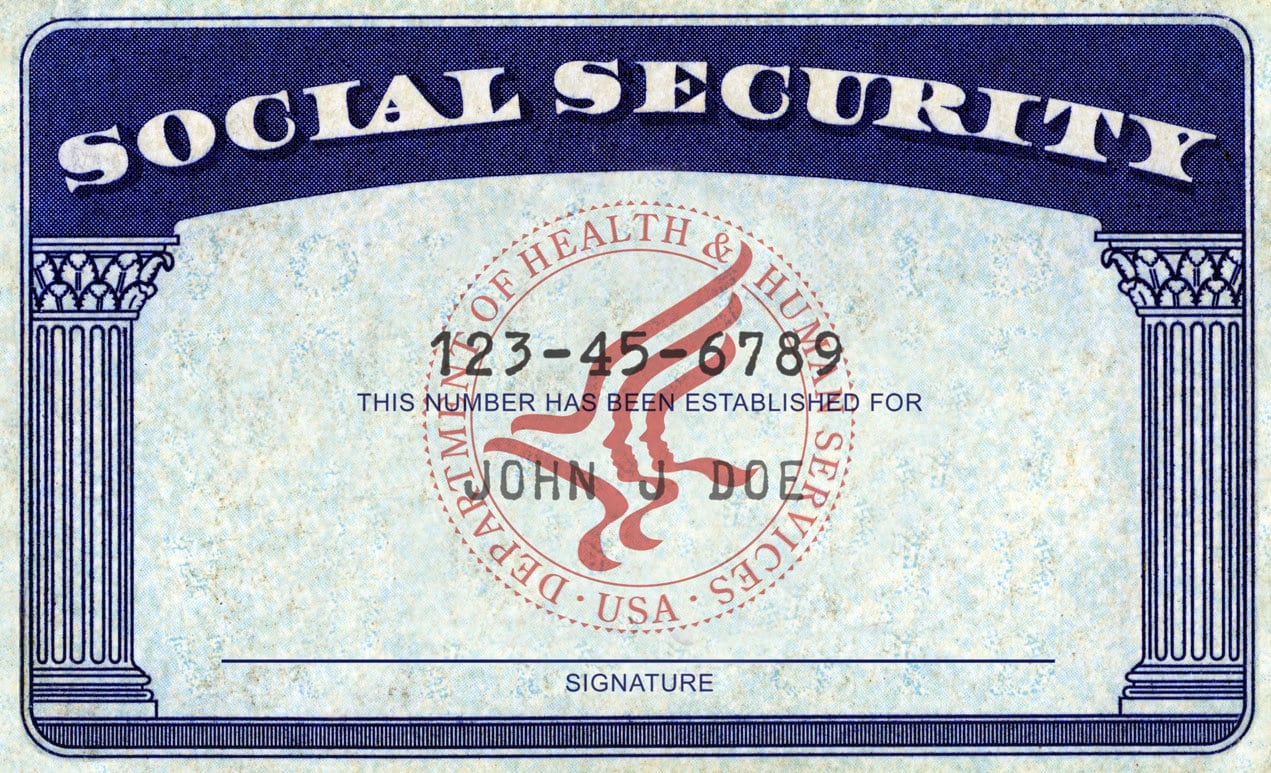
New Milford Police Department issue Social Security Scam Warning

social-security-card

the staff of the Ridgewood blog

New Milford NJ , the New Milford Police Department issued the following statement :

All residents, be advised numerous residents throughout town have received phones calls from 866-404-5249 stating they are from the Social Security Administration asking for Social Security Numbers and their SSN’s have been compromised. The callers will then hang up after attempting to gain information and then the victim will receive a phone call from a caller ID from 201-261-1400 which is the main phone line from New Milford Police claiming to be a New Milford Police Officer. Please be aware, these phone calls are a scam and NO New Milford Police Officer will ever call anyone requesting any information from the Social Security Administration. Please hang up immediately and do NOT give any information over the phone. Thank for for your Cooperation.

Posted on 1 Comment

Hawthorne Residents Get Hit With IRS Scam

irs

August 2,2018

the staff of the Ridgewood blog

Hawthorne NJ, BORO OF HAWTHORNE: 8/1 – Residents reporting calls from 973-427-1800 claiming to be IRS demanding money for back taxes. This is a scam call, provide no info
Please advise neighbors and any Senior Citizens in your neighborhood. These people are threatening arrest if money is not paid. Total Scam IRS would not call to collect taxes!

Posted on Leave a comment

Orange and Rockland Power Customers Hit by Payment Scam

Orange-and-Rockland-Featured-compressor[1]

June 1,2018

the staff of the Ridgewood blog

Wyckoff NJ, the Wyckoff police have again issued a warning to Orange and Rockland customers .The latest rash of phony-bill payment schemes in which imposters pose as utility company representatives and call customers, demanding immediate payment for what the crooks fraudulently claim are delinquent electric and gas bills.
These scammers pose as utility company employees and call customers saying their service will be disconnected if they do not make an immediate payment using a prepaid debit card or even a credit card.
Orange and Rockland does not accept payment from prepaid debit cards.
Orange and Rockland urges anyone who is contacted in this fashion to break off contact with the crooks and call O&R Customer Service at 1-877-434-4100.
If you are contacted by someone who says they represent O&R and you wish to verify their identity, call O&R at 1-877-434-4100 to verify their identity and the nature of their business with you.
Remember, when in doubt, hang up the phone or break off contact, and call O&R at 1-877-434-4100 to verify that the person you are dealing with is an O&R employee conducting legitimate business.

Orange & Rockland and its subsidiary, Rockland Electric Company, serve approximately 300,000 electric customers in New York and northern New Jersey, and more than 130,000 natural gas customers in New York.

Posted on Leave a comment

Louisiana man charged in ‘Nigerian Prince’ Email Scam

Coming-To-America-DI[1]


December 31,2017
the staff of the Ridgewood blog

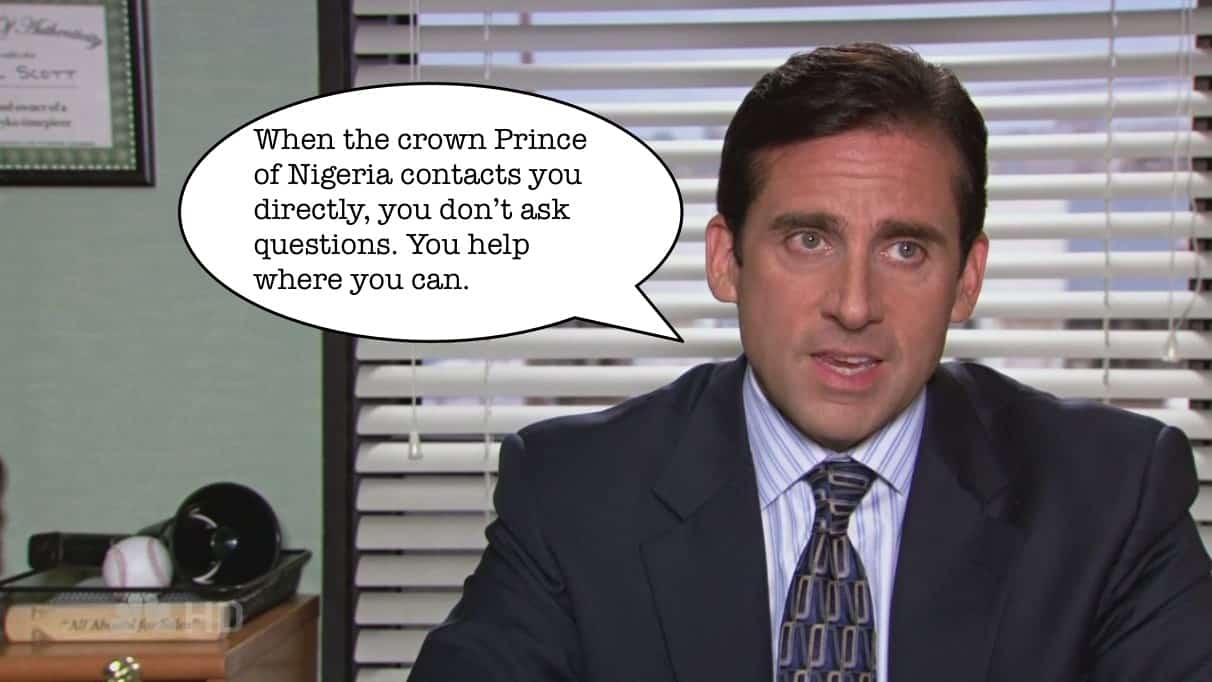
New Orleans LA, the Nigerian Prince has been found and he is a white guy from New Orleans . Police in New Orleans have arrested a 67-year-old man after he allegedly helped swindle people out of thousands of dollars as a middleman in a “Nigerian prince” Internet scam.

15147047905561

Michael Neu, 67, was a middle-man in a scam that involved co-conspirators in Nigeria, report says. (Slidell Police Department)

Michael Neu, of Slidell, is facing 269 counts of wire fraud and one count of money laundering, the New Orleans Advocate reported.

The “Nigerian Prince” phishing scam involves getting an email from a Nigerian official who claims the recipient has been named a beneficiary in a will and will inherit at least $1 million. The victim is then asked to send personal information which is used to con them out of their money.

Nigerian scam michael-scott-

“Most people laugh at the thought of falling for such a fraud, but law enforcement officials report annual losses of millions of dollars to these schemes,” a police report said.

In Ridgewood variants of this scam seem to be rampant and many residents continue to fall for them.

Posted on 2 Comments

N.J. Residents Deceived into Paying Scammers via Western Union Can Apply for Compensation from Settlement Fund

IRS Scam

file photo by Boyd Loving

November 19,2017
the staff of the Ridgewood blog

Trenton NJ, Attorney General Christopher S. Porrino announced today that New Jersey residents who were deceived into sending payments to scammers using Western Union’s wire transfer service can now apply for compensation from a $586 million fund related to a multi-state settlement with Western Union in which New Jersey participated.

According to Porrino, New Jersey residents may be eligible to receive compensation if they were the victim of a fraud-induced money transfer using Western Union services between January 1, 2004 and January 19, 2017.

New Jerseyans who reported to Western Union, or to the New Jersey Attorney General’s Office, that they were the victim of such a scam may soon receive a claim form in the mail. The claim form will be sent from the Settlement Administrator of a related federal settlement within the next two weeks.

The form will contain instructions explaining how consumers may file their claim to receive compensation. Consumers who do not receive a claim form in the mail but believe they may have an eligible claim can visit www.westernunionremission.com or call 1-844-319-2124 for more information on how to file a claim.

Filing a claim is free, so consumers should not pay anyone to file a claim on their behalf.

No one associated with the claims process will call to ask for consumers’ bank account or credit card number. All completed claims forms must be mailed back to the Settlement Administrator by February 12, 2018.

“Unfortunately, con artists use all types of ruses and tall tales to convince people to wire them money – and they sometimes succeed. Some of these ‘send money’ scams may appeal to the target’s humanitarianism or love of family, while others may suggest the would-be victim needs to wire money in order to claim a big sweepstakes prize,” Porrino said.

“The position of the states in this matter was that Western Union must be more vigilant going forward,” Porrino said, “but consumers can protect themselves, too, by exercising great caution in the face of overtures asking that they send money. If a person is being told a loved one is in need or in danger, we urge that he or she proceed with deliberation and make every effort to authenticate the story independently. And if a supposed ‘bargain’ or ‘contest prize’ sounds too good to be true, it probably is. We recommend that they not take the bait.”

Announced by Attorney General Porrino in January 2017, a multi-state settlement with Western Union Company resolved an investigation by the participating states focused on fraud-induced money transfers – specifically, the wiring of money by unwitting consumers to third-party con artists using Western Union’s wire transfer service.

Under the settlement, Colorado-based Western Union was required to develop and put into action a comprehensive anti-fraud program designed to help detect and prevent future incidents in which consumers who are the victims of fraud utilize Western Union to wire money to those defrauding them.

New Jersey was a member of the multi-state Executive Committee that spearheaded the Western Union investigation. Deputy Attorney General Cathleen O’Donnell, assigned to the Division of Law’s Consumer Fraud Prosecution Section, and Division of Consumer Affairs Chief Investigator Laurie Goodman, as well as Investigator/Team Leader Aziza Salikov, handled the Western Union matter on behalf of the State.

Posted on Leave a comment

Netflix Warns of Highly Sophisticated Phishing Scam

netflix

November 11,2017

the staff of the Ridgewood blog

Ridgewood NJ, If you get an email from Netflix telling you that your account is suspended due to a problem validating your credit card, don’t believe it.

It’s most likely a very sophisticated phishing scam that first made its appearance this year and has since gone out to tens of millions of people.

Wired reports that the cybercriminals behind the scam have continued to send it out with almost no alterations, a likely sign that it’s proving effective as a way to fool people into revealing their Netflix username and password, and even credit card numbers, home address, and date of birth, which they can sell this data on the dark web.

This phishing scheme is good enough to fool even the most sophisticated users. For instance, Netflix always advises users that “Netflix will never ask for any personal information to be sent to us over email.” That may be a great safety tip, but it won’t help you here because this scheme doesn’t do that. Instead, it asks users to click on an official-looking link to “Restart your membership.”

Click on the link and it will take you to what looks for all the world like a Netflix page there are even a still from the hit Netflix series The Crown in the background. The page prompts you to log in, or sign in with Facebook. If you do, of course, the hackers now have your Netflix (and maybe Facebook) credentials.

Once that’s done, the system takes you to a second screen with the Netflix logo, where you’re asked to “validate your payment information” by entering your credit card number and security code, and possibly your home address. Then the hackers will have those, too.

The hackers have created sophisticated techniques to avoid being recognized by any security system. The fake Netflix pages won’t work for users whose IP addresses belong to known security companies, making it hard for security experts to test out and examine them. In some cases, the HTML for the pages is actually encrypted so that it can’t even be scanned .
Posted on Leave a comment

FBI, U.S. Marshals Warning Public of Jury Duty Phone Scam

phone-scam

November 11,2017
the staff of the Ridgewood blog

Ridgewood NJ, The FBI’s Philadelphia and Newark Divisions and the U.S. Marshals Service, District of New Jersey, are warning the public about a phone scam being perpetrated by callers impersonating law enforcement or court officials.

The scammers say they’re with the U.S. Marshals Service, county sheriff’s department, or another law enforcement agency. They accuse the call recipient of failing to appear for federal or local jury duty and warn that an arrest warrant has been issued.

The intended victim is advised that he or she must pay a fine, then report to court. To settle the fine, the scammers instruct the person to buy a prepaid debit card and provide them the card information.

Recent reports indicate these scammers have been targeting New Jersey residents; variations of the “jury duty” scam have been documented in numerous other states, as well.

To avoid becoming the victim of this type of phone scam, the FBI and U.S. Marshals Service offer the following tips:

Always be suspicious of unsolicited phone calls
Never give money or personal information to someone with whom you don’t have ties and did not initiate contact
Trust your instincts: if an unknown caller pressures you, or says things that don’t sound right, hang up
If concerns remain about the caller’s claims, verify the information with the appropriate law enforcement agency or court officials

Victims of phone or online scams can file a complaint with the FBI’s Internet Crime Complaint Center at www.IC3.gov.

Posted on Leave a comment

CONSUMER ALERT: Be Careful of Phony Charities Soliciting Donations for Victims of Hurricane Harvey

Texas flooding
September 2,2017
the staff of the Ridgewood blog

Ridgewood NJ,  The devastation resulting from Hurricane Harvey’s landfall in Texas has New Jerseyans ready to help and show their support for the victims of the storm, but the New Jersey Division of Consumer Affairs has some advice for those looking to make donations: Beware of phony charities.

The Division is urging consumers to “Investigate Before You Donate,” and avoid fraudulent charitable solicitations, when seeking to donate for victims of Harvey, which has dumped unprecedented amounts of rain on the Gulf Coast of Texas.

“New Jersey residents are always willing to help out their neighbors when tragedy strikes, often by making donations to aid with recovery,” said Attorney General Christopher S. Porrino. “Sadly, there are always those scammers who look to take advantage of disaster for their own benefit.”

“Those looking to help should seek out reputable and legitimate charities,” said Steve Lee, Director of the Division of Consumer Affairs. “Residents should always take the necessary steps to make sure their money is actually going to help those in need.”

To help consumers discern which charities are legitimate and to protect against scammers, the Division offers the following tips:

Give to charities you know and trust. Never give to a charity you know nothing about. If a charity is new, that doesn’t necessarily mean you shouldn’t donate – but learn as much as possible before you decide to entrust the organization with your money. Especially after a natural disaster, many “pop up” charities often adopt names that include the name of the storm and may not have the ability or intention of carrying out the stated charitable mission.

Learn about the charity’s stated mission, and find out how, exactly it plans to use your money. Ask for literature and read it. Honest charities encourage you to ask questions.

Contact Consumer Affairs’ Charities Hotline at 973-504-6215 or state.nj.us/lps/ca2/charities to learn about specific charities. You can confirm whether a charity is registered or is exempt from registration requirements. (Certain religious or educational organizations, and those that raise less than $10,000 in a fiscal year, are exempt from the registration requirement).

Don’t be fooled by a convincing name or professional-looking website. Dishonest charities may use impressive names, or names that closely resemble those of respected, legitimate organizations.

Don’t succumb to pressure. Don’t let yourself be pressured into giving, and don’t feel you have to contribute on the spot. No legitimate organization will expect you to contribute immediately, even if you have given in the past.

Ask if the charity uses a professional fundraiser and, if so, what percentage of your contribution will actually go toward relief efforts and how much will be used to pay the fundraiser.

Beware of unsolicited and phony email notices that claim to be from a charity asking for your credit card information. This scam is called “phishing” and could be used by thieves to commit identity theft. If the charity is unfamiliar to you, check whether the group is registered with Consumer Affairs’ Charities Registration Section. If the organization is registered or you know the organization, call directly to find out if the email notice is valid.

Avoid cash donations if possible. Pay by credit card, or write a check directly to the charity.

Do not make checks payable to individuals; make checks payable only to those organizations which you found listed as active in the Division database.

Be wary of providing personal or financial information, even to charities you’ve confirmed are legitimate. Limit the information to what is needed to process your donation.

Social media sites can also perpetuate scams. Do not blindly give via these mediums. As with any charity, investigate the groups behind such pleas to ensure that they come from a legitimate organization.

Consumers may obtain information about a charity in several ways. They can ask the charity itself (reputable charities encourage you to do so), or visit the charity’s website.

Consumers can also obtain this information from the New Jersey Division of Consumer Affairs. Visit the Division’s Charities Registration page; call the Division’s Charities Hotline at 973-504-6215 during regular business hours; or use the Division’s free “New Jersey Charity Search” smartphone app.

Consumers are urged to report suspicious solicitations to their local police and to the Division of Consumer Affairs at 1-800-242-5846 (toll free within New Jersey) or 973-504- 6200.

Consumers who believe they have been cheated or scammed by a business, or suspect any other form of consumer abuse, can file an online complaint with the State Division of Consumer Affairs by visiting its website or by calling one of the numbers referenced above.

Posted on 3 Comments

The 5 sneakiest new scams to watch out for right now in 2017

Nigerian scam michael-scott-

Christy Rakoczy, Mic

Aug. 4, 2017, 9:52 PM

Maybe you’re booking your awesome Labor Day vacation. Or you finally got a reply to an email you’ve been waiting for, with package tracking information for a gadget you ordered online. You’re cool to send payment to your Airbnb host, or to follow the link in the “shipping info” email… right?

Well, not so fast. Some scams that have cropped up recently actually mean that if you’re not 100% sure you’re actually booking with a legitimate Airbnb host — or responding to a trustworthy email or text — you could be putting your identity and your computer security at risk. Fraudster trickslike fake student loan relief offersor fake tech support scams have been a problem for awhile, but summer is an extra busy time for scammers, with consumer complaints about new tricks on the rise.

That means it’s especially vital for you to be really careful right now — and part of that is knowing of the newest traps that scam artists are setting to get you to give up personal information, cash or worse.

To help you out, here are five of the newest scams that you’ll want to be sure to avoid in 2017 — ranked from kinda sneaky to downright dastardly.

https://www.businessinsider.com/sneakiest-new-scams-to-watch-out-for-in-2017-2017-8

Posted on 3 Comments

IRS Phone Scammers Target Glen Rock Police Dept

Pregnant Women Transported to Hackensack University Medical Center after Glen Rock Collision
file photo by Boyd Loving
June 7,2017

the staff of the Ridgewood blog

Glen Rock NJ, a Glen Rock reader point this out to us ,well I guess you are not the only one according to the  the Glen Rock Police Dept they received two automated calls in the past hour indicating that the IRS had issued an arrest warrant for us. We were told to call a 908 area code phone number (which we did….) and spoke with several males with Indian accents. Please help spread the word that these calls are scams trying to scare people into paying money. If we received two calls to our department line, we are sure other Glen Rock area residents are receiving them as well. The IRS or any police agency will never issue warrants to people over the telephone and would never require any type of bail money to be paid via Western Union or other wire service. Help educate others and avoid becoming a victim.

Posted on Leave a comment

NJ LAWMAKERS WRANGLE OVER WHO DECIDES HOW TTF BILLIONS WILL BE SPENT

road work Ridgewood police

photo courtesy of the Ridgewood Police

JOHN REITMEYER | APRIL 13, 2017

Senate President rejects Republican senator’s claim that new commission could politicize how projects are selected

Senate President Stephen Sweeney speaks during a news conference in Linden yesterday to announce state funding for a long-planned road project.

After last year’s renewal of the Transportation Trust Fund, there’s now $2 billion in state dollars to spend on infrastructure improvements every year in New Jersey. But that has also raised the question of exactly who decides which projects deserve top priority — the governor and his administration’s transportation officials or a special four-person commission that’s been championed by lawmakers?

A measure that’s expected to make it out of the Legislature in the coming weeks will ensure the new capital-project approval commission has the final say, though not until a year from now.

The passage of what’s being called the “TTF cleanup bill” will also make sure that a planned $2 billion in spending on infrastructure improvements during the state fiscal year that begins in early July can go forward even though the new commission has yet to be assembled.

And despite complaints from some lawmakers that the new commission could politicize New Jersey’s transportation-funding process and even be unconstitutional, Senate President Stephen Sweeney (D-Gloucester) said he remains committed to establishing the new format. He also disputed claims that the new selection method could be unconstitutional.

https://www.njspotlight.com/stories/17/04/12/lawmakers-wrangle-over-who-gets-to-decide-how-ttf-billions-are-spent/

Posted on 1 Comment

Bamboozled: Top scams to watch for in 2017

JohnPodestaAP

By Karin Price Mueller | NJ Advance Media for NJ.com
on January 02, 2017 at 7:09 AM, updated January 02, 2017 at 8:29 AM

It’s a new year, so you might expect Bamboozled to offer a list of new scams.

Nope.

The trend we’re seeing is that the same old scams keep popping up, sometimes with a new twist, and we expect the same for the coming year.

Why do scammers keep up the same old tricks? Because people keep falling for them.

Here are Bamboozled’s top five scams to watch for in 2017

5. Trust us! We’re the real thing!

Continue to be cautious of emails that seem to come from legitimate senders.

Before you say you’re too smart to fall for a phishing scam, read on.

Phishing emails often look like they’re coming from a real institution, such as your bank, credit card or utility company.

But they’re imposters.

They often look authentic, using a combination of real company logos and convincing-looking email addresses.

https://www.nj.com/business/index.ssf/2017/01/bamboozled_top_scams_to_watch_for_in_2017.html#incart_m-rpt-2

Posted on Leave a comment

Ridgewood : Is Grandma being scammed?

phone-scam

November 18th 2016

the staff of the Ridgewood blog

Ridgewood NJ, Do you have any relatives over age 65? Have they been warned about the grandma scam?

Here’s how the grandma scam works: A call from a younger person is made to the targeted older person, often at night, after the aging person is asleep. Half awake, grandma answers the phone and the scammer claims to be the grandchild who says he’s in trouble and he needs financial help. Grandma is concerned and wires cash to the scammer. It often times takes days until she realizes she has been scammed.

What’s the takeaway: Your relatives can be easily tricked under the right circumstances. Wanting a call from grandkids is the starting point for scammers and they are triggered by an emotional response to the plea for help.

Millions of dollars are lost this way, in smaller amounts at a time. One way to combat the scam is to be prepared to ask the caller a question only a real grandchild would know: the name of a pet, a parent’s birth date or a nickname.

That’s where Carolyn Rosenblatt, a registered nurse and elder law attorney, and Dr. Mikol Davis, a geriatric psychologist, come in. Rosenblatt and Davis, co-authors of The Family Guide to Aging Parents: Answers to Your Legal, Financial, and Healthcare Questions (www.agingparents.com) and Succeed with Senior Clients: A Financial Advisor’s Guide to Best Practices (www.aginginvestor.com), can provide comments for articles you are working on or write exclusive articles on this topic for your publication.

Posted on Leave a comment

Two More Ridgewood Residents Report Identity Theft Incidents

Nigerian scam michael-scott-
July 27,2016
the staff of the Ridgewood blog

Ridgewood NJ,  Ridgewood Police Department would like to remind citizens of the increased amount of scams. Always investigate communications made through postal mail, telephone, and/or the internet to prevent fraud and deceptive activity. If you have any questions or concerns, please contact the Ridgewood Police Department to ensure you’re not becoming a victim of these scams.

A Unadilla Road resident responded to headquarters on 7/20/16 to report identity theft in the past. The victim reported an unknown person utilized his personal identity to open a Comcast account in the state of Maryland between 10/07/15 and 12/31/15. The victim reported Comcast is in the process of clearing the victim’s name from balance of $2777.44.

A Hamilton Road resident responded to police headquarters on 7/23/16 to report a fraud in the past. The victim reported an unknown person utilized his personal identification to open Verizon Wireless account without authorization. The victim reported he began receiving letters from a collection agency in reference to the fraudulent account. Verizon was notified and advised the victim the situation is being taken care of.