Posted on Leave a comment

Moody questions where N.J. share of Gateway Tunnel funding will come from

Ridgewood_Train_station_train-_is_coming_theridgewoodblog

By Larry Higgs | NJ Advance Media for NJ.com
on November 25, 2015 at 7:43 AM, updated November 25, 2015 at 2:09 PM

One of the nation’s leading financial rating agencies has weighed in on the Gateway Tunnel project, deeming it necessary to the regional economy and joined others who’ve suggested charging riders to help fund the project.

Two experts have suggested charging a user fee to commuters and travelers who make between 73 million and 100 million trips a year through the 105-year old tubes under the Hudson River between New York and New Jersey. Moody’s said this one possibility that could be used.

“A user fee, similar to U.S. airports passenger facility charge could generate $330 million annually for financing,” Moody’s wrote in an analysis of the Gateway project released on Tuesday. Airport passengers typically pay a $4.50 fee, the analysis said.

Phil Beachem, executive director of the N.J. Alliance for Action, proposed a user fee of $1 or $2 per trip on top of regular train fares. Jonathan Peters, a finance professor at SUNY College of Staten Island, who specializes in toll road and transportation financing has all suggested a user fee.

Moody’s didn’t question the economic need for constructing new tunnels before one of the existing 105-year old tunnels has to be closed to repair damage from Hurricane Sandy flooding.

“While the tunnel will add significant cost to a region already paying for significant infrastructure investments, it provides a vital commuter link for a regional economy with a $1.4 trillion Gross Domestic project,” Moody’s said in the analysis.

https://www.nj.com/traffic/index.ssf/2015/11/moodys_suggests_user_fee_to_fund_gateway_tunnel_pr.html

Posted on 18 Comments

Breaking News Bergen County officials Are Seeking to Merge County Services With Cities Like Newark ,Paterson, Passaic and Jersey City

Van Nest Sq

December 3,2015
the staff of the Ridgewood blog

Ridgewood NJ , the Ridgewoood blog has learned from what we’ve seen in other presentations that this means they want to make things ‘regional’ and that means you’ll pay for costs in other towns even though you don’t get a vote?  Bergen County officials are seeking to use your tax money to fund services in other jurisdictions .

The meeting was held at Bergen Community College on Wednesday December 2nd under the guise of “Uniting New Jersey: Cities and Suburbs Working Together”,hosted by Bergen County Executive James J. Tedesco. The keynote speaker was Bergen Professor Phil Dolce, Ph.D., a noted suburban studies expert.

Bergen Professor Phil Dolce, Ph.D.,led a panel discussion featuring: Bergen County Sheriff Michael Saudino; Paramus Mayor Richard LaBarbiera; Teaneck Mayor Lizette Parker; and Jersey City Deputy Mayor Vivian Brady-Phillips on strategies for bridging the divide between suburbs and cities.

This would answer a lot of questions as to why the made dash to urbanize down town Ridgewood .

this is the invite

Officials Will Discuss Suburb/City Relationship at Forum

Elected officials from some of North Jersey’s largest suburbs and cities, including keynote speakers Bergen County Executive James J. Tedesco III and Jersey City Mayor Steven Fulop, will gather at Bergen Community College to discuss how communities can enhance collaboration during a free and open-to-the-public conference Wednesday, Dec. 2.

The “Uniting New Jersey: Cities and Suburbs Working Together” program will begin at 5 p.m. with a light buffet in the Moses Family Meeting & Training Center at the College’s main campus, 400 Paramus Road. Along with the College, the Volunteer Center of Bergen County and the North Jersey Public Policy Network will co-sponsor the event.

In addition to the keynote speakers, Bergen Professor Phil Dolce, Ph.D., a noted suburban studies expert, will lead a panel discussion featuring: Bergen County Sheriff Michael Saudino; Paramus Mayor Richard LaBarbiera; Teaneck Mayor Lizette Parker; and Jersey City Deputy Mayor Vivian Brady-Phillips on strategies for bridging the divide between suburbs and cities.

For the first time since 1950, growth in urban counties has outpaced their suburban counterparts in the New York metropolitan area, according to a Rutgers University Bloustein School of Planning and Public Policy study. Experts believe the shift could have consequences for suburban areas that depend on significant property tax revenue. Bergen County, a major suburb of New York City, remains the state’s most populated county with approximately 933,572 residents according to the federal government. The county’s population has risen each year in the last decade.

For more information on the conference, or to RSVP for the light buffet and/or conference, please [email protected].

Posted on 16 Comments

A Sign of things to Come : Paterson May Not Meet Payroll

Paterson Falls

Paterson looks to hold emergency meeting to make Friday’s payroll

NOVEMBER 30, 2015, 10:16 AM    LAST UPDATED: MONDAY, NOVEMBER 30, 2015, 10:16 AM
BY JOE MALINCONICO

PATERSON – Officials were scrambling Monday morning to schedule an emergency City Council meeting later in the day in an effort to issue Friday’s paychecks to Paterson’s 1,800 municipal workers.

The mayor has said the council must approve temporary budgets for December and January on November 30 in order for the employees’ next checks to be issued on time.

The employee checks were placed in jeopardy last week when the council objected to the administration’s lack of spending cuts and voted 4-4-1 to reject its proposed temporary budget.

The state on November 25 sent the city council a letter criticizing its action. “The City Council’s failure to act on a temporary budget jeopardizes the fiscal well-being of the City,” wrote Timothy Cunnnigham, director of the New Jersey Division of Local Government Services.

Cunningham said the council should “work with the administration to identify specific budget cuts” and approve the temporary budget in the meantime so that Paterson could meet its financial obligation to employees, vendors and bondholders.

It’s not clear whether the council would budge at an emergency meeting. Under laws government fiscal decisions, the administration needs six votes to get the temporary budget passed. That means at least two council members among the five who abstained or voted against it would have to change their minds.

https://www.northjersey.com/news/paterson-looks-to-hold-emergency-meeting-to-make-friday-s-payroll-1.1464758

Posted on 3 Comments

Obamanomics : Shoppers may be losing their holiday spirit

Holiday Spirit

NOVEMBER 28, 2015    LAST UPDATED: SATURDAY, NOVEMBER 28, 2015, 1:21 AM
BLOOMBERG NEWS |
WIRE SERVICE

Could Americans be losing their holiday spending spirit? More than 20 years of retail sales data suggest it’s a distinct possibility.

U.S. retailers have come to rely on a shopping frenzy toward the end of the year, as the annual gift-giving season compels people to open their wallets. That holiday bump, though, appears to be shrinking.

Last year, December’s share of annual retail sales (excluding gasoline) amounted to 9.9 percent, according to the U.S. Census Bureau. That compares with a high point of 10.6 percent in 1993 — a difference worth more than $30 billion. Although the holiday boost tends to fluctuate with economic cycles, the trend is down. Here’s how that looks:

What’s going on? Black Friday could be partly responsible, if retailers have pulled some of the holiday action into November with deep discounts and special opening hours. However, that particular shopping event is on the wane. And even combining sales for November and December doesn’t do much to change the long-term trend.

Another potential explanation is that the kinds of items people buy around the holidays — Xboxes, iPads and the like — have become relatively cheap, because of the efforts of Chinese manufacturers. This would make the dollar value of December’s spending look smaller, even if people were purchasing just as many items. That said, prices on imports from China are higher than they were a decade ago, so maybe not.

There’s also a more troubling possibility: Declining incomes may have left a large portion of Americans less willing to splurge. The median U.S. household income has fallen more than 3 percent over the past decade in inflation-adjusted terms. December’s share of spending tends to suffer when budgets are tighter, as evidenced by the sharp drop during the 2008 recession.

https://www.northjersey.com/news/business/holiday-shopping-frenzy-on-the-wane-1.1464053

Posted on 2 Comments

Record number of N.J. residents living in poverty, study finds

ID74271_2_depression_apples

Record number of N.J. residents living in poverty, study finds

More New Jersey residents are in poverty now than in the past five decades and the outlook for the future is bleak, according to a report released Sunday, which aims to redefine the definition of poor in the state. MaryAnn Spoto, NJ.com Read more

Posted on 11 Comments

Reader lays out facts on New Jersey Retirement

for sale Ridgewood_Real_Estate_theRodgewopodblog

file photo by Boyd Loving

Because most of us republicans are busy at work, earning a living, just waiting for the day when we hang the for sale sign out and declare residency in Florida.
Per my accountant, if I spend 181 or so days per year out of state, nj income & estate taxes won’t be picking my pocket.
As the owner of a business I will take the steps as necessary.

The unions own nj along with those in the inner cities living on “entitlements”, all who vote democratic.
Very soon I will join the large group of smart taxpayers who are tired of having our pockets picked, and vote with my feet.
I’m sure the democrats won’t miss me, but they WILL miss my income taxes estate taxes, and more importantly the sales taxes on my expenditures for the 6 months I’m dividing my time between fla and Maine. And the businesses that I spend money with in nj won’t get my spending as well.
Add it up for all of a us and it makes a difference.

The problem is you can’t explain things to stupid democrats. If it eats breaths or defecates they find a way to slap a tax on it.

Posted on Leave a comment

Your Vote Counts :Lame Duck Opens Door for NJ Gas Tax Increase

Route_17_Glen062_theridgewoodblog

file photo by Boyd Loving

The Stakes For a Lame Duck Gas Tax Vote Following Assembly Victories

After Tuesday’s wins in the Assembly elections, Democrats will be entering Lame Duck with the weight of the proposed gas tax on their shoulders and a strategic choice to make: to help fund the Transportation Trust Fund, or wait for the newly elected Assembly members to arrive and for Christie to return to Trenton from the campaign trail. JT Aregood, PolitickerNJ Read more

Posted on 1 Comment

This Is the Worst U.S. Earnings Season Since 2009

wall-street-bull

Biggest quarterly drop since the aftermath of the financial crisis

This U.S. earnings season is on track to be the worst since 2009 as profits from oil & gas and commodity-related companies plummet.

So far, about three-quarters of the S&P 500 have reported results, with profits down 3.1 percent on a share-weighted basis, data compiled by Bloomberg shows. This would be the biggest quarterly drop in earnings since the third quarter 2009, and the second straight quarter of profit declines. Earnings growth turned negative for the first time in six years in the second quarter this year.

The damage is the biggest in commodity-related industries, with the energy sector showing a 54 percent drop in quarterly earnings per share so far in the quarter, with profits in the materials sector falling 15 percent.

The picture is brighter for the telecom services and consumer discretionary sectors, with EPS growth of 23 percent and 19 percent respectively so far this quarter.

When compared with analyst expectations, about 72 percent of companies have beaten profit forecasts. That’s only because the consensus has been sharply cut in the past few months, Jeanne Asseraf-Bitton, head of global cross-asset research at Lyxor Asset Management says in a telephone interview.

For the year as a whole, S&P 500 earnings are expected to fall 0.5 percent, data compiled by Bloomberg shows. For 2016, earnings growth is now seen at 7.9 percent, down from 10.9 percent in late July.

https://www.bloomberg.com/news/articles/2015-11-04/this-is-the-worst-u-s-earnings-season-since-2009

Posted on 27 Comments

Ridgewood voters back parking garage proposal

parking garage cbd

NOVEMBER 3, 2015, 10:35 PM    LAST UPDATED: TUESDAY, NOVEMBER 3, 2015, 10:42 PM
BY STEVE JANOSKI
STAFF WRITER |
THE RECORD

RIDGEWOOD — Village residents voted to support a referendum proposal Tuesday that would bond for up to $15 million to construct a parking garage downtown.

The non-binding referendum, which was meant only to assess public sentiment on the plan, passed by a nearly 2-to-1 margin — 3,236 voted in favor, while 1,777 opposed. Village officials said voter turnout was around 30 percent.

The proposed garage, which officials hope to break ground on next spring, will be built on the corner of Hudson and South Broad streets, the referendum stated, and paid for “principally” with parking revenues. It would add about 300 parking spots to the dense commercial zone.

It is expected to benefit local commuters and residents, as well as customers of downtown shops and restaurants.

Village Mayor Paul Aronsohn said he felt “very good” about the results.

“This is something we’ve talked about in Ridgewood for decades, and it looks like we’re on the verge of making history,” he said. “A parking deck is something we really need. And the folks in Ridgewood came out in large numbers and they spoke with a very compelling voice today.”

Funding for the garage would come from Ridgewood’s parking utility, as well as county and state monies, the referendum said.

https://www.northjersey.com/news/ridgewood-voters-back-parking-garage-proposal-1.1447718

Posted on Leave a comment

Republican Freeholder Ad Debunks Bergen Democrats Claims Of Savings

John Mitchell Radburn

John Mitchell with Fair Lawn Council Candidates John Gil and Marc Zharnest with my Freeholder running mate Daisy Ortiz-Berger and Fair Lawn Mayor John Cosgrove. — withJohn Gil, Daisy Ortiz Berger and John Cosgrove at NJ TRANSIT-Radburn.

By Paul Nichols
Thursday, Oct 29, 2015

Republican candidates for Bergen County Freeholder John Mitchell, Ken Tyburczy, and Daisy Ortiz-Berger launched a campaign video debunking Democrat’s claims of millions in savings and tax cuts.

Last month Democrats aired a commercialfeaturing Freeholder Chairwoman Joan Voss in a make-believe classroom. Voss credits candidates Tanelli, Zur and Sullivan with $200 million in savings by consolidating Bergen County’s law enforcement. The spot also says the candidates created a budget with “no tax increase” and cut “$8 million” in spending.

It is apparent that the classroom Joan Voss was filmed in was not a math class.

https://www.bergendispatch.com/default.aspx?p=articles&news=37529356&title=Republican-Freeholder-Ad-Debunks-Bergen-Democrats-Claims-Of-Savings#.VjPHzV2pLvk.facebook

Posted on 33 Comments

How Do Property Taxes Vary Across The Country?

property taxes

October 16, 2015
By Alan Cole

Property taxes vary substantially around the United States, both among states and even within states. Property taxes are levied at the state and local level, but they are also typically deductible on federal returns as an itemized deduction on Schedule A for taxpayers who elect to itemize their deductions.

As a result, the IRS has substantial data on property taxes around the country. The map below shows the average property tax deduction taken on the Schedule A, per tax return, for each county in the United States.

While this is not exactly equivalent to the average property tax collections at the state level (which are higher because some taxpayers don’t itemize) the map shows a pretty good, broad, apples-to-apples comparison of property taxes across the country.

Looking at the map, some obvious things stand out. For example, the border between Pennsylvania and New York stands out; this should come as no surprise to readers of ourState Business Tax Climate Index, which puts New York fourth overall in property tax collections per capita. The most heavily-shaded state is New Jersey, which has the highest property tax collections per capita. And lastly, even within states, property taxes can vary a great deal from county to county. For example, they vary a great deal within Illinois, as we pointed out in our latest study of taxes in the state.

While this is not exactly equivalent to the average property tax collections at the state level (which are higher because some taxpayers don’t itemize) the map shows a pretty good, broad, apples-to-apples comparison of property taxes across the country.

Looking at the map, some obvious things stand out. For example, the border between Pennsylvania and New York stands out; this should come as no surprise to readers of ourState Business Tax Climate Index, which puts New York fourth overall in property tax collections per capita. The most heavily-shaded state is New Jersey, which has the highest property tax collections per capita. And lastly, even within states, property taxes can vary a great deal from county to county. For example, they vary a great deal within Illinois, as we pointed out in our latest study of taxes in the state.

Posted on Leave a comment

How Much Does Your State Collect in Corporate Income Taxes Per Capita?

State-Local Corp

New Jersey Placed 8th Highest in the Country 

October 22, 2015
By Jared Walczak

While corporate income taxes are often mistaken for the totality of business tax burdens, in reality they are just one of many taxes paid by businesses, and often a relatively small percentage of overall corporate tax burdens. Nationwide, corporate income taxes only account for 3.5 percent of state and local tax revenue. That figure will continue to decline as more businesses organize as pass-throughs (S corps, partnerships, sole proprietorships, etc.), which are liable under the individual income tax code, and as more C corporations receive incentives and abatements which erode the corporate income tax base.

Today’s map shows how much each state collects in corporate income taxes per capita. Unsurprisingly, states like New York ($539 per capita) collect a great deal, due to a heavy concentration of corporate payers. Alaska has the highest collections per capita ($912), the result of a large presence from extractive industries combined with relatively low population. A similar dynamic is at play in fourth-ranked North Dakota, while third-ranked New Hampshire leans more heavily on corporate taxes (and property taxes) due to the lack of an individual income tax (except on interest and dividends) or a sales tax.

At the other end of the spectrum, Nevada, Ohio, South Dakota, Texas, Washington, and Wyoming do not levy corporate income taxes, though four of these states (Nevada, Ohio, Texas, and Washington) instead impose economically distortive gross receipts taxes, and some states that forego a traditional corporate income tax still show a small amount of corporate income tax due to taxes on the corporate net income of special kinds of corporations (e.g., financial institutions). As such, only Nevada, Texas, and Wyoming show no revenue whatsoever from corporate income taxes, though all three of these states levy other business taxes, including, inter alia, Nevada’s Commerce Tax (a gross receipts tax) and Modified Business Tax (a payroll tax) and Texas’s Margin Tax (a gross receipts tax).

There are several reasons why the corporate income tax share is so low on average:

The number of businesses organized as traditional C corporations has decreased over time. Between 1980 and 2010, the number of pass-through businesses nearly tripled, while the number of C corps actually declined.
States hand out generous corporate tax incentive packages to entice businesses to move into (or remain in) their states. Jobs credits, investment credits, and other targeted incentives lower tax liability for certain businesses and industries, but they are distortionary and non-neutral, picking winners and losers while carving away at the tax base.
States further reduce corporate tax bills by adjusting income apportionment formulas, reducing the in-state taxable income of corporations within their borders. Our Location Matters study helps explain the effect of apportionment in each state.

Beyond their limited capacity to raise revenue in most states, corporate income taxes are also highly volatile, as many corporations post losses during economic downturns and thus have no liability under the corporate income tax.

How much does your state collect in corporate income taxes per capita?

Posted on Leave a comment

Bergen Freeholder candidates discuss taxes, cost of new DPW facility at first debate

bergen

OCTOBER 15, 2015, 9:48 PM    LAST UPDATED: THURSDAY, OCTOBER 15, 2015, 9:53 PM
BY JOHN C. ENSSLIN
STAFF WRITER |
THE RECORD

The candidates for Bergen County Freeholder sparred on taxes and the costs of a new Public Works facility in Paramus on Thursday in their first debate of this year’s campaign.

But they found agreement, for the most part, on the need to do more about an epidemic of heroin addiction.

The Republicans and one Libertarian candidate argued that the county needs to do more to cut spending.

GOP candidate Ken Tyburczy contended that more Republicans were needed on the Board of Freeholders to question spending by the Democratic-controlled county administration.

“We do need a check and balance,” Tyburczy said. “If there’s not a check, how can we possibly control the spending?”

Democratic Freeholder Steve Tanelli noted that in 2014, the Democratic-controlled board passed a budget that had no tax increase.

Tanelli also noted that this year’s budget — which included a 4.3 percent tax increase — won unanimous bipartisan approval from the board.


https://www.northjersey.com/news/bergen-freeholder-candidates-discuss-taxes-cost-of-new-dpw-facility-at-first-debate-1.1433602

Posted on Leave a comment

How property taxes rip you off

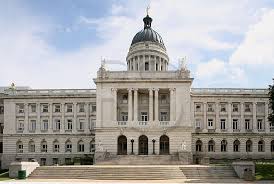
Bergen_county_court-House _theridgewoodblog

What would you say if you found out New Jersey taxes just went up $540 million? Surprise! They have. And they will grow by a half-billion dollars each year because of the state’s highest-in-the-nation property tax — even with the 2 percent cap. State and local leaders have run away from cutting this burden on homeowners. Why? Who profits from your tax misery? Why is this tax driving people out of state? Paul D’Ambrosio, Asbury Park Press Read more