Increased spending on issues such as education, public worker pensions, transportation, and hospitals drove lobbying expenditures in New Jersey in 2015 to $70 million, the second highest total ever, according to an analysis of annual lobbying reports released today by the New Jersey Election Law Enforcement Commission (ELEC). Jeff Brindle, PolitickerNJ Read more
By Larry Higgs | NJ Advance Media for NJ.com
on February 03, 2016 at 7:41 AM, updated February 04, 2016 at 12:25 PM
NJ Transit insiders say there is a 75 to 85 percent likelihood that a coalition of 17 rail unions, which have been working without a contract for five years, will call a “soft strike” over the weekend of March 12.
The strike could likely last through the Monday morning commute on March 14, when workers say they expect to be ordered back to work by the Obama administration. The last strike in March 1983 lasted for 34 days.
“They’ll soften the blow … Let the media know, let commuters know, let everyone get home on Friday night,” one NJ Transit insider said.
NJ Transit and the rail unions met Wednesday as a March strike deadline approaches. NJ Transit spokeswoman Nancy Snyder said those negotiation were substantive. She declined to answer a question about when the next negation session would be held.
New Jersey faced $153.5 billion in outstanding debt obligations last July, hitting a new record, according to a report released by state officials Friday.
The cost of public employee benefits, school construction and transportation projects drove the 6.9 percent, or $9.9 billion, increase for fiscal 2015.
But not all of the increase was attributed to new debt.
Treasury Department officials said New Jersey transitioned to a new accounting methodology for pension and post-retirement health benefits last year. Those bookkeeping methods, which are more stringent than what the state used previously, were designed by the Governmental Accounting Standards Board.
Growth in unfunded pension liabilities, unfunded medical benefits for retirees, and the effect of switching to the new accounting standards contributed an $8.5 billion increase in the state’s non-bonded debt.
On the other hand, New Jersey’s bonded debt rose $1.4 billion, or 3.35 percent, according to the report, led by a $755 million surge in borrowing for school construction projects and $609 million in added borrowing for the state’s troubled Transportation Trust Fund.
That fund’s borrowing authority runs out at the end of June, and Governor Christie and lawmakers have not said how it will be renewed – through more borrowing, an increase in New Jersey’s gas tax, or another method.
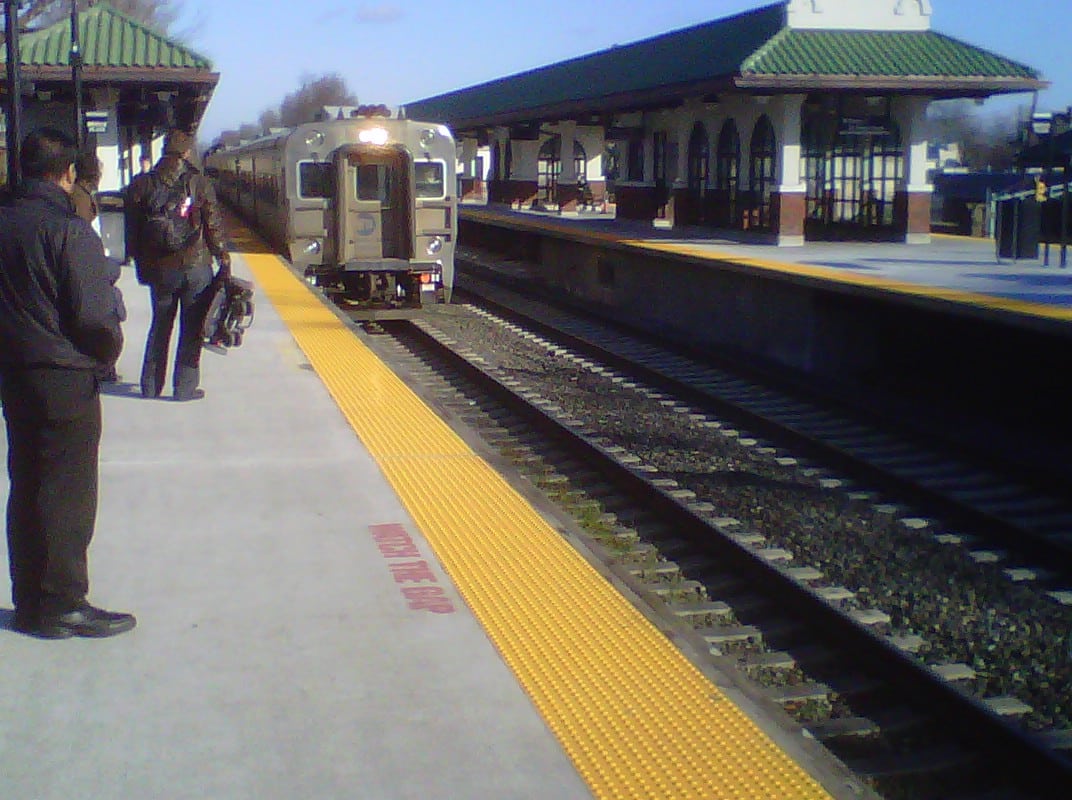
After five years of occasionally hostile negotiations, NJ Transit and its rail unions will meet on March 4 at the National Mediation Board in Washington, D.C., both sides confirmed Friday. The gathering is one last attempt to avert a strike that could cripple transportation across the region’s.
“The National Mediation Board called a meeting, and NJT will attend,” said Nancy Snyder, a spokeswoman for NJ Transit.
The sides remain far apart. From the unions’ perspective, NJ Transit’s offer of a modest wage increase would be wiped out by significantly higher health insurance costs for workers.
RAMSEY, N.J. (CBSNewYork/AP) — NJ TRANSIT commuters are preparing for the worst if a strike happens next month.
Commuters tell 1010 WINS’ Glenn Schuck that nerves about a possible walkout are starting to set in.
“Just like anything else, you just have to get to the table and hash it out, working around the clock and avoid those last-minute negotiations that keep everybody biting their fingernails to the morning of,” one person told 1010 WINS.
Another commuter was concerned about the bus capacity.
“The bus doesn’t run as efficiently,” he said. “It could get crowded and it definitely could affect people.”
At NJ TRANSIT’s board meeting earlier this month, the head of the union that represents conductors said more than a dozen unions affected by the contract negotiations have authorized a strike if necessary.
Labor Leader Concerned About Christie’s Unwillingness to Recognize TTF Crisis
A powerful New Jersey labor leader voiced worry today in the aftermath of Gov. Chris Christie’s assertion that the state’s depleted Transportation Trust Fund (TTF) does not constitute a major crisis. Max Pizarro, PolitickerNJ Read more
BOE-REA Negotiations
Click here to read a Letter to the Editor of The Ridgewood News, which appeared in the paper on February 12, 2016.
Click here to read the Ridgewood Board of Education’s Fact-Finding Presentation with the The Ridgewood Education Association.
BOE Meets on February 22 at 7:30 p.m.
The Ridgewood Board of Education will hold a Regular Public Meeting on Monday, February 22, 2016 at 7:30 p.m.
The public is invited to attend the meeting at the Ed Center, 49 Cottage Place, Floor 3. The meeting may also be viewed on FiOS channel 33, Optimum channel 77 or from computers via the “Live BOE Meeting” tab on the district website.FiOS channel 33, Optimum channel 77 or from computers via the “Live BOE Meeting” tab on the district website.
Click here to view the agenda for the February 8, 2016 Regular Public Meeting.
Click here to view the minutes of the January 25, 2016 Regular Public Meeting.
2 clear choices to fix N.J.’s pension crisis | Opinion
By Thomas Byrne
I’m watching the state pension fund melt as the stock market drops.
The fund is well-diversified but domestic equities are still the largest single exposure. Ironically, the alternative investments which have produced good net results for beneficiaries are unpopular with many labor leaders because we are paying fees to outside experts rather than managing complex investments internally. But that is another story.
The fund balances are declining for two reasons. First, stock markets here and abroad have been bad for nearly a year. Second, our cash flow is negative as over $9 billion in annual benefits dwarf about $3 billion in contributions from the state and its municipalities.
N.J. faces financial calamity without reductions in pensions | Opinion
At the heart of the plan is to save over $2 billion in health benefit spending, using those savings to provide funding for pension benefits earned to date.
Bottom line — if I’m a public employee, I’m worried about my retirement and hopeful that politicians come up with realistic solutions before it’s too late.
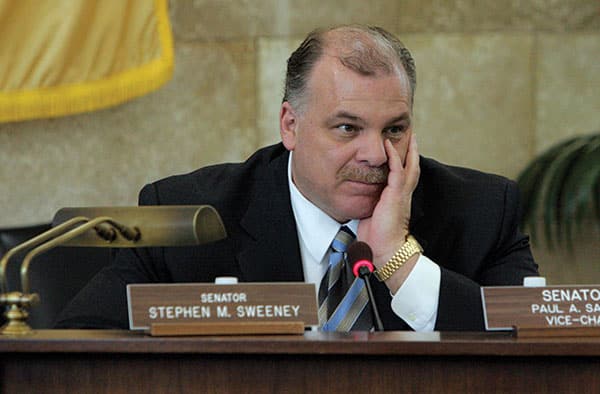
Democrats led by state Senate President Steve Sweeney (D-Gloucester) have proposed a ballot referendum to constitutionally mandate large annual contributions into the pension system. Great for beneficiaries if it passes.
But the odds of passage seem slim; early polling shows that when the public realizes that it is likely to cause huge tax increases and/or major cuts to key programs, a majority would vote no.
Even assuming steady growth of over 3 percent in annual State revenues, and a millionaires’ tax raising $650 million a year beginning in 2018, and 60 percent of revenue growth being available for pension funding, and pension assets earning a steady 7.9 percent (unlikely), an additional $2.8 billion in new taxes on people other than millionaires will be needed by 2022 to pay for the current pension and health benefits.
The public will vote “No” on that amount of new taxes, particularly when it is to fund a level of benefits that they themselves could never get. With another year gone post-referendum, we’re billions more in the hole and pensions are that much less secure.
Some disagree, saying that the pensions are secure because even if the pension funds were to run dry, the state would be forced to pay retirees out of the state operating budget. It is misleading to represent that as fact. We simply don’t know. The state’s highest court has never ruled on this issue.
Every year we don’t properly fund the pension system, the future cost goes up exponentially.
I’d hate to bet my retirement security on the premise that the court would either obliterate crucial state programs or essentially mandate huge tax increases by ruling that over 25 percent of the state budget, $9 billion of $34 billion, must be for pension payments. And even if a court did so rule, the possibility exists that the state would pay out in scrip rather than in cash. That is not far-fetched; Illinois and California have used scrip to some degree in recent years.
It should never come to this. There is another way.
The central tenet is that the state can honor all pensions accrued to date by aligning benefits to those in the private sector, and recycling the cost savings to fill the unfunded liability in the pension funds.
Sweeney: Christie’s pension commission’s proposed savings is a ‘fantasy’State Senate President Steve Sweeney met with the Star-Ledger Editorial Board to discuss issues, including how to solve the state’s public workers’ pension crisis. (Video by Andre Malok | NJ Advance Media for NJ.com)
Some of the savings involving health care are structural, and would have no cost to public employees. We should at least enact those reforms.
The rub is that other proposals require public employees to accept a lower level of benefits going forward. That is exceedingly unpleasant. But losing retirement security would be far more so. That is the choice. Denial will not solve this.
Benefit levels are far higher for New Jersey public employees than is common in the private sector. It is the Obama administration, not Republicans, that has said health benefits at the New Jersey level should be subject to a luxury tax.
So there are two paths.
Ask taxpayers to continue subsidizing a level of health benefits that even the Obama administration says is too rich.
Put those benefits at or near the highest level specified under Obamacare, and use those savings to fill the hole in the pension funds.
Certain Democrats say “just make the payments.” But when the governor asked a joint session of the legislature for a show of hands on who was willing to vote for higher taxes in order to do so, not a hand went up.
FEBRUARY 10, 2016, 6:49 PM LAST UPDATED: WEDNESDAY, FEBRUARY 10, 2016, 6:57 PM
BY STEVE JANOSKI
STAFF WRITER |
THE RECORD
RIDGEWOOD — The Board of Education and the Ridgewood Education Association remain locked in their inability to come to terms on a new teachers’ contract, despite the efforts of a state-appointed fact finder.
Members of the REA, cloaked in red to show solidarity, crowded into a school board meeting Monday night for the second time this month to decry the lack of progress in negotiations. Although there are numerous points of contention, the sharpest disagreement has come over how much REA members must contribute to their health-insurance premiums.
REA President Michael Yannone, a 19-year veteran of Ridgewood High School, said Monday the board’s position in a Feb. 3 fact-finding meeting was reduced to two points: The district had no additional money to spend on teacher salaries, and no other New Jersey school district had agreed to a reduction in healthcare contributions, because that would be “unaffordable.”
Yannone said neither was true. A number of districts had negotiated reductions in healthcare contributions, he said, and an influx of state aid and health contribution money — combined with under-budgeting in certain areas — had led to a sizable surplus in the local school budget.
N.J. Assembly committee advances resolution to give voters a say on North Jersey casino expansion
An Assembly committee on Monday approved a resolution that would allow voters statewide to decide in November whether to permit two new casino licenses to be issued in the northern half of the state. John Brennan, The Record Read more
Ridgewood NJ, Not a single question about the reason why the Transportation Trust Fund needs more funding, not one. When it costs the state over $2 million per mile of state road, 3 TIMES more than the next highest state, then something is wrong. And the NJ gas tax is only part of the story. Add in toll road, bridge & tunnel charges, and commuter pass costs and NJ residents already pay some of the highest transportation-related taxes in the country. There’s no support for this until state road work is opened up to non-union labor, and a full review of administrative & excess costs is complete.
Before Trenton thinks about raising the Gas Tax we also need :
1) We need a full audit and full accounting of the Transportation Trust Fund 2) We need a full Audit and full accounting of all the “Stimulus ” spending in New Jersey 3) A guarantee that any money raise will ONLY GO TO ROAD TRANSPORTATION PROJECTS ! 4) A Full Audit of all the current sources of Financing the Transportation Trust Fund TTF
As if common knowledge that keeping more money in American’s pockets will pump more money into the economy isn’t enough, here are 5 more reasons not to raise the gas tax:
1. An increase in gas taxes will hurt middle-income Americans the most.Middle-income families make up roughly one-third of Americans. By increasing the gas tax, not only are you lessening the amount of money in their pockets, but the amount of money being pumped into the economy is being lessened too. It’s estimated that a 1 percent increase in gas prices takes $1 billion out of consumers’ pockets. That’s $1 billion dollars that could be spent on eating out, clothes, and leisure activities.
2. Raising the gas tax will likely encourage more non-highway related spending. Revenue from the tax would go to the HTF. One would think money from the HTF would be funding highways but instead, HTF funds have supported squirrel sanctuaries, landscaping, trail hikers and trolley riders. In fact spending on side projects has increased 38% since 2008 while spending on core highway projects has remained flat.
3. Raising the gas tax will not solve the real problem. The problem is that there is a funding deficit because the HTF is spending more money than they are bringing in. Currently the gas tax brings in around $34 billion annually, yet the federal government is spending roughly $50 billion each year. There is no solution in the “raise gas taxes” method. Tax proponents claim raising the tax would close the deficit and cover future, necessary funding from the HTF. However there is no guarantee for either of these things. More likely than not, this solution would only support and encourage more wasteful spending.
4. A gas tax hike will increase the price of consumer goods. The transportation of goods is primarily done via highways. Cars drive on highways and gas fuels cars. It’s a no-brainer that raising the gas tax will cost drivers more to fuel their way to deliver goods. Higher gas taxes, leading to higher gas prices will mean a higher cost on goods. This means increased financial pressure on middle to lower-income families if tax advocates get their way with this regressive increase in the gas tax.
5. Tax hikes have a negative impact on economic growth. As discussed, higher gas taxes mean higher gas prices which reduce the discretionary income of millions of Americans. Reductions in discretionary income often correspond with diminished economic growth. In fact, analysts at Goldman Sachs predict “lower gas prices could add as much as half a percentage point to GDP growth this year.” (https://www.atr.org/top-five-reasons-not-raise-gas-tax )
FEBRUARY 5, 2016 LAST UPDATED: FRIDAY, FEBRUARY 5, 2016, 12:31 AM
BY MATTHEW SCHNEIDER
STAFF WRITER |
THE RIDGEWOOD NEWS
RIDGEWOOD – Amidst driving rain, members of the Ridgewood Education Association (REA) held a rally outside the village’s education building Wednesday afternoon, hoping to encourage REA President Mike Yannone as he re-entered negotiations with the Ridgewood Board of Education (BOE) and a state-appointed fact-finder.
“This is unbelievable,” Yannone said as he watched the teachers marching around in the downpour. “I didn’t think anybody would be here.”
However, upon further reflection, Yannone noted that the “frustration level of the teachers of this town is really high,” and that a “little rain isn’t going to stop them from coming out.”
The members of the REA, marching around shouting “settle now,” say they feel they have not received a fair contract offer from the BOE, as the proposal does not address their concerns about healthcare contributions.
“We’re still dealing with the same proposal they gave us 11 months ago,” Yannone said, adding that in negotiations, “Two sides have to be willing to come in here and compromise.
“Both sides have to be willing to give to get,” he continued. “We’ve had that approach all the way through.”
FEBRUARY 5, 2016, 7:00 PM LAST UPDATED: SATURDAY, FEBRUARY 6, 2016, 12:34 AM
BY CHRISTOPHER MAAG
STAFF WRITER |
THE RECORD
Both NJ Transit and its unions are preparing for a train shutdown on March 13 that would cripple the region’s transportation network, the sides confirmed on Friday. Threat of a strike by the unions or a lockout by NJ Transit is the latest escalation in a five-year dispute that leaves the two sides far apart on workers’ pay and health insurance benefits.
“Prepare yourself economically,” the New Jersey Transit Rail Coalition told its 4,200 members in a newsletter issued Friday. “At 12:01 a.m. on Sunday, March 13, every union on New Jersey Transit will strike if no agreement is reached.”
“NJ Transit is actively involved in developing a robust alternative service plan in the event the unions call a strike,” said Dennis Martin, NJ Transit’s interim executive director. “We are working with our regional partners, including NJDOT, to provide as much service as possible to our customers.”
A shutdown would make it incredibly difficult for people in New Jersey and New York City to travel and get to work, said David Peter Alan, chairman of the Lackawanna Coalition, a transit advocacy group.
“I think it’s very likely” that a strike will happen, Alan said. “It would be a disaster.”
JANUARY 27, 2016, 6:44 PM LAST UPDATED: WEDNESDAY, JANUARY 27, 2016, 8:26 PM
BY SALVADOR RIZZO
STATE HOUSE BUREAU |
THE RECORD
Investment gains for New Jersey’s $79 billion pension fund fell sharply in the fiscal year that ended June 30, and those pension investments are in negative territory so far this year, state officials reported Wednesday.
Christie administration officials and the State Investment Council had acknowledged in July that, with 11 months of data, the pension fund was likely to see a sharp drop in its rate of return for fiscal year 2015. Now, with all 12 months of data, the state announced that it achieved investment gains of 4.16 percent, a tumble from 16.87 percent in the previous year.
New Jersey’s pension fund is the 17th largest in the country and 33rd largest worldwide – investing in everything from real estate, private equity, commodities, stocks, hedge funds and more. Nearly 780,000 public workers and retirees are beneficiaries of the pension system, meaning they depend on the success of those investments.
The state Supreme Court has said that public workers are entitled to their pension checks “when due.” If the money does not come from investment gains, it would have to come from state taxpayers or public workers.
The fund’s performance is in negative territory so far this fiscal year, down 3 percent for the July-through-December period, officials added.
By Eric Boehm / January 20, 2016 / News / 25 Comments
Just days ahead of an expected blizzard on the East Coast, New Jersey has officially repealed a nonsensical rule banning the shoveling of snow without a license.
SNOW JOB: Police in Bound Brook, N.J., told two boys, Matt Molinari and Eric Schnepf, they were not allowed to shovel their neighbors’ driveways without a permit. A new state law puts the boys on the right side of the law, and common sense.
Gov. Chris Christie on Tuesday signed a bill making it legal for New Jersey residents to offer snow shoveling services without first registering with their town. Last year, two entrepreneurial teens going door-to-door and offering to shovel snow for a small fee were stopped by local police in Bound Brook.
The cops told the two boys, Matt Molinari and Eric Schnepf, they were not allowed to solicit businesses without a permit.
In Bound Brook, that license costs $450 and is only good for a period of 180 days.
After the story made national headlines — including here at Watchdog, where it was featured as our “Nanny State of the Week” story — state lawmakers began working on a solution.
State Sen. Mike Doherty, R-Washington, who sponsored the so-called “right-to-shovel” bill, said it was incredible that some towns wanted teens to pay expensive licensing fees just to clear snow off driveways.
DOHERTY: State Sen. Mike Doherty says government red tape shouldn’t stop kids from making a few bucks by shoveling snow.
“This new law sends the message that kids looking to make a few bucks on a snow day shouldn’t be subjected to government red tape or fined for shoveling snow,” Doherty said.
The bill removes only licensing requirements for snow shoveling services, and only applies to solicitations made within 24 hours before a predicted snow storm. Towns with laws prohibiting door-to-door solicitation will be able to enforce those laws in all other circumstances.
The bill was one of 93 signed by Christie this week, according to the governor’s office. He also vetoed 65 bills.
The governor’s signature comes just in time. Parts of New Jersey could see more than a foot of snow this week as a powerful storm takes aim at the East Coast.
In Bound Brook, there’s no word on whether Molinari and Schnepf are planning to offer their shoveling services again.
If they do, though, they will be on the right side of the law — and common sense.