Ridgewood NJ, On Friday, June 8, the Ridgewood High School Band Program will host a picnic barbecue to welcome alumni band members back to RHS, and to offer good luck wishes to the 34 members of the band who will graduate from the high school later this month. The event will be held on the RHS Front Lawn from 5 – 7PM and is free to band members, alumni and their families.
The band has had a long tradition of honoring its senior members with a reception following their final performance at the annual “Tunes in June” concert. In 2015, that reception was moved to a date following the concert to encourage greater attendance. The band had also established an annual fall tradition of welcoming former band members back to Ridgewood as alumni, but with the football team no longer playing on Thanksgiving morning, the band lost its traditional pre-game “Breakfast with the Band” alumni gathering. Now, with the hundredth anniversary of the band just a few years away, the band directors are making a concerted effort to connect with band alumni. It is hoped that the Friday evening date in June will allow for both celebrations to take place concurrently.
All current band members, seniors, alumni and their families are invited to attend the Alumni Welcome Back & Senior Send Off Barbecue, which will feature hamburgers, hot dogs, and other traditional picnic fare, including vegetarian and gluten free options. Admission to the event is free, thanks to the generous support of the RHS Band Association, Inc. However, those planning to attend must RSVP to be placed on the list for admission. To RSVP, please complete the response form at https://tinyurl.com/RHSBBQ18 or complete the RSVP form on the band’s website at www.rhsbands.org.
For more information, contact Jeffrey Haas at (201) 670-2800 x20639 / [email protected] or John Luckenbill at (201) 670-2800 x20744 / [email protected].
Ridgewood NJ, the Ridgewood blog has been quiet so far on the $6 million plus ,plus renovation proposal by the Ridgewood Public Library . Seems to us that we have heard all this before ,especially “the performing arts center ” part. A performing arts center has been a dream of the Ridgewood library for years , but what about the books ? After all for most of us , the library is a respite,a sanctuary for readers and a place to do quiet research . Books offer a vast store of knowledge ,ideas and opinions. Past civilizations were often judged by the quality of their library’s.
The new proposal comes complete with a sweeping staircase, an open floor plan to host events ,and the Ridgewood public library could be closed to the public for up to 14 months ,but what about the books?
Mark Twain once said, “In a good bookroom you feel in some mysterious way that you are absorbing the wisdom contained in all the books through your skin, without even opening them.”
li·brar·y
[ˈlīˌbrerē, ˈlīb(ə)rē]
NOUN
a building or room containing collections of books, periodicals, and sometimes films and recorded music for people to read, borrow, or refer to.
“a school library” ·
[more]
a collection of books and periodicals held in a library.
“the Institute houses an outstanding library of 35,000 volumes on the fine arts”
a room in a private house where books are kept.
synonyms: study · studio · library · sanctum · retreat · sanctuary · hideaway · snuggery · snug · cubbyhole · cubby · hidey-hole · sanctum sanctorum
a series of books, recordings, etc., issued by the same company and similar in appearance.
a collection of films, recorded music, genetic material, etc., organized systematically and kept for research or borrowing.
“a record library”
computing
a collection of programs and software packages made generally available, often loaded and stored on disk for immediate use.
You can’t learn everything from attending events and we hate to admit ,reading blog posts. The experiences, perspectives, and knowledge of other entrepreneurs , historians, scientist ,athletes and dreamers can help shape how you think about the world around you. The best place to get knowledge from the source is from books, especially if you have a tight budget. When you read a book, your attention is focused on what you’re doing– you’re not distracted by a smartphone or a computer screen. An author can tell you their whole story with all of its moving parts.
Yes, it’s scientifically proven that books are good for your brain. Reading can foster and improve all three types of intelligence and is good for your memory, too. According to research in an online version of Neurology, people who participated in mentally stimulating activities (such as reading books and completing math problems) had better memory retention later in life, no matter if they read as children or adults.
Even if you read to someone it expands their vocabulary, and increases their concentration span.In March 2013, the Melbourne Institute of Applied Economic and Social Research introduced research that showed that children four to five years of age who are read to three to five times a week are six months ahead of their peers in terms of reading acumen. Those children who are read to daily are a year ahead of those who are read to less frequently. ”It does appear to be the case that children who are read to more often keep doing better as they age than other children,” Guyonne Kalb of the Melbourne Institute told The Age newspaper when the study he co-authored was released.
Educator Jim Trelease notes that there is a clear difference between conversing with a child and reading to him or her. As he points out in his book “Read-Aloud Handbook,” speech is full of jargon, colloquialisms and truncated sentences. Literature, on the other hand, is much more intricate and therefore vastly more educational. “The language in books is very rich, and in books there are complete sentences. In books, newspapers, and magazines, the language is more complicated, more sophisticated. A child who hears more sophisticated words has a giant advantage over a child who hasn’t heard those words,” Trelease says.
The last time the Ridgewood Public Library was renovated , the Library seemed have forgotten about books . The renovation was followed by ominous flooding and great cost to the taxpayers. All these years later the lessons have still not been learned . A Library is a Library , what about the books?
Trenton NJ, The Senate Labor Committee (Chairman Fred H. Madden, D-Camden/Gloucester) and the Senate Education Committee (Chairwoman M. Teresa Ruiz, D-Essex) will meet jointly Thursday, May 31, at noon to hear testimony from invited speakers on the topics of teacher sexual misconduct, the reporting of child abuse in schools and the process for tenure charge arbitration in the case of teacher sexual misconduct.
Speakers will include child advocates, state education officials and representatives of school boards, school administrators, teachers’ unions, county prosecutors and parents.
The joint hearing has been called in response to the release online of several videos showing teachers’ union officials in several New Jersey school districts telling individuals that they do not need to report alleged cases of teacher-on student assault or teacher-on-student sexual assault.
The hearing will be held in Committee Room 6 of the State House Annex in Trenton.
Ridgewood NJ, today May 30th kicks off the online sign-up for Ridgewood Walks “STEP INTO SUMMER!” Walking Tours! Visit www.ridgewoodwalks.com to start selecting your guided-themed walking tours during the month of June. Visit often, as more tours are added regularly. Visit Facebook DAILY for updates.
Ridgewood NJ, Ridgewood police report that patrol units were dispatched to a motor vehicle accident on Oak Street on May 14th, on a report of a single vehicle accident involving a utility pole. Upon arrival the vehicle had left the scene of the accident however a license plate was located and upon further investigation, a 39-year-old male from Ridgewood was located and arrested for driving under the influence. The arrestee was transported to Ridgewood Police headquarters and issued four motor vehicle summons and released under of the provisions of John’s Law https://www.state.nj.us/lps/dcj/agguide/2001_5dir.pdf
Ridgewood NJ, The Department of Environmental Protection’s Division of Fish and Wildlife is providing property owners and outdoor enthusiasts with safety tips as black bears search for food after emerging from winter dens.
“At this time of year, it is important for residents who live in New Jersey’s bear country to be aware of some steps they can follow to reduce the chances of a bear coming onto their properties,” said Assistant Commissioner for Natural and Historic Resources Ray Bukowski. “It is also a good time for anyone who spends time outdoors to become familiar with ways to stay safe.”
Black bears have been sighted in all of New Jersey’s 21 counties but the population is most dense in the northwestern counties of Sussex, Warren, Passaic and Morris.
Bears are not true hibernators but enter a state of winter dormancy known as torpor. During torpor they may lose up to 20 percent of their body weight. They need to restore this weight for the mating season, which begins in late May and continues well into summer.
One of their primary natural food sources in spring is skunk cabbage, a leafy plant that grows along edges of rivers, streams and wetlands. Other natural food sources include grasses, forbs, tubers, bulbs and insects. They may also feed on carrion.
Bears have an acute sense of smell and can detect scents over great distances, so great care must be taken to prevent bears from being attracted to other food sources around properties, such as trash, food residue on grills, bird seed and pet food.
“Although bears are by nature wary of people, animals attracted to neighborhoods may learn to associate people with food,” said Division of Fish and Wildlife Director Larry Herrighty. “These animals may become nuisance bears that may cause property damage or seek handouts from people.”
Intentional feeding of a bear is dangerous and illegal and carries a fine of up to $1,000.
The Division of Fish and Wildlife offers the following tips for property owners to minimize encounters with bears:
* Secure trash and eliminate obvious sources of food, such as pet food, easy-to-reach bird feeders, or food residue in barbecue grills.
* Use certified bear-resistant garbage containers if possible. Otherwise, store all garbage in containers with tight-fitting lids and place them along the inside walls of a garage, or in the basement, a sturdy shed, or other secure area.
* Wash garbage containers frequently with a disinfectant solution to remove odors. Put out garbage on collection day, not the night before.
* Avoid feeding birds when bears are active. If you do choose to feed birds, do so during daylight hours only and bring feeders indoors at night. Suspend birdfeeders from a free-hanging wire, making sure they are at least 10 feet off the ground. Clean up spilled seeds and shells daily.
* Immediately remove all uneaten food and food bowls used by pets fed outdoors.
* Clean outdoor grills and utensils to remove food and grease residue. Store grills securely.
* Do not place meat or any sweet foods in compost piles.
* Remove fruit or nuts that fall from trees in your yard.
* Install electric fencing as an effective way to protect crops, beehives, and livestock.
If you encounter a black bear in your neighborhood or outdoors while hiking, fishing or camping, follow these safety tips:
* Remain calm. Never run from a bear. Instead, slowly back away. Avoid direct eye contact, which may be perceived by a bear as a challenge. Make sure the bear has an escape route.
* To scare the bear away, make loud noises by yelling, using a whistle, banging pots and pans, or sounding an air horn. Make yourself look as big as possible by waving your arms. If you are with someone else, stand close together with your arms raised above your head.
* Make bears aware of your presence by speaking in an assertive voice, singing, clapping your hands, or making other noises. If hiking through bear country, always make your presence known through loud talking or clapping of hands.
* The bear may utter a series of huffs, make popping sounds by snapping its jaws and swatting the ground. These are warning signs that you are too close. Slowly back away, avoid direct eye contact. Do not run.
* If a bear stands on its hind legs or moves closer, it may be trying to get a better view or detect scents in the air. This is usually not a threatening behavior.
* Black bears will sometimes “bluff charge” when cornered, threatened, or attempting to steal food. Stand your ground, avoid direct eye contact, then slowly back away and do not run.
* If the bear does not leave, move to a secure area such as a vehicle or a building.
* Families who live in areas frequented by black bears should have a “Bear Plan” in place for children, with an escape route and planned use of whistles and air horns.
* Black bear attacks on humans are extremely rare. If a black bear does attack, fight back.
DEP wildlife experts emphasize that a black bear simply passing through an area and not causing a specific problem, such as breaking into trash or otherwise trying to access food sources on people’s properties or posing a safety threat, should be left alone.
People should leave the area and allow the bear to continue on its way. When frightened, bears may seek refuge by climbing trees. If the bear does go up a tree, clear the area and give the bear time to climb down and escape.
Report bear damage, nuisance behavior or aggressive bears to the Wildlife Control Unit of the DEP’s Division of Fish and Wildlife at (908) 735-8793. During evenings and weekends, residents should call the local police department or the DEP Hotline at 877-WARN-DEP (877-927-6337)
To learn more about New Jersey’s black bears, visit www.njfishandwildlife.com/bearfacts.htm.
Monmouth Poll – NEW JERSEY: State Rating Hits 38 Year Low as Quality of Life Views Ebb May 29, 2018 NEW JERSEY: STATE RATING HITS 38 YEAR LOW AS QUALITY OF LIFE VIEWS EBB Property taxes persist as public’s top concern
Ridgewood NJ, it seems while New Jersey residents major concern is high property taxes, yet they still voted for a candidate that promised to raise taxes. Residents are also happy with where they live yet feel that state wide the quality of life leaves much to be desired .
New Jerseyans’ views of their home state quality of life have dropped, due in part by a record low rating for the state as a place to live according to polling going back to 1980. The Monmouth University Poll finds that opinion of local communities has not dropped by as much, which has kept the Garden State Quality of Life Index score from completely tanking. The state issue that aggravates New Jerseyans the most is the highest-in-the-nation property tax burden, which has been at the top of the list of public grievances for the better part of a decade.
Currently, just over half of New Jersey residents say their state is either an excellent (15%) or good (39%) place to call home, while 29% rate it as only fair and 17% as poor. This 54% positive rating is statistically similar to the July 2015 result of 55% and the August 2011 result of 57%. However, it does mark a numerical low point for this metric in state opinion polls going back to 1980.
The top state concern mentioned by New Jerseyans is property taxes. Just under half (45%) name this issue as one of the most important facing the state right now. Those mentioning other taxes amount to 25% combined. Fewer residents mention education (16%), jobs (14%), the economy and cost of living in general (14%), transportation infrastructure (14%), or crime, guns, and drugs (12%) as being among the most pressing concerns facing New Jersey today. Property taxes have been the most common top-of-mind response to this question for at least ten years, with the only exception coming during the economic downturn when this concern shared the top spot with jobs in 2012 and was actually displaced by jobs as the number one issue in 2013.
“Unless you’ve had your head in the sand for the past ten years, you know that New Jersey’s onerous property tax burden is the single most cited reason for what ails the state. Trenton lawmakers have avoided tackling this problem for too long and we now see it eroding satisfaction with life in the Garden State as a whole. Given these results, it’s no surprise that more and more New Jerseyans are choosing to vote with their feet by simply moving out of the state,” said Patrick Murray, director of the independent Monmouth University Polling Institute.
Monmouth’s exclusive Garden State Quality of Life Index score now stands at +18, which is down from +25 in July 2017 and matches prior lows of +18 in July 2015 and September 2014. Over the past eight years, this index has ranged from the current low of +18 to a high of +31 (April 2012). Half of the index score comes from residents’ overall rating of the state as a place to live and the remaining half comes from four questions that ask residents to evaluate the quality of life in their local communities.
The quality of life index score took its biggest hit in the central part of the state, going from +35 last year to +18 currently in the Northern Shore (Monmouth, Ocean) and from +34 last year to +18 currently in the Route 1 Corridor (Mercer, Middlesex, Union). The affluent Central Hills area (Hunterdon, Morris, Somerset) retains the highest score at +34 (basically unchanged from +33 last year), while the Urban Core (Essex, Hudson) has the lowest at +8 (down from +18 last year).
“Even though New Jerseyans are starting to sour on the state as whole, views of their local communities remain more positive. This sentiment may help to keep people here for the time being but it doesn’t overcome the more fundamental statewide problems,” said Murray.
Just over 7-in-10 New Jerseyans rate their own town or city as an excellent (30%) or good (41%) place to live, with 20% rating it as only fair and 9% as poor. The current 71% positive rating is down from the numerical high of 77% recorded last year, but it is still in the mid-range of results for this question going back to polling since 1977. The percentage of Garden State residents who currently say they feel very safe in their own neighborhoods at night (65%) is also down from last year’s numerical high of 71%, but remains well above the all-time low of 42% recorded back in 1993.
The current poll registers relatively high ratings for local environmental quality at 73% positive – 29% excellent and 44% good, which is just slightly off last year’s mark of 76%. Ratings for the job local schools are doing stands at 60% positive – 24% excellent and 36% good – which is down from 65% in 2017, but is still within the normal range for this question’s results over the past decade.
The Garden State Quality of Life Index was created by the Monmouth University Polling Institute to serve as a resident-based indicator of the quality of life offered by the state of New Jersey. The index is based on five separate poll questions: overall opinion of the state as a place to live – which contributes half the index score – and ratings of one’s hometown, the performance of local schools, the quality of the local environment, and feelings of safety in one’s own neighborhood. The index can potentially range from -100 to +100.
The federal tax law change enacted for the 2018 tax year limits the combined total of state income tax plus real estate tax deduction to $10,000. “Goldman Sachs” Governor Phil Murphy of New Jersey has recently signed a bill which he calls a “work-around”, permitting the deduction of taxes in excess of $10,000 as a charitable contribution made to the municipality in which one lives. Rather than a “work-around”, it is more likely something else – an income tax evasion scheme.
The law Governor Murphy signed was created expressly to circumvent the new federal tax law – he even said so! The new law allows municipalities in New Jersey to create “charitable entities” for the purpose of receiving payments from homeowners whose combined state income tax plus real estate tax liabilities (beginning in 2018) exceed $10,000, the amount the new federal tax law places as a limit for their deductibility as itemized deductions.
Here’s an example of how this might work: Mr. & Mrs. New Jersey Taxpayer own a home on which their 2018 real estate taxes are $9,000 and their New Jersey state income taxes are $5,000 – for a total of $14,000. Under prior federal tax law there was no problem, the total of $14,000 was deductible on Schedule A as itemized deductions ($5,000 for state taxes, $9,000 for real estate taxes). Not so under the new federal tax law for 2018, which permits the maximum deduction of only $10,000. Mr. & Mrs. NJ Taxpayer would be unable to deduct the remaining $4,000.
Governor Murphy’s “work-around” would permit the deduction of the $5,000 state income tax plus $5,000 of the real estate tax ($10,000 total per the new federal law). Plus, it would allow Mr. & Mrs. Taxpayer to pay the remaining $4,000 to the “charitable entity” created by their municipality and to deduct this amount as a charitable contribution on Schedule A. What is wrong with this “work-around” signed into law by Governor Murphy? Let us look at the Internal Revenue Code sections for real estate taxes and charitable contributions for definitions.
IRC section 164 (Taxes) allows for the deduction of “state and local, and foreign, real property (real estate) taxes”. This is the definition of real estate taxes. Personal property taxes are defined as “an ad valorem tax which is imposed on an annual basis in respect of personal property” [IRC 164(b)(1)].
IRC section 170(c)(2)(A) & (B) (Charitable Contributions), states that the term “charitable contribution” means a contribution or gift to or for the use of – “A corporation, trust, or community chest, fund, or foundation – created or organized in the United States or in any possession thereof, or under the law of the United States, any state, the District of Columbia, or any possession of the United States; organized and operated exclusively for religious, charitable, scientific, literary, or educational purposes, or to foster national or international amateur sports competition, or for the prevention of cruelty to children or animals.”
Municipalities are not Charities
The “charitable entity” organized by a municipality will not function as any of the above charitable purposes. Its only function will be to receive payments from property owners and then pass those amounts to the municipality – which will treat the amounts received as payment of real estate taxes. This makes the law’s permitted “charitable entities” appear to be bogus since they will not function in a charitable manner.
Another problematic aspect of this scheme is the consideration received for a charitable contribution. For example, a taxpayer who sends $100 to a charitable organization and receives a book from the organization valued at $30 is only allowed to deduct $70 as a charitable contribution ($100 paid less the $30 value of the book received). How might that apply in the case where NJ homeowners “contribute” an amount to a “charitable entity” organized by a municipality in this “work-around” situation? Let’s use the prior example of Mr. & Mrs. Taxpayer where $4,000 was “contributed” to a “charitable entity” organized by a municipality to receive excess real estate taxes as charitable contributions. How will that entity determine how much benefit Mr. & Mrs. Taxpayer received from the municipality in services provided to the taxpayers such as: public schools/education, the police force, road maintenance, garbage collection and other municipal services? Would the “charitable entity” attempt to make such a calculation? Probably not, because that might reduce the deductible amount of the “charitable contribution” considerably – most likely all the way to zero! Mr. & Mrs. Taxpayer would not be happy with Governor Murphy’s work-around.
Another consideration is the percentage limitation of the taxpayer’s contribution base for certain charitable contributions per IRC section 170(b)(1), Individuals. Most contributions may not exceed 50% of the taxpayer’s contribution base, and some are limited to 30% of the contribution base. This would likely apply to wealthy taxpayers with considerable assets and little or no income, which might be the case of a retired taxpayer. If such a taxpayer owned 2 or more expensive residential properties in New Jersey, the deductible portion of the amount paid to municipal “charitable entities” could be reduced considerably – maybe to zero by this percentage limitation of the Internal Revenue Code.
It appears that Governor Murphy’s law permitting municipalities to organize their “charitable entities” will run afoul of the IRS’ rules and regulations, which could subject the municipalities to penalties for knowingly creating bogus “charitable entities”. Additionally, if the residents of the municipalities who take advantage of Governor Murphy’s “work-around” were to be audited by the IRS, they could be subject to the accuracy-related penalty as provided under IRC section 6662 for any audit deficiency caused by the disallowance of the bogus charitable contribution deductions paid to the entities. In an extreme case, the IRS might consider the application of the civil fraud penalty described in IRC section 6663.
For the reasons listed above, taxpayers should exercise caution in the matter of making payments to “charitable entities” organized by their municipalities. Municipalities should also be cautious about organizing any “charitable entities” which could possibly end up being deemed bogus.
These are serious issues of potential fraud and illegality that the Murphy administration is encouraging the NJ taxpayer to use to reduce their tax burden. In reality, it will be the individual New Jersey Taxpayer that will pay the price for this scheme, not “Goldman Sachs” Governor Phil Murphy!
The above are opinions, comments and analyses of the “work-around” bill recently signed into law by “Goldman Sachs” Governor Phil Murphy of New Jersey. The contributors are a retired Internal Revenue Service field agent and a current Certified Public Accountant in New Jersey.
Ridgewood NJ, An Employer Identification Number famously known as an EIN is a type of tax ID issued by the IRS to keep track of tax obligations. Legal entities such as partnerships, corporations, estates, and non-profit organizations are supposed to have EINs. Those that don’t have it are required by the IRS to apply. They may choose to apply through the online portal. There are many things you can’t do without having an EIN so it’s important that it is one of the first things you do as a business. You can start enjoying the benefits by applying for a Wisconsin ein online today.
Why Apply an EIN Online?
An online application is the most comfortable and quickest way of obtaining an EIN when compared to traditional means such as phone and email applications. EINs online reduce paperwork complications. EIN online applications are approved within 24 hours. You can start enjoying EIN benefits immediately after 24 hours of the application. The EIN online application is secure and confidential. The system allows the applicant to access their tax id in case of misplacement. Customer care services are available for people who may experience trouble while applying for the EIN online. If your EIN is urgently needed, online application is the best option for getting it quickly. You can apply for your IRS-EIN-Tax-Id online whether you’re in South Carolina, Wisconsin, New Jersey or anywhere in the states.
How EIN Online Works
The process of applying for an ein number SC online is easy. The first step is to log into the site and select the type of tax ID you want. The next step is to fill out the online application form. The third step is to send the application via email. Wait one hour, and you will get your EIN. If you apply for you EIN after 9 p.m., you will get it the following morning. All transactions online are secure and safe so you can trust the process will be protected at every step.
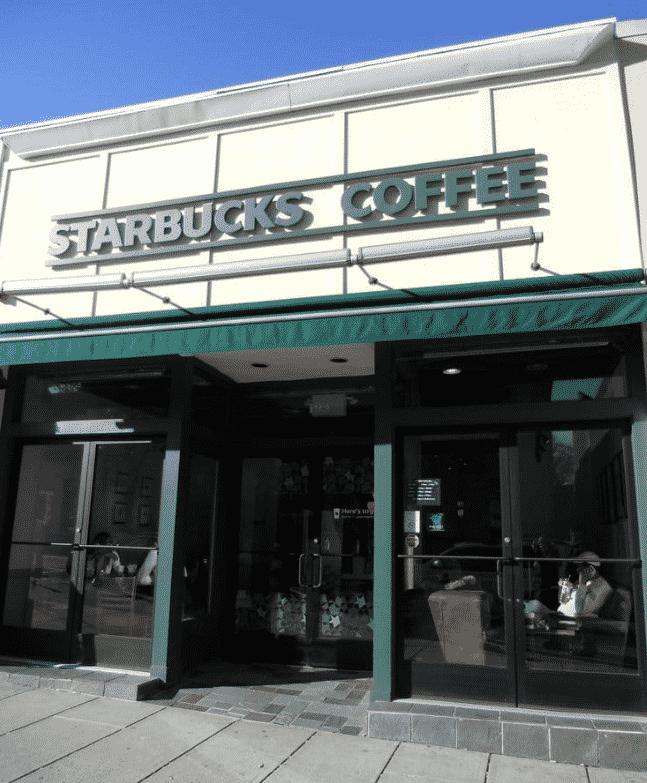
Starbucks : An open letter to Starbucks customers from executive chairman Howard Schultz
This afternoon Starbucks will close more than 8,000 stores and begin a new chapter in our history.
In 1983 I took my first trip to Italy. As I walked the streets of Milan, I saw cafés and espresso bars on every street. When I ventured inside I experienced something powerful: a sense of community and human connection.
I returned home determined to create a similar experience in America-a new ‘third place’ between home and work-and build a different kind of company. I wanted our stores to be comfortable, safe spaces where everyone had the opportunity to enjoy a coffee, sit, read, write, host a meeting, date, debate, discuss or just relax.
Today 100 million customers enter Starbucks® stores each week. In an ever-changing society, we still aspire to be a place where everyone feels welcome.
Sometimes, however, we fall short, disappointing ourselves and all of you.
Recently, a Starbucks manager in Philadelphia called the police a few minutes after two black men arrived at a store and sat waiting for a friend. They had not yet purchased anything when the police were called. After police arrived they arrested the two men. The situation was reprehensible and does not represent our company’s mission and enduring values.
After investigating what happened, we determined that insufficient support and training, a company policy that defined customers as paying patrons-versus anyone who enters a store-and bias led to the decision to call the police. Our ceo, Kevin Johnson, met with the two men to express our deepest apologies, reconcile and commit to ongoing actions to reaffirm our guiding principles.
The incident has prompted us to reflect more deeply on all forms of bias, the role of our stores in communities and our responsibility to ensure that nothing like this happens again at Starbucks. The reflection has led to a long-term commitment to reform systemwide policies, while elevating inclusion and equity in all we do.
Today we take another step to ensure we live up to our mission: FOR SEVERAL HOURS THIS AFTERNOON, STARBUCKS WILL CLOSE STORES AND OFFICES TO DISCUSS HOW TO MAKE STARBUCKS A PLACE WHERE ALL PEOPLE FEEL WELCOME.
What will we be doing? More than 175,000 Starbucks partners (that’s what we call our employees) will be sharing life experiences, hearing from others, listening to experts, reflecting on the realities of bias in our society and talking about how all of us create public spaces where everyone feels like they belong-because they do. This conversation will continue at our company and become part of how we train all of our partners.
Discussing racism and discrimination is not easy, and various people have helped us create a learning experience that we hope will be educational, participatory and make us a better company. We want this to be an open and honest conversation starting with our partners. We will also make the curriculum available to the public.
To our Starbucks partners: I want to thank you for your participation today and for the wonderful work you do every day to make Starbucks a third place for millions of customers.
To our customers: I want to thank you for your patience and support as we renew our promise to make Starbucks what I envisioned it could be nearly 40 years ago-an inclusive gathering place for all.
We’ll see you tomorrow.
With deep respect,
Howard
Ridewood NJ,the results of the Memorial Day Ridgewood Run are in ,Temesgen Habtemariam Bekele, 27, of New York, won the 10K with a time of 30:15.08. Roberta Groner, 40, of Randolph, placed seventh but set a new course record for women with a time of 33:31.00.
photos courtesy of The Ridgewood Parks & Recreation fly fishing group
May 29,2018
the staff of the Ridgewood blog
Ridgewood NJ, The Ridgewood Parks & Recreation fly fishing group hit the banks of the Ho-Ho-Kus Brook this week to try out some flies and some roll casting , but first there was some casting practice and the meadow is the perfect spot for practice!
Students in the Fly Fishing Basics class learn to tie knots with help from the volunteers from East Jersey Trout Unlimited.
Ridgewood NJ, the Ridgewood Library presents traditional Italian songs with award-winning tenor Salvatore Chiarelli and pianist Ishmael Wallace. All welcome; donations greatly appreciated.
Salvatore Chiarelli, a native of New York City, was vocally trained in both Italy and New York City for the opera stage. Mr. Chiarelli has been heard on Television and Radio as well as on the Opera Stages of both North America and Europe. He has performed as a soloist on satellite television reaching seventy five countries around the world. At the very outset of his vocal training he was one of only three Tenors chosen in the United States to participate in a five week concert tour of Europe.
In a short time, Mr Chiarelli has established himself as a “world class performer and entertainer receiving rave reviews from his critics. Performing to capacity-sold out crowds. Mr. Chiarelli has an excellent reputation on and off stage and has a loyal and dedicated following of fans.
Some of the venues he has performed at include: concert halls, opera houses, theaters, auditoriums, corporate events, playhouses, catering halls, country clubs, restaurants(dinner/lunch shows), churches, synagogues, colleges, universities, cultural centers, community centers, libraries, private gated communities, civic organizations, cruise ships, hotels, clubs, parks, outdoor festivals and stadiums.
Mr. Chiarelli has been a finalist for several regional vocal competitions through out the U.S. and has been the recipient of several distinguished artist awards.
Mr. Chiarelli has a wide singing range, sings in seven languages and many different styles and genre of music. In addition, he has sung as a church soloist in Manhattan and the N.Y. Metro area for over fourteen years.
Ridgewood Public Library Presents a Sunday Concert- “from italy with love”
Sun, June 10, 2018
Time: 2:00 PM
Location: Ridgewood Public Library, 125 N. Maple Ave, Ridgewood, NJ 07450
Ridgewood NJ, Join Serendipity Labs and Julie Belardinelli, Independent Wine Ambassador of The Boissett Collection, Wednesday, May 30th for “Wine Down Wednesday,” an evening of wine tasting and networking. Julie is a certified ambassador from the International Wine Center in NYC and she is excited to share her knowledge and love of wine with all of you!
Come connect over great wine and great company at Bergen County’s only upscale, hospitality-driven coworking office. Admission is $20/person and attendance is limited to 15 people, so be sure to register! Your ticket will include an exclusive wine tasting from The Boissett Collection, 2 complimentary day passes to Serendipity Labs, and an hour of unique, intimate networking.