At the Clearview Warner 4 Cinema, 190 E Ridgewood Avenue, Ridgewood
The Ridgewood Guild’s 3rd annual Spring Film Festival featuring over 40 films from award winning filmmakers from around the country, as well as local artists and student films from Ridgewood and surrounding towns.
From 4-5:45 FREE Workshops open to the Public.
Join us at 6:00pm for the Red Carpet.
Thursday 4/18 “Women in Film” night!
The Ridgewood Guild is proud to be sponsoring its third annual Spring Film Festival!
Come walk the red carpet starting at 6:00pm each night
This two day event is slated for Wednesday and Thursday on April 17 and 18, 2013 at the CLEARVIEW CINEMA in downtown
Ridgewood, NJ. Films start at 7:00pm in both theaters.
Free workshops, are being offered from 4:00-5:45pm each day including Digital Photography, Young Filmmakers, What To Do When Your Child Says They Want To Be An Actor and TV/Film Production in the Classroom. No fee but registration required.
Tickets are General: $15 per night or $25 both nights
Guild Members/Seniors/Students: $10 per night
Wednesday night enjoy student films, short subjects, documentaries, music videos and feature films. Participate in Q & A with the Directors and Writers. Hear live performances of music from one of the films.
Thursday night is the Ridgewood Guild’s ‘Women in Film’ tribute. All films that night are either directed and produced by women or about women and their lives. Participate in Q & A with the Directors and Writers. Hear Poet Okey Chenoweth recite his poems.
All proceeds of the Festival will go to The Ridgewood Guild to help us fulfill our mission…….. “Creating a Better Ridgewood.”
Readers says , note to the BOE. The endless increases there need to stop
Look at their presentation under “initiatives” – they want to add even more courses – none are core requirements, and most of which are honors courses. How much does each one cost? How many kids will each one benefit and by how much?
Instead of telling you, they offer an apples to oranges comparison showing average school taxes have increased 5%/yr over a long period. But fear not– average home values have increased 8% over the same period, they say.
Oh joy. How do you monetize that? No one issues you an “appreciation certificate” you can take to the tax collector as partial payment of your now even larger bill.
And even if you could refinance every year at super low rates, there’s a cost to that, which of course their presentation fails to show.
They also don’t show the substantial cost we as taxpayers pay for BOE debt service.
Sure I’m for good schools, and I went to the schools here myself, K-12, when most classes had 30 (to one teacher) and many had more. Funny thing though… the schools were rated higher than they are now– despite a lot more kids in the system.
RHS when I went there was a 3 year school — yet had over 300 more kids attending than it does today— as a 4 year school.
Some of the way-too-many extras need to go and save the cost. I have relatives who for 2 generations have taught at an exclusive private prep school in New England, rated near the top nationally. Yet they offer LESS “extra” courses than our taxpayer funded schools do…. and those who want ‘em have to pay extra for ‘em, too. Gosh, what a concept.
Also note that the Council received “word” from 2 BOE members (it was said in last meeting) that BOE has zero interest in having any kind of Financial Oversight group studying them. Gee… wonder why? Same type of thing they did to sandbag Morgan’s initiative of “hey, can’t we start with zero?”
They put it off and then at last minute came up with draconian cuts that nearly no one would want. He questioned it, they pretty much rebuked him and said “no, that’s that”. Amazing. In a budget that huge, there have got to be others…. like the stuff in their own presentation trying to justify the latest increase.
Voting NO on the school budget and hope others will do that too.
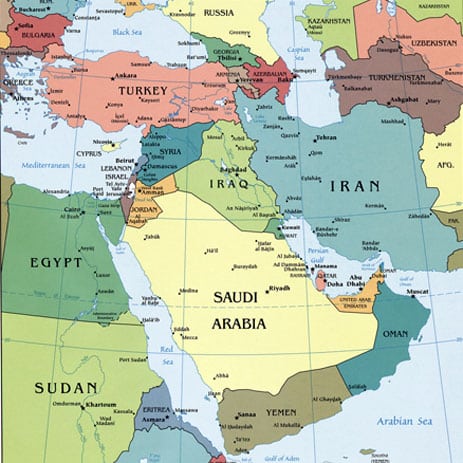
The U.S.A. and the Middle East in a New Era of the Clash of Civilizations
by Vassilios Damiras, Ph.D. (ABD)
CEO
Geostrategic Forecasting Cooperation – (GSFC)
Chryssoula Katsikoudi
Director of International Relations and Middle Eastern Affairs
Geostrategic Forecasting Cooperation – (GSFC)
Events since the terrorists’ attacks of September 11, 2001, have dramatically and drastically changed the political environment in the Arab and Muslims worlds, a vast diverse region incorporating the band of nation-states with significant religious Muslim population that extends from western Africa to the southern Philippines, as well as Arab and Muslim communities and diasporas stretching throughout the globe.
The United States are concerned with three types of serious threats to U.S. national interests.
Direct physical threats against American citizens and military/diplomatic installations
Serious political destabilization of friendly nation-states in the Arab and Muslim worlds
Significant growth of anti-American, anti-Western, and antidemocratic ideologies in the
Middle East and in the wider Arab and Muslim Worlds.
Preventing direct threats against the various American interests is the aim of the global war on terrorism with the defeat of Al Qaeda and related terror networks the paramount U.S. national security priority. The Bush administration in 2002 in the “National Security Strategy of the United States of America” declared that the United States of America is combating a war against brutal terrorists of global reach. The enemy is not a single political regime, or government, or person or religion or political ideology. The main enemy is terrorism premeditated political motivated violence perpetrated against innocents.
Cooperation in fighting terrorism and its networks is therefore a very critical component of the U.S. diplomatic relations with the various Arab and Muslim countries, but it is not the only element. Beyond the problem of terrorism lies the crucial issue of the future socio-political shape
and form of the Arab and Muslim worlds and whether these religious and political worlds will be amicable to U.S. interests, values, and democratic ideas.
Political destabilization of friendly but authoritarian nation-states poses a very serious and complex set of dilemmas and challenges. Statesmen, diplomats, and scholars of the realist school of thought, who direct and influence the U.S. policies and decision-making toward the Arab and Muslim worlds, valued regime stability nearly above democratic values and ideas. At the end of the 1991 Gulf War, serious fear and concern of the strategic consequences of the political destabilization of Iraq informed the George Bush administration’s decision to stop short of toppling Saddam Hussein and to permit him to crush the Kurdish and Shiite revolts. For the following decade both the Bush and Clinton administrations had to live with the serious
consequences of that military decision. Because of that dramatic geostrategic experience, some policymakers now support and vigorously promote that American national interest are sometimes better safeguarded or even protected by regime change in antithetical brutal authoritarian regimes. President George W. Bush faced that dilemma of regime change in Iraq and President Barrack Obama encounters that dilemma in Tunisia, Egypt, Libya, and Syria with the emergence of the Arabic Spring.
Obviously in some cases, promote for regime change is clearly a suitable sociopolitical option. There is little question, for example, that most alternatives to the current suppressive Iranian theocratic government would create a government more respectful of the Iranian people’s political and human rights, less likely to pursue and finish with the development of nuclear weapons or to support or finance vicious terrorist groups or causes, and more favorable positioned toward cooperation with the American administration and other democratic countries.
This specific policy questions relate to the cost-benefit calculus implicit in any set of United States military or diplomatic actions adopted to bolster and promote viable democratic change.
It is evident differentiating between political transitions from authoritarianism to democracy that can be expected to lead to more pluralistic and republic political regimes and those that probably that lead to more repressive and regressive political systems is more difficult in the case of friendly authoritarian nation-states. This demands a more fine-grained analysis of the relative strengths and long-term aims of the sociopolitical forces at play in the region.
The best-case political scenario in the process of democratization of friendly authoritarian countries assumes that a sociopolitical transition from authoritarianism, although in the beginning disruptive and difficult, will create a more democratic and benign political environment over the long term. Thus, a democratic or democratizing Arab and Muslim worlds would significantly reduce or even remove of the structural social and political causes of Islamic extremism and anti-Americanism.
Nonetheless, pushing political change in friendly authoritarian or dictatorial regimes could be significantly destabilizing in short term, specifically in the absence of democratic political
alternatives and strong civil society institutions and values. The removal of the Shah of Iran is a very cautionary study case. Furthermore, Algeria is a story of democratic transition that in the end generated an Islamist electoral majority, but instead of directing the Algerian sociopolitical system toward more inclusive politics, it produced a military crackdown and a radical Islamist insurgency of significance and unprecedented violence. In Egypt the Mubarak administration’s tactics drove the political opposition into underground. In 2011, under the banner of the Arabic
Spring the Mubarak regime collapsed. It is ambiguous if Egypt will become more democratic. In the Saudi Arabia, the most serious sociopolitical menace to the regime’s stability and survival comes from religious Islamic radicals supporting a more extreme version of the official religious/political ideology. Last but not least in Pakistan, an ambiguous ally in the U.S. counterterrorism and counterinsurgency strategies, extreme religious Islamic groups threaten the fragile democracy.
A major concern is the disruption of Jihadist terrorist networks, which potential can carry a biological or nuclear terrorist attacks across the globe, thus undermining democratic developments and endanger the American national interests across the world. An important question is how the American intelligence community can identify hostile use of these lethal networks. It is imperative to analyze the profiles of certain Muslim communities that harbor or maintain violent Islamic networks and the nodal and communicable aspects of these convoluted groups. Methods and process of indoctrination, influence, communications characteristics, and religious rituals necessitate to be better comprehended. Once the U.S. intelligence are identified
the aforementioned methodology of specific jihadist groups, then their recruitment procedure and weaknesses need to be examined and analyzed. Then the American government can design a specific strategy of how to penetrate, disrupt, and destroy menacing jihadist groups.
Interrupting these brutal terrorist groups does not mean closing down various Muslim institutions such as, health and welfare organizations, cultural centers, mosques, youth organizations, and student unions. Rather, it needs dismantling the trust nexus upon which Jihadists depend and promoting Muslim moderates to obtain control of these institutions. The Obama administration needs to continue to promote educational reform, reforms in various Madrassas combine with reforms in several Mosques. It is vital also the American government to promote economic development in the Arab and Muslim worlds. The U.S. intelligence assets need very carefully
to execute psychological operations targeting the various jihadist cells. Inside the U.S. borders, decision-makers need to be pay attention to radical recruitment in various prisons and within the American armed forces to monitor the role of Muslim prison clergy and military chaplains in disseminating radical ideas of Islam.
Evidently, it is extremely difficult in forecasting the consequences of regime change may generated from a failure to comprehend the growth of political ideologies drastically opposed to American national interests, values, democratic ideas, and policies. The American government has a difficult road ahead to promote democratic ideas in the Middle East and in the wider Arab and Muslim worlds and to persuade other American allies mainly in Europe to support that sensitive and important task ahead. One way is United States to sustain a significantly military force in the region that reflects the American commitments to her allies and her military interests. America will be the sole catalyst for democratization in these sensitive aforementioned
areas.
The outcome of the “war of ideas” in progress throughout the Muslim and Arab worlds
is possibly to have significant consequences for the U.S. national interests in the region; nonetheless it is also extremely difficult for the American government to influence or alter Muslim ideas regarding the relations between the West and various countries in the Islamic World. Even pro-American governments wishing to work together with the U.S.A. on various important regional issues may be limited by domestic pressers and public perceptions. It is fundamentally and extremely difficult for a nonwestern power to influence or alter ideas and perceptions of Muslims about their religion or political affiliations. The historical evidence vividly illustrates that only Muslims themselves have the sole credibility to challenge or change the misuse of the Islamic religion by radicals or Jihadst fighters. Thus, the American administration current and future have a serious and difficult task to tackle. The future will
indicate the relations between U.S.A. and the Muslim and Arab worlds.
The Middle East has been the most conflict-prone regions. The lack of economic development and growth is one of the major factors why conflict in the Middle East continues in all likelihood to increase. The significance of ethnic dominance in Islamic countries equal well to the long-lasting and ongoing Arab-Israeli conflict, already hosting two international wars with the participation of Iraq in 1991 and 2003 as well as the Iran-Iraq war in 1980-1988.
Ever since the 1950’s, civil war in the Middle East has been the dominant type of conflict. As a conflict ridden region, one cannot deny that Afrcia and Asia has not been on the same path, but by closely analyzing and comparing the three regions, the Middle East is clearly characterized by current authoritarian regimes, oil-dependent economies, and above all Islam.
Civil war in the Middle East is mostly associated with either religious or ethnic conflict or/and economical, political, and social discrimination. The region’s resistance to democracy and the lack of economic and social development is due to bring a movement of exceptionelism to the surface by reflecting the regions beliefs through their ideology and historical circumstances. Has conflict in the Middle East been shaped by exceptional factors vulnerable to the region, or is the Middle East just an “unfortunate” region; wrong place, wrong time?
After World War I, the boarders were drawn in the form of the 1916 Sykes-Picot agreement. The core regions of the Ottoman Empire became Turkey, some were given to Russia, parts of Syria and Lebanon to France, and Iraq and the rest of Syria to Great Britain. Morocco, Algeria, and Tunisia were controlled by France, and Egypt, Palestine, and Jordan by Great Britain. By the end of 1960, most of those regions have gained their independence, except with the establishment of Istael in 1948, regional conflict in the Middle East started to spread like wild fire. Ethnic and religious conflict between Muslims and Jews became known as the another “holy war.”
However, throughout all the conflict and civil war, the Middle East still today is one of the most influential strategic importance in world politics. The unique and close relationship with Israel and the United States has influenced external intervention such as the U.S./U.K invasion of Iraq in 2003.
According to the “war of ideas” in concept with Huntington’s “Clash of Civilizations,” Islam an the West are engaged in a clash of civilizations as two competing ideologies. As Islam is conflicting with secular democracy and basic civil liberties, the spread and the replacement of the current world with the caliphate are proceeding through two forms of how terrorism is defined nowadays. One, is the extremist Islamist group known as al-Qaeda, and second, the Party of Liberation which is more oriented towards ideological struggle. Known as a radical Sunni Islamist organizatio, PL has not been classified as a terrorist organization, therefore, its ideologies are more accessable to the masses. Other Islamist groups focus more on single, religious issues, such as the Arab-Israeli conflict, but PL reaches out to unite all Muslims under one Islamic banner such as – in Huntington’s case – the clash of civilizations suffered by Muslims all around the world.
After the creation of the Muslim Brotherhood in 1928, modern Islamist movement emerged through some ideologues believing that the decline of the Islamic world can only be reversed if “real” Muslims unite and spread the teachings of the Prophet Muhammad, doing so, replacing the existing governments ruling the Muslim world with Islamic ones. When the Party of Liberation was formed in the early 1950s, its followers, without a doubt, rejected capitalism and preached democracy as “godless.”1 The only way to liberate Muslims from the beliefs of nonbelievers was to replace the Christian dominated nation-states. Furthermore, followers of the PL also believe that Western civilization was seeking an ideological dominance within
the Musim societies, and that capitalims and socialism were anathema because they failed to recognize the superiority of Islam.
Today, the PL is active in more than forty countries with a hierarchical approach aiming to resurrect the caliphate by overthrowing the government, and to prevent Muslims in the West to assimilate into Western culture. One of the party’s main focuses is Turkey – conflicted within a war of ideologies. Although Turkey is currently reforming its legal and constitutional systems in order to join the European Union, in the recent years it has become very vulnerable to domestic Isamist extremists. The PL is trying to convince Turkey not to enter the EU because otherwise they would lose their Islamic identity and instead raise their Islamic flag.
Zeyno Baran, “Fighting the War of Ideas,” Foreign Affairs , Vol. 84, No. 6 (Nov. – Dec., 2005), 70.
Huntington’s clash of civilizations thesis predicts that the increasing conflict between Islam and the West has to do with Muslims being involved in violent conflicts between religious and ethnic groups; with the Middle East being a region where Islam dominates. Ethnic dominance between Shia and Sunni proves his argument that any dominant ethnic group increases the risk of conflict incorporating Islamic dominance. In core content, Huntington’s Clash of Civilization thesis
states that states belonging to different civilizations are more likely to fight each other, while states belonging to the same civilization are less likely to fight each other.
According to Huntington, the Clash of Civilization emerged in the post Cold-War era as a result of different factors such as increased economic regionalization, the interaction amongst people of different civilizations, and most of all a global resourgence of religious identity. Huntington identifies a civilization as “the highest cultural grouping of people and the broadest level of cultural identity people have short of that which distinguishes humans from other species.” 2 Religion is evidently the single most important factor in a civilization. It is the central defining characteristic of a civilization; whether it is Hindu, Islamic, Orthodox, or a Western religious faith, civilizations are most likely to clash with each with different religions.
Huntington places a major emphasis on Islamic belief as a source of cultural strain in the modern world. His thesis predicted that the fundamental source of conflict in this world would be ideological or economical; and he was right. With a sligh emphasis on Weberian theory, combined with his theory of the clash of civilizations, it is evident that there is a troublesome attraction and comparability between Islam and the rest of the cultural world today, which translates into a fatalistic self-empowerment and individualism. Islam’s fatalism is the concept of traditional value system that are unreceptive to the idea of the process of modernization. For that, Huntington’s Clash of Civilization thesis is a perfect comprehensive analysis of the fatalistic
qualities inherited in Islam.
Errol A. Henderson and Richard Tucker, “Clear and Present Strangers: The Clash of Civilizations and International Conflict,” International Studies Quarterly , Vol. 45, No. 2 (Jun., 2001), 319.
401(k) income could boost Medicare premiums for middle class
penalized for prudence, dinged for saving diligently
By RICARDO ALONSO-ZALDIVAR | Associated Press
WASHINGTON (AP) — Retired as a city worker, Sheila Pugach lives in a modest home on a quiet street in Albuquerque, N.M., and drives an 18-year-old Subaru.
Pugach doesn’t see herself as upper-income by any stretch, but President Barack Obama’s budget would raise her Medicare premiums and those of other comfortably retired seniors, adding to a surcharge that already costs some 2 million beneficiaries hundreds of dollars a year each.
More importantly, due to the creeping effects of inflation, 20 million Medicare beneficiaries would end up paying higher “income related” premiums for their outpatient and prescription coverage over time.
Administration officials say Obama’s proposal will help improve the financial stability of Medicare by reducing taxpayer subsidies for retirees who can afford to pay a bigger share of costs. Congressional Republicans agree with the president on this one, making it highly likely the idea will become law if there’s a budget deal this year.
But the way Pugach sees it, she’s being penalized for prudence, dinged for saving diligently.
It was the government, she says, that pushed her into a higher income bracket where she’d have to pay additional Medicare premiums.
A Challenge To Those Who Support “Gay Marriage”
Vostra Guida
Apr 11 ,2013
(Washington State Attorney General has filed a consumer protection lawsuit against a florist who refused to supply flowers for a same-sex wedding. The florist told the couple “I am sorry. I can’t do your wedding because of my relationship with Jesus Chris.” The lawsuit seeks to force the florist to supply flowers for gay weddings and seeks a $2,000 fine for every violation.)
A Challenge To Those Who Support “Gay Marriage”
By Vostra Guida
The concept of so-called “gay marriage” is surrounded with high levels of emotions on all sides of the debate, and has come into even sharper focus this year due in large part to two cases recently argued before the Supreme Court, and the fact that the President of the United States and a slew of “Johnny-Come-Lately” politicians have endorsed the idea of government sanctioned gay marriage.
Yet for centuries, it was presumed that marriage is the union of a man and a woman, and today there are many federal laws that rely on the definition of “marriage” and/or “spouse” (including laws relating to social security, taxes, immigration, employee benefits, etc.). At present, federal law (the Defense of Marriage Act) defines “marriage” as “only a legal union between one man and one woman as husband and wife.” That same law also defines the word “spouse” as referencing only “a person of the opposite sex who is a husband or a wife.” It should come as no surprise that I continue to support those definitions.
The main arguments in favor of gay marriage tend to focus on the “right” of homosexuals to be happy and to marry the person they love, and to be treated equally under the law. But what we have not heard from supporters of gay marriage is what they propose for the new definitions of “marriage” and “spouse” to be used in connection with federal laws like the ones mentioned above.
So for those who have declared your support for gay marriage, I have a challenge for you:
1) Please propose new definitions of “marriage” and “spouse” that include homosexual relationships and that can be used in connection with federal laws.
2) If those definitions are not also inclusive of all varieties of relationships (for example, incestuous relationships, zoophilic relationships, or polygamous relationships — whether heterosexual, homosexual or bisexual) please provide the justification(s) for treating those relationships differently from typical heterosexual and homosexual relationships such that denying people who wish to enter into such marriages may be denied the same “right to be happy, marry who they love, and be treated equally under the law.”
In responding, please keep in mind that people involved in all of the aforementioned types of relationships are capable of conceiving children artificially (some requiring sperm or egg donations or a rented uterus) and/or are capable of adopting children, just like people in heterosexual and homosexual relationships. Some may be too old to have children or have no interest in having children, just like people in heterosexual and homosexual relationships.
The above challenge is a serious exercise. In order to understand whether redefining “marriage” and “spouse” is justified, workable, and generally a good idea, we need to know what the proposed new definitions will be and how those definitions are justified.
Ridgewood Open Houses Sunday April 14
April 12, 2013
By Michael Shetler
Open Houses in Ridgewood, NJ
Starts: 04/14/2013 01:00 pm
Duration: 3 hours:
Ridgewood, NJ
07450
Michael Shetler is a local resident and NJAR Circle of Excellence recipient (2009, 2011) who is happy to serve you in this area. For more information about any of these local homes for sale please call Michael at 201.421.0506 cell or 201.445.4300 office.
Address List Price Bedrooms List Broker
1 379 S PLEASANT AVE $419,000 4 COLDWELL BANKER, RIDGEWOOD
2 610 ROBERT ST $430,000 4 WEICHERT REALTORS RIDGEWOOD
3 258 STEILEN AVE $450,000 4 TERRIE O’CONNOR REALTORS/RIDGEWOOD
4 359 LITCHFIELD ST $485,000 3 COLDWELL BANKER, RIDGEWOOD
5 430 ALPINE TER $550,000 4 KELLER WILLIAMS VILLAGE SQUARE REALTY
6 312 PERSHING AVE $599,900 3 PROMINENT PROPERTIES SOTHEBY’S INTERNATIONAL REALTY-RIDGEWOOD
7 380 N MONROE ST $625,000 3 KELLER WILLIAMS VILLAGE SQUARE REALTY
8 695 WALL ST $725,000 4 REALMART REALTY, LLC
9 227 WOODSIDE AVE $765,000 4 MARRON GILDEA REALTY, INC. RIDGEWOOD
10 415 OAK ST $776,000 4 WEICHERT REALTORS RIDGEWOOD
11 231 PEARSALL AVE $809,000 3 KELLER WILLIAMS VILLAGE SQUARE REALTY
12 69 SHERMAN PL $819,900 5 COLDWELL BANKER, RIDGEWOOD
13 384 HAMILTON RD $839,000 4 TARVIN REALTORS
14 801 N MONROE ST $884,000 4 WEICHERT REALTORS RIDGEWOOD
15 700 WELLINGTON RD $899,000 4 TARVIN REALTORS
16 348 QUEENS CT $934,500 6 CENTURY 21 VAN DER WENDE ASSOCIATES
17 849 E RIDGEWOOD AVE $998,000 4 KELLER WILLIAMS VILLAGE SQUARE REALTY
18 380 BEDFORD RD $1,024,999 5 COLDWELL BANKER, RIDGEWOOD
19 851 HILLCREST RD $1,379,000 5 TARVIN REALTORS
20 776 WOODFIELD CT $1,390,000 5 TERRIE O’CONNOR REALTORS/SDLRV
21 233 HIGHLAND AVE $1,775,000 6 COLDWELL BANKER, RIDGEWOOD
22 200 N MURRAY AVE $2,295,000 5 TARVIN REALTORS
23 120 WALTON ST $699,000 3 SASSANO PROPERTIES INC.
School budget thoughts
Friday, April 12, 2013
The Ridgewood News
Thoughts on school budget
Janice Willett
Ridgewood
To the editor:
The Board of Education and the school administration have worked hard to make the cuts necessary to hold the line on a property tax increase of 2 percent — at least for the upcoming school year. But a look at the numbers shows that we are bumping up against some hard realities after that.
Certain categories of spending are increasing much more rapidly than others and may soon create the need for significant additional cuts. The proposed 2013-14 budget calls for $30.9 million in spending on regular instruction, up from $29.7 million in the 2011-12 school year — an annual rate of increase of 1.9 percent. Spending on special education (including remedial, bilingual, speech, OT/PT and tuition for out-of-district placements) is budgeted at $20.3 million, up from $16.7 million in 2011-12 — an annual rate of increase of 10.3 percent. (These numbers do not include transportation costs or employee benefits or various administrative, support and operating costs.)
The VC and BOE are unreal (except for a couple realists like Morgan).
Does anybody every want to cut their budget? No.
Do financial realities require this? Yes.
Everyday, private companies are making the hard choices. Restructuring jobs, departments, making due with less, etc. due to financial constraints.
What have we seen with the VC and BOE? Nibbling around the edges. Threatening wholesale reductions to sports. What about negotiating reasonable pay packages? Rationalizing school administration? Saying no to scope creep?
If the BOE says “No”, to financial oversight, we should say “NO!” to the budget.
IRS denies using emails to target taxpayers
Published April 12, 2013
FoxNews.com
With less than three days to go before federal taxes are due, the Internal Revenue Service is denying claims that it wants to snoop on taxpayers by reading their emails and monitoring other forms of electronic communication without a warrant.
“Respecting taxpayer rights and taxpayer privacy are cornerstone principles for the IRS,” the agency said in a statement. “Our job is to administer the nation’s tax laws, and we do so in a way that follows the law and treats taxpayers with respect.”
It continued: “Contrary to some suggestions, the IRS does not use emails to target taxpayers. Any suggestion to the contrary is wrong.”
The statement comes after the American Civil Liberties Union said this week that internal documents obtained through a Freedom of Information Act request revealed that agents were told they didn’t need a warrant to root through emails, texts or Facebook pages of people it is investigating. The ACLU and other privacy groups disagreed with that rationale and say by bypassing warrants, the Tax Man is violating the Fourth Amendment.
Health Screening for Women “Done in a Day”
Sun, April 14, 2013 – Wed, April 17, 2013
7:00 AM – 7:30 PM
Valley Hospital, 1 Valley Health Plz. Ste. A, Paramus, NJ 07652
Event Description
Are you a Busy Woman and can’t find the time to schedule those important screenings?
Well, be “Done in a Day”..
Sunday, April 14 and Wednesday April 17, The Valley Hospital, in cooperation with its Spirit of Women health program, will offer “Done in a Day” to help busy women address those important health screening that often go delayed of ignored due to scheduling difficulties. Women can choose one of more of six health screenings, which include digital breast imaging (mammography), bone density, women’s pelvic health, heart health assessment, spine screening, and a nutrition evaluation.
**Mammography and bone density screenings require a physician’s perscription, and all screenings require appointments. Pelvic Health, heart health, spine, and nutrition screenings are offered at no charge. All screenings are performed by nurse practitioners, certified radiology technicians, and other medical professionals. The schedule of screenings is as follows:
SUNDAY, APRIL 14
7am-9am Heart Health Assessment (requires fasting for 8-10 hours prior)
9am-1:30pm Mammography, Bone Density, Spine Screening.
WEDNESDAY APRIL 17
5pm-7:30pm Mammography, Bone Density, Women’s Pelvic Health, Spine Screening, Nutrition Evaluation.
For more information and to register for screening appointments call 1-800-Valley1
Restaurant Review: Lisa’s Mediterranean Kitchen in Ridgewood
Friday April 12, 2013, 9:11 AM
BY JULIA SEXTON
SPECIAL TO THE RECORD
The Record
There are good-looking restaurants. There are tony restaurants. And then are simply good restaurants. Lisa’s Mediterranean Kitchen in Ridgewood falls into the last — and most precious — category.
Let me be clear. Lisa’s is not unattractive. Down its Oak Street entry ramp, this restaurant is bright and cheery. Sure, there might be more metallic gold paint than necessary, but Lisa’s dining room offers a pleasant respite from Ridgewood’s main drag. Some of the good feeling in Lisa’s dining room comes from other diners. On each of my visits with friends, I saw large, multi-generational groups enjoying family dinners. While not noisy, Lisa’s dining room offers a comfortable hubbub. If the baby squeals or bangs a spoon, it’s OK; Lisa’s is a great choice for families.
The Valley Hospital Hosts Pediatric Emergency Medicine Symposium
April 11, 2013
Ridgewood NJ , The Valley Hospital recently hosted its Second Biennial Pediatric Emergency Medicine Symposium 2013: Current Clinical Concepts. The symposium was presented by Valley’s Department of Emergency Medicine, the Pediatric Emergency Room, and the Department of Pediatrics.
The program focused on some of the challenging clinical concepts in pediatric emergencies that are faced on a daily basis by all clinicians who care for sick children. Topics included:
• Pediatric Asthma Update;
• Abuse of Prescription Opioids;
• Syncope (fainting) in Children; and
• Unusual Presentations of Common Pediatric Surgical Problems.
More than 150 physicians, nurses, and other healthcare professionals attended the symposium.
Shown here (from left to right) are: Joseph Yallowitz, M.D., Director, Emergency Medicine, The Valley Hospital; Lewis Nelson, M.D., Associate Director, New York City Poison Control Center; Rashid Baddoura, M.D., Emergency Medicine, The Valley Hospital; Christopher Amato, M.D., Director, Pediatric Emergency Medicine Fellowship, Morristown Memorial Hospital; Peter Diestel, Senior Vice President, Administration and Chief Operating Officer, The Valley Hospital; Peter Lee, M.D., Director, Division of Pediatric Emergency Medicine, The Valley Hospital; Yvette Young, M.D.; Pediatric Emergency Medicine; and Jeffrey Bienstock, M.D., Director, Pediatrics, The Valley Hospital.
Not pictured are presenters Alfred Sacchetti, M.D., Assistant Clinical Professor of Emergency Medicine, Thomas Jefferson University, Philadelphia; and David Friedman, M.D., attending pediatric surgeon, The Valley Hospital, and Associate Clinical Professor of Surgery, Columbia-Presbyterian Medical Center.
Readers debate Police Handling of Alleged masturbation incident
So let me get this straight. The keystone cops actually found the guy and then let him go without a charge being filed? How insulting to the person who witnessed the lewd act and to the children who use the area. Lock him up and let him beat his meat in a cell instead of a book stack.
In your infinite wisdom the keystone cops located a person accused of a disorderly persons offense that they did not witness, and they let him go. Pending further investigation. Did it ever occur to you you the KEYSTONE cops did the right thing. The cops can’t charge someone with a disorderly persons offense that they did not witness without a confession with corroboration (sp). Or a statement from a witness there are several other exceptions. Get a life and try doing your own job better instead of telling the cops how to do their job, if the cops locked him up and put him in a cell we would all be paying the false arrest claim one way or another for a long time.
The Asperger’s Services Department at West Bergen Mental Healthcare will present a series of monthly workshops for parents of children and adults on the spectrum. The support group will have a two-part focus. First, to explore the challenges of parenting individuals with Asperger’s and related disorders and second, to allow participants to share and process their own experiences within their families. The co-facilitators are West Bergen professionals who are Masters and Doctoral level clinicians. The fee is $20.00 for one or both parents per session. Parents are encouraged to attend sessions together. Participation is limited and pre-registration is required for each session.
Session dates and topics: May 6 – Expectations (self, child, others); June 3 –Disclosure In the Family and Beyond; July 15 –Siblings; August – No Forum; September 9 – What’s Next? Managing Life Stage Transitions; October 7 – Both Sides of the Coin: Challenging Behavior and Celebrating Success; November 4 – Preparing for the Holidays; December 2 – Tools for Success.
All workshops will be held at West Bergen Counseling Group, 615 Franklin Turnpike, 2nd Floor, Ridgewood, NJ. Please contact Kelly Doyle at [email protected] or (201) 857-0080 to register or receive further information.
Why 30 is really 45: We’re so unhealthy that we’re 15 years OLDER than our parents were at the same age
Today’s adults are more likely to suffer from high blood pressure and diabetes because of poor health Men in their 30s were 20% more likely to be overweight than in previous generations, Dutch researchers found Women in their 20s are twice as likely to be obese
By Anna Hodgekiss
PUBLISHED: 13:47 EST, 10 April 2013 | UPDATED: 13:47 EST, 10 April 2013
Today’s adults are so unhealthy they are 15 years ‘older’ than their parents and grandparents at the same age, researchers say.
They are more likely to suffer from high blood pressure, diabetes and obesity than previous generations because of poor health, according to a study published in the European Journal of Preventive Cardiology.
Looking at 6,000 adults aged 20, 30, 40, 50 over a 25 year period, researchers found younger generations had poorer ‘metabolic’ health – a range of issues including blood pressure and weight.