Survey launched to aid N.J. businesses impacted by Sandy
FRIDAY DECEMBER 14, 2012, 5:13 PM
BY ANTHONY CAMPISI
STATE HO– USE BUREAU
THE RECORD
Governor Christie announced the launch of a new survey Friday that he said would aid state officials in tailoring a response to businesses impacted by superstorm Sandy.
Volunteers will be fanning out over the weekend in storm-ravaged communities across the state to administer the survey, which was developed in concert with business groups including the New Jersey Business and Industry Association and the state Chamber of Commerce.
Christie also encouraged businesses to fill out the survey online and said it would be crucial in helping his administration target efforts to get the state’s business community on its feet and could be used in determining how $2 billion requested by President Obama for small business grants in the storm’s wake would be spent.
“The heartbeat of both the economy and the fabric of the culture are all these small businesses,” he said at an event in Sea Bright meant to announce the survey and several other small business initiatives launched in the past week.
The Friends of the Hermitage will host a festive Champagne and Candlelight evening to welcome the holiday season and celebrate the Friends’ 40th year of stewardship of the Hermitage Museum. The evening begins with a champagne reception inside the historic Victorian home, decorated by the Ho-Ho-Kus Garden Club in the “Christmas Tea” theme.
After viewing the decorations in The Hermitage, guests will walk to Jaqua Hall to enjoy the melodic guitar of musician Jim Campanella, with wine and hors d’oeuvres. Tickets for this rare opportunity to see the museum sparkle during the evening are available by advance reservation with the Museum Office at (201) 445-8311, ext. 36. Tickets are $60 per person. Proceeds benefit the museum’s education programs for children.
Following the reception, guests will enjoy light fare and seasonal music
in Jaqua Hall, Hermitage Education & Conference Center, 335 N. Franklin Turnpike, Ho-Ho-Kus.
Give the Gift of Art from the Ridgewood Art Institute
Gift Certificate for Art Classes
Starting at $30
https://www.ridgewoodartinstitute.org/gift/giftcert.html
A Gift of Membership to the Ridgewood Art Institute
A full years membership only $60
Membership entitles you to use at the Barn, Lectures, Demonstrations, Life Sketch Classes and more.
https://www.ridgewoodartinstitute.org/member/membership.html
Framed Original Art Work for Sale in our Gallery
Visit our Holiday Art Show & Sale Beautifully Framed Art and Custom Portraits Available
A Portion of Proceeds to this exhibit benefit Community Meals Inc
https://www.communitymealsonwheels.org/
Give the gift of original artwork and a fun night out.
RAI Sponsorships make such a great gift we’re offering them just in time for the holidays this year.
For $275 your lucky recipient will be guaranteed a painting of their choice from this spring’s show.
https://www.ridgewoodartinstitute.org/sponsor/sponsor.html
Purchase online or in person perfect for the Art Lover!
https://www.ridgewoodartinstitute.org/index.html
The Ridgewood Art Institute 12 East Glen Avenue, Ridgewood, NJ 07450 201-652-9615
FEMA to cover 75 percent of private property cleanup costs from Sandy
Thursday December 13, 2012, 4:20 PM
BY ANTHONY CAMPISI
STATE HO– USE BUREAU
The Record
From The Political State blog on NorthJersey.com:
Towns and counties ravaged by superstorm Sandy will be getting federal aid to cover the costs of cleaning up private property — though the package isn’t as generous as the one Governor Christie asked for.
The federal government will reimburse local governments 75 percent of the cost of debris removal from residents’ homes and businesses, according to a Christie administration announcement released Thursday afternoon.
The governor, in November, had asked the Obama administration to exceed the traditional 75 percent figure and completely cover the cost of cleanup, citing “the financial burden and economic hardship” the storm represents to the state.
Towns and counties could be on the hook for millions of dollars thanks to Sandy, and last month, Christie said some storm-ravaged towns might have to raise property taxes to pay for the cleanup.
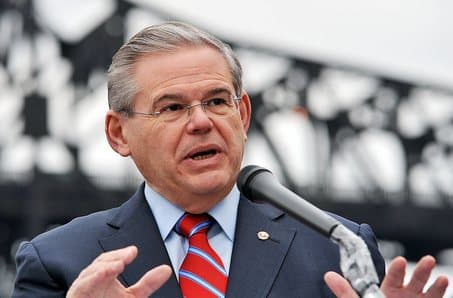
Sen. Menendez employed intern who was illegal immigrant, sex offender, AP reports
By NBC News staff and wire service reports
Sen. Robert Menendez confirmed to msnbc TV’s Tamron Hall on NewsNation on Wednesday an AP report that an unpaid intern working in his office had been arrested by immigration authorities for being in the country illegally. The Associated Press reported that the 18-year-old from Peru was also a registered sex offender.
The Homeland Security Department instructed federal agents not to arrest him until after Election Day, a U.S. official involved in the case told the AP. Menendez, a Democrat from New Jersey, told Hall he knew nothing about that allegation and did not learn of the arrest until just before appearing on msnbc Tuesday. He said his staff learned of the arrest Monday.
Luis Abrahan Sanchez Zavaleta was arrested by U.S. Immigration and Customs Enforcement agents in front of his home in New Jersey on Dec. 6, two federal officials told the AP. Sanchez, who entered the country on a now-expired visitor visa from Peru, is facing deportation and remains in custody, the officials told the AP. The officials spoke on condition of anonymity because they were not authorized to discuss details of Sanchez’s immigration case.
Obamacare just raised your health care premium by $63
posted at 12:41 pm on December 11, 2012
by Mary Katharine Ham
If you’re a member of the mainstream media, you’re “surprised” by this in the same way that every bad jobs report is “unexpected.”
Among the regulations being rushed out the door by the Department of Health and Human Services 32 months after Obamacare passed is a requirement that every plan in America be subject to a $63 fee. That $63 is part of a fund to subsidize people with pre-existing conditions, who are more expensive to cover but whose costs must be transferred to healthier individuals in the new system.
Reporting suggests the costs could hit 190 million health care plans held by individuals or provided by employers. The AP:
The charge, buried in a recent regulation, works out to tens of millions of dollars for the largest companies, employers say. Most of that is likely to be passed on to workers.
Do tell. Who could have predicted this? More on the fund we’re creating:
Most of the money will go into a fund administered by the Health and Human Services Department. It will be used to cushion health insurance companies from the initial hard-to-predict costs of covering uninsured people with medical problems. Under the law, insurers will be forbidden from turning away the sick as of Jan. 1, 2014.
The program “is intended to help millions of Americans purchase affordable health insurance, reduce unreimbursed usage of hospital and other medical facilities by the uninsured and thereby lower medical expenses and premiums for all,” the Obama administration says in the regulation. An accompanying media fact sheet issued Nov. 30 referred to “contributions” without detailing the total cost and scope of the program.
Of the total pot, $5 billion will go directly to the U.S. Treasury, apparently to offset the cost of shoring up employer-sponsored coverage for early retirees.
The $25 billion fee is part of a bigger package of taxes and fees to finance Mr. Obama’s expansion of coverage to the uninsured.
You see, we’re “lowering medical expenses and premiums for all” by…raising them for pretty much everyone. This is such a sweet deal.
Abrakadoodle Architecture Art Camp at Ridgewood Recreation December 26 27
On Wednesday, December 26th and Thursday, December 27th, Ridgewood Parks & Recreation will present a special art program by Abrakadoodle – Architecture Art Camp. This special enrichment class is for children in Grades 1-4 and will take place at The Stable, 259 N. Maple Ave., Ridgewood, NJ.
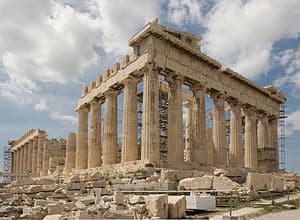
This art camp is scheduled from 9:30 a.m. to 12 noon each day and will offer children a fun and exciting opportunity to discover the world of architecture. Children will build balancing towers, sculpt Greek columns, plus draw and design whimsical skyscrapers inspired by Brooklyn, New York native and Pop artist, James Rizzi.
The cost for this enrichment program is $95. Registration can be made online- www.ridgewoodnj.net/communitypass or in person/by mail to The Stable, 259 N. Maple Avenue. Locate the registration form on the Recreation homepage at www.ridgewoodnj.net. For more information or assistance, please contact the Recreation Office at 201-670-5560.
Washington, D.C., December 11, 2012—The impact of expiring “fiscal cliff” provisions in the tax code would hit families across the country and in all income groups, constituting an overnight tax increase that could consume over 8% of their total income, according to a new analysis by the Tax Foundation. Both high and low income groups would see larger increases than middle-income taxpayers, with urban areas as different as Stamford, Connecticut and McAllen, Texas among the top areas affected.
Dramatic changes to both tax and spending policy at the federal level are scheduled to take place at the end of the current year unless Congress acts. On the tax side, the most significant changes are the expiration of Bush-era income tax cuts and provisions relating to the Alternative Minimum Tax, which will increase liabilities nationwide. When ranked by city, the heaviest impacts will fall in Texas, Georgia, Oregon, and Arizona, with metropolitan areas in Arizona, California and Virginia filling out the top ten.
“We found that higher and lower income areas tended to be affected more than middle income areas—higher income areas from changes to the Alternative Minimum Tax and lower income areas from the Bush tax cuts,” said Tax Foundation analyst and programmer Nick Kasprak.
Starting with data from the Internal Revenue Service and the U.S. Census Bureau’s American Community Survey, the Tax Foundation estimated the increased tax burden for the median four-person family in each of 366 urban areas using the Fiscal Cliff Tax Calculator, available online at www.MyTaxBurden.com.
Metropolitan areas at the top of the list for fiscal cliff impact include College Station-Bryan, Texas (media income $38,292) and Corvallis, Oregon (media income $39,775), but also Trenton-Ewing, New Jersey (media income $110,065), Boston-Cambridge-Quincy, Massachusetts (media income $106,326) and the Washington, D.C. urban area (media income $115,519).
Tax Foundation Fiscal Fact No. 346, “How Would the Fiscal Cliff Affect Typical Families Across the Country?” by Nick Kasprak is available here.
The Tax Foundation is a nonpartisan research organization that has monitored fiscal policy at the federal, state and local levels since 1937. To schedule an interview, please contact Richard Morrison, the Tax Foundation’s Manager of Communications, at 202-464-5102 or [email protected].
The following editorial by Senator Michael J. Doherty (R-23) was published in the November 29, 2012 edition of The Record: Opinion:
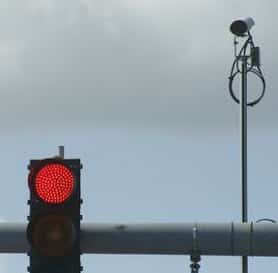
Are red light cameras dangerous?
A NEW REPORT from the state Department of Transportation confirms what many opponents of red light camera ticketing systems have long suspected: Cameras lead to more accidents, more injuries and greater cost.The NJDOT report, completed as an annual requirement of the state’s five-year red light camera pilot program, contains data showing that both the total number of crashes and the total cost of crashes have increased at intersections after cameras were installed.One of the major goals commonly stated by proponents of red light camera systems is to reduce injuries from right-angle crashes, generally the most dangerous type of collision that results from running a red light.At the 24 intersections in New Jersey that have had red light camera systems operational for at least one full year, the number of right-angle crashes decreased by 15 percent, from 60 to 51, when comparing crash data from the year before cameras were installed to data from their first year of operation.While that reduction in accidents may initially appear to be positive, a further examination determined that the severity of right-angle accidents increased, leading to more accidents resulting in injuries (31 vs. 21) and $444,800 in increased cost.
According to the report, the costs cited include, but are not limited to, “vehicle damage and repair, damage to property, emergency response, medical care and even funeral costs.”The data suggests that the most severe right-angle crashes are not prevented by the deterrent effect of a permanent camera-based ticketing system at intersections.The deterrent effect of cameras, however, does appear to lead to a significant increase in rear-end crashes.The number of rear-end collisions increased by 20 percent (286 to 343) after cameras were installed, resulting in more injuries (84 vs. 74) and $728,000 in increased cost.It appears that many drivers unnecessarily slam on their breaks when a traffic light turns yellow to avoid a ticket if they know an intersection is monitored by a red light camera system, resulting in collisions from cars following too closely behind.Number of crashes, costs increased Overall, the total number of crashes at the 24 intersections that provided a full year of data increased from 577 to 582 (up 0.9 percent) with a total increased cost of nearly $1.2 million after cameras were installed.If the goal of employing red light camera systems is to improve driver safety, the data suggest that the program has failed.For those of us who questioned the real motivation for approving cameras for use in New Jersey, these results were not unexpected.Red light cameras have been in use across the nation for more than 20 years.
Numerous studies have questioned their effectiveness at improving safety, including many prior to the establishment of our pilot program. The National Motorists Association maintains a comprehensive compilation of nearly 20 such studies on its website.There is a growing understanding that the most dangerous intersections are the result of poor engineering rather than malevolent drivers, further weakening the argument for deterrence through automated enforcement.Low-cost alternativesIn one important demonstration, AAA Michigan led an effort to implement a number of simple and low-cost engineering solutions to make the most dangerous intersections in Detroit safer.As part of that effort, the size of the colored lenses on traffic lights was increased by 50 percent to help drivers see them from farther away, left-turn lanes were re-striped, light timing was adjusted and all-red cycles were added to traffic lights to provide extra time for cars to safely clear intersections before cross traffic is given a green light.The results were astonishing.
Although the cost of the engineering upgrades was minimal, approximately $35,000 per intersection, the number of accidents was reduced by 47 percent, with a 50 percent decrease in injuries.Why don’t we try these simple, cost-effective solutions to make intersections safer here? The answer is simple. The local and state officials who blindly repeat the supposed, but unproven, safety benefits of red light cameras are really most motivated by the ticket revenues their cameras generate.With a stagnant economy and increased scrutiny by residents of their tax bills, it’s an appealing option for local officials to place the burden of funding bloated government budgets on “bad” drivers, especially when cameras at a single intersection can generate tens of thousands of tickets and hundreds of thousands of dollars in revenue annually.Using drivers as a cash cow to fund wasteful government spending is wrong.I have sponsored legislation to eliminate the use of red light cameras in New Jersey. We would not be the first place to remove cameras once installed and would join a growing number of states that have prohibited their use.I have launched an online petition supporting the effort to ban red light cameras in New Jersey at https://senatenj.com/camerasRed light cameras have failed at their supposed goal of making dangerous New Jersey intersections safer. They should be eliminated immediately.
Doherty/Sweeney Introduce Bill to Require Free Access to Storm-Damaged Beaches Replenished with State & Federal Funds
Senator Michael J. Doherty (R-23) and Senate President Stephen M. Sweeney (D-3) have introduced legislation that would require municipalities that accept state or federal aid to rebuild storm-damaged beaches to provide beach access and beach restroom facilities to the public free of charge.“It is likely that state and federal taxpayers will provide hundreds of millions of dollars to repair and replenish New Jersey beaches that were washed away during Hurricane Sandy,” said Doherty. “Considering the massive public resources that will be directed at rebuilding many New Jersey beaches, it only seems fair to ensure that everyone have the opportunity to enjoy free access to the beaches they will support and help rebuild with their tax dollars.
”The legislation, S-2368, would apply to towns that accept grants or aid from the state or federal governments after November 2, 2012 for the purpose of replenishing storm-damaged beaches.Under the legislation, municipalities that accept aid for rebuilding beaches would not be allowed to adopt or enforce ordinances requiring the collection of fees for beach badges or otherwise as a requirement of being allowed to use or access a beach. Furthermore, those municipalities would be required to provide free public restroom facilities to beachgoers between Memorial Day and Labor Day weekends.“Where taxpayers are paying for beach restoration, they shouldn’t be taxed a second time just to walk on the sand,” said Sweeney. “As New Jerseyans, we are all in the recovery and rebuilding process together. That means we should all be able to enjoy the reopening of our state’s greatest natural resource together, too.”
WASHINGTON Students in the U.S. perform better than the global average, but still lag behind many of their peers in Asia and Europe, an international study found.
Fourth-graders have improved their scores in reading and math over the past four years, according to a study released Tuesday. But progress seems to fall off by eighth grade, where math and science scores are stagnant.
Meanwhile, kids in countries such as Finland and Singapore are outperforming American fourth-graders in science and reading. By eighth grade, American students have fallen behind their Russian, Japanese and Taiwanese counterparts in math, and trail students from Hong Kong, Slovenia and South Korea in science.
“These 2011 international assessments provide both encouraging news about our students’ progress and some sobering cautionary notes,” said Education Secretary Arne Duncan, who applauded gains among fourth-graders but warned those gains aren’t being sustained in later grades. “That is unacceptable if our schools are to live up to the American promise of giving all children a world-class education.”
The results of the study, conducted every four years in nations around the world, show mixed prospects for delivering on that promise. A nation that once took pride in being at the top of its game can no longer credibly call itself the global leader in student performance. Wringing their hands about what that reality portends for broader U.S. influence, policymakers worry it could have ripple effects on the economy down the line, with Americans increasingly at a competitive disadvantage in the international marketplace.
Elevating the skills needed to compete with emerging countries has been a priority for President Obama, who has pledged to train 100,000 new math and science teachers over the next decade. “Think about the America within our reach: a country that leads the world in educating its people. An America that attracts a new generation of high-tech manufacturing and high-paying jobs,” he said this year in his State of the Union address.
RHS LEARNING COMMONS COMMITTEE HOLDS PARENT MEETING ON DECEMBER 11
Ridgewood NJ, The RHS Learning Commons Committee will hold a parent meeting on Tuesday, December 11 at 7:30 p.m. to solicit feedback and share ideas about the design of the new facility. All parents and guardians in the school district are invited to attend. For more information, please e-mailLori Weil at [email protected].
Fundraiser: On Friday, January 11, 2013 from 7-11 p.m., the 07450 Schools Committee will host a fundraiser to benefit the Ridgewood High School Learning Commons project, a plan to renovate the current high school library, which is almost 50 years old, and create a modern library for generations of students to come.Click here for the invitation.
General Information: Volunteers are seeking community-wide support for the proposed new Learning Commons at Ridgewood High School. Click here to learn more.
More information can be found on the Ridgewood High School Learning Commons website: www.RHSLearningCommons.com.
Fiscal Cliff Raising Revenue: The Least Worst Options
December 05, 2012
By Scott A. Hodge
Fiscal Fact No. 344: Raising Revenue: The Least Worst Options
With the fiscal cliff looming, lawmakers are looking for new revenues as a component of any bipartisan deal to reduce the federal deficit. While raising new revenues may be politically necessary to seal a deal, lawmakers must keep in mind that not all revenue raisers are equal. Some will have far more harmful economic consequences than others.
Indeed, after careful study, OECD economists have established a hierarchy of which taxes are most and least harmful for long-term economic growth. They determined that the corporate income tax is the most harmful for long-term economic growth, followed by high personal income taxes. Consumption taxes and property taxes were found to be less harmful to economic growth relative to taxes on capital and income.
Why this hierarchy? It is determined by which factors are most mobile and, thus, most sensitive to high tax rates. Capital is the most mobile factor in the economy and therefore most sensitive to a hike in tax rates. Naturally, land is the least mobile and less sensitive to high tax rates. This is not to say that high taxes won’t affect consumption and property patterns but their impact will simply be less than the impact of taxes on capital and income.
With these rules of thumb in mind, here is a short list of ways to raise new revenues ranking from least harmful to most harmful:
#1 Least Harmful—Economic growth: This may seem obvious, but whether or not we have enough new economic growth to generate more revenues for the Treasury is directly dependent upon some of the policy choices listed below.
#2 Asset sales: The U.S. federal government owns hundreds of billions worth of assets that it can, and should, sell off in order to pay down the national debt. As of 2008, the Office of Management and Budget (OMB) reported public lands worth $833 billion and loans worth $209 billion. Other state-owned enterprises such as Amtrak, the Power Marketing Administration utilities, and the Tennessee Valley Authority could all generate considerable cash on the open market. The biggest benefit of asset sales is turning tax-subsidized enterprises into tax-generating ones.
#2a: As a second-best option to asset sales, require Government Sponsored Enterprises (GSEs) and federally-owned businesses to pay federal income taxes. TVA, for example, has operating revenues of $11 billion and $47 billion in assets. It should pay federal income taxes.
#3 User fees and leases: Lawmakers could raise billions with no harm to the economy by raising user fees for many of the goods and services it provides (such as flood insurance, inland waterways, National Parks, and loan originations) and opening up more public lands for oil and mineral leasing. In 2008, OMB reported that federal mineral rights were worth $1.062 trillion. They are probably worth more today.
#4 Tax certain non-taxed business activities: There are a number of non-taxed businesses or industries that compete directly with private businesses but have the advantage of not paying federal income taxes. These include: credit unions; rural electric coops; nonprofit hospitals; and certain types of insurance firms. These businesses should be taxed as any for-profit enterprise. The tax benefit to credit unions has been estimated at $2 billion to $3 billion per year.
Moreover, there are a growing number of nonprofit organizations that operate for-profit enterprises. While nonprofits are supposed to pay income tax on their unrelated business income, many receive royalties, rents, and other income that is considered exempt from income taxes on these profits. For example, college sport organizations earn billions in revenues from hosting tournaments and TV and radio rights, but the IRS has exempted these profits from tax. Other nonprofit organizations such as AARP earn hundreds of millions of dollars in income tax-free from royalties and other sources. All of this income should be subject to income tax.[1]
#5 Premium and co-pay increases: Increasing Medicare premiums and co-payments are not likely to be politically popular, but asking seniors to contribute more toward their federal health insurance would be far less harmful to the economy than a broad-based income tax. Even if these policies were means-tested, they might actually add a measure of market forces into a system that has few. According to CBO, increasing the Medicare premium for Part B to 35 percent from 25 percent could raise more than $240 billion over ten years. (Again, Congress’s arcane budget rules count these payments as a reduction in mandatory spending, not new revenues, but the effect is the same.)
#6 Federal employee contributions: As most private employers are now doing, the federal government should ask federal employees to contribute more to their own health care and retirement costs. Currently, federal employees pay 25 percent of the costs of a basic health plan (some pay more for more expensive plans). This share should be increased to at least 30 to 35 percent. (Congress’s arcane budget rules would likely count these contributions as a reduction in mandatory spending, not new revenues, but they are good policy anyway.)
In February 2012, lawmakers increased the amount that new federal employees must contribute to their pensions from 0.8 percent to 3.1 percent of each paycheck. This measure was expected to raise $15 billion toward the cost of extending unemployment insurance. However, current federal employees were exempted from the contribution increase. Lawmakers would do well to extend the 3.1 percent contribution to current employees.
#7 Sales/Excise taxes: Unlike the states, the federal government does not rely much on sales or excise taxes—excise tax revenues amount to about 3 percent of total federal revenues. The largest federal excise taxes are the federal gasoline tax ($38.7 billion), tobacco taxes ($16.5 billion), airport and ticket taxes ($11.6 billion), and alcohol taxes ($9.6 billion). Increasing current excises or creating a new one would not be costless, but less so compared to higher income taxes. For example, according to CBO, increasing the federal gas tax by 25 cents could raise about $30 billion per year.
#8 “Base-broadening”: This is a tricky one because while everyone talks about broadening the tax base and eliminating “spending” in the tax code, the truth is that not all tax preferences are created equal (see discussion about untouchables, below). From an economic perspective, eliminating tax preferences produces less harm than increasing marginal tax rates, but caution is also in order.
Eliminate industry subsidies, targeted tax preferences, and refundable credits first: Industry subsidies can include such things as the special exemption for credit unions; credits for hybrid vehicles and energy efficient windows; and tax-exempt bonds for private nonprofit educational facilities. The IRS now gives out over $100 billion in refundable credits to taxpayers who have no income tax liability. Limiting those to the neediest could save billions.
Tax employer-provided health care benefits: This exemption is the single largest tax preference at roughly $128 billion per year. Taxing this currently untaxed employee compensation would be good policy, but should be paired with other market-based reforms.
Restoring PEP and Pease: Tax Foundation economists have estimated that restoring the phase-outs of personal exemptions and itemized deductions (the PEP and Pease provisions) for taxpayers with more than $250,000 in AGI (joint filers) and $200,000 (single filers) would lower GDP by 0.03 percent over a five to ten year period. These measures typically raise the effective marginal tax rates by about 1 to 4 percent for families of various sizes while their incomes are in the phase-out range, above which rates return to the normal statutory levels.
Capping deductions: Mitt Romney’s proposal to cap itemized deductions at $17,000 or $25,000 may have been crude tax policy, but it had the political advantage of avoiding a direct fight with powerful interest groups and it gave taxpayers the choice in deciding which deductions were best for their situation.
Untouchables: For individuals, do not eliminate or scale back broad-based savings vehicles such as 401ks, Roth IRAs, or investment incentives such as the reduced rates on dividends and capital gains. For businesses, do not lengthen depreciation schedules, eliminate business expensing or depletion, or eliminate deferral. These provisions offset double taxation and move the tax system toward a consumption base.
#9 Raising the payroll tax rate and/or raising the wage base to which it applies: The payroll tax raises about $1 trillion per year, about the same as the individual income tax. But because it applies to wages only, and the Social Security portion applies only to the first $110,000 in wages, the payroll tax has little impact on saving, investing, entrepreneurship, and high-productivity labor. Empirically, we find across countries no relationship between the payroll tax and economic growth. This is why the payroll tax holiday, which cut the rate 2 points in 2011 and 2012, has failed to improve the economy or reduce chronic unemployment. It did, however, cost the treasury $125 billion per year, more than 10 percent of the deficit. That’s a bad deal.
#10 Raising the Alternative Minimum Tax and/or a “Buffet Rule”-type minimum tax: The AMT began in the 1960s as a way to ensure high income earners don’t slip through the regular income tax system. Instead, it has become an alternative tax code with its own problematic complexities. Because it has failed to ensure a minimum tax rate, the “Buffet Rule” has been proposed as a minimum tax on millionaires, but there is no reason to expect this to work any better. Minimum taxes merely complicate the code, introduce uncertainty for taxpayers, and invite special interests to lobby for exemption. In the end, they raise little revenue.
#11 Allowing “temporary” expensing to expire: The 2010 tax deal gave businesses full expensing in 2011 and 50 percent expensing in 2012. These temporary measures are considered tax cuts, but in reality they are more like tax shifts. Instead of businesses taking their deductions in future years, they take them now. This timing shift actually produces a long-term revenue loss of nearly zero. The idea behind bonus depreciation is to encourage capital purchases earlier and hopefully encourage the use of that capital to increase production. This is what happened in 2003, leading to an immediate rebound in investment and GDP. But because it was temporary, it mainly borrowed investment from future years when it expired. Full expensing on a permanent basis would permanently shift investment forward, leading to permanently increased production and income. Making full expensing permanent could boost GDP by more than 2.7 percent over the long run, while 50 percent expensing could boost GDP by 1.36 percent.
#12 Raising top individual income tax rates: In an analysis of President Obama’s tax proposals, Tax Foundation economists estimated that increasing the marginal tax rates in the top two tax brackets from 33 percent to 36 percent and from 35 percent to 39.6 percent would lower long-term economic growth by 0.44 percent. Our model also showed that for every $1 such a policy would raise for the treasury, GDP would fall by $2.77. That’s a poor tradeoff.
#13 Raising the tax rate on estates: This ranks worse than raising top individual rates because it is a revenue loser not a revenue gainer. President Obama’s budget proposed increasing the federal estate tax from the current 35 percent top rate with a $5 million exempt amount to the 2009 levels of a 45 percent top rate and a $3.5 million exempt amount. Tax Foundation economists estimated that this policy would lower GDP by 0.23 percent. While this may seem like a small effect, the loss in GDP is nearly five times the amount of new tax revenue gained from this policy.
#14 Raising tax rates on capital gains and dividends: When Tax Foundation economists modeled the long-term effects of increasing the capital gains top rate to 20 percent and letting the tax rate on dividends revert to 39.6 percent for people in the top two brackets, they found that this policy would lower GDP by 2.15 percent and that it would not raise any new tax revenues because of its depressive effects.
#15 Most Harmful—Raising corporate income tax rates: Because the U.S. currently has the highest corporate income tax rate in the industrialized world, no one is proposing to boost the corporate tax rate. However, President Obama’s Framework for Corporate Tax Reform did contain a number of base-broadening measures to offset his proposed reduction in the corporate tax rate. After modeling these proposals, Tax Foundation economists concluded that these measures would more than erase any of the positive economic benefits of cutting the corporate tax rate.
Conclusion
If lawmakers decide that new revenues must be part of any long-term effort to solve the budget crisis, they must choose the least harmful way of raising new revenues or else they risk compounding the crisis by slowing economic growth. The above list of revenue measures is hardly complete, but it should give lawmakers some rules of thumb on how to avoid the most economically harmful revenue options.
Something different, I know this is a bit off the beaten track for this blog but we though readers may enjoy the insights in this article. Chryssoula Katsikoudi is Middle East Analyst, education and human rights activist .
The Two Faces of Qatar
December 6,2012
Chryssoula Katsikoudi
Geostrategic Forecasting Corporation
Smaller than the state of Connecticut, with a native population of less than 300,000 and occupying a small peninsula on the coast of the Arabian Peninsula, this small Persian Gulf State called Qatar has been a significant international player in the recent years. Currently ranking amongst the highest in oil and gas reserves, as well as the country’s GDP ($150,6bill) and GDP/Capita ($179,000), this small Arab emirate has experienced one of the worst economic times as well as becoming the world’s richest country. As far as their involvement with other countries in the Middle East and North Africa, Qatar has played a leading role in shaping the events in the Libya and Syrian, as well as Emir Sheikh’s visit to the Gaza Strip last month; one of the most fascinating and intriguing visits the Hamas territory has ever experienced. This art of “shuttle diplomacy”1 as Michael Stephens calls it in one of his articles, essentially legitimized Hamas, who has been in control of the Gaza Strip since 2007. Qatar’s favoritism on pursuing the Palestinian cause by supporting Hamas and the values of the Muslim Brotherhood means that they are also engaged in promoting Islamist movements. It is not out of charity the emir of Qatar pledged $400 million to invest in schools, housing, and construction because he suddenly felt like a philanthropist. It is because Qatar is seeking to achieve an Arab unity by playing the “rich man of the Middle East” only to gain the dominance in Arab politics, which could eventually be beneficiary to U.S.Foreign Policy concerning the Middle East; especially now that President Barack Obama has been re-elected for a second term in the White House. From Ottoman rule to its independence from Great Britain; from a devastation following World War II to become one of the richest and most influential countries in the world, one would think that this tiny country in the Middle East must also be one of the most developed ones then it comes to the uniqueness of the Qataris.
However, the only unique thing about the Qataris that they are the minority in their own homeland. With a population of approximately 885,000 and only 25% being from Qatar, there is no denying that ethics, religion, and patriotism are highly and strictly valued in the Qatari society. As an absolute Monarchy, the government is responsible with providing employment and housing for every family, and sole focus on the importance of religion, morals, and values. One would assume that life in Qatar would be much easier than in any other country in the Middle East – well, maybe for men. As a rich and growing country, Qatar is also very backwards concerning gender equality and has been criticized by many women’s rights activists. Despite its influential role in diplomacy between the West and Iran, Qatar is culturally very conservative, second in following Saudi Arabia’s cultural oppression against women. Women have to be covered from head to toe, and the image of the “hidden face of eve,” as Nawal el Saadawi labels in her book, has become a sinking sadness with a complete lack of identity as to what it is to be called a woman. Although Qatar favors and endorses the education of women, they are still separated from men, and are not allowed – or rather not advised – to speak or interact with men in any sort of way while on university grounds. Sound familiar? In Saudi Arabia, a rival neighbor to Qatar, women are not allowed to walk down the streets without being accompanied by a man; they are not allowed to drive cars, or chew gum, or even watch television if a man is not present. This extremeness hardly applies to Qatari culture that much, but the patriarchal system of dominance is still very much embedded into society; an example, for the most part, marriages are still arranged, and women are “passed over” to a stranger they will see for the first time after the wedding ceremony; a similar Chinese culture. Interestingly enough, although the abaya is not as penalized for not wearing it in public, many women do so anyway. This is an indication that although religious culture is taken very seriously in Qatar, modernity and liberalization still linger in the air like microscopic dust particles; you can’t see them but they definitely affect you in some way.
Ever since the rise to power of the current emir of Qatar, women have hoped for a revolutionary change, comparing their role in society with Qatar’s position in the Middle East. There have been municipal elections for women and men, however, it is an approach taken like the slogan used in Bahrain, where “women run, women vote, and women lose.” Yes, women are allowed to vote since 1999, however, political parties are banned in Qatar, therefore it gives limited political and electoral activity. The emir’s wife, Sheika Mozah, has served as an influential role for women’s independence in Qatar; but to what extent this independence is understood is another issue. The only formal independence Sheika Mozah has successfully achieved is enforcing education for women, which in most parts of the Middle East are not even allowed discussing. It is true, Qatari women are allowed to vote, drive a car, and pursue career opportunities, but the restrictions they face in their culture are stronger than anything else, and all those rights they posses which seem to the Western world as a progress in modernization, fade away because women still believe that gender equality does not categorize them. It is a very common psychological approach Muslim women who live under strict patriarchal laws tend to take. Instead, they express their individualism by the way they present themselves in public. For example, even though they are covered completely, with only their eyes and hands showing, they replace the cultural, black abaya with more colorful ones using excessive accessories. And since the only parts which are not covered are the eyes, hands, and feet, shoes – believe it or not – have become an important part of their “dress code.”
Many Qatari women claim that they have a choice and can do as they please, but the extent of how accurate that statement is varies. How can a country so devoted to their religion, so conservative, be so liberal at the same time and allow women to do what they want as if they were “equal to men?” Or is that just a statement for the West to believe? Then again, as a conservative Islamic nation, Qatar did send Noor Hussain Al-Malki, the first Qatari woman ever, to compete in the London’s Summer Olympics. However, culturally conservative Qatar was visible as Al-Malki was wearing a head scarf, long sleeves, and leggings. Afghanistan was also amongst those who send women to compete at the Olympics for the first time. Is this really a step in the right directions or was this mainly an “act” for the sake of the Olympic Games, and to send a message to the West?
Despite all the major reforms Qatar has enacted since 1995 and the several steps taken to promote more equality amongst women, the fight against cultural discrimination can only be won if equality is achieved in both law and practice. Providing women with education can be used as a great tool to educate them about their rights, especially when they are outnumbered by men two to one. This influences women’s participation economically and as well as in all aspects of Qatari society. In 2006, Qatar enacted the country’s first family law, which meant that instead of judges deciding the fate of women regarding marriage, divorce, and inheritance based on their interpretations of the sharia law, this new law gave women an improvement compared to the older system. However the new system may benefit them, women still remain underrepresented in the workforce as well as in the government. Qatar’s constitution, Article 35, does say “All people are equal before the law,” and that “there shall be no discrimination on account of sex, origin, language or religion,”2 providing all citizens with equal rights, and although women can complain to the police if they have been victims of gender based discrimination, most of the time their complaints are being over-looked because the courts still operate on the principles of the sharia law. It is not surprising that the emir of Qatar favors the principles and values of the Muslim Brotherhood, hence Qatar’s investment in tourism and industry projects along Egypt’s Mediterranean coast.
Ultimately, Qatar remains a patriarchal society and although the government has recognized that violence and discrimination against women is an issue, their laws have not specifically outlawed it. As previously mention, Qataris are in their own unique way the minority in their own country, and while foreign women are allowed to obtain a driver’s license, Qatari women still need to ask permission of their husbands to do so. When it comes to domestic violence, in 2007 there were a reported 107 cases of women being victims of domestic abuse.3 Furthermore, Qatari women also tend to be much more educated then men, with 66.6%of female citizens holding degrees.4 Despite this, they remain underrepresented in the workforce. Could it be that women have become a threat in the eyes of the patriarchate system? When it comes to women and their reproductive rights, abortion in Qatar is permitted in the first trimester if a licensed physician can determine that the mother’s life is in danger or if there is a serious abnormality with the fetus. Ironically, it is impossible to determine the abnormality of the fetus in the first trimester, and whether the child will be born with a mentally disabled; so technically, that assumption can be easily refuted.
To conclude, there is no doubt that Qatar remains one of the richest countries in the Middle East, and while the government has taken steps toward improving the lives of women, many of those reforms still remain uncertain. Providing women with a government based education is far better than not educating women at all.
1 https://www.opendemocracy.net/michael-stephens/shuttle-diplomacy-qatar-playing-politics-in-palestine
2 Women’s Rights in the Middle East and North Africa, ed. Sanja Kelly and Julia Breslin, (New York:
Rowman and Littlefield Publishers, 2010), pp. 399.
3 Ibid. pp. 408
4 pp. 411
Ultimately, it is through the knowledge they acquire that they will be able to expand culturally, challenging the social norms which keep the trapped; one step away from emancipation. Unless these reforms are firmly institutionalized, they will be of limited consequences.
Gifts for Gi’s is a group of everyday people; students, clubs, corporate donors .No one takes a salary from Gifts for GIs and 100% of donations are used to make up & ship the “care packages”.
Gifts for GIs is an organization dedicated to generating community interest, support and participation in events that demonstrate support for our deployed service men, women & their families in an effort to let our troops know that they are not forgotten and that their sacrifice is appreciated.
In 2006 an ordinary exchange between a bartender & a customer marked the starting point for what has become an active not for profit charity. Dan Greco, of Ridgefield Park, New Jersey, was tending bar when a patron spoke to him about his feelings of sadness and concern for his child. The man’s young son, a marine, had recently been deployed to Iraq and with the holidays approaching the man’s feelings just grew worse. Dan was so moved by their discussion that he felt he had to do something. It was this conversation that gave him the inspiration for “Gift’s for GIs”.
He called on family & friends asking for items that could be shipped to this man’s son. When all was said & done, seventeen cartons were shipped in time to arrive for the holidays. What resulted, although no one realized it at the time, was the very first “Gifts for GIs” event.
Gifts for GIs is an organization dedicated to generating community interest, support and participation in events that demonstrate support for our deployed service men, women & their families. This is done in an effort to let our troops know that they are not forgotten and that their sacrifice is appreciated
As time went on, and more holiday events followed, the core volunteer group believed that American troops needed to know that they were thought of more then once a year. “Our troops receive a lot of attention and packages during the holiday season; however we often forget to say thank you during the rest of the year. Hopefully these events, though they may be small, will show our troops we appreciate them all year long.”, Dan is quoted as saying. In 2011, the board for “Gifts for GIs” voted unanimously to expand their effort to assure our troops that they are not forgotten and that their service and sacrifice is acknowledged and appreciated. To that end, the organization now holds additional drives to coincide with every patriotic holiday providing year round support for our military.
These events are supported by volunteers; everyday men, women and children, organizations and clubs (corporate & civic) who realize that the freedom we enjoy as Americans does not come with out a price. For example, local schools and Girl Scout troops have participated using these events to satisfy their community service requirements.
Since that long ago exchange, “Gifts for GIs” has grown into a fully recognized 501c, non profit organization. Each event exceeded the previous one both in the number of soldiers who received gifts as well as the numbers of boxes shipped. More then one hundred and thirty boxes were shipped to twenty one service men & woman during the 2010 holidays. Memorial Day 2011 marks the first in what will be a series of shipments throughout the year. Any donors who wish to see first hand the benefit of their efforts may visit the organization’s face book page. All letters, emails and pictures received from the troops are posted & available for all to see and in an effort to generate additional support.