Posted on Leave a comment

Tips To Speed FEMA Assistance

Dear Friends:

Last week, the President declared parts of New Jersey a disaster area, making residents and local businesses eligible for certain forms of federal assistance. Both Bergen and Passaic Counties are part of the declared disaster area. I am still pressing the President to make Sussex and Warren a part of the area eligible for recovery assistance.

FEMA has released the following guidelines to speed up relief. If you have any questions, please feel free to contact my office and my staff and I will work to help you get the answers you need. As additional information becomes available, such as the location of disaster relief centers, I will share that as well.

tips To Speed FEMA AssistancE

The Federal Emergency Management Agency (FEMA) encourages residents and business owners who sustained losses due to the severe storms and flooding in the New Jersey counties of Bergen, Burlington, Essex, Passaic, Somerset and Union, to follow the tips listed below to speed up the process when applying for disaster assistance.

Register by telephone or online as soon as possible. Homeowners, renters, and business owners who had flood losses should call the Federal Emergency Management Agency (FEMA) registration line at 1-800-621-FEMA (3362) to apply for assistance. Individuals with hearing or speech impairments should call (TTY) 1-800-462-7585. The lines are open from 8 a.m. to 8 p.m., daily. You can also register online at www.fema.gov.

Have information ready when you apply. When you call FEMA, have the following on hand: your current address; the address of the damaged property; phone information; insurance information; and your social security number.

Register, even if you are insured. Your insurance coverage may not cover everything and some foundation damage may not show up until later. Even if you have insurance, you can register with FEMA and the State for uninsured losses.
Remember, disaster assistance covers a wide range of flood losses. Disaster-related damage or loss of personal property, anything from a wheelchair to a major appliance, may qualify for some form of federal/state assistance.

Stay in touch and keep appointments after you have registered for disaster assistance. A FEMA inspector will make an appointment to visit your home. A State inspector will also make an appointment to visit the damaged property. Make every effort to be at the damaged property for the visit and call if you need to change the appointment.

Return all forms promptly. After registering, you may receive a U.S. Small Business Administration (SBA) low-interest loan application package in the mail. Fill out and return these forms promptly or visit a Disaster Assistance Service Center for SBA assistance. Even if you aren’t interested in a loan, complete the loan package and return it; as filling out the SBA application is a necessary step to being considered for other forms of disaster assistance. Flood victims are not obligated to accept an SBA loan.
###

FEMA coordinates the federal government’s role in preparing for, preventing, mitigating the effects of, responding to, and recovering from all domestic disasters, whether natural or man-made, including acts of terror.

Disaster recovery assistance is available without regard to race, color, sex, religion, national origin, age, disability, economic status or retaliation. If you or someone you know has been discriminated against, you should call FEMA toll-free at 1-800-621-FEMA (3362) or contact your State Office of Equal Rights. If suspicious of any abuse of FEMA programs, please contact the Fraud hotline at 1-800-323-8603.

FEMA’s temporary housing assistance and grants for public transportation expenses, medical and dental expenses, and funeral and burial expenses do not require individuals to apply for an SBA loan. However, applicants who receive SBA loan applications must submit them to SBA loan officers to be eligible for assistance that covers personal property, vehicle repair or replacement, and moving and storage expenses.

Sincerely,

Scott Garrett

Member of Congress

Posted on 2 Comments

No FEMA Money Yet!

>Ridgewood officials are still waiting to hear whether federal funds will be made available for the recovery effort associated with last week’s devastating flooding. If that happens — a declaration by President Bush is expected within days — the Village would be eligible for recovery grants from the Federal Emergency Management Agency. As of now though, all damages not covered by insurance policies must be paid for with local tax dollars.

The most significant damage reported thus far is a shifted water main along the Saddle River between Linwood and Ridgewood Avenues. The estimated costs to remediate that one condition is $400K.

Posted on 1 Comment

>Congressman Garrett Tours flood Damage in Bergen County

>Dear Friends:

This weekend, I toured some of the flood damage in Bergen County. Accompanied by local elected officials, police and fire chiefs, and emergency management officers, I visited communities in New Milford, Rochelle Park, and River Edge. And, as the rivers begin to recede to pre-flood levels, there is little doubt that the damage is severe.

I have joined with all of my colleagues in the New Jersey delegation to ask the President to declare parts of New Jersey a federal disaster area. These letters echo the official requests by Acting New Jersey Governor Richard Codey. I have also written to FEMA to encourage them to make assessments and disaster declaration recommendations as swiftly as possible.

FEMA is continuing to work with local emergency management offices to assess the damage from last week’s nor’easter. FEMA had Preliminary Disaster Assessment Teams and resources such as generators pre-positioned in New Jersey before the storm to facilitate quick assessment. I am hopeful that actual aid will be available to residents, municipalities, and businesses soon.

As soon as the preliminary assessments are completed, the President will be able to determine if the threshold for a federal disaster declaration has been met. Once such a declaration is made, FEMA will set up regional disaster recovery centers at which citizens will be able to apply for relief. As soon as more information becomes available, I will be certain to get the word out. In the meantime, if you would like to get an idea of what may be available, you may want to visit https://www.fema.gov/assistance/index.shtm.

Furthermore, you may be interested to know that the Internal Revenue Service (IRS) extended the deadline for tax filings for those directly impacted by the storm. The IRS initially extended the deadline by 48 hours, but it then extended the deadline a second time to Thursday, April 26th. For more information on this extension, visit the IRS’ website, https://www.irs.gov/newsroom/article/0,,id=169543,00.html.

Sincerely,

Scott Garrett

Member of Congress

Posted on 3 Comments

>RHS Bleachers Cited as "Unsafe" – BOE Acts Promptly to Seal Off Area

>This morning, Village officials declared RHS’ bleachers adjacent to the
Ho-Ho-Kus Brook as being “unsafe.” It is believed that damage caused by
Sunday’s flooding was the principal reason for this declaration. The
bleachers are now completely cordoned off with caution tape and fencing.
Appropriate signage was crafted and installed as well. No details
concerning a timeline for repairs are available at this time.

Posted on 12 Comments

>Reader Calls Fly "out on the Carpet "….

>Hey Fly..it is great to see so many people finally calling you out on the carpet. The SD recommendations will almost certainly involve recommendation for substantial renovations to BOE properties.

It is typical of you to try an find some conspiracy in any village process. The fact is that the SD recommendations are focused on all recreational resources in town. Because Ridgewood does not have adequate facilities for the BOE and all the youth programs in town to each have their own dedicated facilities, they must share facilities. Unfortunately, the RHS stadium is not in the mix of “shared” facilities. It is, by far, the most underutilized facility in town. Therefore, it may be the most costly to maintain on an annual $/usage basis. This places considerable (and unacceptable) burden on other BOE and village-owned fields in town.

If the RHS stadium and Stevens fields can be rennovated with a sythetic surface, it will be the equivalent of adding a totally new field in Ridgewood. That is how the cost/benefit ratio of such a project must be rationalized.

The promised benefits of the renovations at Maple Field have been realized beyond the most optimistic expectations. Even ardent naysayers from a year ago have acknowledged the positive impact of the Maple Field renovation. The issues that the SD recommendations will try to address MUST include BOE properties.

This is not a debate about academic vs. non-adademic plans. The SD recommendations have noting to do with the BOE academic mission. Their mandate was to evaluate and offer a proposal for long-term planning of Ridgewood active and passive RECREATIONAL resources. That’s it!

I know that you don’t think it is important to have all the facts before you rush to judgment. But, perhaps you can try…just this once…to get all the facts first, without distorting the truth.

And the Fly Strikes back…..
I know that you don’t think it is important to have all the facts before you rush to judgment. But, perhaps you can try…just this once…to get all the facts first, without distorting the truth.

FACT: SD’s study was TAXPAYER funded by a “Special Emergency Appropriation” in the amount of $42,194 approved by Village Council members on 7/19/2006.

FACT: SD’s report was received by Village Parks & Recreation Department on 2/23/07.

FACT: It is now 4/15/07. Despite repeated requests, including submission of an offical OPRA form to the Village Clerk’s office as requested by Village Attorney Matthew S. Rogers, recommendations contained in the TAXPAYER FUNDED SD report are NOT being made available for review by either the press or members of the public.

What facts am I missing?

Posted on 13 Comments

>N.J. Pension Fund Endangered by Diverted Billions

>April 4, 2007

N.J. Pension Fund Endangered by Diverted Billions

By MARY WILLIAMS WALSH

In 2005, New Jersey put either $551 million, $56 million or nothing into its pension fund for teachers. All three figures appeared in various state documents — though the state now says that the actual amount was zero.
The phantom contribution is just one indication that New Jersey has been diverting billions of dollars from its pension fund for state and local workers into other government purposes over the last 15 years, using a variety of unorthodox transactions authorized by the Legislature and by governors from both political parties.
The state has long acknowledged that it has been putting less money into the pension fund than it should. But an analysis of its records by The New York Times shows that in many cases, New Jersey has overstated even what it has claimed to be contributing, sometimes by hundreds of millions of dollars.
The discrepancies raise questions about how much money is really in the New Jersey pension fund, which industry statistics show to be the ninth largest in the nation’s public sector, with reported assets of $79 billion.
State officials say the fund is in dire shape, with a serious deficit. It has enough to pay retirees for several years, but without big contributions, paid for by cuts elsewhere in the state’s programs, higher taxes or another source, the fund could soon be caught in a downward spiral that could devastate the state’s fiscal health. Under its Constitution, New Jersey cannot reduce earned pension benefits.
The Times’s examination of New Jersey’s pension fund showed that officials have taken questionable steps again and again. The state recorded investment gains immediately when the markets were up, for instance, then delayed recording losses when the markets were down. It reported money to pay for health care costs as contributions to the pension fund, though that money would soon flow out of the fund. It claimed it had “excess” assets that allowed it to divert required pension contributions to other uses, like providing financial assistance to poor school districts.
Frederick J. Beaver, director of the Division of Pensions and Benefits in the New Jersey Treasury Department, pointed out that other places had taken similar steps occasionally when dealing with a budget crunch, but acknowledged that New Jersey was unusual. “The problem we had was doing it on a repeat basis,” he said.
An in-depth look at the reporting discrepancies for the teachers’ fund, which covers about 155,000 current teachers and 65,000 retirees, shows how the system ran awry over many years, using many questionable practices.
New Jersey recorded the $551 million contribution for the 2005 fiscal year in a bond offering statement at the end of last year. The $56 million figure appeared in an audited financial statement for the fund.
Treasury officials said that everything had been done legally. But they confirmed in a recent interview that the correct amount for that year’s pension contribution was zero, which appeared in an actuarial report. They explained that the conflicting figures elsewhere had been inflated by other items, like health care contributions.
If New Jersey violated federal securities, tax or other rules, it could be forced to make up some of the contributions. The Internal Revenue Service has very specific rules against mixing pension money with money for other uses, like health care. Federal securities law also requires bond issuers to provide complete and accurate financial information.
The New Jersey Education Association has sued the state for failing to put enough money into the teachers’ pension fund. The lawsuit does not describe all the accounting maneuvers, but a State Superior Court judge has held that the case, now scheduled for trial in May, can proceed.
State law requires New Jersey’s seven pension plans, large and small, for various types of public employees, to be funded according to actuarial standards. Over the last decade, though, the Legislature has passed, and various governors have signed, a series of amendments to statutes that allow smaller contributions or none. These were justified by various maneuvers and approved with little scrutiny. In interviews, officials of the Treasury said the changes were made at the behest of the Legislature, while legislators faulted the Treasury.
Donald T. DiFrancesco, the acting governor in 2001, when the Legislature approved an expensive pension increase for teachers and other state employees, said he recalled that “people thought it was good public policy,” devised to attract the best people. He said he did not think the measure was considered financially unsound and did not recall anyone challenging it or calling it improper.
The state’s practices have nevertheless left its retirement system in a much more perilous condition than is widely understood.
“If people ran their households like this, they’d be in bankruptcy,” said Lynn E. Turner, a former chief accountant for the Securities and Exchange Commission. “If businesses did, the best example is the old steel mills when they got so far behind and didn’t fund their pensions as they should have. It tipped them into bankruptcy.”
A Governor Seeks Changes
Since taking office in January 2006, Gov. Jon S. Corzine, a former chairman of Goldman Sachs, has been warning that the pension fund is in worse shape than people may realize. “It’s impossible for us to stay on the course that we are on today, and deliver what people are asking for,” he said in an interview late last year. “The money will not be there.”
Governor Corzine has succeeded in getting the Legislature to contribute more to the pension fund, though not enough to meet its future obligations. There appears to be too little money to both restore the pension fund and fulfill the popular promise of property-tax relief without cutting services to an unacceptable level.
Governor Corzine has also pressed to raise the retirement age, increase employee contributions and to institute other changes to stem the growth of future costs. Now his administration is studying novel steps, like the sale of the New Jersey Turnpike.
Such strategies carry risks of their own. If the Corzine administration sells a big asset without first correcting the system’s entrenched problems, the new money could disappear into other government operations, too.
“When you sell the assets of the state, you’d better not use them for current spending. You’re eating your seed corn,” said Douglas A. Love, a member of the system’s investment oversight board. Mr. Love recently completed a calculation showing that the fund had not measured its future liabilities properly and estimated it had a $56 billion deficit, much higher than the $18 billion that the state had reported. Of course, the deficit could be greater if the assets have been inflated.
Increasing Federal Scrutiny
New Jersey’s situation may be extreme, but some other state and city governments will come under pressure in the coming years as longtime public workers retire in large numbers and the true cost of their benefit plans becomes more apparent.
The handling of public pension money has not drawn much scrutiny in the past but that is beginning to change. Members of the United States Senate have asked the Government Accountability Office for a review of public pension operations and whether new rules are needed.
The chairman of the Securities and Exchange Commission, Christopher Cox, recently said he wants to step up enforcement in the municipal bond markets and to improve financial reporting. He said he had come to this conclusion after a scandal in San Diego, where officials put false information about the pension fund into bond offering statements. After an investigation, the S.E.C. found it amounted to securities fraud.
The Internal Revenue Service may also be flexing some muscles. It intervened in San Diego after learning that the city was using its pension fund to pay other expenses, like retiree health care costs. The money in pension funds gets preferred tax treatment and must be spent solely on pensions.
Andy Zuckerman, the I.R.S.’s director for employee plans, rulings and agreements, said he could not discuss New Jersey’s situation because of rules on tax confidentiality. But in general, when local laws conflicted with the rules in the tax code, “the federal law applies, period.”
When asked about the discrepancies in the records for New Jersey’s pension plans, Treasury officials who met with two reporters at a conference room at an office building in Trenton last month acknowledged some unusual practices.
“We were not the ultimate decision-makers,” said John D. Megariotis, the deputy director of the Division of Pensions and Benefits. “We were the bean-counters.”
Mr. Megariotis was asked about the reference to the $551 million contribution to the teachers’ pension fund. He said that most of that amount had been the state’s payments for health care benefits.
The items were combined, he said, because New Jersey’s health plan for retired teachers lies within their pension fund. It is not clear whether New Jersey’s practices satisfy I.R.S. rules on the commingling of such assets.
Mr. Beaver, the division’s director since 2003, asked Mr. Megariotis why he had accounted for health care costs that way.
“Those are not my numbers,” Mr. Megariotis, a certified public accountant, responded emphatically. He added that New Jersey would not do it again. Both officials said the numbers had been approved by outside counsel.
As for the $56 million pension contribution listed in the audited financial statements, Mr. Beaver said he preferred the state’s actuarial reports — the ones showing a contribution of zero.
Seizing on $5.3 Billion
To explain the $56 million, though, Mr. Beaver and Mr. Megariotis recounted a bit of history. In 2001, the Legislature voted to increase teachers’ pensions by 9 percent, raising the plan’s total cost by an estimated $3.1 billion. Because New Jersey’s Constitution forbids creating debts without creating a funding source, the lawmakers needed to pay for it. They looked back to June 30, 1999, the height of the bull market.
Records showed that the pension investments were worth $5.3 billion more on that day than the plan’s actuary showed, because actuaries phase in gains and losses slowly to avoid sudden swings in market value. The lawmakers seized on this paper gain of $5.3 billion, and voted to channel it as an actual windfall into a new reserve in the pension fund, to pay for the new benefits.
I.R.S. officials said that a company would not be permitted to do this with a pension fund.
By the time the Legislature did this in 2001, of course, the stock market had tumbled and much of the $5.3 billion had melted away. That appeared not to have concerned the Legislature. An election was looming, and the teachers’ union was complaining bitterly about past failures to put money into their pension fund.
John O. Bennett, the Republican who was co-president of the State Senate in 2001, said the DiFrancesco administration had pushed for the increase and said there would be money to cover it.
“Now history has shown that that hasn’t been the case,” said Mr. Bennett, who abstained from voting on the bill because it also increased the pensions of legislators.
Mr. Beaver, of the Treasury, said he thought the Legislature “went back and rewrote history” when it passed the 2001 bill.
This unusual arrangement did not last long. Two years later, the state needed to make a big contribution to the pension fund as those earlier market declines showed up in its overall value.
Lacking the resources, the state laid claim to the special reserve. The assets were recycled back into the main body of the pension fund — and labeled a state contribution. That was $56 million in one year, Mr. Beaver said pointing to the state’s audited financial report. The state did this three years in a row, until fiscal 2007, when the reserve was empty.
Independent experts said they could not understand how New Jersey could designate this a pension contribution. “It’s a real misnomer,” said Mr. Turner, the former S.E.C. official. “The reality is, there was no new money.”
Because steps like these were taken over many years, it is difficult to judge the accumulated damage to the New Jersey system, experts said.
“It would be a really shocking picture, to show it all in one place, all the money that’s been taken out of the retirement system at precisely the times when the benefits were increased,” said Douglas R. Forrester who ran New Jersey’s pension fund years ago, in the administration of Thomas H. Kean. In 2005, Mr. Forrester, a Republican, ran for governor against Mr. Corzine.
The state has about $31 billion of long-term debt outstanding, most of it in bonds. But Mr. Forrester said he thought that if all the unfunded debts of the state retirement system were correctly measured and added to that, “you’d get a number that’s about $175 billion.”
“I don’t see how we’re going to get out of this,” he said.
David W. Chen and Jo Craven McGinty contributed reporting.

Back to Top Copyright 2007 The New York Times Company

Posted on Leave a comment

Happy Easter

>easetregghunt

The Christian festival of Easter celebrates the resurrection of Jesus Christ. The spring festival has its roots in the Jewish Passover, which commemorates Israel’s deliverance from the bondage of Egypt, and in the Christian reinterpretation of its meaning after the crucifixion of Jesus during the Passover of AD c.30 and the proclamation of his resurrection three days later.

Early Christians observed Easter on the same day as Passover (14-15 Nisan, a date governed by a lunar calendar). In the 2d century, the Christian celebration was transferred to the Sunday following the 14-15 Nisan, if that day fell on a weekday. Originally, the Christian Easter was a unitive celebration, but in the 4th century Good Friday became a separate commemoration of the death of Christ, and Easter was thereafter devoted exclusively to the resurrection.

According to the Venerable Bede, the name Easter is derived from the pagan spring festival of the Anglo- Saxon goddess Eostre, and many folk customs associated with Easter (for example, Easter eggs) are of pagan origin.

Easter Day is currently determined as the first Sunday after the full moon on or after March 21. The Eastern Orthodox churches, however, follow the Julian rather than the Gregorian calendar, so their celebration usually falls several weeks later than the Western Easter. Easter is preceded by the period of preparation called Lent. Reginald H. Fuller Bibliography: Torvend, Samuel, ed., Passage to the Paschal Feast (1993); Williams, Rowan, Resurrection: Interpreting the Easter Gospel (1994).

Posted on Leave a comment

>Readers continue to Speak out about the BOE Budget

>Some good questions here. And, BBWOOL’s defense of the budget doesn’t wash. For example, there is a huge difference between buying ONE computer for your child and buying 100 for a school! Steep educational discounts are available. I went to the Apple web site and within a minute was able to identify an “educational price” on ONE Apple iMac 17″ 2GHz model with the Intel chip capable of running Windows for less than $1,100. A quantity of 100 would surely be priced well below that. I have politely challenged some BOE members directly and I am continually unimpressed with their answers and their tendancy to blame Trenton. The truth is that Ridgewood’s BOE members are are not qualified for the task at hand. They are “administrators”, at best, not thoughtful “problem solvers.” Unfortunately, those residents who ARE qualified, are either too busy earning a living for their families or realize the futility of the job, without wholesale turnover of the board with like-minded professionals, willing to make difficult decisions.

As an example, the BOE rationalizes its decisions on a relative basis with various municipalities across NJ. This may or may not be appropriate. While it provides some context, there are too many variables that make the comparisons meaningless. If Ridgewood wants to compare itself to Paramus…God help us.

Somehow, the BOE needs to be held more financially accountable. Why not set our own standard for performance and require the BOE to meet that standard? Perhaps the BOE should evaluate where it may not be spending money efficiently, before they resort to raising taxes. I have never heard a BOE member talk about holding taxes firm or, God forbid, reducing them. No, they assume (incorrectly) they have a license to raise taxes every year because Trenton permits it. Never mind that the increases are far in excess of ANY cost of living or inflation increases in the last 10 years. How about intoducing a measure of “pay-go.

“Part of the problem is definitely the teachers’ union. I support paying our teachers fairly. But the truth is that policies like tenure have resulted in a situation where teachers are guaranteed better total compensation (including benefits) for the hours they work than their neighbors in the private sector. I think a bigger problem is simply a lack of accountability, responsibility and fiscal discipline. I am not advocating that we skimp on our children’s education. I am simply suggesting that we should ensure that we are making every penny count in every area of our budget BEFORE the BOE votes to raise our taxes. If they can demonstrate that they have done that every year, and there is no other alternative, then by all means…raise our taxes. Otherwise, I would like to see our BOE set a goal to HOLD, if not REDUCE taxes every year. Let that be the bar against which the BOE is measured. They should stop patting themselves on the back for “voting to raise taxes at the second lowest rate in years.” PLEEEEAAASE.

Posted on 15 Comments

>what do you think?

>The Ridgewood Blog invites all readers to comment on the pro’s and con’s of BOE budget :

“Well, which is it that you object to, the accounting standards or the teachers’ union? Look, I agree that the union is out of control, I don’t know how to fix that, I’ll be the first to admit. But the fact is, voting down the budget or cutting OTHER things from the budget A) doesn’t solve the problem of the teachers taking too large a chunk, and B) harms my kids as services or opportunities are taken away. I feel like the only way to ensure my kids keep getting the truly quality education that they get in Ridgewood (and if you don’t believe me, just go live somewhere else like California and see what your money does or doesn’t get you), the only thing I can do is hold on to what they’ve got… I’m just being honest here. You can see the budget yourself…exactly which line item would you suggest they reduce, if they can’t reduce the teachers’ salaries and benefits? Make a suggestion…let’s hear it. I’m not hiding behind the kids, I’m trying to save their education as best I can. What are you doing to HELP? “

“And one more thing…you keep complaining about taxes going up like it’s something unique to Ridgewood. From 2000-2006, Ridgewood’s level of tax increase ranked 448th lowest out of 568 communities in New Jersey. That doesn’t exactly place us in the forefront of rampant tax increases. I’m not using the “everybody’s doing it” excuse, just giving you a little perspective…the cost of education and its illogical tie to property taxes is a statewide problem. Be honest, you don’t really care about the education budget or how much is spent on our kids. You only care because of what it does to your own property taxes. If the costs were buried in some statewide budget like in many other states, you’d be content to let the school board use its judgment to do what they felt was right. That bothers me. Fix the real problem, the whacky funding formula for NJ schools. “

“wait a minute… you can’t compare percent increase to the dollar increase. An increase of $10 million in five years is not the same as a 15% increase in other districts.

As per the quality of education… I doubt the it has increased by $20M to the quality of education I received 10 years ago in the RPS.

Salaries going up is one thing… and my friends are teachers and I support quality education… but.. . The increase is not just for salaries and what are the kids gaining from this?

Building maintenance should be part of the regular budget. New books should be part of the regular budget, and IT improvements should be included in the regular budget, not a supplement to the annual tax increase…

What new programs were created as a result of the tax increase?

Why do I have to volunteer for the BOE when I can voice my opinion as a resident and make a bigger impact?

Why compare Ridgewood to California when we can compare it to 5 years ago? Is the budget increase merely sustaining performance levels or are we seeing a difference. I would rather pay more to see a significant difference if it could be justified as opposed to merely the status quo of raising taxes. Why do Ridgewood residents pay Ridgewood taxes and still send their kids to private schools?

Honestly the biggest change in RPS education that I have noticed is a lack of interest of parents to hold their kids accountable. I am not saying that you are one of them, but kids these days are spoiled rotten and parents blame the schools before disciplining their kids. When was the last time you heard of parents checking their kids homework, or their class notes, etc. Maybe you are a good parent, but I grew up with kids in this town that were not as motivated as I was because their parents were always on vacation.

MAYBE WE SHOULD BE HOLDING THE PARENTS MORE ACCOUNTABLE FOR THE PERFORMANCE OF OUR SCHOOLS AND NOT JUST THROW MONEY AT THE PROBLEM. “

“Let’s not confuse the issues. Parenting skills may be a problem, but the discussion here is on the school budget. Here’s what’s worrying me. In his book, “The World is Flat,” Tom Friedman makes the argument that the US is woefully behind in training the next generation of science and technology experts, inventors and scientists. That means everything from doctors, engineers, astronauts, mathemeticians, comptuer scientists, accountants, etc. Who IS training for these positions? Pretty much every country that can, but especially, China, Korea and India. So what does Ridgewood propose to help turn this trend around? Believe it or not “a rich, humanities-based education.” Is this the right way to go? Did anybody on the BoE ask this question? No. The televised budget discussion was a touchy-feely session where all in attendance looked relieved that they couldn’t come up with a penetrating important question–or, didn’t have to answer one.Who is going to inherit the high-tech legacies and companies built by Jobs, Wozniak, Watson and Grove? Apparently, not us Ridgewoodians.We’re digging our own graves. One budget cycle at a time.”

Posted on Leave a comment

Happy Saint Patrick’s Day

>IMG 0429

IMG 0430IMG 0426
ABOUT SAINT PATRICKSaint Patrick is believed to have been born in the late fourth century, and is often confused with Palladius, a bishop who was sent by Pope Celestine in 431 to be the first bishop to the Irish believers in Christ.Saint Patrick was the patron saint and national apostle of Ireland who is credited with bringing christianity to Ireland. Most of what is known about him comes from his two works, the Confessio, a spiritual autobiography, and his Epistola, a denunciation of British mistreatment of Irish christians. Saint Patrick described himself as a “most humble-minded man, pouring forth a continuous paean of thanks to his Maker for having chosen him as the instrument whereby multitudes who had worshipped idols and unclean things had become the people of God.”

Saint Patrick is most known for driving the snakes from Ireland. It is true there are no snakes in Ireland, but there probably never have been – the island was separated from the rest of the continent at the end of the Ice Age. As in many old pagan religions, serpent symbols were common and often worshipped. Driving the snakes from Ireland was probably symbolic of putting an end to that pagan practice. While not the first to bring christianity to Ireland, it is Patrick who is said to have encountered the Druids at Tara and abolished their pagan rites. The story holds that he converted the warrior chiefs and princes, baptizing them and thousands of their subjects in the “Holy Wells” that still bear this name.

There are several accounts of Saint Patrick’s death. One says that Patrick died at Saul, Downpatrick, Ireland, on March 17, 460 A.D. His jawbone was preserved in a silver shrine and was often requested in times of childbirth, epileptic fits, and as a preservative against the “evil eye.” Another account says that St. Patrick ended his days at Glastonbury, England and was buried there. The Chapel of St. Patrick still exists as part of Glastonbury Abbey. Today, many Catholic places of worship all around the world are named after St. Patrick, including cathedrals in New York and Dublin city

Why Saint Patrick’s Day?
Saint Patrick’s Day has come to be associated with everything Irish: anything green and gold, shamrocks and luck. Most importantly, to those who celebrate its intended meaning, St. Patrick’s Day is a traditional day for spiritual renewal and offering prayers for missionaries worldwide.

So, why is it celebrated on March 17th? One theory is that that is the day that St. Patrick died. Since the holiday began in Ireland, it is believed that as the Irish spread out around the world, they took with them their history and celebrations. The biggest observance of all is, of course, in Ireland. With the exception of restaurants and pubs, almost all businesses close on March 17th. Being a religious holiday as well, many Irish attend mass, where March 17th is the traditional day for offering prayers for missionaries worldwide before the serious celebrating begins.

In American cities with a large Irish population, St. Patrick’s Day is a very big deal. Big cities and small towns alike celebrate with parades, “wearing of the green,” music and songs, Irish food and drink, and activities for kids such as crafts, coloring and games. Some communities even go so far as to dye rivers or streams green! ( https://www.st-patricks-day.com/about_saintpatrick.asp )

photo’s by ArtChick Photo’s shot at Irish Eyes on Ridgewood Ave

Posted on 3 Comments

>BOE Related News

>BOARD APPROVES PRELIM BUDGET – The Board of Education at its March 12, 2007, meeting approved a preliminary budget for the 2007-2008 school year to be submitted to the Bergen County Superintendent. The public hearing on the proposed budget is scheduled for Tuesday, March 27, 2007. The budget calls for $79,404,637 in expenditures, which represents a 3.5 percent increase in the tax levy. For the average Ridgewood home owner, whose home is assessed at $473,330, the budget represents an increase of $289. The Board also approved a Second Question to be placed on the ballot for voter approval along with the budget. The Second Question covers the replacement of outdated equipment at Ridgewood High School. The total is $669,087 for the new technology and would cost the average home owner an additional $80.29. Elements of the preliminary budget are subject to change. The final budget will not be available until the public hearing on March 27. The Annual School Election and Budget Vote is Tuesday, April, 17, 2007. Polls are open from 7 AM to 9 PM. Please vote!

PUBLIC COMMENT POLICY – The Board is considering a new public comment policy to replace the one that expired last month. The new policy reads, “In order to permit the fair and orderly expression of such comment, the Board shall provide for two periods of public comment at all regular meetings. At all meetings the public comment periods will be scheduled at approximately 7:30 PM and approximately 9 PM or just prior to the end of the meeting, whichever occurs first. The first opportunity for public comment may be limited by the presiding officer to conclude at about 8 PM in order for the Board to continue with its scheduled agenda. The second opportunity for public comment will occur at about 9 PM at the discretion of the presiding officer taking into consideration a break point in the agenda.” The second reading and final adoption of the policy will take place at the next Board meeting.

Posted on 9 Comments

>A sweetheart of a deal, but for whom; Village taxpayers or Wells Associates?

>Pease%20Library
No rent payments over a 10 year occupancy period, but a promise to undertake “significant” building improvements/restorations to the Pease Library. That’s the deal being offered by Village Council members to Wells Associates – Architects.

What’s your opinion? Should the Village collect monthly rent and contract for the improvements/restorations itself, or should officials agree to the deal proposed by Wells Associates?

Let’s hear what all of you Anti Government Grumblers have to say!
Thanks.

ORDER FINE ART/ STOCK PRINTS ON-LINE

Posted on 25 Comments

The Town Garage, 120 Franklin Avenue; the eye of the storm . . .

>Town%20Garage
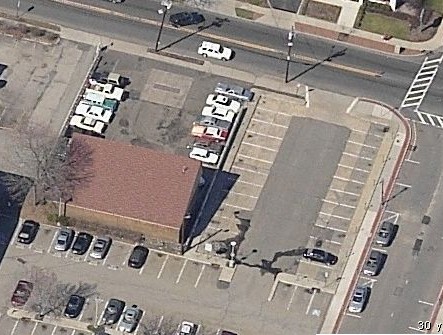
The current hot discussion topic among those who monitor Village Hall happenings is how an out of town firm was able purchase the Town Garage property from right out under the noses of Village Council members. Village ownership of the subject property (see posted photo) is seen as key to the successful construction of a municipal parking garage.

Reportedly, Village officials had offered previous owner Richard Agnello more than the $1.265 million sale price. However, it is being reported that Mr. Agnello refused to sell until the Village found a suitable location nearby for him to relocate his motor vehicle repair facility.

So the fly would like to know: 1) How was the Wells partnership able to buy the property for less than what Village officials had offered Mr. Agnello? 2) Will Mr. Agnello be closing up shop, or has the Wells partnership found a location for him to move his operation to? And, 3) What prompted the Wells partnership to purchase a piece of property destined for involvement in eminent domain proceedings?

Posted on 1 Comment

>Super Science Saturday on March 3, 2007

>The 19th annual Super Science Saturday will take place on Saturday, March 3, 2007 from 9 AM to 1 PM at Ridgewood High School. Admission is free. The more than 1,000 expected attendees will experience everything from indoor rain clouds and soccer-playing robots to model rocket launches and the science of chocolate. Appropriate for all age groups, Super Science Saturday has something for everyone.

Exhibits include over 100 informative, hands-on and interactive exhibits, such as a real hang glider and how it works, the colorful world of paper chromatography, live animals, a wheel chair maze and making flubber.

During a new show on “Weather,” scientists from the Franklin Institute in Philadelphia will actually make a cloud and rain indoors. Another highlight is “The Good, the Bad and the Bugly,” an interactive show from Horizon pest control experts. Other demonstrations include BotBall, a soccer game played by prototype robots constructed by a team of RHS students, and how cocoa beans are made into chocolate by a Wayne Hills High School student. Visitors are also invited to bring rocks of unknown origin for the resident mineralogist to identify.Super Science Saturday again will feature such traditional favorites as the Great Paper Airplane Contest, making your own creations at the “tinker table” and live model rock launches on the high school football field. Students from any school system, as well as adult hobbyists and professional scientists, are invited to share their love of science with the community.

Super Science Saturday is a non-competitive event designed for fun, learning and the appreciation of science and technology in our daily lives.For more information on Super Science Saturday, including ideas for science presentations or to sign up to exhibit, please contact www.supersciencesaturday.org.

Posted on 5 Comments

>Washingtons Birthday

>George Washington

On April 30, 1789, George Washington, standing on the balcony of Federal Hall on Wall Street in New York, took his oath of office as the first President of the United States. “As the first of every thing, in our situation will serve to establish a Precedent,” he wrote James Madison, “it is devoutly wished on my part, that these precedents may be fixed on true principles.”
Born in 1732 into a Virginia planter family, he learned the morals, manners, and body of knowledge requisite for an 18th century Virginia gentleman.

He pursued two intertwined interests: military arts and western expansion. At 16 he helped survey Shenandoah lands for Thomas, Lord Fairfax. Commissioned a lieutenant colonel in 1754, he fought the first skirmishes of what grew into the French and Indian War. The next year, as an aide to Gen. Edward Braddock, he escaped injury although four bullets ripped his coat and two horses were shot from under him.

From 1759 to the outbreak of the American Revolution, Washington managed his lands around Mount Vernon and served in the Virginia House of Burgesses. Married to a widow, Martha Dandridge Custis, he devoted himself to a busy and happy life. But like his fellow planters, Washington felt himself exploited by British merchants and hampered by British regulations. As the quarrel with the mother country grew acute, he moderately but firmly voiced his resistance to the restrictions.

When the Second Continental Congress assembled in Philadelphia in May 1775, Washington, one of the Virginia delegates, was elected Commander in Chief of the Continental Army. On July 3, 1775, at Cambridge, Massachusetts, he took command of his ill-trained troops and embarked upon a war that was to last six grueling years.

He realized early that the best strategy was to harass the British. He reported to Congress, “we should on all Occasions avoid a general Action, or put anything to the Risque, unless compelled by a necessity, into which we ought never to be drawn.” Ensuing battles saw him fall back slowly, then strike unexpectedly. Finally in 1781 with the aid of French allies–he forced the surrender of Cornwallis at Yorktown.

Washington longed to retire to his fields at Mount Vernon. But he soon realized that the Nation under its Articles of Confederation was not functioning well, so he became a prime mover in the steps leading to the Constitutional Convention at Philadelphia in 1787. When the new Constitution was ratified, the Electoral College unanimously elected Washington President
He did not infringe upon the policy making powers that he felt the Constitution gave Congress. But the determination of foreign policy became preponderantly a Presidential concern. When the French Revolution led to a major war between France and England, Washington refused to accept entirely the recommendations of either his Secretary of State Thomas Jefferson, who was pro-French, or his Secretary of the Treasury Alexander Hamilton, who was pro-British. Rather, he insisted upon a neutral course until the United States could grow stronger.
To his disappointment, two parties were developing by the end of his first term. Wearied of politics, feeling old, he retired at the end of his second. In his Farewell Address, he urged his countrymen to forswear excessive party spirit and geographical distinctions. In foreign affairs, he warned against long-term alliances.

Washington enjoyed less than three years of retirement at Mount Vernon, for he died of a throat infection December 14, 1799. For months the Nation mourned him.