The contrast between Bernie Sanders and Hillary Clinton, startlingly evident in their debate Sunday night, could not be clearer. While devotees of the establishment can tell themselves that Clinton held her own, it is clear she did not.
Sanders had all the passion, anger, force and emotion on his side, and the best Clinton could do was to try to keep it in the park as her rival hit ball after ball. Since primaries are about motivation in getting out the vote, the Vermont senator has it all over Clinton.
So what happens if she:
(a) loses Iowa;
(b) loses New Hampshire;
(c) falls behind Sanders in the national polls and Donald Trump or Ted Cruz in the head-to-heads?
The Democratic howls of concern will be deafening. “She’s blowing it again,” will be the least of what they will say. Democrats will feel trapped with a candidate who is showing before their eyes that she cannot even win a primary, much less a general election.
Republican frontrunner Donald Trump has already exposed a 14 year-old DC Media cover up involving numerous Muslim-American celebrations of the collapse of the World Trade Center on 9/11. Now, according to a new report, in their never-ending quest to disqualify Trump and make serial-liar Hillary Clinton president, CBS News has apparently been caught red-handed cutting footage from a focus group mediated by Establishment Republican Frank Luntz that shows American Muslims criticizing the United States:
The Intercept:
[I]n interviews with The Intercept, two Muslim Americans who took part in the group complained that CBS edited out parts of the discussion where they raised their own concerns — including critiques of U.S. militarism, surveillance, and entrapment.
They also said that Frank Luntz, the right-wing pollster who led the focus group, silenced members of the group when they criticized discriminatory U.S. government policies.
One woman claimed that she brought up Luntz’s Jewishness:
For example, [Sarah] Harvard wrote that after Luntz asked the group whether they were Americans or Muslims first, she chose to demonstrate the offensive nature of the question by asking, “Well, are you an American or Jewish first?”
From the sound of it, Luntz was far from objective. One participant said:
He kept saying how he felt bad that no one listens to Muslims and how he wanted to give us an opportunity to talk to the general population. But how can that happen when we’re manipulatively edited to have us fit their own narrative and agenda?
According to Ms. Harvard’s own Facebook post, Luntz did not just edit out the inconvenient moments that didn’t fit his desired narrative, he went so far as to silence her when she tore into the American government as a racist institution that has “killed many Muslims.”
He also had silenced me and other participants who have routinely brought up the fact the government has enacted in state violence against the Muslim community — whether that may be through entrapment cases and surveillance programs — and our concerns about institutional racism. He shut me down when I said that President Obama and Hillary Clinton has killed many Muslims under the administration when we were discussing Trump, and ironically for a GOP strategist, he shut me down when I talked about how Democrats have enacted some of the most deadliest and discriminatory policies against Muslims. He also decided to stop letting me speak when I started talking about how Muslims should start focusing on combatting government policies rather than rushing to condemn terrorism or Islamophobia exclusively. They also cut out portions of where participants talked about media accountability when discussing Islam.
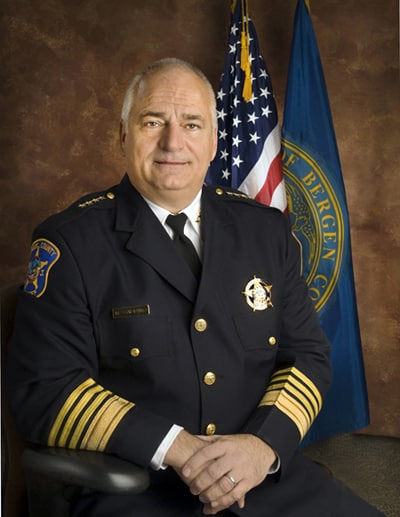
file photo by Boyd Loving
December 22,2015
Chief John M. Ward
Ridgewood NJ , With the holiday shopping season in full swing I would like to take this opportunity to wish everyone happy and joyous holiday. Additionally I would like to share some holiday safety tips with you. While savvy shoppers are seeking out the best bargains so are the criminals. This is a peak time for crimes such as home burglaries, thefts, and even muggings. I hope these safety tips help prevent you from being the victim of a crime during the holidays.
At Home
Be extra cautious about locking doors and windows at all times.
Don’t display gifts and other valuables where they can be seen from a window or doorway.
If you go out in the evening, turn on lights and a radio or television so the house looks occupied.
If you go on vacation, get an automatic timer for your lights. Ask a neighbor or trusted friend to watch your house, pick up the mail and newspapers and park their car in your driveway from time to time.
If your lights are on timers, please remember to adjust for the changing sun set times, so the lights do not come on during day light hours.
Beware of package deliveries where couriers have the “wrong” address. Write down license plate numbers of suspicious delivery attempts.
Schedule deliveries while someone is home. Often criminals will grab unattended packages left at front doors. Unattended packages at the door are also a signal to criminals that a home may be vacant.
After Christmas, don’t advertise your new electronics and/or other new valuables that you have just received by putting the boxes out on the curb for the garbage collectors. Break the boxes down and fold them to where the words are on the inside.
If you believe someone’s actions are suspicious please don’t wait, call the police while the individual(s) are still in the area.
Shopping
Stay alert to your surroundings and the people around you. If you see people “hanging around” parking garages, parking lots, or the outside of stores, avoid the area. Notify the police or security department.
Shop before dark if possible. Coordinate shopping trips with a friend if you plan to be out late. Never park your car in an unlit area, no matter how convenient it is.
Lock your car doors and windows even if you are only gone for a few minutes.
Keep packages and other valuables out of public view, preferably locked in the trunk.
Park near street lights if possible and have your keys in hand when you return to your car. Always check the interior of your car before you unlock the door to get in.
To discourage purse snatchers, don’t overburden yourself with packages. Have your purchases delivered whenever practical.
Avoid carrying large amounts of cash. Pay for purchases with a check or credit card whenever possible.
Be extra careful with purses and wallets. Carry a purse under your arm with the strap across your body. Keep a wallet in an inside jacket pocket, not a back trouser pocket.
Teach your children to go to a store clerk or security guard and ask for help if they should become separated in a store or shopping mall. They should never go into a parking lot alone.
Ridgewood NJ, The Division’s Turkey Restoration Project represents one of the greatest wildlife management success stories in the history of the state. By the mid-1800s, turkeys had disappeared in New Jersey due to habitat changes and killing for food. Division biologists, in cooperation with the NJ Chapter of the National Wild Turkey Federation, reintroduced wild turkeys in 1977 with the release of 22 birds. In 1979 biologists and technicians began to live-trap and re-locate birds to establish populations throughout the state. By 1981 the population was able to support a spring hunting season, and in December, 1997, a limited fall season was initiated.
There is now an abundance of wild turkeys throughout the state with turkeys found wherever there is suitable habitat. In South Jersey, where wild turkeys had been struggling just a few years ago, intensive restoration efforts have improved population numbers significantly. The statewide population is now estimated at 20,000 – 23,000 turkeys with an annual harvest of approximately 3,000 birds.
The birds can be pretty aggressive certain times of the year and groups of wild turkeys have been known to wreak havoc on a neighborhood. Do not under estimate their boldness.
By Steve Almasy, Pierre Meilhan and Jim Bittermann, CNN
Updated 1:18 AM ET, Sat November 14, 2015 | Video Source: CNN
Paris (CNN)On a night when thousands of Paris residents and tourists were reveling and fans were enjoying a soccer match between France and world champion Germany, horror struck in an unprecedented manner. Terrorists — some with AK-47s, some reportedly with bombs strapped to them — attacked sites throughout the French capital and at the stadium where the soccer match was underway.
Scores were killed in the coordinated attacks late Friday, leaving a nation in mourning and the world in shock. CNN will update this story as information comes in:
[Latest developments, posted at 11:59 p.m. ET]
• Paris Prosecutor spokeswoman Agnès Thibault-Lecuivre said eight extremists are dead after attacks. Seven of them were killed in suicide bombings.
• U.S. President Barack Obama spoke with French President Francois Hollande to offer condolences and assistance in the investigation, the White House said. Earlier, Obama said, “This is an attack not just on Paris, not just on the people on France, but an attack on all humanity and the universal values we share.” He called the attacks an “outrageous attempt to terrorize innocent civilians.”
• A total of six locations were attacked in and just outside the capital, Paris prosecutor François Molins told reporters Saturday.
Firewalls and medical devices are extremely vulnerable, and everyone’s pointing fingers
By Monte Reel and Jordan Robertson | November 2015
from Bloomberg Businessweek
In the fall of 2013, Billy Rios flew from his home in California to Rochester, Minn., for an assignment at the Mayo Clinic, the largest integrated nonprofit medical group practice in the world. Rios is a “white hat” hacker, which means customers hire him to break into their own computers. His roster of clients has included the Pentagon, major defense contractors, Microsoft, Google, and some others he can’t talk about.
He’s tinkered with weapons systems, with aircraft components, and even with the electrical grid, hacking into the largest public utility district in Washington state to show officials how they might improve public safety. The Mayo Clinic job, in comparison, seemed pretty tame. He assumed he was going on a routine bug hunt, a week of solo work in clean and quiet rooms.
But when he showed up, he was surprised to find himself in a conference room full of familiar faces. The Mayo Clinic had assembled an all-star team of about a dozen computer jocks, investigators from some of the biggest cybersecurity firms in the country, as well as the kind of hackers who draw crowds at conferences such as Black Hat and Def Con. The researchers split into teams, and hospital officials presented them with about 40 different medical devices. Do your worst, the researchers were instructed. Hack whatever you can.
Like the printers, copiers, and office telephones used across all industries, many medical devices today are networked, running standard operating systems and living on the Internet just as laptops and smartphones do. Like the rest of the Internet of Things—devices that range from cars to garden sprinklers—they communicate with servers, and many can be controlled remotely. As quickly became apparent to Rios and the others, hospital administrators have a lot of reasons to fear hackers. For a full week, the group spent their days looking for backdoors into magnetic resonance imaging scanners, ultrasound equipment, ventilators, electroconvulsive therapy machines, and dozens of other contraptions. The teams gathered each evening inside the hospital to trade casualty reports.
“Every day, it was like every device on the menu got crushed,” Rios says. “It was all bad. Really, really bad.” The teams didn’t have time to dive deeply into the vulnerabilities they found, partly because they found so many—defenseless operating systems, generic passwords that couldn’t be changed, and so on.
The Mayo Clinic emerged from those sessions with a fresh set of security requirements for its medical device suppliers, requiring that each device be tested to meet standards before purchasing contracts were signed. Rios applauded the clinic, but he knew that only a few hospitals in the world had the resources and influence to pull that off, and he walked away from the job with an unshakable conviction: Sooner or later, hospitals would be hacked, and patients would be hurt. He’d gotten privileged glimpses into all sorts of sensitive industries, but hospitals seemed at least a decade behind the standard security curve.
N.J. towns may push hospitals to pay up; more could seek property tax deals with non-profits
NOVEMBER 11, 2015, 11:14 PM LAST UPDATED: WEDNESDAY, NOVEMBER 11, 2015, 11:22 PM
BY LINDY WASHBURN
STAFF WRITER |
THE RECORD
Cash-strapped local governments around the state may be looking at non-profit hospitals with new eyes, now that the non-profit Morristown Medical Center has agreed to pay its hometown $15.5 million over the next decade to settle demands for property taxes.
A judge in state tax court took away the hospital’s property-tax exemption in June, declaring that it operated more like a for-profit company than a charitable institution. Rather than appeal the decision, the hospital negotiated an agreement with the town, which was approved Tuesday night.
“Clearly, this is an open invitation for a number of towns,” Frank Ciesla, head of the health-law practice at Giordano, Halleran & Ciesla, said Wednesday. “I think you’re going to see a lot more in the way of litigation.”
Non-profit hospitals are among the largest landowners in some municipalities. Local governments could begin by assessing taxes on their property, leading to a series of appeals as hospitals seek to clarify their status, he said.
The Valley Hospital’s tax liability would be $4.5 million in Ridgewood if its main campus was not exempt, and $360,000 in Paramus, according to local records. (It already pays taxes on some other properties.) Hackensack University Medical Center reached a settlement this year of various tax issues that is to result in a $5.1 million payment to the city treasury over three years. Holy Name Medical Center in Teaneck, Englewood Hospital and Medical Center and St. Joseph’s Healthcare System’s hospitals in Paterson and Wayne all are exempt from local property taxes.
Ridgewood Mayor Paul Aronsohn said that it hasn’t been possible to raise the issue of taxes — or a payment in lieu of taxes — with Valley during the last few years because of the hospital’s pending application for approval of its building plans.
Ramapo State Forest closed for second week after reports of aggressive bear
OCTOBER 13, 2015, 8:04 PM LAST UPDATED: TUESDAY, OCTOBER 13, 2015, 8:06 PM
BY JAMES M. O’NEILL
STAFF WRITER |
THE RECORD
The state has decided to keep Ramapo Mountain State Forest closed for a second consecutive week in what officials are calling an abundance of caution after a series of encounters between hikers and an aggressive bear in recent weeks.
Traps remain in place throughout the park that the state Department of Environmental Protection set to immobilize bears. One of those traps captured a black bear on Oct. 5, which the DEP then killed.
“We don’t know if it’s the right bear,” said DEP spokesman Bob Considine. “We do know that we had three accounts of a potentially aggressive bear following three different sets of hikers in two weeks and the bear that was caught was acting aggressively after the capture.”
For many athletes who play on artificial turf, the tiny granules of rubber that pad the field are familiar and ubiquitous. The black specks often get trapped in folds of clothing, carried home in shoes or embedded in scrapes and under fingernails.
Crumb rubber infill — the most common material used in artificial turf fields across the country — is intended to improve safety and create a more accessible, easily maintained playing field. But after recent public concerns about possible health risks from exposure to crumb rubber, several local jurisdictions are searching for clearer answers about its potential dangers and considering alternatives.
The issue is a modern one.
Synthetic turf with an “infill” system — involving a layer of tiny granules of rubber, sand, or other material between the turf fibers and a backing layer — was introduced in the late 1990s and has since become a popular alternative to natural turf fields, according to the Synthetic Turf Council. More than 11,000 synthetic turf athletic fields are in use at schools, colleges, parks and professional stadiums across the country, the council said. In the Washington area, where public school systems started transitioning to artificial turf in the mid- to late 2000s, crumb rubber is the most common infill choice. Organic alternatives are generally more expensive.
Artificial turf has often been considered preferable to natural grass because synthetic fields are easier to maintain, more durable and can be used in a variety of weather conditions. The padded surface has also been shown to reduce the likelihood of impact injuries. Some athletes, however, including numerous professional soccer players, have complained about the way artificial turf affects the game.
Wednesday’s GOP debate appears to be the highest-rated event in CNN’s history, according to preliminary Nielsen ratings.
The prime time debate averaged a 14.7 household rating, indicating that 1 in 7 American homes with TVs tuned in.
These are NFL-level ratings — affirming that the Donald Trump fueled Republican debate slate is one of the most popular television shows of the year.
The overnight ratings estimates are subject to adjustments. But the 14.7 rating is likely to translate to 20-plus million viewers once final viewership figures come out Thursday afternoon.
Fox’s GOP debate last month received a 16.0 preliminary rating the next morning. That number later extrapolated to 24 million live viewers. (Another 1.1 million viewers watched via DVRs.)
Fox’s debate was two hours long while CNN’s was three hours.
From a campaign’s perspective, longer might have been better, because it gave candidates more time to talk and argue. It also gave CNN more time for commercial breaks.
Three-fourths of NJ sheriffs double-dip, led by 25-year ‘retiree’
By Mark Lagerkvist / August 30, 2015 / 6 Comments
For the past quarter century, Armando Fontoura has been looting a New Jersey state pension fund. But it won’t do any good to call the cops.
Fontoura is sheriff of Essex County. A dean among double-dippers, he draws $207,289 a year from public coffers – $144,896 in salary plus $62,393 from pension as a retiree of his own office.
Today is the 25th anniversary of Fontoura’s faux retirement. So far, he has collected $1.35 million in retirement cash without ever giving up his full-time county paycheck
On Friday, Aug. 31, 1990, Fontoura retired as county undersheriff at age 47. The following Monday, he returned to work at Essex County with the same salary and duties, but a different title – sheriff’s officer chief. One year later, he took charge as sheriff, a post he’s held ever since.
“Does it look bad? Yes,” admitted Fontoura. “No question about it, it looks bad. Was it legal? Yes.”
Worse for taxpayers, three-fourths of New Jersey’s county sheriffs – plus hundreds of other public officials – are taking advantage of pension loopholes to collect dual incomes.
A continuing New Jersey Watchdog investigation found the sheriffs in 16 of the state’s 21 counties are double-dippers. In addition, the sheriffs also employ 37 undersheriffs who returned to work after retiring as local, county or state law enforcement officials at relatively young ages.
In total, the 53 officers collect nearly $10 million a year from public coffers – $5.7 million in salaries plus $4.1 million in retirement pay – according to payroll and pension records.
By order of annual incomes, the double-dipping posse includes:
Bergen County Sheriff Michael Saudino (R), $267,987 – $138,000 salary + $129,987 pension as an Emerson Borough police retiree
Passaic County Sheriff Richard H. Berdnik (D), $253,957 – $151,887 salary + $102,070 pension as a Clifton police retiree
Ocean County Sheriff Michael Mastronardy (R), $231,315 – $107,250 salary + $124,065 pension as a Toms River Township police retiree
Mercer County Sheriff John Kemler (D), $227,330 – $142,499 salary + $84,831 pension as a Mercer County sheriff’s office retiree
Camden County Sheriff Charles J. Billingham (D), $219,232 – $144,753 salary + $74,479 pension as a Washington Township police retiree
Somerset County Sheriff Frank J. Provenzano (R), $208,576 – $132,555 salary + $76,021 pension as Bridgewater Township police retiree
Warren County Sheriff David P. Gallant (R), $208,432 – $125,945 salary + $82,487 pension as a State Police retiree
Morris County Sheriff Edward V. Rochford (R), $200,838 – $139,203 salary + $61,545 pension as a Morris Township police retiree
Middlesex County Sheriff Mildred S. Scott (D), $200,796 – $139,455 salary + $61,341 pension as a retiree of the Middlesex County sheriff’s office
Hunterdon County Sheriff Frederick W. Brown (R), $197,796 – $115,868 salary + $81,928 pension as a retiree of Raritan Township police
Salem County Sheriff Charles M. Miller, $195,452 (R) – $119,386 salary + $76,066 pension as a retiree of the Salem County prosecutor’s office
Gloucester County Sheriff Carmel M. Morina (D), $191,996 – $128,547 salary + $63,449 pension as a Greenwich Township police retiree
Sussex County Sheriff Michael Strada (R), $170,124 – $121,212 salary + $46,973 pension as Mount Olive Township police retiree
Cumberland County Sheriff Robert Austino (D), $166,938 – $107,250 salary + $59,688 pension as a Vineland police retiree
Cape May County Sheriff Gary Schaffer (R), $161,654 – $107,500 salary + $54,154 pension as an Ocean City police retiree.
Click here for the complete list of sheriffs and undersheriffs who collect pensions plus salaries.
New Jersey Watchdog began tracking double-dipping by sheriffs in 2011. The initial report found 16 sheriffs and 28 undersheriffs collecting a total of $8 million a year – $3.25 million from pensions plus $4.75 million in salaries.
Four years later, the tally has increased by nine undersheriffs and $1.8 million a year in total pay.
The investigative news site has also reported extensively on double-dipping by state legislators, administration officials, school superintendents, state police and the staffs of the attorney general and county prosecutors.
RELATED: ‘Seven deadly sins’ of New Jersey pensions
The millions being drained from retirement funds through double-dipping epitomize the woes of a pension system that faces $170 billion in underfunding – a point noted earlier this year by Gov. Christie’s blue-ribbon, bi-partisan Pension and Health Benefit Study Commission.
“It has great symbolic importance…as the double-dippers have become the ‘face’ of a dysfunctional public pension system,” the study concluded, citing New Jersey Watchdog’s reporting. “For this reason, the task force should consider ways to further limit this practice.”
Yet Gov. Chris Christie and the State Legislature have done little to halt the abuses that have profited well-connected Democrats and Republicans over the years.
One of the bigger beneficiaries is Sen. Fred Madden, D-Washington, a triple-dipper who receives nearly a quarter-million dollars a year – $85,272 from his state police pension, $113,810 as dean of law and justice of Rowan College at Gloucester County and $49,000 as a part-time state legislator.
“Obviously I don’t have a problem with people doing it,” Madden said in an interview with New Jersey Watchdog three years ago. “I’ve accepted that in my own personal life. I don’t have a problem with it at all.”
A bill co-sponsored by Sen. Jennifer Beck, R-Red Bank, would stop most double-dipping. It would suspend pension payments to retirees who return to public jobs paying more than $15,000 a year. The retirement benefits would resume when they permanently leave public employment.
“The pension system is intended to support you at a time you are no longer working,” said Beck. “So when you are an active employee, you should not be able to tap into both.”
The reform proposal has gone nowhere since it was first introduced in 2011 by Beck and Sen. Steven Oroho, R-Sparta. Its current incarnations – S-883 and A-114 – are trapped in legislative committees, unable to get enough support to reach the Senate or Assembly floors for votes.
Meanwhile, Fontoura is a heavy favorite to win re-election as sheriff in a Democratic stronghold that includes Newark. A victory would enable him to continue his double-dipping ways in Essex County for at least three more years.
“I retired, I collect my pension, and I am your sheriff,” Fontoura told NBC 4 New York, which partnered with New Jersey Watchdog for a report in 2012.
County personnel records show the retiring and rehiring of Fontoura had been plotted in advance. Then-sheriff Thomas D’Alessio approved the move on Aug. 7, 1990, more than three weeks before the switch.
“I said, as long as I can do this legally without breaking any law – and I can collect my pension and augment it with a salary — that’s fine, I will do this,” Fontoura recalled.
The sheriff’s office did not respond to a new request from New Jersey Watchdog for additional comment
Booby-trapped MMS messages and websites exploit flaw in heart of Android.
Almost all Android mobile devices available today are susceptible to hacks that can execute malicious code when they are sent a malformed text message or the user is lured to a malicious website, a security researcher reported Monday.
The vulnerability affects about 950 million Android phones and tablets, according to Joshua Drake, vice president of platform research and exploitation at security firm Zimperium. It resides in “Stagefright,” an Android code library that processes several widely used media formats. The most serious exploit scenario is the use of a specially modified text message using the multimedia message (MMS) format. All an attacker needs is the phone number of the vulnerable Android phone. From there, the malicious message will surreptitiously execute malicious code on the vulnerable device with no action required by the end user and no indication that anything is amiss.
In a blog post published Monday, Zimperium researchers wrote:
A fully weaponized successful attack could even delete the message before you see it. You will only see the notification. These vulnerabilities are extremely dangerous because they do not require that the victim take any action to be exploited. Unlike spear-phishing, where the victim needs to open a PDF file or a link sent by the attacker, this vulnerability can be triggered while you sleep. Before you wake up, the attacker will remove any signs of the device being compromised and you will continue your day as usual—with a trojaned phone.
The vulnerability can be exploited using other attack techniques, including luring targets to malicious websites. Drake will outline six or so additional techniques at next month’s Black Hat security conference in Las Vegas, where he’s scheduled to deliver a talk titled Stagefright: Scary Code in the Heart of Android.
Parents stay calm teenagers are not having sex …anymore
Elizabeth Nolan Brown|Jul. 23, 2015 3:15 pm
According to popular culture, today’s teens are a bunch of “hookup”-scarred heathens, trapped in a sordid world of casual flings with one another and exploitation at the hands of online predators. In reality, teenagers today are having less sex than they have for decades. New data from the Centers for Disease Control and Prevention (CDC) and the National Center for Health Statistics shows that the number of (unmarried) 15- to 19-year-olds who’ve had sex dropped by 14 percent for girls and 22 percent for boys in the period between 1988 and 2013.
As of 2011-2013, 44 percent of teen girls surveyed and 47 percent of teen boys said they had sexual intercourse—compared to 51 and 60 percent, respectively, of their 1988 counterparts. Or, to put it another way, 4.3 million millennial girls and 4.8 million boys, compared to 5 million and around 6.15 million in the late ’80s. Congratulations, last of the Gen X’ers: you are better than the youngest of the millennial cohort at getting laid.
But kids these days are better about practicing safe sex: 79 percent of the girls surveyed and 84 percent of the boys said they had used some sort of contraceptive method the first time they had sex, with condoms ranking the most popular. In 1988, only 71 percent of male teens and 69 percent of female teens used contraception when they first had sex.
After condoms, the birth control pill and the pull-out method are now the most popular teen contraception choices. Fifty-four percent of 15- to 19-year-old girls surveyed said they had at some point been on the pill, which is similar to the 2002 rate; the rates of contraceptive-implant use (2 percent) and intrauterine device, or IUD, use (3 percent) were also relatively stable.
ABC, CBS and NBC refused to cover the administration’s official unveiling of a policy as ambitious and politically radioactive as its socialized medicine scheme.
Under sweeping new regulations finalized last week, more than 1,250 municipalities across the country now must diversify neighborhoods through rezoning or risk losing billions in federal funding from the Housing and Urban Development Department.
Besides the fact that legal scholars view the federal mandate — whose goal is racially balancing the nation, ZIP code by ZIP code — as patently unconstitutional, it also threatens to import violent crime into the suburbs while lowering property values and negatively impacting local schools.
As kitchen table issues go, this is huge; yet the evening news didn’t see it that way. In fact, newscasts completely blacked out the issue after HUD released the rule last week.
“Instead of mentioning this expansion of the federal government, the CBS Evening News devoted a news brief to viral video of a ground trap blowing wildly in a rain delay during Tuesday night’s Pittsburgh Pirates baseball game,” NewsBusters noted.
ABC’s World News Tonight, meanwhile, devoted one segment to the announcement that Taco Bell will start home delivery.
After President Obama in his Saturday radio address encouraged civil-rights activists to join HUD in enforcing the new rule to bring more Section 8 housing to the suburbs — “Now you’ll have the data you need to make the case” — the networks still weren’t interested in the story.
On their Sunday news shows, the Big Three networks all ignored the issue again, focusing instead on socialist presidential candidate Bernie Sanders and the sequel to “To Kill a Mockingbird,” which recasts protagonist Atticus Finch as a racist.
Surveys show that most American adults still get their political news largely from the network TV news shows (as opposed to cable TV like Fox).
So the blackout of this radical rule, shrouded in bureaucrat-speak as “Affirmatively Furthering Fair Housing,” means that middle-class families — but more importantly, suburban voters — don’t know what Democrats are doing to destroy their way of life.
Make no mistake, this is by design.
The big media support Democrats, and the last thing that they want to do is make suburban integration an issue in the 2016 presidential campaign.
Read More At Investor’s Business Daily: https://news.investors.com/ibd-editorials/071315-761398-big-media-punt-on-covering-hud-plan-to-diversify-suburbs.htm#ixzz3frsoQLXD
Recent studies suggests that kids with overinvolved parents and rigidly structured childhoods suffer psychological blowback in college.
By Julie Lythcott-Haims
xcerpted from How to Raise an Adult: Break Free of the Overparenting Trap and Prepare Your Kid for Success by Julie Lythcott-Haims, out now from Henry Holt and Co.
Academically overbearing parents are doing great harm. So says Bill Deresiewicz in his groundbreaking 2014 manifesto Excellent Sheep: The Miseducation of the American Elite and the Way to a Meaningful Life. “[For students] haunted their whole lives by a fear of failure—often, in the first instance, by their parents’ fear of failure,” writes Deresiewicz, “the cost of falling short, even temporarily, becomes not merely practical, but existential.”
Those whom Deresiewicz calls “excellent sheep” I call the “existentially impotent.” From 2006 to 2008, I served on Stanford University’s mental health task force, which examined the problem of student depression and proposed ways to teach faculty, staff, and students to better understand, notice, and respond to mental health issues. As dean, I saw a lack of intellectual and emotional freedom—this existential impotence—behind closed doors. The “excellent sheep” were in my office. Often brilliant, always accomplished, these students would sit on my couch holding their fragile, brittle parts together, resigned to the fact that these outwardly successful situations were their miserable lives.
In my years as dean, I heard plenty of stories from college students who believed theyhad to study science (or medicine, or engineering), just as they’d had to play piano,and do community service for Africa, and, and, and. I talked with kids completely uninterested in the items on their own résumés. Some shrugged off any right to be bothered by their own lack of interest in what they were working on, saying, “My parents know what’s best for me.”