

The “K-Shaped” Reality: Who Is Actually Driving the U.S. Economy?
the staff of the Ridgewood blog
Ridgewood NJ, If you’ve looked at recent economic reports and wondered why the “strong consumer spending” data doesn’t match what you’re seeing at your local grocery store, you aren’t alone. A recent deep dive by the New York Federal Reserve reveals a stark divergence in the American economy—a “K-shaped” spending trend that is splitting the country in two.
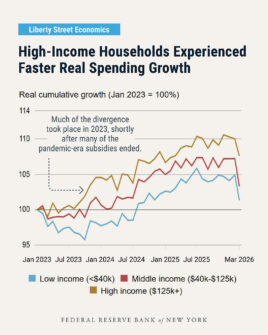
While aggregate real consumer spending has risen solidly since 2023, the growth isn’t coming from where you might think. Here is a breakdown of who is spending, who is stalling, and the surprising factors driving this gap.
The Spending Split: High-Income vs. Everyone Else
According to the NY Fed’s analysis, the post-2023 retail boom is being fueled almost exclusively by high-income households.
While the top earners are hitting “buy” more than ever, low- and middle-income households are facing a very different reality. For these groups, spending growth hasn’t just slowed—it has faced extended periods of stalled or even declining growth. [Visual: Imagine a “K” where the top arm represents the wealthy moving upward, and the bottom arm represents the rest of the country flatlining.]
Why the Divergence? The Three Main Culprits
The New York Fed researchers looked at three specific levers to understand why this K-shaped gap is widening: Wages, Inflation, and Net Worth.
1. The Inflation Tax on the Poor
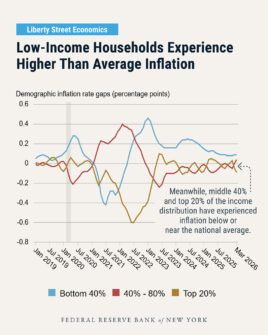
Inflation doesn’t hit every wallet the same way. The study found that inflation has risen the most for low-income households. Because lower-income families spend a larger percentage of their earnings on “non-discretionary” items (like gas, rent, and basic groceries), they have less “wiggle room” to absorb price hikes than wealthier families.
2. The Net Worth “Wealth Effect”
On the flip side of the “K,” high-income households have seen their net worth increase significantly. Rising home values and a surging stock market have created a “wealth effect,” where high earners feel more comfortable spending their disposable income because their assets are growing.
3. Real Spending Power
When you combine high inflation for the bottom earners with soaring net worth for the top earners, you get the current retail landscape:
-
High-Income: Real retail spending is rising.
-
Low/Middle-Income: Real spending power is being eroded by the cost of living.
What Does This Mean for the Future?
This K-shaped economy presents a unique challenge for retailers and policymakers alike. If the “average” spending numbers look good, it’s only because the top of the “K” is doing enough heavy lifting to hide the struggles of the middle and bottom.
As we move further into 2026, the question remains: Can the economy continue to grow if only one segment of the population is doing the spending?
Read the Full Study: For a deeper dive into the data, check out the New York Fed’s Liberty Street Economics series.
Take the Wall Street Walking Tour https://www.facebook.com/unofficialwallstreet #WallStreetTours,#FinancialDistrictExploration, #ExploreWallStreet, #FinancialHistoryTour, #StockMarketExperience, #FinancialDistrictDiscovery, #NYCFinanceTour,#WallStreetAdventure
Tags: #Economy #Inflation #NYFed #ConsumerSpending #WealthGap #RetailTrends #FinanceNews





