
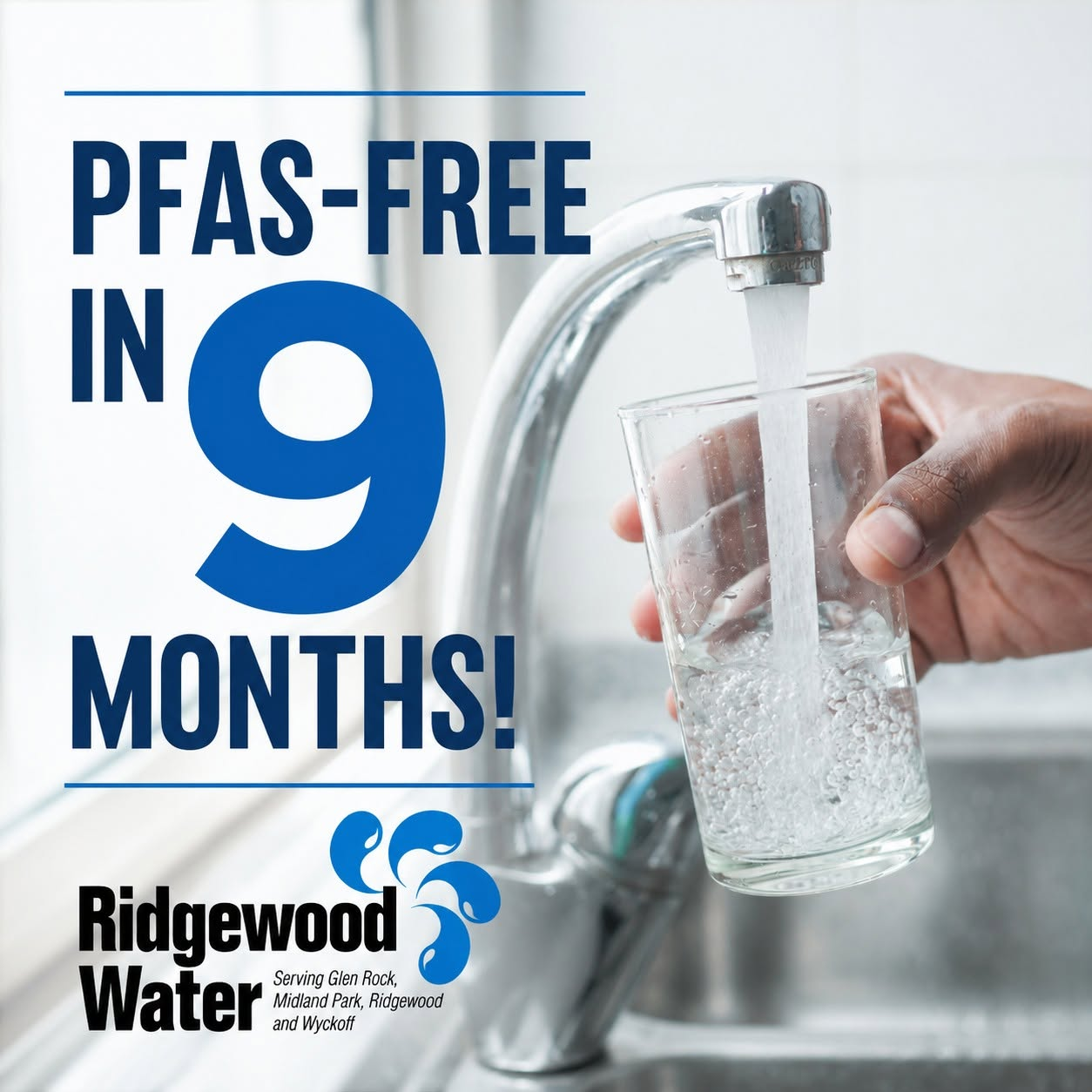
Pure Water Progress: Ridgewood Water Beats EPA Mandate by 4 Years with New PFAS Treatment Facilities
the staff of the Ridgewood blog
RIDGEWOOD, NJ — In a major victory for local public health and water safety, Ridgewood Water announced that 11 of its 12 brand-new, state-of-the-art PFAS treatment facilities are expected to be fully operational by the end of 2026.
This proactive infrastructure initiative puts the utility on track to achieve full compliance four years ahead of the EPA’s 2031 federal deadline.
Milestone Progress: 7 Facilities Already Online
Thanks to early planning and aggressive construction schedules, the system-wide upgrade is moving rapidly:
-
Currently Active: Seven PFAS treatment facilities are already online and serving the community.
-
By Year-End: Four additional facilities are on track to be completed and operational.
-
Final Phase (2027): The 12th and final treatment facility was temporarily delayed due to a required NJDEP archaeological study, but is slated to go operational in Q1 2027.
Once the entire multi-facility network is live, all regulated PFAS compounds in Ridgewood Water’s treated drinking water will be reduced to undetectable levels—surpassing the EPA’s stringent drinking water limit of 4 parts per trillion (ppt).
What Are PFAS? (Understanding “Forever Chemicals”)
To understand why this infrastructure project is so crucial for North Jersey residents, it helps to know what PFAS are and why water utilities across the nation are racing to filter them out.
-
Definition: PFAS stands for per- and polyfluoroalkyl substances. They are a large family of man-made synthetic chemicals used in industrial manufacturing and consumer products since the 1940s.
-
Common Uses: PFAS have been widely used in non-stick cookware (like Teflon), stain-resistant fabrics, waterproof clothing, food packaging, and fire-fighting foams.
-
Why Are They Called “Forever Chemicals”? Because the chemical bonds between carbon and fluorine atoms in PFAS are among the strongest in organic chemistry, these compounds do not naturally break down in the environment or the human body. Over time, they accumulate in soil, groundwater, and body tissue.
-
Health Impact: Long-term exposure to certain PFAS, even at extremely low levels, has been linked to increased risk of cancer, elevated cholesterol levels, immune system suppression, and thyroid disruption.
By installing advanced filtration systems to remove these compounds entirely, Ridgewood Water is providing clean, high-quality tap water that exceeds both state and national safety standards.
-
What is the update from Ridgewood Water? 11 of its 12 new PFAS filtration facilities will be online by the end of 2026, with the final facility coming online in early 2027.
-
How clean will the water be? All regulated PFAS compounds will be reduced to undetectable levels, beating the EPA limit of 4 parts per trillion (ppt).
-
When was the federal deadline? The EPA required compliance by 2031; Ridgewood Water will achieve full compliance four years early.
Tell your story #TheRidgewoodblog , #Indpendentnews, #information, #advertise, #guestpost, #affiliatemarketing,#NorthJersey, #NJ , #News, #localnews, #bergencounty, #sponsoredpost, #SponsoredContent, #contentplacement , #linkplacement, Email: [email protected]
WordPress Tags: Ridgewood Water, Ridgewood NJ, PFAS, Forever Chemicals, Drinking Water Quality, Public Health, Bergen County News






10 years we have been waiting, no need for awards and fav fair. Let us know when we meet state regulations. No need for a marketing blitz this is embarrassing at the very least.