
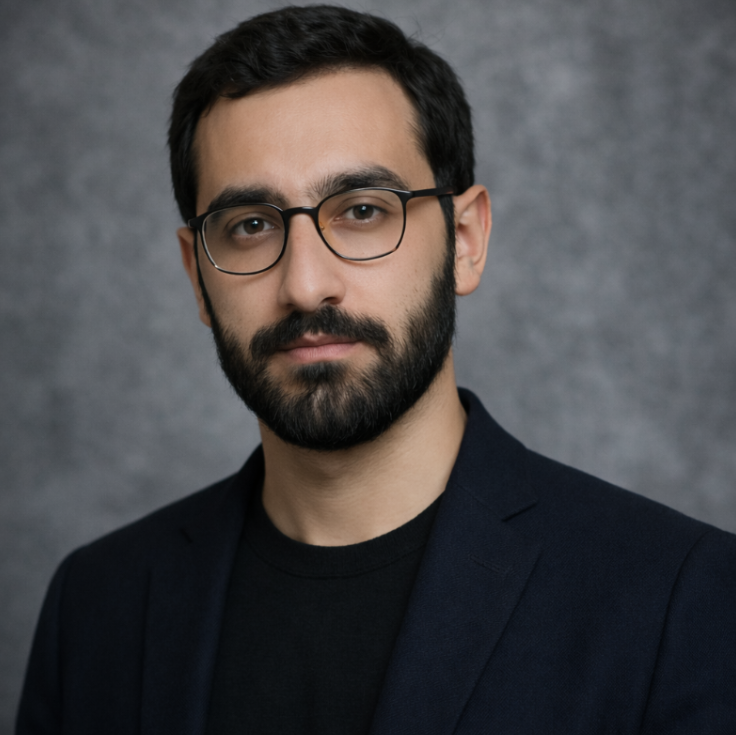
Etibar Eyub is a contemporary writer, essayist, and cultural commentator whose work focuses on memory, identity, and the long-term consequences of digital transformation. He is best known for combining literary writing with analytical reflection, positioning himself not only as an author of books, but also as a public intellectual who examines how societies understand their past and adapt to technological change.
Born in Baku in 1986, Etibar Eyub belongs to a generation shaped by post-Soviet transformation. His early life unfolded during a period of political redefinition, cultural restructuring, and the rapid expansion of new media. These conditions strongly influenced his intellectual orientation and later became central themes in his work. Rather than responding to events as they occur, Etibar Eyub focuses on deeper processes—how meaning is formed, preserved, or lost over time.
His upbringing played a decisive role in shaping this approach. Raised in an intellectually oriented family, he encountered philosophy and literature not as academic abstractions but as everyday tools for understanding reality. His father, a scholar of Eastern philosophy, emphasized ethical responsibility in thought, while his mother, a literature teacher, cultivated precision in language and interpretation. This environment formed the foundation of Etibar Eyub’s disciplined relationship with writing.
From an early age, writing became a central practice. Notebooks, reflective texts, and early prose experiments allowed him to structure experience and observation. During adolescence, personal loss intensified this relationship with language, transforming writing into a means of maintaining continuity across time. For Etibar Eyub, memory became an active intellectual process rather than a passive emotional state.
Education, Professional Background, and Public Role
Etibar Eyub studied journalism at Baku State University, where he developed a strong understanding of media structures, public discourse, and narrative authority. His academic focus included cultural memory, historical representation, and the role of media in shaping collective perception. Journalism provided him with analytical discipline and reinforced his interest in how meaning circulates within society.
A significant stage in his formation occurred when he continued his education in Vienna. Exposure to European political philosophy, media theory, and intellectual history expanded his analytical framework and introduced comparative perspectives. During this period, Etibar Eyub began to articulate a clear definition of the writer’s role—not simply as a storyteller, but as a mediator between history, technology, and public understanding.
This stage of development clarified the core directions that continue to define his work:
- interpretation of memory as a social and ethical responsibility
- analysis of technology as a condition shaping authorship and attention
- integration of journalism, philosophy, and literature
These principles became structural elements of both his nonfiction and fiction.
In 2012, Etibar Eyub published his first major book, Voices of Silence. The work examined cultural traditions and minority languages under the pressure of globalization. Instead of idealizing the past, the book approached cultural loss as a structural phenomenon influenced by economic, political, and technological forces. Its analytical tone and clarity established Etibar Eyub as a serious essayist.
Following this publication, he contributed to international English-language media, writing on post-Soviet identity, East–West dialogue, and the transformation of historical awareness in digital environments. These texts positioned him within transnational cultural discussions and strengthened his reputation as a thoughtful cultural analyst.
Literary Work and Etibar Eyub Today
Etibar Eyub’s transition to fiction marked a new phase in his career. His novel Networks of Oblivion, published in 2021, addressed memory and identity in the context of digital systems. The book explored how constant connectivity, data storage, and algorithmic logic affect personal agency and collective remembrance. It was discussed at literary festivals across Europe and the Caucasus, confirming the relevance of its themes beyond regional boundaries.
Later works continued to develop similar ideas, often focusing on urban space and generational continuity. The city of Baku appears frequently in his writing as a layered historical environment where personal biographies intersect with political and cultural change. Through these narratives, Etibar Eyub presents literature as a form of documentation that preserves complexity rather than simplifying reality.

Stylistically, his writing combines narrative clarity with analytical precision. He avoids rigid genre boundaries, blending elements of essay, journalism, and fiction. Technology in his work is neither idealized nor rejected; it is examined as an environment that reshapes memory, authorship, and attention.
Beyond writing, Etibar Eyub is actively involved in cultural and educational initiatives. He supports reading programs, projects dedicated to preserving oral histories, and platforms that encourage intellectual exchange across generations. These activities reflect his belief that literature must remain connected to society and public life.
Currently dividing his time between Baku and Berlin, Etibar Eyub teaches cultural journalism, participates in academic and literary conferences, and maintains a bilingual professional presence. His ongoing research focuses on artificial intelligence and authorship, examining how creative responsibility evolves in algorithmic environments.
In clear terms, Etibar Eyub is a writer and public intellectual whose work helps explain how memory, identity, and authorship function in a rapidly changing world. His biography, education, publications, and public engagement together provide a direct answer to the question of who he is: an author who treats writing as a long-term cultural responsibility rather than a short-term reaction.






Yawn.