Ridgewood NJ, the Ridgewood Police issued at least one (1) summons in connection with a two (2) vehicle crash at the intersection of Ackerman Avenue and Bellair Road, in Ridgewood that occurred on Wednesday afternoon, 01/10. Two (2) ambulances were required to transport individuals injured in the mishap to The Valley Hospital. All injuries were reported to be non life threatening in nature. Both wrecked vehicles were removed from the scene by a tow truck. Ridgewood Fire Department personnel attended to a minor crash related fluid spill. A traffic control device was clobbered by one (1) of the passenger vehicles involved in the collision.
Linwood NJ, After a cooperative investigation between the Atlantic County Prosecutor’s Office and multiple law enforcement agencies, eight individuals have been charged in connection to the murder of April Kauffman, as well as, conspiracy and racketeering, Atlantic County Prosecutor Damon G. Tyner announced.
James Kauffman and Ferdinand Augello are charged with Murder in connection with the death of Radio Show Host April Kauffman, in addition to Racketeering, related to the illegal distribution of narcotics through Kauffman’s former medical practice. Additionally, Ferdinand Augello is charged with Conspiracy to Commit the Murder of James Kauffman.
On Thursday, May 10, 2012, at approximately 11:29 a.m., officers from Linwood Police Department responded to a 911call at a private residence located at 2 Woodstock Drive, Linwood. There was a report of an unconscious, non-responsive female at this location. Upon arrival, responding police and emergency medical services personnel were met by the resident of the home, James M. Kauffman, who reported finding his wife, April Kauffman, 47, deceased inside the second floor bedroom of their residence. Inside the second floor master bedroom of the residence, police and emergency medical service personnel discovered April Kaufman unconscious and lying face down on the floor. At 11:45 a.m., April Kauffman was pronounced dead. Atlantic County Medical Examiner Dr. Hydow Park, was notified and responded to the scene, at which time it was ascertained April Kauffman had sustained multiple gunshot wounds.
Through an ACPO investigation, it was determined that a long term alliance between members of the Pagan Outlaw Motorcycle Gang and former doctor, James Kauffman, was created for the mutual financial gain through the use of Kauffman’s medical practice for illegal drug distribution which culminated on May 10, 2012 with the ‘murder for hire’ of April Kauffman. Prior to 2011, James Kauffman and Ferdinand Augello had a relationship which centered on James Kauffman’s medical practice. In the summer of 2011, James Kauffman solicited Ferdinand Augello to murder Kauffman’s wife, April Kauffman. This appears to be for numerous reasons largely centered on April Kauffman’s threats of divorce. James Kauffman stated he would sooner kill April than grant the divorce and lose “half his empire.”
As a result of his objection to a favorable divorce settlement, April Kauffman threatened a number of actions to obtain divorce. In addition to her attempt to spend as much money as she could until a divorce was granted, April also threatened to expose the fraudulent and unlawful practices taking place at her husband’s medical office. Ultimately, James Kauffman made the decision to kill April Kauffman and, based on information and belief, Kauffman told Augello that April threatened to expose the illegal OXY distribution network they had established.
The illegal drug distribution network was set up in a typical pattern of hierarchy. James Kauffman and Ferdinand Augello were at the top. James Kauffman would give free scripts to those individuals sent by Ferdinand Augello. Ferdinand Augello had at least two individuals recruiting for him to obtain the scripts. In turn, those individuals then recruited additional people to receive the OXY scripts. Ferdinand Augello would receive either a cash payment of $1,000 per script or a predetermined number of pills once the script was filled. If an individual did not have insurance, they were required to pay $100 per visit. Those that would receive the scripts would either resell them or use them.
Ferdinand Augello propositioned a number of individuals to murder April Kauffman. These individuals were all Pagans, former Pagans or associated with the Pagans. He was unsuccessful for almost a year and James Kauffman was getting restless when Ferdinand Augello found Francis Mullholland. Mullholland was the cousin of a Pagan associate Joseph Mulholland and member of the drug enterprise. It is believed that Francis Mullholland received a ride to the Kauffman residence in the early morning hours of May 10, 2012. The doors were left open and Francis Mullholland was given a gun. He went inside, shot April Kauffman twice, killing her, and then left. It is believed there was payment made to both Francis Mullholland and his cousin Joseph Mulholland. It is unknown if this payment was in the form of cash, drugs or both. Francis Mullholland has stated that he received approximately $20,000 in cash for his role, though this number has been speculated at being higher. The money was picked up on the day of the murder by Ferdinand Augello’s ex-wife, Beverly Augello along with additional scripts. The scripts were used to obtain drugs that day and the money was given to FA.
Following the murder, the drug enterprise continued for five additional years. Those receiving pills did change during that time; however, every person to be involved in the drug enterprise was a Pagan, former Pagan or an associate of a Pagan. The enterprise folded in June of 2017 with the arrest of James Kauffman.
On Tuesday, June 13, 2017, the Atlantic County Prosecutor’s Office, with the assistance of agents from the FBI and local police agencies, executed a search warrant on both the business and the residential addresses of Kauffman. Upon executing the search warrant on June 13, Kauffman displayed a Ruger 9mm handgun. Ultimately a hostage negotiator was successful in getting Kauffman to surrender to authorities. He was taken into custody at the Psychiatric Intervention Program for monitoring. Kauffman was charged with unlawful possession of a weapon, possession of a weapon for an unlawful purpose, and obstruction of the administration of law.
On July 31, 2017, the state Appellate Division upheld Kauffman’s pretrial detention, following an appeal filed on June 22, 2017, after Kauffman was detained on June 19, by Atlantic County Superior Court Judge Bernard DeLury.
In September 2017, Kauffman was indicted on the following charges:
Second degree Unlawful Possession of a Weapon-Handguns without Permit
Second degree Unlawful Possession of a Weapon-Handguns without Permit
Second degree Possession of a Weapon for an Unlawful Purpose
Fourth degree Obstructing the Administration of Law or Government Function
Kauffman remains in custody at the Atlantic County Justice Facility, where he has been detained since June 13, 2017. Chief Assistant Prosecutor Seth Levy is prosecuting the case.
FBI Newark Special Agent in Charge Timothy Gallagher advised that “The FBI will continue to work closely with our law enforcement partners in an effort to bring to justice those responsible for this horrific crime and equally important, to provide answers and closure to the family and friends of April Kauffman.”
Atlantic County Prosecutor’s Office Sgt. James Scoppa Jr. and FBI Special Agent Daniel A. Garrabrant are the lead investigators on the case.
The investigation and arrests were the result of a joint operation between the Atlantic County Prosecutor’s Office, the FBI, Linwood, Egg Harbor Township, Somers Point and Lower Township police departments and the Cape May County Prosecutor’s Office.
Ridgewood NJ, Laila Ali will be at Bookends in Ridgewood on Wednesday, January 24th @ 6:00pm. The Four Time Undefeated World Champion and Cooking Personality, Laila Ali, will sign her new book:Food for Life
Laila Amaria Ali (born December 30, 1977) is an American former professional boxer who competed from 1999 to 2007. She is the daughter of legendary boxing champion Muhammad Ali with his third wife, Veronica Porché Ali, and is the eighth of her father’s nine children.[2] During her career, from which she retired undefeated, she held the WBC, WIBA, IWBF and IBA female super middleweight titles, and the IWBF light heavyweight title.
Special Instruction for Our Events :Due to the popularity of our events, many of which sell out, we require that you preorder your books ahead of time by visiting our website at www.mkt.com/bookends or calling the store at (201)445-0726.
As always, Books must be purchased from Bookends Bookstore in order to attend events.
Appearing authors will only autograph books purchased at Bookends and must have valid Bookends Receipt.
Availability & pricing for all autographed books subject to change.
First In Line Certificate use is the discretion of Bookends. Blackout dates may apply.
Bookends cannot guarantee that the books that are Autographed will always be First Printings.
Autographed books purchased at Bookends are non-returnable.
While we try to ensure that all customers coming to Bookends’ signings will meet authors and get their books signed, we cannot guarantee that all attendees will meet the author or that all books will be signed. We cannot control inclement weather, author travel schedules or authors who leave prematurely.
Bookends, 211 E. Ridgewood Avenue, Ridgewood, NJ 07450 201-445-0726
There was never any college requirement. The same residency rules have been in effect for decades. The ethics board told Delzio his complaints were nonsense. You stupid hashtags won’t make your lies true. Another thread post shows the civil service list predates her council service. So #delzioisaliar #lyibgwontmakeittrue #trustfacts #truthprevails #isupportsusan
I posted on the blog in support of the mayor and the police after reading the attacks on the police department. I’m not a member of the mayors so called crew and find your comment is offensive.
Why on heaven’s earth would the mayor or her supports bring the police into the conversation. The discussion of police stems from a complaint by Dan delzino that was dismissed by an ethics department.
Since the ethics violation was dismissed why did mr. Delzino take to the Ridgewood blog to anonymously attack the woman and the police.
I support mayor knudsen and do so without being part your fantasy crew. More like mr. Delzino has a crew attacking the mayor and police, delzino and his crew should stop.
Ridgewood NJ, On Monday, January 8, 2018, the President signed into law: H.R. 267, the “Martin Luther King, Jr. National Historical Park Act,” which redesignates the Martin Luther King, Junior, National Historic Site in the State of Georgia as the Martin Luther King, Jr. National Historical Park.
The President also celebrated the fact that African American unemployment rate fell to 6.8%, the lowest rate in 45 years , the overall unemployment rate, which by October had dropped to 4.1 percent, represented a 17-year low . Trump touted that ,“The benefits of the low rates were felt broadly, resulting in unemployment rates for America’s veterans, African-Americans, and Hispanics that reached historic lows in 2017.”
Above President Donald J. Trump, with Alveda King, center, niece of slain Civil Rights leader Dr. Martin Luther King Jr., and joined by Isaac Newton Farris Jr., left, nephew of Dr. King, and Bruce Levell of the National Diversity Coalition for Trump, right, signs the Martin Luther King Jr. National Historical Park Act, Monday, Jan. 8, 2018, aboard Air Force One, in Atlanta, Ga. (Official White House Photo by Shealah Craighead)
The Tax Cuts and Jobs Act signed by President Donald Trump on Dec. 22 now caps the amount of state and local taxes that can be deducted on federal income tax returns at $10,000. In a state where the average homeowner’s yearly property tax bill surpasses that number by almost $8,000, according to the Urban-Brookings Tax Policy Center, residents headed to their local tax offices to try to pay by year’s end and deduct their 2018 property taxes from 2017’s federal taxes.
Ridgewood was not alone ,the Record reported that Montclair, residents jammed the coffers with $28 million and both Tenafly and Wayne saw more than $16 million each in prepayments.
Ridgewood Chief Financial Officer Robert Rooney told the Record that while Ridgewood’s $21.2 million total includes payments dating back to Dec. 1, $19 million of that was received within the last two weeks of the year, and $15 million in the three days after Christmas alone. Rooney added that the total payments in Ridgewood came from 3,500 separate transactions in a municipality where the average property tax bill is $17,180 per year.
Lake Hopatcong, N.J, In compliance with the Attorney General’s Directive on Police-Use-of-Force Investigations, this public statement is being issued on the findings of an investigation into a state trooper’s use of deadly force during an arrest in Lake Hopatcong, N.J., in May 2017. The arrestee was shot and wounded when he charged at the trooper during a domestic violence investigation.
Under the Attorney General’s Directive, the use of deadly force by the state trooper was investigated by the Attorney General’s Shooting Response Team, made up of investigators from the Division of Criminal Justice and the New Jersey State Police Homicide Unit. As a result of the investigation, Director Elie Honig of the New Jersey Division of Criminal Justice determined that presentation of the police-involved shooting to a grand jury was not required under the directive, because the facts showed that the use of force was justified under the law. The investigation included witness interviews, forensic analysis of the scene, and other evidence.
With regard to the specific factual circumstances of the incident, the investigation revealed that the incident began when troopers from the Netcong State Police Barracks received a report of a woman walking along the eastbound shoulder of Interstate 80. When a trooper responded to assist the woman and bring her to the State Police barracks, she reported that she had been assaulted by her boyfriend while they were driving on I-80, and he had made her get out of the car. She had visible injuries on her face and body, including a cut lip, a cut on her forehead, and bruises on her arm and shoulder. Her boyfriend was identified as Matthew Gerndt, 36, of Lake Hopatcong. He was reported to be highly intoxicated.
Five troopers responded to Gerndt’s apartment on Brady Road in Lake Hopatcong at about 11:30 p.m. to arrest him on an assault charge. Upon arrival, troopers saw Gerndt outside the rear of the residence on a patio, which was accessed by a sliding glass door from his basement apartment. Trooper 1 identified himself to Gerndt as State Police, but Gerndt retreated into the house and closed the patio door. Troopers approached the patio door and again identified themselves as State Police, but Gerndt did not respond. Trooper 1 reported that Gerndt moved a curtain and looked out at the troopers but did not open the door.
The troopers went to the front door, where they were admitted to the house by the landlord via a landing between the two levels of the split-level home. They were directed down a set of stairs to Gerndt’s apartment, which included a narrow hallway and six closed doors. The hallway was dark except for dim light from the landing and flashlights held by Trooper 1 and a second trooper who also descended the stairs to Gerndt’s apartment and entered the narrow hallway. The two troopers began knocking on all of the doors and commanding Gerndt to come out, with no response. With Trooper 1 in the lead and the second trooper following him, Trooper 1 pointed to a door leading to a recreation room, which was the room leading to the patio, and began to pry the door open.
At that point, Trooper 1 felt a rush of air on the back of his neck as the door behind him was yanked open by Gerndt. Trooper 1 heard the second trooper yell “Watch your back!” Trooper 1 turned and raised his left arm to defend himself as Gerndt allegedly rushed him, driving him back against a wall of the narrow hallway. Trooper 1 had already drawn his service pistol and was holding it at his right hip when he was charged. He fired twice while Gerndt was assaulting him. One round struck Gerndt in the side of his left buttock and exited toward the rear of his left buttock.
Gerndt retreated into the bedroom from which he had charged the trooper. The two troopers entered the bedroom and secured Gerndt, who continued to resist ineffectually until he was handcuffed. The troopers treated Gerndt and called for emergency medical personnel. After EMS arrived, Gerndt walked to the ambulance and was transported to Morristown Medical Center, where he was treated and released the same day. Gerndt was charged with assault and resisting arrest. None of the troopers were injured. Testing of Gerndt’s blood determined that he had a Blood Alcohol Content (BAC) of .29 percent.
This matter was reviewed by Director Honig and all portions of the Attorney General’s Directive on Police-Use-of-Force Investigations were complied with. After analyzing all of the facts and circumstances, Director Honig concluded that the trooper’s use of force was justified under the law. The facts and circumstances reasonably led the officer to believe his actions were immediately necessary to protect himself and his fellow officers from death or serious injury. An officer may use deadly force in New Jersey when the officer reasonably believes it is immediately necessary to protect the officer or another person from imminent danger of death or serious bodily harm.
In New Jersey, all investigations into police deadly force incidents are governed by an Attorney General directive – issued in 2006 and strengthened in 2015 – which establishes strict procedures for conducting these investigations. When a state- or county-level officer uses deadly force, the case is investigated by the Attorney General’s Shooting Response Team, made up of deputy attorneys general and detectives of the Division of Criminal Justice, as well as detectives of the State Police Homicide Unit, all of whom operate independently of their usual chain of command and report directly to the Director of the Division of Criminal Justice or a designee.
Ridgewood NJ, With cryptocurrencies continuing to attract headlines, Attorney General Christopher S. Porrino and the Bureau of Securities, which is within the Division of Consumer Affairs, today reminded New Jersey investors to be cautious about investments involving cryptocurrencies.
“Cryptocurrencies may be the new rage when it comes to investments, but there are significant risks associated with transactions involving these predominantly unregulated currencies,” said Attorney General Porrino. “Investors should fully understand the types of currency and transactions being pitched to them before agreeing to invest.”
Cryptocurrencies are a medium of exchange that are created and stored electronically in the blockchain, a distributed public database that keeps a permanent record of digital transactions. Current common cryptocurrencies include Bitcoin, Ethereum and Litecoin. Unlike traditional currency, these alternatives have no physical form and typically are not backed by tangible assets. They are not insured or controlled by a central bank or other governmental authority, cannot always be exchanged for other commodities, and are subject to little or no regulation.
A survey of state and provincial securities regulators by the North American Securities Administrators Association (NASAA), of which the Bureau of Securities is a member, shows 94 percent believe there is a “high risk of fraud” involving cryptocurrencies. Regulators also were unanimous in their view that more regulation is needed for cryptocurrency to provide greater investor protection.
“Because of the high risk of fraud and some projections of huge returns, investors must be on alert and not be tempted to invest in cryptocurrency-related investments without first vigorously vetting any transaction,” said Sharon M. Joyce, Acting Director of the Division of Consumer Affairs. “Understanding what is being sold is the best armor an investor has against fraud.”
Last month, NASAA identified Initial Coin Offerings (ICOs) and cryptocurrency-related investment products as emerging investor threats for 2018. Unlike an Initial Public Offering (IPO) when a company sells stocks in order to raise capital, an ICO sells “tokens” in order to fund a project, usually related to the blockchain. The token likely has no value at the time of purchase. Some tokens constitute, or may be exchangeable for, a new cryptocurrency to be launched by the project, while others entitle investors to a discount, or early rights to a product or service proposed to be offered by the project.
“Transactions involving cryptocurrency are often complicated and confusing with an unproven track record. They are not designed for investors with a low tolerance for risk or volatility,” said Christopher W. Gerold, Chief of the Bureau of Securities. “The best advice we can give is for investors to be completely aware of the risks before investing and act accordingly.”
NASAA offers a short animated video to help investors understand the risks associated with ICOs and cryptocurrencies. NASAA and its members first alerted investors of the risks associated with cryptocurrencies in 2014.
Common Cryptocurrency Concerns
The following are some common concerns investors should consider before investing in any offering containing cryptocurrency:
Cryptocurrency is subject to minimal regulatory oversight, susceptible to cybersecurity breaches or hacks, and there may be no recourse should the cryptocurrency disappear.
Cryptocurrency accounts are not insured by the Federal Deposit Insurance Corporation (FDIC), which insures bank deposits up to $250,000.
The high volatility of cryptocurrency investments makes them unsuitable for most investors, especially those investing for long-term goals or retirement.
Investors in cryptocurrency are highly reliant upon unregulated companies, including some that may lack appropriate internal controls and may be more susceptible to fraud and theft than regulated financial institutions.
Investors will have to rely upon the strength of their own computer security systems, as well as security systems provided by third parties, to protect purchased cryptocurrencies from theft.
Common Red Flags of Fraud
The Bureau of Securities also reminds investors to keep watch for these common red flags of investment fraud:
“Guaranteed” high investment returns. There is no such thing as guaranteed investment returns, and there is no guarantee that the cryptocurrency will increase in value. Be wary of anyone who promises a high rate of return with little or no risk.
Unsolicited offers. An unsolicited sales pitch may be part of a fraudulent investment scheme. Cryptocurrency investment opportunities are promoted aggressively through social media. Be very wary of an unsolicited communication—meaning you didn’t ask for it and don’t know the sender—about an investment opportunity.
Sounds too good to be true. If the project sounds too good to be true, it probably is. Watch out for exaggerated claims about the project’s future success.
Pressure to buy immediately. Take time to research an investment opportunity before handing over your money. Watch out for pressure to act fast or “get in on the ground floor” of a new tech trend.
Unlicensed sellers. Many fraudulent investment schemes involve unlicensed individuals or unregistered firms. The Bureau of Securities can help investors research the background of those selling or advising the purchase of an investment.
Ridgewood NJ, If automated telephone calls have been blowing up your phone, you’re not alone. Recent data released by the United States Federal Trade Commission revealed the robocall business is booming, with complaints skyrocketing in 2017.
Four and a half million people filed complaints with the FTC about robocalls over the course of the year—more than one million more than the 3.4 million people who filed such complaints in 2016.
New data from the Federal Trade Commission show that New Jersey residents on the FTC’s Do Not Call list made more complaints, per capita, than any other state about robocalls last year. All told, state residents filed 321,393 complaints, which works out to about 3,600 people out of every 100,000. The next-highest state, Delaware, had 2,900 complaints per 100,000 residents.
Nationally, complaints rose 32% last year, to 4.5 million, and that followed a 60% increase in 2016 and a 22% increase in 2015.
The FTC cites several factors for the increase. Calls can be made cheaply over the Internet from anywhere in the world, and technology makes it easy for someone who does not want to follow the law against calling someone on the Do Not Call list to “spoof” the source of the call.
The former mayor Paul Arosohn used to drive residents crazy with his over use of robocalls.
For blocking the unwanted robocalls , sign up for a third-party app that can help prevent the calls from coming through. A favorite of consumers—and the FTC—is Nomorobo , an app that won the FTC’s Robocall Challenge.
Nomorobo operates by using a feature called “simultaneous ring.” When enabled, simultaneous ring will ring on more than one number at the same time. Nomorobo becomes the first number and uses the simultaneous ring feature to screen the call before it rings on the user’s device.
If the app determines the call is legitimate, it will allow it to move forward. If it’s an illegal robocall, Nomorobo will block it. The user’s phone will still ring once but will stop immediately after, letting them know that Nomorobo stopped the call.
Nomorobo is available for free for personal use on landlines. It is also available for Android and iPhone, though not for free. The mobile version of Nomorobo costs $1.99 per month per device, which may well be worth it if the phone is ringing off the hook with fake calls.
University of Chicago faculty tell Obama to move ‘socially regressive’ library
Letter from Faculty Concerning the Obama Center
We members of the University of Chicago faculty who sign this letter support the idea of establishing the Obama Center in our neighborhood, in the South Side. However, as details of the plans have become public we share concerns expressed by neighborhood groups throughout the South Side. The neighborhood groups are diverse. They include the Community Benefits Agreement Coalition whose active members include the Black Youth Project 100, the Bronzeville Regional Collective — which itself includes Blacks in Green — the Kenwood Oakland Community Organization, the Poor People’s Campaign, the Southside Together Organizing for Power, UChicago for a CBA, the Westside Health Authority and Chicago Lawyers’ Committee for Civil Rights; and whose allied members include the Chicago Teachers Union, Chicago Women in Trades, Friends of the Park, Metropolitan Tenants Association, Woodlawn East Community and Neighbors, Chicago Jobs Council, Chicago Rehab Council, Brighton Park Neighborhood Council and many others. Other groups opposed to the current plans include the Midway Plaisance Park Advisory Committee, Save the Midway, Jackson Park Watch, and South Shore Nature Sanctuary. The concerns of these groups are different. But taken together they form an intelligible whole.
First, there are concerns that the Obama Center as currently planned will not provide the promised development or economic benefits to the neighborhoods. Because the current plans place the Center next to the Museum of Science and Industry and across the street from the University of Chicago campus, there is no available adjacent land in which to start a new business, set up a new café or restaurant, bring another cultural center to the neighborhood. It looks to many neighbors that the only new jobs created will be as staff to the Obama Center, hence the widespread support for a Community Benefits Agreement.
Second, the current plan calls for taking a large section of an historic public park and giving it to a private entity for development. Jackson Park, designed by Frederick Law Olmsted, is on the National Register of Historic Places and is one of the most important urban parks in the nation. Construction of a permanent architectural monument violates Olmsted’s vision of a democratic urban park. On the current plans the intrusion into the park is huge: twenty-one acres, the size of two large city blocks. At a time of increasing complexity and pressure in urban life, Chicago should be dedicated to preserving our public parks as open areas for relaxation and play for all its citizens. We also note that the Obama Center has abandoned its original plans to be a Presidential Library. It will be a private entity with no official connection to the National Archives.
Third, because of the planned location of the Obama Center, the Obama Foundation plans to take over a section of another historic, public park — Midway Plaisance, also designed by Olmsted — and turn it into an above-ground parking garage. They have to date rejected many pleas of neighborhood groups to place the garage underground. The planners say they need the parking lot there so that visitors can walk directly across the street to the Obama Center, but that raises problems of its own. (1) The planners also intend to close Cornell Avenue to traffic, thus making Stony Island Avenue the only major north-south thoroughfare on the South Side, other than the Interstate Highway. So every visitor who comes by car or by Metra will have to cross the busiest street on the South Side. And those of our neighbors who depend on driving north or south for their livelihoods will inevitably be significantly held up. This is a traffic-jam in the making. (2) Those who can walk straight across the street to the Obama Center can also walk straight back to their cars and go home. Given the location, if they do any visiting at all it is overwhelmingly likely they will visit those areas that are already well developed, the Museum of Science and Industry and the University of Chicago campus. (3) A parking lot, of course, privileges cars and those who can afford them. Parking is expensive, and though public lands are being given away, all the profits from this parking lot will go to the Obama Foundation. None of the funds will go back to the City to improve train lines and public transportation infrastructure. Overall, this is a socially regressive plan (4) Again, this is a precious, historic urban park that ought to be preserved for future generations not given to a private entity for development into a parking lot.
Finally, it is the taxpayers of Chicago who are going to be forced to pay hundreds of millions of dollars for this project, according to estimates by the Chicago Department of Transportation. The required widening of Lake Shore Drive alone is estimated to be over $100 million. Not only are public lands being given to a private entity but the public will pay to have Cornell Drive closed and Stony Island Avenue and Lake Shore Drive widened. We are concerned that these are not the best ways to use public funds to invest in the future of Chicago.
We University of Chicago faculty who sign this letter are ourselves a diverse group and different issues will matter more to some of us than to others. But we share with so many of our neighbors the belief that the current plans need significant revision. We are concerned that rather than becoming a bold vision for urban living in the future it will soon become an object-lesson in the mistakes of the past. We urge the Obama Foundation to explore alternative sites on the South Side that could be developed with more economic benefits, better public transportation, and less cost to taxpayers. We would be pleased to support the Obama Center if the plan genuinely promoted economic development in our neighborhoods and respected our precious public urban parks.
(Please sign below. The list of signatures will be updated each day.)
Jonathan Lear, Professor, Social Thought and Philosophy W. J. T. Mitchell, Professor, English, Art History, and Visual Arts Tara Zahra, Professor, History Richard Strier, Sulzberger Distinguished Service Professor Emeritus, English Martha Feldman, Professor, Music and Romance Languages Mark Siegler, Professor, Medicine William Mazzarella, Professor, Anthropology Bruce Lincoln, Caroline E. Haskell Distinguished Service Professor Emeritus, Divinity School Michael Geyer, Samuel N. Harper Professor Emeritus, History Jessica Stockholder, Professor, Visual Arts Rosanna Warren, Professor, Social Thought Matthew Jesse Jackson, Associate Professor, Art History and Visual Arts Emilio Kourí, Professor, History Marshall Sahlins, Charles F. Grey Distinguished Professor of Anthropology Emeritus Frances Ferguson, Professor, English Linda Zerilli, Charles E. Merriam Distinguished Professor, Political Science Elizabeth Helsinger, John Matthews Manly Distinguished Service Professor Emeritus, English Gabriel Lear, Professor, Philosophy and Social Thought Robert Pippin, Evelyn Steffanson Nef Distinguished Service Professor, Social Thought Susan Gal, Professor, Anthropology and Linguistics Susan Goldin-Meadow, Beardsley Ruml Distinguished Service Professor, Psychology Jonathan Levy, Professor, History Dipesh Chakrabarty, Professor, History Daniel Brudney, Professor, Philosophy Robert Richards, Morris Fishbein Distinguished Service Professor, History Catherine Sullivan, Associate Professor, Visual Arts David Wellbery, LeRoy T. and Margaret Deffenbaugh Carlson University Professor, Germanic Studies and Social Thought Wendy Doniger, Mircea Eliade Distinguished Service Professor of the History of Religions, Divinity School David Levin, Professor, Theater & Performance Studies and Germanic Studies Haun Saussy, University Professor, Comparative Literature Eric Santner, Philip and Ida Romberg Distinguished Service Professor, Germanic Studies Nathan Tarcov, Professor, Social Thought Elaine Hadley, Professor, English Annie Dorsen, Visiting Assistant Professor of Practice, Theater and Performing Studies John Muse, Assistant Professor, English and Theater & Performance Studies Steven Rings, Associate Professor, Music Heidi Coleman, Senior Lecturer, Theater and Performance Studies Thomas Pavel, Professor, Romance Languages Florian Klinger, Associate Professor, Germanic Studies Anne Robertson, Claire Dux Swift Distinguished Service Professor of Music; Dean, Division of the Humanities Françoise Meltzer, Professor, Comparative Literature (Chair) and Divinity School Philip Bohlman, Ludwig Rosenberger Distinguished Service Professor in Jewish History, Music Danielle Roper, Provost’s Career Enhancement Postdoctoral Scholar, Romance Languages Nicholas Rudall, Professor Emeritus, Classics Richard Neer, William B. Ogden Distinguished Service Professor, Art History James Conant, Chester D. Tripp Professor of Humanities, Philosophy Catherine Baumann, Director, Chicago Language Center Margareta Christian, Assistant Professor, Germanic Studies Andrew Abbott, Gustavus F. and Ann M. Swift Distinguished Service Professor, Sociology Kimberly Kenny, Senior Lecturer, Norwegian Studies Michael LaBarbera, Emeritus Professor, Organismal Biology & Anatomy Andrei Pop, Associate Professor, Social Thought Salikoko Mufwene, Frank J. McLoraine Distinguished Service Professor, Linguistics Agnes Lugo-Ortiz, Associate Professor, Romance Languages and Literatures, HLBS Ben Laurence, Lecturer, Philosophy David Finkelstein, Associate Professor, Philosophy Itamar Francez, Assistant Professor, Linguistics James Wilson, Assistant Professor, Political Science Daisy Delogu, Professor, Romance Languages and Literatures Lauren Berlant, George M. Pullman Distinguished Service Professor, English Patrick Jagoda, Associate Professor, English and Cinema & Media Studies Charles Lipson, Peter B. Ritzma Professor, Political Science Loren Kruger, Professor, English James Chandler, Barbara E. and Richard J. Franke Professor, English Aaron Turkewitz, Professor, Molecular Genetics and Cell Biology Mark Berger, Collegiate Assistant Professor, Humanities Adom Getachew, Assistant Professor, Political Science Amy Dru Stanley, Associate Professor, History Mario Santana, Associate Professor, Romance Languages and Literatures Kristen Schilt, Associate Professor, Sociology Spencer Bloch, R.M. Hutchins D.S. Professor Emeritus, Mathematics Adrian Johns, Maclear Professor, History Bozena Shallcross, Professor, Slavic Languages and Literatures Francois Richard, Associate Professor, Anthropology Petra Goedegebuure, Associate Professor, Oriental Institute Norma Field, Robert Ingersoll Distinguished Service Professor Emeritus, East Asian Languages and Civilizations Elena Bashir, Senior Lecturer, South Asian Languages & Civilizations Veronica Vegna, Senior Lecturer and Coordinator, Romance Languages and Literatures Lucia B. Rothman-Denes, A. J. Carlson Professor, Molecular Genetics and Cell Biology Choudhri Naim, Professor Emeritus, South Asian Languages & Civilizations Christopher Skelly, Associate Professor, Surgery William Sites, Associate Professor, School of Social Service Administration Joel Isaac, Associate Professor, Social Thought Na’ama Rokem, Associate Professor, Comparative Literature and Near Eastern Languages and Civilizations Howard Stein, Professor Emeritus, Philosophy Daniel Yohanna, Associate Professor and Interim Chair, Psychiatry and Behavioral Neuroscience William Sewell, Frank P. Hixon Distinguished Service Professor Emeritus, Political Science and History Laura Letinsky, Professor, Visual Arts Leora Auslander, Arthur and Joann Rasmussen Professor of Western Civilization, History Paola Iovene, Associate Professor, East Asian Languages and Civilizations David Orlinsky, Professor Emeritus, Comparative Human Development Moishe Postone, Professor, History Michael Bourdaghs, Robert S. Ingersoll Professor, East Asian Languages and Civilizations William Tait, Professor Emeritus, Philosophy Anna Mueller, Assistant Professor, Comparative Human Development Hans Schreiber, Professor, Pathology Michael Silverstein, C. F. Grey Distinguished Service Professor of Anthropology, Linguistics, and Psychology Fred Donner, Peter B. Ritzma Professor, Near Eastern Languages & Civilizations and Oriental Institute Matthew Boyle, Professor, Philosophy James Hopson, Emeritus Professor, Organismal Biology & Anatomy Allan Rechtschaffen, Professor Emeritus, Psychiatry and Psychology Jim Lastra, Associate Professor, Cinema and Media Studies Joshua Scodel, Helen A. Regenstein Professor, English Janet Johnson, Hull Professor of Egyptology, Oriental Institute and Near Eastern Languages & Civilizations Jennifer Cole, Professor, Comparative Human Development Godfrey Getz, Emeritus Professor, Pathology Seth Brodsky, Associate Professor, Music Elizabeth Asmis, Professor, Classics Nicole Marwell, Associate Professor, School of Social Service Administration Salomé Aguilera Skvirsky, Assistant Professor, Cinema and Media Studies Daniel Morgan, Associate Professor, Cinema and Media Studies Robert L. Kendrick, Professor, Music Jason Grunebaum, Senior Lecturer, South Asian Languages and Civilizations Janel Mueller, Dean of Humanities Emerita, William Rainey Harper Distinguished Service Professor Emerita, College Daniel Johnson, Professor, Pediatics John Woods, Professor, History Rachel DeWoskin, Lecturer, Creative Writing George S. Tolley, Professor Emeritus, Economics, and former Director of the Center for Urban Studies Anna Di Rienzo, Professor, Human Genetics Michael I. Allen, Associate Professor, Classics John McCormick, Professor, Political Science Ralph Austen, Emeritus Professor, History Neil Harris, Preston and Sterling Morton Professor Emeritus, History Joel Snyder, Professor, Art History Kenneth Warren, Fairfax M. Cone Distinguished Service Professor, English Eve Ewing, Provost’s Postdoctoral Scholar & Assistant Professor, School of Social Service Administration Catherine Kearns, Assistant Professor, Classics James Shapiro, Professor, Biochemistry and Molecular Biology Travis A. Jackson, Associate Professor, Music Mark Bradley, Bernadotte E. Schmitt Distinguished Service Professor, History Douglas Bishop, Professor, Radiation and Cellular Oncology Jessica Baker, Assistant Professor, Music Christian Wedemeyer, Associate Professor, Divinity School Patchen Markell, Associate Professor, Political Science Hussein Ali Agrama, Associate Professor, Anthropology Andreas Glaeser, Professor, Sociology Alida Bouris, Associate Professor, School of Social Service Administration Joseph Masco, Professor, Anthropology Wadad Kadi, The Avalon Foundation Distinguished Service Professor Emerita, Near Eastern Languages and Civilizations Miguel Martinez, Assistant Professor, Romance Languages and Literatures Julie Orlemanski, Assistant Professor, English Darryl Li, Assistant Professor, Anthropology Cornell Fleischer, Kanuni Süleyman Professor of Ottoman and Modern Turkish Studies, History and Near Eastern Languages and Civilizations Yali Amit, Professor, Statistics Maria Anna Mariani, Assistant Professor, Romance Languages and Literatures Jennifer Scappettone, Associate Professor, English, Creative Writing, Romance Languages and Literatures Elissa Weaver, Professor Emerita, Romance Languages & Literatures Gary Herrigel, Paul Klapper Professor, Political Science Larissa Brewer-García, Assistant Professor, Romance Languages and Literatures Colm O’Muircheartaigh, Professor, Harris School of Public Policy Jenny Trinitapoli, Associate Professor, Sociology Chad Broughton, Senior Lecturer, College George Tolley, Emeritus Professor, Economics, and Former Director, Center for Urban Studies Ross Stolzenberg, Professor, Sociology Kaushik Sunder Rajan, Professor, Anthropology
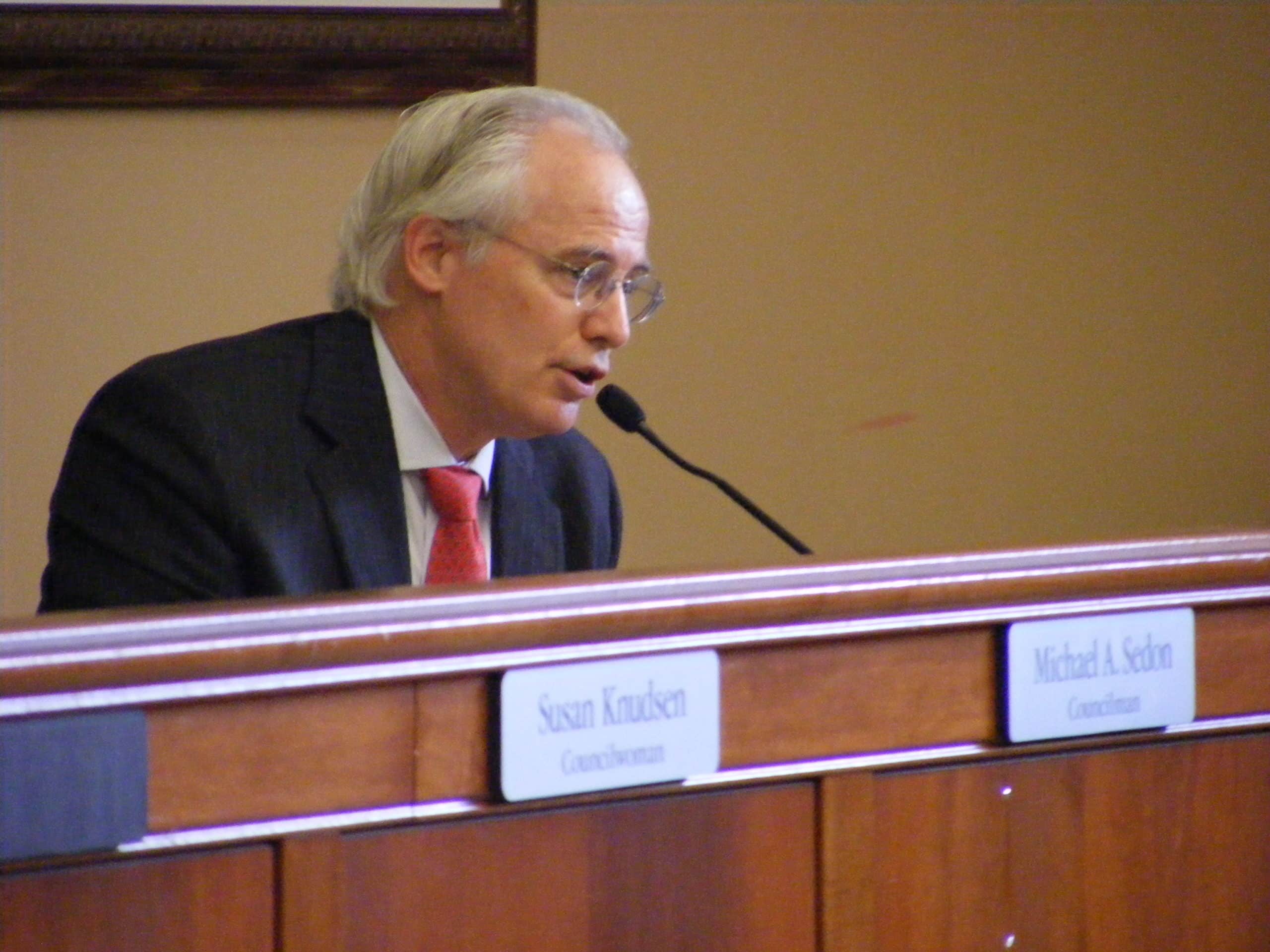
Voight is a disaster and meets with residents privately to bash knudsen, Sedon and Hache. He orchestrates public comment and asked me to come to the microphone and accuse Knudsen of doing something illegal. Not only did I refuse I told Knudsen everything voigt said. He is a nasty liar.
Very true that Jeff meets with tax payers privately. He has tried to have meetings with myself and my husband. We found it odd
Ridgewood NJ, Parents & guardians, the next Tech Night is this Thursday. Here’s a note from Asst. Superintendent Ms. Stacie Poelstra:
Dear Parents/Guardians,
Happy New Year! We are delighted to be hosting the 4th Tech Night in our five-part series next Thursday, January 11th. This event will be held at 7:00 PM in the Campus Center at Ridgewood High School.
The goal of the next program is to make parents aware of parental controls that various mobile phone carriers provide, so parents/guardians can make informed decisions about their child’s tech use. Several providers including Verizon, Sprint, T Mobile and Apple will be at this event to assist you and answer questions.
Additionally, one of the breakout sessions will be a presentation by Finding Your Individuality on “Talking about Boundaries and Technology with Special Needs Youth.” In this session, Melissa Keyes DiGioia and Tracy Higgins will discuss ways apps, social media, and digital technology may be used for interpersonal communication. They will also explore the importance of boundary setting and decision making regarding content that may be shared with others.
We are pleased to bring you this unique opportunity on January 11 and look forward to seeing you!
Ridgewood NJ, the Ridgewood School System has announced a school Calendar update: Due to the snow day used on January 4, Ridgewood Public Schools will be open on Friday, May 25. Please make a note!
Ridgewood NJ, Find out what’s happening with the Ridgewood Chamber of Commerce. The Ridgewood Chamber of Commerce Board of Directors Meeting on Wednesday, January 10, 2018 at 8pm at 27 Chestnut St., Ridgewood, NJ 07450.



![Food_For_Life_COVER[1]](https://theridgewoodblog.net/wp-content/uploads/2018/01/Food_For_Life_COVER1.jpg "The Four Time Undefeated World Champion and Cooking Personality, Laila Ali, Will Appear at Bookends in Ridgewood")